Admin

Trump limits flags on government buildings — no more LGBTQ or BLM flags

By Maryam Ahmad

The Trump administration has reportedly issued a directive restricting the display of flags on government buildings, embassies, and military bases worldwide. According to a report by the Washington Free Beacon, which obtained a copy of the document, the new policy permits only the U.S. flag and select military symbols to be flown.

Although the directive does not explicitly mention specific flags, media outlets have interpreted the move as a ban on displaying symbols such as LGBT and Black Lives Matter (BLM) flags, which were frequently flown alongside the U.S. flag during the Biden administration.

This policy aligns with Trump’s broader cultural stance, including a previous decree recognising only two genders—male and female—in official U.S. government documents and policies.

The decision has sparked debate. Supporters praise the emphasis on national and military symbols, while critics view it as a step back in terms of inclusivity and representation.

Preserving the sanctity of the Qur’an: Why “Festival” is the incorrect term

By Abubakar Aminu Ibrahim

Language is a powerful tool. It shapes how we think, communicate, and understand our beliefs. In the Islamic faith, words carry immense weight, for they are tied to sacred meanings and spiritual truths. This is why using the term “Qur’anic festival” to describe any event associated with the Qur’an is both misplaced and misleading. While the word “festival” may seem innocuous, its implications are incompatible with the spiritual essence of the Qur’an and the traditions it upholds.

A festival is often marked by joy, festivities, and entertainment. While it can sometimes carry religious undertones, its modern usage is predominantly cultural or secular. On the other hand, the Qur’an is a divine revelation—a book of guidance, wisdom, and moral discipline. It is meant to elevate the soul, inspire reflection, and connect individuals to their Creator. Associating the Qur’an with a “festival” risks reducing its sacredness to something casual, even trivial.

Consider the Islamic celebrations of Eid al-Fitr and Eid al-Adha. These are joyous occasions deeply rooted in worship, gratitude, and submission to Allah. Their joy is spiritual and reflective, not superficial. To call these occasions “festivals” would diminish their profound meanings. Similarly, attaching the word “festival” to the Qur’an creates a disconnect between its sacred purpose and the secular image that the term often evokes.

Moreover, using the term “Qur’anic festival” opens the door to misinterpretation. To the uninformed, it might conjure images of parades, loud music, or revelry—activities that Islam often cautions against when taken to excess. For instance, a Qur’anic recitation event might aim to deepen one’s connection to Allah, but labelling it a “festival” could unintentionally attract a crowd expecting entertainment rather than spiritual enlightenment. Precision in language is vital in Islamic traditions, and terms like “gathering” or “symposium” better preserve the solemnity of such occasions.

The Qur’an is not just a book; it is Allah’s final message to humanity, and its recitation, study, and understanding are acts of worship. To frame these sacred practices as part of a “festival” undermines the dignity of the Qur’an and the reverence Muslims owe to it. Imagine referring to a gathering for tahajjud (night prayers) or a Qur’anic competition as a “festival.” Such terminology strips the event of its spiritual depth and misrepresents its purpose.

It is also important to, with all sense of humility, caution scholars and traditional leaders against carelessly inventing new terms or traditions on a whim. If some have historically criticised the celebration of Maulud (the Prophet’s birthday) as an innovation, why then should the term “Qur’anic festival” be any less scrutinised? This is not to argue the correctness or incorrectness of the concept of Maulud, Qur’anic events or similar practices but to highlight the inconsistency in applying principles of linguistic and theological precision. The issue is, first and foremost, with the choice of the word “festival” attached to the Qur’an.

The Qur’an deserves words that uplift its message, preserve its sanctity, and reflect its divine status. It is a guidance for humanity, a light for those in darkness, and a connection to Allah that transcends worldly pleasures. Let us honour its dignity by rejecting terms that fail to encapsulate its sacred purpose.

Abubakar Aminu Ibrahim (AbuMuhd) can be reached via matazu247@gmail.com.

Court refuses to grant bail to ex-Elrufa’i’s aide amidst corruption allegations

By Abdullahi Mukhtar Algasgaini

Kaduna State High Court has once again refused to grant bail to the former Chief of Staff to the former Governor of Kaduna State, Malam Nasir El-Rufai, Alhaji Bashir Sa’idu.

The court has ordered that he be returned to custody after being charged with 10 counts of alleged corruption, embezzlement, and theft during the administration of Malam Nasir El-Rufai.

When the case was resumed before Justice Isa Aliyu on Tuesday, the 10 charges were read to the defendant, to which he pleaded not guilty.

Among the charges, Sa’idu is accused of selling $45 million of the Kaduna State government’s funds—equivalent to N18.45 billion—at a rate of N498 per dollar, which allegedly resulted in a loss of N3.96 billion to the state government.

According to the prosecution, the offense occurred in 2022 when Sa’idu was serving as the Commissioner for Finance in El-Rufai’s government.

The prosecutors further stated that Sa’idu is accused of embezzling N3.96 billion, which violates Section 18 of the 2022 Anti-Corruption Act.

The defendant’s lawyer, M.I. Abubakar, informed the court that there was a need for bail to be granted to his client, as he had already spent 21 days in custody since his arrest on January 2, 2025.

He also informed the court that a bail application had been filed on January 16, 2025, adding that granting bail would allow Sa’idu to properly prepare his defense against the charges.

However, the prosecution’s counsel, Professor Nasiru Aliyu, objected to the bail request, stating that the law allows the prosecution seven days to respond to the bail application.

After a 40-minute recess, Justice Isa Aliyu ruled that the prosecution should be given sufficient time as provided by the law to respond to the bail request.

The court has adjourned the case to January 23, 2025, for further consideration of the bail application.

NCS achieves record revenue collection in 2024 after surpassing target by over 20%

By Sabiu Abdullahi

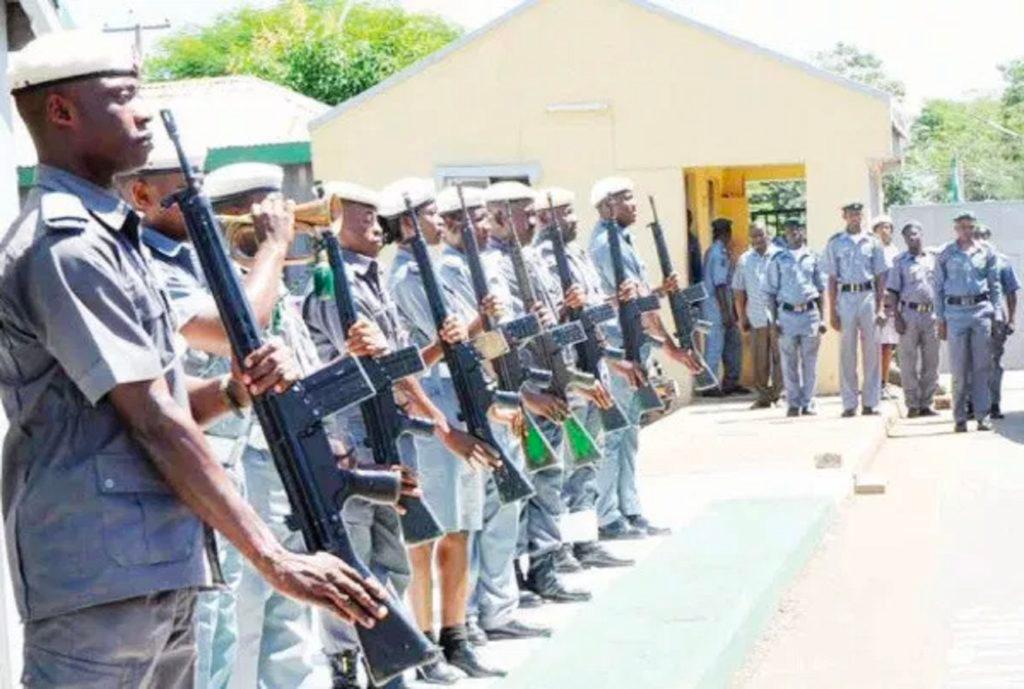
The Nigeria Customs Service (NCS) has achieved an unprecedented success in revenue collection for 2024 after surpassing its target by a significant margin.

This was revealed in a summary of all revenues collected by the service as seen below:

The total revenue collected reached NGN6.105 trillion, representing a 20.2% increase over the 2024 target of NGN5.079 trillion.

This remarkable figure also reflects a 90.4% increase compared to the 2023 collection of NGN3.206 trillion.

Several factors have contributed to this outstanding performance, including increased trade activities and intensified enforcement measures by the NCS.

The highest monthly collection ever recorded was in October 2024, with NGN604 billion.

Federation revenue amounted to NGN3.657 trillion, while non-federation revenue totaled NGN816 billion.

Import VAT collection reached NGN1.631 trillion, and concessions granted to stimulate economic growth amounted to NGN1.682 trillion.

Furthermore, the NCS recorded a significant reduction in concessions, with a 57.52% decrease compared to the NGN3.959 trillion granted in 2023.

Regarding waivers, duty waivers totaled NGN723 billion, levy waivers amounted to NGN372.65 billion, and VAT waivers reached NGN586.65 billion.

The service has implemented various strategies, including the deployment of modern technology and strengthening its enforcement capabilities.

Iranian court sentences pop star Tataloo to death for blasphemy

By Sabiu Abdullahi

An Iranian court has reportedly sentenced Amir Hossein Maghsoudloo, popularly known as Tataloo, to death for blasphemy following an appeal.

Local media revealed that the decision came after the prosecutor objected to an earlier five-year prison sentence.

“The supreme court accepted the prosecutor’s objection,” reported Etemad, a reformist newspaper, on Sunday.

According to the paper, the case was reopened, and the defendant was subsequently sentenced to death for “insulting the prophet,” referring to Prophet Muhammad (SAW).

The ruling, however, is not final and may still be appealed, according to reports.

Tataloo, a 37-year-old underground musician who blends rap, pop, and R&B, had been living in Istanbul since 2018.

He was extradited to Iran by Turkish authorities in December 2023 and has been in detention ever since.

The singer was also sentenced to 10 years for allegedly promoting “prostitution” and faced charges in other cases, including spreading “propaganda” against the Islamic Republic and sharing “obscene content.”

Tataloo, who is known for his extensive tattoos, was once embraced by conservative Iranian politicians to appeal to liberal-minded youth.

In 2017, he even participated in a televised meeting with Iran’s ultra-conservative president at the time, Ebrahim Raisi, who later died in a helicopter crash.

In 2015, Tataloo released a song supporting Iran’s nuclear programme, which was part of a deal to dismantle it in exchange for sanctions relief.

This agreement, however, fell apart in 2018 during the presidency of Donald Trump.

Tinubu holds closed-door meeting with Wike, Fubara, Ogoni Leaders

By Sabiu Abdullahi

President Bola Tinubu is currently hosting a closed-door meeting with Rivers State Governor Siminalayi Fubara and leaders from Ogoniland’s four Local Government Areas at the Council Chamber of the State House.

Observers noted the arrival of the delegation led by Fubara, which includes notable figures such as Senators Lee Maeba, Magnus Abe, Olaka Nwogu, Barry Mpigi, Victor Giadom, Kenneth Kobani, Monsignor Pius Kii, Ledum Mitee, and Prof. B. Fakae.

Around 2:45 pm, the official vehicle of Nyesom Wike, Minister of the Federal Capital Territory, was seen arriving at the venue.

Key federal officials at the meeting include National Security Adviser Nuhu Ribadu, Chief of Staff Femi Gbajabiamila, Minister of Information and National Orientation Idris Mohammed, Minister of Regional Development Abubakar Momoh, Minister of Environment Balarabe Abbas, and the Group Chief Executive Officer of the Nigerian National Petroleum Company Limited, Mele Kyari.

Although the meeting’s agenda has not been officially disclosed, it is widely speculated to focus on the Ogoni clean-up project and discussions about resuming oil exploration in Ogoniland, Rivers State.

The Federal Government has raised concerns over the prolonged suspension of oil activities in the region, emphasizing its impact on the nation’s economy.

The Niger Delta Development Commission’s Managing Director, Samuel Ogbuku, previously expressed concern over the conflicts that halted oil exploration in Ogoniland, which have led to significant losses in national revenue amidst growing energy challenges.

Meanwhile, a coalition of civil society organizations has demanded $1 trillion for the Niger Delta’s environmental clean-up and compensation for livelihood losses before crude oil production resumes.

In a joint statement, groups including Environmental Rights Action/Friends of the Earth Nigeria and the Health of Mother Earth Foundation criticized the government’s plan to restart oil production, describing it as neglecting environmental justice.

The coalition also referenced a 2011 UNEP report that documented widespread environmental damage in Ogoniland caused by oil exploration, citing severe pollution of land, water, and air.Further updates on the meeting are expected.

Japa: Nigerian hospitals face collapse as health workers exit in droves – CMDs

By Uzair Adam  

The Chief Medical Directors (CMDs) of University Teaching Hospitals and Federal Medical Centres have expressed concerns about a looming staff crisis. Doctors, nurses, and other healthcare professionals are leaving Nigeria in large numbers due to poor salaries and working conditions.  

During the 2025 budget defence session before the House of Representatives Committee on Health Institutions, the CMDs noted that despite significant federal government investments in health infrastructure, the mass exodus of healthcare workers weakens the country’s healthcare delivery system.  

The Chief Medical Director of Lagos University Teaching Hospital (LUTH), Professor Wasiu Adeyemo, described the trend as alarming, warning that if immediate steps are not taken, the nation’s hospitals could soon be empty.  

“Resignations occur almost daily,” Adeyemo stated. “In one or two years, our hospitals may become empty. The main reason people leave is economic. Consultants are earning less than $1,000 monthly. 

“Without addressing remuneration, all government investments in infrastructure will be wasted,” he added.

He reported that LUTH’s 2024 budget included N19.2 billion, with N13.57 billion allocated for personnel and just N33.2 million for overhead costs. 

While personnel performance reached 91 per cent by December, only 45 per cent of the capital project budget had been utilized.  

For 2025, LUTH proposes a budget of N32.7 billion, with N20.3 billion allocated for personnel. 

Adeyemo emphasized the need for improved funding to prevent further resignations and ensure the hospital’s functionality.  

Similarly, the Chief Medical Director of University College Hospital (UCH), Ibadan, Professor Jesse Abiodun, decried delays in releasing budgeted funds. 

He revealed that UCH had a capital appropriation of N5.59 billion in 2024, but only 38 per cent of the funds were released.  

“We still have 72 per cent of the funds outstanding,” Abiodun said. “We could only utilize the 38 per cent because we had prepared a cash plan in advance.”  

UCH has proposed a capital budget of N4.39 billion and an overhead budget of N690 million for 2025, which Abiodun said is insufficient, especially given rising utility costs such as electricity.  

The House Committee on Health Institutions Chairman, Hon. Patrick Umoh, urged the CMDs to provide comprehensive presentations detailing their budgetary needs and challenges. 

He noted that the committee would continue reviewing submissions to address the critical issues facing Nigeria’s tertiary health institutions.  

The CMDs reiterated the urgent need for government intervention, stressing that improving remuneration and timely funding release is crucial to averting a healthcare crisis.

Navigating interfaith marriages: Some points for consideration for Muslim men

By Ibrahyim A. El-Caleel

Muslim men who have an interest in interfaith marriages (marriage to non-Muslim wives) seem to be looking at the matter only at the surface. They do not look deeply into the injunctions around the whole marriage. 

Yes, Islam permits a Muslim man to marry a non-Muslim wife, but the reverse case is prohibited. Some of the few things you must think deeply about and seek explanations from scholars over are:

1.It is not permissible for the Muslim husband to force his non-Muslim wife to accept Islam. This is not permissible in Islam. 

2. To what degree can you ensure that your children from the wife remain upon the fitrah – remain as Muslims? A large number of children from this form of marriage end up as non-Muslims. Some of them leave the fold of Islam after their Muslim fathers die. Some of the fathers don’t even care. They actually make it a “democracy” sort of thing. “You boys and girls can just choose what you think you are okay with- my religion or your mother’s”. 

3. How do you reconcile specific differences between the injunctions in your religion and hers? An example here is that a Muslim wife must take her janabah bath after menstruating. Equally, there is no intercourse during that period. Are you aware of what is the provision for a non-Muslim wife? From where do you start, especially since there is even a niyyah (intention) component in the janabah bath? Have you thought about this before?

4. You must allow her to practice her religion if she is genuinely committed to it. If, for example, she must hang a symbol of her religion, let’s say ✝️, in her living room, would you be okay with it? Okay, let’s assume you have no problem with that. Have you asked what the Islamic injunction on praying is for any of your five compulsory prayers in a room with such a symbol inside it? 

Both Muslim men and non-Muslim women must seek clarification on some of these things before getting married. They should not just look at the permissibility at the surface. What are the other injunctions within such a marriage? Islam is full of injunctions as a religion based on knowledge of the Qur’an and Hadith. 

There are many injunctions even in a marriage between a Muslim man and a Muslim woman. Therefore, intending couples in interfaith marriages must better know what they are getting into. It is not always about getting a flight ticket and a visa to Rome. You must think ahead—what happens after you land in Rome?

Umar Maikudi, new MOPPAN President, urges collaboration in Nigerian film industry

By Muhsin Ibrahim

Umar Maikudi, also known as Cashman, was elected as the National President of the Motion Picture Practitioners Association of Nigeria (MOPPAN) at an event held in Nasarawa State on 18 January 2025.

As the newly elected National President, Maikudi expressed gratitude and enthusiasm for collaborating with filmmakers and film scholars to explore potential partnerships that could benefit the film industry. 

In a message sent to media houses across Nigeria, the president stated, “Let’s work together to drive growth and development in the sector.”

Maikudi concluded by encouraging others to “feel free to reach out to me to discuss potential collaborations and partnerships.”

Hailing from Kaduna, Maikudi has been a film scholar and actor for many years. He has appeared in several films, including the Netflix series War: Wrath and Revenge, part of the famed Sons of the Caliphate drama.

The Evolution of Yan Daba: From warriors to thugs in Kano

By Salisu Uba Kofarwambai

“Daba” comes from the Hausa term for a gathering place where people would sit and converse during their leisure time. Over time, the term took on a different connotation, referring to a spot where idle individuals would congregate, discuss, and plan their criminal activities, often fueled by drug addiction.

Historically, Hausa society had warriors known as Yan Tauri. These brave adventurers possessed magical powers and charms that made them nearly invincible in battle. They were also skilled hunters, often engaging in fierce competition over their prey. However, the Maitatsine crisis in the late 1970s to early 1980s marked a turning point for Yan Tauri. The crisis erupted when the followers of the heretic preacher Maitatsine clashed with the Nigerian government. 

Maitatsine, a Quranic teacher from Cameroon, had attracted a large following in Kano before beginning to preach against orthodox Islamic teachings. He started labelling people as infidels for merely watching TV or drinking tea with milk. When his son was killed at the street fight in Sabon Gari, Maitatsune started attacking people and killed many Kano residents.

The federal government refused to intervene, mainly due to party rivalry and Governor Abubakar Rimi’s criticism of the ruling party, NPN, and President Shehu Shagari. Thus, the Kano state government was left to handle the crisis on its own. The state government enlisted Yan Tauri’s help to combat the Maitatsine followers. Yan Tauri fought bravely, killing many followers, but this exposure to violence and bloodshed had a profound impact on them.

Following the Maitatsine crisis, Yan Tauri began to metamorphose into Yan Daba, a group notorious for their thuggery and violence. Politicians exploited Yan Daba for their gain, employing them as enforcers and thugs. During Governor Rimi’s tenure, the divide within the People’s Redemption Party (PRP) in Kano State further exacerbated the situation. The party split into two factions: the Santsi group, led by Governor Rimi, and the Tabo group, led by Malam Aminu Kano. Both factions employed Yan Daba thugs, leading to a deadly fight between the two groups.

Notorious Yan Daba members during this period included Gogarma, Mal Hadi, Gambo Cooperation, Sarki Change, Sabo Wakilin Tauri Mai Adashin Sara, Uba Dala Bala Turu, and many others. These thugs were known for their brutality and willingness to do whatever it took to achieve their objectives.

The reign of terror by Yan Daba continued until Major General Muhammadu Buhari came to power in 1983. Buhari’s administration cracked down on Yan Daba, arresting, killing, or forcing many of its members to flee Kano.

Then, in 1989, during General Ibrahim Babangida’s effort to transition Nigeria back to civilian governance, the Social Democratic Party (SDP) and the National Republican Convention (NRC) were established. These parties significantly influenced Nigeria’s move towards democracy. However, they also, perhaps unintentionally, aided the revival of Yan Daba in Kano as politicians continued to manipulate them for personal gains.

Yan Daba’s activities plagued Kano, with members engaging in robbery, assault, and other forms of violence. The emergence of notorious gangsters marked their reign of terror.

With the return of democratic rule in 1999, Yan Daba continued to pose a significant problem in Kano. Politicians continue to exploit them for their own gain, and their activities remain a major challenge for law enforcement agencies. Over time, Yan Daba has evolved, with many members now engaging in phone robbery and other forms of cybercrime.

Today, Yan Daba remains a challenge, with members engaging in various forms of criminal activity. Their history should be a cautionary tale about the dangers of exploiting violence and thuggery for political gain.

Salisu Uba Kofarwambai wrote from Kano via salisunews@gmail.com.