Admin

Reps Probe Uncovers 58 Bank Accounts, 12 Organisations Linked to PFIPC Controversy


By Sabiu Abdullahi

The House of Representatives ad hoc committee investigating the controversial Presidential Foreign Intervention Promotion Council (PFIPC) has released a preliminary report that links 12 organisations and 58 bank accounts to Adeniyi Adeyemi, who presented himself as the director-general of the council.

The committee, chaired by Yusuf Adamu Gagdi, presented its findings on Wednesday. The investigation followed public concerns over the appearance of the PFIPC in the 2026 Appropriation Bill despite questions about the legal status of the organisation.

According to the report, evidence obtained from witness testimonies, official documents, financial records and submissions from government institutions formed the basis of the panel’s preliminary conclusions.

The lawmakers said their investigation found no law enacted by the National Assembly or presidential directive that established the PFIPC.

The committee also stated that information obtained from the State House showed that President Bola Tinubu’s administration never appointed Adeyemi as director-general of the council.

In addition, the panel said it found no proof that Femi Gbajabiamila, Chief of Staff to the President, endorsed Adeyemi’s appointment letter.

“The Committee therefore preliminarily finds that the purported appointment letter was fabricated and falsely attributed to the Presidency,” the report reads.

“Such conduct, if established through the applicable criminal process, would constitute a grave assault on the integrity of the Office of the President and the official identity of the Federal Government.

“The unlawful creation or deployment of a document calculated to represent that the President or the Chief of Staff had authorised the appointment of a person to head a non-existent federal institution cannot be treated as a mere administrative irregularity.

“It is a matter deserving the most serious investigative and prosecutorial attention.”

The report identified several organisations allegedly connected to Adeyemi. They include the Confederation of United Nations Youths, FCT Investment Promotion Agency and Public-Private Partnership, FCT Investment Promotion Council and Public-Private Partnership, Foreign Investment Promotion Agency, United Nations Youth Global Agency and United Nations Youth Global Foundation.

Others listed by the committee are the World United Nations Youth Global Foundation, World Entrepreneurship University Limited, World Enterprise University Limited, FCT Investment Promotion Act, FCT Promotion Agency and the Olubadan of Ibadan Foundation.

Lawmakers also reported that about 58 bank accounts were traced to the organisations.

The committee further disclosed that investigators discovered a letter dated November 7, 2024, which was allegedly forged and presented as an official communication from the State House to the Office of the Accountant-General of the Federation (OAGF).

According to the report, the document sought the creation or issuance of an administrative code for the PFIPC. The letter was reportedly signed by one Akambi Adewale, a person the committee said does not appear in State House records.

The panel criticised both the OAGF and the Budget Office of the Federation over what it described as procedural failures in their handling of matters relating to the PFIPC.

The report stated that the OAGF acknowledged that its response to the forged correspondence should have been transmitted through an officially verified channel rather than released directly to Adeyemi.

“The office (OAGF) further acknowledged that the response ought not to have been released to Prince Adeniyi Adeyemi or any other unauthorised person but should have been transmitted through a properly authenticated official channel,” the report reads.

“The committee considers it a serious administrative and security lapse that official correspondence addressed to the State House could allegedly have been collected by a person connected with the forged originating request.

“The committee is therefore investigating whether the circumstances arose from negligence, failure to observe elementary verification requirements, breach of established correspondence procedures, wilful disregard of due process or deliberate facilitation.

“No officer will be condemned without fair hearing. Equally, no proven breach of public duty will be overlooked.

“The Budget Office made extensive submissions regarding its interaction with the purported organisation.

“While preliminary evidence indicates that the Office was presented with documentation purporting to establish the organisation as a federal institution, the Committee considers that verification of the legal existence of an institution is a fundamental prerequisite to its recognition within the Federal Budget Framework.”

The committee said further investigations are ongoing as it continues to examine the circumstances surrounding the PFIPC and the roles played by various individuals and government agencies in the matter.


Uber Ends Operations in Nigeria, Uganda After 12 Years


By Sabiu Abdullahi

Global ride-hailing company Uber has announced the termination of its services in Nigeria and Uganda, effective September 2, 2026.

The company disclosed the decision in a statement issued by its spokesperson on Wednesday, citing changes in its business priorities and investment strategy across Africa.

Uber said the decision was not connected to the recent restrictions placed on ride-hailing companies at Nigerian airports by the Federal Airports Authority of Nigeria (FAAN).

FAAN had in August limited the activities of ride-hailing operators at Nigerian airports before later allowing Bolt, one of Uber’s major competitors, to resume operations.

Uber said its decision to leave the two countries was specific to those markets and would not affect its activities in other parts of Africa.

“After a thorough review, we have taken the difficult decision to wind down operations in Nigeria and Uganda, effective September 2, 2026. This decision is limited strictly to these two markets and does not impact our operations across the rest of the continent,” the statement reads.

“Our immediate priority is supporting drivers, riders, and local team members throughout this transition. Uber remains deeply committed to Sub-Saharan Africa, where we continue to see robust growth and long-term opportunity.”

The company also reiterated its long-term interest in the sub-Saharan African market, despite its withdrawal from Nigeria and Uganda.

“We remain committed to Sub-Saharan Africa, where we continue to see strong growth and opportunity,” Uber said.

“We are focusing our investments on markets where we believe we can add the most value for drivers by providing earning opportunities at scale and enabling riders to go anywhere seamlessly.”

Uber said it had begun communication with employees, drivers and riders affected by the decision.

“We are committed to supporting affected employees through the transition and will communicate directly with them regarding the arrangements that apply to them,” the firm said.

The company also said active drivers had received communication as part of the transition process.

“We have been in touch with active drivers to extend a token of our appreciation as they transition over the next period.”

Uber said its customer support service would remain accessible for 21 days after the end of operations. The period is intended to address outstanding complaints and other issues linked to the transition.

The company’s departure comes after years of operational challenges in Nigeria. Its drivers staged protests in 2017, 2023 and 2025 over issues that included fares, commission rates and alleged poor treatment.

Uber entered the Nigerian market about 12 years ago as part of its expansion into Africa. Since its establishment in 2009, the company has withdrawn from 14 countries across Asia and Africa.

Gunmen Kill Two, Abduct Kano APC Local Government Chairman

By Sabiu Abdullahi

Gunmen have killed two residents and abducted the All Progressives Congress Chairman of Rogo Local Government Area of Kano State, Alhaji Abdullahi Fanka, in a late-night attack on the community.

The incident reportedly occurred around 11pm on Monday when the armed men invaded the area and opened fire, forcing residents to flee their homes.

A resident who spoke about the incident on Tuesday, under the condition of anonymity due to security concerns, said two people were killed after they attempted to prevent the abductors from taking away the APC chairman.

“The two people killed couldn’t stop them from whisking away the party chairman because they were in possession of sophisticated weapons,” the resident said.

The latest attack occurred less than 24 hours after gunmen reportedly killed the APC Chairman of Rantan Ward in Bebeji Local Government Area, Alhaji Garba Buba, alongside another resident, Sulaiman Zunduma.

The Rantan incident took place on Sunday night when the attackers invaded the community and killed the two victims. The Kano State Police Command subsequently commenced an investigation and launched efforts to identify and arrest those responsible.

The incidents followed another attack in Chiromawa community, Garun Mallam Local Government Area, where suspected bandits abducted the Sarkin Noman Kano, Alhaji Yusif Nadabo, on Saturday night.

Nadabo was later rescued by the police after security personnel and local residents responded to the attack. Three residents were reportedly injured during the incident.

The attacks in Rogo, Bebeji and Garun Mallam occurred in neighbouring areas of Kano State within roughly 72 hours, raising renewed concerns about the security situation across the state.

The development came shortly after the Minister of State for Defence, Bello Muhammad Matawalle, announced on Monday that the Federal Government was working on a five-year defence and security strategy following the recent attacks in Kano.

Attempts to obtain an official reaction from the Kano State Police Public Relations Officer, CSP Abdullahi Haruna Kiyawa, were unsuccessful as of the time of filing this report. Calls to his telephone were not answered, while a WhatsApp message sent to him had not received a response.

Atiku Fires Back At Tinubu Over Energy Cost, Says Nigerians Deserve Relief

By Sabiu Abdullahi

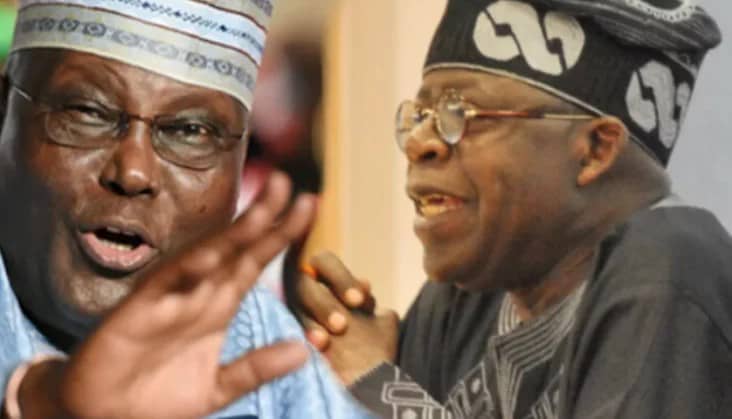
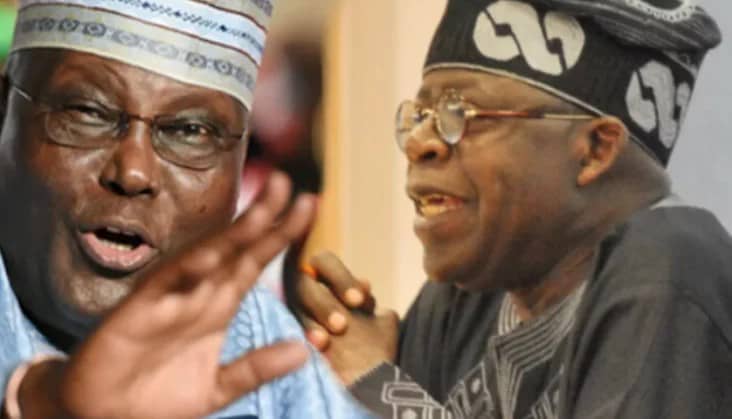
Former Vice President Atiku Abubakar has criticised President Bola Tinubu over his recent comments on proposals aimed at reducing energy costs, saying Nigerians have endured prolonged economic hardship while the government is now promising relief as the 2027 elections draw closer.

Atiku made his position known through his Senior Special Assistant on Public Communication, Phrank Shaibu, who issued a statement on Tuesday titled, “Tinubu, the issue is not Atiku — it is why Nigerians can no longer afford to live.”

Shaibu said Atiku was not interested in turning the matter into a personal confrontation with the President. He maintained that the former vice president would continue to advocate policies that could ease the financial burden on Nigerians.

He said, “Atiku has more important people to engage directly: the mother struggling to feed her children; the civil servant whose salary disappears into transportation; the farmer paying more to move produce to market; the student being pushed into debt simply to remain in school; and millions of Nigerians whose daily reality bears no resemblance to the prosperity advertised in your tweets.”

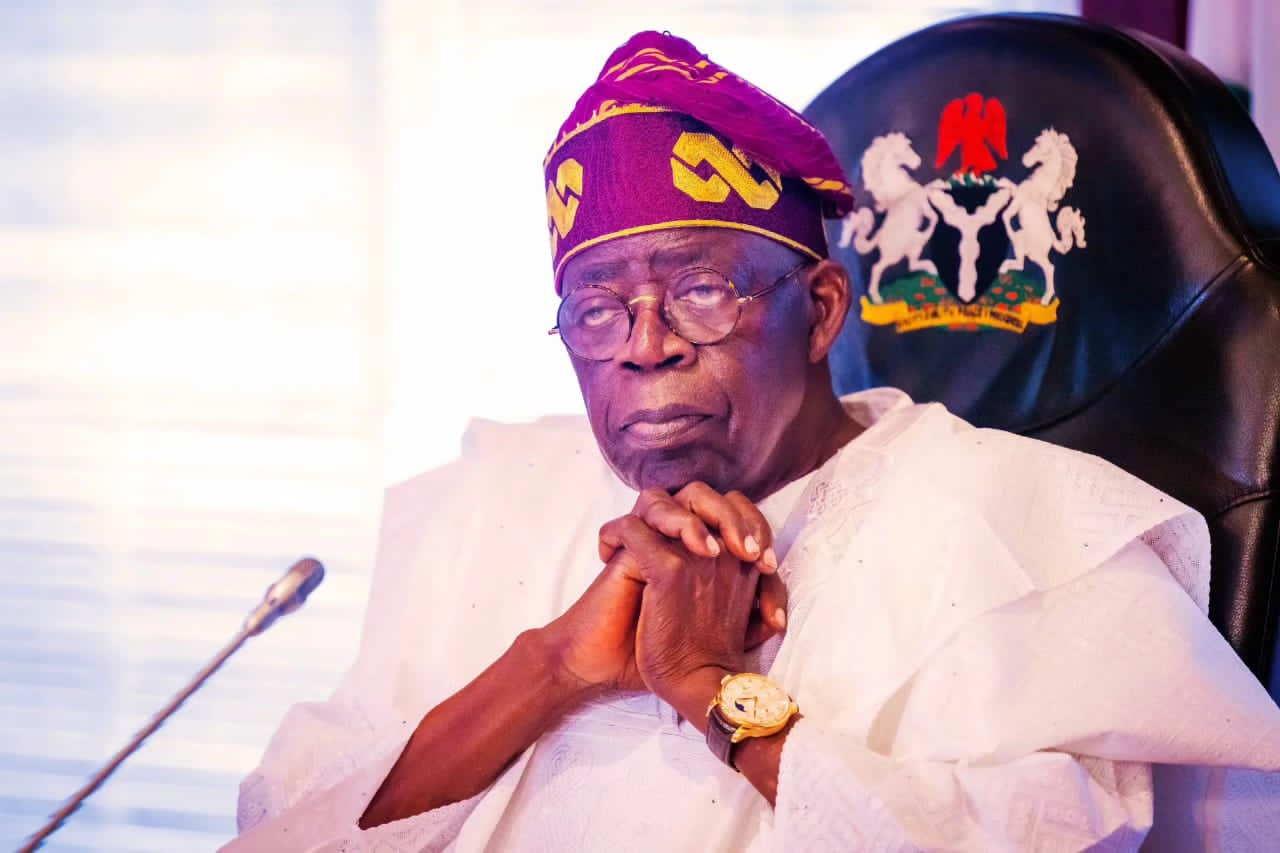
The statement followed Tinubu’s recent criticism of Atiku’s economic proposals, particularly suggestions for reducing energy costs. The President had also rejected the possibility of a return to fuel subsidy arrangements.

Shaibu questioned the timing of the administration’s renewed promises to reduce transportation costs, boost food production and provide assistance to vulnerable Nigerians after years of economic difficulties.

“Why did Nigerians have to suffer for more than three years before your government discovered that economic growth must reach ‘the dining table and the pocket ‘. Why is intervention backwards when Atiku proposes it, but progressive when you announce it?,” he asked.

According to the statement, lowering energy costs could have broader economic benefits because cheaper fuel would reduce transportation and production expenses. This, it said, could eventually bring down the prices of food and other essential commodities.

Shaibu also outlined aspects of the Atiku Economic Recovery Plan, which he said would provide targeted support for Nigerian crude supplied to domestic refineries under a capped and transparently budgeted framework.

He said the proposal would involve tracking crude supplied to refineries, monitoring refined petroleum products and introducing a consumer pass-through mechanism to ensure Nigerians benefit directly from the intervention.

“The economics is straightforward. Reduce fuel costs, and you reduce pressure on transportation. Reduce transportation costs, and you reduce the cost of moving tomatoes, rice, yam, livestock and manufactured goods,” he said.

Drug Case: APM Calls on Tinubu to Withdraw From 2027 Race


By Uzair Adam

The Allied Peoples Movement (APM) has called on President Bola Ahmed Tinubu to withdraw from the 2027 presidential race, citing the ongoing legal proceedings in the United States over alleged links to narcotics trafficking.

The party said the President’s recent legal action before the U.S. District Court for the District of Columbia was an indication of his concern over the possible release of documents allegedly linking him to drug-related activities.

The APM National Publicity Secretary, Yusuf Abubakar, made the position known in a statement issued on Tuesday in Abuja.

According to the party, President Tinubu, through his lawyers, filed a plea on August 28, 2026, seeking to block a summary judgment and prevent the Federal Bureau of Investigation (FBI) and the Drug Enforcement Administration (DEA) from releasing documents it described as potentially incriminating.

The APM argued that the attempt to prevent the release of the documents amounted to an effort to suppress evidence that could have implications for the President.

The party said that if Tinubu’s legal team was confident of his innocence, the case should instead be allowed to proceed so that the documents could be examined and the President’s name cleared.

It further argued that the invocation of privacy concerns and the possible impact of releasing the documents on Nigerian politics showed that the matter had serious implications for the President.

The party also drew attention to Section 137 of the 1999 Constitution, as amended, which outlines the conditions that could disqualify an individual from contesting the presidency.

The APM said Nigeria’s obligations under international treaties on drug and narcotic control further underscored the importance of the matter.

The party said it remained confident that the U.S. court would determine the case based on the law and evidence presented before it.

“As a party, we insist that no individual, regardless of their political position, should be beyond the reach of the law, especially regarding drug-related issues of legitimate concern to the entire world,” the statement said.

The APM also cited the conviction of former Honduran President Juan Orlando Hernández by a U.S. federal jury in Manhattan in March 2024 on drug-related charges as an example of how political status, in its view, should not shield anyone from prosecution.

The party consequently urged President Tinubu to withdraw from the 2027 presidential contest, saying Nigeria deserved a president who was free from allegations involving fraud, corruption and dishonesty.

“We, therefore, counsel President Tinubu to spare the nation the pain, cost, and embarrassment of this situation by stepping down from the race,” the party said.

The APM also called on other presidential aspirants to be prepared for public scrutiny of their records as the 2027 election approaches.

Atiku’s $1.2M Washington Lobbying Effort Exposed as Political Gamble, Presidency Claims

By Abdullahi Mukhtar Algasgaini

The Presidency has strongly refuted claims circulating in some media circles that suggest President Bola Tinubu is connected to ongoing U.S. legal proceedings, describing the reports as a desperate political maneuver funded by opposition figures seeking foreign validation ahead of the 2027 elections.

In a detailed statement issued Sunday, Dr. Sunday Dare, Special Adviser to the President on Media and Public Communications, characterized the coordinated media campaign as a “clinical demonstration of desperation” orchestrated by former Vice President Atiku Abubakar’s camp.

According to publicly verifiable filings with the U.S. Department of Justice under the Foreign Agents Registration Act (FARA), Atiku Abubakar contracted the Washington-based firm Von Batten-Montague-York, L.C. on a $1.2 million, 12-month retainer. The agreement’s explicit scope, Dare noted, is to execute a “targeted, partisan campaign” designed to “counterbalance” Nigerian government narratives and weaponize historical judicial archives for domestic political leverage.

The statement identified Dr. Karl-Marx Edward Okeke-Von Batten—a U.S.-based consultant of Nigerian origin who added the “Von Batten” surname following his marriage—as the commercial lobbyist behind what the Presidency termed “manufactured controversies.”

“Okeke-Von Batten must have conned a desperate Alhaji Abubakar Atiku into believing that he has access to everyone in the Trump administration, including President Trump himself, by falsely representing that he had reached out to President Trump to release the so-called FBI files,” Dare stated.

The Presidency emphasized that the case in question has been active since 2023, with the FBI’s primary concern being “the protection of the techniques by which it gathers information and the safety of its sources.”

“The report presents no intelligence document, no named Western official, and no evidence of any exchange involving Nigeria’s secrets or resources. It is nothing more than political speculation packaged as classified information,” Dare asserted.

Addressing what it termed “the recycled fixation on decades-old, settled U.S. legal filings,” the statement referenced recent public discourse where Wole Afolabi, SAN, appeared on Channels Television to clarify that actions taken by the legal team to withhold certain sections of FOIA requests align strictly with U.S. legal provisions designed to protect confidential investigative processes.

“If the president had been criminally liable under U.S. law during past investigations, American authorities would have indicted and prosecuted him at the time,” the statement quoted Afolabi as clarifying.

The Presidency also dismissed suggestions linking President Tinubu’s current European trip to U.S. legal proceedings, describing it as a “previously scheduled annual leave” with “absolutely no connection” to ongoing FOIA matters.

Dare concluded by challenging the opposition to present tangible evidence for their allegations, arguing that “true democratic validation is earned through the ballot box and tangible service delivery to the citizens at home, not through manufactured headlines bought and paid for in foreign currency.”

The statement emphasized that Nigerians are “no longer naive spectators easily swayed by rented international mouthpieces or imported falsehoods.”

Hausa Language at Risk of Decline, Former NAWOJ Chair Warns

By Sabiu Abdullahi

The growing influence of English and the declining practice of passing indigenous languages from parents to children could threaten the future of Hausa, former Chairperson of the Nigeria Association of Women Journalists (NAWOJ), Katsina State chapter, Hajiya Hannatu Mohammed, has warned.

Mohammed raised the concern while speaking with newsmen on Sunday in commemoration of Hausa Day. She called for deliberate efforts to protect Hausa and other indigenous Nigerian languages from gradual cultural erosion.

She said the importance of preserving indigenous languages extends beyond communication, as they carry the history, traditions, values and identities of different communities.

The Punch Newspapers quoted her as saying, “Nigeria needs to preserve Hausa and other indigenous languages because language is more than a means of communication. It is a repository of our history, culture, values and collective identity.”

She noted that the widespread use of Hausa across Northern Nigeria, especially in the media, education, commerce and cultural activities, makes its preservation an important cultural and social responsibility.

“We should be able to speak English for global communication while proudly maintaining Hausa and our other indigenous languages,” she insisted.

G-100: Turaki-led PDP Faction Joins Opposition Move to Defeat Tinubu


By Anwar Usman

The Kabiru Tanimu Turaki-led faction of the Peoples Democratic Party (PDP) has endorsed the G-100, a coalition of 100 opposition stalwarts, in its efforts to establish a united opposition front to challenge President Bola Tinubu in the 2027 general elections.

Ini Ememobong, the faction’s National Publicity Secretary in a statement on Tuesday said the decision was informed by the “wailings of Nigerians groaning under the repressive Bola Tinubu APC-led Federal Government,” and the need to cooperate with other credible political forces to unseat the incumbent at the federal level.

The National Chairman said “Our participation is anchored on the promise that the process will be hinged on the philosophical underpinnings of transparency, equality, data-driven decisions and egalitarianism. Any result birthed by a process midwifed by these virtues will certainly offer Nigerians a credible leadership capable of alleviating the skyrocketing poverty and rising insecurity in the country.”

Further more, Ememobong added, “This new move aligns with our earlier stated disposition of working with like-minded political parties and organisations desirous of salvaging the country from the many vices orchestrated by the ruling APC.

“Our participation at the first meeting of the G-100 on 31st August, 2026 is a further indication of our preparedness to contribute our quota in the quest for an all-opposition platform that will take power from the incumbent and rebuild Nigeria for the good of all Nigerians.”

EFCC: Public Funds Moved From LG Account Into Crypto Wallets

By Sabiu Abdullahi


The Economic and Financial Crimes Commission (EFCC) has revealed that public funds were allegedly transferred from a local government account to a private company before being moved into cryptocurrency wallets.

EFCC Chairman, Ola Olukoyede, made the disclosure on Monday in Abuja during an engagement with media executives and journalists.

He said the commission’s Fraud Risk Assessment and Control Department detected the suspicious transactions and temporarily froze the account for 72 hours to determine the destination and purpose of the funds.

Olukoyede did not identify the local government, company or state involved in the transaction.

Defending the commission’s intervention, the EFCC chairman said suspicious movement of public funds should not be allowed to continue unchecked.

He said, “When we see money moving suspiciously, we move in and freeze it in the interim. I know some of you are calling for my head. The account was frozen for 72 hours. Okay, come and show where this money is going? Why are you moving money? We saw money being moved from the local government account to a company. Apart from that phase, we discovered that the money has gone into cryptocurrency wallets.

“Is that the road to build? Is that the power to generate cryptocurrency wallets for your people? Are you asking me to close my eyes and not do something like that? Then you don’t need me in this office.”

According to him, the development demonstrated the importance of preventing suspicious transactions before public funds are lost rather than waiting until after theft has occurred.

“Why must we be waiting for money to be stolen? Why can’t we change the narrative? And that’s the main thing we need to bring to the office,” he said.

The disclosure followed controversy earlier in August after the EFCC froze an account belonging to the Osun State Government shortly before the August 15 governorship election.

However, Olukoyede did not connect the transaction he disclosed with Osun State or any other state.

The EFCC chairman also warned that cybercrime in Nigeria had moved beyond the conventional “Yahoo Yahoo” narrative. He said some young Nigerians were allegedly being used by public officials to conceal and transfer funds through cryptocurrency wallets.

He said, “We have gotten to a stage in Nigeria now that public officials steal money and they put it in cryptocurrency wallets.

“Most of the directors we are investigating now, you can’t trace tangible assets to them. They steal this money, give it to students, give it to young people. They open cryptocurrency wallets all over the world. They plunder the money there within 24 hours.

“The money moves abroad. They buy a house anywhere in the world, buy luxury items. Those are the recent trends.”

Olukoyede said the commission had developed the ability to track cryptocurrency wallets, particularly those connected to virtual asset platforms registered in Nigeria.

He noted that regulatory measures had led to the licensing of about 40 virtual asset platforms in the country.

“Now we also have the capacity to trace cryptocurrency wallets now, at least with those that are registered in Nigeria, and we are doing that,” he said.

Speaking on the EFCC’s achievements over the past three years, Olukoyede disclosed that the commission had recovered virtual assets linked to the CBEX fraud.

He, however, identified the management of confiscated cryptocurrency as a challenge that had previously raised concerns about accountability.

“When you recover virtual assets, where do you put them? No accountability. That’s why we can’t continue like this,” he said.

According to him, the Federal Government had approved a national confiscation wallet for virtual assets recovered by law enforcement agencies.

“Today, now we have a national confiscation wallet. So if I confiscate virtual assets now, it’s a national wallet that we put into those,” he said.

The EFCC chairman further called for greater technological capacity among financial institutions and law enforcement agencies to address the growing use of cryptocurrency in the movement of illicit funds.

He said, “When we are talking about cybercrime, please cooperate with us, understand the scope. Not just Yahoo. Some of the people you are calling Yahoo, see your young children; they are stealing on behalf of London, on behalf of public servants.”

Olukoyede also disclosed that the EFCC’s anti-corruption operations had contributed to revenue recovery, with federal and state tax recoveries reaching approximately N288.1bn during the period under review.

He said federal tax recoveries accounted for about N173.2bn, while N114.9bn was attributed to State Internal Revenue Services.

The EFCC chairman further revealed that more than 40 commission personnel had been dismissed over alleged corruption and financial misconduct within the past two and a half to three years.

He added that some of the dismissed officers were already facing prosecution, while case files involving others were being prepared for prosecution.

EFCC Tells Wanted Ex-Bayelsa Governor Sylva to Report for Questioning

By Sabiu Abdullahi

The Economic and Financial Crimes Commission (EFCC) has asked former Bayelsa State Governor, Timipre Sylva, to appear before the agency for questioning over an alleged $14.86m fraud case.

The commission declared Sylva wanted in connection with an alleged case of conspiracy and dishonest conversion involving $14,859,257.

EFCC spokesperson, Dele Oyewale, made the call on Monday while responding to accusations by the former governor that the anti-graft agency had become more of a political arm of the All Progressives Congress than a state institution.

“He has been declared wanted; he should make himself available to the commission,” Oyewale said.

The development came on the same day Sylva announced his resignation from the APC after more than a decade as a member of the ruling party.

In his resignation letter, which was addressed to the APC chairman of Ward 4 in Brass Local Government Area of Bayelsa State, Sylva said he had also sent copies to the national chairman of the party, the EFCC chairman and the APC chairman in Bayelsa State.

Sylva said his decision followed consultations with his family, associates, colleagues and supporters.

He described the APC as a “floundering ship whose fate appears to have been sealed by its irredeemable load of iniquities.”

The former governor also accused the party’s leadership of abandoning the principles that informed its creation.

In the letter dated August 31, 2026, Sylva wrote, “As a founding member of the APC, and one who joined other well-meaning Nigerians in building the Party with sweat and money, it is deeply saddening to witness how the ideals we espoused have been so thoroughly and unrecognisably thwarted.

“Moreover, I cannot, in all good conscience, continue to belong to a Party whose leaders believe that ‘all is fair in politics;’ and have consistently demonstrated that belief in practice.

“All cannot be fair in any endeavour of life. The demands of basic decency and morality forbid it. Unfortunately, this mentality appears to underpin virtually every action, and even inaction, of this administration.”

Sylva further criticised the administration of President Bola Tinubu, claiming that the Federal Government had failed to live up to the expectations of Nigerians.

“The present Government, formed under the banner of the APC we once loved, has disappointed the vast majority of Nigerians. And I can see neither a credible attempt nor any possibility of a revamp,” he stated.

He said he had decided to leave the party because he believed Nigerians would seek a political change at the next election.

“I am therefore left with no other choice than to jettison a floundering ship whose fate appears to have been sealed by its irredeemable load of iniquities. I have no doubt that, in the coming election, Nigerians will vote for Nigeria and free the Country from this stranglehold on our beautiful country,” he said.

Sylva also explained why he copied the EFCC in his resignation letter, accusing the commission of acting in a manner that suggested political alignment with the APC.

He wrote, “I am deliberately putting the EFCC in copy of this letter because, of late, it has conducted itself more as an organ of the APC than as an institution of State.

“I am fully aware that this action of mine may invite a redoubled witch-hunt against me and my associates, but that is a risk I am willing to take.”

The EFCC had declared Sylva wanted in November 2025 over the alleged $14.86m transaction.

The former governor has also been linked to an alleged plot against the Tinubu administration. He is listed as a defendant in a 13-count Federal High Court charge that includes allegations of treason, terrorism-related offences, conspiracy and money laundering.

He has denied involvement in the alleged plot.

Reports linked Sylva to an alleged financial contribution of about N785m to the purported operation through Purple Waves Limited, an Abuja-based company. Investigators reportedly traced the money through the company and a bureau de change operator.

The wider investigation allegedly involved more than N5bn, which investigators said was pooled for the operation. Funds paid into Purple Waves were also reportedly linked to contracts from the Niger Delta Development Commission and loans secured by the company.

The allegations remain before the courts, and Sylva has not been convicted of the offences.

In July 2026, the Department of State Services arraigned five associates of the former governor over allegations that they concealed his whereabouts after he was declared wanted in connection with the alleged plot. They pleaded not guilty and were granted bail.

Earlier, in May 2026, the Federal High Court in Abuja granted an interim forfeiture order over nine properties linked to Sylva following an application by the EFCC.

Sylva served as governor of Bayelsa State from 2007 to 2012, although his tenure was affected by court decisions. He later served as Minister of State for Petroleum Resources under former President Muhammadu Buhari.