Admin

From comfort to campus: Reality of schooling away from home

By Faiza Aliyu Farouk

Leaving the comfort of home to pursue education elsewhere is a defining moment in the lives of many students. Schooling away from home means stepping into an unfamiliar world, one that is both exciting, exhilarating, yet overwhelming. It’s more than just a physical transition; it’s an emotional and psychological journey that reshapes who we are.

The moment you pack your bags and wave goodbye to the familiar walls of your family home, you begin a journey filled with uncertainty, growth, discomfort, and discovery. It exposes students to diverse cultures, ideas, and ways of life.

One of the most challenging parts of schooling away from home, according to many, is the emotional toll it takes.

Homesickness is a quiet but heavy feeling that settles in your chest in the middle of the night or while eating something bland and unfamiliar.

Research by Yugo, student accommodation provider in the university of Derby found that almost two-thirds (61%) of students aged 19 to 25 were concerned about feeling homesick when it came to moving away for the first time (The Guardian, 2024).

That number felt very real when talking to friends and classmates who admitted to crying in their hostels during the first few weeks. And yet, almost all of them pushed through and eventually found ways to cope.

The first few weeks or months away from home can be particularly tough. The excitement of a fresh start often gives way to the reality of managing day-to-day activities independently.

“I was excited but anxious,” said Fatima, a 400-level Mass Communication student at BUK. She recalls the first time she stepped foot on campus, far from the comfort of her family. “I missed the comfort, care, and familiar routine of home. I had to figure things out on my own, even when I was sick.”

There are many reasons why students leave their homes to study elsewhere. Abdulaziz, a medical student who left his hometown of Minna for Kano, said he left in pursuit of a better academic program.

“The schools back home weren’t offering the course I wanted to study.” Meanwhile, Alhassan, who left Jos for Kano, said he intentionally chose to stay far from home to gain experience.

“I wanted new perspectives and to challenge myself. While some leave for academics, others see distance as a test of independence.

Navigating environmental factors is another challenge of schooling away from home. “Having spent my life in Jos, never traveling for exposure or leisure.

Transitioning to a new setting was quite a challenge,” Alhassan said. As student routines change, so do relationships.

“Sometimes I feel distant from my family due to limited time spent with them, not because of anything else,” he added.

However, others, like Tsadu said they noticed a shift in how they were treated due to being away from home: “They respect me more now.”

Khadija, when asked what studying away from home meant for her, said, “I became my own person. I stopped relying on others to make decisions for me.”

Another student shared, “It was hard, but I needed to be away to find myself.” For others, it was about discovering their voice, taking risks, and failing without shame.

These stories are common, yet each one is uniquely powerful.

Living on campus forces students to grapple with new responsibilities. From cooking, budgeting, building community, and dealing with loneliness.

“Staying away has made me financially independent and more disciplined. I realized five thousand naira doesn’t stretch far,” Zainab admitted.

While describing the daily struggles, she said; “Staying in the hostel isn’t easy, especially when you come back from lectures hungry and there’s no water to cook. You have to fetch it first, sometimes from far away.

The issue of electricity is another challenge, we only get light for three hours at night, which is when we charge our devices and study. It’s not convenient; I just manage.”

Although the emotional impact of living away from home is often associated with students, parents also experience significant changes.

They feel the shift too. The independence is bittersweet. “I feel disturbed and unhappy but the other side of me feels good and happy while I continue to pray for him” Hajiya Hau’wa, whose son studies in Kano while the family lives in Niger said.

Aisha, a mother of a university student, said, “When she calls, complaining about school or being sick and lonely, it breaks my heart that I can’t be there. I’ve had to learn to let her go with prayers and constantly checking up on her.”

Communication becomes a lifeline. Most parents check in daily, not just to monitor progress but to maintain an emotional connection. Yet, not all students appreciate the frequent calls.

Nana, who studies accounting at Nassarawa State University said; ” Constant calls from my parents tend to be stressful. I’m trying to manage their expectations while also focusing on my studies”

Leaving the comfort of home for campus life is more than a transition. It’s a transformation. It’s about stepping into a version of yourself that only distance, responsibility and independence can bring.

It’s where growth happens. You learn to stand on your own, make your own choices and live with the outcome.

There will be days of loneliness, moments of doubt, and nights when home feels like a world away. But there will also be victories. Big and small that will build your confidence.

Faiza Aliyu Farouk is a 400-level Mass Communication student at Bayero University Kano (BUK).

Nigeria at 65: What exactly are we celebrating?

By Muhammad Umar Shehu

As Nigeria clocks 65 years of independence, one would expect a moment of pride and reflection on remarkable achievements. Yet, the reality on the ground tells a different story. 

The country continues to struggle with corruption, poverty, unemployment, inadequate infrastructure, insecurity, and a range of other social issues. These issues cut deep into the daily lives of ordinary Nigerians, making access to basic necessities and opportunities for growth a constant struggle.

For many citizens, there is little reason to roll out the drums. Independence anniversaries are usually a time for celebration, but how can we truly celebrate when millions remain jobless, when insecurity still holds communities hostage, when hospitals lack basic equipment, and when roads remain death traps? The weight of these problems overshadows whatever progress has been made.

This does not mean Nigeria has no potential or that the sacrifices of our founding fathers should be ignored. Leaders like Sir Abubakar Tafawa Balewa, who gave Nigeria a voice of dignity on the global stage, or the Sardauna of Sokoto, Ahmadu Bello, who worked to strengthen education and unity in the North, envisioned a better future for this country. 

Chief Obafemi Awolowo’s free education policy in the West and Chief MKO Abiola’s ultimate sacrifice for democracy remain powerful reminders of what true leadership and patriotism demand. These men stood for a Nigeria that could rise above selfishness and mediocrity.

But after 65 years, Nigerians deserve more than repeated promises and underdevelopment. We deserve a country where leadership prioritises people, where accountability is more than just a slogan, and where citizens can genuinely take pride in the flag they carry.

So, if there is something worth celebrating at 65, perhaps it is the resilience of Nigerians themselves —the spirit that refuses to give up despite everything. Beyond that, the truth is clear: the road ahead requires serious action, not mere rhetoric.

May Nigeria succeed and prosper. Amin.

Muhammad Umar Shehu, who wrote from Gombe, can be reached via umarmuhammadshehu2@gmail.com.

Why I accepted national theatre renaming—Soyinka

By Sabiu Abdullahi

Nobel Prize winner, Professor Wole Soyinka, has revealed the reason behind his decision to accept the renaming of the National Arts Theatre in Lagos after him.

Soyinka, who spoke on Thursday during the reopening of the Wole Soyinka Centre for Culture and Creative Arts, said he once believed the landmark could never be restored.

He explained that he had considered the facility beyond redemption until the Bankers’ Committee carried out a comprehensive renovation.

The literary icon admitted that he agreed to the honour reluctantly, stressing that he had always criticised leaders who attached their names to public monuments.

“I have to stand up in public and watch my name being put up as yet another appropriator. It just didn’t seem very well for me,” Soyinka said.

He further noted that he was ready to “eat his words” if the remarkable transformation of the National Theatre was the cost of having it renamed in his honour.

Nigeria@65: Gov Yusuf urges Tinubu to remove Kano CP, accuses him of incompetence

By Uzair Adam

Kano State Governor, Alhaji Abba Kabir Yusuf, has called on President Bola Ahmed Tinubu to remove the state’s Commissioner of Police, accusing him of incompetence and lack of professionalism.

The governor made the appeal on Wednesday during Nigeria’s 65th Independence Anniversary celebration at the Sani Abacha Stadium in Kano.

Governor Yusuf emphasized that Nigerians deserve security officers who are fair, transparent, and dedicated to safeguarding lives and property without bias or political interference.

His call comes at a time of heightened debate over the management of security in Kano, especially the role of the police in the state’s political affairs.

Details later…….

Malaria: The silent killer still at our doorstep

By Bashir Abubakar Umar 

Malaria remains one of the world’s most persistent public health challenges, particularly in tropical and subtropical regions. To gather more information about the disease, I contacted Dr Musa Muhammad Bello, who works with Aminu Kano Teaching Hospital (AKTH) in the Department of Community Medicine. It is a life-threatening disease caused by parasites of the Plasmodium genus, transmitted to humans through the bites of infected female Anopheles mosquitoes.

Despite advances in medicine and public health campaigns, malaria continues to claim hundreds of thousands of lives each year, with children under five and pregnant women among the most vulnerable groups.

Infection with Plasmodium falciparum, P. vivax, P. ovale, or P. malariae primarily causes the disease. The infection begins when an infected mosquito bites a person, releasing parasites into the bloodstream. These parasites travel to the liver, where they mature and multiply before re-entering the bloodstream to infect red blood cells.

Malaria is not spread directly from person to person; instead, it requires the mosquito as a vector. However, it can also be transmitted through blood transfusions, organ transplants, or from an infected mother to her child during pregnancy.

Symptoms of malaria typically appear 7 to 10 days after infection. Early signs include fever, chills, headaches, muscle aches, sweating, body weakness, vomiting, diarrhoea, and a change in taste. In severe cases, the disease can lead to anaemia, respiratory distress, organ failure, and even death if left untreated. Diagnosis is usually confirmed through laboratory methods, such as microscopic examination of blood smears or rapid diagnostic tests, which detect malaria antigens in the blood.

Malam Abdurrahman, a resident of Dorayi Babba, said that the mosquitoes used to bite him not only at night, but he also advises the general public to use nets for prevention.

Prevention is the most effective way to reduce malaria cases and deaths. Sleeping under insecticide-treated mosquito nets can significantly reduce the risk of being bitten at night, while indoor residual spraying kills mosquitoes that rest inside homes.

Eliminating stagnant water, clearing drainage systems, using window and door nets, applying body lotion, and fumigation are all measures that help reduce mosquito breeding grounds. In some high-risk regions, preventive antimalarial medication is recommended for vulnerable groups, including pregnant women, children under 5, and foreigners.

Hajiya Rabi’a, a resident of Tudun Yola, said that the mosquitoes prevent her from sleeping at night due to their bites, even when she is in a net.

Treatment for malaria depends on the type of Plasmodium parasite and the severity of the infection. Artemisinin-based combination therapies are currently the most effective treatments for P. falciparum malaria, which is the most dangerous form. Early and proper treatment is essential to prevent severe illness and to help break the cycle of transmission.

The global impact of malaria remains significant. According to the World Health Organisation, Africa accounts for more than 90% of malaria cases and deaths worldwide. Beyond its toll on health, the disease hampers economic development by reducing productivity, increasing healthcare costs, and deepening poverty in affected communities.

Although malaria is both preventable and treatable, it persists due to environmental factors, limited healthcare access, and poverty in many areas. A continuous global effort is essential, combining prevention methods, effective treatment, public education, and ongoing vaccine research. With dedication and coordinated actions, the world can progress towards eradicating malaria and creating healthier, safer communities.

Bashir Abubakar Umar wrote via baabum2002@gmail.com.

Nigeria@65: Nigeria’s worst economic pains are over—Tinubu

By Abdullahi Mukhtar Algasgaini

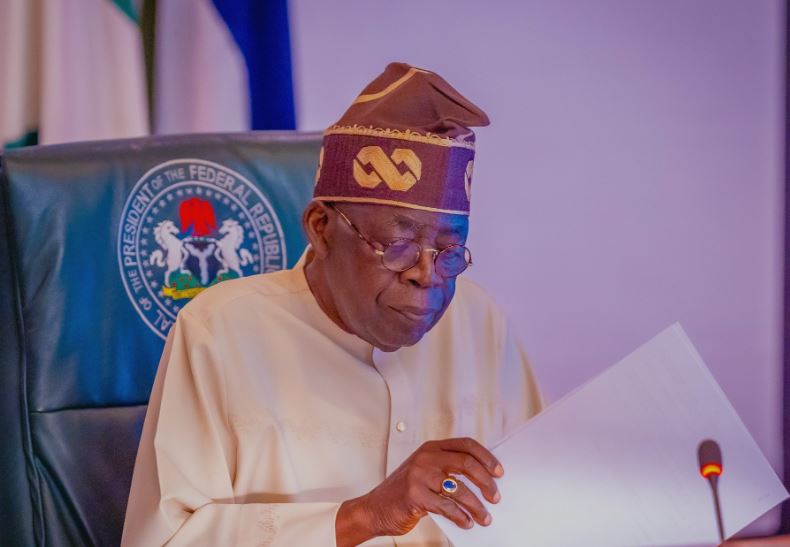
President Bola Ahmed Tinubu has assured Nigerians that the worst of the country’s economic challenges are behind them, saying the nation has “finally turned the corner.”

In a nationwide broadcast on Tuesday to mark Nigeria’s 65th Independence Anniversary, Tinubu admitted that his economic reforms, including the removal of fuel subsidy and the unification of exchange rates, brought temporary hardship.

However, he defended the policies as crucial to saving the country from what he described as a “near-collapsed economy” and “economic chaos.”

“The worst is over, I say. Yesterday’s pains are giving way to relief,” the President declared from the Presidential Villa.

He praised Nigerians for their patience, resilience, and support during the difficult period.

Tinubu used the address to present what he described as his administration’s progress report, outlining 12 key milestones achieved since May 2023.

He cited recent economic growth of 4.23 percent in the second quarter of 2025, the fastest in four years.

Inflation, he said, had eased to 20.12 percent in August, the lowest in three years, while external reserves had climbed to $42.03 billion, the highest since 2019.

Other achievements highlighted include a ₦7.46 trillion trade surplus, improved oil production at 1.68 million barrels per day compared to under one million in 2023, and the stabilisation of the naira, with the gap between official and parallel market rates narrowing significantly.

On security, the President praised the armed forces for “making significant sacrifices to keep us safe,” noting that peace was gradually returning to previously troubled communities in the North-East and North-West.

He also addressed the youth, pointing to programs such as the National Education Loan Fund (NELFUND), which has disbursed ₦99.5 billion, and the YouthCred initiative for corps members.

“We will continue to give you wings to fly sky-high,” he assured.Tinubu called on Nigerians to embrace a culture of production rather than consumption, urging citizens to farm the land, build factories, and support made-in-Nigeria goods.

“Let us be a nation of producers, not just consumers,” he said.

The President closed his address on a hopeful note, expressing confidence in a “new, prosperous, self-reliant Nigeria.”

He declared that with divine guidance, the nation’s brighter future had already begun.

FG disburses N330bn to 8 million poor Nigerians -Tinubu

By Anwar Usman

The President of Nigeria, Bola Tinubu, on Wednesday stated that his administration has disbursed N330 billion to eight million households under the Federal Government’s social investment programme, designed to support poor families and vulnerable Nigerians.

The president disclosed this in his 65th Independence Day broadcast, noting that the disbursement was part of his administration’s resolve to cushion the impact of economic reforms on the most disadvantaged groups.

He noted that many of the beneficiaries had already received one or two out of the three tranches of N25,000 each.

“Under the social investment programme to support poor households and vulnerable Nigerians, N330 billion has been disbursed to eight million households, many of whom have received either one or two out of the three tranches of the N25,000 each,” Tinubu said.

The President further admitted that Nigeria had for many years failed to make critical investments in infrastructure, power, and public services, leaving a heavy burden on the present generation.

“Fellow Nigerians, we are racing against time. We must build the roads we need, repair the ones that have become decrepit, and construct the schools our children will attend and the hospitals that will care for our people,” he said.

According to him, the neglect of the past has resulted in poor electricity supply, crumbling roads, and a lack of modern facilities that can compete globally.

He further stated, “We have to plan for the generations that will come after us. We do not have enough electricity to power our industries and homes today, or the resources to repair our deteriorating roads, build seaports, railroads, and international airports comparable to the best in the world, because we failed to make the necessary investments decades ago. Our administration is setting things right”.

The President assured Nigerians that his government was already implementing corrective measures to reverse the country’s decline in infrastructure and the economy.

He praised Nigerians for their resilience in enduring tough times, pledging not to betray the trust that had been reposed in him.

President Tinubu names new heads for biosafety, tourism, investment agencies

By Abdullahi Mukhtar Algasgaini

President Bola Ahmed Tinubu has approved the appointment of three new heads for federal agencies in a move aimed at strengthening key sectors and institutions across Nigeria.

The announcement was made in a statement on Tuesday by Segun Imohiosen, Director of Information and Public Relations in the Office of the Secretary to the Government of the Federation.

The President tasked the new appointees to contribute their expertise to the development of their respective agencies for the good of the nation.

In the National Biosafety Management Agency (NBMA), President Tinubu has appointed Bello Bawa Bwari from Niger State as the new Director-General.

His appointment is for an initial term of four years, effective from September 18, 2025, and is in accordance with the provisions of the National Biosafety Management Agency Act, 2015.

For the Investment and Securities Tribunal, Hon. Barrister Aminu Junaidu of Zamfara State has been appointed as Chairman and Chief Executive Officer.

He is set to serve a five-year term, which also began on September 18, 2025.Similarly, the President approved the appointment of Olayiwola Nurudeen Awakan as the new Director-General of the Nigerian Tourism Development Corporation (NTDC).

His initial four-year term took effect earlier, on September 2, 2025.

The Presidency stated that these appointments underscore President Tinubu’s commitment to repositioning strategic institutions for greater efficiency and impact.

Ex-DR Congo leader Kabila sentenced to death for treason, war crimes

By Abdullahi Mukhtar Algasgaini

A military court in the Democratic Republic of Congo (DRC) has sentenced former President Joseph Kabila to death in absentia after convicting him of war crimes, treason, and a range of other serious offenses.

The verdict, delivered on Tuesday, marks a dramatic escalation in the political conflict between the former president and his successor, Felix Tshisekedi.

The High Military Court in Kinshasa found Kabila guilty of charges including treason, crimes against humanity, murder, sexual assault, torture, and insurrection.

Lieutenant General Joseph Mutombo Katalayi, presiding over the tribunal, stated that the court applied the most severe penalty under the military penal code.

Kabila, who led the DRC from 2001 to 2019, did not attend the trial and was not represented by legal counsel.

His current whereabouts are unknown, though he has been living primarily in South Africa since 2023 . The former president had previously dismissed the case against him, calling the courts “an instrument of oppression”.

The case stems from accusations that Kabila provided support to the Rwanda-backed M23 rebel group.

The prosecution alleged he was plotting to overthrow President Tshisekedi and that the other charges were linked to the M23’s activities.

The court concluded that Kabila “had always been the undisputed leader of M23” and had led meetings and inspected training centers for the group.

The M23 has seized large swaths of territory in the eastern DRC this year, including the major cities of Goma and Bukavu.

The sentence intensifies a long-simmering political feud. Kabila handed power to Tshisekedi after the 2018 elections, but their alliance quickly soured.

In May 2025, Kabila made a highly publicized visit to the rebel-held city of Goma, where he met with religious leaders and expressed his desire to help achieve peace in the troubled eastern region .Earlier this year, the DRC Senate voted to repeal Kabila’s immunity from prosecution, a move he denounced as dictatorial.

The government has also moved to suspend his political party and seize its leaders’ assets .Despite the verdict, Kabila’s arrest seems unlikely in the immediate future.

An appeal is possible before the Court of Cassation, though only on procedural grounds . The DRC lifted a moratorium on the death penalty last year, but no judicial executions have been carried out since.

The sentencing comes amid ongoing violence in eastern DRC, where numerous armed groups operate. While a U.S.-brokered peace agreement was signed in June, and churches have launched peace initiatives, violence and atrocities against civilians persist.

The verdict against Kabila risks fueling further divisions in the vast, mineral-rich nation.

Nigeria@65: President Tinubu to address Nigerians as FG cancels anniversary parade

By Abdullahi Mukhtar Algasgaini

President Bola Ahmed Tinubu will broadcast to the nation on Wednesday, October 1, 2025, at 7 a.m., in commemoration of Nigeria’s 65th Independence Anniversary.

All television, radio stations, and other electronic media outlets are urged to join the network services of the Nigerian Television Authority (NTA) and the Federal Radio Corporation of Nigeria (FRCN) for the broadcast.

The announcement was made by Bayo Onanuga, the Special Adviser to the President (Information & Strategy).

In a related development, the federal government has announced the cancellation of the Independence Anniversary parade, which was previously scheduled for the same day.

The government clarified that this decision does not diminish the significance of the milestone and that all other anniversary programs will proceed as planned.

The government expressed regret for any inconvenience and appreciated the understanding of the public, while also urging Nigerians to support the president’s reforms.