Month: March 2026

Plateau Governor Mutfwang Sacks Six Appointees, Suspends One

By Sabiu Abdullahi

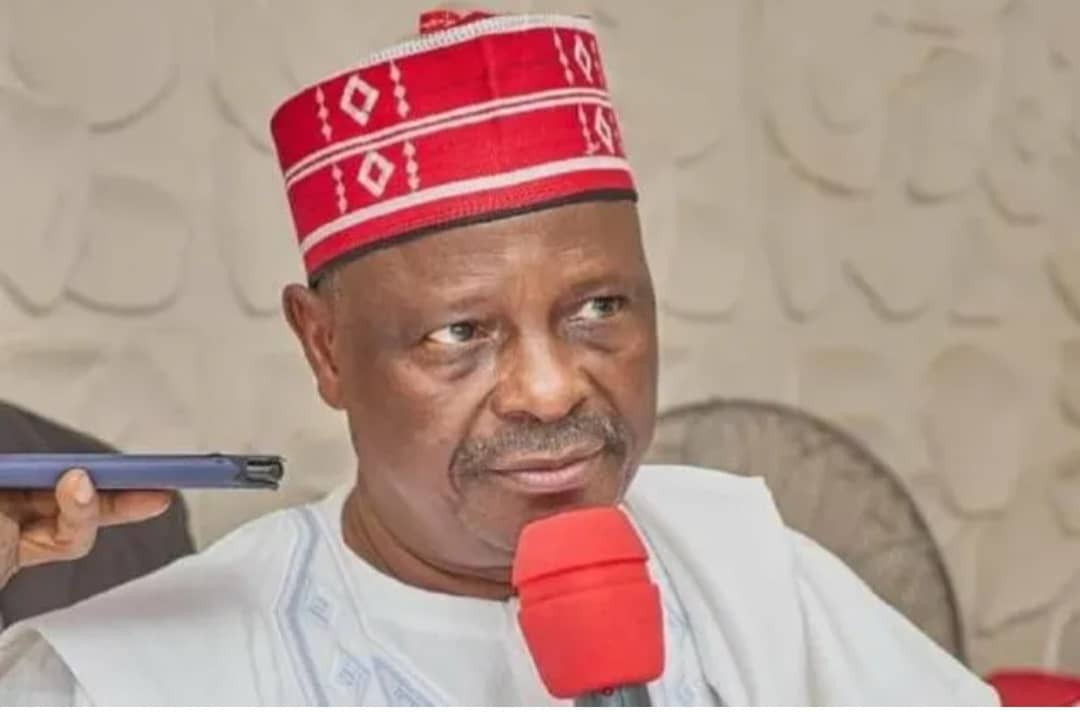
Governor Caleb Mutfwang of Plateau State has dismissed six political appointees and placed another official on suspension.

The development was made public on Tuesday through a statement issued by the Secretary to the State Government (SSG), Samuel Jatau, according to NAN.

Jatau explained that the action forms part of efforts by the state government to improve performance and strengthen service delivery across various offices.

Those removed from their positions include Timothy Golu, the governor’s special adviser on strategic communication, and Fom Gwottson, liaison officer for Jos South. Others are Nanbol Rimvyat and Nannim Langyi, who served as liaison officers for Langtang North.

Also affected are Paul Datugum and Nimchat Rims, who held similar roles in Qua’an Pan and Langtang South respectively.

In a related move, the governor approved the suspension of Johnbull Shekarau, chairman of the Plateau State House of Assembly Service Commission, over alleged actions said to be inconsistent with the expectations of his office.

The SSG did not disclose specific reasons for the dismissal of the six appointees. He, however, instructed them to return all government property in their possession to the appropriate authorities.

Jatau added that the governor appreciated the contributions of the affected officials during their time in office and wished them success in their future pursuits.

Iran Confirms Death Of Top Security Official Ali Larijani In Alleged Israeli Strike

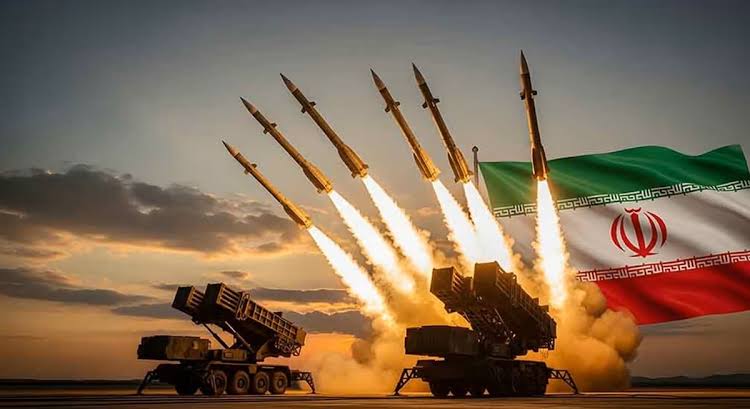
Iranian state media has announced the death of Ali Larijani, the Secretary of Iran’s Supreme National Security Council, following reported Israeli air attacks carried out overnight.

The confirmation came after Israel’s Defence Minister, Israel Katz, stated that Larijani and Basij commander Gholamreza Soleimani were killed during the strikes.

In a statement issued by his office, Katz alleged that both men lost their lives in the operation.

“I have just been updated by the Chief of Staff that Larijani, Secretary of the Supreme National Security Council, and the head of the Basij — Iran’s central repression apparatus — (Soleimani), were eliminated last night,” Katz claimed in a statement released by his ministry.

Earlier reports from Israeli media indicated that Larijani was the intended target of the overnight assault.

The development marks a significant escalation in tensions between Iran and Israel, as both sides continue to exchange accusations over ongoing military actions.

Trump Slams Counterterrorism Chief After Resignation, Calls Him ‘Weak On Security’

By Sabiu Abdullahi

President Donald Trump has responded to the resignation of Joseph Kent, Director of the United States National Counterterrorism Center, following controversy linked to U.S. military action against Iran.

Trump spoke on the development during an interview with Fox News, where he shared his views on Kent’s position on national security and the ongoing conflict involving Iran.

He claimed that he had long held concerns about Kent’s approach. “I always thought he was weak on security. Very weak on security. I didn’t know him well. But I thought he seemed like a pretty nice guy. But when I read his statement, I realised that it’s a good thing he’s out because he said Iran was not a threat,” Trump said in a video released by Fox News on Tuesday.

Kent stepped down earlier the same day. His resignation followed criticism of the war in Iran and questions about the reasons behind the military engagement.

In a letter addressed to the president, Kent stated that his decision came after careful consideration. “After much reflection, I have decided to resign from my position as Director of the National Counterterrorism Center, effective today,” he wrote.

He explained that he could not align himself with the administration’s current foreign policy, especially its military actions. “I cannot in good conscience support the ongoing war in Iran. Iran posed no imminent threat to our nation, and it is clear that we started this war due to pressure from Israel and its powerful American lobby,” he stated.

Kent added that his views were based on principles he believed had guided previous policies. “I support the values and the foreign policies that you campaigned on in 2016, 2020, 2024, which you enacted in your first term. Until June of 2025, you understood that the wars in the Middle East were a trap that robbed America of the precious lives of our patriots and depleted the wealth and prosperity of our nation,” he said.

He also criticised what he described as the role of external influence and media narratives. Kent said “high-ranking Israeli officials and influential members of the American media” promoted misinformation that “wholly undermined your America First platform and sowed pro-war sentiments” encouraging military action.

The former counterterrorism chief warned that U.S. leaders may have been misled about the level of threat posed by Iran. “This echo chamber was used to deceive you into believing that Iran posed an imminent threat to the United States, and that should you strike now, there was a clear path to a swift victory. This was a lie,” he said.

Reflecting on his personal experience, Kent pointed to the cost of war. “As a veteran who deployed to combat 11 times and as a Gold Star husband who lost my beloved wife Shannon in a war manufactured by Israel, I cannot support sending the next generation off to fight and die in a war that serves no benefit to the American people nor justifies the cost of American lives,” he said.

He concluded his message with a call for a policy rethink. “I pray that you will reflect upon what we are doing in Iran, and who we are doing it for. The time for bold action is now. You can reverse course and chart a new path for our nation, or you can allow us to slip further toward decline and chaos. You hold the cards,” he wrote.

Kent ended his letter on a note of appreciation for his time in office. “It was an honor to serve in your administration and to serve our great nation.”

U.S. Counterterrorism Chief Resigns Over Iran War, Alleges Israeli Pressure

By Sabiu Abdullahi

The Director of the United States National Counterterrorism Center, Joseph Kent, has stepped down from his role, citing disagreement with Washington’s military involvement in Iran and questioning the factors behind the conflict.

Kent conveyed his decision in a letter to President Donald Trump. He said he reached the conclusion after careful thought and confirmed that his resignation takes immediate effect.

“After much reflection, I have decided to resign from my position as Director of the National Counterterrorism Center, effective today,” he wrote.

He stated that he could no longer support the administration’s current foreign policy, especially its decision to engage Iran militarily.

“I cannot in good conscience support the ongoing war in Iran. Iran posed no imminent threat to our nation, and it is clear that we started this war due to pressure from Israel and its powerful American lobby,” he stated.

Kent noted that his position reflects principles he believes once shaped U.S. foreign policy.

“I support the values and the foreign policies that you campaigned on in 2016, 2020, 2024, which you enacted in your first term,” Kent wrote.

“Until June of 2025, you understood that the wars in the Middle East were a trap that robbed America of the precious lives of our patriots and depleted the wealth and prosperity of our nation.”

He also accused “high-ranking Israeli officials and influential members of the American media” of driving what he described as a misinformation effort. According to him, the campaign “wholly undermined your America First platform and sowed pro-war sentiments” that encouraged action against Iran.

Kent argued that U.S. leadership received misleading information about the situation.

“This echo chamber was used to deceive you into believing that Iran posed an imminent threat to the United States, and that should you strike now, there was a clear path to a swift victory. This was a lie,” he said, while drawing a comparison with events that preceded the Iraq war.

He pointed to his own military background to stress the human cost of war.

“As a veteran who deployed to combat 11 times and as a Gold Star husband who lost my beloved wife Shannon in a war manufactured by Israel, I cannot support sending the next generation off to fight and die in a war that serves no benefit to the American people nor justifies the cost of American lives,” he said.

Kent urged the president to reconsider the current approach and warned about possible long-term consequences.

“I pray that you will reflect upon what we are doing in Iran, and who we are doing it for. The time for bold action is now. You can reverse course and chart a new path for our nation, or you can allow us to slip further toward decline and chaos. You hold the cards,” he said.

He ended his letter by expressing gratitude for the opportunity to serve. “It was an honor to serve in your administration and to serve our great nation.”

Mentorship in danger

By Professor Abdalla Uba Adamu

The phrase can be read in two ways: the dangers within mentorship, and the danger that mentorship itself may be disappearing.

As one grows older and accumulates experience, visibility, and a measure of goodwill, public culture often expects a form of “payback.” One of the most valued ways to do this is by mentoring younger colleagues—especially those approaching exit points in their careers. Nowhere is this expectation more pronounced than in academic circles. Yet over the years, I have watched the mentorship process deteriorate from both mentors’ and mentees’ perspectives.

When I began my career, mentees were frequently exploited. They carried out the basic research for their mentors—data gathering, analysis, and preliminary drafting—while the senior scholar ultimately received the credit in subsequent publications. When some mentees later attempted to assert ownership of their intellectual labour by publishing from the same datasets, mentors simply stopped working with them. By then, however, the senior academics had already crossed the Rubicon: they had secured their place in the system and had little incentive to look back.

Being exploited intellectually is not a small matter. In academia, one’s ideas, labour, and reputation are the core of one’s identity. When these are appropriated or manipulated, it feels like a violation — not just of professional ethics, but of dignity. Watching others suffer the same fate, and then seeing the perpetrators continue to flourish without consequence, naturally intensifies the sense of injustice.

A later generation of mentors adopted a more tactical strategy. Mentees were still required to do most of the “dirty work,” often writing up results for papers or book chapters, after which mentors insisted on being listed as joint authors. I objected to this practice on several occasions, arguing that a mentor is institutionally remunerated to support the mentee’s development, not to appropriate the mentee’s intellectual rewards. Yet some mentees willingly entered into such parasitic arrangements, convinced that the mentor’s visibility would enhance their own prospects. Meanwhile, mentors leveraged the mentees’ labour to boost citation counts and online academic metrics—the modern equivalent of academic swagger.

Mentees themselves have not been entirely blameless. Whether within formal institutional settings or in the more fluid spaces of public culture, mentorship ideally enables individuals to reach their potential. Increasingly, however, the relationship is being instrumentalised for economic gain or opportunistic advantage. Recent distressing experiences involving well-known academics [on Facebook and a young man named Ismail Sani] illustrate how goodwill and a willingness to assist can be exploited by outright scams. Such incidents inevitably make potential mentors more cautious, and sometimes less willing, to extend help in the future.

What we are witnessing, therefore, is a shift in expectations from intellectual mentorship to personal patronage. In many of our social environments, the two easily get conflated. Respect for elders, the culture of assistance, and the visibility that comes with academic success can combine to create the assumption that a mentor is also a benefactor. When repeated often enough, the requests begin to feel less like genuine emergencies and more like a pattern of dependence. That can make even a generous person start to withdraw.

Another troubling dimension is the subtle guilt-tripping employed by some would-be mentees. I have received numerous requests to serve as a referee for individuals I scarcely know. We may have met briefly at an event, or they may simply have encountered something I wrote. To them, I appear as a convenient “low-hanging fruit.” Basic courtesy would require prior contact—at the very least, a reminder of the context in which we met. I usually decline such requests. After all, referees are expected to have genuine knowledge of a candidate’s work and character. How can one write an honest assessment based on nothing more than fleeting acquaintance or social-media followership?

Social media has radically transformed access to public figures, rendering them perpetually available. Once a mentoring relationship is established, some mentees interpret access as entitlement. The boundary between guidance and material obligation becomes blurred. Social media makes this worse because it creates intimacy without context — people feel they “know” you, and therefore feel justified in making personal demands. Over time, the mentor begins to anticipate the next request, and the original intellectual purpose of the relationship is quietly eroded.

In the physical, offline world, proximity often enables one to gauge the sincerity of requests for guidance or assistance. The anonymity and immediacy of online interaction, however, have produced what might be called a form of “closed distance”: a space stripped of emotional grammar and contextual obligation. In such a space, panhandling can easily be reframed as a moral claim upon those perceived as accessible or influential.

The cumulative effect is worrying. Mentorship, as a meaningful intellectual and moral relationship, may itself be in danger.

What have your own experiences been?

Zulum Condemns Maiduguri Explosion, Calls For Vigilance


Borno State Governor, Babagana Zulum, has denounced the explosion that hit parts of Maiduguri on Monday evening, describing it as a cruel and cowardly act.

The governor, who is currently in Saudi Arabia for the Lesser Hajj, expressed grief over the incident. He noted that the attack affected innocent residents during the Ramadan period.

In a statement issued by his Special Adviser on Media, Dauda Iliya, Zulum urged residents to stay alert. He also called on security agencies to intensify monitoring efforts, especially around mosques and other public locations.

“I am deeply saddened by the explosions that occurred in parts of the metropolis on Monday evening. My thoughts and prayers are with the families of the victims and those injured as a result of the blast,” Zulum said.

“The act is utterly condemnable, barbaric and inhumane,” he added.

Zulum suggested that the incident could be linked to ongoing military operations against insurgents in Sambisa Forest and other locations in the region.

He, however, assured residents that security forces remain in control of the situation and are taking steps to prevent further attacks.

The governor appealed for calm and encouraged the public to continue their lawful activities while cooperating with security personnel.

He also advised residents to report any suspicious movements or activities within their communities to the appropriate authorities.

Zulum reaffirmed his administration’s resolve to work closely with security agencies to safeguard lives and property across Borno State.

Champions League Round Of 16: Teams Brace For Decisive Second-Leg Battles

The UEFA Champions League Round of 16 enters a crucial phase this week as clubs prepare for the return leg fixtures.

The matches are scheduled for Tuesday and Wednesday. All sixteen teams remain in contention, but only eight will advance to the quarter-finals at the end of the ties. The opening legs took place last week.

The teams still in the competition include Bayern Munich, Liverpool, Atalanta, Sporting CP, Tottenham, Paris Saint-Germain, Real Madrid, Barcelona, Chelsea, Arsenal, Newcastle United, Atletico Madrid, Galatasaray, Bayer Leverkusen, Manchester City and Bodo/Glimt.

Several fixtures present different challenges based on first-leg outcomes.

On Tuesday, Sporting CP will host Bodo/Glimt in Lisbon after suffering a 3-0 defeat in Norway. Chelsea face a difficult task against Paris Saint-Germain at Stamford Bridge following a 5-2 loss in the first leg. Manchester City welcome Real Madrid to the Etihad Stadium after losing 3-0 in Spain and must produce a strong performance to overturn the deficit. Arsenal take on Bayer Leverkusen at the Emirates Stadium after a 1-1 draw in Germany, with both sides still evenly matched.

Wednesday’s fixtures also promise intense action. Barcelona host Newcastle at Camp Nou after both sides settled for a 1-1 draw in England. Tottenham will attempt to recover from a 5-2 defeat against Atletico Madrid when they meet in London. Liverpool face Galatasaray at Anfield after a narrow 1-0 loss in Turkey, while Bayern Munich appear to be in a commanding position against Atalanta following a 6-1 victory in the first leg.

A former coach at TTC Football Academy, Emmanuel Brown, shared his thoughts on the upcoming matches.

“It’s now getting more interesting at this stage of the competition.

“The second leg is the last chance for every team to try and give their all to progress to the next stage of the competition.

“Those teams that lost the first legs will be under more pressure compared to the teams that won their first legs. Because you know you will get knocked out if you fail to win the second leg, and it’s obviously like your last chance.

“I was impressed by several first-leg matches, especially Bodo/Glimt’s victory over Sporting. The Norwegian side is definitely a dark horse to watch in this year’s Champions League; they are well-organized and function as a cohesive unit,” he said.

Brown also identified teams he believes are in strong positions to qualify for the next round.

“From the first-leg results, it seems some teams already have one foot in the last eight.

“Bodo/Glimt, Bayern Munich, Real Madrid, PSG, and Atletico Madrid, which all won their first legs, seem favourite to progress.

“I also see Arsenal progressing because they will be playing at home, as well as Barcelona.

“The match between Liverpool and Galatasaray is tough to call. Galatasaray won narrowly 1-0 in Turkey, but Liverpool is a different challenge at Anfield.

“I hope Galatasaray qualifies because of Victor Osimhen. I want to watch that man go far in this competition, but my head is telling me Liverpool could win. However, I believe it is a 50-50 chance,” he said.

INEC Urges Parties To Report Issues, Monitors Osun Voter Registration

The Independent National Electoral Commission (INEC) has called on political parties in Osun State to promptly notify the commission of any concerns or irregularities observed during the ongoing Continuous Voter Registration (CVR) exercise.

The Resident Electoral Commissioner in the state, Mutiu Agboke, said the move would enable the commission to take appropriate action where necessary.

Agboke spoke with journalists on Monday during an inspection tour of registration centres across the state. He led a team of INEC officials to assess the conduct of the exercise and engage with party representatives at the various locations visited.

The monitoring exercise covered centres such as Ilare Methodist Primary School in Ward 7, Obokun Local Government Area; Saint Andrew Primary School in Ada 1 Ward 7, Boripe Local Government Area; and Holy Michael Primary School in Olonde, Ikirun, Ward 8, Ifelodun Local Government Area.

He explained that the visit was designed to confirm that the registration process was orderly and transparent. He added that the commission needed direct feedback from its staff and party agents involved in the exercise.

“Many people are not aware that the registration exercise has been moved to the Registration Area level, and we must monitor what our staff are doing there,” he said.

Agboke noted that it was important for the commission to observe activities on the ground rather than rely solely on reports.

“There may be issues that we are not aware of and that may not be brought to my attention. That is why we decided not to remain in the office but to come to the field and hear directly from the party agents.

“When we come out like this, they will see that we are following up on what our staff are doing. The essence is simply monitoring, nothing more, nothing less,” he stated.

On political campaigns, the REC described them as internal matters of the parties. He, however, said INEC would continue to keep track of developments to ensure compliance with electoral rules.

“Campaigns are internal arrangements of the political parties. We may monitor them, but for now there has not been any formal invitation to us. However, we are tracking the activities of the parties and will carry out oversight where necessary,” he said.

Agboke also addressed the timeline for the voter registration exercise. He disclosed that the process is expected to continue until close to the election period, after which it will be paused to allow for the production of Permanent Voter Cards.

“The totality of the exercise may run until around August, but before the election in Osun the registration will stop so that all cards can be printed and distributed to voters,” he explained.

At the centres visited, representatives of the All Progressives Congress (APC) and the Accord Party were present. Security personnel were also on ground to maintain order throughout the exercise.

Sani Danja: From performance to promotion 

In governance, performance should naturally translate into greater responsibilities. Since his appointment as Special Adviser on Youth and Sports, Hon. Sani Musa Danja has demonstrated capacity, commitment, and a people-oriented approach that has delivered visible impacts on youth development and sports advancement in Kano State.

Within his first month in office, over 3,000 youths were empowered through food-related initiatives such as Nija Food. This early intervention reflected responsiveness to the economic realities facing young people and set the tone for a tenure driven by action rather than mere rhetoric.

One of Hon. Danja’s most commendable achievements is his grassroots engagement across all 44 Local Government Areas of Kano State. Through open consultations with the youths, he listened to concerns on welfare, unemployment, insecurity, and inclusion. This initiative brought governance closer to the people and helped rebuild trust between the government and youth.

To strengthen coordination and sustainability, he worked closely with Senior Special Assistants on Youth across the 44 LGAs, fostering cohesive leadership and unified strategies for youth development across the state.

Understanding the strong link between unemployment and insecurity, Hon. Danja adopted a preventive empowerment approach. Over 300 youths previously involved in thuggery and phone snatching were redirected into productive ventures, including popcorn-gurguru production, fast-food services, shawarma preparation, and baking. This intervention not only provided livelihoods but also contributed to crime reduction and social reintegration.

His tenure also saw institutional support for voluntary youth and security organisations, including the Nigerian Boy Scouts and other community-based groups such as the Civilian JTF Kano. Through the provision of working materials and encouragement, discipline, and volunteerism, community service among young people was strengthened.

In addition, a statewide Youth Symposium Day was organised to promote dialogue, leadership, and civic engagement, involving participants from all 44 LGAs. Hon. Danja also paid visits to youth training and skills acquisition centres across the state, encouraging trainees and reassuring them that government support remains within reach (kusa da gwamnati).

Beyond programs, compassion has remained a defining feature of his leadership. Financial assistance was extended to youths facing serious health challenges, including those with spinal cord-related disabilities, demonstrating an inclusive and humane approach to governance.

In sports development, Hon. Danja contributed to the revival of neglected sports such as volleyball, encouraging youth participation and talent development. Administratively, he reorganised and strengthened his office to ensure efficiency, transparency, and effective service delivery.

Currently, his office is coordinating a large-scale youth empowerment initiative under YEIDEP, targeting over 1.2 million youth participants in skills acquisition and entrepreneurship, reflecting executive-level vision and readiness.

Given his performance, statewide reach, and ability to connect with young people, Hon. Sani Musa Danja is well-positioned to deliver even greater impact.

A passionate appeal is therefore made to His Excellency, Engr. Abba Kabir Yusuf, to consider appointing Hon. Sani Musa Danja as the Commissioner for Youth and Sports and nominate him to the Kano State Executive Council. Such a decision would ensure continuity, consolidate gains, and further strengthen Kano State’s youth and sports development agenda.

Shamsuddeen Muazu (AbuMuhd) wrote from Kano State. He can be reached via abumuhdpress@gmail.com.

Bandits renege on deal, keep NYSC member hostage despite receiving ₦10 million ransom, motorcycles

By Abdullahi Mukhtar Algasgaini

A tragic ordeal has taken a turn for the worse for a kidnapped National Youth Service Corps (NYSC) member, simply identified as Abba, who remains in the clutches of his abductors despite the payment of a substantial ransom.

According to sources close to the victim’s family, the terrorists had initially demanded a significant sum for the release of the corps member, who was seized in Zamfara State. After weeks of agonizing negotiations, the family and associates managed to raise the funds to meet the captors’ demands.

Reliable sources disclosed that the ransom payment, amounting to ₦10 million in cash, was delivered to the bandits. In addition to the monetary payment, the terrorists also insisted on, and received, two brand-new motorcycles as part of the agreed-upon terms for Abba’s release.

However, in a cruel twist that has left the family devastated, the armed group reneged on the agreement immediately after collecting the ransom and the motorcycles. It is understood that the terrorists are now making fresh demands, insisting on an additional motorcycle before they will free the hostage.

The development has plunged the family into deeper despair, having exhausted their resources to gather the initial ransom. Abba, a corps member serving his fatherland, has now spent an extended period in captivity.

Authorities in Zamfara State have repeatedly advised against the payment of ransom to bandits, arguing that it fuels further abductions. Nonetheless, desperate families often resort to private negotiations and payments in a bid to secure the freedom of their loved ones.

As of the time of filing this report, there was no official confirmation from the police regarding the latest development in the case. The family is reportedly at a loss, unsure of how to meet the new demand.