Month: January 2026

JOHESU orders indefinite strike over Tinubu’s ‘No Work, No Pay’ policy

By Sabiu Abdullahi

The Joint Health Sector Unions (JOHESU) has instructed its members across federal health institutions to commence an indefinite withdrawal of services following a new directive from the Federal Ministry of Health that enforces a “No Work, No Pay” policy.

Reports on Saturday indicated that the directive prompted the union’s latest decision, which affects workers in federal hospitals and other government-owned medical facilities nationwide.

In a statement circulated to members, a JOHESU leader, Comrade Abubakar Sani Aminu, said the policy was introduced without prior consultation with the union. He described the action as a unilateral step that violates workers’ rights and undermines the principles of collective bargaining.

According to the statement, Chief Medical Directors and Medical Directors of federal health institutions have received instructions to enforce the policy. JOHESU said the move represents an attempt to weaken the union while industrial action continues.

“This decision was made without prior consultation or dialogue with the union, showing a disregard for the collective voice of health workers,” Aminu said.

He cautioned members to remain calm and firm, noting that the policy was designed to weaken the unity of the union. He described the directive as “the final weapon” that the government intends to use to undermine JOHESU’s resolve.

Following the development, the union directed all members to vacate their duty posts with immediate effect. It ruled out the provision of skeleton services or any form of compromise.

“There should be no skeleton services, no attempt to help out, or compromise in any way,” the statement read. “Our collective action is the key to securing our rights.

”The leadership of the union said unity among members remains critical. It warned that allowing the policy to stand would create what it described as a dangerous precedent for future labour disputes in the health sector.

“This is the time for us to stand together, strong and united, until our demands are met,” Aminu said. He added that solidarity among members would shape the outcome of the ongoing dispute.

JOHESU restated its commitment to a campaign for fair treatment of health workers and urged members across the country to remain resolute while discussions with the federal government continue.

As of the time of filing this report, the Federal Ministry of Health had not released an official response to the union’s directive.

The possible effect of the strike on public health services remains uncertain. Past JOHESU actions have led to major disruptions in federal hospitals across the country.

Trump backtracks, acknowledges Muslims among victims of Nigeria killings

By Uzair Adam

Former United States President Donald Trump has acknowledged for the first time that Muslims are also victims of ongoing killings in Nigeria, marking a shift from his earlier narrative that focused almost exclusively on Christians.

Trump, who has repeatedly claimed that Christians are being targeted in attacks across the country, made the admission during an interview with The New York Times.

Despite this, he maintained that Christians remain the primary victims of the violence.“I think that Muslims are being killed also in Nigeria. But it’s mostly Christians,” Trump was quoted as saying.

Speaking on a Christmas Day attack on what he described as terror targets in Nigeria, Trump warned that the United States could carry out additional military strikes if the violence continues.

“I’d love to make it a one-time strike … But if they continue to kill Christians, it will be a many-time strike,” he said.

When reminded that his own Africa adviser had previously stated that groups such as Islamic State and Boko Haram have killed more Muslims than Christians, Trump repeated his position, insisting that while Muslims are affected, Christians suffer the most.

In late October, Trump began warning that Christianity was facing what he described as an “existential threat” in Nigeria, accusing the government of failing to protect Christian communities.

He subsequently redesignated Nigeria as a Country of Particular Concern and criticised authorities for what he called a weak response to insecurity.

The Nigerian government later dispatched a high-powered delegation to the United States to brief officials on the country’s security challenges.

Following the visit, senior American officials also travelled to Nigeria to assess the situation firsthand.

In defence of Kwankwaso and the scholars who stand with him

By Muhammad Sani Ilyasu

I woke up to a video circulating on social media by a former Kano State anti-corruption czar, giving his opinion about scholarship beneficiaries on why they had no moral right to identify with Kwankwasiyya. It is important to clear the air. Much of what is being said comes from people who were never inside the scheme and never lived the consequences.

Let me state this clearly and upfront: I do not identify with Kwankwasiyya. I disengaged from the movement in 2020. What follows is not partisan advocacy. It is testimony.

Criticism of Rabiu Musa Kwankwaso and scholars associated either rightly or wrongly with his ideology has become fashionable. But much of that criticism is detached from the lived realities that shaped those associations, especially the horrible experience of Kano State scholarship beneficiaries. I write as one of them.

Yes, the scholarships were funded with Kano State resources. But at no point—none that I can recall—were beneficiaries compelled to support Kwankwaso politically. There was no loyalty test, no ideological oath, no expectation of political repayment. In fact, many scholars openly opposed him. I personally recall frequent debates with colleagues who were supporters of Ibrahim Shekarau, many of whom never gave Kwankwaso any credit for the scholarship. Most of us were indifferent, credit was never the issue.

The lesson however came in 2015. That was when Abdullahi Ganduje assumed office—and when all of us, including Kwankwaso’s fiercest critics among the scholars, learned the brutal difference between right and privilege. Tuition payments were halted. Upkeep allowances disappeared. Return-ticket funds were withheld. Scholars were stranded and pushed into destitution in foreign countries.

Some waited over eight years to receive their certificates after the scheme was abruptly terminated. In some cases, parents died without ever seeing the academic fruits of sacrifices they had made.

As if that were not enough, scholars were publicly discredited—labeled products of “substandard universities,” their academic legitimacy questioned to justify administrative neglect. Throughout this period, Kano State went silent.

Religious leaders. Business elites. Civil society organizations. The same voices that now moralize and gaslight scholars looked away. The only “crime” of the scholars was that Kwankwaso started the program.

If, as some critics claim, the scheme was merely a vehicle for siphoning public funds, a simple question remains unanswered: why was Kwankwaso never prosecuted—and why were scholars punished instead? Why were entitlements withheld if the beneficiaries were not the accused?

What makes the silence more damning is that this neglect extended beyond foreign scholars. Until the return of a Kwankwasiyya-led government, even undergraduate scholars sent to private universities within Nigeria—and to Egypt and Cyprus—were denied certificates. For postgraduate students, the delay was damaging. For undergraduates, it was life-shattering: no certificate meant no employment, no future.

In all those years, only one political current consistently raised the issue and demanded settlement: Kwankwasiyya. This is the context critics conveniently ignore.

What they now describe as “indoctrination” or “blind loyalty” was, in reality, a rational response to abandonment. You cannot withdraw education, dignity, and future—then later shame people for gravitating toward the only structure that acknowledged their suffering.

That is not principled criticism. It is double standard. Scholars were not pushed toward Kwankwaso by manipulation. They were pushed there by neglect and even for those of us who have long moved on, that historical truth remains intact—uncomfortable, inconvenient, and undeniable.

Gaslighting scholars for the choices they made under abandonment is not moral courage.
It is hypocrisy.

Muhammad writes from Baltimore Maryland and can be reached at msaniiliyasu@gmail.com.

APC: Allies of Tinubu vow nationwide protests to oust Wike

By Abdullahi Mukhtar Algasgaini

Leaders and support groups within the ruling All Progressives Congress (APC) have threatened to hold nationwide protests unless President Bola Tinubu dismisses the Minister of the Federal Capital Territory, Nyesom Wike.

The ultimatum was issued on Wednesday in Abuja by the APC Leaders Forum and the Tinubu/Shettima Solidarity Movement. Protesters marched to the national party secretariat bearing placards and a formal letter demanding Wike’s immediate removal from office.

They accused the former Governor of Rivers State of anti-party activities, insubordination, and actively undermining unity within the APC.

The groups cited Wike’s recent criticisms of party officials and his continued interference in the politics of Rivers State as actions that threaten the party’s cohesion and prospects in the 2027 general elections.

The coalition vowed to intensify demonstrations, spreading them across all states and local government areas, until their demand is met.

This confrontation underscores the deepening rifts within the APC, as Wike a former chieftain of the opposition Peoples Democratic Party (PDP)continues to face fierce opposition from party loyalists despite his key ministerial role.

Internal party sources indicate that resolving this conflict is seen as crucial for the APC’s strategic planning ahead of the next election cycle.

Court in Jigawa orders arrest of DSS officer for abducting, raping, converting 16-year-old girl to Christianity

By Anwar Usman

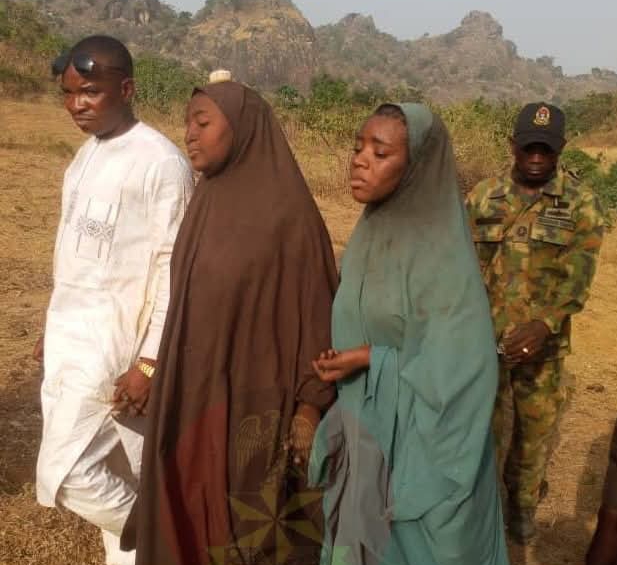
A magistrate Court in Jigawa State has ordered the arrest of a serving officer of the Department of State Services (DSS) over allegations of kidnapping 16 year old Muslim girl, sex related charges, unlawful detention, and forcefully converting her to Christianity.

The order was issued by the Magistrate Court of Jigawa State sitting in Hadejia, presided over by His Worship, Sadisu Musa Esq., in Suit No: DCC/01/2026, between Abdulhadi Ibrahim and Ifeanyi Festus.

Contained in the court order, dated January 7, 2026, the magistrate directed the Commissioner of Police, Jigawa State Command, or senior officials of the DSS, to aprehended the respondent, Ifeanyi Festus, and investigate the alleged offences pursuant to Sections 125 and 102(5) of the Jigawa State Administration of Criminal Justice Law (ACJL).

In the same vein, the court further ordered the DSS to immediately release and reunite the alleged victim, Walida Abdulhadi, with her parents.

The court order in part reads “Upon hearing Mr. Kabiru Adamu Esq. appearing with Babangida Garba Esq Counsel to the Applicant moving this Court praying for an order of this Court for the Arrest of the Defendant and Investigation of the alleged offences by the Commissioner of Police Jigawa State Police Command Pursuant to Section 125 of the ACJL and 102(5) of the same Law.”

The court ordered that “the defendant be arrested by the Commissioner of Police Jigawa State Police Command or Deputy Director General of the Department of State Security Services and/or any officer under them.”

“That the Commissioner of Police Nigerian Police Force Jigawa State Command is HEREBY ORDERED to discreetly investigate this case.

“That the Department of State Security Service Shall immediately release/reunite the Victim (WALIDA ABDULHADI) to her parent.”

Two-year-old boy drowns in well in Kano community

By Sabiu Abdullahi

A tragic incident has occurred in Kano State following the death of a two-year-old boy, Sa’idu Ahmad, who lost his life after falling into a well in Kwankwaso town, Madobi Local Government Area.

The incident was confirmed in a statement released in Kano by the Public Relations Officer of the Kano State Fire Service, Alhaji Saminu Abdullahi. He said the incident took place on Wednesday afternoon.

According to him, the fire service received an emergency alert from the Deputy Director of the agency, Rabiu Garba, at about 12:15 p.m.

He said, “We received an emergency call from the Deputy Director, Fire Service, Rabiu Garba, at about 12:15 p.m. that a boy had drowned in a well, and we immediately sent our rescue team to the scene.”

Abdullahi stated that officers recovered the child in an unconscious state and later handed him over to Umar Shehu of the Madobi Police Division.

He added that officials had begun an investigation to determine the circumstances surrounding the incident.

In a related case, another tragedy was reported later on the same day in Ghari Local Government Area.

A 28-year-old man, Suleiman Sani, reportedly fell into a well at Karofawa Yan Kifi Village on Wednesday evening.

Abdullahi said, “We received a call of distress at Ghari fire station that a man has drowned in a well.“Our rescue team quickly mobilised themselves to the scene. The victim was rescued unconscious and was later confirmed dead by his parents.“

He was handed over to the Village Head of Karofawa, Alhaji Musa Aliyu, and the cause of the incident is also under investigation.

“The Kano State Fire Service extends its condolences to the families of the deceased and urges the public to ensure that wells are properly covered to prevent such tragic occurrences.”

The fire service also reminded residents of similar incidents in other parts of the country.

In November 2025, a 12-year-old girl, Nabilat, died after she slipped into a domestic well at Ikoyi Community in the Irewolede area of Ilorin West Local Government Area of Kwara State while she went to fetch water.

FG pushes mandatory drug tests for public officers

By Sabiu Abdullahi

The Federal Government has renewed its campaign against illicit drug use with a directive that makes drug testing compulsory for individuals seeking employment in public service, describing the move as a key response to Nigeria’s growing drug abuse challenge.

The policy, announced in December, instructed all Ministries, Departments and Agencies to include drug screening as a core requirement for recruitment. Authorities said the step supports the present administration’s commitment to confront substance abuse and protect the integrity of the national workforce.

Findings from a 2019 survey by the United Nations Office on Drugs and Crime showed that 10.6 million Nigerians abuse marijuana, while local cultivation rivals Afghanistan, which is regarded as the world’s second-largest exporter of marijuana resin.

The survey also highlighted the consumption of cocaine, heroin, methamphetamine and locally brewed substances among Nigerian youths.

Although the pre-employment testing policy has been widely welcomed, stakeholders insist that restricting the programme to new entrants will not deliver the desired impact.

They argue that drug screening should extend to serving public officials, elected office holders, security agencies, traditional institutions, tertiary institutions and students. They add that random and routine testing would help safeguard public resources and strengthen national security.

Supporters of the initiative said its effectiveness rests on random mandatory testing, which could encourage discipline and discourage drug use across all sectors.

They also called for consistent political support to sustain the programme.Concerns over substance abuse within security agencies have also been raised.

In 2019, Premium Times reported that a police officer killed a truck driver for refusing to pay a N50 bribe at a checkpoint on the Owo-Akure Expressway.

Arewa: Why do some women murder their husbands?

By Usman Usman Garba

Incidents of women killing their husbands in Northern Nigeria have become a disturbing phenomenon which puts some kind of anxiety in the hearts of youth and unmarried men. What was once rare is now appearing more frequently in headlines, police reports and public conversations. 

Everyone knows that Northern Nigeria is a region known for strong family values, deep respect for marriage, and a social structure built on religious and cultural norms. Yet, the recent rise in cases where wives take the lives of their husbands has forced many to question what is happening behind the façade of stability.

There are a lot of views and perceptions concerning why women kill their husbands in Northern Nigeria. Many are of the belief that forced marriage is one of the reasons such an inhumane act happens. Thus, others are married willingly without the intervention of anyone in a forced marriage, but still kill their spouses.

In my opinion, other factors should be taken into consideration, contrary to what many regard as the main cause of this dastardly act.

Mental health remains one of the least understood issues in Northern Nigeria. Depression, trauma from abusive relationships, postpartum challenges, and emotional exhaustion can push individuals to extremes. Unfortunately, many women have no access to counselling, families discourage speaking out; society expects women to “endure”; emotional crises are dismissed as weakness or spiritual problems, and this lack of support creates dangerous psychological pressure.

Similarly, domestic violence is one of the dangerous circles that causes women to kill their husbands. Many of the reported cases involve homes where domestic violence had been ongoing. Women in such situations sometimes endure physical and emotional abuse for years. With limited support systems, some feel trapped with no escape route.

This does not justify murder, but it highlights the reality. For instance, some wives act out of fear; some out of desperation; some out of retaliation; while others act because they believe no one will protect them.

Hence, the role of social media and exposure to new narratives has also contributed immensely to this inhumane act in Northern Nigeria.

Cases of women killing their husbands, though still few, spread quickly on social media, and sometimes, this creates copycat behaviour, unrealistic ideas about marriage, normalisation of revenge narratives and fake empowerment messages telling women to “fight back” violently.

Social media has become an amplifier, sometimes distorting reality and increasing tension in fragile homes

Nonetheless, a justice system that often fails women worsens the system. Many women who are abused find no one to intervene. At the station, police dismiss domestic complaints; families send them back home; religious or traditional leaders advise “patience”, and society blames women for failed marriages. Thus, when conflict turns deadly, the same system responds swiftly, after lives have already been destroyed. This is why prevention, not punishment, should be our priority.

The rising cases of wives killing their husbands are not simply crime stories; they are warning signs of deeper fractures inside marriages, families and social systems.

Northern Nigeria must confront these issues honestly and urgently. The goal is not to assign blame but to prevent homes from becoming battlegrounds. When families break down, society breaks down: when violence enters the home, it enters the community; and when silence becomes the norm, tragedy becomes inevitable.

The solution lies in awareness, support, justice and compassion, before the next headline appears. To stop this dangerous pattern in our communities, we must confront the root causes. The society must strengthen domestic violence reporting channels, improve community mediation and counselling structures, promote healthy marital communication, address economic pressures, educate people on mental health and teach conflict management to young couples.

Usman Garba writes from Kano via usmangarba100@gmail.com

ABU law students confer teaching excellence award on Professor Kabir Danladi

By Anas Abbas

Students of the Faculty of Law, Ahmadu Bello University (ABU), Zaria, U18/19 LLB set, have presented a letter of appreciation and an Award of Excellence to Professor Kabir Muhammad Danladi in recognition of his exceptional commitment to teaching, mentorship, and student development.

In a heartfelt gesture captured on video, the students described Professor Danladi as the first lecturer who formally introduced them to core legal courses, praising his ability to simplify complex legal concepts through the use of current affairs and trending issues.

According to the students, this approach not only deepened their understanding of the law but also made classroom engagement practical and relatable.

The letter further commended the professor for his dedication to inclusive teaching, noting that he consistently went the extra mile to ensure that no student was left behind.

The set of students highlighted his strict adherence to the course outline, effective time management that ensured full coverage of the syllabus within the semester, and his openness to questions during lectures.

Uniquely, the students also acknowledged Professor Danladi’s use of a portable voice amplifier in class,an uncommon practice among lecturers which they said enhanced audibility and learning for all students.

To them, this commitment symbolized “justice in teaching,” a principle they believe reflects the true spirit of legal education.

Beyond academics, Professor Danladi was praised for offering guidance on life after university, mentorship the students described as invaluable to their personal and professional growth.

As a mark of respect, love, and gratitude, the U18/19 LLB students presented the professor with a token Award of Excellence and gifts, reaffirming their appreciation for what they termed a rare blend of knowledge, compassion, and professionalism.

When power meets purpose: Why Abba Kabir Yusuf’s APC move is Kano’s necessary turn

By Abdulkadir Ahmed Ibrahim (Kwakwatawa), FNGE

In politics, moments arise when loyalty to a platform must give way to loyalty to the people. There are seasons when courage is not found in standing still, but in moving forward with clarity of purpose. Kano State stands at such a moment. The planned defection of Governor Abba Kabir Yusuf to the ruling All Progressives Congress is not an act of betrayal. It is a call to responsibility, a deliberate choice shaped by necessity, foresight, and the overriding interest of Kano and its people.

Perhaps power, when isolated, grows weak. Governance, when detached from the centre, struggles to deliver. Since the emergence of Abba Kabir Yusuf as governor, Kano has found itself standing alone in the national space. Federal presence is thin, strategic attention limited. The state that once sat confidently at the table of national influence now watches key decisions pass by without its voice fully heard. This isolation is not a reflection of the governor’s intent or capacity; it is the reality of operating outside the ruling structure in a political environment where access often determines outcomes.

It is common knowledge that governors do not govern in a vacuum. Roads, security, education, health, and economic revival depend on cooperation between state and federal authorities. When that bridge is weak, the people bear the cost. Kano today needs bridges, not walls. It needs inclusion, not distance. It needs a seat where decisions are shaped, not a gallery where outcomes are merely observed.

The internal tension surrounding the emirate question has further deepened uncertainty. While history and tradition demand respect, governance demands stability. Prolonged disputes distract leadership, unsettle investors, and weigh heavily on public confidence. At such a time, a governor requires strong institutional backing and political leverage to navigate sensitive reforms with balance and authority. Standing alone makes that task far more difficult than it ought to be.More troubling is the visible absence of federal projects and partnerships. In a country where development is often driven by political proximity, Kano cannot afford to remain on the margins. A state of its stature, population, and historical relevance deserves more than sympathetic silence. It deserves action, presence, and partnership.

It is within this context that Abba Kabir Yusuf’s movement toward the APC must be understood. Not as personal ambition, but as strategic realism. Not as political convenience, but as a pathway to unlock opportunities long denied by distance from power.

By extension, Senator Rabi’u Musa Kwankwaso stands at a defining crossroads. History has placed him in a rare position. He is respected across party lines, commands a loyal following, and remains one of the most influential political figures in Northern Nigeria. Above all, President Bola Ahmed Tinubu holds him in high regard. They share a common political generation, having both served as governors in 1999, shaped by the same democratic rebirth and seasoned by time and experience.

In addition, one can recall that both Rabi’u Kwankwaso and Bola Tinubu were at the National Assembly under the platform of the now defunct Social Democratic Party, SDP, during the short-lived 3rd Republic. The former was the Deputy Speaker at the House of Representatives while the latter was a Senator together with Late Senator Engineer Magaji Abdullahi who was also elected under the same SDP ticket.

Late Engineer Magaji Abdullahi a former Deputy Governor of Kano State (2003 to 2007) and also a former Chief Executive of the State owned Water Resources and Engineering Construction Agency, WRECA, in the 1980s was a benefactor of Engineers Rabi’u Kwankwaso and Abba Kabir Yusuf were they first met as members of staff.

The late successful Kano technocrat, accomplished engineer, career civil servant charismatic and vibrant national politician was a close ally and associate of Asiwaju Bola Ahmed Tinubu starting from the SDP days and the duo was some of the foundation members of the APC.

The President’s repeated extension of an olive branch to Kwankwaso is therefore not accidental. These gestures are acknowledgements of value, respect, and shared history. They signal recognition of Kwankwaso’s political weight and his capacity to contribute meaningfully at the national level. When such calls come consistently, wisdom suggests they should not be ignored. Kwankwaso should heed the call by moving along with the political direction of Kano State.

The truth is unavoidable. The political home Kwankwaso once built no longer offers the shelter it promised. The NNPP is enmeshed in internal crises that threaten its very identity. Court cases over party ownership and recognition pose serious risks. With the Independent National Electoral Commission recognising one faction amid raging disputes, the platform has become unstable ground for any serious electoral ambition. Under these circumstances, entering the 2027 race either with Abba Kabir Yusuf seeking re election on the NNPP platform or Kwankwaso pursuing a presidential ambition would amount to gambling against history and reason.

The alternatives are no better. The Peoples Democratic Party is fractured, weakened by internal contradictions and persistent leadership disputes. Its once formidable structure now struggles to inspire confidence. The African Democratic Congress, on the other hand, is ideologically and historically uncomfortable for Kwankwaso. Many of its leading figures were once his fiercest rivals. They resisted him in the PDP and are unlikely to allow him meaningful influence now. Political memory is long, and grudges rarely dissolve.

Beyond current realities lies a deeper lesson from history. Regional parties, no matter how passionate or popular within their strongholds, have rarely succeeded on the national stage. From the First Republic to the Fourth, the pattern remains consistent. Nigeria rewards broad coalitions, not narrow bases. Power flows where diversity converges.

The APC today represents that convergence. It is not perfect, but it is expansive. It is national in outlook, broad in structure, and firmly in control of the federal machinery. For Kano, aligning with the APC is not surrender. It is strategy. It is an investment in relevance, access, and development.

For Abba Kabir Yusuf, the move is about delivering tangible dividends of democracy. For Kwankwaso, it is about securing a future that reflects his stature and experience. Loyalty, in its truest sense, is not blind attachment to a platform. It is fidelity to the welfare of followers, to the aspirations of a people, and to the demands of the moment.

Politics is not static. It is a living conversation between ideals and realities. When realities change, wisdom adapts. Kano’s future demands bold choices, not sentimental delays. The music is louder now. The moment is clearer. The door is open.

History favours those who recognise when to move. For Abba Kabir Yusuf and Senator Rabi’u Musa Kwankwaso, the path toward the APC is not a retreat from principle. It is a step toward purpose. They should go back to where they rightly belong. And for Kano, it may well be the bridge back to the centre, where its voice belongs and its destiny can be fully pursued.

Abdulkadir, a Fellow of Nigerian Guild of Editors, former National Vice President of the NUJ, Veteran Journalist, was the Press Secretary of the former Deputy Governor Late Engineer Magaji Abdullahi.