Month: July 2025

Gov Yusuf appoints new CoS, DG special services

By Uzair Adam

Kano State Governor, Alhaji Abba Kabir Yusuf, has approved the appointment of Dr. Suleiman Wali Sani as the new Chief of Staff, Government House, Kano.

This was disclosed in a statement issued on Thursday by the Governor’s Spokesperson, Sunusi Bature Dawakin Tofa.

Dr. Sani, a seasoned medical doctor, policy expert, and retired Permanent Secretary, brings over 40 years of public service experience to his new role.

Prior to this appointment, he served as the Special Adviser to the Governor on Civil Service Matters.

A graduate of Ahmadu Bello University, Zaria, with MBBS degrees, he also holds a diploma from Bayero University, Kano, and the prestigious mni certificate from the National Institute for Policy and Strategic Studies (NIPSS), Kuru.

Over the course of his career, Dr. Sani held top-level administrative positions, including Director General in the Ministries of Health and Commerce, Executive Secretary, and Permanent Secretary in various government institutions.

He also served as Chief Medical Director at both the Murtala Muhammad Specialist Hospital and the Muhammad Abdullahi Wase Specialist Hospital.

He has played a significant role in shaping health policies, civil service reforms, and social development in the state and beyond.

He has participated in over 40 state and national committees and has represented Nigeria in international medical and administrative engagements.

In a related development, Governor Yusuf has also approved the appointment of retired Major General Mohammed Sani as the new Director General of Special Services at the Government House.

A highly decorated infantry officer, Maj. Gen. Sani served in the Nigerian Army for over 35 years, holding several key command and staff positions.

He played critical roles in peacekeeping, conflict resolution, and national security operations before retiring.

The statement further noted that the decision to reinstate the Office of the Chief of Staff—scrapped in December 2024—is part of the governor’s broader effort to strengthen governance and improve service delivery in the state.

Both Dr. Sani and Maj. Gen. Sani are expected to assume duties immediately.

Nigerian troops kill 24 BH fighters in week-long Northeast offensive

By Abdullahi Mukhtar Algasgaini

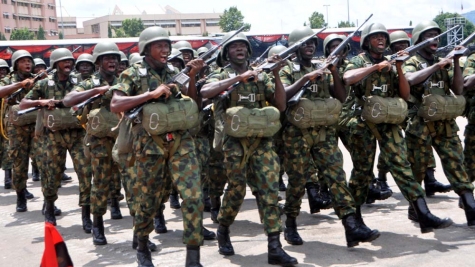
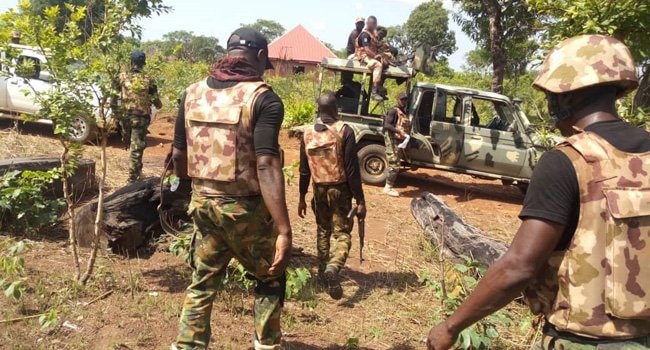
Nigerian military forces operating in the restive northeast have killed at least 24 Boko Haram and Islamic State West Africa Province (ISWAP) insurgents during a series of intense offensives conducted between July 4th and 9th, the Army announced Wednesday.

Troops from Operation HADIN KAI (OPHK), supported by air power and local forces including the Civilian Joint Task Force (CJTF) and hunters, executed multiple successful ambushes, patrols, and clearance operations across Borno and Adamawa states.

According to a statement by Captain Reuben Kovangiya, Acting Deputy Director Army Public Relations for the Theatre Command, the operations targeted terrorist movements, logistics networks, and hideouts.

Key engagements included:

1.Ambush at Platari (July 4): Troops killed 3 insurgents on bicycles moving from Sambisa Forest towards the Timbuktu Triangle.

2.Ambush near Komala (July 4):One terrorist was neutralized; troops recovered motorcycles, sprayers, pesticides, and food.

3.Night Ambush near Kawuri (July 4): 2 terrorists transporting logistics were killed; salt, seasoning, and detergents seized.

4.IDP Camp Interception, Madarari (July 5): Troops prevented terrorists from accessing a camp, killing one and recovering ammunition.

5.Fighting Patrol at Leno Kura (July 5): 3 insurgents killed during an assault on their enclave.

6.Night Ambush near Ngoshe/Gava (July 6): One terrorist neutralized at a suspected crossing point.

7.Ambush near Sabsawa (July 7): 2 logistics suppliers killed; bicycles, slippers, torchlights, and other items recovered.

8.Clearance Operation at Bula Marwa (July 8): One insurgent killed, gun and uniforms recovered, camp destroyed (air support involved).

9.Joint Patrol at Pambula, Adamawa (July 8): One terrorist killed; four motorcycles and a weapon captured.

10.Tangalanga & Bula Marwa Clearance (July 9): 3 insurgents killed; camp destroyed; six AK-47 rifles, 47 magazines, and 90 rounds of ammunition recovered (air support involved).

11.Ambush at Ngailda, Manjim, Wulle (July 9): 6 terrorists killed; motorcycles and bicycles seized.

Captain Kovangiya emphasized the significance of air support and collaboration with local forces like the CJTF and hunters in the success of the operations.

He stated the offensive demonstrates the troops’ determination to cripple the insurgents and restore security for socio-economic activities in the region.

Exploitation of the areas after clashes led to the recovery of significant weapons, ammunition, logistics supplies, and the destruction of terrorist camps and life-supporting structures.

Troops capture wanted militia leader in Nasarawa, foil terror attacks

By Uzair Adam Troops of the Nigerian Army have arrested a notorious militia leader, Haruna Abdulhamid, during a covert operation in Gidan Waya, Nasarawa State.

According to a reliable source, the operation was carried out by personnel of Sector II, Operation Whirl Stroke, deployed to Nasarawa Eggon.

The arrest followed actionable intelligence that led troops to the suspect, who was reportedly on his way to collect cash from a criminal deal.

Abdulhamid had long been on the radar of security agencies for his involvement in multiple criminal acts, including attacks on communities, kidnapping, and illegal arms trade.

He is currently in custody undergoing further interrogation.Elsewhere in the North East, troops working with local hunters and Hybrid Forces engaged terrorists during a patrol in Pambula Village, Madagali Local Government Area of Adamawa State.

One terrorist was neutralised, and troops recovered a weapon along with four abandoned motorcycles.

Troops deployed in Bama, Borno State, also engaged insurgents in a gunfight, neutralised one, recovered weapons, and destroyed makeshift terrorist camps and shelters.

During the operation, three family members of the ISWAP/JAS faction—an adult woman and two children—surrendered.

Additionally, an unexploded 40mm mortar bomb was discovered during a patrol along the Damboa–Azir road in Borno.

The area was immediately secured, and the bomb was safely recovered by an Explosive Ordnance Disposal (EOD) team.

In the North West, troops in Kebbi State conducted an ambush at River Kaa, rescuing six kidnapped victims and recovering four rustled cattle after a clash with terrorists.

Meanwhile, in the South East, soldiers arrested a suspected member of the Eastern Security Network (ESN) at a checkpoint in Ehime Mbano, Imo State.

The suspect is believed to have links with previous attacks on security personnel and government facilities.

In the South-South region, troops from 34 Artillery Brigade and 197 Special Forces Battalion uncovered an illegal refining site in Delta State.

The site contained 60 cooking drums, 15,000 litres of stolen crude oil, and reservoirs of illegally refined products, which were dismantled in line with Operation Delta Safe guidelines.

Similarly, troops from 3 Battalion, working with Tantita Security Services, intercepted boats carrying 1,720 litres of suspected illegally refined petroleum products along the Jeddo Waterways in Warri South.

The suspects fled on sighting the troops, and the recovered items were secured.

The source reaffirmed the military’s continued commitment to national security through sustained and coordinated operations across all regions.

Trump applauds Liberian president’s ‘beautiful’ English

By Sabiu Abdullahi

United States President Donald Trump has drawn attention with remarks made during a meeting with African leaders at the White House, where he praised Liberian President Joseph Nyuma Boakai’s English-speaking skills.

After Boakai delivered his remarks, Trump responded with visible admiration. “Such good English,” the president said.

He then asked, “Where were you educated? Where? In Liberia? Well, that’s very interesting. It’s beautiful English.”

He went further to say, “I have people at this table can’t speak nearly as well.”

The comments were made during a luncheon on Wednesday, July 9, 2025, attended by the leaders of Senegal, Gabon, Mauritania, and Guinea-Bissau, among others.

The gathering was held to deepen ties following a recent executive order signed by Trump to enhance U.S. mineral output, with a focus on collaboration with resource-rich African countries.

President Boakai, who studied at the University of Monrovia and previously served in various senior roles under former President Ellen Johnson Sirleaf, responded to Trump’s praise with a statement of friendship and alignment.

“Liberia is a longtime friend of the United States and we believe in your policy of making America great again,” Boakai said.

Trump’s remarks, however, sparked debate on social media and in the press. Some viewed them as complimentary, while others criticized the tone as condescending.

In defense of the president, a White House spokeswoman told The New York Times that “only the fake news could so pathetically pick apart President Trump’s heartfelt compliment during a meeting that marked a historic moment for U.S.-Africa relations.”

Liberia, located in West Africa and with a population of 5.7 million, was founded by freed Black Americans in the 1800s.

English is the country’s official language, although Liberian English and various indigenous languages are widely spoken.

The World Bank projects a 5 percent GDP growth for Liberia in 2025, driven largely by an expansion in the gold mining sector, along with improvements in agriculture and services.

The country’s reserves of rare Earth elements, including neodymium, have made it a point of interest for foreign investors, including the U.S.

Other African leaders at the White House also expressed interest in deepening economic cooperation with Washington and voiced support for policies that prioritize mutual benefit.

Ganduje assumes role as FAAN board chairman

By Abdullahi Mukhtar Algasgaini

Dr. Abdullahi Umar Ganduje, the immediate past National Chairman of the All Progressives Congress (APC) and former Governor of Kano State, was formally inaugurated today as the Chairman of the Board of the Federal Airports Authority of Nigeria (FAAN).

The inauguration ceremony, held in Abuja, was conducted by the Minister of Aviation and Aerospace Development, Mr. Festus Keyamo (SAN).

Ganduje, who holds the national honour of Commander of the Order of the Niger (CON), was sworn in alongside other members of the newly constituted FAAN Board.

The newly inaugurated board members include:

1.Ms. Olubunmi Kuku (Managing Director, FAAN)

2.Ms. Dorothy Duruaka

3.Ahmed Ibrahim Suleiman

4.Nasiru Muazu

5.Omozojie Okoboh

6.TP Vembe

7.Bridget Gold

Dr. Ganduje’s appointment as Chairman of the FAAN Board was initially announced by President Bola Ahmed Tinubu in January 2025.

Today’s inauguration marks the official commencement of his tenure and that of the entire board, tasked with overseeing the strategic direction and governance of the nation’s airport authority.

The Nigerian illusion of outrage and criticism

By Oladoja M.O

In an age where access to information is boundless and opinions flood our timelines like seasonal rains, one would expect public discourse, especially around issues of governance to be rich with nuance, clarity, and purpose. Instead, what we are confronted with in Nigeria is a noisy theatre of misdirected outrage and watery criticism, lacking both depth and direction. 

One recent trigger came from the viral criticisms surrounding the national budget, particularly the eyebrow-raising figures allegedly earmarked for streetlight poles and similar line items. As is typical in the social media age, the noise began to swell. Twitter went into a frenzy. Threads upon threads emerged, each outdoing the other in outrage. The focus wasn’t just on the figures; it quickly spiralled into yet another populist takedown of the presidency, calling into question the entire moral fabric of governance. But just when the public’s fury had reached a crescendo, a jarring but necessary intervention came from an unlikely source: a senator who, contrary to the collective narrative, took time to explain that the criticism was misdirected. What was being paraded as evidence of executive recklessness was, in fact, the product of legislative insertions. Even the revered watchdog body, BudgIt, which had positioned itself as the conscience of fiscal scrutiny, had peddled the wrong story, and done so confidently.

At that point, a deeper question emerged, one which goes beyond this specific incident: What exactly is the quality of criticism in Nigeria?

What we see across our social and political landscapes is not a culture of informed criticism but a culture of reactive condemnation. The ability to shout the loudest, to gather the most retweets or likes, has replaced the discipline of patient inquiry, structural understanding, and fact-based argument. We have mistaken noise for scrutiny, and in doing so, we have created an illusion: an illusion of outrage and criticism. Here’s the tragic irony: many of these criticisms stem from a good place, the desire for accountability and a better Nigeria. But because the foundation is faulty, the outcomes are futile. One cannot build a temple of truth on a foundation of ignorance. The budget saga is just one example among many.

BudgIt, a civil society organisation that has in the past done commendable work in simplifying the budget for the public, got it wrong this time, badly. Yet, even in the face of clarification, corrections, and new evidence, there was no public recant, no humility to say, “We were mistaken.” That act of refusal: the inability to admit error and recalibrate, is itself a glaring indicator of the intellectual poverty that plagues Nigerian criticism. In a land where saving face is prioritised over seeking truth, errors are not corrected; they are doubled down upon. And the implications are devastating. Public trust becomes confused and misdirected. The presidency gets blamed for what is, in fact, a legislative manoeuvre. Activists spend more time dragging the wrong institutions while the real culprits laugh quietly in the shadows. The people remain stirred but unenlightened, angry, yes, but none the wiser.

This shallow approach to criticism bleeds into other national conversations. Take the fixation on the Lagos-Calabar Coastal Road. A project that, whether justifiable or not, deserves technical, economic, and legal analysis is instead reduced to a carnival of trendy hashtags. Populists slam it without understanding its scope, funding model, or long-term impact. No consideration is given to feasibility studies, displacement issues, or cost-benefit analyses. No proper questions asked about procurement processes or federal-state cooperation. Instead, the discourse becomes a jamboree, a performance of rage designed to court virality, not accountability.

This is not criticism. It is a parody of it.

And just when you think the poverty of insight couldn’t dig deeper, reality offers more proof. Consider Peter Obi’s recent Democracy Day speech. In his attempt to discuss democracy, he instead ended up distorting history and misrepresenting the very fabric of the democratic struggle in Nigeria. A man who, during the dark days of military rule, was cosy with the system’s power brokers, now stands on podiums speaking as though he bore scars from that era. When real patriots were sacrificing their lives, fleeing their homes, and watching their properties burned for daring to speak truth to power, Obi stood closer to the oppressor than the oppressed. Yet today, he speaks with the authority of the afflicted. That, too, is born of ignorance, not just his, but the ignorance of the audience clapping in affirmation, unaware of the truth.

Even more revealing was the reaction to President Tinubu’s Democracy Day awards. Nigerians, young and old, in all corners of the internet, questioned why certain figures were honoured, some even asking, “Who are the Ogoni 9?” Others criticised the President for not awarding campaign allies, as though national honours were a reward system for electoral foot soldiers. It was laughable, yet tragic. How can you even begin to criticise a government when you don’t understand the very history of the democracy you claim to defend? How do you talk about national direction when your knowledge of national evolution is trapped in recent memory, as if Nigeria started in 2023?

It’s not just young people, either. Some of the loudest voices in the room, middle-aged, supposedly experienced, display a kind of ignorance so raw, you’d think the only political event they’ve lived through was a Twitter space. This is why we are where we are: a nation speaking loud but saying little, reacting fast but knowing nothing.

True criticism demands hard work. It requires research, attention to context, historical awareness, and, above all, intellectual honesty. You cannot meaningfully critique governance structures without understanding the separation of powers. You cannot hold public office holders accountable when you confuse federal responsibilities with local ones. You cannot demand transparency when your tools of inquiry are faulty. And in this desert of rigorous public engagement, one cannot help but mourn the absence of voices like that of Gani Fawehinmi: voices forged in the fire of truth, unseduced by populism, unshaken by power. Gani didn’t criticise for clout; he criticised with clarity. He did not shout merely to be heard; he roared because he understood. He was, above all, consistent, a virtue alien to many of today’s keyboard crusaders.

What Nigeria faces is not a lack of criticism; it’s an excess of uninformed, performative, and ultimately useless criticism. And therein lies the danger. Because when the noise becomes the norm, it drowns out the voices that actually matter. When every outrage is manufactured, real outrage loses its power. When critique becomes theatre, accountability becomes a joke.

To move forward as a nation, we must re-engineer our culture of criticism. We must build a new generation of thinkers, activists, and ordinary citizens who understand that to question power effectively, one must first understand it deeply. That it is not enough to be angry; one must be accurately angry. That social media fame is not the same as civic literacy. Until then, we will continue to shout: loudly, passionately, endlessly, but in circles.

Like a dog chasing its own tail, we will perform outrage while the real issues remain untouched, and the real culprits continue to operate in silence. 

The illusion will continue. The theatre will go on. And the nation, tragically, will remain where it is starved, not of voices, but of thought.

Oladoja M.O writes from Abuja and can be reached at: mayokunmark@gmail.com

Reps propose quota seats for women, PWDs in constitution review

By Abdullahi Mukhtar Algasgaini

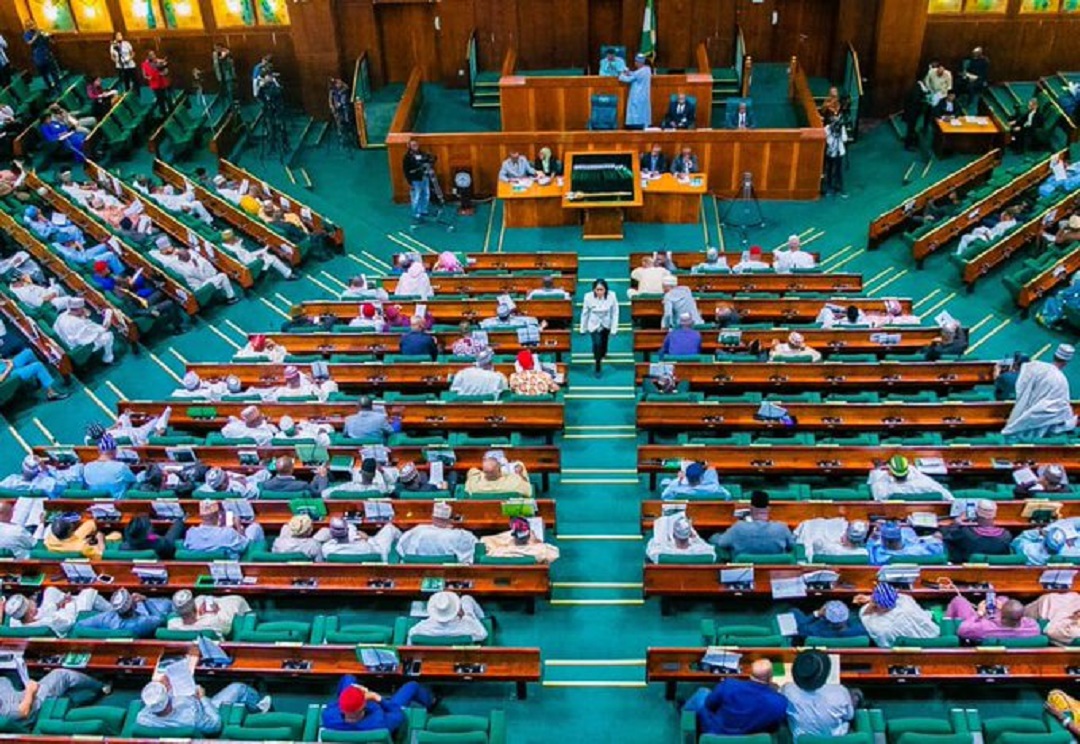
In a significant move towards inclusive governance, the House of Representatives is proposing the creation of 82 reserved seats in the National Assembly specifically for women and Persons with Disabilities (PWDs) as part of the ongoing constitutional amendment process.

Speaker of the House, Rt. Hon. Tajudeen Abbas, announced the proposal on Tuesday during the 2nd Legislative Open Week in Abuja.

The plan allocates 55 reserved seats within the House of Representatives and 27 in the Senate.

Under the proposal, 10% of National Assembly seats would be reserved for women and 5% for PWDs.

Abbas stated that the reserved seats for women would be filled through direct elections on separate ballots.

Seats reserved for PWDs would be filled via nominations from accredited advocacy organisations, also through direct elections.

He framed the reform as essential to correct “decades of gender imbalance,” highlighting the stark underrepresentation of women since independence.

“At independence, women held less than 1% of seats. Today, it has barely moved,” Abbas noted, pointing to countries like Rwanda and Senegal as examples where quotas have significantly boosted women’s representation.

The proposal is among 109 constitutional amendment bills currently under consideration by the House.

Other key areas of reform include elections, judicial processes, and fiscal accountability.

Speaker Abbas also provided an overview of the 10th Assembly’s legislative output, revealing that 2,263 bills have been introduced so far, with 55 already signed into law.

Notable enacted legislation includes the Student Loan Act and the amended Electricity Act.

On public engagement, Abbas reported that the House has received 621 citizen petitions.

Of these, 24 have been resolved, 30 dismissed, and 567 remain under consideration.

Senate President Godswill Akpabio, who also addressed the Open Week, commended the House’s legislative strides and pledged the Senate’s support for collaborative efforts.

He announced plans for a joint National Assembly Open Week and expressed concern over the high turnover rate of legislators, which he said negatively impacts institutional memory.

Former Speakers Yakubu Dogara and Patricia Ette urged current lawmakers to deepen public engagement and uphold accountability.

Speaker Abbas concluded by assuring that the 10th House remains committed to “inclusive and responsive lawmaking” and strengthening collaboration with the executive branch to deliver results for Nigerians.

OPINION: Sexual recession and its deeper implications

By Muhammad Ubale Kiru

A quiet but growing crisis is taking shape across societies, especially among young adults. It’s not about inflation, unemployment, or politics; though all of these play a role. It’s called the sexual recession; a noticeable and measurable decline in sexual activity among people, particularly those under 35. And while it may sound like a trivial or even humorous phenomenon to some, the consequences run far deeper than the surface suggests.

What Is a Sexual Recession?

A sexual recession refers to a consistent and significant drop in sexual activity within a population. In recent studies from countries like the United States, United Kingdom, Japan, and even parts of Africa, researchers have noticed that young adults are having less sex than previous generations. Not just slightly less, but in some cases, drastically so. But sex, in this context, is not merely about physical intimacy, it’s tied to deeper themes of connection, intimacy, identity, mental health, and even national population stability.

Why Is It Happening?

Several interwoven factors explain this modern-day phenomenon:

1. Digital Distractions and Virtual Living

Smartphones, social media, online gaming, and streaming platforms now consume a major chunk of young people’s time. We are more “connected” than ever, yet lonelier than any generation before. Many now prefer screens over real-life interactions, and as a result, dating, emotional bonding, and physical intimacy have taken a back seat.

2. Economic Pressures

The global economic situation is squeezing young people. Unemployment, underemployment, and the rising cost of living mean that many are postponing marriage or serious relationships. Some even avoid dating entirely due to financial insecurities. How can one think about love and intimacy when they are burdened with survival?

3. Pornography and Unrealistic Expectations

The proliferation of free, high-definition pornography has created skewed views of sexuality, leading to performance anxiety, addiction, and emotional detachment. For some, the convenience of porn replaces the effort of real relationships, leading to a drop in desire for real-world intimacy.

4. Mental Health and Social Anxiety

Depression, anxiety, and other mental health challenges have skyrocketed, especially in the post-COVID world. These conditions directly reduce libido, motivation, and the ability to form or sustain intimate bonds.

5. Cultural Shifts and Delayed Adulthood

More people are delaying traditional milestones like marriage, childbearing, or long-term commitments. In some societies, casual sex has also become emotionally draining and less fulfilling, leaving many opting for celibacy, not out of religious devotion but out of fatigue or disillusionment.

6. Hyper-Individualism

Modern culture promotes extreme self-focus: “me first, my goals, my space, my needs.” While self-development is essential, intimacy requires self-sacrifice, compromise, and shared vulnerability. Hyper-individualism often undermines those values.

Why It Matters

Some might argue: “So what? It’s their choice.” But this trend has ripple effects across society.

1. Lower birth rates: Several countries now face demographic crises due to declining fertility.

2. Weakened family structures: Relationships suffer, and social cohesion weakens when people lose touch with intimacy and emotional bonding.

3. Mental health decline: Healthy sexual relationships are closely linked to emotional wellness, self-esteem, and a sense of belonging.

4. Rise in transactional relationships: A vacuum in meaningful intimacy often leads to exploitative or shallow alternatives.

The Way Out: Rebuilding Intimacy in a Fractured World

The solution is not one-size-fits-all, but here are some pathways forward:

1. Teach Healthy Relationship Skills Early

Schools and parents must go beyond basic sex education to include emotional intelligence, communication, boundaries, and empathy. Healthy relationships don’t come naturally – they’re learned.

2. Reduce Digital Dependence

We must encourage digital detox and revive real-world connections. Host physical meetups, foster community spaces, and create tech-free zones to rebuild social skills and real interactions.

3. Address Economic Insecurity

Governments and institutions must tackle the youth unemployment crisis, offer affordable housing, and create environments that make long-term relationships more feasible.

4. Reframe Masculinity and Femininity

Many young men and women are confused about gender roles in today’s world. Society must create balanced narratives that honor emotional vulnerability in men and ambition in women, without turning either into enemies.

5. Prioritize Mental Health

We must normalize therapy, create accessible mental health services, and integrate emotional wellness into everyday life. A healthy mind is a prerequisite for healthy intimacy.

6. Faith and Values

Religious institutions also have a role to play in guiding people toward meaningful love, purposeful relationships, and sacred sexuality. Not through shame, but through compassion, mentorship, and support.

In conclusion, the sexual recession is not about libido; it’s about loneliness, disconnection, and a society drifting away from human intimacy. If we ignore it, we will wake up to a colder, lonelier, and more fractured generation. But if we confront it with wisdom, compassion, and courage, we can rebuild the bonds that make us truly human. It will be naive to wait for more statistics to confirm what we already feel. Let’s act before love becomes extinct.

Muhammad Ubale Kiru wrote in from Kano and can be reached via muhdjkiru@gmail.com

Nigerian Professor Salary: The re-ignited debate

By Prof. Abdelghaffar Amoka

A Hausa interview by a professor from ABU, lamenting academics’ poor pay, is trending and has re-ignited the debate on the salaries of Nigerian academics on social media. The discussion is championed by my brothers from the region, which is considered by the country as educationally less developed. I didn’t know what to say that I hadn’t said before. It will be like repeating myself.

Professors in Nigeria are now blamed for their financial status. They are expected to stop lamenting and get a side hustle to augment their salaries. A professor whose salary was ₦450,000 in 2009, when the exchange rate was ₦140 per dollar, is blamed for his economic state in 2025, with a salary of about ₦500,000, when the exchange rate is ₦1,600 per dollar. 

Some people are referring to professors abroad as if some of us have not had the experience. A number of us have studied and worked there, and we know how their university system works. I got two grants in the UK during my PhD. They said a professor earns more abroad from their research grants. The primary beneficiaries of research grants are postgraduate students and postdoctoral researchers. Professors are not paid from their grants.

Grants have a budget, and personnel costs are not included. They are paid to the university account and managed by the university. The university pays professors to encourage them to think critically and attract grants for the institution. A university lecturer around the world is paid enough to give him the comfort to think and do his job as it should. Any extra cash from stuff like consultancy is for additional comfort. 

The Executive Secretary of TETfund, Sunny Echono, in July 2024, said: “On salary to lecturer, I feel ashamed because I have the privilege to represent Nigeria at a global conference where former presidents and prime ministers were in attendance. I was asked if it was true that a professor, after 20 years, still earns less than $1,000 a month. I couldn’t answer that question; I only said that we are doing something about it.” I think we should be proud of the salaries of our professors and boldly tell anyone around the world their actual salaries. 

Before you, in your narrow-minded state, blame professors for their financial status, ask yourself why the Nigerian government will pay the same professors about two thousand dollars per month under the Technical Aid Corp (TAC) to go help teach in universities in some African countries? The same professors who are given approximately $ 2,000 to teach in Ugandan universities under TAC are receiving an equivalent of $ 320 per month at home.

You know what? Everyone is right—those for and against. The argument won’t change anything, and it will likely end within a day or two. The new reality is that younger academics have learned from the impact of senior colleagues’ commitment to the academic job. The commitment you considered as “our stupidity”. The younger academics are planning for themselves.

A colleague, after the 8-month strike and the withholding of our 8-month salaries, said the university does not deserve his full-time commitment. That he is going to give the university the time it deserves and use a large chunk of his time for a side hustle to pay his bills, I thought, was unreasonable. I later realised I was the unreasonable one. And he is not doing badly from the side hustle. 

Around this time last year, I was passing and met some of my students in the class without the lecturer. In my usual chat with the students, I asked whose lecture it was. I decided to call a younger colleague, as students were waiting for his class in case he forgot. He picked up the call and said he had forgotten he had a class, but that he was on his farm planting, and that he would see them next week. He was at the farm during work hours and forgot he had a class because the farming hustle is paying the bills. He is actually doing quite well with his side hustle. 

Farming during work hours becomes more important. I reflected on that for several days. There are several examples of young academics who won’t be seen on campus, except when they have a lecture or are on campus for something they consider essential. 

People sometimes question why a whole professor would accept being an adviser or assistant to a political office holder. A trip with the political officeholder boss could get him his one-year gross salary as a professor. Since it’s his fault that he is poor, why shouldn’t he accept such an offer or even lobby for it?

As a consequence of defeat, we have accepted one awkward thing as a part of us. Because we can’t do anything about our tormentors and needed someone to blame, we blamed ourselves, the victims. It’s our fault that we’ve been on the same salary for 16 years, from 2009 to date. It’s our fault that successive governments refused to renegotiate the 2009 agreed salary with ASUU. It is our fault that the government of President Tinubu has kept Yayale Ahmed’s 2009 Renegotiation Committee report since November 2024 without speaking about it. They are still studying it, possibly till May 2027 or beyond. 

Universities are designed to attract the best minds from around the world. Universities, including those in Africa, such as those in Ethiopia, Uganda, Kenya, and Chad, are attracting the best brains. At the same time, we justify the poor pay for academics and still blame them for their inability to compete with their colleagues in the UK, the US, and Iran. We’ll continue to breed our best brains for these countries. 

Meanwhile, as we take all the blame for our economic status as professors, younger academics are devising ways to survive. They don’t want to he like their senior colleagues who bury themselves in their books thinking they are serving the country. They are given more time for their side hustle to pay the bills, and leave the students hanging. They’ll attend to them when we can. The system will bear the consequences of neglect, and our survival plans will be affected.

From a reality check, you can’t think when you are hungry. So, what are your expectations when your thinkers are hungry and you are unfortunately justifying it? We may be on a journey of illusion if you expect a man to look for food to eat and think for you. The future will tell who gains and who loses.

Best wishes to all of us! 

©Amoka

APC dismisses ADC claims of government interference as imaginary

By Abdullahi Mukhtar Algasgaini

The All Progressives Congress (APC) has strongly rejected allegations made by the African Democratic Congress (ADC) that the federal government is plotting to destabilize the opposition party.

In a press statement issued on Tuesday by its National Publicity Secretary, Felix Morka, the APC described the ADC’s claims as baseless and a product of “warped imagination.”

The ADC had alleged in a statement on Monday that it possessed “credible intelligence” indicating federal government officials summoned its state chairmen from the North East and North West to a “secret meeting” aimed at intimidation and coercion.

The APC statement countered that the ADC provided no substantiation for its claims, calling them “wild” and “poorly imagined.”

It criticized the ADC’s vague reference to “officials of the federal government” as evidence of a “mischievous intent” to manipulate public opinion.

“There was no such meeting, and certainly, no one could have been coerced or intimidated at a meeting that never was,” Morka asserted.

The APC further argued that the Tinubu administration and the ruling party have no reason to interfere with the ADC, which it characterized as “mortally wounded by confusion” stemming from internal conflicts.

Morka claimed the ADC is an “agglomeration” of politicians plagued by “internal dissonance, contradictions and discord” following a “gestapo-like takeover.

“The statement portrayed the ADC as a coalition of “inept politicians,” “architects of misrule,” and “failed and restless presidential contenders” incapable of offering Nigeria a viable alternative vision.

It dismissed the ADC’s strategy as focused solely on vilifying the APC and attacking President Tinubu’s record.The APC contrasted the opposition’s “self-inflicted confusion” with its own focus on “build[ing] a virile and vibrant country.”

Morka concluded by questioning the credibility and track records of several prominent figures associated with the ADC coalition.

The APC urged Nigerians to disregard the ADC’s allegations, framing them as a “calculated preemptive excuse” for the party’s anticipated failure.