Month: July 2025

ADC leadership crisis deepens as Nafiu Bala claims interim chairmanship

By Abdullahi Mukhtar Algasgaini

A leadership crisis has erupted in the African Democratic Congress (ADC) after Nafiu Bala, the party’s 2023 Gombe State governorship candidate, declared himself Interim National Chairman on Thursday.

Bala, who previously served as the party’s National Deputy Chairman, announced his new role during a press conference in Abuja.

He accused former party leaders of abandoning their constitutional duties and handing over ADC’s structures to “powerful outsiders.”

The position is currently held by former Senate President David Mark, who was appointed interim chairman after an opposition coalition adopted ADC as its platform.

Bala, however, insists his assumption of the role is legitimate under the party’s constitution.

He called on the Independent National Electoral Commission (INEC) to recognize the leadership change, warning that failure to adhere to ADC’s constitutional guidelines could lead to legal action.

Bala vowed to restore internal democracy, stating, “No party leader has the right to transfer elected mandates to non-members.”

The development signals deepening divisions within the opposition party.

PSC vows to crack down on fraud in upcoming police recruitment

By Abdullahi Mukhtar Algasgaini

The Police Service Commission (PSC) has warned against fraud and racketeering in the upcoming recruitment of officers into the Nigeria Police Force (NPF), including Cadet ASPs and Inspectors.

PSC Chairman, DIG Hashimu Salihu Argungu (rtd), issued the warning during a courtesy visit to the Federal Character Commission (FCC) on Wednesday, July 30, 2025.

He stressed that any misconduct or manipulation in the recruitment process would be met with strict sanctions.

Argungu emphasized transparency, fairness, and equity, ruling out discretionary waivers or replacements.

He sought FCC’s partnership to ensure balanced representation. FCC Chairman, Hon. Kayode Oladele, welcomed the collaboration, stating that an inclusive police force strengthens public trust and national cohesion.

He reaffirmed FCC’s commitment to monitoring federal character compliance in the recruitment.

While a recruitment date is yet to be announced, the PSC assured Nigerians of a credible and merit-based exercise.

President Tinubu extends customs CG Adeniyi’s tenure by one year

By Abdullahi Mukhtar Algasgaini

President Bola Ahmed Tinubu has approved a one-year extension of the tenure of the Comptroller-General of the Nigeria Customs Service (NCS), Bashir Adewale Adeniyi, MFR.

Adeniyi’s tenure, originally set to expire on August 31, 2025, will now continue until August 2026.

The extension is aimed at allowing the Customs boss to consolidate ongoing reforms and complete key initiatives of the Tinubu administration.

According to a statement by Bayo Onanuga, Special Adviser to the President on Information and Strategy, the extension will enable Adeniyi to drive critical projects, including the modernisation of the NCS, the implementation of the National Single Window Project, and the execution of Nigeria’s commitments under the African Continental Free Trade Area (AfCFTA).

President Tinubu commended Adeniyi for his leadership and expressed confidence that the extension would enhance the Service’s ability to deliver on its mandate of revenue generation, trade facilitation, and border security.

Adeniyi, a career customs officer, was appointed Comptroller-General in 2023 and has since spearheaded reforms to improve efficiency in the Service.

Tinubu entitled to second term like Buhari—Presidency

By Sabiu Abdullahi

The Presidency has said President Bola Ahmed Tinubu is entitled to seek a second term in office, just as the late former President Muhammadu Buhari did.

Bayo Onanuga, the Special Adviser to the President on Information and Strategy, made this known during an interview with Trust Radio on Wednesday.

He urged Northern politicians to exercise patience and respect the rotational power arrangement, arguing that the South supported Buhari for eight years and should be allowed to complete its own turn.

Onanuga dismissed recent claims by the Arewa Consultative Forum (ACF) about Northern marginalisation.

He described such complaints as a veiled attempt to weaken Tinubu’s government.

“This president is a Nigerian. He deserves the same two terms that Buhari had. Let’s not sacrifice the country for personal ambition,” Onanuga stated.

Addressing allegations that federal appointments under Tinubu favour the Southwest, Onanuga challenged those making the accusations to present credible data rather than general assumptions.

He also dismissed reports of lopsided infrastructure development. He said the Tinubu administration inherited several incomplete and abandoned projects across the country.

Onanuga pointed to appointments in the security sector as proof of inclusiveness, saying Northerners head key agencies under Tinubu’s leadership.

“You need to get your statistics right. It’s all political mischief designed to undermine the President. There are bad roads across the country, not just in the North.

“The National Security Adviser, Chief of Defence Staff, and the two Defence Ministers are all Northerners. Places like Birnin Gwari and Igabi (in Kaduna) are now safer. I drove from Kaduna to Abuja without incident, a journey that was once unthinkable,” he added.

NCS cautions travellers on proper use of US visas

By Sabiu Abdullahi

The Nigeria Customs Service (NCS) has issued a public advisory warning Nigerians against misusing United States visas, stressing that entry into the U.S. does not exempt visa holders from ongoing scrutiny.

In a press statement dated July 29, 2025, and signed by the National Public Relations Officer, Assistant Comptroller Abdullahi Maiwada, the Service noted that the U.S. Government had raised concerns about Nigerians engaging in activities that contradict the declared purpose of their travel and the category under which their visas were issued.

“The Nigeria Customs Service (NCS) wishes to alert the general public to the concerns raised by the Government of the United States of America on the need for Nigerians to desist from misusing entry visas granted by the US through activities that are inconsistent with the stated purpose of travel and visa classification,” the statement said.

The NCS emphasized that visa vetting continues beyond the point of entry.

It warned that U.S. immigration officials retain the authority to revoke visas at any time if holders are found in breach of immigration laws, import or export regulations, or other legal standards.

“U.S. authorities will continuously monitor the activities of visa holders, and visas can be revoked if holders are found to have violated US immigration protocols, import/export guidelines and other laws,” the Customs Service noted.

The advisory also reminded Nigerian travellers to comply with cash declaration rules when entering or exiting the country.

Individuals carrying more than $10,000 or its equivalent are required to declare it to the authorities. Travellers were also warned not to transport prohibited goods in their luggage.

“It is pertinent to also note that passengers are encouraged to be law abiding citizens and be of good conduct within and outside Nigeria,” the statement added.

Intending U.S. travellers were further advised to uphold integrity in all jurisdictions. According to the Customs, “whoever commits fraud in any jurisdiction will face legal consequences both under U.S. and Nigerian laws.”

The NCS disclosed that it is working closely with the U.S. Mission in Abuja to ensure Nigeria remains in good standing.

The aim is to prevent the inclusion of Nigeria in a broader visa restriction list that could affect legitimate travellers.

“The Nigeria Customs Service wishes to reaffirm that it is working with the U.S. Mission in Abuja to ensure that Nigeria meets the criteria to avoid enlistment into an expanded visa ban that will deny entry to well-meaning Nigerians wishing to travel to the US for their lawful business endeavours,” the statement concluded.

The Customs Service urged members of the public to take these reminders seriously in order to protect Nigeria’s global image and ensure unhindered travel for its citizens.

Maryam Bukar Hassan named first UN Global Advocate for Peace

By Hadiza Abdulkadir

Nigerian spoken word artist and poet, Maryam Bukar Hassan, has been appointed the first United Nations Global Advocate for Peace, marking a historic milestone for both the artist and the continent.

Known for her evocative poetry and powerful performances, Hassan, often called “Alhanislam” by her fans, has gained international recognition for using her voice to address pressing social issues. Her latest appointment underscores the UN’s commitment to engaging young voices in the global peacebuilding process.

In her new role, Hassan is expected to lead campaigns that inspire dialogue, promote conflict resolution, and amplify youth perspectives on peace. Her message, rooted in empathy and resilience, has resonated with many around the world.

“Peace is not a silence you force into people’s mouths… It is not the absence of war; it is the presence of understanding,” she says in her latest poem — a reflection of the conviction she brings to her advocacy.

With conflict and crisis affecting millions globally, especially young people, Hassan’s appointment comes at a critical time. Her voice offers not just representation, but a rallying call for hope and healing.

An open letter to the chairman of Hadejia Local Government

Dear Honourable Yaro Abba Ari,

I write to you as a deeply concerned indigene of Hadejia Local Government Area, more specifically, a resident of Dubantu Quarters. I do so with a strong sense of responsibility and hope, believing that your esteemed office, under your capable leadership, will give due attention to the pressing issues that have plagued our community for quite some time.

First and foremost, I would like to sincerely commend your administration for the developmental strides made in various parts of the local government area. These achievements reflect your commitment to progress and service delivery. However, I am compelled to draw your immediate attention to some ongoing challenges that continue to affect the people of Dubantu Quarters — challenges that, if not addressed, may further deteriorate the well-being and safety of our community.

The first major issue of concern is the worsening condition of the drainage systems in Dubantu Quarters. Every year, particularly during the rainy season, our community suffers from excessive waterlogging and flooding. Rainwater, due to the absence or blockage of proper drainage, flows freely over the roads and into homes, causing significant disruption and damage. The situation has unfortunately become a recurring crisis that leads to the destruction of properties and, in the worst cases, loss of innocent lives. Residents live in constant anxiety as heavy rains turn roads into rivers, making movement dangerous and threatening the safety of families.

Secondly, I would like to bring to your kind attention the growing security and social concerns in specific parts of Dubantu Quarters — particularly areas that remain in complete darkness at night due to a lack of public lighting infrastructure. These dark zones have become gathering points for immoral and misguided youths, who often engage in illicit activities such as the abuse of toxic substances — including syrul (codeine cough syrup), ganja, and other harmful drugs. These activities not only endanger the lives of the individuals involved but also pose a significant threat to the safety and peace of law-abiding citizens, especially during the night hours.

Despite numerous efforts by responsible members of the community to curb this growing menace, their attempts have been largely ineffective due to the absence of necessary support, tools, and enforcement capabilities. The community is doing its best with the limited resources at its disposal, but the situation clearly calls for strong governmental intervention. 

As a result, and in the spirit of community development, I humbly and earnestly appeal to you to take the following specific actions:

Reconstruction and proper maintenance of Drainage systems in Dubantu Quarters will help ensure that rainwater is channelled correctly, reducing the devastating impact of seasonal flooding and safeguarding the lives and properties of the residents.

Installation of solar-powered Street lights in critical dark areas within Dubantu Quarters. Improved lighting will not only enhance visibility and security but will also deter criminal and immoral behaviour that currently thrives under the cover of darkness.

Collaborative Engagement with Law Enforcement Agencies and Community Leaders to Develop and Implement a Strategic, Community-Driven Solution to the Issue of Drug Abuse. This should include awareness campaigns, youth sensitisation programs, and the creation of positive alternatives that engage our young people in meaningful and productive activities.

Your timely intervention in these matters will go a long way in alleviating the hardship currently faced by the residents of Dubantu Quarters. Moreover, it will serve to reaffirm the trust and confidence that the people of Hadejia Local Government Area have placed in your leadership.

We remain optimistic that you will treat these concerns with the urgency and seriousness they deserve, and that your office will take immediate steps to implement lasting solutions.

Thank you very much for your time, attention, and anticipated positive response.

Yours sincerely,

Garba Sidi

An Indigene of Hadejia Local Government Area

sidihadejia@gmail.com

Green numbers, red realities

By Oladoja M.O

The Bola Ahmed Tinubu administration has unarguably embarked on a bold and unapologetic mission to retool Nigeria’s economy. From the abrupt removal of petrol subsidies to the floating of the naira, the unification of multiple FX windows, and most recently, the signing of the landmark Tax Reform and Fiscal Policy Bill, there is no denying that the government has chosen a macro-to-micro economic approach. That is, fix the big picture first, then let the gains gradually filter to the people.

And indeed, the “green lights” are beginning to blink. Global credit rating agencies such as Fitch and Moody’s have upgraded Nigeria’s outlook. Foreign investors are expressing renewed interest. Oil production is improving, FX liquidity is easing, and fiscal buffers are being rebuilt. From a purely macroeconomic standpoint, Nigeria appears to be reclaiming its place as a serious economy with a reform-minded leadership.

But there’s a contradiction that cannot be ignored: on the streets of Agege, Aba, Makurdi, and beyond, the economy is still red; red markets, red household budgets, red transport fares, and red faces of frustration. Prices have tripled in some cases. Wages have barely moved. Many can no longer afford their children’s school fees. Traders are losing capital to inflation. Food is fast becoming a luxury. Amid this hardship, Nigerians are asking the most honest, piercing question of the moment:

“If the economy is growing, why am I still shrinking?” “If the economy is growing, where is the growth in my pocket?”

This is not a question born out of ignorance. It is a legitimate cry that speaks to the disconnect between macroeconomic progress and microeconomic relief. Yes, the big numbers are looking better, but the lived realities of the majority are deteriorating. To understand this discrepancy, we must first understand the difference between macroeconomics and microeconomics. 

Macroeconomics concerns itself with the national economy, including factors such as GDP growth, inflation rates, budget deficits, and foreign exchange reserves. These are the indicators investors, multilateral organisations, and economic analysts watch. Microeconomics, on the other hand, deals with everyday realities: how much you earn, what you can buy with that income, whether your small business can survive, and whether prices of food, fuel, and medicine are manageable. In theory, macroeconomic stability should, over time, trickle down and improve microeconomic conditions. But in practice, especially in a country like Nigeria, that process is rarely smooth or automatic.

The truth is that reforms, especially big, structural reforms create what economists call a “lag effect.” That is, the pain comes first; the relief comes much later. Floating the naira made the exchange rate more transparent and investor-friendly, but it also instantly raised the price of imported goods. Removing fuel subsidy fixed a long-standing fiscal leak, but it also sent transport and food prices soaring. And because Nigeria imports a significant share of its consumption, inflation spiked, with devastating effects on the poor. Salaries have not caught up. Social safety nets are thin. Informal workers who make up over 60% of Nigeria’s labour force are primarily left to fend for themselves.

Yet, this is the path the government has chosen. And it is important to say this clearly: choosing a macro-first approach is not inherently wrong. In fact, for a country like Nigeria, plagued by decades of financial mismanagement, it is even necessary. Fixing subsidies, unifying the exchange rate, and rebuilding fiscal credibility are long overdue. Every administration must work with the strategy it believes in, and this government has opted to “stabilise the roof before fixing the foundation.” That, in itself, is a policy choice one with clear upsides.

However, macroeconomic success without a visible microeconomic impact is a hard sell to a hungry population. People don’t live in GDP. They live on garri, transport fares, and electricity bills. While international investors applaud the courage of reforms, local citizens are asking: Where is the evidence that my own life is getting better?

The administration is not blind to this concern. The recently signed Tax Reform and Fiscal Policy Bill is part of a broader effort to expand the tax net and capture the informal sector, both to raise revenue and bring more economic players into visibility. But again, for the everyday Nigerian, these reforms are abstract. What matters is how they translate into food on the table, money in the pocket, and hope in the future.

So, how do we build a bridge between this macro-level retooling and the micro-level reality of the people?

First, we must move beyond tokenistic interventions like cash transfers and instead design innovative relief tools that tie micro-support to long-term productivity. For example, introducing community-based digital vouchers that support food or fuel purchases but are redeemable only when tied to school attendance, digital payments, or participation in a training program would ease the current pressure while also boosting the country’s long-term human capital.

Second, the government must decentralise economic adaptation. Nigeria is too diverse for a one-size-fits-all economic playbook. Establishing “Local Reform Chambers” committees made up of state governments, market leaders, and community associations can help interpret macro policies at a local level and propose area-specific interventions. If subsidy removal causes a shock in Zaria or Owerri, let those communities co-design their response, be it cooperative transport schemes or communal food banks, funded partially by the government and partially by local actors.

Thirdly, data must become a feedback tool, not just a planning tool. The government should publish a monthly Macro-to-Micro Progress Report that clearly shows how reforms are improving incomes, lowering costs, or reaching underserved communities. Let people see the path of change, even if it’s still under construction.

Finally, the government must actively invest in skills, tools, and local infrastructure. Don’t just train youths to code; train them to fix machines, install solar panels, manage cooperatives, and build homes. Make markets more productive with solar lighting, shared storage, and access to water. These are the enablers that convert national growth into grassroots empowerment.

Conclusively, it is fair to acknowledge that the current administration is taking steps that previous governments only danced around. The reforms are not without merit and frankly, not without courage. But reforms are not complete until they reach the people.

The Nigerian people are not impatient; they are simply in pain. And when they ask, “If the economy is growing, why is my pocket not?” they are not being unreasonable. They are asking for what every citizen deserves: a place in the progress. Now is the time to move beyond balancing spreadsheets and begin balancing lives because growth is only real when it is felt.

And no reform is complete until the people rise with the numbers.

Oladoja M.O writes from Abuja and can be reached at: mayokunmark@gmail.com

UAC to acquire Chivita|Hollandia from Coca-Cola in strategic expansion move

By Sabiu Abdullahi

UAC of Nigeria Plc has announced a major acquisition deal with The Coca-Cola Company to take ownership of Chivita|Hollandia (CHI Limited), one of Nigeria’s leading food and beverage companies.

In a disclosure submitted to the Nigerian Exchange Limited on Wednesday, UAC confirmed that the agreement has been reached but remains subject to regulatory approval.

CHI Limited, the parent company of popular brands such as Chivita and Hollandia, is known for its range of juices, dairy products, nectars, still drinks, and snacks.

Fola Aiyesimoju, Group Managing Director of UAC, described the acquisition as a significant step for the company’s operations in Africa. “As a company with a strong presence in Africa, we are deeply committed to the continent’s growth. We are pleased to announce the acquisition of Chivita|Hollandia (CHI Limited), a leading dairy and juice business in the region,” he said.

Aiyesimoju highlighted the potential of the transaction, stating, “This acquisition presents significant potential to build on Chivita|Hollandia’s (CHI Limited’s) legacy of excellence and innovation.

I would like to thank the management and staff of Chivita|Hollandia (CHI Limited) and look forward to working with the team to support the next phase of growth.”

Eelco Weber, Managing Director of CHI Limited, expressed optimism about the company’s trajectory, pointing to recent accomplishments and the strength of its workforce.

“I would like to thank our over 5,000 employees for their hard work and dedication in bringing our business forward and earning us recognition as a Gold-rated Great Place to Work,” he stated.

He added, “We see a bright future for Chivita|Hollandia. With the strength of our team, coupled with the dedication of UAC, there will be exciting opportunities for further growth.”

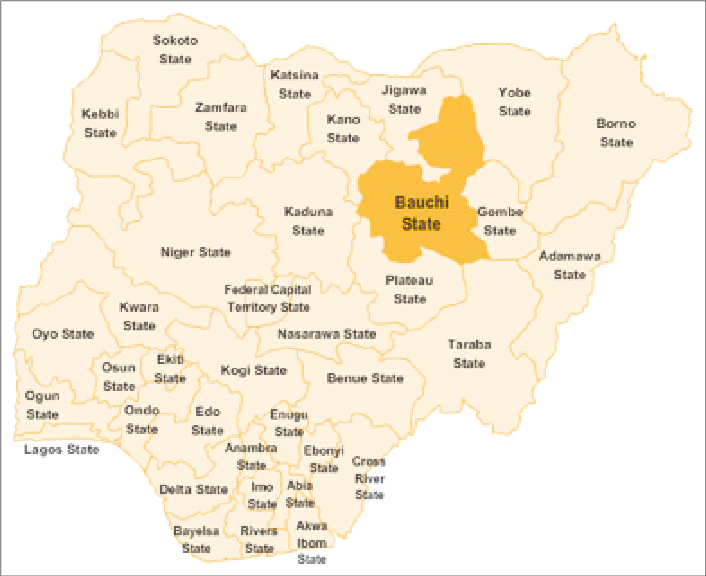
Bauchi’s unique politics and its swinging character

By Zayyad I. Muhammad 

Bauchi is one of the few states, perhaps the only one, in northern Nigeria that has consistently upheld a politics rooted in independence. The people of Bauchi are known for their distinct political culture: no candidate, political party, or ideology can be imposed on them. Incumbency holds little sway, and public or political office holders often fail to win elections.

From the days of the Northern Elements Progressive Union (NEPU) in the First Republic, to the politics of the Second Republic, and even the cult-like support for Muhammadu Buhari in more recent times, Bauchi has carved out a political identity that is both unique and enduring.

A review of Bauchi’s electoral history, particularly in gubernatorial contests, reveals a striking pattern of political independence that many analysts regard as unmatched in Nigeria. 

For instance:

In 1979, they elected Tatari Ali as Governor under the National Party of Nigeria (NPN) against their kinsman within the North East, in the person of Alhaji Ibrahim Waziri of the GNPP.

In 1992, they elected Alhaji Dahiru Mohammed Deba as Governor, alongside Alh Ibrahim Tofa of NRC, against the popular candidature of MKO Abiola 

Somehow in 1999, after a rerun election, PDP managed to win, and Adamu Mu’azu got elected as Governor, but later lost the bid to win senatorial elections after serving for 8 years as Governor. 

In 2007, Mal. Isa Yuguda won as Governor under ANPP against the incumbent PDP when Yar’Adua was president. 

In 2011, the state aligned with the opposition APC to produce Mohammed Abdullahi Abubakar as Governor, but lost his re-election bid despite being the sitting governor to the Present Governor Bala Mohammed of the PDP.

This pattern speaks volumes:

Abuja or any ‘interest’ cannot and has never dictated the governor’s emergence in Bauchi state. Imposing candidates rarely work. Incumbency does not guarantee re-election. High-profile public and political office holders have little impact. Governors have lost re-election, senatorial bids, and attempts to anoint successors in several Cases. The swinging nature of Bauchi politics is one of its most intriguing features

Equally remarkable is the background of those elected. Since 1999, Bauchi governors have consistently emerged from modest or unexpected circumstances- ‘Zero level, so to speak. Governors Adamu Mu’azu, Isa Yuguda, Mohammed Abubakar, and the present Bala Mohammed all came from zero disposition, meaning they did not hold a position or office for at least two years during the election period. This trend illustrates the state’s openness to merit and its resistance to political imposition.

Looking ahead to the 2027 elections, it appears to be the state with the highest number of contestants so far. 

1. Mohammed Auwal Jatau – the current Deputy Governor of Bauchi State

2. Muhammad Ali Pate – the current Minister of Health

3. Dr. Nura Manu Soro – Ex-Finance Commissioner and President Tinubu campaign Coordinator. 

4. Ambassador Yusuf Tuggar, current minister of foreign affairs. 

5. ⁠Senator Shehu Buba, a serving senator from the APC 

6. ⁠Alhaji Bala Wunti, former MD of NAPIMS

7. ⁠RTD Air Marshal Sadiq, former APC gubernatorial candidate 

8. ⁠Senator Halliru Jika, former senator 

9. ⁠Dr. MUSA Babayo, former chairman of TETFUND 

10. ⁠Senator Dahuwa Kaila, a serving senator, among numerous others. 

With such a lineup and Bauchi’s long history of voter independence, the 2027 elections promise to be as competitive and unpredictable as ever.

Bauchi’s politics remain firmly anchored in progressive and populist traditions. Candidates without a clear vision or strong grassroots connection are regularly rejected at the polls, and 2027 is likely to uphold that tradition.

Only time will tell.

Zayyad I. Muhammad writes from Abuja via zaymohd@yahoo.com.