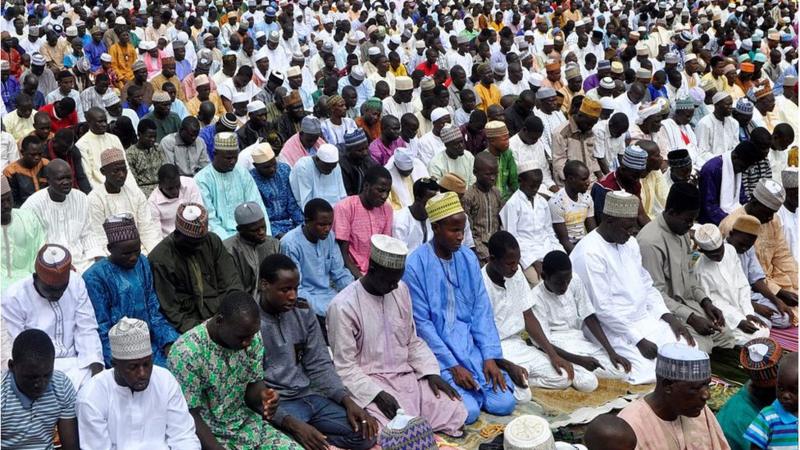
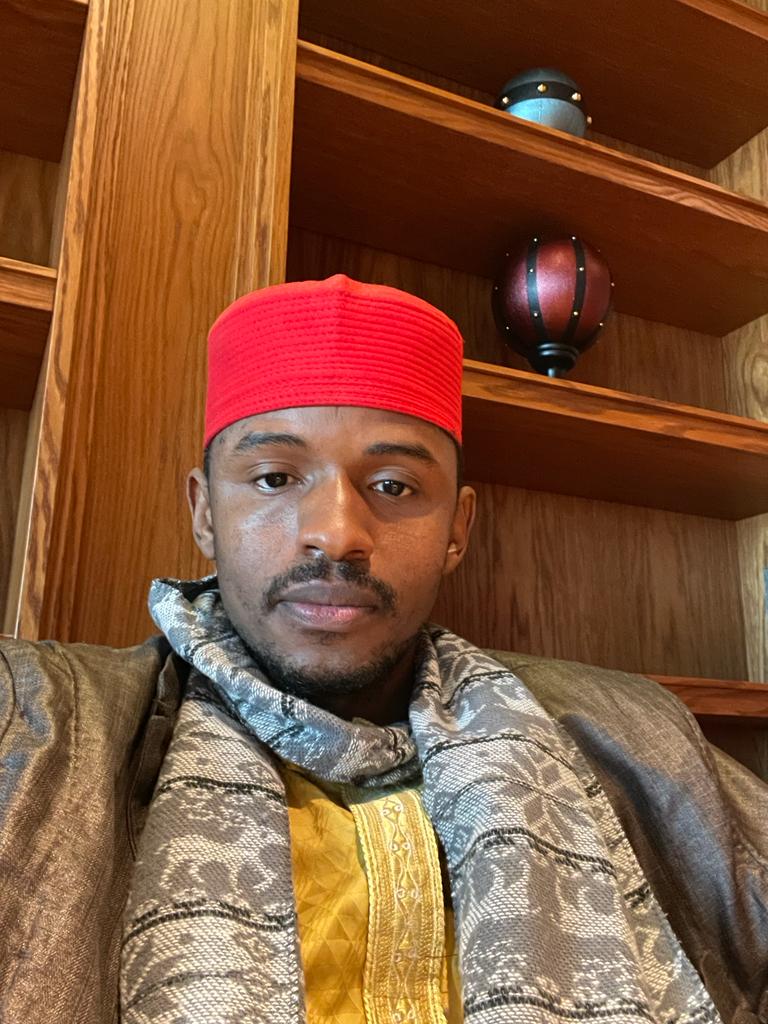
Sheikh Musa Lukwa, a prominent cleric based in Sokoto, made headlines on Tuesday as he led his followers in observing the Eid prayer.
This move came in defiance of the Nigerian Supreme Council for Islamic Affairs (NSCIA), led by Sultan of Sokoto, Alhaji Muhammad Sa’ad Abubakar III, which had declared Wednesday as the official Eid day, marking the end of the 2024 Ramadan fast.
Contrary to the NSCIA’s announcement, Sheikh Lukwa insisted that the crescent moon signaling the beginning of Shawwal, and hence Eid, was sighted in neighbouring Niger Republic on Monday.
He justified his decision to hold the Eid prayer on Tuesday by citing reports and a verified video clip from Niger Republic’s council of Ulamah authenticating the moon sighting.
According to Lukwa, adhering to the teachings of the Holy Prophet necessitated following the declaration made in Niger Republic.
Despite the NSCIA’s assertion and the earlier stance of Saudi Arabia authorities, Lukwa remained steadfast in his belief, leading prayers at his Juma’at mosque around 8:30 am.
This event underscores the ongoing debate and differing perspectives within the Muslim community regarding moon sightings and the determination of Islamic holidays.
He was qouted to have said, “If we can accept that of Saudi Arabia, why can’t we agree with that of Niger Republic which is nearer to us.
“I am not saying all Nigerian Muslims must observe their Eid prayer on Tuesday but we have no moral justification not to observe our prayer on Tuesday because the new moon was sighted by our neighbors.
“And remember there is no fasting on Sallah day, it is prohibited,” the imam stated.
Lukwa has been defying Sultan directives, accusing the monarch of forcing Muslims to accept the moon sighting of Saudi Arabia which he believes is against the tradition of the Holy Prophet Muhammad (PBUH).
The cleric however, challenged any scholar with a contrary view to a public debate.
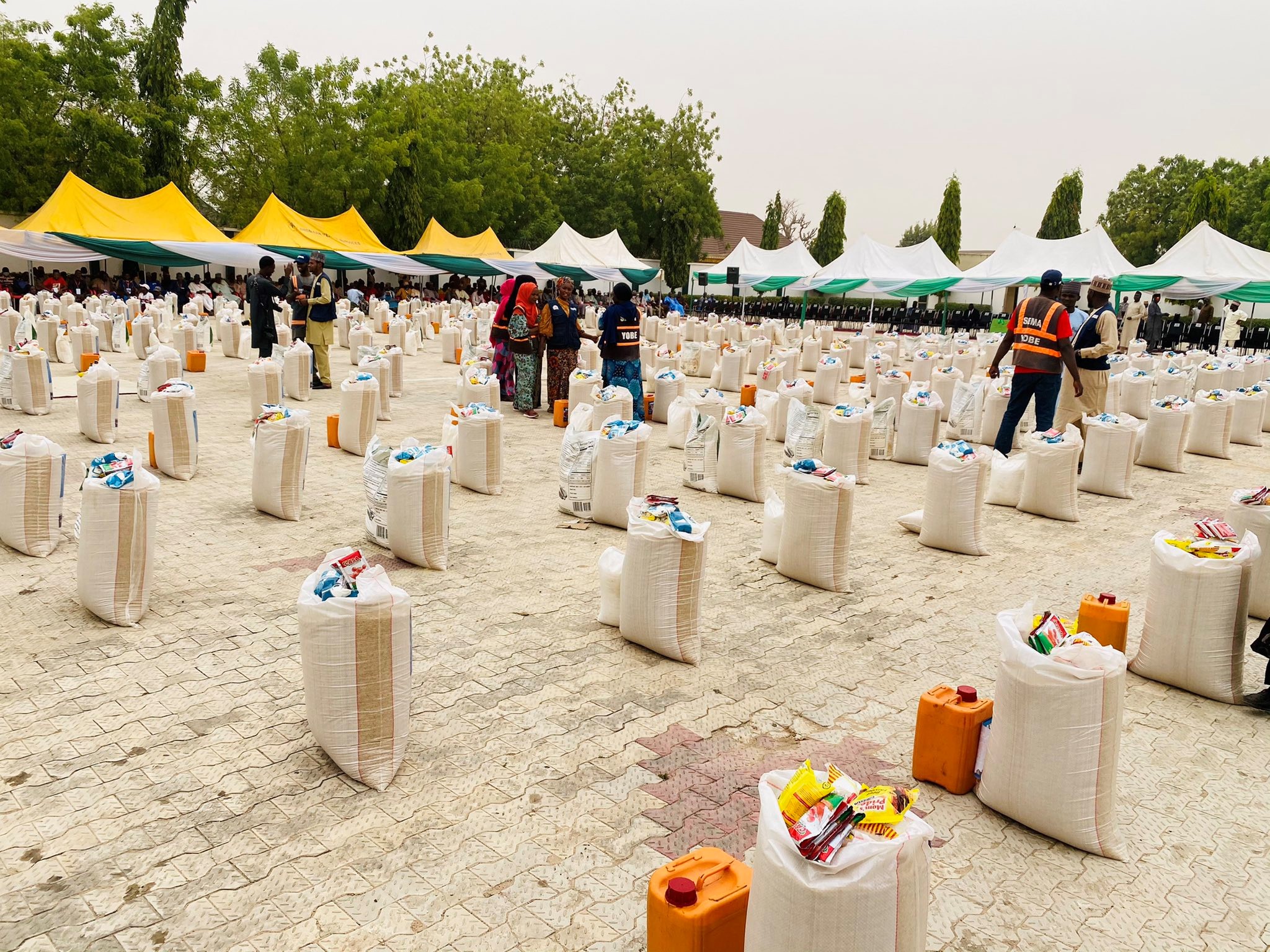
The tragic deaths of two students and the injury of 23 more at the botched distribution of palliatives at Nasarawa State University on Friday is a disturbing addition to what has been a troubling period for undergraduates in Nigeria.
Just last Friday, nine students of Federal University Gusau regained their freedom after spending over 170 days in terrorists’ captivity. On Thursday, three medical students of Abia State University died in a road traffic accident while returning from their seniors’ induction.
Unlike these other tragedies, however, the Nasarawa stampede could have been envisaged and prevented. The successful distribution of similar palliatives at the University of Ilorin shows us how we can do things differently.
Following subsidy removal and the attendant inflation in the country, several state governments distributed palliatives—foodstuffs and stipends—to ease the economic burden on citizens. Some states like Kwara and Nasarawa recently extended the palliatives to students in their tertiary institutions.
The initial distribution of the palliatives across institutions in Nasarawa state was peaceful. A government statement released after Friday’s stampede noted that previous distributions were “a huge success.” Students got two 7.5 kg bags of rice and 5,000 naira each.
However, events leading to the stampede at Nasarawa State University, Keffi, points towards a mismanagement of crowd control by the organizers responsible for distributing the palliatives. According to media reports, the palliatives were scheduled at the university convocation square until students arrived in large numbers and disrupted the distribution.
“After our arrangement for the distribution of palliatives to the students which was to hold at the University’s convocation square, they (students) suddenly arrived at the venue in their numbers and overpowered the security,” said Yunusa Baduku, National President of the Nasarawa State Students Association, in a Punch Online report.
He added that the students “broke through the gate into the Convocation square where the bags of rice was to be shared,” leading to the stampede that consumed the two students and injured many more.
Sadly, such chaos is not new. In February, the Nigerian Customs Service had to suspend its sale of seized bags of rice after seven people died at one of its centres in Yaba, Lagos. Some two years ago, 31 people died at a stampede at the King’s Assembly in Rivers state church during the distribution of palliatives to church members; seven more were injured.
Although the state governor, in a statement by his Chief Press Secretary, was quoted as calling the tragedy “a needless stampede,” the state could have prepared better for it. Distribution events, especially those intended to provide aid or relief, tend to draw large crowds, making effective crowd control essential.
In Unilorin, for instance, where students received palliatives—cartons of noodles—from the Kwara State government, distributions were such that students did not have to gather in their numbers at the arena or use vouchers.
The government sent the palliatives to the university, who distributed them to the faculties. From the faculties, they were distributed to departments, where class representatives from each level went to retrieve the packages for their class. It was as seamless as public distributions go.
I suppose the Unilorin model could help other tertiary institutions plan more effectively. The university leveraged student associations and divided the population into manageable chunks. Such divisions made it difficult for hoodlums to gatecrash, as the class reps knew their colleagues. The strategy also eased accountability.
While I admit there is a risk of student representatives appropriating the palliatives or shortchanging their colleagues, this is more manageable than asking a crowd of desperate undergraduates to gather for government handouts.
A departmental or level advisor can be mandated to coordinate the distribution, even if he has to be paid or receive palliatives, too. It is not likely that the coordinator will conspire with the student reps to loot the palliatives. In the rare event that that happens, then so be it. Nigeria students have suffered enough than to die in avoidable stampedes.
Adoto writes from Ilorin via bellohussein210@gmail.com.
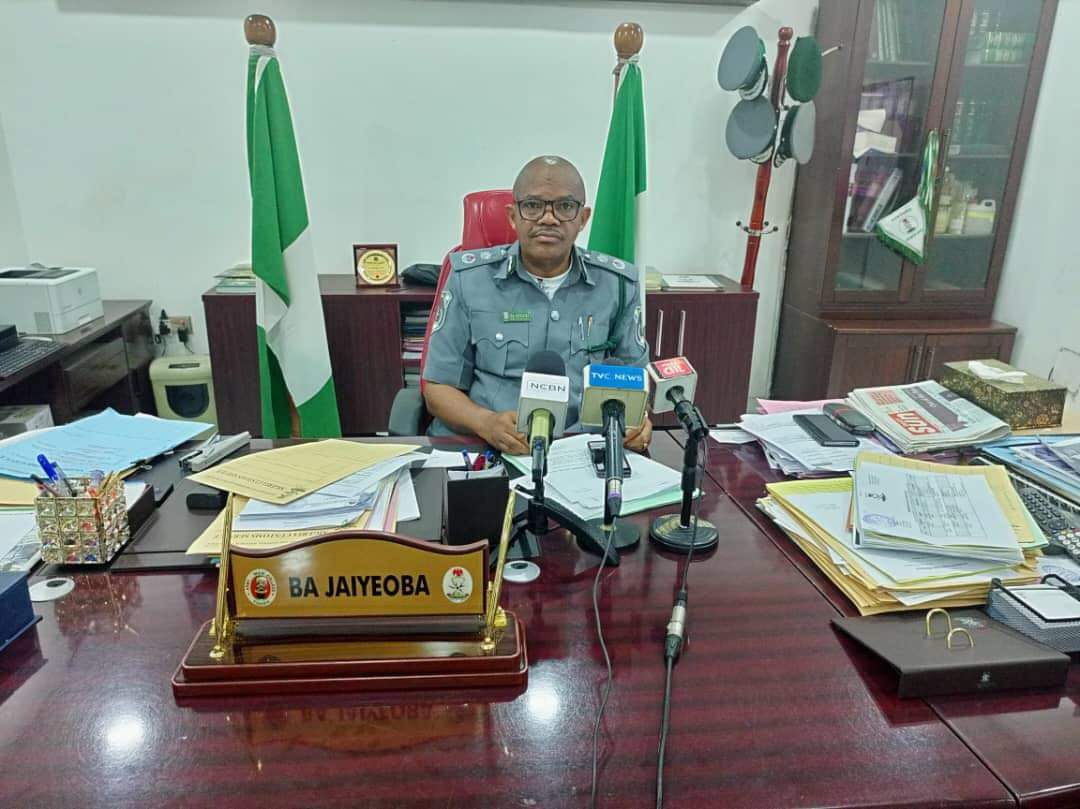
The Nigeria Customs Service, Apapa Area Command, has shattered previous revenue records by collecting an astonishing N489,614,095,022.15 in the first quarter of 2024.
This figure marks a staggering increase of over 100% compared to the N212.5 billion collected during the same period in 2023.
The announcement came through a press release from the Command’s Public Relations Officer, Chief Superintendent of Customs, Abubakar Usman, on Saturday, April 6, 2024.
Commander Babajide Jaiyeoba, the Customs Area Controller (CAC) of the Command, hailed this achievement as a significant stride towards reaching their ambitious target for the year.
With a target set at nearly N2 trillion for 2024, Jaiyeoba emphasized the pivotal role of compliance in achieving this objective.
Jaiyeoba underscored the importance of adhering to established protocols, including the Nigeria Customs Service Act (NCSA) 2023, government import/export prohibition lists, Common External Tariff, and Federal Government-approved Standard Operating Procedures (SOP).
He stated that diligent compliance not only ensures smoother operations but also unlocks a myriad of benefits for all stakeholders.
Expressing gratitude to the Officers and port stakeholders for their cooperation, Jaiyeoba called for sustained compliance from both government and private sector entities.
He urged all stakeholders within the Apapa Port to continue supporting the Customs Service in fostering an efficient and rules-based system for import/export cargo clearance.
“I will continue my weekly engagement of stakeholders at various levels to sustain the tempo of our achievements and consolidate on the gains from regular enlightenment of every member of the port community,” said Jaiyeoba, highlighting the importance of ongoing communication and collaboration.
In his address, Jaiyeoba reiterated the role of the Apapa Command in realizing the NCS’s annual target of N5.7 trillion for 2024, stressing the collective responsibility of all involved parties.
Furthermore, Jaiyeoba outlined the benefits of compliance, including the recently launched Authorized Economic Operator (AEO) program.
He noted that honest declaration not only enhances reputational integrity but also expedites cargo processing, reduces costs, and mitigates the risk of penalties or seizure.
As the Command gears up for the second quarter of 2024, Jaiyeoba expressed confidence in surpassing previous achievements.
“As we step into the second quarter to end the first half of 2024, I am convinced we will do better in revenue collection, facilitate more trade through our port, and prevent smuggling under any guise,” he affirmed.
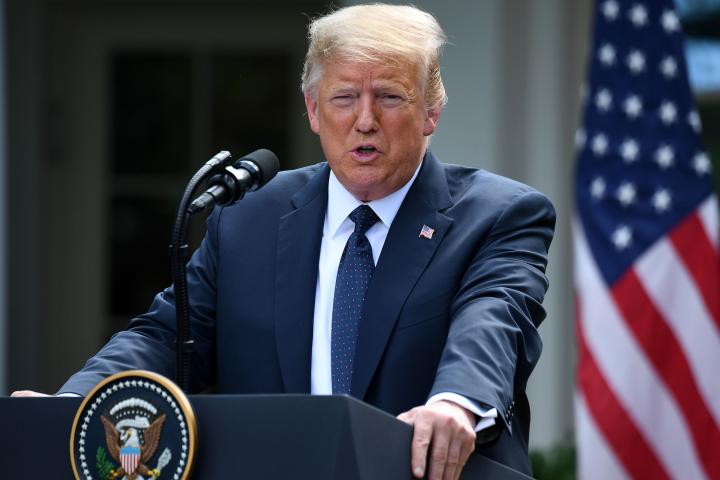
Republican presidential candidate Donald Trump has advocated for leaving the decision on abortion rights to individual US states, a move that deviates from his previous wavering on the highly controversial issue.
In a video shared on his Truth Social network, Trump expressed his stance, stating, “My view is now that we have abortion where everybody wanted it from a legal standpoint, the states will determine by vote or legislation or perhaps both.”
He stated that whatever decision states make regarding abortion rights “must be the law of the land, in this case, the law of the state.”
This declaration comes after months of uncertainty surrounding Trump’s position on abortion, exacerbated by conflicting reports.
In February, The New York Times published an article suggesting Trump favored a 16-week national abortion ban but refrained from publicly addressing it to avoid alienating socially conservative supporters.
The backdrop against which Trump’s statement emerges is the landmark 2022 US Supreme Court ruling that overturned Roe v Wade, the case that had established the federal right to abortion.
The ruling effectively transferred the authority over abortion laws to individual states, resulting in a patchwork of regulations across the country.
While some states have implemented near-total bans on abortion, others, like Maryland, have reinforced abortion rights through legislation.
Many conservatives have been advocating for a national ban to supersede state laws favoring abortion rights.
However, public opinion leans towards supporting abortion rights, with extensive polling indicating that a majority of Americans believe abortion should be legal in most cases.
Approximately half of the states have enacted measures to safeguard access to abortion services.
Trump’s presidential rival, incumbent President Joe Biden, has consistently supported abortion access despite being a devout Catholic.
Democrats have framed Trump as the driving force behind attacks on reproductive rights and have vowed to restore Roe v Wade if given the opportunity.
Since the Supreme Court’s ruling on Roe v Wade, abortion rights advocates have achieved success in seven consecutive referendum victories.
Conversely, Republicans have struggled to establish a clear stance on the issue and faced repercussions in the 2022 midterm elections, losing crucial battlegrounds to candidates supporting abortion rights.
In his video address, Trump reiterated his support for exceptions to abortion bans in cases of rape, incest, and when the life of the mother is at risk.
He also emphasized his backing for in vitro fertilization (IVF) access for couples undergoing fertility treatments.
Legal experts suggest that the Supreme Court’s decision effectively grants states the ultimate authority on matters of personhood, potentially impacting various aspects of reproductive health, including IVF procedures.
Trump’s latest stance adds another layer to the ongoing debate over abortion rights in the United States.
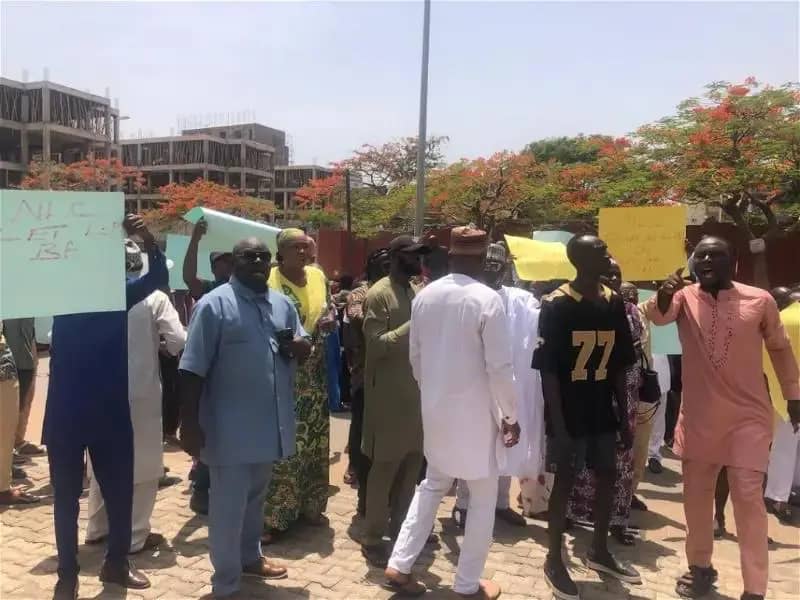
Supporters of Comrade Julious Abure, the National Chairman of the Labour Party (LP), took to the streets of Gudu, Abuja, today to voice their grievances against what they perceive as unwarranted interference by the Nigeria Labour Congress (NLC) in the affairs of their party.
Dozens of protesters, brandishing placards emblazoned with messages such as “On Abure’s mandate we stand,” “NLC leave Abure alone,” and “Nnawi’ National Convention is valid,” commenced their march from the new Abuja chapter secretariat.
The demonstration follows a recent escalation in tensions between the Nigerian Labour Congress and the leadership of the Labour Party, with the NLC accusing Abure of operating as a sole administrator within the LP. This accusation culminated in the NLC passing a vote of no confidence in Abure’s leadership and demanding his resignation.
The conflict between the two organizations has captured widespread attention and sparked debates regarding the NLC’s authority to intervene in LP’s affairs, as well as the underlying reasons behind their dispute.
Investigations by Vanguard have revealed that the ongoing power struggle between the Julius Abure-led National Working Committee of the Labour Party and the Comrade Joe Ajaero-led Nigeria Labour Congress is jeopardizing the future of the Labour Party itself.
Central to the conflict is the battle for control over the party’s structure, with major stakeholders accusing Abure of treating the LP as his personal fiefdom, an allegation vehemently denied by Abure.
Trouble began brewing for Abure shortly after the 2023 general elections, when some party members, led by Alhaji Lamidi Apapa and Abayomi Arabambi, accused him of financial mismanagement. Subsequent court battles resulted in Abure’s leadership being upheld by the Court of Appeal.
However, fresh turmoil erupted when the party’s former National Treasurer, Ms. Oluchi Oparah, publicly alleged that Abure must be held accountable for over N3.5 billion, purportedly received by the party from the sale of forms and donations during the 2023 elections. Oparah’s outspokenness led to her suspension for six months on grounds of bringing the party’s reputation into disrepute.
Currently, the Abure-led NWC of the LP finds itself at odds not only with the NLC but also with the House of Representatives caucus of the party. This discord stems from Abure’s unilateral decision to proceed with plans for a national convention without soliciting input from party stakeholders.
As tensions continue to mount, the future trajectory of the Labour Party remains uncertain, with the specter of internal strife casting a shadow over its viability as a political entity.
Rwanda paused on Sunday to honor the memory of genocide victims, marking three decades since a brutal campaign orchestrated by Hutu extremists tore through the nation, leaving deep wounds as communities turned against each other in one of the darkest chapters of the 20th century.
The relentless violence, spanning 100 days until the Rwandan Patriotic Front (RPF) rebel militia seized control of Kigali in July 1994, resulted in the deaths of 800,000 individuals, primarily Tutsis but also moderate Hutus.
Despite the immense tragedy, Rwanda has made strides toward stability under the firm leadership of President Paul Kagame, who helmed the RPF.
Nevertheless, the legacy of the atrocities persists, casting a shadow over Africa’s Great Lakes region.Following tradition, ceremonies held on April 7—the day when Hutu militias unleashed terror in 1994—commenced with Kagame lighting a remembrance flame at the Kigali Genocide Memorial, a solemn site believed to hold the remains of over 250,000 victims.
Accompanied by somber melodies played by an army band, Kagame laid wreaths at the mass graves, joined by foreign dignitaries, including several African heads of state and former US President Bill Clinton, who had acknowledged the genocide as a grave failure during his tenure.
The failure of the international community to intervene remains a point of regret, with French President Emmanuel Macron expected to express remorse for France’s and its allies’ inaction, acknowledging they could have halted the bloodshed but lacked the resolve to do so.
Kagame is scheduled to deliver an address at a 10,000-seat arena in the capital, where Rwandans will later gather for a candlelight vigil in remembrance of those lost to the slaughter.
The commemoration marks the beginning of a week-long period of national mourning, during which Rwanda will come to a standstill, with flags flown at half-mast. Public music, sports events, and non-remembrance-related television broadcasts are suspended.The United Nations and the African Union will also hold remembrance ceremonies to honor the victims.
Reflecting on the events, Karel Kovanda, a former Czech diplomat and the first UN ambassador to publicly denounce the 1994 massacres as genocide, emphasized the importance of ensuring that the genocide is never forgotten, asserting that the page cannot be turned on such atrocities.
The genocide, triggered by the assassination of Hutu President Juvenal Habyarimana on April 6, 1994, led to widespread atrocities fueled by virulent anti-Tutsi propaganda disseminated through various media outlets.
Countless individuals were brutally murdered, and tens of thousands of women were subjected to sexual violence.Rwanda has taken steps to address the legacy of the genocide, including establishing community tribunals for victims to confront their perpetrators. However, challenges persist, with hundreds of genocide suspects still at large, some reportedly seeking refuge in neighboring countries.
Despite the passage of time, Rwanda continues to grapple with the wounds inflicted by the genocide, endeavoring to ensure that the horrors of the past are never forgotten while striving to build a future rooted in peace and reconciliation.
The Economic and Financial Crimes Commission (EFCC) has apprehended a clergyman in Ilorin, Prophet Adeniyi James, on allegations of defrauding a member of his congregation to the tune of N3.9 million.
James, who serves as the General Overseer of Christ Apostolic Church (CAC), Freedom City Prophetic and Deliverance Ministry in Ilorin, was taken into custody by the Ilorin zonal command of the EFCC on April 2.
Dele Oyewale, the head of media and publicity for the EFCC, revealed in a statement issued in Ilorin on Saturday, that the arrest came following a petition lodged by the victim, Oluwole Babarinsa.
Babarinsa recounted in his petition that during a church programme in 2021, James purportedly had a divine revelation about his (Babarinsa’s) imminent travel abroad.
According to Babarinsa, James engaged him in a conversation about his preferred destination, to which he responded, ‘Canada’.
Subsequently, James allegedly informed him of a friend in Lagos who could facilitate his relocation to Canada, albeit at a cost of N1.7 million for processing and an additional N2.5 million for flight tickets and travel documents.
In his quest to fulfil the purported divine directive, Babarinsa resorted to selling some of his assets and taking out loans, ultimately amassing a total of N3,980,000, which he handed over to the prophet.
However, despite the substantial sum provided, Babarinsa alleged that James failed to fulfil his promises.
“The petitioner stated that all efforts and entreaties to the suspect to refund his money yielded no positive result,” Oyewale said, relaying Babarinsa’s frustration with the situation.
The EFCC spokesperson affirmed that following the arrest, investigations into the matter are ongoing, with plans to arraign the suspect in court upon completion of the inquiry.
“And another time – you shall see something wondrous.” “And I thank my Lord that my secret is not sterile or barren.” – Sheikh Ibrahim Niasse
By Umar Sheikh Tahir
Harvard University is renowned for its academic excellence and intellectual vibrancy. Visitors often expect encounters with great minds and engaging discussions with professors, students, and highly enlightened individuals. However, my recent visit transcended mere intellectual exchange; it was a holistic experience that seamlessly intertwined intellectual discourse with spiritual enrichment, specifically with my fellow Tijjāniyah Faydah community, where I shared my day with them, which was superb and was a Friday full of activities.
On March 29, 2024, the day commenced with an eagerly anticipated lecture under the Islam in Africa initiative Lecture Series, co-organized by Prince Bin Al-Waleed Bin Talal Islamic Studies Program, Hutchins Center for African and African American Research, Harvard Faculty of Arts and Sciences, and Harvard Divinity School, and also the program convened by Professor Ousmane Kane al-Waleed Bin Talal, Professor of Contemporary Islamic Religion and Society.
My friend and interlocutor, a fellow Tijjānī disciple Amadu Kunateh, is a PhD candidate who works on Islamic Intellectual Traditions in Sub-Saharan Africa and their philosophical currents. He presented a lecture on the reception of theology (Kalam) and philosophy (Falsafa) in Modern Sub-saharan Africa. He utilised Sheikh Ibrahim Niasse as a case study of African ulemas’ engagement with the subjects. In keeping with the form of the subject matter, Amadu summarised his work in syllogistic form:
Premise 1: In Islam in Sub-Saharan Africa, Kalam and Falsafa were present but held limited valorisation.
Premise 2: Sheikh Ibrahim Niasse denounced Kalam and Falsafa as ‘evil innovations’.
Premise 3: Kalam’s aim of providing certain knowledge was refuted by Niasse, who argued that it cannot offer certainty.
Premise 4: Ma’rifa and tarbiya, offering certain knowledge, negate the necessity of Kalam.
Premise 5: Critics suggest that Ma’rifa is exclusive, leaving Kalam and speculative reasoning as alternatives for the populace.
Premise 6: In the Islamic context of West Africa, under Sheikh Ibrahim Niasse’s guidance, Ma’rifa is universally attainable.
Conclusion: Thus, in this milieu of the `Ārifeen in Subsaharan Africa, Kalam and Falsafa become redundant.
Notwithstanding, Amadu suggested that despite the privileging of ma’rifa and tarbiya as alternative cognitive modes, he showcased the continued presence of profound intellectual contributions to the issues pertinent questions of Kalam and Philosophy found in Sheikh Ibrahim’s Fi Riyād al-Tafseer.
The Q&A session allowed for more in-depth engagement with particular issues ranging from questions on Sheikh Ibrahim’s conception of Time, God’s Attributes (Sifat) & Dhat (Essence), the limits of the Intellect (‘aql), and more. The lecture ended with a hot meal, which was enjoyed by non-Muslims who are not observing Ramadan fasting, and takeaway containers for Muslim fasters.
Since it was Friday, we went to the Masjid for Friday prayer, where I found myself spiritually immersed, complementing the intellectual discourse seamlessly. Serendipitously, the Friday sermon (khutbah) was delivered by Dr. Ousmane Kane, who reminded congregants of the importance of God-consciousness (taqwa) and how taqwa results in God teaching you knowledge directly. This was a poignant reminder for an audience of academics and students in the pursuit of knowledge.
The sermon echoed Amadu’s earlier presentation on the alternative epistemologies and limits of the intellect. How remarkable to have heard a presentation on Sheikh Ibrahim Niasse only to follow it up with a khutbah at Harvard by his grandson, Dr. Kane, the son of his daughter Seyda Maryam Niasse. It was evident that the Flood (Fayda) had indeed travelled westward, and its wonders reverberated through the Harvard walls.
Dr Ousmane Kane
Following the Juma’ah prayer, the day continued to unfold its tapestry of spiritual and philosophical threads, culminating in two extraordinary meetings: one a private meeting with Dr. Kane in his office. During my meeting, I updated him on my project and the progress I am making at Columbia University. He gave me some valuable academic tips and then prayed for us with my friends.
My doctoral dissertation is about the tradition of Arabic Islamic logic in Subsaharan and North Africa. As such, it was suggested that I meet Āqil, an undergraduate student at Harvard College majoring in Math and philosophy, with a particular focus on modern logic. He is well-versed in Islamic tradition, having had madrasa training in Malaysia before arriving at Harvard.
Our conversation explored the relationship between Modal Logic, Classical Logic, and Arabic logic. The discussion focused on the metaphysical assumptions that ground modern logic and go unnoticed by modern logicians like Frege, Russel, and Wittgenstein. However, precise and comprehensive due to its extensive utilisation of symbols, it can be used for contemporary Usul al-Fiqh (Principles of Jurisprudence) as classical Arabic logic was traditionally espoused as an ‘instrumental’ tool for Usul and Theology. We were not convinced of the utility of modern logic for the Islamic sciences, but this issue requires further exploration.
Since it was Friday, and as Tijjānī adherents, we headed out to the Zawiyah located at Shaykh Ousmane Kane’s home to engage in more remembrance (dhikr), Qur’an recitation, poetry recitals community before the Maghrib prayer. In the midst of rigorous intellectual engagement, moments of spiritual reflection provided a refreshing pause. A moment of tranquillity presented itself during the Haylala at the Zawiyah. The evening culminated with the Quranic khatm, which is done every week following a complete recital of the Quran by members of this community.
We broke our fast together, which fostered a sense of community and companionship. It was amazing to experience a day of intellectual fasting at Harvard – with each conversation serving as a reminder of Allah.
The Path to Paradise is the prayer and the fast. And the Path to Allah is abandoning everything apart from Allah.
– Sheikh Ibrahim Niasse
As we partook in the communal meal, it became evident that such gatherings not only nourish the body but also nurture the soul, and the healing food is exclusively cooked with the heart before the hand. Thanks to Kane’s family.
By the way, not surprisingly again, Shaykh Ousmane Kane presented the annual Ramadan Lecture (Durūs al-Hasaniyah)hosted by His Majesty the King of Morocco in front of Muslim global ‘ulema on Western Academia and Islamic Intellectual Tradition in Sub-saharan Africa and his efforts at Harvard to unravel that history. It’s astonishing and unprecedented that Shaykh, who lectured in front of the world’s Islamic scholars in Morocco, was a Harvard professor, khatib, and spiritual leader (muqaddam). It is a testament to Dr Kane (complex of two oceans of mind and spirit, as I named him in lines of my poetry last year,) the grandson of Shaykh al-Islam and Harvard professor. Indeed, the Fayda has flooded over from Africa to Harvard and its nurturing hearts and minds.
Reflecting on the day’s experiences, it’s evident that intellectual and spiritual pursuits need not exist in isolation; rather, they can complement and enrich one another, as is currently occurring at Harvard. Within Harvard’s diverse intellectual community, there exists a small group of people championing a holistic approach to learning.
Umar Sheikh Tahir, PhD Candidate at Columbia University. He can be contacted via ust2102@columbia.edu.
The FCT Police Command conducted a series of coordinated raids on notorious black spots and criminal hideouts in the Durumi and Dei-Dei areas of Abuja.
The operation, carried out between March 31 and April 4, 2024, resulted in the arrest of eighty-five suspects for various offenses.
Confirming the success of the raids, SP Josephine Adeh, spokesperson of the FCT Police Command, highlighted the persistent criminal activities that had plagued these areas.
She described the hideouts as notorious havens for hoodlums engaged in a range of illicit activities, including the peddling of hard drugs, manufacturing counterfeit currencies, and erecting illegal structures.
During the operation, law enforcement officers executed search warrants on several structures within the targeted areas.
This led to the seizure of numerous incriminating exhibits, including counterfeit paper and coins in both local and foreign currencies, light weapons, eight motorcycles, seven generators, various electronic gadgets, and a stash of ATM cards suspected to have been stolen from victims.
Adeh stated that all the arrested suspects would undergo thorough screening, with those found culpable being profiled and subsequently arraigned in court to face justice.
Additionally, the illegal wooden structures erected by the criminals were dismantled and set ablaze as part of efforts to deter further criminal activities in the area.
CP Benneth Igweh, the Commissioner of Police for the FCT, reiterated his commitment to ridding the territory of criminal elements and ensuring the safety of all residents.
He urged the public to remain vigilant and cooperate with law enforcement agencies by reporting any suspicious activities through designated emergency hotlines.
Residents were reminded to contact the following police emergency contact numbers if there is newd: 08032003913 – 08028940883 – 08061581938 – 07057337653 – PCB: 09022222352 – CRU: 08107314192
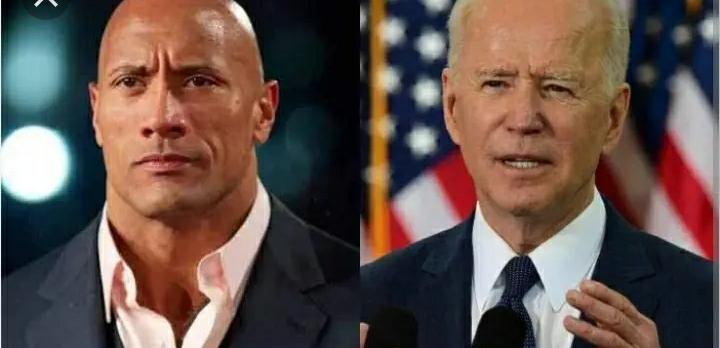
American actor and wrestler Dwayne Johnson, widely known as The Rock, has declared his decision not to endorse President Joe Biden for a second term in the upcoming presidential election rematch with former President Donald Trump.
Johnson had previously thrown his support behind Biden in the 2022 presidential election, lauding him for his qualities of compassion, heart, drive, and soul.
However, in a recent interview with Fox News, Johnson indicated a change in stance, stating, “Am I going to do that again this year? That answer’s no. I realise now going into this election, I will not do that.”
Back in September 2020, The Rock endorsed Biden and his running mate, Kamala Harris, praising their experience and leadership qualities.
However, when asked about a potential repeat of his endorsement, Johnson expressed dissatisfaction with the current state of America, saying, “Am I happy with the state of America right now? Well, that answer’s no. Do I believe we’re gonna get better? I believe in that – I’m an optimistic guy. And I believe we can do better.”
While stating his goal of uniting the country, Johnson asserted that he would keep his political views private, stating, “It is between me and the ballot box.”
He expressed trust in the American people’s decision, asserting that whoever they vote for will be his president, whom he will support wholeheartedly.