Month: January 2024

Escalating drug prices in Nigeria: Post-subsidy removal

By Abdullahi D. Hassan

Nigeria is described as the most populous black nation in the world, with over 200 million inhabitants, Africa’s biggest economy, and endowed with variant mineral deposits to improve the living standards of its citizens. Yet, the country is bedevilled by gross corruption. Poor governance, ethnic tension, and abject poverty threaten integrity and sovereignty.

Even though, in the past, Nigeria witnessed serial military rulers, The nation transitioned to democracy in 1999. Since then, Nigeria’s leadership has emerged; leaders have been elected from different platforms and regions. Thus, the problems lingered; most elections were marred by irregularities, political interference, and power tussles from one inch to the next.

The political parties adopt the concept of rotating power between the north and south to accommodate the plural ethno-religious groups in the country. After the two tenures of Muhammadu Buhari. Bola Tinubu was nominated by the All Progressive Congress (APC). Amidst serials of allegations labelled against him by the opposition to hinder his andidacy, The bulk of Nigerians were enthusiastic about the level of experiences and transformation built in Lagos from 1999 to 2032.

On May 29, a new Nigeria’s president, Bola, was sworn in. In his inauguration speech, he made a striking remark on Nigeria, mentioning, ‘Subsidy has gone, the controversial fuel subsidy scheme. Four decades of financial assistance were institutionalised in the 1970s by the government to minimise the excessive cost of fuel (Premium Motor Spirit) to consumers and affordability to average citizens. Within a week’s time, the prices of basic household items, transport fares, and electricity began to rise at a high pace. Thus, fuel subsidy is the direct government intervention for the common man that benefits directly, without an odd process. Subsequently, the price increment affects the pharmaceutical industry acutely.

In recent months, patients from economically deprived backgrounds with terminal illnesses and diseases have been on recommended drugs and life-support medications. They are exposed to the brunt of fuel subsidy removal principles. Patients with asthma, diabetes, cancer, hypertension, and sickle cell diseases find it hard to afford medications at exorbitant prices. Due to financial hardship, inflation, and 1000 per cent hikes in drug prices.

GlaxoSmithKline (GSK), a British pharmaceutical and biotechnological company, withdraws from Nigeria. After 51 years of operation, The pharmaceutical firm is known for producing effective drugs, anti-biotics, anti-asthma, anti-malaria, allergy relief, painkillers, pain cream, and nasal decongestion. According to the report by the International Centre for Investigative Reporting (ICIR), GlaxoSmithKline Consumer Nigeria faced a setback in sales of N7.75 billion ($9.83 million) from N14.8 billion last year. GlaxoSmithKline’s existence leads to a drug hike, patients being unable to have medication and an increase in fake drugs. Similarly, GSK faces challenges from the high cost of importation of active pharmaceutical ingredients (APIs), a lack of steady power supply, and the depreciation of the naira against the US dollar.

According to the National Bureau of Statistics (NBS), the value of pharmaceutical products imported into Nigeria rose by 68 per cent to N81.8 billion ($99.1 million) between July and September 2023. The reports revealed that most of the drugs were imported from China, India, the United States, France, and Germany.

From the price survey across the country, the drugs were selling: asthma inhalers from N4,000 ($4.86) to N12,000 ($14.57), hypertension drugs from N10,000 ($12.14) to N20,000 ($24.28), augmentin tablets from N6, 000 ($7.28) to N24, 000 ($29.14), and Glucophage from N3, 800 ($4.61) to N6, 200 ($7.53). The prices vary between cities and regions.

David Uja, 63, a retired army officer frail from prostate cancer, undergoes chemotherapy for two sessions. Each cost him $100. She said, “For almost two months. All the prescribed drugs I used have already expired. The little pension received from the government is not enough to buy medicines at a high price. The economy is bad for us; people battle deadly sickness.”

“After I complained to my doctor, who relocated to the UK, Thanks to him, he sent me an Orgovyx tablet via courier, an expensive drug over $400, said Mr David.

Dataphyte reports that in 2021, only three per cent of the Nigerian population will have health insurance. Despite the guidelines of the National Health Insurance Scheme (NHIS), it is mandatory for Nigeria to benefit from the insurance. Public servants have smooth access to it. An employer will contribute 10% of the monthly basic salary, while the employee contributes 5%. The insurance covers the contributor, spouse, and four biological children less than 18 years old. The current monthly minimum wage is $44.45. Technical non-government workers are denied access to health facilities and medication.

In October, the Central Bank of Nigeria lifted the ban on 43 items after 8 years to allow access to foreign exchange and import-listed goods in the country. Never, pharmaceuticals and medical essentials are excluded from the list.

Interestingly, oil is the mainstay of Nigeria’s economy. Even so, the country has remained poor, with its citizens living below the poverty line of $1 per day. Nigeria has been nearly six months without a fuel subsidy. The majority of Nigerians are unable to afford standard health service delivery. These led to fast and quick deaths among the vulnerable. Others reside in rural areas that lack the means to buy drugs at a high rate. Alternative to traditional medicines.

Therefore, deciding on traditional medicine, given its low cost of purchase, Such medicine lacks a scientific approach, and most traditional doctors determine the nature of an ailment by mere observation. Outwardly of any examination and sometimes depend on spiritual healings in order to detect the course of sickness. These have made life more difficult in a nation with a life expectancy of 53.87 years.

Abdullahi D. Hassan is a freelance journalist and writer from Abuja, Nigeria. His journalistic and literary pieces were published in Daily Trust, The Guardian, Triumph, Politics Today, The Daily Reality, and Kalahari Review.     
In need for collective battle against drug abuse

By Nusaiba Ibrahim Na’abba

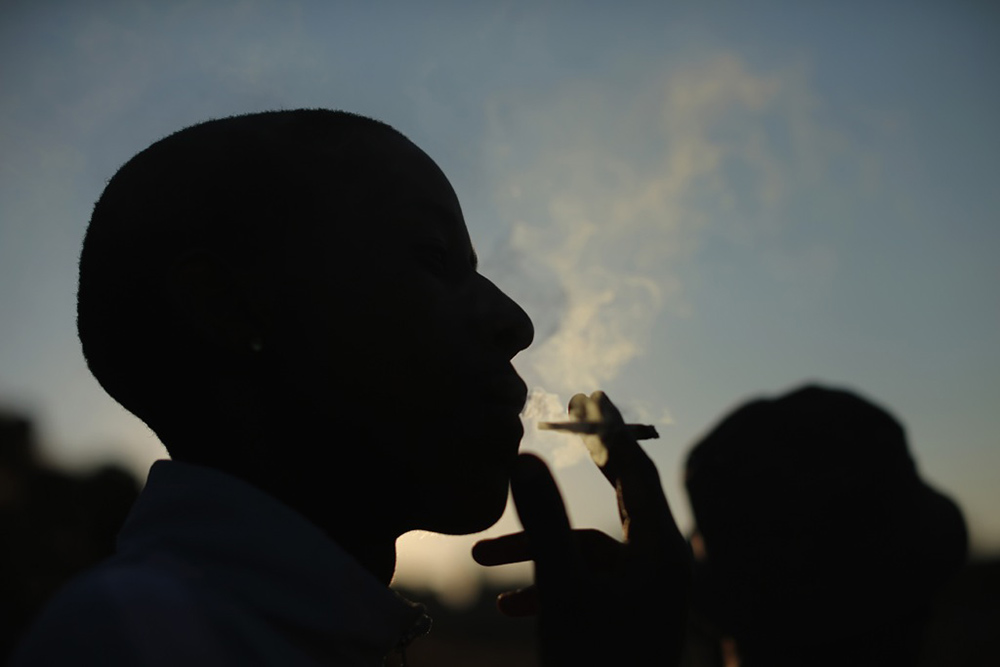
We continue to lose a part of us – our brothers, sisters, friends and colleagues – to drug abuse. It keeps getting scarier, forcing all of us to have bleak thoughts about the future. For us to win this war against drug abuse, we need to do the following and, perhaps, more.

Communality: Our common fight against the pervasiveness of these substances was long lost here. Achieving common goals is now a bizarre thing of the past. When problems happen at family or community levels, we begin playing blame games. And to those who think their wards are ‘righteous’, they’ve done an impeccable parenting job. They describe people who are facing the heartbreak of child-related drug abuse as being incapable, too strict or too loving to their kids to let that happen. They then hop on the trend of gentle parenting as the key to having upright children. But reality shows that some parents who battle these problems possess proper parenting skills.

Now, in the case of the neighbourhood or larger community engagements, menial signs of danger are being neglected. Often, these drug dealings and businesses flourish where there is community negligence. The drug lords are purposeful enough to select urban areas where families live low-key lives. There, they conduct their sales without much or any attention from the communities, using selected morning hours for their exchanges. Quickly, a business of millions will happen in front of your house, and you will forever not know.

We must work together to be more vigilant. I am confident that the power of our communal efforts supersedes a few bad eggs that vow to torment the lives of our beloved youths with harmful substances. This battle is beyond a one-man thing. I’m also not generalising the drug dealings to happen in all urban areas in Kano, but there are several allegations about that.

Sustainable Income Options: About four years ago, the BBC Africa Eye gave staggering statistics of codeine consumption in Kano and Jigawa States in their investigative report titled Sweet Sweet Codeine. Well, the situation has only gotten worse with shisha parlours and other unthinkable substances aimed at destroying us in total. The mere imagination of how much is invested in this business is inconceivable. Unlike food, illicit substance addiction does not embrace sorry as an answer. Even in the eyes of the storm, addicts must get their day’s share. And this is why its market keeps expanding and thriving. Before you start arguing, they never fail in their businesses because they always have a market.

Unless a robust, sustainable income generation mechanism is found and proliferated in the minds of young adults into this business, we will continue to lose hope. It is extremely difficult to convince a young adult who has discovered the ropes of this illegal business to start a legal business with a low income. Their state of growth is one, and the reality you cannot overlook is difficult. Adding to the complexity of the already bad situation, you would find it difficult to neglect how politicians spend money lavishly, which is widely spread on social media.

This is one of the most difficult tools that must be deployed in this fight.

Women Groups: I’m 100% supporting creating women groups who can keenly monitor community levels. Women possess an indispensable role in upbringing, and they receive the largest share of agony when they lose their child to drug abuse. When they are part of decision-making, they can contribute immensely to the patterns they notice in their wards, and finally, they own the collective action.

Nonetheless, they must be trained rigorously on the processes they can use to fact-check drug abuse in their kids. It has been an issue that women do not understand the change in eating, sleeping, or engagement habits of their kids, which is drug-related. With the training, the problem can be tackled early before it escalates.

I can vividly recall when a mature lady entered our house some years ago. She came in with deep red eyes, along with a young girl who was 7 to 8 years old. It was in the evening, around 5 p.m., when we were seated in our compound, chatting. The woman, whose age I cannot ascertain, said she needed help with some money to buy foodstuff. By Allah, her appearance and language did not show she needed help. In fact, she appeared to be more of a well-to-do individual. But you could tell she was desperate for something, and the little girl kept giving her looks of disbelief with every sentence she made.

My mother said she had no money to help her. After a moment, she gathered momentum and said goodbye, leaving with the kid. It was only months after the encounter that my mother explained that she was sure that the woman was high on a substance and that she desperately needed money to keep going.

This world is a scary place.

Language and Codes: People who are associated with illicit substance abuse or business create codes for interaction so that they cannot be easily identified. It is usually only the people in their circle who can understand them.

There must be a way of breaking down their language and codes to identify them quickly. It creates a massive gap in understanding the context of discussions; hence, meeting points and business dealings can be set up effortlessly without anybody noticing. In community kiosks where these exchanges happen, they are facilitated by a unique language and code.

We need to break that language barrier to dissect the problem better so we can address it appropriately.

Nusaiba Ibrahim Na’abba wrote from Kano. She can be reached via nusaibaibrahim66@gmail.com.

Tragedy as Nigerian soldier ‘accidentally’ shoots self to death

By Sabiu Abdullahi 

A soldier attached to the 35 Artillery Brigade of the Nigerian Army in Abeokuta accidentally shot himself to death, as confirmed by Lt.-Col. Olabisi Ayeni, the spokesman of the 81 Division, Nigerian Army, supervising the brigade. 

The unfortunate incident occurred when the soldier sustained a gunshot wound to his head. Lt.-Col. Ayeni reported on Wednesday that upon hearing the accidental discharge, the soldier’s colleagues rushed to the scene, discovering him in a pool of his own blood. 

“Investigation has since started to unravel the circumstances and possible remote cause of the unfortunate incident. 

“The remains of the soldier have been evacuated and deposited at the Federal Medical Centre, Abeokuta,’’ Mr Ayeni stated. 

Addressing speculations circulating on social media, Lt.-Col. Ayeni urged the public to disregard insinuations that the soldier took his own life due to non-payment of Ration Cash Allowance. 

He clarified that the late soldier had been deployed to the Brigade Standby Force on Jan.15, adequately fed alongside his colleagues in accordance with the Nigerian Army’s standards for troops on duty. 

Expressing deep concern over the misuse of the incident, Lt.-Col. Ayeni stated the commitment of the division to the welfare of its troops. 

He conveyed the division’s condolences and sympathy to the deceased soldier’s family, highlighting that the division is dedicated to providing necessary welfare to boost the morale of its troops.

Nigeria Wrestling Federation extends gratitude in courtesy visit to customs boss

 By Sabiu Abdullahi 

The Board of the Nigeria Wrestling Federation (NWF) paid a courtesy visit to Bashir Adewale Adeniyi MFR, the Comptroller General of Customs (CGC), on January 16, 2023. 

The visit aimed to express gratitude for the CGC’s significant contributions as a distinguished Board member. 

Daniel Igali, President of the Nigeria Wrestling Federation, led the delegation and took the opportunity to congratulate the CGC on his appointment. 

He conveyed the federation’s heartfelt appreciation for the CGC’s active role as a board member and his unwavering support over the years. 

President Igali also acknowledged the CGC’s longstanding association with the board, dating back to his tenure as the Commandant of the Nigeria Customs Command and Staff College in Gwagwalada. 

This history of collaboration added a special dimension to the expressions of gratitude during the visit. In response, the CGC expressed his thanks for the honor and appreciation extended by the Wrestling Federation. 

Reflecting on his enduring involvement with the board, he assured the delegation of the Nigeria Customs Service’s continued dedication to promoting wrestling and other sports activities within the service. 

The CGC affirmed the service’s commitment to supporting the Wrestling Federation, pledging ongoing assistance and collaboration.

He underscored the importance of fostering training and sporting activities for Customs officers, highlighting the readiness of the Nigeria Customs Service to engage in Corporate Social Responsibility (CSR) initiatives with the Wrestling Federation. 

The visit highlighted the strong bond and collaborative spirit between the Nigeria Customs Service and sports federations, particularly the Wrestling Federation. 

This collaboration exemplifies a shared commitment to the development of sports in Nigeria, showcasing the positive impact of partnerships between government institutions and sports organizations.

Joint Tax Board wants to collaborate with customs to improve tax management

By Sabiu Abdullahi 

Mr. Olusegun Adesokan, Secretary of the Joint Tax Board, initiated discussions with the Comptroller General of Customs, Bashir Adewale Adeniyi, MFR, on January 16, 2023.

The purpose of the visit was to forge collaboration, focusing on critical areas such as system integration and finalising the Memorandum of Understanding (MOU) between the Nigeria Customs Service (NCS) and the Joint Tax Board. 

Mr. Adesokan, during the meeting, stated the necessity of a robust partnership between the Tax Board and Customs, placing particular emphasis on the issues of system integration and the pending MOU.

The discussion also touched upon a proposed technical training session designed to fortify the collaboration. 

Comptroller General Adeniyi stressed the pivotal role of engaging stakeholders in achieving effective tax management.

Acknowledging the collaborative imperative, he expressed his commitment to coordinating with the Human Resources Department to explore the suggested technical training session.

He also directed the legal teams to expedite processes leading to the finalisation of the MOU. Providing insights, Assistant Comptroller General of Customs in charge of ICT and Modernization, Kikelomo Adeola, highlighted advancements in integration with the Federal Road Safety Corps (FRSC).

This integration aims to register only vehicles that have paid the correct customs duties, contributing significantly to efficient tax management. 

The collaborative efforts between the Joint Tax Board and the Nigeria Customs Service underscore the commitment of both entities to fostering synergy.

Their joint focus on addressing critical issues related to tax management and system integration reflects a proactive approach to navigating the complexities of revenue collection in the country.

Think twice before selling that property to travel abroad 

By Aminu Mohammed

I recently came across an interview on Instablog9ja on Instagram, where an elderly man advised youths to think critically before moving to the United Kingdom for better opportunities. The interview sparked a lot of reactions from listeners, particularly from the youths who were unhappy with the man’s attempt to discourage them from seeking a better life abroad.

I was both amused and taken aback by the disparaging comments under the post. Unsurprisingly, many Nigerians, particularly the youths, are disenchanted with the country’s security challenges and economic situation, especially the lack of jobs and inflation, and are desperately looking for a means to travel abroad for a better life.

I have read several stories online of people who resigned from their jobs and sold their properties, such as houses, lands, and businesses, to raise significant funds to pay for tuition fees in the United Kingdom, which can range from £10,000 to £20,000, depending on the course of study.

I have received several emails from people asking for advice on applying for scholarships or postgraduate programs in Germany. Similarly, I have received messages from people seeking my opinion on whether to sell their property to pay for tuition for a master’s program in the UK and Germany or travel to another country to seek work.

First and foremost, I would never discourage anyone from exploring the world to pursue his or her aspirations. I believe that life without adventure is not worth living. I have gained many tangible benefits from moving to Germany for my studies. In the last few years, I have acquired valuable skills, visited great cities and met incredible individuals from different countries worldwide.

However, it is important that I share the reality of living abroad with those who are planning to embark on such an adventure. This will enable them to prepare adequately before leaving their home country.

Conduct Sufficient Research and Planning

Before making any relocation moves, it is important to conduct adequate research and preparation. You should start by evaluating your qualifications, skills, and ability to adapt. Remember that immigration laws are becoming stricter in European countries like the United Kingdom, France, Sweden and Germany. If you decide to migrate and explore other places, ensure you have a job with visa sponsorship, a scholarship, or the financial capability to support yourself while studying. Additionally, research the prospective countries you want to relocate to and check the ease of settling down after your studies.

It is also a good idea to consult reliable friends from the countries you intend to relocate to for genuine advice. Don’t be swayed by social media trends like the “Japa hype”. Peer pressure is a significant challenge in our society, and herd mentality often impedes personal growth.

Keep the Second Option in Mind

Defining your goals, intentions, and plans is important before jumping into something trending. Many people make the mistake of not having a concrete plan and end up stranded and depressed when things don’t work out as expected. If you plan to travel abroad, it is not advisable to do so on a visitor visa to find a job. This puts you at a great risk of getting stuck and deported for overstaying.

If you are currently employed in Nigeria and plan to study abroad, taking a study leave from your company is best. Similarly, if you have a successful business, do not dispose of it before travelling abroad. Instead, entrust it to someone you trust to manage it in your absence.

While many Nigerians have successfully moved abroad and achieved career and financial success, many are stranded and unable to return home. Some even suffer from depression and mental illness due to the challenges they are facing there.

Moving to a new country comes with challenges, so careful consideration is necessary before making any decisions. Best of luck as you embark on your personal pursuit and growth journey.

Aminu Mohammed wrote this article from Ingolstadt, Germany. He can be reached at gravity23n@gmail.com.

Nollywood Film Review: A Tribe Called Judah

The film with the title above came with a big bang and burst the block( in real terms, Blockbuster). I came to know of the film( I am not as good at motion pictures as books because in books you can see and hear and smell and feel and taste everything) when Atiku Abubakar and Sanwo Olu sent a twit of congratulatory message that one plagiarised one (same words same message) for hitting the 1 billion naira mark and becoming the highest money grossing film in Nigeria. I became interested. And I watched.

Why am I writing this? Honestly, I like celebrating good people and their achievements (a gift God gave me that I don’t ever think I have ever envied anyone. Rather, I celebrate him believing that, so long I keep clapping for them, one day they will also clap for me). 

After celebrating people, I love strong women. I truly do. Though honestly, my love for strong women (becoming them) had made me vulnerable in the eyes of weaker women. MY MOTHER IS A STRONG WOMAN, and on trying to be her(defending and protecting and advising and assisting all and sundry I became – in lowly goons eyes – a weak soul: reason if a woman doesn’t have empathy, I see her like a man–I will never get attracted to you: My little secret.

The above paragraph made me have a great likeness for the film A Tribe Called Judah.

The Storyline:

Jeddidah, played by Funke Akindele herself, is the mother of five boys from her five different men (East, North, South, West and “Mid-West”) that she vowed to protect with her life.

Emeka Judah, her first son, is the son of an Igbo man. He works in a Furniture shop, C&K, as a sales boy in a mall to a very wicked money laundering man.

Adamu Judah is the second son who works as a security guard at the same mall as Emeka.

Pere, the third son, is the black sheep of the house who goes about picking pockets in Lagos.

Shina, the fourth and second to the last born, always has his mother’s back and is a Lagos hooligan.

Ejiro, the last born, is a lover boy with–his life–Testimony (a beautiful young girl who can give him EVERYTHING, including her life, if it matters. Honestly, their love is something that can be seen only in films in the contemporary world.

As life keeps unravelling itself, every member of the family is loved by one another because their mother is solidly behind them. Emeka played his role as the big brother, always defending, fending, protecting and advising them. Adamu, the second from the womb, played his deputy role perfectly. He fell in love with a beautiful Hausa girl, but having no name or knowing the house of his father at Kano in Dala made him lose her. (Ejiro and Testimony’s love in reverse). Pere, the thief who, if not for sheer luck and the goodness you do, always find you wherever you are, would have been burnt alive by typical Lagosians, but for Jeddidah’s always love for goodness. She was there at the right time, and Pere was saved. Shina, the bloody bad English speaker and an area tout in a gang in Lagos, hears him, “I will work on me.” All these fingers are not equal.” despite his bad English guy, he is the man with the strongest will. He defended the family when it mattered most.

Ejiro, last born. The weakling and the somehow rejected cornerstone who, without the last heroic act of his lover, Testimony, would have all been killed.

You see, I have this belief that if you are good, you are good. Funke Akindele, both in the outside world and in the film she produced, is a good woman. The reason she has to be riding Keke Napep is to make sure that she loves her children despite having lost all their fathers one way or the other. So, when the time came for the children to stand by her, they all teamed up to save her by getting the needed money for a kidney transplant. 

The highly accented Igbo-speaking CEO of C&K Furniture, in fact, this guy is the salt of that film, is the wicked man who is Emeka’s boss that can’t lend Emeka money for his mother’s sickness but saying that Emeka should give him his mother’s number to give to his wife to join a strong “player glup in a church his wife is in.” You will laugh your life out and you will see in your very eye the statement “money miss road.” His dressing code, ehn! His I don’t care attitude, eh?! And his love for money is something I doubt I have ever seen.

Collette, the C&K General Manager (later have to “Correct don Collect” according to her boss), who was inherently wicked with a bad past, because hardly does a leopard shed its spots, Collette teams up with another gang to come and rob C&K. 

On that faithful day, the Juddahs agreed to rob that same. C&K and robbery turned into a war of two factions that Emeka paid the supreme price, but having a strong Deputy, Adamu picked up and made sure that EIGHT HUNDRED THOUSAND DOLLARS was moved for their mother’s kidney transplant. Collette was apprehended and was shown when she was breaking a CCTV unknown to her. Some lights are not for illumination alone. 

She tried to indict Emeka and Adamu, but Emeka has an alibi of saying he is travelling to Italy through the desert always and when sacked from C&K, his phone number hadn’t been reachable. Adamu was off duty on that day and part of the money was gotten from her gang. And for being “GILIDI”, she took a slug for her wickedness. And that was the end of a bad life, I believed.

The cinematography, the sounds, the colour combo, the settings, the scenes, the plots, the structure and everything that is required of a good film are contained in A Tribe Called Judah. 

Let’s make Funke Akindele the BILLIONAIRE that she deserves. Go watch the film. 

Written by

Engr. Mustapha Ibrahim, MNSE, R.Eng. BDSP.

President, Triple E Foundation.

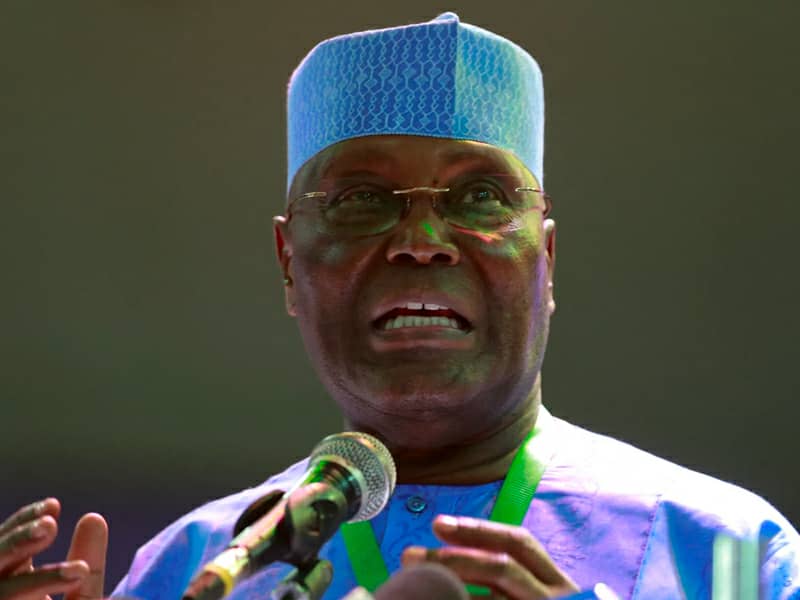
Atiku condemns unchecked reign of terror, calls for urgent address of security crisis

By Uzair Adam Imam 

Former Vice President Atiku Abubakar attributed the surge in kidnappings and insecurity across the country to pervasive poverty and hunger.  

In a statement shared through his official handle on Tuesday, Atiku expressed concern over the distressing level of violence, particularly in Abuja, the nation’s capital. 

He highlighted the correlation between worsening poverty and the escalation of kidnapping and insecurity.  

Atiku criticised the government’s failure to fulfil its constitutional duty of safeguarding citizens’ lives and property, asserting that such negligence creates an open invitation for criminals to operate freely, leaving citizens vulnerable to abductions. 

Lamenting the unchecked reign of terror by kidnappers, Atiku urged authorities to urgently address the deteriorating security situation to rebuild the trust of the Nigerian people.  

He drew attention to recent tragic incidents, including the abduction and subsequent murder of Nabeeha and 13-year-old Folorunsho Ariyo in the Sagwari Estate Layout in Dutse, Bwari Area Council of the FCT. 

Expressing condolences to the families of the victims, Atiku called for immediate action to curb the rising violence and lawlessness.  

He affirmed the need for the government to fulfill its duty in protecting citizens, praying for comfort to the bereaved families and eternal peace for the departed.

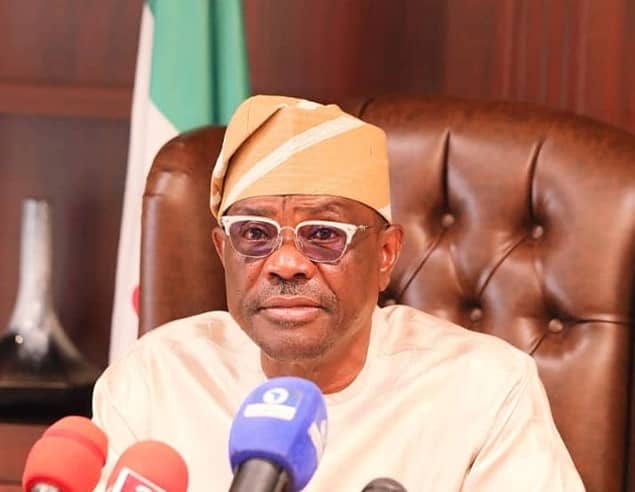
FCT Minister Wike convenes emergency security meeting amid kidnapping surge 

By Uzair Adam Imam The Federal Capital Territory FCT Minister, Ezenwo Nyesom Wike, convened an emergency security meeting on Tuesday in response to the rising incidents of kidnapping by bandits in Bwari Area Council and other parts of the territory. 

During the opening session, Wike reassured residents that his administration and security agencies were actively addressing the situation and urged them not to panic.  

He acknowledged the security challenges but emphasized that steps were being taken to resolve them.  

“We are all aware of the security situation in the Federal Capital Territory, particularly Bwari and some other areas that we have witnessed security challenges.  

“I am also aware that sometimes too, the Press overblow what is happening but indeed we owe a duty to make sure that FCT is safe,” said Wike. 

He further stated that the purpose of the meeting was to discuss the challenges and find solutions collaboratively, involving all Council Chairmen who share responsibilities for their respective areas. 

Wike warned Council Chairmen against unnecessary stated their responsibility to remain in their councils and address issues within their purview.  

He expressed dissatisfaction with Chairmen leaving their responsibilities for unnecessary travels and noted the need for them to actively engage in resolving challenges within their jurisdictions. 

“We will not be happy where Area Council Chairmen will leave their responsibilities and travel out. We have gotten reports that Council Chairmen travel anytime and then, if anything happens, they will not call anybody’s name except the FCT Minister,” warned Wike. 

He also addressed the recent strike by the Nigeria Union of Teachers (NUT), pointing out that primary schools fall under the jurisdiction of Area Councils.  

While emphasizing that resolving the issue was not the responsibility of the Ministers, Wike invited the Council Chairmen to collaborate in finding solutions to challenges. 

Wike concluded by asserting that every effort was being made to address the security challenges faced by the FCT and urged Council Chairmen to fulfill their responsibilities actively.  

The security situation has escalated in Bwari Area Council since December 23, 2023, with kidnappers carrying out bold attacks and even killing their hostages.

On Monday, reports indicated that kidnappers had dumped the remains of at least four victims around the Jere junction on the Abuja-Kaduna highway.

Customs boss committed to establishing polo club for officers after victory in tournament 

By Sabiu Abdullahi

In his support for sports within the Nigeria Customs Service (NCS), the Comptroller-General of Customs (CGC), Bashir Adewale Adeniyi MFR, expressed his commitment to encouraging officers engaged in sports activities. 

According to the customs service spokesperson in a statement on Monday, this announcement came on Sunday, January 15, 2024, during the Polo Tournament between Customs Players and the Nigeria Army at the Nigeria Army Polo Resort in Abuja. 

CGC Bashir Adeniyi said, “We will consider officers who have expressed interest in the Polo game here to be the nucleus of our team — and we will give similar encouragement to other Officers to engage in the game.” 

Impressed by the NCS representatives’ performance, he declared, “I am quite impressed with what I have seen, and this will mark the beginning of the resurgence of Polo Games development in Customs.” 

Highlighting the importance of physical fitness, CGC Bashir Adeniyi noted that maintaining officers’ health directly impacts the NCS’s performance in revenue generation, trade facilitation, and smuggling suppression. 

“Our job is a very serious one: generating revenue, facilitating trade, fighting against smuggling — and these are serious callings. It requires us to be physically and mentally fit, as doing so will help maintain a delicate balance between the requirements of our work and the need to stay fit,” he remarked. 

The Chairman of the Nigerian Army Polo Association (NAPA), Major-General Adamu Garba Laka, organized the tournament to celebrate Army Remembrance Day and honor CGC Bashir Adewale Adeniyi MFR. 

Major General Laka urged other security agencies to emulate the NCS by engaging their staff in Polo activities, stating, “The easiest way to do that is to invite the big men to come and appreciate their players like CGC Bashir Adewale Adeniyi.” 

Major-General Laka recalled the game’s introduction to Nigeria in the 60s by Colonial Masters. 

The victorious NCS Players, honored with major trophies, received awards from dignitaries including Major-General Adamu Garba Laka, Director-General and CEO of Voice of Nigeria Jibril Baba Ndace, and Assistant Comptroller-General of Customs in-charge Headquarters Olaniyi Alajogun. 

Representatives at the tournament, Chief Superintendent of Customs Jamilu Haruna Funtua and Superintendent of Customs Aminu Labaran Kago, expressed gratitude to CGC Bashir Adeniyi for his morale-boosting presence.

They pledged increased efforts for future matches, aiming to bring more trophies to the Nigeria Customs Service.