Month: September 2023

Our words have the power to build or break our marriages

By Aisha M. Auyo

In my last article, I wrote about how verbal appreciation affects marriage. In this episode, I will discuss how our words have the power to build or break our marriages. Words are not just for communication; they are for construction and destruction.

We are builders when we use our words wisely. With our words, we are creating a marriage that matters, a union that makes it through the good and bad, through thick and thin.

Here are a few things that you can build with your words in marriage

1. Intimacy

Intimacy is not just something physical. Share your heart with your spouse. Cultivating a marriage with meaningful communication will build deeper intimacy. 

Words move two hearts closer together and unite them as one. 

Dear wife, be patient with your husband – we all know men generally don’t talk as much… They are people of action.

Allah didn’t create marriage to be boring! Have fun for His sakes! From sending a naughty text during the day, a random phone call with words that will make your spouse want to finish whatever they are doing and come home to using words that will build anticipation.

Simple sentences like “I made your favourite dish” or “I’ll come home with your favourite smoothie” can do the trick. It is not the entity that matters. It’s about knowing that your Significant Other has thought about you and even tried to do what pleases you.

When you are together, set aside time for just the two of you to talk. Be intentional and selective with your words. Flirt with one another.

2. Build encouragement

Wives, one of the best things YOU can do for your relationship is to be an encourager. Encouragement can come naturally through sincere daily prayers. Through voicing delight in whatever is done or given to you, through words of gratitude. This will make him want to do more.

Men, women are highly receptive to words. Simple sentences could fuel her attitude for years. The phrase “Allah yai miki albarka” (We want this very badly), or “We can’t do without you”, is all she needs to hear to be her very best.

3. Build confidence

Life is hard, full of tough and sobering reminders that we live in a broken world. So, use your words to encourage and build hope in your spouse. 

Tell them you believe in them and trust their ability to excel. In a world full of competition, envy, and self-doubt, be the number one person who believes your spouse, uplift them, and make them trust themselves. From writing exams, presentations, business ideas, etc. Instil the seed of belief and confidence in them.

Men, please encourage your wife and boost her confidence in her looks and dreams. We need this like oxygen. With your support and trust, we can be the best version of ourselves.

Women, showing doubt in your man’s ability or dreams will kill his ego. His zeal to work hard, his zeal to excel. If there’s one thing that keeps men alive more than oxygen, it should be a massaged ego.

4. Heal

Words heal broken people, sick people, tired people, people who lost loved ones, even people in coma! I’m sure you’ve watched a movie where friends or families of a person in life support talk and say good things to them, and with time, the person in a coma comes back to life. This works not only in movies but also in real life. 

Soothing words for a broken person can help their physical and mental recovery immensely. Hearing someone say that they care about you, believe in your ability to heal, or that life will get better is often enough to improve someone’s mood in their lows.

Life-changing events, sickness, ailment, etc., can affect one spouse or the other. Be the person who brings harmony and healing to your spouse through words. Make it a point to say something positive to your significant other, even once a day.

However, let us always remember that our words can cripple, destroy and disrupt as much as they can build and construct. Verbal abuse is as powerful and destructive as physical abuse. It’s not every time we say what we feel. Most times (Not always woo), silence is better than some utterances. 

Avoid any word that will bring negativity, fear, or discouragement to your spouse. Never threaten or demean your spouse. If an issue needs to be resolved, choose your words wisely.

Know that words, once spoken out, can never be taken aback. The words ‘I’m sorry’, ‘I don’t mean it,’ and ‘it was a joke’ can never undo what you said. Some words create wounds that apology will never heal.

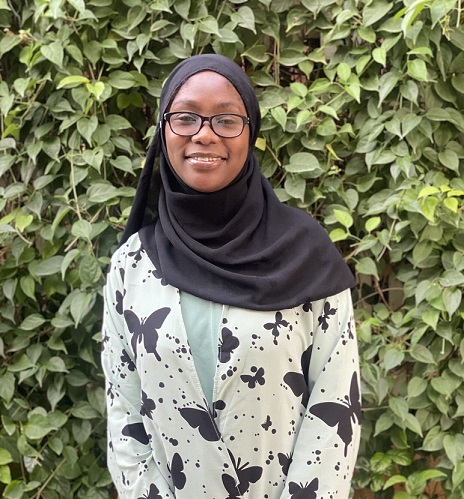
Aisha Musa Auyo is a Doctorate researcher in Educational Psychology, a wife, a mother of three, a homemaker, a caterer and a parenting/ relationship coach.
The emotional toll on a caregiver

By Aisha Mahmud Yusuf

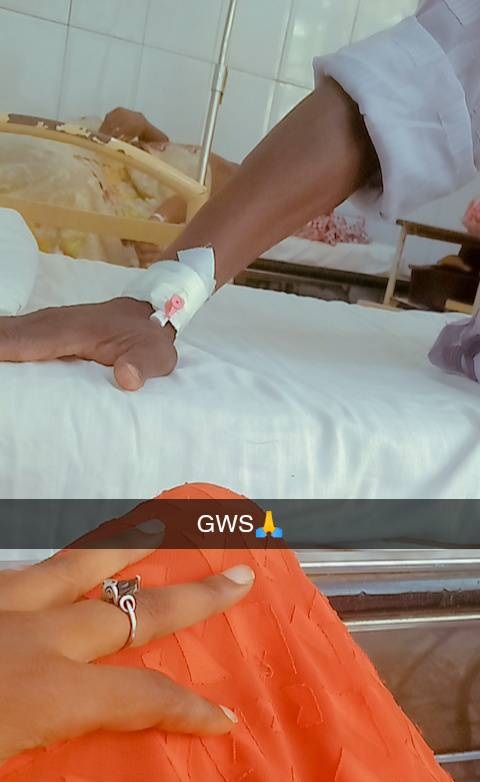
In August 2020, when my father was admitted to the hospital, my friend, who was doing her youth service (NYSC) at the same hospital, visited him. She later came when I was with him and told me something no one else had. She said, “I know exactly how you feel, and it’s okay to have all those emotions.” She understood that because her father had also been sick for years.

A few years later, some of my friends whose parents became sick would ask me, “Is that how you feel?” I would tell them it would get better with time and pray for the sick to get better. It made me realize that we don’t talk about it because without experiencing it, one doesn’t know how it feels to have a sick loved one and take care of them. 

Often, when someone is sick, what people see is the financial burden on the family members. But there is much more that they don’t see. The stress, anxiety, fear, and sometimes even guilt that the family members, especially the caregivers, go through is rarely acknowledged. Unfortunately, sometimes people even add to all these with their judgements and (sometimes accusations) unsolicited suggestions and advice on how to care for the patient.

People expect one to be a caregiver without showing emotions, to be on one’s feet 24/7 without a break, forgetting that we are humans too and there is a limit to what we can endure. 

In a society where mental health is still not a priority, you as a caregiver should take time to process your emotions and, if possible, take a break to avoid burnout. You cannot give from an empty cup. If it becomes overwhelming, find someone to listen and talk to them. 

When next you visit a sick person, check their caregivers too, share a few kind words, and appreciate them.  That will go a long way for them. Also, if a caregiver opens up to you, listen with empathy even if you don’t understand because you are not in their shoes and ask if you can help in any way.

Aisha Mahmud Yusuf wrote via aishatyusuf63@gmail.com.

“It’s a temporary setback,” Abba says he remains resolute after election ruling 

By Muhammadu Sabiu 

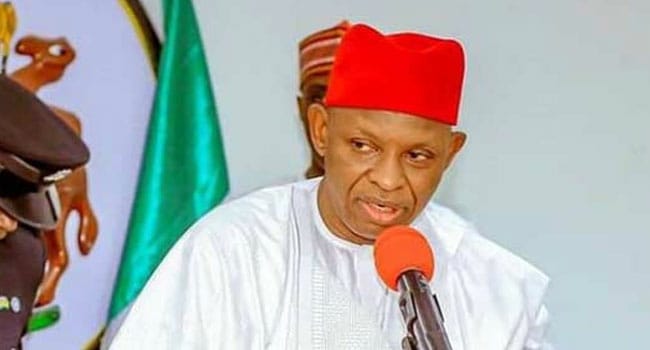
Kano State Governor Abba Kabir Yusuf, a member of the New Nigeria People’s Party (NNPP), has responded to the recent State Tribunal judgement that quashed his election victory with unwavering determination and optimism, describing the ruling as a “temporary setback.” 

In his statement following the judgement, Governor Yusuf expressed his commitment to continuing the positive work initiated for the people of Kano State, declaring, “It will not dampen my morale, as we will continue to do good works we have started for the good people of Kano State.” 

Governor Yusuf and his supporters firmly believe that the tribunal’s decision was marred by errors and misapplications of the law. He expressed confidence that the ruling would not stand in subsequent appeals, including those at the Supreme Court. 

He defended the integrity of his election, stating, “My election was testified to be upright and just; the people of Kano came out en masse to cast their votes for me, so nobody will sit down and upturn my victory.” 

In a plea to his supporters and the entire population of Kano, the governor urged them to remain law-abiding and patient throughout this legal process. 

He reassured them that the recent judgement did not signify an immediate exit from office, emphasising, “The judgement does not in any way mean that we are just going out of government; we are still in power.

Even tomorrow, we are going to hold the weekly Executive Council Meeting to come out with laudable projects.” 

Concluding his statement, Governor Abba Kabir Yusuf firmly asserted, “The judgement will not dampen our morale because it is a temporary setback. We will get justice at the Apex Court.” 

As the legal battle unfolds, Kano State remains in anticipation of further developments, with Governor Yusuf and his party gearing up to pursue justice through the higher courts.

Court confirms Governor Bala’s 2023 election victory

By Muhammadu Sabiu 

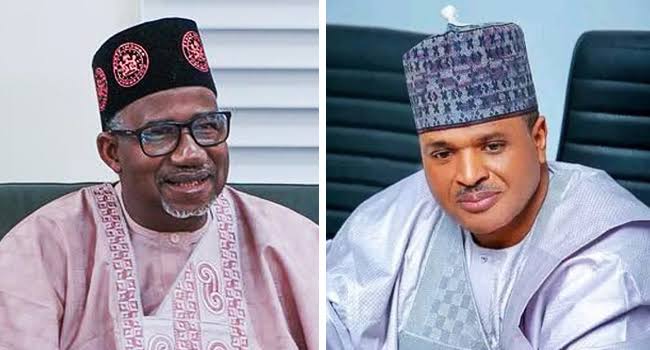
The Bauchi State Governorship Election Petition Tribunal has upheld Governor Bala Mohammed’s victory in the hotly contested March 18th election. 

The tribunal, chaired by Justice P.T. Kwahar, dismissed the petition by the All Progressives Congress (APC) and its candidate, former Chief of Air Staff, Air Marshal Sadique Abubakar, citing no substantial grounds for nullification. 

Justice Kwahar emphasised the importance of upholding the rule of law and democratic processes.

Governor Bala Mohammed expressed gratitude to the people and called for unity, while APC representatives acknowledged the rule of law and hinted at exploring other legal options. 

This verdict solidifies Governor Bala Mohammed’s mandate and keeps Bauchi State under his leadership.

My dream of a united and prosperous Nigeria

By Usman Muhammad Salihu

As a citizen of this great country, my dream of a united and prosperous Nigeria is not merely a wish but a vision that I believe is soon to become a reality. 

Nigeria’s diversity is one of its greatest strengths. With over 250 ethnic groups, various languages, and a vibrant tapestry of cultures, our nation possesses immense potential for creativity, innovation, and resilience. I firmly believe embracing and celebrating this diversity is vital to unity.

As a giant of Africa, Nigeria has abundant natural resources, including oil, minerals, and arable land. Our economy has the potential to thrive, create jobs, and improve the standard of living for all Nigerians. To realise this dream, we must invest in sustainable development, diversify our economy, and ensure that the wealth generated benefits all citizens.

Furthermore, A united and prosperous Nigeria must prioritise education and innovation. Our population is a valuable asset, and by providing quality education, vocational training, and support for research and development, we can unlock their potential and drive economic growth.

To achieve prosperity, we must demand transparency, accountability, and good governance from our leaders. A united Nigeria requires leaders who prioritise the welfare of the people, uphold the rule of law, and work tirelessly to eliminate corruption.

Security is a fundamental prerequisite for prosperity. We must address security challenges, promote peace, and foster an environment where businesses thrive, and citizens can live without fear. 

Investing in infrastructure, such as roads, healthcare facilities, and power generation, is essential for our nation’s progress. This improves the quality of life, attracts investments, and creates job opportunities.

Active participation of citizens in the democratic process is crucial. We must engage in dialogue, vote responsibly, and hold our leaders accountable for their actions to ensure that our collective dream is realised.

Together, we can build a Nigeria where every citizen enjoys the fruits of unity and prosperity and our nation stands as a beacon of hope and progress for all of Africa.

Usman Muhammad Salihu writes and can be reached via muhammadu5363@gmail.com.

Alaafin: Makinde must follow due process – MURIC

By Abdurrahman Muhammad

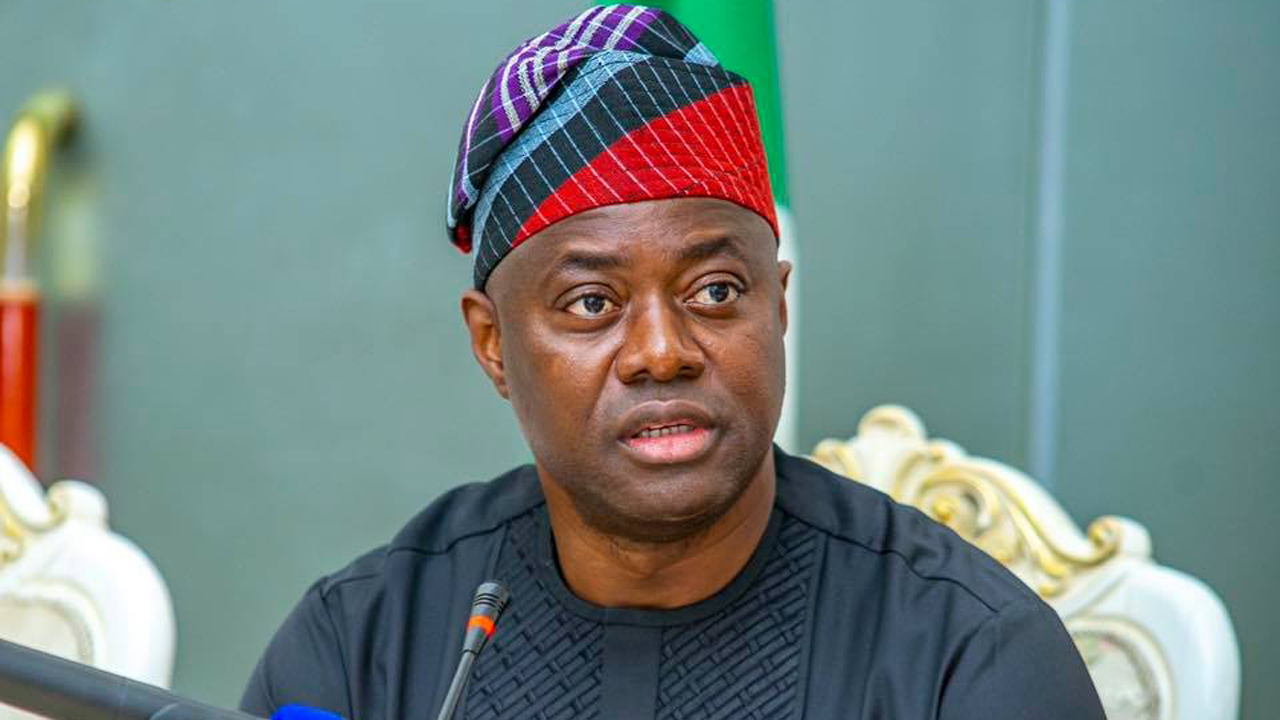
Following controversies surrounding the selection of the next Alaafin of Oyo, an Islamic human rights organization, the Muslim Rights Concern (MURIC), has advised the governor of Oyo State, Seyi Makinde, to follow due process. According to the organization, the due process involves announcing Lukman Gbadegesin, the candidate picked by the Oyomesi, as indicated in a document signed by the seven Oyomesi authorities.

This was revealed in a press statement issued on Wednesday, 20th September 2023, by the Executive Director of MURIC, Professor Ishaq Akintola.

The statement reads :

“There has been prolonged controversy over the right candidate to become the next Alaafin of Oyo since the demise of Oba Lamidi Adeyemi on 22nd April 2022 at the age of 83.

“The authentic kingmakers of Oyo, who are known as Oyomesi, have kicked against the nomination of Archbishop Ayo Ladigbolu, who is 85 years old, for lack of due process. A document published in various newspapers two days ago and signed by the seven Oyomesi revealed that the candidate duly selected by the rightful kingmakers of the ancient town is Prince Lukman Adelodun Gbadegesin.

“The Oyomesi group affirmed that they had forwarded the name of Prince Gbadegesin to the governor since 4th October 2022. According to them, the Bashorun of Oyo, High Chief Yusuf Akinade Ayoola, wrongfully picked another candidate, Archbishop Ayo Ladigbolu and filed a suit against them in court, but he lost the case.

“This implies that the Alaafin throne has been vacant for almost one and a half years. We urge Governor Makinde to make hay while the sun shines. It is now time to announce the name of the candidate picked by the Oyomesi and backed by the court’s pronouncement.

“Archbishop Ladigbolu’s attempt to come through the backdoor to the throne of the Alaafin of Oyo is illegal, illegitimate, unlawful and unconstitutional. Communal clashes which claim hundreds of lives and destroy properties worth billions of naira will be avoided if state governors respect the rule of law and follow due process. Vested interest from official circles in matters relating to tradition often end in tragedies.

“Tongues are wagging, not only in Oyo town but in the whole state as well as in the whole South West. This time around, Governor Makinde has to prove that the label given to him as the governor who likes to install Christians only as Yoruba kings is unsuitable for him.  

“This year alone, it happened in Ogbomosho where a Redeemed Church pastor, Afolabi Ghandi Olaoye, was crowned as king and in Iseyin where another pastor, David Olawale Oyebola has emerged the Aseyin.

“As a peace-loving and dialogue-inclined human rights organization, MURIC urges the state governor to allow the choice of the authentic kingmakers of Oyo town to prevail by announcing Prince Lukman Adelodun Gbadegesin as the next Alaafin of Oyo without any delay.”

President Bola Tinubu addresses world leaders at UN General Assembly

By Muhammadu Sabiu

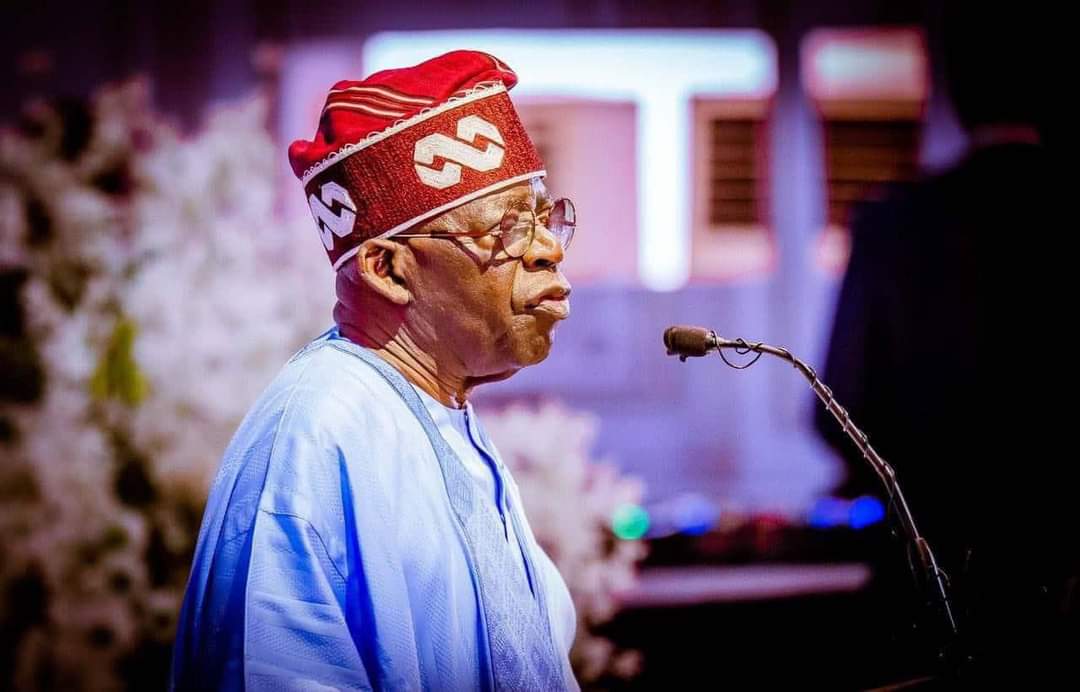
President Bola Tinubu of Nigeria is set to make his debut appearance on the international stage as he takes the podium at the 78th session of the United Nations General Assembly (UNGA) in New York. 

The President is scheduled to deliver his address at 6 pm local time (11 pm Nigerian time) during the high-level general debate. The theme of his speech, “Rebuilding Trust and Reigniting Global Solidarity: Accelerating Action on the 2030 Agenda and its Sustainable Development Goals towards peace, prosperity, progress, and sustainability for all,” highlights the critical issues he intends to discuss. 

President Tinubu’s speech will encompass various topics, including sustainable development, climate change, global cooperation, and the urgent need to address inequalities and global humanitarian crises. 

President Tinubu’s arrival in New York two days prior to his address was marked by a modest reception, with only a handful of officials greeting him at the airport.

The welcoming party included the Minister of Foreign Affairs, Yusuf Tuggar; the Permanent Representative of Nigeria to the UN, Tijjani Muhammad-Bande; and Dangana Allu, Nigeria’s Defence Attache, Washington, D.C. Notably, the majority of Nigerian officials were stationed at the UN Plaza Millennium Hilton Hotel to welcome the President upon his arrival.

There, he was received by Nigeria’s Ambassador to the United States, Amb. Uzoma Emenike; the Consul General of Nigeria in New York, Amb. Lot Egopija; and the Consul General in Atlanta, Amb. Amina Samaila. Several Nigerian state governors were also present to support President Tinubu on this international platform, including Umo Eno of Akwa Ibom, Gov. Seyi Makinde of Oyo, Gov. Uba Sani of Kaduna, Gov. Inuwa Yahaya of Gombe, and Gov. AbdulRahman AbdulRasaq of Kwara, among others. 

As President Tinubu prepares to address world leaders at the UNGA, his speech is anticipated to shed light on Nigeria’s stance on critical global issues, emphasising the nation’s commitment to sustainable development and cooperation on the path to a more equitable and peaceful world.

Group deradicalises, empowers 30 women linked to Boko Haram in Borno

By Muhammadu Sabiu 

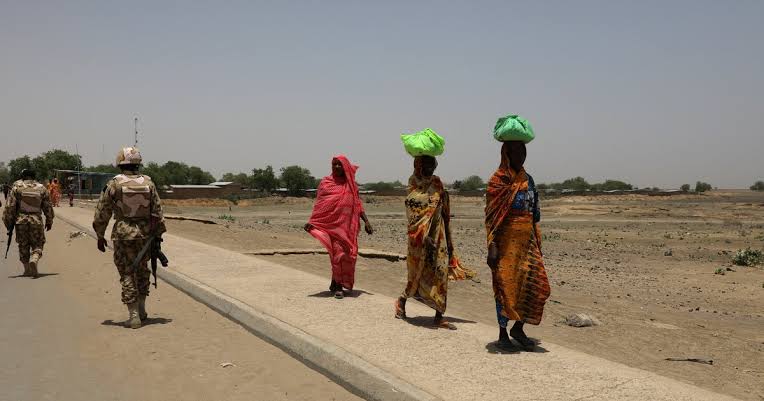
In an effort towards ensuring transitional justice and reconciliation, the Allamin Foundation for Peace and Development, an indigenous non-governmental organisation, announced the successful deradicalization and reintegration of 30 women associated with Boko Haram in Borno State. 

At the inaugural meeting of a media forum on transitional justice and reconciliation in the state, Executive Director Hamsatu Allamin revealed the foundation’s commendable achievement.

The women were not only deradicalised but also empowered and reintegrated into society as part of the foundation’s new programme aimed at fostering peace and reconciliation in Borno. 

Mrs. Allamin emphasised the importance of this new programme in facilitating transitional justice in the state, particularly following the mass surrender of Boko Haram members.

She underscored the crucial role of the media in creating awareness about transitional justice and the responsibilities of various stakeholders in ensuring its success. 

“The objective of this forum is to engage media professionals in vital conversations concerning the promotion of transitional justice and reconciliation efforts within Borno State and the broader North-Eastern region of Nigeria,” stated Mrs. Allamin.

She highlighted the media’s influence in shaping public discourse and framing issues, emphasising its role in fostering a development-oriented approach to transitional justice and social cohesion. 

In response, Abdulkareem Haruna, Vice-Chairman of the Nigeria Union of Journalists (NUJ) Borno Chapter, expressed gratitude for the foundation’s collaboration with the media in promoting reconciliation.

He reiterated the commitment of journalists in Borno to work towards peace and normalcy in the state. 

The successful deradicalisation and reintegration of these 30 women represent a positive step towards healing and reconciliation in Borno State, as efforts continue to bring an end to the conflict and secure a peaceful future for the region.

Niger Coup d’État: The gale of change and the balance of global power 

By Bilyamin Abdulmumin

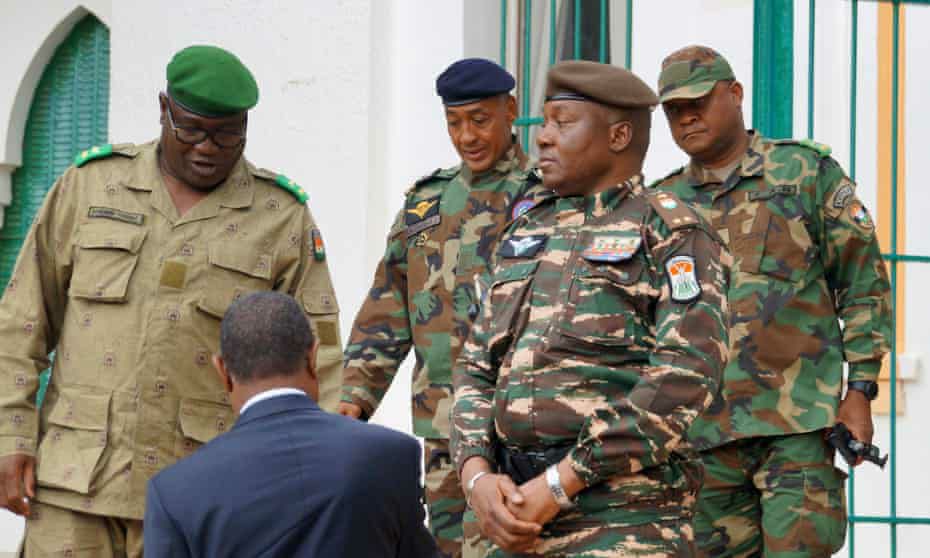
What initially appeared as rumours of a coup attempt in the Niger Republic gradually and eventually proved true. Even when the leader of the coup d’état, Presidential Guard Commander General Abdourahamane Tchiani, announced the overthrow and proclaimed himself the leader of a new military junta, there remained a doubt in the air due to the exclusion (or so it seemed) of the Nigerien Chief of Army Staff. However, all traces of doubt cleared when the military declared their support for the coup. They cited loyalty to avoid casualties from internal military clashes. Since then, news and developments have dominated the public discourse hourly. Small and major national and international media outlets pinched their tenths on this event. 

The Nigerien coup has drawn significant attention compared to other recent similar operations. For instance, in Conakry, Chief of Army Mamady Doumbouya ousted his authoritarian leader Alpha Condé. In Mali, the junta overthrew its transitional president a few months after their appointment. In Niger’s neighbouring Burkina Faso, the junta toppled another transitional government they had installed months earlier. 

The reasons for the global condemnation of the Nigerien coup differ among various blocs. France and its allies might be concerned about the potential loss of influence over their former colonies. The U.S. stance is partly rooted in their role as self-appointed global police guardians of democracy. It is also due to their military base housing thousands of soldiers within the country. Russia, on the other hand, seems to be benefiting from the situation. However, for organisations like the African Union (AU) and the Economic Community of West African States (ECOWAS), the coup posed a direct threat to democratic leadership, reaching an alarming level. So the ECOWAS bigwig Nigeria, which not only shares proximity with Niger but also has its president as ECOWAS leader, tends to overreact. Bola Ahmed Tinubu was fighting from a dual role. 

The Nigerian coup came as a surprising shock, sudden and unexpected. Unlike many similar military strikes, this coup lacked potential factors pointing to its occurrence. Such factors often include internal crises, insecurity, tension, hardship, prolonged presidential tenure, crackdowns on the opposition, and suppression of dissent. The renowned Ghanaian coup leader Jerry Rawlings once noted that the success of his coups was owed to the ripe situation in his country. He likened the atmosphere for coup success to a saturated atmosphere filled with gas, waiting for ignition to burst into flames. However, in the case of Niger, none of those factors seem to be in play. 

One plausible theory regarding the reason behind the Niger coup has been put forward by a friend who also serves as an elder brother figure. This theory revolves around the wave of change sweeping through Francophone Africa. The leadership of France appears to be faltering due to its neo-colonial approach toward its former colonies. This approach doesn’t align with the interests of the affected countries, leading to increasing unrest. Both civilians and the military are discontented with this interference, creating an environment conducive to a coup. This theory gains weight considering the surge of support that followed the coup. The military cut all ties with France to bolster this perspective and sought to shift their allegiance towards Russia. But wait! President Basoum’s public statements aligned with this shift. His videos, circulating on social media, included threats to sever remaining ties with France gave rise to the conspiracy theory as the reason behind the coup. But with the current unfolding, the question arises: Is Basoum genuinely committed to this path, or is he merely putting on a facade? 

Russia appears threatened by Western encroachment, mainly through proxy conflicts in its neighbouring countries. The most recent instance of this is the situation in Ukraine. However, suddenly, Russia found a windfall at the doorstep: developments in Africa. Aggrieved African countries with the West swiftly shifted their allegiances towards Russia as a rival to Western powers. This scenario offers an alternative to the dominant Western influence—a sort of counterbalance. The concept of the BRICS (Brazil, Russia, India, China, and South Africa), akin to NATO or perhaps a stronger G7, also garners mass interest in joining. Six countries, namely Iran, Saudi Arabia, the United Arab Emirates, Argentina, Egypt and Ethiopia, joined this movement in January 2024. Such a development holds promise for rebalancing global power dynamics. It provides other developing countries with an alternative.

Those who previously leaked atomic technology to Russia would be very happy with this development. After the United States successfully developed and detonated nuclear bombs on Hiroshima and Nagasaki, effectively ending Second World War II, some of the bomb’s developers had worries: the disruption of the global power balance. As a result, according to reports, they leaked the technology to their arch-rival, the USSR.

Bilyamin Abdulmumin is a Doctoral candidate in Chemical Engineering at ABU Zaria. He is also a social and political affairs commentator and science writer.

Yobe Assembly appeals to FG to rehabilitate bad roads

By Muhammad Suleiman Yobe.

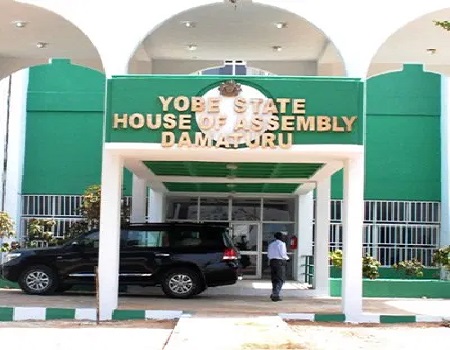
Yobe State House of Assembly has appealed to the Federal Government of Nigeria to rehabilitate dilapidated federal roads in the state. 

The House made the plea in a motion presented by the majority leader of the House, Hon. Nasiru Hassan Yusuf, on behalf of all members. 

Presenting the motion, the majority leader of the House said the federal roads constructed over the years are now dilapidated and need to be built for effective and efficient transportation within the state. 

Hon Nasiru Hassan Yusuf said most of the bridges and culverts at the federal roads that linked Potiskum to Jakusko, Babbangida to Bayamari, Buni Yadi to Gulani and Gujba to Ngalda was destroyed in last year’s flood and need federal government intervention. 

The majority leader of the House, who spoke at length on the importance of the roads to the development of the economy, said the poor conditions of the federal roads have affected the state’s commercial activities. 

In their separate contributions to the motion, the members representing Geidam, Damaturu,  Mamudo, Gujba and Machina constituencies described the motion as apt and timely. 

They expressed dismay over the delay in completing some federal roads awarded over the years in the state. 

Presiding over the sitting, the speaker of the House, Rt Hon Chiroma Buba Mashio, appealed to members of the National Assembly representing Yobe to present the matter at the upper chamber for quick response by the federal government.