Month: May 2023

Buhari launches Dangote Refinery in Lagos

By Ahmad Deedat Zakari

Barely seven days before the expiration of his final tenure, President Muhammadu Buhari launched the long-awaited Dangote Refinery in Lagos. The newly commissioned refinery is the first private-owned oil refinery in Nigeria. 

The President was flanked by many dignitaries from within and outside Nigeria during the unveiling. He described the refinery as a ‘game changer’ for the country’s economy. 

“This clearly makes this event a notable milestone for our economy and a game changer for the downstream petroleum product market not only in Nigeria but the entire African continent,” He said.

The accomplished businessman and owner of the refinery, Alhaji Aliko Dangote, gave the welcome remark at the unveiling ceremony.

He thanked President Muhammadu Buhari for his support and said he was his source of inspiration at times he felt like giving up. 

He also appreciated the Governor of the Central Bank of Nigeria, Godwin Emefiele, for ‘moving mountains’ in the course of the project. 

The billionaire also revealed that the first product of the $12 billion facility “will be in the market before the end of July, beginning of August this year”.

“Beyond today’s ceremony, our first goal is to ramp up production of the various products to ensure that within this year, we’re able to fully satisfy our nation’s demand for higher quality products,” he said.

The Dangote Petroleum Refinery and Petrochemical is the largest single-train refinery in the world and has a capacity of 650,0000 capacity a day.

El-Rufai deposes two chiefs in Kaduna 

By Sumayyah Auwal Ishaq 

With just about one week left to the end of his second and final term in office, Governor Nasir Ahmad El-Rufai has approved the deposition of His Highness Jonathan Paragua Zamuna, the Chief of Piriga, and His Highness General Aliyu Iliyah Yammah, the Chief of Arak, with effect from Monday, 22nd May 2023. 

The Kaduna State Ministry of Local Government Affairs made the announcement. 

Details later…..

Presidential tribunal declines request for live coverage of proceedings

By Muhammadu Sabiu
 
The Labour Party (LP), the Peoples Democratic Party, and their presidential candidates’ requests for a live broadcast of the election petition proceedings in court have been declined by the Presidential Election Petition Tribunal in Abuja.
 
On Monday, Justice Haruna Tsammani, the Tribunal’s head, denied the request for live coverage of the court proceedings, adding that the request lacked merit.
 
The All Progressives Congress candidate, Bola Tinubu, won the presidential election on February 25.
 
Atiku Abubakar, the PDP’s candidate for president, submitted a request on May 8 for live coverage of the court proceedings in his case.
 
Peter Obi, who was also running for president in the election, had also submitted a request for a live broadcast of the court hearings related to the election petition.
 

“Bring Back Dokaji” to APC is an unnecessary exercise 

By Mukhtar Jarmajo

In a democratic system, individuals have the right to associate with any political party of their choice. This right is enshrined in the Nigerian Constitution, and it guarantees the freedom of political association to every citizen of the country.

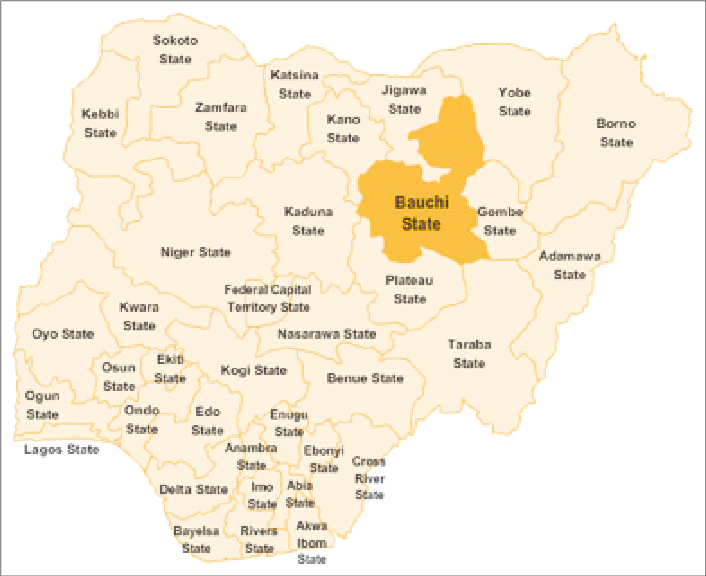
Recently, there have been efforts to call back Halliru Dauda Jika, a former member of the All Progressives Congress (APC) in Bauchi state, who left the party to pitch his tent with the New Nigeria Peoples Party (NNPP) ahead of the 2023 general elections. Reliable sources close to Jika said he decamped from the APC because he felt he deserved the party’s governorship ticket, having funded the party since 2019.

However, it should be noted that the call-back efforts are unnecessary and uncalled for since the person in question has the constitutional right to be in any political party he so desires. Jika has the right to leave the APC and join another party, just as he now has the right to rejoin the party as an ordinary member.

It is crucial to understand that political parties are voluntary associations individuals join based on their beliefs, ideologies, and interests. Therefore, deciding to join or leave a political party is a personal choice everyone should respect.

The call-back movement seems driven by people who were likely his supporters while in the APC. However, if these people genuinely believe in the ideology of the APC, then they should work towards strengthening the party by promoting its values and ideals.

All should respect the constitutional right to political association, and call-back movements should cease, especially when they are unnecessary and uncalled for. Instead, political parties should focus on strengthening their values and ideals, and individuals should be free to join or leave any party without fear of persecution or intimidation.

Jarmajo wrote from Wuse Zone 2, Abuja. 

Navigating the challenges of data journalism practice in Nigeria

By Jemimah Shuna Dogo

Data journalism has emerged as a powerful tool, allowing journalists to delve deeper into complex issues and present information in a compelling and accessible manner. However, data journalism faces numerous challenges in Nigeria that hinder its full potential. This article aims to shed light on some of these challenges and explore potential solutions to enhance the practice of data journalism in the Nigerian context.

The first challenge is that of limited Access to Reliable Data. The lack of credible and current data is one of the biggest problems data journalism in Nigeria faces. Government institutions and agencies frequently lack transparency and may suppress information that would interest the general public. Obtaining accurate and thorough data, essential for fact-checking and creating data-driven stories, is difficult for journalists. Journalists find it challenging to offer unbiased analysis and hold public officials accountable without trustworthy information. To curb this challenge, it is essential to promote open data laws. This can be achieved through advocacy and campaign. The government should encourage openness and give the general public and media easy access to data.

Secondly, the lack of data literacy among journalists is a setback. A unique skill set that combines conventional reporting with data analysis and visualisation is needed for data journalism. To properly deal with data, however, many journalists in Nigeria lack the requisite data literacy abilities. Because of this knowledge gap, fewer journalists can use data-driven methodologies in their reporting, leading to a dearth of data-driven stories. Training and capacity building is the answer to this challenge to be tackled. Media institutions, NGOs, and international organisations can work together to provide workshops, seminars, and online courses that give journalists the skills they need to gather, analyse, and visualise data properly.

Another obstacle that hinders the practice of data journalism in Nigeria is a lack of adequate technological infrastructure for journalists using data; issues including limited internet connectivity, erratic power, and obsolete devices and software present serious difficulties. These challenges limit the potential for data-driven journalism in the nation by impeding data collection, analysis, and distribution. Overcoming this obstacle involves Infrastructure development. Stakeholders in Nigeria’s media sector should give infrastructure improvements a top priority. Collaborations between media outlets, IT firms, and governmental organisations can help find long-term solutions to these infrastructure problems.

Furthermore, security and safety issues obstruct the practice of data Journalism. When reporting on corruption and other pressing societal issues or conducting sensitive investigations, journalists in Nigeria frequently worry about their safety and security. These hazards can increase when using data journalism, which may involve disclosing untruths. Data journalism is discouraged by threats, intimidation, and attacks on journalists, which also restrict press freedom and the public’s right to information. Strengthening press freedom is vital to ensuring that journalists can work without fear of retaliation. Government institutions, civil society organisations, and international organisations need to collaborate.

Finally, lack of locally-bred Journalism models. Scholars believe that If journalism adheres to the Western model’s principles, it will be unable to fulfil its mandate to contribute to “new knowledge”. In this context, “new knowledge” may refer to understanding rules and traditions that are particular to each culture. Therefore, a model that best fits regional circumstances is required. To conclude, data journalism holds immense potential for enhancing transparency, accountability, and public engagement in Nigeria.

Jemimah Shuna Dogo can be contacted via Jemimah.dogo@kasu.edu.ng.

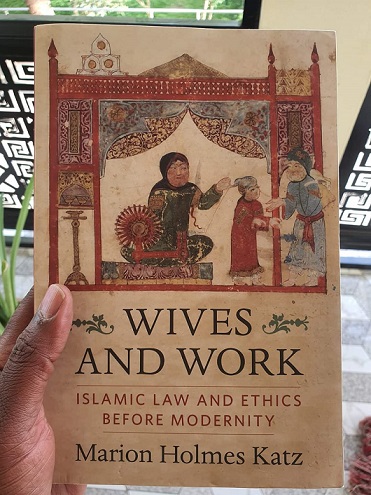
BOOK REVIEW: Wives and Work: Islamic Law and Ethics Before Modernity

Dr Shamsuddeen Sani

The modern discourse around housework for wives from the Islamic legal perspective has garnered beyond the adequate level of scholarly attention. It is as old as the marriage institution itself in the Islamic tradition.

The book, Wives and Work: Islamic Law and Ethics Before Modernity, published in 2022 by Columbia University Press, is a compelling and intellectually rigorous work that broadly contributes significantly to Islamic studies and gender studies.

Marion Holmes Katz’s meticulous research and refined analysis dismantle stereotypes and offer a fresh perspective on the complex realities of Muslim women’s lives. By engaging with Islamic legal and ethical traditions, the author not only deepens our understanding of the past but also provides a platform for critical reflections on the contemporary challenges and possibilities surrounding women’s roles as wives and their engagement in the workforce within Muslim-majority societies.

The book adopts a well-structured framework with an elaborate introduction followed by four body chapters and concludes with a thoughtful synthesis. Each chapter is dedicated to the diversity and development of fiqh discussion of domestic labour for the respective periods of the four Sunni schools of law.

The first chapter emphasises the formative period of Islamic law (8th-9th century CE) with a profound exploration of the Islamic literary corpus reflecting the social realities of the early Islamic community, then focusing heavily on wives’ domestic labour in the Maliki legal school. 

Moving into the 10th century CE, the second chapter of the book examined the issue of domestic labour through the lens of Shafii scholar Abul Hasan al-Mawardi using his legal manual, Al-hawi al-Kabir, as a paradigm for deconstruction but at the same provided a captivating contrast through his ethical manual Adab al dunya wal din.

Chapter three navigates into the intellectual realm of the Hanafi school of law, specifically focusing on the legal manual Al-Mabsut by the esteemed Hanafi scholar al-Sarakhsi. This comprehensive investigation illuminates al-Sarakhsi’s profound analysis and interpretations pertaining to domestic labour, offering an in-depth understanding of the Hanafi school’s intricate perspectives.

Geographically and temporally shifting to the post-classical period in Damascus, chapter four directs its attention to the Hanbali school of law. The focal point of analysis lies in a meticulous exploration of Ibn Qudama’s seminal work, which would later face extensive challenges from the visionary scholar Ibn Taymiyyah. Ibn Taymiyyah’s radical approach to the subject matter promotes a ground-breaking and transformative vision of the ethics of marriage, firmly rooted in the Qur’an and hadith traditions.

Academic dream: My research, my citations, my h-index, and the “true impact”

By Prof. Abdelghaffar Amoka

Colleagues have been sharing their experiences as academics in Nigerian universities with several reactions. The essence is not to discourage people from going into academia but to know what lies ahead of you if you want to go into academia. Like most colleagues, I had no idea of the challenges in Nigeria’s academia when I was so eager to join. For example, I never knew the job is for 24 hours, and that promotion is based on research output you will fund from your pocket.

After graduating in 1999, I looked forward to being part of the academia. During my youth service in Kano, I visited the HoD of Physics, ABU Zaria, Prof I. B. Osazuwa, to discuss my “academic dream”. He directed me to the late Prof. N. I. Hariharan. I met him, and he advised that I should enrol for MSc. So, in 2001 on my way from Kano, I stopped over in Zaria, purchased the PG form, and left for Lagos.

As we were job-hunting in Lagos, I remember my friend and Brother, Yusuf Osafore, saying it appears I was not taking the job hunting seriously but was more concerned with pursuing a Master’s degree. My looking forward to becoming an academic was so apparent to people around me. Then, I eventually got hired in March 2005. It was a dream come true. I have finally joined the group of intellectuals. The “most revered” group in the society. A group of knowledge generators. A group of reservoirs of knowledge.

After a few months in the university, they revealed the reality of Nigerian academia. The fact that I had no prior knowledge of. There are, of course, viable ideas, but they die within the university walls because the political class isn’t interested in them. The ideas are published, but it is just for promotion’s sake. I paid N7,000 or so to publish my first paper in a Nigerian university-based academic journal in preparation for the next promotion to Lecturer II. These made me begin to meditate on “my academic dream”.

In 2007, I had the opportunity to visit ICTP for a two weeks workshop, and my interaction there revived my academic dream. Then, in 2009, I got lucky and left the country for my PhD, strengthening my revived “academic dream”. My joy knew no bounds when I published my first research paper in an Elsevier-indexed Q1 journal in 2011. From then on, the papers kept coming.

There are two publication options. You either publish in close access journals where publishers are paid for access to your research work, or you pay between $1,500 to $3,500 to publish as open access for everyone to have access. I remember spending some dollars in 2014 to publish the last paper from my PhD work in Elsevier’s Sustainable Materials and Products journal as open access. That money came from my salary in Norway.

We were told that research impact is based on the number of citations one has. Something they called h-index was brought to classify our research impact. I began to monitor my citations and h-index on Scopus, ResearchGate, and Google Scholar. I usually wear a smile on my face whenever I receive citation alerts. As the promotion period approached, I counted my number of publications and was excited as my number of citations grew. We began to use Scopus h-index to rate academics. Unfortunately, we get carried away so much that if you talk too much, we ask, “What is your Scopus h-index?”

The irony is that you look for money (either grant or personal fund) to do research and get it published in a reputable journal after rigorous reviews (reviewers work for free) and are excited for an additional paper to your credit. Brag that you have so many articles in indexed journals and get promoted for a peanut added to your salary. In Nigeria, you become a Professor to earn about 440 USD (N325,000) per month. You proudly go around with the title (Prof). Meanwhile, a multi-billion dollars cooperation makes money from your sweat and the knowledge you have laboured to create. And all that we are happy with are citation alerts, a growing h-index, and promotions that come with peanuts.

The best publication time is during our young age. As we grow older, our students take over the writing. Then, the university will ask why you are the paper’s first, second, or last author. They have got no idea how it was funded. The academic dream can truly be defined as spending our entire youth creating knowledge and paying a billion-dollar corporation to take it from us in exchange for career capital that you can then use to buy meaningless promotions from other exploited individuals.

Sometime back, I logged into the university network, and the research output of a senior colleague on Google Scholar was highlighted on the university webpage with thousands of citations and a high h-index. So I decided to follow the link to check mine. Mine was very much below his, but it wasn’t that bad. So then, I sat down and began to question the true impact of my research work beyond what Google Scholar has evaluated.

Do a mere citation of our publications truly translate into research impact? Research is global, but you should see your work impact your immediate environment. We have Professors with thousands of citations that can’t present an inaugural lecture, faculty colloquium, or even a departmental seminar; so, what is the impact of our research on our immediate community?

I tried to reflect on our impact, especially as Professors and Farooq Kperogi came to mind. I remember checking on him on Scopus when he became a Professor in the US. However, when I later reflected on his writeups on Nigeria’s sociopolitical scene and the healthy discussions he had generated towards repositioning the country, I began to realise that Farooq has made much more impact on Nigeria than many of us with a better presence on Google Scholar, Researchgate, and Scopus.

Let me introduce myself properly—a Professor of Physics specialising in dielectrics and high-voltage electrical insulation. I have 33 research documents indexed in Scopus and an h-index of 11, 13, and 14 in Scopus, Reseachgate, and Google Scholar, respectively. In addition, I have about 585 citations on Google Scholar. My published research articles are on high-voltage insulation. Still, the articles and the citations, put together, have not impacted our electricity network in Nigeria, which is on a breakdown spree. So, what, then, is my impact?

Universities are identified as keys to innovation, from developing new ideas to providing state-of-the-art facilities. Industrialists and managers of the countries engage them in keeping the workflow full of new ideas. But in Nigeria, our university system has been made the most insignificant institution that has been reduced to lecture rooms. We only publish to avoid perishing.

Everywhere in the world, academics are respected and heard when they talk. But in Nigeria, especially during the Buhari government, they are tagged as enemies to crush. Our universities were once places where policies evolved. Academics generated ideas that shaped the country. Discussions in academia are used to shape the policy development of our nation. The golden time of Bala Usman can never be forgotten. What happened to those intellectual discussions? Who killed it? We now chase appointments within and outside the universities, especially after we become ‘Professors’.

Nigeria has been messy for the last eight years, and universities are in the worst state ever. But the government of Buhari used eight years to run away from education stakeholders’ engagement. The political class are educated people with no value for the education of the people. The best gift that Buhari gave to the people that so loved him was to strangulate the public universities for the people. Rather than having a public engagement on how to salvage the situation he was well aware of before his appointment, the outgoing Education Minister, Adamu Adamu, described the backwardness that they have imposed on us as “self-imposed backwardness” and their idea of the solution is by approving the establishment of more substandard private universities in the North.

The incoming government of Bola Ahmed Tinubu needs to come in with a clean and open mind to engage the academia with sincerity. They should look at ASUU as partners in progress rather than enemies to crush. The solutions to our problems are right in our hands if we are willing to engage each other. On the other hand, academia needs to start looking beyond publishing, not to perish. We need to start thinking beyond journal publication impact that has no impact on our immediate constituency, Nigeria. We need to wake up and revive the golden days of Bala Usman on our university campuses.

©Amoka

It’s phone robbery, not phone snatching

By Salisu Uba Kofar-Wambai

It is no longer a front-page story that phone robbery has become a mammoth calamity in Kano state. And it’s gradually spreading like cancer to other parts of Northern Nigeria. One trait peculiar to Northern Nigeria as a geographical entity is that new trends quickly spread and gain ground like wildfire without being questioned. This is precisely what occurred with kidnapping cases.

 If one has no guiding principle, one will always be carried away in imitating others, whether good or bad actions. Phone robbery is now a trend. Many caught in the act would testify that they were not such but got tempted by what others were doing and getting away with it. What a society!

However, unsuspected members of the public have lost their phones, valuable properties and above all, their dear lives and some got injured as a consequence of this brutal and barbaric act. And 95% of the confessions of the wrongdoers have shown that they’re drug addicts and Indian hemp smokers.

Unfortunately, phone users can no longer display their phones or pick up a call because those robbers are somehow like invisible elements and can appear with their life-threatening weapons to pounce on you, which include thorny knives, hatchet, long sharp metals and have you. Often, any attempt to resist their advancement will land one in trouble of losing his life or getting a severe injury that may eventually threaten his health and life. The victims of this are uncountable in Kano and other parts of the North.

However, our legal system is not helping to curb the menace either. Many caught red-handed are seen getting their freedom back. At the same time, those arrested for capital offences are languishing in prisons without meeting appropriate punishment measures on capital offences. And the politicians who have just finished using these thugs and other undesirable elements of society are also contributing a lot in this direction.

Politicians employed them in their recent campaigns as a strategy for winning elections. After the campaigns and elections, they usually leave them alone after spoiling them with vast amounts of free money from the state treasury to enjoy. Those thugs have nowhere to turn in the absence of such goodies but to terrorise unsuspecting and innocent citizens.

Before this, society had its traditional way of dealing with truants and miscreants. The schools of “Yan Mari” are used to shackle those children and disassociate them from the public so that they were given moral remedy of teaching them Quranic recitation, training them on new religious upbringing, and making them off drugs. Owing to the weakness of this system, the Federal and State governments abolished the system by tagging it “gross human rights abuses and violations” instead of helping them to improve and enhance it.

Nevertheless, what’s on everyone’s lips now is that since the government has failed in checkmating the catastrophes, let’s employ jungle justice that everyone caught in the act should be maimed and killed on the spot to serve as a deterrent to others. But can our society accept this? The sanctities of our moral and religious upbringing won’t allow us to think like Lagos Area Boys of burning suspected thieves with tyres alive. Instead, we need to think of more civilised methods.

First, most perpetrators of this act are Indian hemp smokers and drug addicts. So, what are we doing to mitigate it? We allow Igbo drug traffickers to make our state their paradise. And in turn, they are every day, every minute spoiling our young men (and women) who are our future.

Secondly, we haven’t built rehabilitation centres to change these criminals to develop positive characters and morals so they can be reincorporated into society again. And those built were closed down for the greedy notion that the government could no longer feed them. Sad!

Thanks to the new legal thinking, such suspects will be tried as armed robbers from now on. But all these measures cannot solve the problem in toto until we fight Indian hemp and drug smugglers. We can only end up killing our children and still, others joining. Parents also have to do more for their kids.

May Allah guide our children and us all, amin.

Salisu Kofar-Wambai wrote from Kano and can be contacted via salisunews@gmail.com.

Alcohol, ethanol and beer

By Bilyamin Abdulmumin

Days ago, a picture of a beer advert on a bus with the caption: “ba barasa a cikin wannan giyar” dramatically attracted public attention. First, it appears the translation was outright flawed. The English direct translation may read thus: the alcohol doesn’t intoxicate.

Every native or one conversant with Hausa would find it difficult to wrap his head around this Hausa translation. So, some think it was out of the sheer cheap labour that the South African wine industry relied on the online translator to land them into the translation comatose. It might also be the usual case of giving the advert to the wrong agent or hiring a non-native to advertise the product.

Forget it; even if you are a professor in a particular language but happen to be not native or brought up in that typical language culture you will end up harming the advert than promoting it. One such advert that went wrong recently was that of one famous company, which read: “ko wanne zubawa, muhimmanci da ya wuce gwaji”. The equivalent English version read, “Every drop treasure beyond measure” What a rape to language!

As promoters of products, one can never dare associate the advert with alcohol in Hausa or any Islamic land; else, the result will be a mass exodus from the product. The brewing companies are still recuperating from the wound their Maltina product suffered because the same company is producing it as beer.

One factor that even fans the fire of controversy is that alcohol, beer/wine, and intoxicants are used interchangeably as the same thing: giya/barasa. So it becomes meaningless to try to separate one from another: that is to say, the beer contains no alcohol, alcohol is not intoxicated, or the alcohol is non-drunken. In the Hausa language, as long as it is alcohol there is nowhere to turn around.

Notwithstanding, are alcohol, ethanol, beer/wine, and intoxicants the same or different?

Alcohol is a general term referring to any organic compounds with OH functional groups. Therefore, any organic chemical with -OH in its makeup is alcohol. Examples of alcohol (alkane series) are methanol, ethanol, propanol, butanol, and the list goes on…. Alcohol has been a subject of controversy, no thanks to one of its family members: ethanol.

This controversial member: ethanol, is composed of two carbon, six hydrogens, and one oxygen; because of the presence of OH (hydrogen bonding) in its makeup, ethanol enjoys a wide range of applications. It is next to water as a global solvent. In addition, where water fails in industrial application, ethanol as an organic chemical (with carbon in its makeup) swoops in.

The industries where ethanol easily finds its way include Pharmaceuticals, several medicines you can’t do without today owe themselves to ethanol; Paint Industry, where your favourite paint can’t exist without ethanol; Fragrances, ethanol, not water is the solvent for making many perfumes; the Medicinal Properties, ethanol is a death sentence to microorganisms so when next used sanitiser, know that ethanol is that potent content; Bakery Industries, yeast is used in the bakery to give the bread desired quality as a result of ethanol and carbon dioxide as a by-product; Electrical Repair, ethanol is used as spirit, take your gadget for repairs they use ethanol for cleaning; Oil and Gas, perhaps the most economical part of ethanol use is when employing as fuel, depending on the purity, ethanol can be used as complement or substitution to transportation fuel (PMS); Brewing Industry, now the most controversial part of ethanol is when used as a drink, such as beer or wine. In beer, starch, e.g. corn or maize starch, is acted upon by appropriate enzymes and yeast industrially to produce beer. In a similar passion, fruit instead of starch is used in winemaking. Ethanol in brewing is the most dominant public knowledge, so it has become synonymous with alcohol (even among native English speakers).

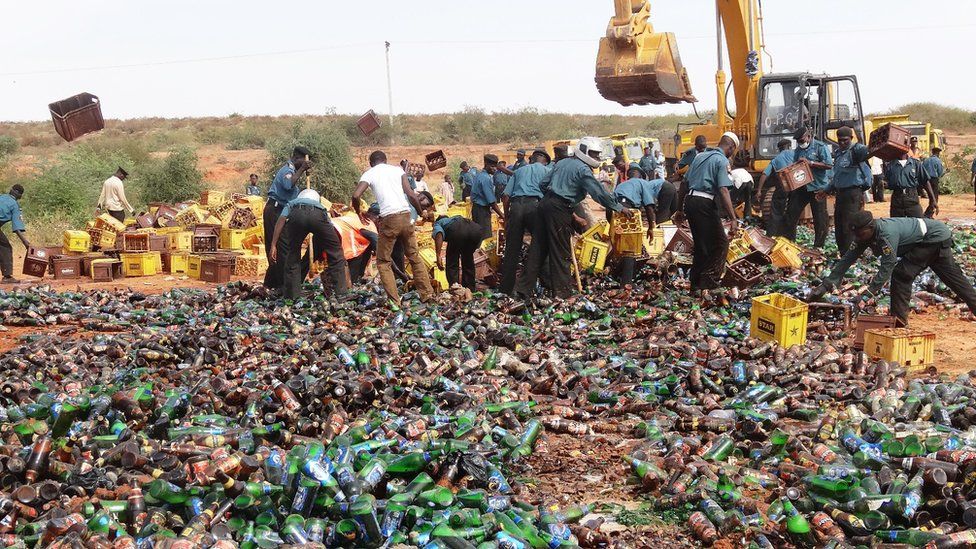
The beer and wine produced conventionally contain up to 15 per cent of ethanol. This percentage is quite enough to intoxicate the drinker. Islam has outrightly forbidden taking intoxicants, such as beer and wine. The consequence for the global brewing industries is that they can only bite their fingers to watch a market of a staggering 1.5 billion people impossible to penetrate. So this became the mystery brewing industry struggled to crack. They finally get a catch.

Because the prohibition in Islam said intoxicants, so by this view, the brewing industries can design beer and wines that contain quantities of ethanol that is not enough to intoxicate a drinker, making beer and wine halal. Some Islamic countries like Malaysia have already nodded to this explanation by setting 1 % ethanol as a limit. Perhaps this was the intention of the South African wine advert on the bus.

On the other hand, the ethanol prevalence is more than what we could imagine; we are as indispensable as ethanol is concerned. Because the enzymes, yeast, and starch/sugar necessary to make ethanol are ubiquitous and, by extension, the ethanol itself. The cups, plates, our hands, and system you are using currently to read this article are a community of microorganisms; among them are the saccharifying enzymes and yeast. So with food readily available in the form of rice (rice), kunu, zobo, pieces of bread, fruits, etc., the right contact is just required to get the ethanol. Fura is the breeding ground for ethanol. The longer the “fura da nono” takes (without refrigeration), the higher the quantity of ethanol will be in it. But this passive ethanol prevalence is non-intentional.

Bilyamin Abdulmumin is a Public Affairs commentator and a Doctoral candidate at the Department of Chemical Engineering, ABU Zaria.

ABUTH delivers first IVF baby in northwest

By Ahmad Deedat Zakari

Ahmadu Bello University Teaching Hospital, Zaria has recorded an unprecedented milestone in the North-Western region of Nigeria as the university hospital successfully delivered its first invitro fertilization (IVF) baby.

Professor Adebeyi Adesuyun of the Department of Reproductive Medicine, disclosed this to newsmen on Friday. He said, “A male baby was delivered at 10:53am on May 16 with weight of 3kg.”

The Professor noted the cost implication of the milestone and further disclosed that it was a journey began by ABUTH about twelve years ago.”

Such delivery is costly and not available in the whole of the northwest region. ABUTH is the only public health facility that offers IVF. The journey did not start today; we have been on it for more than 12 years, but paucity of funds in getting the right equipment was our major hindrance,” he said.”

He also disclosed that the hospital has patients on their waiting list to receive the treatment.