Month: March 2023

Nigeria’s failure is a combination of the individual and collective disgrace of the system

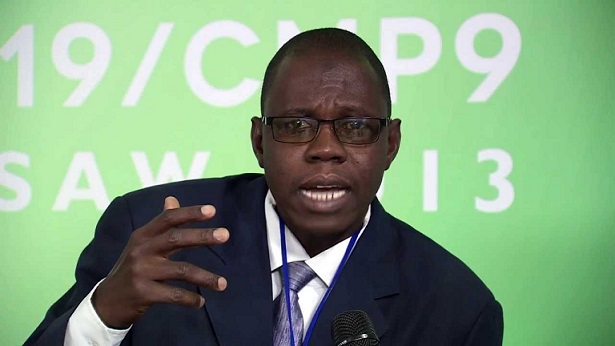
By Nura Jibo

Nigerians living within and staying in the diaspora should start a self-cleansing effort to seek Allah’s forgiveness. Already, the people of the country have wronged God. Unfortunately, the current leadership does not want to agree with this position. However, let me start with the individual failures before I descend to the collective disgrace and abuse of the system.

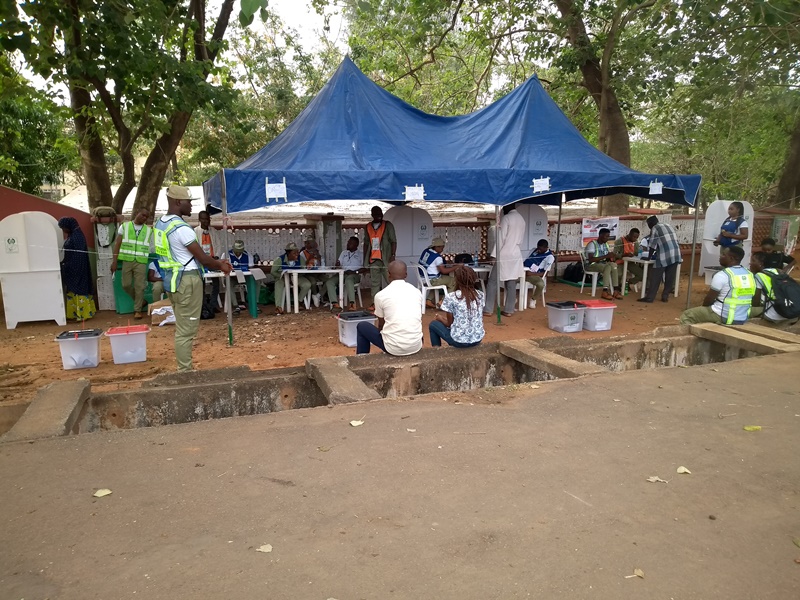
1. The recent presidential election overtly exposed the INEC chairman’s unpreparedness. He was highly unprofessional and produced a very abysmal and disappointing outcome. In the history of Nigeria’s electoral commission, there has never been a time that a lump sum of money amounting to N335 billion was spent on a presidential election under the pretext of the Bimodal Voter Accreditation System (BVAS) or IReV (portal) or whatever parlance Prof. Mamud Yakubu wants to call it. This guy ended up giving Nigerians the most controversial and expensive presidential election in the entire history of the world. As a professor of history, he went to Chatham House and bragged to Prof. Alex Vines and co. that in his office, “There is one of his engineers that even promised him to design a voting machine that could sense voters’ body odour.” He was telling this open and brazen “invention” to global audiences at Chatham House even when he ended up giving Nigerians the most terrible BVAS and IReV technologies that, up until now, he is struggling to fix by postponing the Guber elections by a week!

2. The N335 billion that Henry Omoru of Vanguard reported that Prof. Mamud asked from the Federal Government to conduct this kind of election was an upshot of the initial INEC budget of N305 billion plus an additional N10 billion. This stupendous amount is enough to build eight state universities in each of the 36 states of the federation, including Abuja, with a take-up grant of N1 billion each!

3. According to Dennis Amata’s analysis of the INEC 2023 election budget that appeared in Dataphyte, “The Federal Government spent N444.5 billion to conduct the country’s last three general elections, and a total of N255 billion was wasted due to the low voter turnout recorded in each of the elections.”

4. And if it is true that Mamud is a first-class historian from Usman Danfodio University, Sokoto, Nigeria, and he used his historical antecedents to brag at Chatham House and, in the end, give Nigerians this BVAS melodrama, then his first-class degree is now subjected to the vagaries of his incompetence and lack of ICT knowledge. And this is why! His poor BVAS and IReV performances had already reduced him to a local champion or, better put, a local history professor overrated in Nigeria.

5. A cursory look at the INEC’s nine (9) key items that it budgeted for the conduct of the 2023 election shows that there was a very depressing procurement of hi-tech/advanced ICT facilities such as BVAS and a hi-tech result storage database that could safeguard the security of online and offline result submittals and transmittals, as Mamud wants us to believe. Indeed, Mamud is not aware of or lacks knowledge about the disadvantages of using BVAS as a voter accreditation system. On the contrary, he was probably carried away by it because INEC was told that it could eliminate electoral malpractices and prevent multiple registrations.

6. But Mamud, as a “first-class” academic and Professor of Political History, ought to have known that using such a biometric voter identification and transmitting apparatus for instant results collation is always problematic for developing countries such as Nigeria because there is no adequate network in African countries that could effectively allow the use of BVAS and IREV portals (transmission). In fact, the incessant network failures in Nigeria and, by extension, Africa are enough to get Mamud informed of the disadvantages of using this failure-prone network facility. Moreover, as a learned history professor, this ought to have informed him how this kind of network failure gave President Yoweri Museveni an advantage to impose an internet blackout that cut off access to news, social media, and messaging services ahead of the Ugandan presidential election.

Seriously, Mamud, as a professor, needs to know better than anybody the calamity in the erratic supply of electricity that could ravage his entire BVAS and IREV efforts. In 2019, I had an international conversation with Volkswagen’s Head of Sustainability in Madrid. I tried to persuade him to patronize African countries by supplying electric cars to Nigeria and other African countries. The Volkswagen giant quickly checked my ideas by saying thus: “There is no constant supply of electricity in Africa that could charge the batteries that will drive the cars”. Therefore, Prof. Mahmud and co. ought to have known this simple arithmetic. They could have visualized that no ample network or electricity in Africa could make BVAS and IReV function well!

Fellow Nigerians, friends, and colleagues of Nigeria, that was Mamud Yakubu’s disgrace to Nigerians!

And one wonders what the likes of Mohammed Haruna are doing at INEC as Resident Commissioners by allowing Mahmud to use Nigeria’s ample resources and, in the end, put the entire country into global shame! Whenever I see Mohammed Haruna sitting beside Prof. Mahmud with his hand akimbo, I know that Nigeria does not have a future. Because if a combination of Mohammed Haruna, who spent a significant part of his life writing long essays about Nigeria’s underdevelopment and democratic misgovernance, and Yakubu could disgrace Nigeria this far in the name of INEC staff, then we need to call it off for Nigeria. Indeed, there are so many Mamud Yakubus and Mohammed Harunas in the land that time and space will not allow us to exemplify most of them in this analysis. Therefore, we can only mention a couple of Mahmud’s similar disgraceful elements that constitute the Nigerian system’s individual failure before narrowing down to the specific scenarios that have thrown the country into a global failure and a pariah state.

7. Therefore, the next individual’s disgrace worth mentioning here is that of Adamu Adamu, the current Nigerian Minister of Education. Adamu took ample time to write his folklore about ASUU and how to make it better. But in the end, he goofs up Nigeria’s education by forcing the entire system to suffer universities’ strike action for over seven months! Courtesy of Adamu’s Taqiyya Amana, which he displayed amidst growing educational tensions that distract Nigeria by throwing it backwards by two-semester backlogs.

We can go on and on! But to cut the story short, the colossal loss to Nigeria on this INEC’s BVAS and IReV drama has successfully reduced its chairman to a local champion who made his country not reap the benefit(s) of the huge monies that he spent on this so-called BVAS without giving Nigerians value for their money. It is a shame that for all the money he asked for, he could not provide Nigerians with an enabling environment to come out en masse and cast their votes. Mamud and co. sincerely deceive themselves by hiding under the pretext that Nigeria’s democracy is the biggest in Africa. He also brags about this point anytime he is given a chance to speak. He doesn’t know that several African countries are fairing better than Nigeria. Unfortunately, Prof. Mamud doesn’t know that his country is lagging behind certain African countries regarding voter turnout and conducting fair elections without BVAS! Here I will conclude by quoting extensively Ray Ekpu’s take on the need for INEC to wake up from its slumber and engage in a serious campaign on voter turnout.

According to Ray Ekpu, “Many African countries have done far better than Nigeria in combating voter apathy. Their voting figures are close to 100%. Look at these: Rwanda’s 2017 presidential election produced a 98.2% voting record; Equatorial Guinea (2016): 92.7%; Angola (2017): 90.4%; Seychelles (2016): 90.1%; Guinea-Bissau (2019): 89.3%; Zimbabwe (2018): 84.2%. For Nigeria to deepen its democracy, the voting figures have to go up drastically. That means that all concerned must work on improving voter education.

Voter education can also help in checking election rigging. Election rigging can only happen when there is collusion among the triumvirate, namely, politicians, INEC officials, and security personnel. Where there is no collusion, no rigging of fundamental significance can take place. There is no perfect election anywhere in the world, but rigging can be substantially reduced once people are interested in ensuring that their votes count. But in Nigeria, poverty is an issue. Many of the people who sell their permanent voters’ cards are poor. For them, those cards mean little or nothing, but a few thousand naira can mean a lot to them. It can mean the difference between a full stomach and an empty one”.

Nura Jibo is a Lifetime Member of the West African Research Association (WARA), African Studies Centre, Boston University, United States. He can be reached via jibonura@yahoo.com.
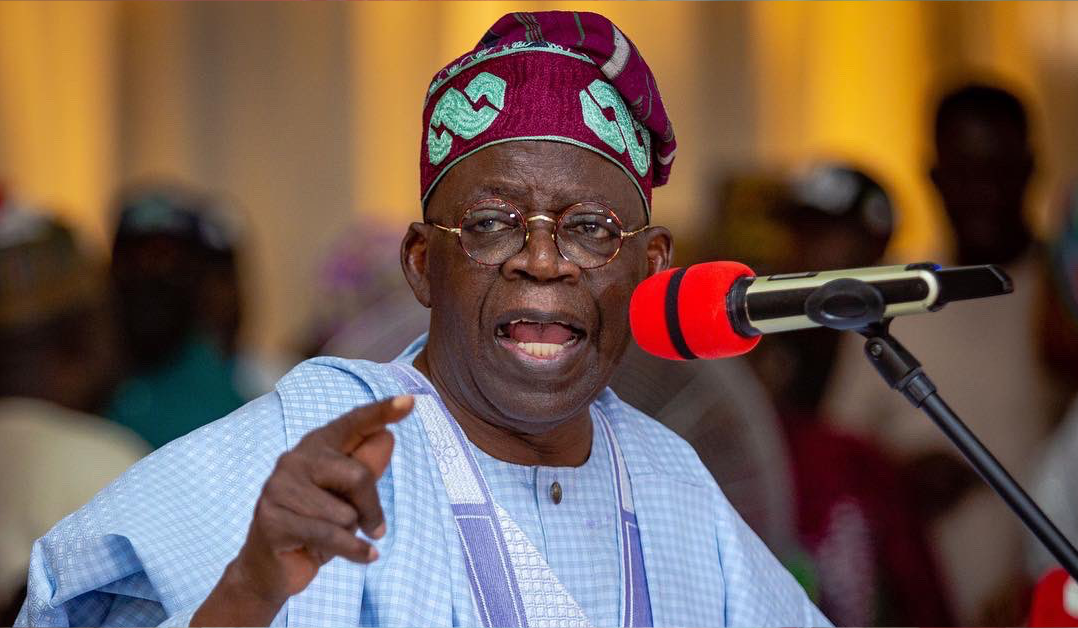
Tinubu: Savouring the triumph of an ageless political colossus 

By Lawan Bukar Maigana

It is now an open secret that the former Governor of Lagos State, Bola Ahmed Tinubu, is now Nigeria’s president-elect. For many who may not know, the erstwhile Lagos Chief Executive is not the typical run-of-the-mill Nigerian politician. 

A master political strategist of no mean repute, Tinubu has never lost an election since he started appearing on the ballot. The lessons in his political journey are enormous and worth studying by contemporary politicians, especially young people who aspire to be leaders of tomorrow. 

Tinubu’s political trajectory depicts the importance of building people regardless of any differences. He built builders, and the builders built him. 

Most people, including some members of his party, had thought that he was not going to win the February 25th presidential election because of some varying factors.

But Tinubu, for a minute, never lost hope. He consistently told people that he was going to win. He candidly said, “it is my turn, and I will win.” These were the songs he sang until he won. 

It is a fact known that most politicians fear the “enemies within”, but the reverse is the case with Tinubu as the Aso Rock cabals in President Muhammadu Buhari’s government fear him. He tackled them and moved on. 

The contribution of the people he built in politics to his emergence as president-elect cannot be overemphasized. 

Hours after he was announced as the winner of the keenly-contested election, he first extended his heartfelt appreciation to the Vice President-elect, Senator Kashim Shettima, and the entire northern governors who gave their best to his ascension to the presidency. 

One of the qualities of a resounding leader is his ability to unite people and carry everybody along. That is what Tinubu started with. He called on all presidential contestants to join him in building a new Nigeria for the betterment of all and sundry. Who has ever done that in the history of our nascent democracy? 

Tinubu’s track record as governor of Lagos is a testimony of his effort for the unity and development of Nigeria. He brought capacity hands outside Lagos for the betterment of his people. He has national spread, unlike his Labor Party rival, Peter Obi, who was largely voted by people of the east and a few from the west. 

Obi, being the governor of Anambra, does not take his state as his permanent residence. He lives in Lagos—a state developed by Asiwaju Bola Ahmed Tinubu. I expect him to calm down his supporters, conceit defeat and join hands with the president-elect to steer the Nigerian project. 

One of the best ways to advocate peaceful coexistence and give people a sense of belonging is by giving protection to the people you govern, regardless of any differences. Tinubu’s house is a good example. He’s a Muslim. His wife and children are Christians. 

Teeming Nigerians have joined Tinubu to savour his electoral victory in the penultimate Saturday’s presidential election. But the President-Elect knows, more than anyone else, that the journey ahead will be rough, bumpy tortuous. 

He, however, should do all that it takes to actualize the visions of his ‘Renewed Hope’ campaign slogan. It is not for anything that many, including his armchair critics, regard him as a political colossus who has greatly paid his dues in helping to entrench democratic governance in Africa’s Giant.

Lawan Bukar Maigana writes from Abuja and can be reached via email: lawanbukarmaigana@gmail.com.

NUM’s distinctive strategies on university education

By Muhammad Danjuma Abubakar

The term ‘University’ has its roots from the Latin word ‘universitas’, which translates to ‘the whole’ or ‘the totality’. This is said to have originated from medieval Europe where groups of scholars came together to form communities dedicated to education and research.
In essence, universities of good standing, regardless of ownership (public or private) are specialized spaces for universal education that have established traditions of research and innovations aimed at tackling societal issues. Also, these are the fundamental reasons why they are referred to as such.

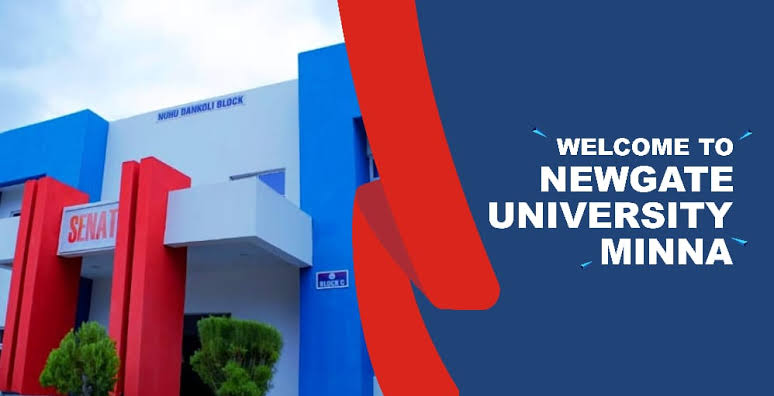
Newgate University, Minna (NUM) can be counted as one of the best academic institutions that aim to promote qualitative education. This can be justified precisely through the NUM’s rigorous curriculum, exceptional faculty members who are experts in their respective fields with committed culture of inquiry that pushes the boundaries of knowledge.

NUM – the Newgate University, Minna, was licensed by the National Universities’ Commission (NUC) in April, 2022 as the first private university in Minna, the Niger State capital, with a reputation of an orientation that is focused around student-centered learning to meet the needs and interests of students within reasonable grounds.
At the heart of the university’s tradition is a unique combination of research exploration and academic excellence, expressed through its motto ‘explore to excel’. Also, Newgate University, Minna entices students to embark on a splendid journey of self-discovery by presenting them with a diverse range of academic programs that are tailored to their individual passions and interests.

However, the university’s philosophy of exploration extends beyond academics to encompass a comprehensive range of extracurricular activities, such as community service, practical experience, among others that aid students in expanding their horizons and discovering their true potential.

Newgate has distinctive strategies and academic culture exemplified by its provision of four (4) distinct teaching and learning packages to its students: cognitive, digital, interpersonal and intrapersonal study packages. The cognitive package being offered by Newgate University instills in its students, the ability to devise innovative solutions to emerging challenges in their respective fields of study. Meanwhile, the digital component of the university’s curriculum ensures that students become responsive digital citizens, capable of keeping pace with the ever-evolving digital landscape. To enhance comprehension and facilitate recall, the university employs cloud-based teaching and learning techniques such as virtual reality, streamed lectures and relevant practical videos.
At NUM, both the intra and interpersonal components of the study packages are given key attention, with emphasis on orientation and training that will equip students to assume leadership and negotiation roles, while instilling in them qualities of service, passion, adaptability and empathy. These components are intentionally designed to meet the growing global need for hard and soft skills which are crucial for employability.

The impact of Newgate University’s distinctive and impressive strategies to university education extends beyond the classrooms, to equipping students to become leaders in their communities and in societies at large. By providing a holistic university experience that emphasizes on critical thinking, creativity, innovation and problem-solving, NUM proves that, it can be a model for other institutions to emulate.

Muhammad Danjuma Abubakar lives and writes from Minna, the Niger State capital and can be reached on muhammadcares4u@gmail.com

On Southern Nigeria’s selective outrage

By Suleiman Ahmed

In Nigeria, an election period is like watching a classic Series for the umpteenth time. You know how it’s going to play out, but it doesn’t make it any less fascinating. The most entertaining episode, of this Series, after the presidential election, of course, is the debate leading up to the Lagos gubernatorial election.

Firstly, the Yorubas must perform a ritual of agonisingly re-iterating the exact same thing: that Lagos is not a “no man’s land.” This is quickly followed by an outcry from the non-Yoruba, Lagos-based (mostly southern) Nigerians. They argue that, as Nigerians, every inch of land in the country, belongs to all Nigerians. That any attempt to deprive them of this right is ethnic bigotry. But how true is this? And do they practise what they preach? Let’s go down memory lane.

A few years ago, when the federal government suggested to some (southern) state governors to provide grazing lands to cattle farmers (who’re predominantly Fulanis) to grow their herds; to control herder-farmer clashes in parts of the country, many of the governors rejected this proposal. (Mostly) Southern Nigerians also took to social media to applaud the governors for refusing fellow Nigerians access to Nigerian lands.

Dangerous words like “invaders” and “take over” were recklessly deployed to stoke ethnic tension. No one cared to remember that these people, too, were Nigerians and therefore were entitled to own land and do business anywhere in Nigeria.

Now, in 2023, it’s election time again, and this same divisive rhetoric is being deployed, albeit in different circumstances. The same people who once championed an anti-Fulani campaign that ensured their fellow countrymen from the north couldn’t get lands in their own country are now complaining of being othered by Yorubas in Lagos. So, I’m asking: why is it ok for them to own lands and freely do businesses, have some influence on who becomes governor in “another man’s land,” but at the same time, see no contradiction in telling northern Muslim cattle farmers to return to the north, to look for land, because “the south does not belong to them?” Why are you concerned that the Fulanis “will take over your land” but are now getting triggered because the Yoruba people feel the same way towards you?

They wanted the land for free

When I first shared my thoughts on this topic on my Facebook Page, some interlocutors argued that the reason for the southern governor’s pushback was that the federal government wanted the land free of charge.

“Free,” in this context, is debatable. When an industry such as cattle farming wants the land for its activities, it’s not usually a mere hectare or two. A reasonable size would be hundreds to thousands of hectares. The size and complexity of such a project is not something private individuals can execute without support from the government.

Therefore, it was not out of order for the federal government to step in to help with things like making the land available and then building the infrastructure needed for the place to function properly. After which interested parties can be invited to come in and rent/buy spaces to set up shop. These farmers were clearly going to pay taxes to local authorities and generally operate the same way market stall owners do in places like Kano, Lagos or Aba.

Having said that, let’s say, for the sake of argument, I agree that the federal government wanted the state government to give “free” land to the cattle farmers; why was the response not: “bring more money!” Or “let’s have a better financial agreement?” We didn’t hear of any such request — of a better (financial) offer, from the southern governors. Instead, what we got from them, and many southern Nigerians, were: “the Fulanis should go back to the north and ask for land there,” “this is a plan by the Fulani government to take over our land and hand it over to their people,” and many other unpleasant, divisive comments. The protest from the south was a clear message to those cattle farmers from the north. It was made known, loud and clear, that their land was in the north and not in the south. What happened to being a Nigerian citizen with full rights anywhere in Nigeria?

We can’t be comfortable with othering and divisive languages when it involves the Fulanis and then suddenly become appalled when they’re deployed against a different group of people. It doesn’t work that way. We cannot, on the one hand, say things like Idoma land, Ijaw land, Tiv land, Igbo land, or Niger Delta land (or Niger Delta oil) and then throw tantrums when Yoruba people say Lagos is Yoruba land. You’re clearly not appalled at any injustice. You’re only now concerned because you are at the receiving end of it. What you’re practising is Selective Outrage (apologies to Chris Rock), and it is hypocritical.

Suleiman Ahmed is a writer and the author of the socio-political novel, Trouble in Valhalla. He tweets from @sule365.

Five apprehended for exhuming human bodies

By Muhammadu Sabiu 

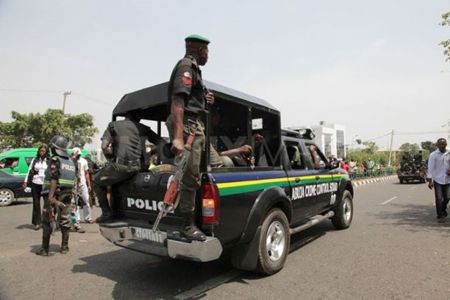
The Ogun State Police Command has apprehended five persons suspected of being part of a group known for exhuming bodies from cemeteries and taking body parts for use in rituals.

The accused, Oshole Fayemi, 60; Oseni Adesanya, 39; Ismaila Seidu, 30; Oseni Oluwasegun, 69; and Lawal Olaiya, 50, were detained on Saturday in Odogbolu.

This was revealed by police public relations officer Abimbola Oyeyemi on Sunday.

After receiving a tip, Divisional Police Officer Godwin Idehai and his colleagues tracked them down just as they were about to leave for another human parts harvest in Ososa town.

The statement partly reads, “They said that they usually sold the exhumed body parts to their clients, who used them for money-making rituals.”

The Police PRO also revealed that Police Commissioner Frank Mba had ordered the accused to be transferred to the State Criminal Investigation Department for additional investigation and legal action.

Dangote Group trains 50 truck drivers to minimize road accidents

By Aisar Fagge

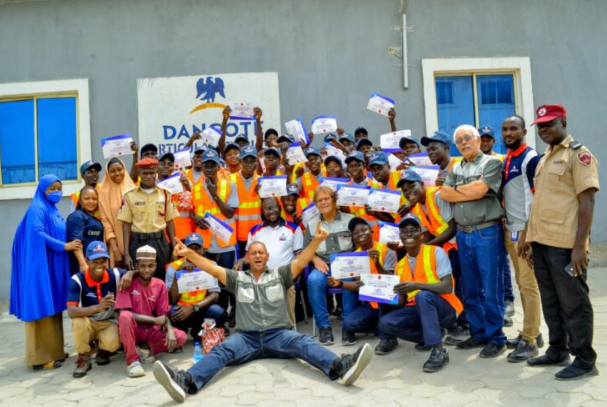
About fifty trainees graduated from the Dangote Articulated Truck Driving School. The effort was to minimize the rate of auto crashes involving its drivers and other road users in the country.

The trainees who celebrated the success amidst joy have passed through a specially designed and rigorous educational curriculum, said the Divisional Director Transport (DDT), Mr Ajay Singh.

Mr Singh, who spoke at the graduation ceremony, said the trainees would now be exposed to practicals through attachments for an additional six months.

The Daily Reality gathered that the school at Obajana is one of its kind, having been the only accredited truck driving academy in Nigeria.

It was learned that the school was commissioned last year by the former Corps Marshal of the Federal Road Safety Corps (FRSC), Dr Boboye Olayemi Oyeyemi.

The effort was to bring solutions to the menacing issue of auto crashes involving articulated trucks in Nigeria.

Mr Singh said that the school would not only bring down the rate of crashes involving articulated vehicles but also positively impact other drivers.

He was quoted as saying, “The ultimate objective was to achieve zero accidents for all subsidiaries in the Dangote Group.

Also speaking, Mr Daniel Marcus Akuso said the intensive training was carried out in collaboration with the FRSC and Fantique Driving Training Centre of South Africa.

According to the Manager of the school, the three months training programme has been a big success and changed the orientation of the trainees.

He said, “This is the only articulated truck driving school in Nigeria where the students are paid stipends, trained, tested, certified, licensed, and employed. Our products are not only for Dangote Cement but for all subsidiaries of the Dangote Group in Africa.”

Kawu Sumaila: The ghost of Malam Aminu Kano

By Umar Ahmad Rufai

As we all know, politicians in Kano have been claiming they are followers of the late Malam Aminu Kano to achieve their political interests. We all know and remember him as a leader of the masses, a reformist, educationist and revolutionist. Mallam had built the most substantial legacies. When he was minister, he joined protests against the federal government in Nigeria.

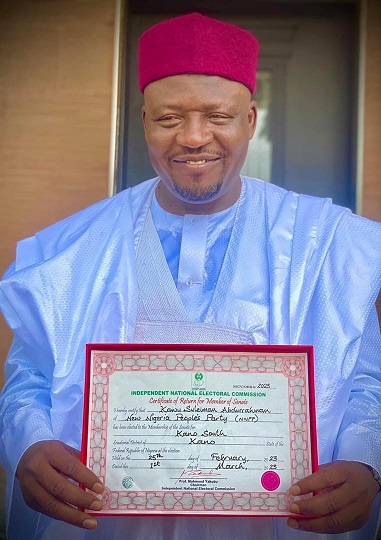
Honourable Kawu Sumaila is Malam’s ghost. As a strong opposition leader after resigning from his position as senior special assistant to the president on national assembly matters,  Kawu defeated the incumbent senator that spent sixteen years in the seat last week.

He is ready to represent the good people of southern Kano. He contrasted and won the election three times. He represented Takai/Sumaila for 12 years in the Green Chamber.

Kawu’s action is louder than his voice. He knows the problems of his senatorial district. That’s why he aspired for the seat in 2019 and lost in a questionable primary election. He is ready to speak about his senatorial district, Kano state and northern Nigeria.

Kawu supports the less privileged within and outside his constituency. He founded Al-Istiqama University, the first private university in southern Kano.

Umar Ahmad Rufai wrote from Kano via umarahmadrufaijr@gmail.com. He is a student at Aminu Kano College of Education in Kano.

2023: Governor Fintiri’s politics of deceit and the presidential election in Adamawa

By Auwal Modire

The Presidential elections have come to pass, and the outcome of the results will continue to be a watershed in the political terrain and a new definition of “Loyalty “ in Adamawa PDP politics. Atiku Abubakar of the People’s Democratic, PDP, got 417,611 votes, Bola Ahmed Tinubu of the APC got 182,881, Peter Obi of the Labour Party (LP) secured 105,648 votes, while Rabiu Musa Kwankwaso of the New Nigeria Peoples Party (NNPP) got 8,006 votes

The performance of the Labour Party in the state though not surprising because of the open secret fraternity of the incumbent Governor with the Labour Party for some time. 

It is now obvious that the allegations against the Governor of Adamawa state for anti-party activities have come to pass. Many prominent people of Adamawa State last month alleged and warned that Governor Rt. Hon.  Ahmadu Umaru Fintiri had pitched his camp with the Labour Party’s Presidential candidate and crisscrossed the state campaigning for him in line with the arrangements of the G5 PDP Governors. It’s an open secret that he remained a member of the group covertly. The outcome of Saturday‘s Presidential election is a clear testimony to that effect. 

The theatrics of the  Governor’s pretentious loyalty and deception could only go that far, and today the die is cast, and the truth cannot be suppressed.

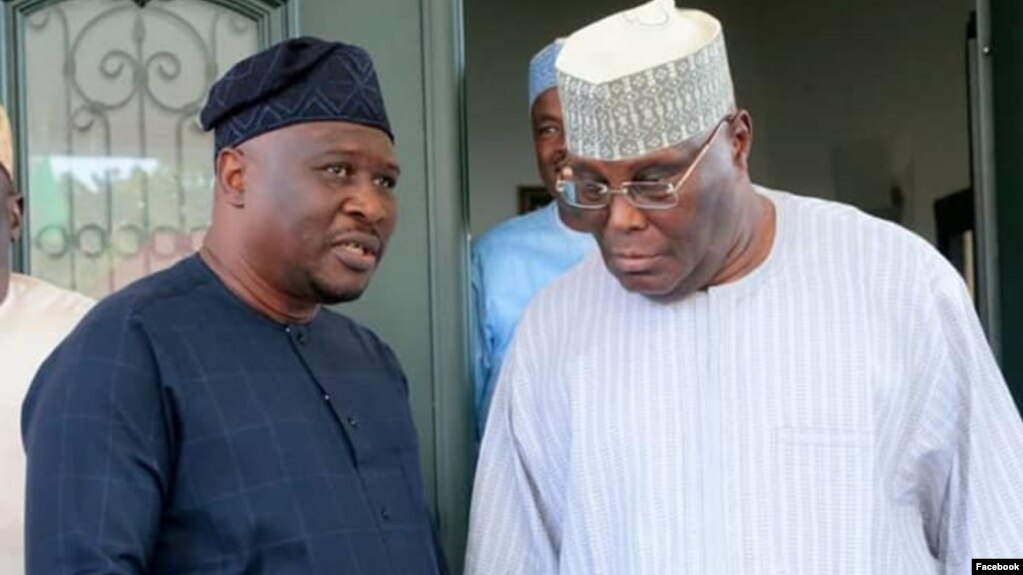
 Atiku Abubakar though not unaware of Fintiri’s intrigues, according to sources, decided to ignore all the clear and overwhelming evidence shown to him in that regard and deluded himself in a suspension of belief, hoping that Governor Fintiri would continue to be loyal and supportive.

The Waziri Adamawa rightly or wrongly is said to be scared of the consequences of confronting the Governor in order not to jeopardise his political fortunes since all politics are local, and will need the governor on his side to succeed in this rather elusive Presidency, having attempted severally without success and believing this could be his last opportunity. 

 In February, when the Labour Party candidate, Peter Obi, visited Adamawa State for his campaign, he ignored the protocol of usual courtesies on the Paramount Ruler, the Lamido of Adamawa Emirate and Chairman of the Adamawa state Traditional Rulers Council but headed straight to Numan Federation to pay homage/Respect to Hamma Bachama of Numan Federation, which was a serious breach of protocol and a slight on the Lamido. It’s also on record that he was there to fraternise with the predominantly Christian community in the zone. 

Obi’s action was attributed to Fintiri’s advice and in active collaboration of CAN leadership. This strategy is today consequential to Labour’s Political gains in that part of the State. Obi defeated Atiku in Numan LGA and secured substantial votes in the other areas in the zone. 

The outcome of the elections results in Madagali, the Governor’s support base where the Labour Party won at the Governor’s polling unit, is, without doubt, a collusion in cohort with the Governor.

The ADC Gubernatorial Candidate, Malam Muhammadu Usman Shuwa, after officially endorsing the PDP presidential candidate, His Excellency Alhaji Atiku Abubakar and promising to work for him in the state, relocated to his home town Madagali 6 days before the election. He made serious contact and strategies to ensure Alhaji Atiku Abubakar’s victory and delivered his polling unit and even his ward for Atiku.

If Fintiri had Atiku’s interest, he could have ensured he delivered not only his unit or Madagali but the entire Northern Zone for Atiku, being his domain and as an incumbent Governor of Atiku’s Party, but behold, the outcome isn’t what we expected.

They say in war, political war inclusive, all is fair, and politics is like the contributions in “Adashe”. In other words, it’s turn-by-turn. Everyone will take his share, albeit at the tail end  

Waziri Adamawa is well-schooled in political treachery and well-acquainted with its muddy terrain. Therefore needs not be incited into realigning his priorities and strategies. He surely feels where it pinches.

In stating the obvious, we can only wish Waziri Adamawa well in his future endeavours

Auwal Modire wrote from Yola, Adamawa state. He can be reached via modiree@aol.com.

Democratic failure and increased voters’ apathy in Nigeria

By Zaharaddeen Muhammed

It is a general psychological belief that individuals tend to keep repeating things that benefit them and help reduce their suffering. In politics, too, citizens believe that the essence of participating in the political life of their country is to maximise their benefits through attaining improved living conditions, say, for example, security of lives and properties, food, a better health care system, more employment opportunities, stable electricity and so on.

You don’t need statistical data to conclude that, since 1999, when Nigeria returned to a democratic system, the sufferings of Nigerians coming out to vote for a better life increased. As such, many citizens choose not to exercise their franchise as it does not benefit their lives.

Abraham Lincoln’s definition of Democracy as a government of the people by the people and for the people seems irrelevant in Nigeria because some of the leaders who served political offices in the past were suspected to be products of statistical inflation during elections, not by choice of the majority. Thus, they are not by the people; our leaders are considered to serve themselves rather than the general populace. That is why they strive to get into power by hook or crook.

The Independent National Electoral Commission (INEC) reported that during the 1999 general election, out of 58 Million Nigerians that registered to vote, only 30 million were able to vote, 42 out of 61 million registered voters voted in 2003, only 35 million out of 62 million in 2007, 39 million out of 74 million cast their votes in 2011, 29 million out of 67 million in 2015, 29 million out of 82 million in 2019 and, sadly, in the recent 2023 presidential election we have witnessed the lowest turnout whereby of all the 93.46 million eligible registered voters we have, only 24.97 million came out and cast votes.

Though many factors like; lack of voter education, electoral malpractices and vote buying during primary elections, which produce uninspiring candidates in the general elections, rigging during the general election, and the activities of political thugs are contributing factors to political absenteeism during elections, the major factor that converts responsible citizens into political absentees is bad governance resulted by poor- performing elected officials and political parties.

To respond to this signal of “not having feelings” citizens about the political affairs of our dear country, resulting from a lack of efforts from the side of our political leaders to improve people’s situation, I see it that the best way to lure people back to the polls is to promote people’s welfare. Campaigns and sensitisations are less effective these days—only action matters.

Take, for example, the issue of vote buying. You can’t convince someone who lives from hand to mouth, similarly being denied the opportunity of going to market on election day to get what to eat, not to collect a bag of grated maize for a vote—relief materials matter.

Zaharaddeen Muhammed wrote from Azare and could be reached via zahmuhaza@gmail.com.

Women contribute immensely to our success – Fatima Dangote

By Aisar Fagge

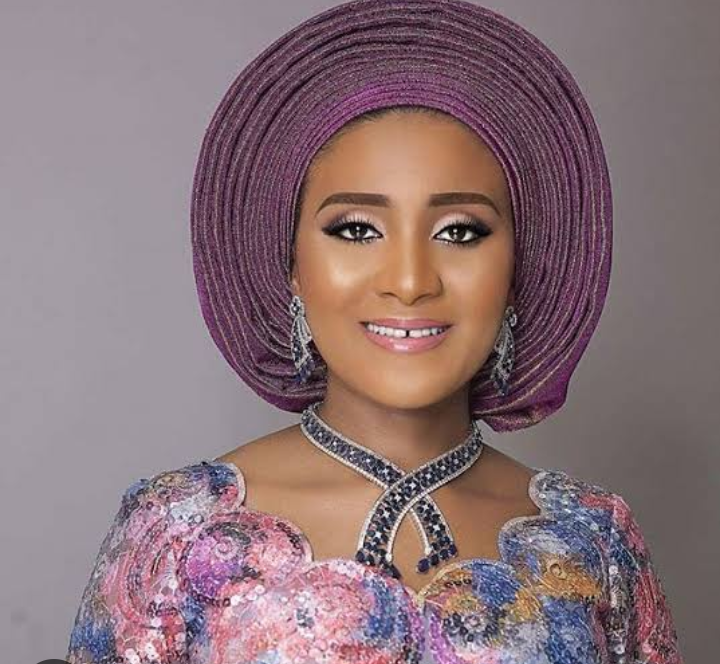
Fatima Aliko Dangote, the Executive Director, Commercial, NASCON Allied Industries, has commended women for playing a crucial role in making the Dangote Group achieve many successes.

The Director made the commendation while opening the International Women’s Day Conference in Lagos and Dangote Cement Plc, Obajana Plant.

She stated that the company had offered its employees many opportunities that helped them improve their personal and professional development.

She added that the group has been working tirelessly to achieve gender equality for all women in the organisation through the investment of numerous innovative technologies and processes.

She stated, “At the plants, we have the Gamma Neutron Activation Analysis (PGNAA) for online analysis, robotic laboratory, and fully automated central control room system equipped with Human Machine Interface technology (HMI) and innovative solutions to drive resource efficiency, process optimisation and mitigate the environmental footprints of our products while delivering quality products that meet the needs of our esteemed customers.

“We are inspired by our superheroes in STEM, and we hope this session increases your awareness of innovation, technology, and digital education, driven by women for women, and learn advancements in digital technology that address how we rethink our daily lives and achieve our personal and professional goals.

“I would like to encourage our women with a few tips on leveraging technology, Equipping yourselves academically and technically, be inspired and inspire others by creating opportunities for regular interactions with female STEM champions and leaders and tapping into opportunities for hands-on experience in the form of volunteering”, she added.

Also speaking at the event, the Chairperson of the Dangote Women Network at the DCP Obajana, Mrs Fatima Kabir Ikunaiye, said the Network has been carrying out several interventional programmes in the cause of women.

Mrs Ikunaiye said some of the programmes include: support for orphanages and vulnerable homes, sensitisation and empowerment of women as well as training them on skill acquisition.