Month: November 2022

On the lurking horror after successful security operation in Giwa, Kaduna

By Safiyanu Ladan

The henious activities of bloodthirsty and marauding bandits is taking a new toll in some communities in Giwa LGA, Kaduna state, despite the fact that military has orchestrated a new strategies aimed at mopping them up.

The remnant of these bandits are still lurking in some rural communities unleashing mayhem to the helpless and hopeless villagers.

A joint military and police operation carried out on 18th November, 2022 has foiled kidnap attempt along Funtua-Zaria road and led to the rescue of over 70 people.

In addition to that on 17th November, 2022 the Kaduna state police command has, acting on intelligence report that some armed bandits were sighted on motorcycle along Galadimawa-Tumburku Road in Giwa LGA, deployed its personnel and after an ensued engagement between the bandits and the police, one bandit was apprehended and five of their operational motorcycles were recovered.

The untiring efforts of military and police in checkmating the criminal activities of bandits is glaring as it brings back sanity to some communities. However, much need to be done in order to rid other communities of the clutches of armed bandits.

Some news reports coming out from other communities are disturbing because they indicated that residents in those communities live at the mercy of the dreaded bandits.The horrendous killing of eleven community members and the abduction of 24 others in Sarkin Rafi in Giwa local government area last Friday is a major setback in the security’s ongoing war with bandits.

I was enraged by the news that about ₦10 million ransom was paid to the bandits to secure the release of my cousin who was kidnapped alongside her husband and 7 other couples of just a few months in one of the community at Giwa LGA. They regained their freedom after spending over 40 days in the kidnapper’s dens.

The unreported and underreported incidents like the above-mentioned are going on without interruption in some communities at the detriment of the poor villagers who are always at the receiving end.

It’s on this note that, while we appreciate the efforts of security personnel for deploying the resources to combat the menace of armed bandits, we equally call on them to re- strategize and deal with them ruthlessly.

The life of any Nigerian matters and as such people should be allowed to pursue their legimate goals and ambitions ina peaceful setting as enshrined in the Constitution, without fear of being attacked by the miscreants.

Safiyanu Ladan writes from Zaria. uncledoctor24@gmail.com

Inuwa vs Danbarde: The tricky side of the 2023 election contests in Gombe State

By Kabiru Danladi Lawanti, PhD

As the Independent National Electoral Commission (INEC) lifted the ban on the 2023 elections campaigns, attention has now shifted to analysing candidates’ policies and programmes. In Gombe State, like in many states, the governor seeks a second term. Governor Inuwa Yahaya of the All Progressive Congress (APC) is facing a tough battle with People’s Democratic Party’s Alhaji Jibrin Barde (Danbarde), a former banker turned politician. Danbarde was the first runner-up in the 2018 APC primary and was defeated by the incumbent Governor, Inuwa Yahaya. However, he defected to PDP in 2021, ascribing his action to bad governance in the state.

As the 2023 elections fast approach, the two leading candidates are gearing up to face each other again, not at primaries, but in the murky waters of campaigns and the general election in 2023. Already political permutations and predictions have started flowing from those in support or against the two candidates. With the reconciliation between the Governor and his erstwhile friend turned political enemy – Alhaji Danjuma Goje, many predicted that Inuwa Yahaya would have an easy sail in 2023. Coupled with incumbency and support from a political heavyweight in the state, the Governor seem to have no serious challenge going into the elections.

Things took a new turn some weeks ago when Goje appeared to have scrapped the earlier reconciliation efforts by the APC reconciliation committee weeks before the party’s National Convention. Instead, Goje remains as unpredictable as the weather in recent times. Some political pundits on conventional and social media believe Goje may support Danbarde in 2023. This was very clear when he insisted that all candidates seen as Inuwa’s supporters were to be dropped for his anointed candidates during the primaries. It took the intervention of some party stalwarts at the state and national levels to agree to allow these candidates to participate in the primaries.

However, for politicians, especially those who look to the future of who becomes Governor in 2027 in the state, support for who becomes the Governor in 2023 will be based on the odds for those contesting in 2027. For instance, since the return to democracy in 1999, Gombe state has had four governors, including the incumbent, Inuwa Yahaya. Three of these governors came from the Gombe North Senatorial District. These are Abubakar Habu Hashidu (Dukku LGA), Ibrahim Hassan Dankwambo and Inuwa Yahaya (Gombe LGA). Only Danjuma Goje came from Gombe Central (Akko LGA). On the other hand, Gombe South has never produced a governor, though all the deputy governors were from that senatorial district.

Suppose the other Senatorial Districts decided to support the PDP’s Danbarde, and eventually, he becomes the Governor. In that case, it means Gombe Central and Gombe South have to wait for another eight years to have a chance to present a candidate for the number one office. This is also tricky because they may decide to support Inuwa Yahaya, with the understanding that APC may consider zoning the Governorship position to either Gombe Central or Gombe South. Can Gombe South buy this mouthwatering offer and support Inuwa? Others think that Gombe South has nothing to lose on whoever becomes the Governor in 2023, as far as the Governorship position is concerned, because they are assured of the position of Deputy Governor for any election year. It is a tradition maintained by all Governorship candidates in both parties since 1999. 

This may leave only the Gombe Central Senatorial district with a serious dilemma. Already the district’s political heavyweights have started their permutations. Most believe that supporting Danbarde means handing over the number one seat to Gombe North for 18 years. Dankwambo 8 years, Inuwa 8 years and Danbarde 8 years. Therefore, support for Inuwa Yahaya in the forthcoming elections is like a national duty if any of their sons is aiming for the Governorship seat in 2027. The two local governments that made up the senatorial district are crucial and strategic in the state’s political equation. With the state’s highest number and registered voters, they had the highest voter turn-out in the 2019 general elections.

Whatever decision the politicians and the electorates take in the forthcoming elections in 2023, they should remember that it can either make or mar their chances of producing the next Governor in 2027. Therefore, Alhaji Danjuma Goje, Alhaji Usman Bello Kumo, Abubakar Mu’azu, Barrister Idris Umar Abdullahi and other politicians from the district need to look beyond their disagreements and think ahead for the senatorial district. This may sound like another push for regional considerations, but some of these choices usually guide rational choices in politics. While no one can doubt the good performances of Inuwa Yahaya in the last four years, Gombe Central’s support for him goes beyond his perceived performance and anticipation for a more common public good. Therefore, the votes from this senatorial zone should/must be used to negotiate a power shift to the senatorial district.

This is politics.

First oil drill in Northern Nigeria: a blessing?

By Ibrahim Sambo

On Tuesday, President Muhammadu Buhari commissioned the drilling of two oil wells on Kolmani OPL 809 & 810 at the Kolmani field sites in the northeastern states of Bauchi and Gombe. The two sites have about 1 billion barrels of crude oil reserves based on initial figures by the NNPC, with the potential to produce N32 trillion over 10years (at crude price of $73 per barrel).

From many angles in the North, this sparked a euphoric roar. This euphoria is quite understandable. Who would not want to have, at their disposal, tremendous quantities of the most traded commodity in the world, the mighty magical black liquid?

And even with all the green-economy and climate-smart drive by the West, the exit of the fossil fuel era is some distant away. Some months ago, the most foremost and practical evangelist of renewable energy, Elon Musk, stated in a conference in Norway that “civilization will crumble” if the world stops the use of oil and natural gas and called for continued drilling and exploration of fossil fuel sources.

Further, the concerns that the two sites where the reserves are located (Gombe and Bauchi states) are far from port terminals (at-least 700km away), hence a potential difficulty in exporting the crude oil has been laid to rest by the NNPC as they announced the plan to refine the crude oil around the oil fields by building a 120,000 barrels per day refinery. This is in addition to gas processing facilities and a power plant that could generate at least 150 megawatts (MW) of electricity.

But even with all these, there is still a great deal of pessimism as to whether we can derive the juices from the oil revenues, or we will be struck with what economists called the “resource curse”, a situation where a region has valuable natural resources but are still steeped in poverty.

A question that will linger on the mind of every discerning and concerning northerner would be, what future does this hold for the states involved, or the region, or even the country in terms of economic prosperity. A superficial answer would be that the oil and its byproducts will drive more revenue to the government for social and infrastructural development, provide employments for the youths and improve standard of living. While this is true on paper, it would not necessarily be so in practice.

For one, the resource-curse phenomenon is real. When the first oil wells in Nigeria were discovered in Oloibiri in 1958, jubilations filled the air, and it was assumed that within few years, this precious commodity will pick Nigeria up from the gutters of poverty and put her on the elitist list of wealthy nations. But 65 years down the line, Nigeria is still stuck deep in that stinking gutter. Similar thing is happening with oil-rich countries like Columbia and Venezuela for instance where they produce humongous volumes of oil but are still poor.

The second frightening thing is environmental concerns. Uncontrolled oil spill is a major threat in oil-producing areas, and a perfect example of these devastating effects we have seen in Ogoniland, where some 2.1 million barrels of oil was spilled into the land, adversely affecting their water, farming and fishing activities. Here too, this environmental fear was allayed—at-least verbally—by Gombe state governor, when he remarked during the flag-off ceremony that the region “will avoid mistake of the Niger Delta.” “With regard to the issue of the environment,” the Governor remarked, “our ministry of environment is working hand in hand with the Federal Ministry of Environment and the Nigerian National Petroleum Corporation Limited (NNPCL) so that we will avoid all the mistakes and pitfalls that have been the big challenge of oil exploration and implementation in the southern part of the country.”

But as oil has been a curse to some, so has it been a blessing to others. Petrodollars has created immense wealth in the middle-eastern Gulf countries such as never seen in history. There is nothing that can stop northern Nigeria from doing exactly so. Oil can turn the North, and indeed Nigeria into an incredibly virile economic powerhouse.

The two northeastern states of Bauchi and Gombe will now, potentially, have a share of the 13% oil derivation fund pie. And this fund is quite huge. For starters, in just 11years, the 8 oil producing states pocketed a whopping N6trn from this fund. This share of the 13% oil derivation fund, a petroleum refinery and a gas plant, a powerplant, a fertilizer plant, all exude odor of economic merriment.

The question now is how do we make these seemingly tremendous economic potential translate into real time prosperity. The answer lies in adopting the classic model that has worked for the middle eastern countries which is great, visionary leadership.


Leadership—and not an abundance of resources, is the foundation upon which prosperity lies upon, as we have seen time and again. It is that simple. Without good leadership, a society has zero chance of prosperity even if bars of gold gushes down the gutters of its towns and cities.

When Sheikh Muhammed Al-Makhtoum put a tiny desert nation, the UAE, on to the world map, it was through sheer vision and strategic implementation. The North needs to have Al-Makhtoums who would properly manage the money gotten from this venture and channel into well-crafted visions of development; of erecting technology infrastructures for a digital economy, of building mega industries that provide jobs, of constructing roads and state-of-the-art health facilities, of building modern schools and laboratories, of building structures for hospitality and tourism, and all the things that make for a modern economy. The money will be there and in abundance.

As the first oil drill takes place in the Northern region, can we get into power the leaders who would properly use the money from this venture into longterm projects that will finally liberate the North from extreme poverty that has so much traumatize us, and turn it to a modern economy, full of wealth and possibilities and opportunities, or are we leaving the money to go down the wire, into the pocket of the privileged few elites, just like our southern brothers, and just be bragging that we are now oil producing entities, with nothing to show? It is now left to us. In the words of the Hausa man, dabara ya rage wa mai shiga rijiya.

Ibrahim Sambo writes from Lagos. He can be reached at ibrahymsambo4@gmail.com

Prof. MZ Umar appointed new VC, FUBK

By Ibrahim Mukhtar

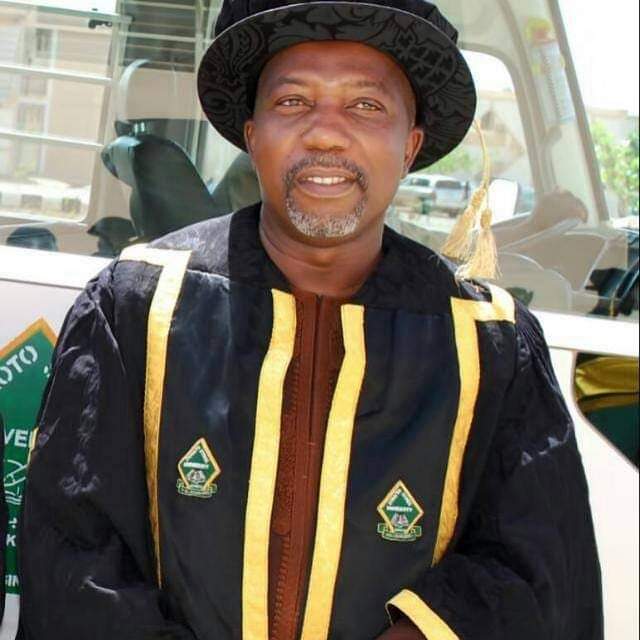
The Governing Council of Federal University, Birnin Kebbi, at its 25th meeting held from Monday, 21st to Thursday, 24th November, 2022, has approved the appointment of Prof. Muhammad Zaiyan Umar as the new Vice Chancellor of the University.

In a press statement sent by Alhaji Jamilu M. Magaji, the
Public Relations Officer,
Federal University Birnin Kebbi, he noted that the Pro-Chancellor and Chairman of Council, Prof. Funmi Togonu-Bickersteth announced the development at a Press Briefing held on Thursday, November 24, 2022 at the Council Chamber, Senate Building, University Main Campus.

The statement received by The Daily Reality states that “the Pro-Chancellor who revealed that the appointment of the new Vice Chancellor was sequel to the advertisement in the Daily Trust and The Punch Newspapers of Saturday, 2nd July, 2022 and subsequent interview by the Governing Council, added that the tenure of the outgoing Vice Chancellor ends on December 3, 2022.

Until his appointment, the new Vice Chancellor was the immediate past Deputy Vice Chancellor, Sokoto State University.

Muhammad Zaiyan Umar, a Professor of Political Science at the Usmanu Danfodiyo University, Sokoto (UDUS), comes with over three (3) decades of professional and administrative experience. He started his professional career at the UDUS as a Graduate Assistant in 1989 and became a Professor in 2009.

The immediate past Deputy Vice Chancellor (Academic), Sokoto State University, Sokoto, Prof. MZ Umar also served as the University’s Ag. Director, TETFund’s Research and Development Centre of Excellence. He is currently the Chairman of the Board of Centre for Open and Distance Education (CODE) at the Usmanu Danfodiyo University, Sokoto. Prof. Umar was, at various times, the Ag. Head of Department of Political Science, Deputy Dean and Dean of the Faculty of Social Sciences, as well as the Dean of Postgraduate School at UDUS.

The new Vice Chancellor served as Resource Person to several organizations including the Institute of Security Studies, Abuja; National Institute for Policy and Strategic Studies (NIPPS), Kuru, Jos; The Electoral Institute of the Independent National Electoral Commission (INEC) and the House Committee on Marine Transport, National Assembly, Abuja.

A Fulbright Fellow, Prof. Umar served at the University of Washington, Seattle, USA between 1988 and 1999. He served as an External Examiner and Assessor for promotion to Reader and Professor for various State and Federal Universities in Nigeria as well as the Council for the Development of Social Science Research in Africa (CODESRIA), in Dakar Senegal. He is a member of the Fulbright Alumni Association of Nigeria, Nigerian Political Science Association (NPSA) and Social Science Academy of Nigeria (SSAN).

Prof. Umar was born on June 12, 1963. He is married with children.”

Terrorists demand N60m as peace deal levy

By Muhammadu Sabiu

Some villages in Zamfara State’s Zurmi LGA have to pay a “compensation charge” of varying amounts.

Aliyu Buhari, a resident of Moriki, one of the settlements in the local council, claimed that the bandits had demanded payment of the levy through released hostages before allowing villagers access their farmlands.

According to Buhari, some villages have paid the bandits and reached a reconciliation agreement with them.

He also noted that people in Moriki are actively striving to increase the tax.

He was quoted as saying, “People living in Moriki ward were asked to pay the sum of N20 million to be able to enjoy some level of peace.”

There have recently been reports of abduction in the state as the bandits have yet to demand a ransom for some of the abductees.

ABU lecturer wins ASR prize for Best Africa-Based Doctoral Dissertation

By Ahmad Deedat Zakari

A lecturer with Ahmadu Bello University, Zaria, Dr Nadir A. Nasidi, has been declared winner of the African Studies Review prize for ‘Best Africa-Based Dissertation’

The Public Affairs Directorate of the institution announced Dr Nasidi’s success in a statement on Thursday, November 24, 2022.

According to the statement, “Dr Nadir A Nasidi’s dissertation ‘ A Contextual Analysis of Sufi Saint Paintings in Kano Nigeria’ has won the 2022 African Studies Review (ASR) Prize for the ‘Best Africa-Based Doctoral Dissertation”.

The statement said Dr Nasidi will also be given a certificate recognizing the award and a $500 e-certificate from Cambridge University Press.

The Vice-Chancellor of ABU, Prof. Kabiru Bala, has congratulated him saying that the “University always takes pride to see its students and staff excel in a given task.”

Dr Nasidi is a lecturer at the History Department of Ahmadu Bello University, Zaria and had defended the award-winning dissertation in 2021 at the same institution.

Skills rather than just degrees: A timely professional advocacy

By Engr. Mustapha Habu Ringim

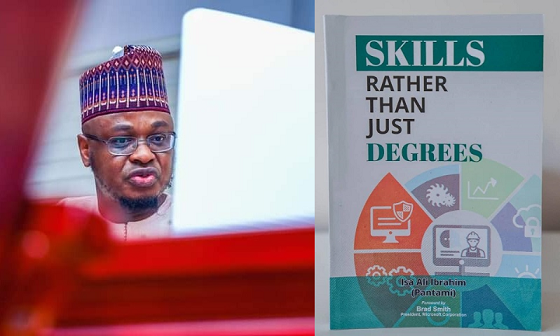
Despite all his official commitments, Prof. Isa Ali Ibrahim Pantami’s internationally recognised contributions to the field of both Digital Economy and Islamic knowledge are unprecedentedly breaking colossal barriers to socioeconomic development in Nigeria and Africa at large. We are grateful to The Almighty Allah, Who has bestowed our society with such a rear gem.

The Islamic scholar and professor of cyber security, Sheik Pantami, is leaving, to some extent, a tripartite legacy for our future leaders to emulate. He is equally fostering a paradigm shift in his professional career and public office as a Minister of Communications and Digital Economy. He is an epitome of a role model, a philosopher with a positive legacy which will serve as a footprint or a sailable path for all potential leaders, academics and religious scholars to tread on.

However, Malam Pantami is building this astounding path against all criticisms from some of his academic colleagues and Islamic and Christian scholars. He patiently stands tall on his two feet. He forges ahead against all social media hypes, just like the flow of rivers, as “rivers never go reverse” – they gradually clear their paths to their destinations, entrenching a memorable route for explorers and navigators to follow passively.

Long before writing his essential book Skills Rather than just Degrees, his advocacy out of which the book was written, has already transformed so many lives, including myself and thousands of graduates of our innovation hub, through the effective programs and seminars conducted by the National Information Technology Development Agency (NITDA) under the excellent leadership of its Director General, a “Digital Transformer”, Kashifu Inuwa CCIE.

Prof. Muhammad Bugaje, the current Executive Secretary of the National Board for Technical Education (NBTE), is another advocate of the same subject. However, his slogan, “Skills but not Degrees”, is a bit tougher. Therefore, I sincerely urge these two erudite professors to actualise an inter-ministerial or agency collaboration between NITDA and NBTE to develop a realistic action plan and strategic roadmap for entrenching ubiquitous skill capital development in our society. 

The National Board for Technology Incubation (NBTI), Industrial Training Fund (ITF) and National Directorate of Employment (NDE) would equally play an essential role in the proposed collaboration. Such agencies are supposed to be under the same umbrella, the way it is done in Morocco, which as a result of their effective work-based learning, has achieved one of the highest economic growth among African countries, as pronounced by the European Training Foundation.

ENGAUSA GLOBAL TECH HUB, publicly recognised as “technical skills enthusiasts”, will formally seek permission from His Excellency Prof. Isa Ali Ibrahim Pantami to translate the book into the Hausa language. The translation will help fit it into the bilingual-based curriculum of ENGAUSA APPRENTICESHIP PROGRAMS. That opportunity would also pave the way for using the translated version in our public awareness programs on Radio, TV and social media. This book succinctly corroborates the mission and objectives of ENGAUSA HUB, as it goes with our motto, “Breaking Barriers and Bridging Gaps”.

Engr. Mustapha Habu Ringim is the founder/CEO of EngausaHub.com.

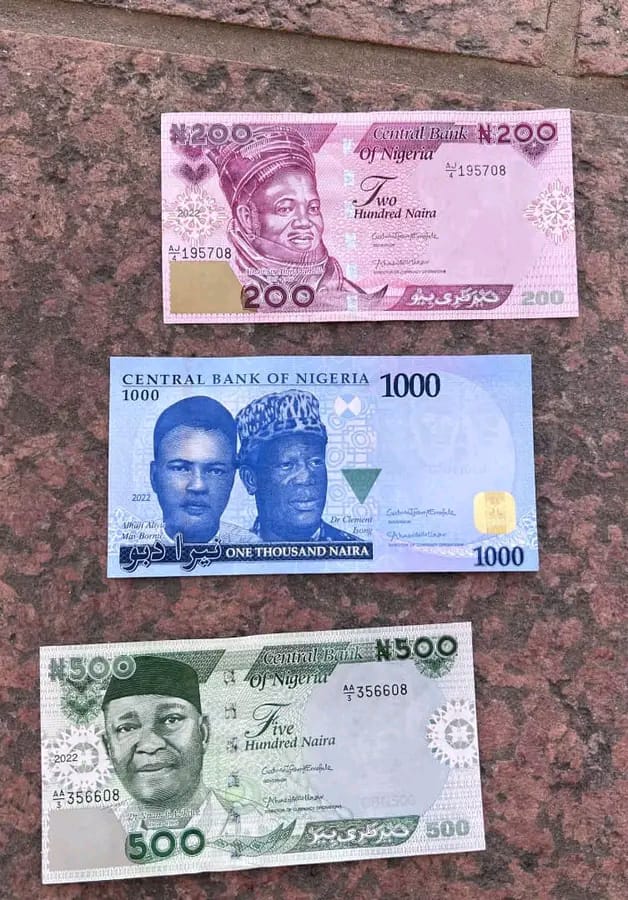
Buhari unveils new naira notes

By Ahmad Deedat Zakari

President Muhammadu Buhari has unveiled the redesigned naira notes in Abuja.

The President unveiled the new naira notes on Wednesday morning at the meeting of the Federal Executive Council (FEC ) at the state house, Abuja.

The Governor of the Central Bank of Nigeria (CBN), Godwin Emefiele was also in attendance during the unveiling ceremony.

While addressing the FEC members after the unveiling ceremony, the CBN governor debunked the rumours that the early unveiling of new notes is a means to target any Nigerian.

He therefore appealed to the public to refrain from perpetuating such rumours.

He added that the CBN will intensify the monitoring process and interrogate the process of withdrawals.

He stated that there will be strict restriction on the volume of cash that people can withdraw over the counter, as it works with the EFCC to monitor the purpose of any heavy transactions.

Nigerian media industry proposes new regulation to enhance professionalism

By Ahmad Deedat Zakari

The Nigerian media industry has adopted a new mechanism to address ethical and professional problems in the industry.

The decision was an aftermath of a media roundtable organized on Monday, 21st November, 2022.

The amalgam of the Newspapers Proprietors Association of Nigeria (NPAN), Nigerian Guild of Editors (NGE), Nigerian Union of Journalists (NUJ), Broadcasting Association of Nigeria ( BON) and the Guild of Corporate Online Publishers (GOCOP) came together to arrive at the resolution.

Media leaders and operators at the roundtable noted that the success of the co-regulation would be attainable via a workable enforcement mechanism.

According to them, co-regulation is attainable when the Nigeria Press Organization (NPO), comprising NPAN, NGE, NUJ and BON work together to make the co-regulation system effective. This will be done through the establishment of the ombudsman at local and central levels.

This is contained in a communique issued at the end of the media roundtable convened within the context of the imperative of a strategic response to the challenge of institutionalizing self-regulatory mechanisms by the media for the media.

The communique was jointly signed by the president, NPAN/NPO, Mal. Kabiru A. Yusuf, FNGE, president, NGE, Mustapha Isah, president, NUJ, Chief Chris Isiguzo, MFR, president, GOCOP, Maureen Chigbo and the executive secretary, BON, Dr. Yemisi Bamgbose

The communique noted that measures must be put in place to avoid the creation of bureaucratic structures that may have high-cost implications and hinders the efficient operation of the ombudsman.

The communique reads in part:

“That sanctions for the violation of ethical codes and professional standards shall be determined by the Ombudsman, guided by the regulation.

“That media professional bodies and associations shall partner with media organisations to give wide publicity to the decisions of the Ombudsman,” the communique stated.

On the revised Code of Ethics of Journalists in Nigeria, the communique noted that a bill of rights would be incorporated into the revised code to address concerns over some industry practices that tend to undermine the welfare and safety of journalists.

The communique also said: “That the revised code shall protect investigative journalism by making the public interest exception to instances where undercover methods may be used to obtain information.

“That the revised code shall distinguish between paid content and editorial content to preserve editorial integrity; and a new clause would be inserted to obligate journalists to promote the right of the people to know, freedom of the press and responsibility.”

Kolmani oil project has attracted over $3bn investment – Buhari

Ahmad Deedat Zakari

President Muhammadu Buhari said the Kolmani oil project has attracted over $3bn investment in the oil and gas sector at a time the world is unwilling to invest in fossil energy.

The President made the disclosure while flagging off the Kolmani Development Project in Bauchi on Tuesday. The president noted that his administration has done everything to de-risk the project and attract investors.

Buhari said:

“Considering the land locked location and the huge capital requirement, the economics of the project is a challenging proposition. Consequently, from the outset, I instructed NNPC Limited to utilize and leverage their vast asset portfolio across all corridors of its operations to de-risk the project to attract the much-needed investment.”

“It is therefore to the credit of this administration that at a time when there is near zero appetite for investment in fossil energy, coupled with the location challenges, we are able to attract investment of over USD 3 billion to this project.”

The President in his address also commended the Nigerian National Petroleum Company Limited (NNPCL) for their effort in discovering oil in the northern part of the country after so many futile attempts. He noted that the discovery foreshadows economic prosperity for Nigeria.

“This is indeed significant considering that, efforts to find commercial oil and gas outside the established Niger Delta Basin was attempted for many years without the desired outcomes,” he stated.

The Daily Reality had reported that the Kolmani oil exploration is the first of its kind in Northern Nigeria.