Month: June 2022

Experts advise young women to utilize ICT to change society

By Muhammad Aminu

Experts have advised women and young girls, particularly in northern Nigeria to make judicious use of Information and Communication Technology (ICT) to better their lots and change society for the better.

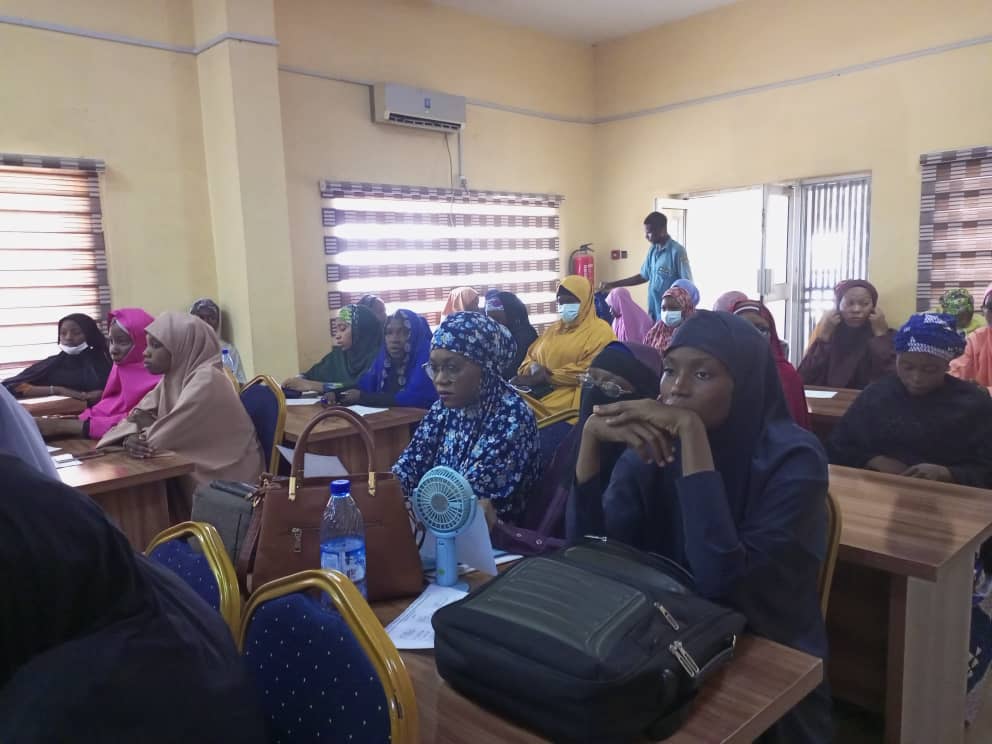
The experts gave the advice at a roundtable discussion on the Challenges of Seeding and Nurturing Creativity and Innovation Among Young Women Organised by the Center for Information Technology and Development (CITAD) in Kano.

Aliyu Aliyu, an Independent Consultant, decried that socioeconomic and cultural barriers as well as inadequate role models to emulate are stifling women and young girls from actualising their full potentials in Nigeria.

Aliyu contended that women and girls are creative and problem solvers and that all they need are inspiration and mentorship to leverage digital technology to unleash their potential for their success and societal development.

“Young women need to use their time in a way that will better their lives, use social media in an effective and rewarding way, set their priorities and know how to achieve them, he added.

According to Dr Sana Muaz of the Department of Software Engineering, Bayero University, Kano, there are challenges for young women but with passion and zeal to excel, they can create a niche for themselves in society.

She advised girls to always understand a business idea well before venturing into it so that they can not just start a business but can build a sustainable brand in business against all odds.

She called on the participants to always remember their important position as women that other girls would look up to as role models.

In her contribution, Malama Aisha Bako, Chief Executive Officer, Onyx Investment Advisory Limited, challenged the participants to penetrate the ICT sector to make their contribution to society instead of wasting their resources on fruitless activities on social media.

“Platforms like TikTok and Instagram are paying huge amounts of money to those that know how to use them well,” she added.

The Chairman of the discussion, Prof. Asabe Mohammed while commended CITAD for the Initiative called on the participants to make the best use of the “unique opportunity” to improve their lives and society.

Earlier, CITAD’s head of Digital Creativity and Innovation for Girls (DICIG), Kamaluddeen Umar, said the programme is aimed at empowering girls to have access to digital skills in order to address the gender digital divide in Northern Nigeria.

He said: “The aim is to provide digital skills training for 200 girls (100 per year), to produce 80 digital entrepreneurs (40 per year) and create 160 new digital jobs for girls (80 per year).

“Selected participants were: girls between the ages of 18-30 who have a minimum secondary school education and are from Bauchi, Gombe and Kano States in addition to having an interest in building and running their business.”

According to Umar, the participants will undergo five phases of training basic, advanced, business ideation, business development support services market transition which some participants will be selected on the merit of their performance and business idea for awards.

Police honour constable for returning 800 missing dollars to owner

By Uzair Adam Imam

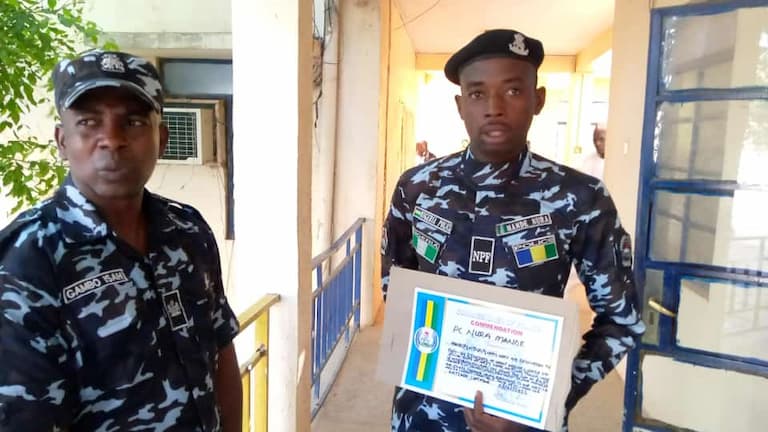
A Police Constable, Nura Mande, has been honoured by Katsina State Police Command for finding and returning the missing 800 dollars to its owner in the state.

The Daily Reality learnt that the money belongs to a female intending pilgrim, Hajiya Hadiza Usman.

Mande was reportedly presented with a letter of commendation and N30,000 by the Commissioner of Police, Idris Dabban.

SP Gambo Isah, the Command’s Spokesperson, disclosed this in a statement, stating that the constable was on official duty at the state Pilgrims Welfare Board Hajj camp when he found the money.

He added that “while discharging his duty at the Hajj camp, PC Mande found the 800 dollars on the ground and returned it to the board’s Director of Administration, Alhaji Sada Salisu-Rumah.

“PC Mande disclosed that it was his fear of God that made him to return the money to the board’s official so that it could be returned to the owner.

“Salisu-Rumah commended the police constable for his good behaviour and honesty,” he added.

Isah added in the statement that the Police Commissioner was very excited over the display of honesty by Maude.

He, however, called on other police personnel in the command to emulate him.

English letters and sounds: How we get them wrong

By Salisu Yusuf

One of the problems encountered in learning English phonetics and phonology by the second language learners in Nigeria is the assumption that the English phonemic orthography is having the same trends as those of our first language. For example, the Hausa letter /c/ as in caca, ciki and abinci is always predictably realised as /c/. It can’t be realised as any other sound in any other environment. In contrast, English letters are unpredictable in their phonetic realisation. For instance, the sound /y/ can be realised in ‘lure’ as in ‘failure’ /’feilja/ or something like /felya/ not /felwa/ as we pronounce. The /y/ can also be realised in /year/, etc. 

 While the phonemic orthographies of Hausa, Igbo and Yoruba are uni dimensional, that each written symbol or letter has a predictable sound, the English phonemic orthography is complex and unpredictable. For example, the symbol /ch/ can be realised as /sh/ sound in ‘charade’ /ʃəˈrɑːd/ or /sharad/, the /teous/ in ‘righteous’ /’raetʃas/ or something like /raicas/ not the /raitiyos/ we say.

 What I am trying to say, is that the English spelling of words can’t be a reliable guide to pronunciation. For example, there are 26 English alphabets and 20 vowels but there are 44 conventional English sounds! Moreover, there are English sounds that aren’t found in African languages. For example, the /ʒ/ sound in ‘division’ or /ə/ in ‘police,’ etc.

 Some English letters are not pronounced at all in their phonetic realisation. For example, the /t/ in ‘ ballet’ /’baelei/ or /balei/, the /au/ in ‘restaurant’ /’resrɒnt/ or /restront/ not /restaurant/ as we say, the /w/ in ‘sword’ is deleted /sod/, the /b/ in ‘plumber’ /ˈplʌmə/ or /plama/, the /t/ is deleted in pronouncing ‘sachet’ /ˈsaʃeɪ/ or /sashe/ not /sacet/, the /o/ in ‘leopard’ /ˈlepəd/ /lepad/is silent, the /b/ in bomb /bom/ is also silent, so is /s/ in ‘debris’ /’debri:/ or /debrii/, etc.

Some letters are substituted with other sounds that are different from the actual letters. For example, ‘memoir’ /ˈmemwɑ/ is closer to /memwa/, the ‘chure’ in brochure /ˈbrəʊʃə/ is /sh/ sound pronounce closer to /brausha/, the /toise/ in tortoise /ˈtɔːtəs/is /ta/ sound, pronounce as /totas/ not /totuwas/ as we say. The word ‘poignant’ /ˈpɔɪnjənt/ is pronounce as /poyinyant/, vehicle /vi:ikl/ is more closer to /viyikl/ not /vehikl/ we say. Chasis /ˈʃasi/ is /shasi/ not the /chasis/ we say. 

 Some vowels are changed during phonetic pronunciation differently from the written ones. Example, honey /ˈhʌni/ is /hani/ not /honi/, onion /ˈʌnjən/ or /anyan/ rather than the /oniyon/ we pronounce. Matrix /ˈmeɪtrɪks/ is /meitriks/ , village /’vilidz/ or /vilij/ not /vilej/. Stipend /ˈstaɪpend/, quay is pronounced as /ki/, chaos /ˈkeɪɒs/ or /keyos/, fuel /fjuː(ə)l/ is pronounced as closely as /fyuuwal/, verbatim /vəːˈbeɪtɪm/ or /vabeitim/ not /vaba../ we say. Albeit /ɔːlˈbiːɪt/ is pronounced as /olbiit/, receipt is /’risit/ not /resipt/, and liason /li’eizan/ or /liyezn/.

 We pronounce certain combinations through generalisation of certain features of similar combinations from other environments. For example, the following words are pronounced from similar sounds say in example the word ‘ tuition’. So unlike in ‘ tuition’ almost all those English words with /ui/ combination are pronounced with a long /u:/: juice /dzu:s/ or /juus/, suitable /’su:tabl/, or /suutabl/, suicide /’su:said/ or /suusaid/, suit /su:t/( but ‘ suite’ is /swi:t/ or /swiit/) or /suut/, fruit /fru:t/ is /fruut/, etc.

 In words with similar syllables, a preceding sound is used to randomly pronounce wrongly the immediate syllable. For example, gigantic /dzae’gaentik/ or /jaigantik/ is usually pronounced wrongly as /dzaidzantik/, etc.

These are some of the features that influence Nigerian phonetics. A companionship with an English dictionary, listening to stations like the BBC World Service, etc. can give us some hints on English phonetics and phonology.

Salisu Yusuf wrote from Katsina via salisuyusuf111@gmail.com.

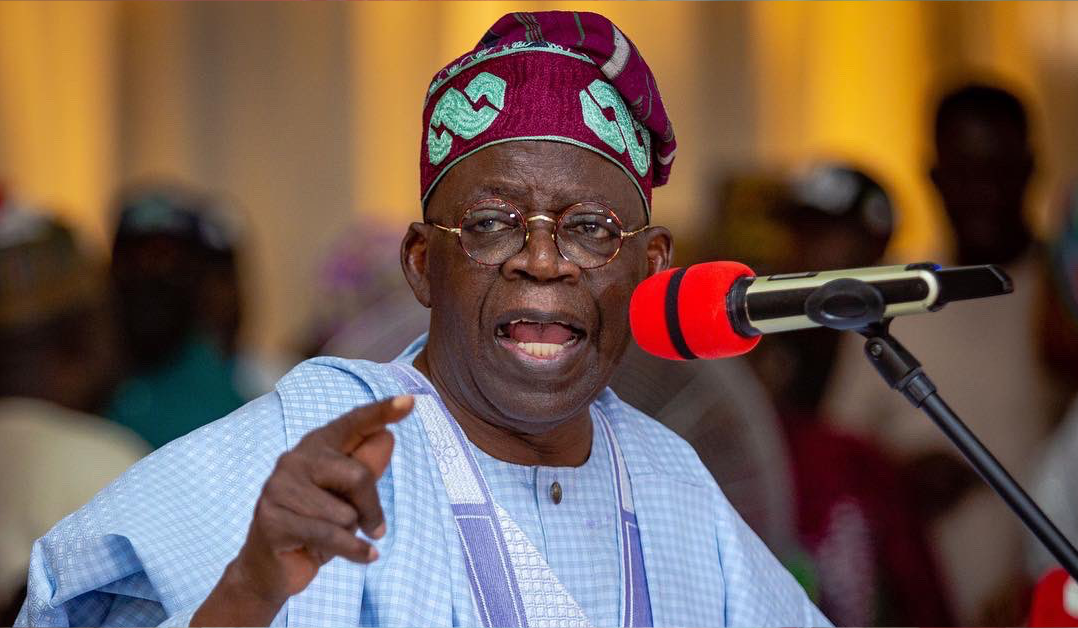
Tinubu’s Emergence: A demonstration of political mentorship and lesson to Northern leaders

By Adamu Abubakar Kumo

Mentorship has been the way through which a more experienced, more skilled and usually more elderly person passes his experience, expertise, knowledge etc. to the younger ones. From education to politics, business to occupation, mentorship is instrumental to the continuance of the flow of wisdom from one generation to another.

The history of Nigeria’s founding fathers is undoubtedly that of heroes and legends who wrote their names in gold in the books of history. But, looking at today’s Nigeria, one would be right to say that the wisdom of those great men has not been successfully passed down to today’s generation.

Among the six geo-political regions of the country, South-West has distinguished itself. The region seems to uphold the principles of mentorship. From Sir Herbert Macaulay, Chief Obafemi Awolowo, Chief Samuel Akintola, Aare M.K.O. Abiola and now Asiwaju Bola Tinubu, Yoruba leaders have been producing leaders who subsequently would take over from them. They deliberately ‘build’ people; they sow the seeds and look after them until they grow into large formidable and strong iroko trees that can hardly be trampled or tempered with by just lilliputians if I were to borrow Shattima’s word.

The successful emergence of Asiwaju Ahmed Bola Tinubu is a testimony of the presence of mentors and the continuance of political mentorship in Yoruba land.

Asiwaju, for the past two decades, has been working, influencing the appointment of some of his mentees in strategic government positions, politically supporting his allies and subordinates to attain power and building political bridges and structures across the country. The man waited patiently until when it is time, the time for the Jagaban to reap the fruits of his labour, the time when Amaechi has support from within; the time when Lawan seems to have the blessings of some party juggernauts, the time when some northerners feel that only a Northerner can defeat the opposition’s candidate. At this precious time, Bola Ahmed ‘summoned’ his mentees across the length and breadth of the country and alas, they answered! They come in their thousands with all the vigour and support the Jagaban needs.

Despite the eloquence of Prof. Yemi Osinbajo, the grammar of Ayade, the bluntness of Yahaya Bello, the doggedness of Rotimi Amaechi and the ‘appeal for sympathy’ of the aspirants from the South East, Bola emerged victorious, defeating them hands down.

This ‘political war’ fought and won by the  Southwesterner may compel one to ask, where are the Asiwajus of other regions? Can somebody from North-East, North-West or North-Central brag about having the capacity to do something similar to what this septuagenarian did?

The likes of Sirs Sardauna and Balewa don’t exist anymore in the North. Moreover, nobody is following the footsteps of Hassan Usman Katsina, Sir Kasim Ibrahim, Malam Aminu Kano and many other patriots – the mentorship thread is broken. Though North has been boasting of having great and influential leaders, the problem remains that none is willing to ‘nurture’ his successor.

While Alhaji Atiku Abubakar was busy contesting to become the president right from 2007, Kwankwaso was busy fighting Ganduje and so on. On his part, Bola Tinubu was busy, making sure his candidates become governors in Ogun, Oyo, Lagos, etc. He was influencing ministerial nominations, making sure he appointed Vice President. He was equally working to bring Dimeji Bankole, Ahmed Lawan, Femi Gbajabiamila etc. In other words, Tinubu was busy ‘building’ people. Because he believes even if some choose to betray him, many others will not.

The lesson Asiwaju taught most of our leaders, especially from the North, is that, if you have a plan of twenty years, start mentoring people who will help you achieve it right from today. More importantly, look beyond your family and kinsmen when choosing your proteges.

Another point of note is that you will mentor a person who may rise to a position that you have never attained. This is normal. Don’t get upset when the person tried to rub shoulders with you. Instead, be focused, determined and strategic in your dealings.

Dear Northern leaders, make sure you mentor another person who may likely take over from you. Succession is natural, if you did not breed anybody, someone may grow on his own and come to fight and overtake you one day. Mentor your proteges today to have loyal mentees that will always be proud of you tomorrow.

Adamu Abubakar Kumo wrote via akumo89@gmail.com.

Man in connection to kidnap of politician’s mom arrested in Jigawa

By Muhammad Sabiu

A 65-year-old man named Ibrahim Suleiman of Tsigi Quarters in Kiyawa local Government has been detained by Jigawa State police in connection with the abduction of an elderly woman.

The arrest was confirmed by the command’s spokeswoman, DSP Lawan Shiisu Adam.

Ibrahim Suleiman, 65, of Tsigi Quarters, Kiyawa LG, was detained in connection with the kidnapping of Ibrahim Gaya’s mother.

Recall that there were reports that unidentified gunmen abducted the 70-year-old mother of governing All Progressives Congress (APC) candidate Tijjani Ibrahim Gaya for the Jigawa Central Senatorial District on Tuesday.

He stated that the suspect was apprehended after he was seen in one of the vehicles that the shooters used to torment their victims, adding that investigations into the incident were still ongoing.

On the need to establish the Federal Medical Center Rigasa

By Abdullahi Yusuf

In our dear country Nigeria, the responsibility of providing health care to local communities is shouldered upon Local Governments through primary health care. State Governments are responsible for taking care of any facility under secondary health care, while Federal Government on the other hand is responsible for handling Tertiary Health Care Institutions which include (federal or state) university teaching hospitals or Federal Medical Centers (FMCs).

Contemporarily, there are 22 FMCs in Nigeria located in different states of the federation. In operationalizing the policy of providing health care services to Nigerian citizens, the Federal Government decided to establish one tertiary health institution in each state in which FMCs were established in states that do not have a University teaching hospital. However, there was an exception in the case of Lagos State which has both a University Teaching Hospital and FMC at the same time. This might be due to its population density and the commercial activities in the state.

Kaduna is the third most populous state in Nigeria with more than 5 million people as per 2006 census data. The number could be double today. Rigasa, a ward under the Igabi Local Government Area, is considered the fastest developing area in terms of population, with approximately 3 million people according to Wikipedia.

People living in Rigasa commonly faced limited access to good health care, having just two primary health care centres and one general hospital which are not enough to cater for the health need of the populace. There are quite a numbers of private hospitals which supports the provision of health care to the people of the community but could only be patronized by well-to-do members of the society.

With regards to the limited accessibility of quality health services by the people of Rigasa, the senator representing Kaduna central Mallam Uba Sani sponsored a bill for an Act to establish the Federal Medical Center Rigasa. According to him, this will bring much-needed relief to inhabitants of the hugely populated area, who for long have to travel long distances to get medical attention. This is a commendable effort by Senator Uba Sani and history will never forget his kind gesture towards the people of Igabi Local government and Kaduna State at large.

In 2019, if we can remember, Senator Uba Sani raised a motion with regards to a measles outbreak in Wusar village, which is under the Gwaraji ward of Igabi LGA. The Senate directed the Center for Disease Control (NCDC) and National Primary Health Care Development Agency to take measures that would address the outbreak. It also directed the NCDC to set up an office in the local government as a matter of urgency.

The bill for an Act to establish Federal Medical Center Rigasa passed its first reading on the 19th of November, 2019. And subsequently, passed its second reading on the 17th of December, 2019. The bill passed its third reading on the 3rd of December, 2020. It is currently awaiting assent by President Muhammadu Buhari, which will pave the way to the commencement of the work.

The boon of establishing FMC Rigasa can not be overemphasized as it will bridge the gap of accessibility of quality health care services by the people of the community and the state at large. It will also provide easy access to more sophisticated healthcare services by making available technologically advanced machines and equipment for the diagnosis and treatment of diseases of all kinds. It will also provide intensive manpower in taking care of patients and operationalizing the sophisticated health care services.

Socioeconomically, the establishment of FMC Rigasa will undoubtedly boost the macro and micro economy of the state by reducing the rate of unemployment among the graduates, promoting business activities of SMEs and increasing revenue generation for the state government. The huge economic impact of the Rigasa Train Station on the inhabitants of Rigasa and Kaduna State at large is obvious to all. Moreover, this impact will surely duplicate itself beyond expectation when the FMC is established.

It has been a well-known fact that Rigasa inhabitants are die-hard supporters of President Muhammadu Buhari, and they have never compromised their support regardless of the situation of the country. This is a great chance for  Mr President to reciprocate the gesture and prove his appreciation for his long-standing support by okaying the bill for commencement of work.

In conclusion, I will like to appeal to all concerned individuals who in one way or the other can support the actualization of this dream to help in pushing this agenda till it becomes a reality. Kaduna state government under the leadership of Mallam Nasir ElRufai have done a lot for Rigasa. Still, we will not relent in soliciting this one more favour concerning actualizing FMC Rigasa. Zazzau Emirate under the leadership of Amb Ahmad Nuhu Bamalli as well can help in facilitating this agenda, and finally Federal Ministry of Health under the leadership of the Honourable Minister of Health, Dr Osagie Ehanire should kindly help in facilitating the actualization of FMC Rigasa.

Abdullahi Yusuf is a student in Human Kinetics and Health Education Department, Bayero University Kano. He wrote from Rigasa, Kaduna, via abdoolphd@gmail.com.

Tributes pour in as Turkish Sunni Sheikh, Mahmud Effendi, dies

By Ahmad Deedat Zakari

Influential Turkish and Sunni scholar, Sheikh Mahmud Effendi passed on at the age of 93. 

Sheikh Effendi, who was well known for his emphasis on strict adherence to the sunnah, died on Thursday after battling kidney-related problems. 

His grandson announced his demise on Twitter on Friday, June 24, 2022. 

“His Excellency Mahmud Effendi, my grandfather, has reached Allah,” he tweeted. 

The late Sheikh was buried on Friday, after a funeral at the Faith Mosque in Istanbul. The funeral which was held after the Jumu’ah prayer was attended by thousands of people. 

Turkish President, Tayyip Erdogan joined mourners in paying tributes to the late shaykh.

“May God have mercy on Mahmoud Effendi, a spiritual guide in our country. He dedicated his life to Islam. I wish patience to his family, students and all his fans. Let him rest in peace,” he tweeted. 

Other important Muslim figures around the world have also joined in praying and extolling the virtues of the late sage. 

“Innā li-Llāhi wa inna ilayhi rāji’ūn. Saddened to learn of the passing of Shaykh Mahmud Effendi of Turkey. He revived Islam & Sunnah at a challenging time, inspiring millions of people in #Turkey & around the World. A great loss for the Ummah,” said Pakistan’s former Prime Minister, Imran Khan

“Do you know how you can tell a real scholar and walī of Allah?” 

“It is the fact that Allah has written the love of this person in the hearts of millions of righteous people from different backgrounds. The death of the Turkish scholar Sheikh Effendi shows such a love والله حسيبه.” Dr Yasir Qadhi tweeted

Imam Omar Suleiman was not left out in praying for the shaykh as he also took to his verified Twitter handle to mourn his demise. 

“May Allah have mercy on Shaykh Mahmud Effendi, forgive him and elevate him. What a loss for the Ummah. A man I always felt had a secret with His Lord that was manifest in his face,” said Imam Omar Suleman.

Sheikh Mahmud Effendi was born in Turkey’s northern Trabzon, he completed the memorization of the Qur’an at the age of 10. 

He authored Tafsir of the Qur’an in the Turkish language named Rahu’l Furkan

He was ranked number 34 in the 2022 edition of “The Muslim 500”; the annual publication by the Jordan-based Royal Islamic Strategic Studies Centre, which ranks the most powerful Muslims globally.

Will Mai-Mala walk the talk?

By Kasim Isa Muhammad

Yobe State students across Nigeria were left with questions about the silence of the Yobe state scholarship board and the state government itself. The students filled out all the requirements and paid money to complete the registration. Since then, not even a cough, nobody has heard from the scholarship board. The students gave different excuses for the board until things reached a confusing level.

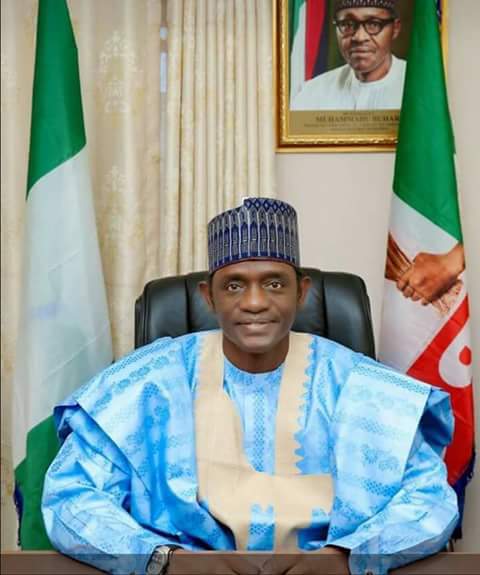
Meanwhile, the Yobe state government has not yet released any information about the scholarship board. His Excellence, Mai Mala Buni, as executive governor, and be seen as responsible for all matters around the state in Yobe and should have to call upon the board and question them about the approved funds for the scholarship. Still, the views turned out to be different. 

However, the students are in high demand for scholarships to cover some of their academic programs. Even if there is any problem, the board or state ministry of finance should release a statement to convince the students and acknowledge their whereabouts.

The school tuition fees are rapidly increasing because of the current economic impact on Nigeria. Some students look forward to the scholarship as a means to support them in one way or another. Silence is never an answer because the past administration has never failed the students in paying scholarships.

The one thousand-dollar question is: where do the good people of Yobe donate the funds meant for fostering the state’s educational sector in the form of an educational appeal fund?

Therefore, It is a good idea for the government of Yobe State to form a high-powered committee laden with a task to look after the issues pending.

Kasim Isa Muhammad wrote from Potiskum, Yobe state.

Hijab Judgement: Lawyer appears in traditionalist’s attire to court

By Ahmad Deedat Zakari

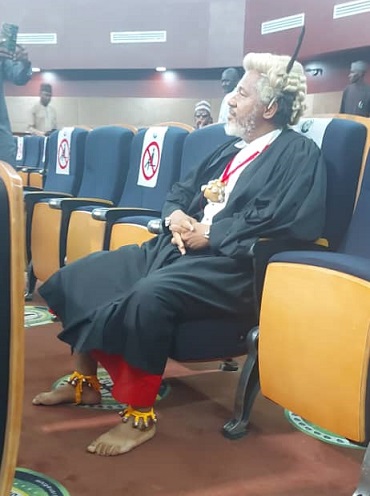
A Nigerian lawyer identified as Malcolm Omirhobo appeared in what looked like a traditional worshipers’ attire before the Supreme Court on Thursday, June 23, 2022.

Omirhobo was barefooted and dressed in a red wrapper, among other things to identify with his traditional belief.

According to him, his appearance is inspired by the Supreme Court Judgement delivered on Friday. The apex court had passed a judgement on Friday allowing the use of hijab by female Muslims in secondary schools.

Members of the Legal Profession have expressed divergent views on the act. While some are in support, others are against the behaviour.

A Nigerian Human Right Lawyer, Pelumi Olajenbgesi, took to his Facebook account to condemn the act.

“This is unacceptable! We cannot make nonsense of the respected and noble Legal Profession for any reason. Yes, we have issues and challenges, but this is totally condemnable.” Pelumi posted on his Facebook page.

Another Lawyer, John Aikpokpo-Martins, commended Omirhobo. “CHIEF MALCOLM OMIRHOBO IS MY MAN OF THE YEAR. He got Chutzpah,” He posted.

Although many bar members have reacted differently and expressed their biases, the leadership of the Nigerian Bar Association, NBA, which by law, is required to regulate and discipline lawyers, is yet to comment on the issue.

Why do students hate or fail mathematics?

By ImamMalik Abdullahi Kaga

Many students across Nigerian schools hate the king of subjects – mathematics. Mathematics is a subject that has application in most things, if not everything, in our life. Yet it is loved by few. Why?

The application of mathematics is there in every aspect of our life. Mathematics is crucial for industries, artisans, doctors, engineers, and many others. Yet, despite the vast and promising applications of the subject in our day-to-day activities, many students find it uninteresting. However, as a 200-level student, it is among the most straightforward and exciting subjects I enjoy. The reasons for the aversion towards mathematics include the teachers’ teaching methodology, students’ attitude towards the subject, poor reading culture, and lure of peer mates.                                                                                                                                                  

Some teachers (trained ones) employed to teach this almighty subject do not teach from the background. On the other hand, some are not trained and qualified to teach the subject. We cannot deny the fact that not all that are practising the noble profession of teaching are teachers. The majority have found themselves in the cause accidentally. This results in their inability to carry out the job correctly. It is becoming rare seeing a well-trained mathematics graduate teaching the students because the untrained ones are displacing them. And this applies not only to mathematics but to other subjects too. It is worrisome to notice that most of our schools produce students with a minimal or poor background in mathematics. The truth is that our schools are invaded by non-professionals parading themselves as teachers.                     

Students’ lack of seriousness and keenness on the subject cannot be over-emphasized. In this world of technology, students face many distractions which cause hindrances to their studies. Students nowadays are addicted to phones. They prefer surfing the internet and social media, playing games, watching the so-called series films, listening to music to devoting time to practising the subject. With this attitude, no student will perform excellently in this subject because mathematics requires constant practice.                                                                        

These days, students are not keen on their studies, so they barely read their books. In the past, students worked hard; some even read harder than their teachers. This helped them understand mathematics and other subjects, and then a holistic knowledge and solid background. Ours is entirely different. We hardly ever find students that have devoted keen interest in reading the subject in the six-year academic program at the secondary level. Still, they expect to score a credit pass in the subject.                                                

In some instances, fellow students discourage others in their crew from being focused on the study of mathematics in our schools. Some of the students in question, either out of sheer laziness or fear, would not devote their time and energy to the subject, which is one of the reasons for the mass failure in the subject in recent times. It is a fact that once a student hates a topic, he will equally hate the teacher, resulting in a large group of students who develop an aversion toward learning the subject. Another disturbing aspect is the influence of peer groups that lure others who might have an interest in this subject to go to games, parties and others. This has ignited lugubrious discouragement to others.                                                                    

Another disturbing aspect is the kind of textbooks used in schools. Unemployed folks searching for jobs plagiarize the works of hardworking researchers and sell them to schools. You will believe me that the books in circulation in various schools are full of silly pictures instead of extensive clarifications about the topics contained.

ImamMalik Abdullahi Kaga wrote from Borno State University via abdullahiimammalik@gmail.com.