Month: April 2022

Banditry: Kano loses another businessman

By Uzair Adam Imam 

Another Kano businessman, Umar Sani, aka Magaji, was killed by suspected bandits after collecting ransom from his relatives.

Magaji, who hailed from Fagge LGA in the Kano metropolis, was said to have been kidnapped alongside five others on the highway en route to Buruku.

The bandits who spoke after they collected the ransom confirmed the murder of Magaji to his relatives. 

Our reporter gathered that the bandits called back on Thursday demanding another N20 million from his relatives despite killing the businessman. 

Hussaini Sani, an elder brother of the deceased, confirmed the death of Magaji to journalists. 

He said, “Nine of them were kidnapped along the Kaduna-Birnin Gwari road while on their way to Buruku. They later released three of them but withheld six.

“After some time, negotiation started with the families of the six people, and we later agreed to pay them collectively, only for us to see five of them coming back.

“When we asked them about the whereabouts of our brother, they confirmed to us that he was killed by the abductors. We called them (abductors) using the number they used for the negotiation. They insisted that our brother was still alive and even went ahead to demand another ransom before they would release him.

“When we insisted that we must hear our brother’s voice before paying something again, they opened up to us that he was really killed, saying he was trying to escape. But his released colleagues said he was killed intentionally,” he added.

The Daily Reality reported how bandits killed a 39-year-old businessman, Yahya Hassan Musa, hours after receiving a N6m ransom.

Musa, who hails from Kano, was roamed and kidnapped in a forest around the Mopa area of Kogi State, and the bandits reportedly demanded N10m naira before slashing it to N6m at a later date.

MURIC to INEC: Warn Muslim haters among your staff

News Desk

The chairman of the Independent National Electoral Commission (INEC), Professor Mahmood Yakubu, yesterday announced that the closing date of the registration exercise for the 2023 general elections is 30th June 2022.

Reacting to this announcement, the Muslim Rights Concern (MURIC) has appealed to the electoral body to ensure that Nigerian Muslims are not disallowed from partaking in the exercise by overzealous Muslim-haters among INEC’s ad hoc and full staff who are in the habit of disallowing hijab, cap and turban-wearing Muslims from registration.

This was contained in a statement issued on Saturday, 23rd April 2022, by the director of MURIC, Professor Ishaq Akintola.

The statement reads:

“The chairman of the Independent National Electoral Commission (INEC), Professor Mahmood Yakubu, yesterday announced that the deadline of the registration exercise for the 2023 general elections is 30th June 2022.

“While we commend INEC for successfully carrying out its duties in the past few years, we sound a wake-up call to the electoral body to prevent the disenfranchisement of millions of Muslims in the coming 2023 general election.

“It is very common for Muslim haters among INEC’s full and ad hoc staff to harass hijab-wearing female Muslims as well as cap and turban-wearing male Muslims at the registration centers in a bid to frustrate and prevent them from registering for the election. They are ordered to remove their hijab, cap or turban during capture. Such orders are illegal, unlawful, illegitimate and unconstitutional.

“Only those who are ready to compromise their faith by obeying the illegal instruction are allowed to register while others are turned back. As a result of this intimidation, millions of Muslims are disenfranchised. The effect is a huge deficit in the numerical strength of Muslim voters. This will not be tolerated in the ongoing exercise.

“INEC is fully aware that it is illegal to disallow citizens from registering for election on the basis of religion. It is also a precursor to the rigging of elections in favour of Christian candidates all over the country. This practice is evil and provocative. It can lead to crisis before, during and after elections.

“It is a major threat to a peaceful election, particularly in the 2023 exercise. Judging by the announcement of the leading Christian firebrand Pentecostal wing, namely, the Redeemed Christian Church of God (RCCG) that it has formed political wings in all its parishes, it is clear that Nigerian Christians plan to hijack the 2023 exercise.

“While Muslims in the North are not likely to fall victims of the disenfranchisement, millions of Muslims in the South are definitely exposed to the danger because it is not a new phenomenon in the southern geo-political zones of the South West, South East and South-South. It occurred in 2003, 2007, 2011, 2015 and 2019. MURIC documented these ugly events.

“We, therefore, urge INEC to give necessary instruction and training to all its staff. They should be warned against coercing Muslims on account of their manner of dressing. Apart from internal memoranda, INEC should issue public statements whose copies Muslims can use to defend their appearances in case of intimidation. In addition, INEC should discourage the opening of registration centers in places of worship.

“MURIC advises Muslims who face victimisation of any sort in registration centers to maintain their stand by insisting on being registered with their hijab, cap and turban. They should not obey illegal orders. Any refusal to register them should be reported to the Imam in the nearest mosque, Muslim leaders and officials of Islamic organisations.

“As a precaution, MURIC will document all cases of illegal prevention of Muslims from registration. Where possible, details of INEC officials involved in such unlawful prevention will be provided. We shall also institute lawsuits in courts of competent jurisdiction against perpetrators.

“All state commissioners of INEC in the three geo-political zones in Southern Nigeria are advised to ensure that no single Muslim is denied his or her Allah-given fundamental human right, including the right to partake in voting through the denial of voters’ cards. We will hold each commissioner responsible for any infraction that takes place in his or her state.

“While MURIC and the generality of Muslim voters in Nigeria seek a peaceful electoral exercise, we call on INEC not to ignore our advice in the interest of peace. Nigerian Muslims will not stomach any attempt to disenfranchise them during the 2023 general election. INEC should therefore take necessary steps to avoid the persecution of Muslim voters by its officials.”

Adverse effects of force-feeding infants

By Ja’afar Ja’afar

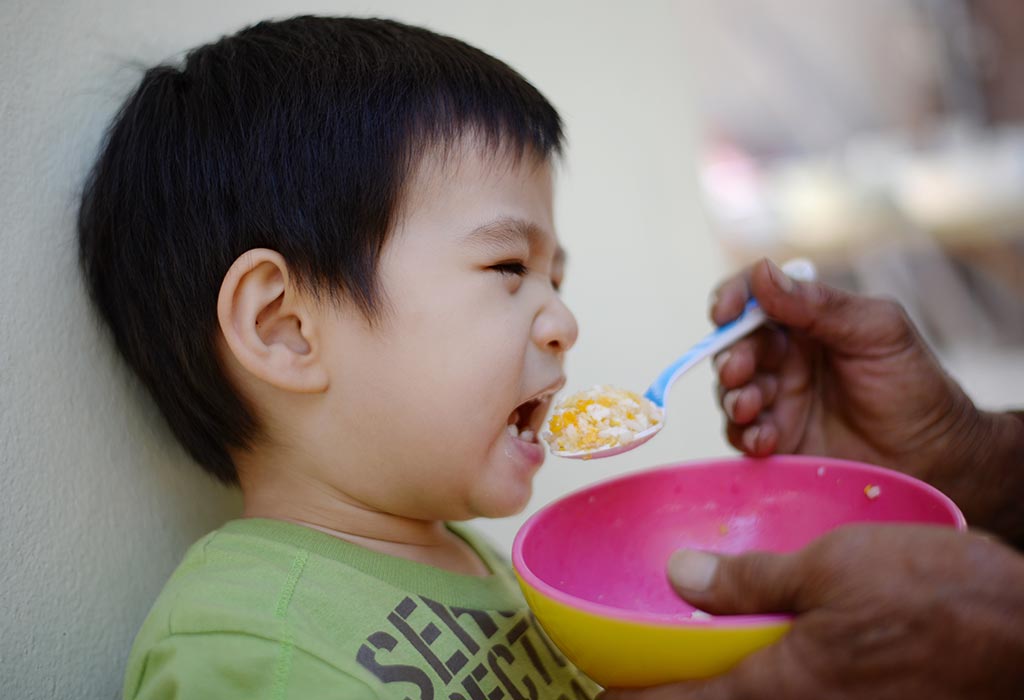
As your little one starts to explore the world of solid foods, he will learn to differentiate the tastes of different food items. This is where the struggle of a parent begins. Despite being a picky eater, making sure your child gets all the required nutrients can be frustrating. At times this frustration makes parents go overboard, and they pressurise their children to eat. Even though done with good intentions, force-feeding is never a good idea when it comes to the developing years of your child.

What is force-feeding?

Force-feeding is basically forcing your child to finish the whole served food against their will. When happy mealtimes turn into a war between parents and children with a plate full of healthy foods in between, parents generally end up using force-feeding as the ultimate strike. Even though it seems harmless, it never leads to a “win-win” situation and can do more harm than good to your child.

Instead of force-feeding your child to eat a particular food, try to prepare different variants of dishes, including that food along with the food groups your child enjoys eating.

How do parents force-feed?

Here are a few common ways parents tend to force-feed their children –

  • Deciding on your own what, when and how much your child should eat.
  • Nagging, scolding or threatening your child to finish his plate.
  • Bribing or blackmailing your child into finishing his food and rewarding him later.
  • Punishing your children if they don’t eat.
  • Comparing your child with siblings or other children to make them feel shame or competitiveness.
  • Literally forcing food into your child’s mouth and making him swallow.
  • Ignoring his pleas to eat less and using fear to force him to eat.

Force-feeding seems to get the work done for the time being and may give you the “mission accomplished” feeling too. However, it actually can have harmful effects on your child. Let’s discuss seven negative effects of force-feeding that are usually seen among children:

1. Destruction of your child’s natural appetite

The natural desire to eat is known as one’s appetite. During mealtime, constant nagging and force-feeding will make your child lose interest in food and disrupt your child’s natural appetite. Forcing your child too much may lead to him puking out everything and hating even the idea of eating.

2. Strong aversion towards food

Studies have shown that force-fed kids often end up developing a strong aversion toward food. The negativity associated with food makes them traumatised and nauseous. This aversion sticks around even when they grow up as these foods continue to subconsciously remind them of the panic and bad memories of childhood.

3. Stressful meal-times

It is in human nature to avoid anything that causes stress or discomfort. The only way a child will accept something is if they enjoy it while doing it. Forcefully feeding your child healthy foods on his plate can leave him with a stressful and unpleasant experience. Hence instinctively, he will only learn to hate mealtimes and continue to struggle with food.

4. Inclination towards sugary or junk foods

Force-fed children often learn to develop unhealthy food habits. This happens because a force-fed child never learns when to stop eating as they get accustomed to overeating during those force-feeding sessions. Also, due to their hatred towards healthy foods, they get attracted more to sugary or junk foods.

5. Lose control over their eating habits

As parents, your ultimate focus should be on making your child less dependent on you and learning to do everything themselves. But, the more you take control and force-feed your child, the less control he will have over his own eating habits. This will hamper his life and food habits even as he grows up.

6. Development of eating disorders

Since force-fed children never learn how much food their bodies require, they tend to overeat or undereat even when they grow up. This loss of control over eating habits can lead to serious eating disorders such as obesity, anorexia, bulimia, etc.

7. Disrupted eating pattern

Every human body has a different food capacity and metabolism rate. The amount you decide to give your child may be much more than his capacity to digest. If you force-feed him to finish the entire serving even after he tells you that he is full, you are feeding him an excess amount. He will need more time to digest that portion, so he won’t be hungry when you serve his next meal. As the cycle continues, your child’s natural digestive pattern will end up getting disrupted.

Ja’afar Ja’afar sent this article via mrjaafar64@gmail.com.

Stop religious altercation, use social media to learn practical skills

By Aminu Mohammed

In the last few weeks, I have keenly observed discussions about bestie, comrade and recently altercation over interfaith dialogue by our youths on various Social media platforms, particularly Facebook. The debates seem amusing, even though the one on interfaith has generated more altercation between some Islamic scholars and their followers, leading to personal abuse. I am not against people using social media to crack jokes and have fun, but it will show a lack of seriousness when people waste time on meaningless arguments.

I shudder in disbelief, wondering if something is wrong with our youth. I still recall that just a few weeks ago, a Kaduna-bound train was attacked, with many people killed while scores are still in captivity. Yet, we have seemingly forgotten about them. Instead, we dissipate energy on trivial issues. Have we done enough by putting pressure on the government to rescue our brothers and sisters in captivity?

What about using social media to pressure our governments in the region to evacuate Almajiris off the streets and end such child abuse. What about encouraging our brothers to exhibit tolerance towards other sects rather than altercations?

We have many issues at hand, and we can use social media to compel the government to do our bidding. Still, we are more comfortable arguing over trivial matters and abusing those who do not believe in our ideology. Our Islamic scholars seem not to see the urgent need through their sermons to pressure the government to tackle poverty and Almajiri syndrome in the North.

Social media is a gold mine that has provided many opportunities for personal development and skill acquisition for career advancement. But are we utilising the massive opportunities in social media to improve our lives? Are we learning new skills every day to change our narrative and move to the next level? These are questions that we should be asking ourselves.

Many people worldwide are utilising the vast opportunities made available by social media to enhance their lives, acquire new knowledge and boost their income. I still recall a post made by Dr Muhsin Ibrahim on his Facebook page, lamenting how many graduates cannot use basic email to send letters or apply for jobs. One can acquire this knowledge by spending a few hours on YouTube, but our youth will rather spend hours on Facebook attacking one another over frivolities. Frankly, obtaining mere certificates is not enough in the current era. Practical skill is what differentiates between graduate A and graduate B.

Living in Germany in the last few years has exposed me to the notion that a certificate is not enough but practical skills that can help one deliver on the job. I have seen people finish graduate programmes here and struggle to get a job until they learn practical digital skills online.

In the last few months, I have observed that some people got jobs after learning digital skills for six months or more such as web development, app development, digital marking, and programming, among others. This is despite the fact that they completed their degree at the university here – in Germany. The reality is that companies are only interested in knowing if you have the practical skills to deliver on the job and not a simple certificate.

It is pertinent to note that some forward-thinking youths in the Southern part of Nigeria work remotely for international companies due to the acquisition of digital skills. Thanks to their skill, they live in Nigeria and still earn money in foreign currency.

I have decided to devote much time this year to acquiring digital skills for personal development and suggest that to whoever is interested. I will not hesitate to reiterate that our youth in Arewa should embrace digital skills to escape poverty. With your mobile phone, you can learn practical skills free online. There are various mediums to learn digital skills for free such as Google garage, Udacity, Udemy, Coursera, among others. In fact, I am currently learning a digital skill on Coursera.

Please, my brothers and sisters, I believe we can change the narrative. Our region is bedevilled by mass poverty because of the attitude and mindset of our people. An untrained mind will create and recreate poverty irrespective of the available opportunities. So, stop wasting your data on frivolities. Instead, use it judiciously for something meaningful.

Of course, not everyone will be interested in digital skills, but there are other vocational skills you can still learn by watching YouTube videos. For example, people learn how to bake cakes, cook, and do many things by watching videos on YouTube.

Likewise, you can improve your Islamic knowledge by reading good articles and books on various Islamic websites online rather than using social media negatively. The time is now for us to do the right thing and find a way to improve our lives and that of our families. May Almighty Allah accept our supplication in this month of Ramadan.

Aminu Mohammed is at the school of Sustainability, Christian- Albrechts- Universität zu Kiel, Schleswig Holstein, Germany. He can be reached via gravity23n@gmail.com.

Only ASUU can decide on end to strike, says Chris Ngige

By Ahmad Deedat Zakari

Nigeria’s Minister of Labour and Employment, Chris Ngige, on Thursday,  April 21, 2022, said the decision to halt the ongoing strike solely lies with the Academic Staff Union of Universities,  ASUU. 

Ngige said this on Channels TV while featuring as a guest in the televised program ‘Politics Today.’

According to Ngige, the time the strike will end is only for ASUU to decide and that it is expected of the Union to decide if they have the student’s best interest at heart. 

On when the strike, which has crippled academic activities in Nigeria’s public universities, will end, the Labour Minister said, “It depends on ASUU. The ball is in their court. They should go and meet the Benimi Briggs Committee and look at what the committee is doing and make further inputs so that work can be accelerated, ” he said

Ngige added that ASUU’s attitude towards the labour crisis is not helping the situation. 

“ASUU has to come down from their high horse. You cannot go and start intimidating people in NITDA and threatening the Minister of Digital Economy and Communication with revocation of his professorship that he is a fake professor. You go to ABU and say you are going to withdraw the certificate of the director of NITDA. That’s bullying. It is not allowed in Labour negotiations,” he stated.

Despite rising insecurity, Nigeria deploys over 100 troops in Guinea Bissau

By Uzair Adam Imam

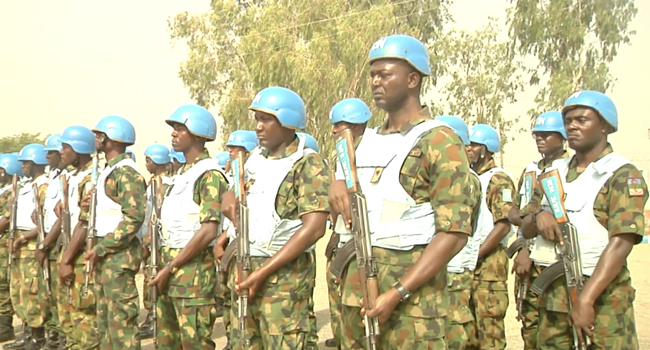
 As part of the contribution toward global peace, Nigeria has deployed about 173 soldiers to keep peace in Guinea Bissau despite rising insecurity in the country. 

The Chief of Operations, Army Headquarters, Major General Oluwafemi Akinjobi, made the disclosure at the pre-deployment training graduation of the Nigerian contingent to the ECOWAS Mission in Guinea Bissau.

He stated that since independence Nigeria has contributed over 100,000 troops to over 40 countries on peacekeeping missions.

Akinjobi, who was reportedly represented by the Chief of Operations, Major General Zakari Abubakar, noted that Nigeria remains the beacon of peace and the gatekeeper of the ECOWAS sub-region.

He added that Nigeria has helped restore peace in many conflict areas around the world.

Akinjobi was quoted as saying: “The nation continues to strive to ensure security and stability in Africa through collective security by contributing to international peace and security, which is essential to Nigeria’s defence policy.”

‘RRR’ Review: A visually stunning, exhilarating epic

To borrow from Aditya Chopra in his short review of Hum Aapke Hain Koun (1994), “It’s a mind-blowing film, a complete entertainer [which] deserves all the success it gets”. This description is apt for the latest Indian Tollywood epic titled RRR.

Directed by S.S Rajamouli, the film is a large scale period action drama that outshines even his record-breaking Baahubali. Its seemingly strange title, RRR, originates from the director’s initials (Rajamouli) and the two protagonists (RamCharan and RamaRao). The three-letter title also stands for Roudram Ranam Rudhiram (Rage war Blood) and Rise Roar Revolt in the film’s Telugu and Hindi versions, respectively.

Firmly placed in Rajamouli’s style of high fantasy, elaborate set design and spectacular CGI, the film is visually stunning and exhilarating. The story is a historical fiction set in the 1920s British India, with Alluri Sitarama Raju (Played by Ram Charan) and Komaram Bheem (Played by N.T Rama Rao Jr.) as the leading characters. Two Indian revolutionary leaders who fought against the British colonial rule at the time inspired these characters.

Plot:

Sitarama Raju (Ram Charan) is an anti-British rebel leader disguised as a loyal police officer of the Crown. Komaram Bheem (N.T. Rama Rao Jr.), on another side, is a freedom fighter from the Gond tribe on a mission to attack the British colonial rulers and rescue a girl, Malli, who they enslave. Unfortunately, the British authorities get information about his mission, and their fearless cop, Raju, takes up the challenge to search and arrest him to get a promotion. However, Raju and Bheem become friends as they are unaware of each other’s true identities.

Later on, Bheem reveals his mission to Raju and goes on to attack the British. Raju chases him and succeeds in arresting him after a fierce face-off. Therefore, the British government promotes him to a senior officer, not knowing that he, too, is plotting against them. The story continues…

The film is indeed an exciting movie full of breathtaking adventures. It proves enthralling right from the beginning when it introduces Ram Charan in a crowd scene, where he bravely manhandles thousands of protesters to catch one of them. It then continues with the equally rousing NTR’s introduction scene showing his encounter with wild beasts. It keeps the magic with another thrilling sequence in which the two heroes team up to save a boy from a ghastly train accident. All these, even before the climax! Indeed, director S.S Rajamouli has shown his unrivalled directorial talent in this movie.

The efficient, exciting performance of the two musclebound leading actors (Ram Charan and Rama Rao) makes this film a huge success. They effortlessly excel in the skillfully choreographed action sequences throughout the action-packed movie.

Without mincing words, RRR is a fascinating, thoroughly entertaining movie that keeps the viewer hooked throughout. You will immensely enjoy it. Don’t miss out! Rating 4/5.

Reviewed by:

Habibu Maaruf Abdu

(Kano, Nigeria)

habibumaaruf11@gmail.com

Photo grid

By Ismaila Academician

One could succumb to knowing why Europeans and Americans are so obsessed with photo-keeping culture. Every fragment of their life, whether small or insignificant, is captured in a photo collection that will be made available on display or neatly hidden in a safe for future use.

Although that is not part of my culture, I can reason that they keep a photo collection, contrary to what we think. The Europeans do that to keep memory down history lanes – pedigree, simply because, at times, that is one heck of a thing one can grow up to know about their family. For example, parents die leaving behind their children at much younger ages; the lost ones, the adopted ones, and those who find themselves in the orphanage may get to know and connect with their past from photos made available to them.

That’s their pop culture right before the present day when digital tools made photos even easy to capture and share with FAF, even on the go. But, unlike photo cards, digital images travel far away and faster than we can ever imagine. It also keeps memories longer than photo cards, free from any physical damage, such as loss, overuse, fire and water consumption, etc.

Despite the importance of keeping photos, I feel that we overdo it. Nowadays, we take unnecessary images that we could not even keep, and recently, it’s becoming like an addiction. We just found ourselves taking photos that are not only insignificant but smartly improper that sometimes pose threats to our peace of mind.

On many occasions, photos land us in big troubles: many people lost their jobs, some were convicted and tried; it broke marriages, shattered dreams, and made rich people poor. However, sometimes the photos we take belie our sense of humanity. For example, sharing pictures of victims of a ghastly accident is more horrible than sharing nudes.

Although photos motivate and make things extremely simple, sometimes they appear to be fallacious and discouraging, and when that happens, it does more harm than the purpose it was captured for. Thus I advocate for photos for a good cause.

Ismaila Academician wrote from Kano via ismailaacademician@gmail.com.

How ASUU strike cripple businesses in BUK and Yusuf Maitama Sule varsities (II)

By Aminu Adamu Naganye

In this second part of the special report, The Daily Reality reporter narrated how other business activities continue to suffer due to the strike in Nigeria’s public ivory towers. And it is now getting worse as other unions in the universities, such as SSANU, NASU, and NAAT, have since declared strikes following the government’s failure to honour agreements with the workers’ unions.

Okada, tri-cyclists and yellow bus

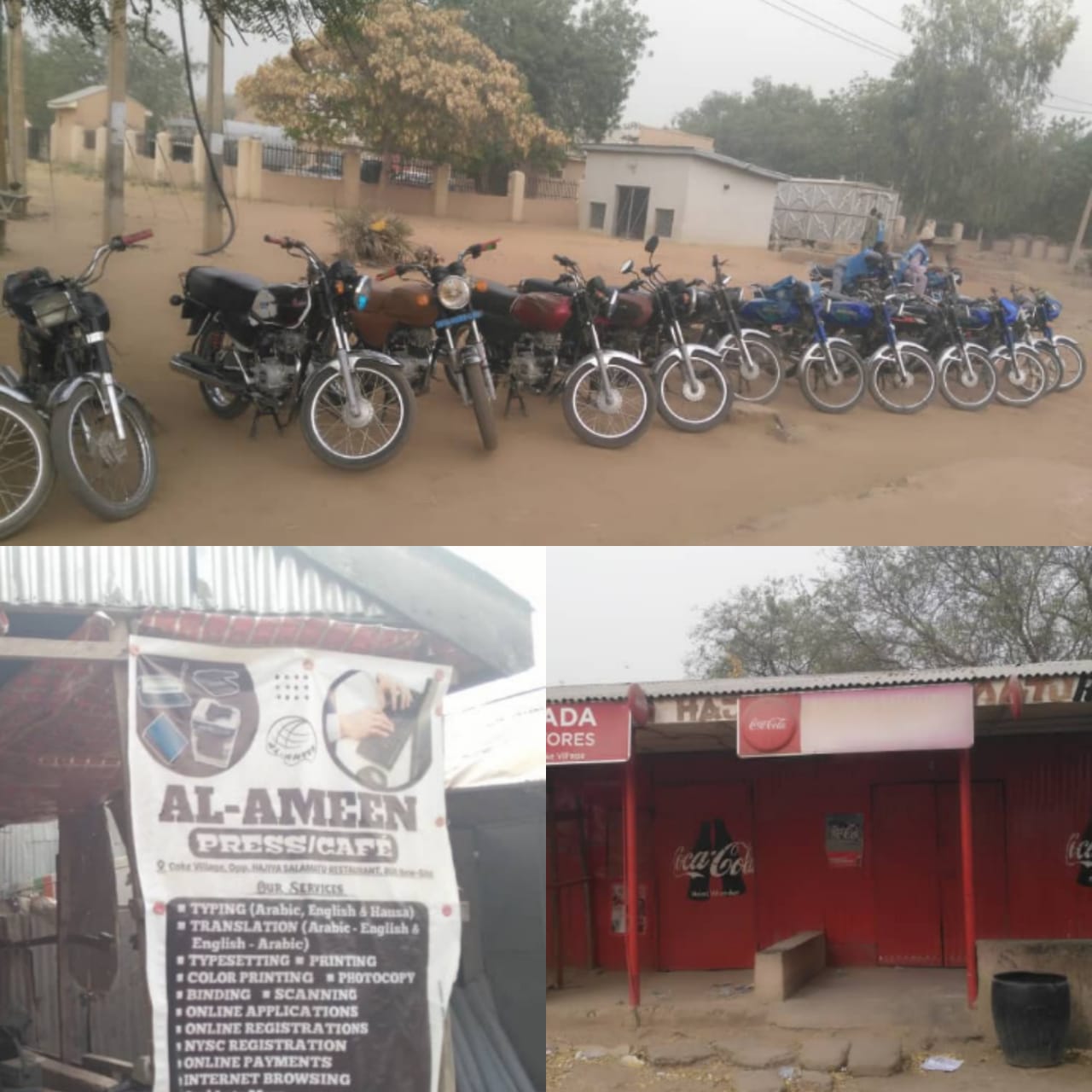
Commercial motorcycles, tricycles popularly known as Adai-daita and commercial shuttle buses, alias yellow buses (or taxis), are the major means of transportation in and around the universities for students’ daily movements.

With the suspension of academic activities in the universities, the commercial transporters discontinued their operations, rendering hundreds of them without their normal means of earning a living.

Although Okada/Acaɓa (commercial motorcycle ride) riders are still doing skeletal work with very few passengers, as they explained in their interaction with this reporter, tri-cycles and yellow buses have since moved elsewhere in search of respite.

Young Abdurrahman Usman, whose means of eking out a living is okada/acaɓa in BUK. He used to convey students to, in and outside of the university, cater for his family’s needs. He now faces challenges as a result of the strike. He said:

“It is quite saddening. The strike stifles our means of livelihood. There are no passengers now to carry. Students have vacated the campus, and the remaining ones have been served notice to leave since. We are pleading with the government to resolve the problem. Acaɓa riders, students and other business people suffer. Government should meet up with ASUU’s demands for activities to resume on campus.”

“It was unnerving when I first heard there will be a strike”, recalling when his friend told him about the strike as he had bitter experience in the past, adding that “before the strike, I used to make N1500 – N2000 a day but now hardly I make 200 -300 a day. I am in a very tense situation,” Usman concluded.

“Honestly, we can only say Inna lillahi wa inna ilaihi rajiun! Because this isn’t a new thing to us. Whenever there is rumour of embarking on a strike, we will be praying that the issue gets resolved before the strike commences. But if the strike is declared… it is really usually terrible for us”, said Ado Umar, who serves as the Secretary of the BUK Riders (Acaɓa) Association.

Ado said with the current economic realities of Nigeria, “Federal Government and ASUU, for God’s sake and the plight of the hungry people around and students, should resolve their differences”, adding that “I don’t think any of them can get what he or she desires completely…they should have sympathy for us… businesses in Kano, not just BUK, suffer the consequences of the strike.”

Photographers, barbers decry

Abdulmuiz Ibrahim, with his largest photo studio at BUK, said he had already lost most of his customers, primarily students, due to the industrial disharmony between the government and teachers.

While students vacated the environment, he noted that he had been surviving from a few people who come from outside the university and wedding bookings from outside campus, “we’ve been surviving from one or few people who are coming from outside. And as you know, weddings happen, we get wedding bookings from outside campus. That is what we’ve been using to maintain …the strike hasn’t been fair at all.”

Resilient photographer, Abdulmuiz, who described the strike as less devastating ditto Corona lockdown, said he is determined to survive the strike as he “brushed through previous strikes and Corona lockdown”, adding that “That is part of what I did then because there weren’t outdoor events. There was no event to cover, and school wasn’t in session. So you live on savings from savings to taking money from family and friends.”

He acknowledged that ASUU is fighting a worthy cause but advised them to engage in alternative means of resolving the problem, saying, “The victims are the students, the business owners, the workers, neighbouring communities that sell to students, the markets …this affects everybody.”

He further advised the Federal Government to resolve the problem amicably to avoid forcing youths to be on the streets. “We have seen what happened during the EndSARS protest. If schools weren’t closed, EndSARS wouldn’t have been that successful. If students were in school doing one thing or the other, EndSARS wouldn’t have had that solidarity. I hope they learn any lesson”, he cautioned.

“The Federal Government often talk about self-reliance and entrepreneurship, but they are now destroying our self-reliant businesses …there are over 200 business people in BUK New Site alone, and each has at least ten people under him. So thousands of people are in trouble with this strike. Government should help those who create jobs, not to destroy them” emotionally laden Abdulkadir Suleiman chronicled the chain of employment their businesses provide to people, including students on the campus.

Approaching his photography shop, Abdulkadir was already parking some items, ready to move out of the BUK to find some work to cater for the needs of his wife and six children.

Due to his business’ nature, he shuttles between town and campus, arguing, “With the current economic situation in the country, even the outside is very difficult. Campus remains the best but strike…” stressing further that “we are now thinking of alternative if not one day we will turn to beggars!”

He reminded the Federal Government that people brought them to power, and God will hold them accountable. “They should resolve this conundrum. God give them trust, and He will question them on it.”

A barber, Aliyu Badamasi, noted that the least he could work on before the strike were 15 – 20 people daily, while currently, the average is 2.

Aliyu noted, “It is very, very horrible, that is what I would say… Life hasn’t been easy. If the school is on break, it isn’t funny, not to talk of a strike. It is not easy.”

With his barber’s shop as the only means of making ends meet, Aliyu urged the Government and ASUU to remember that “So many people rely on students’ presence to survive”, appealing to the government “to put education first. They should make it a priority.”

Some businesses are moving off Campus

Abdurrahman Shafiu, who doubles as a student and a POS operator, concluded his plan to move to the town pending the resumption of academic activities at the university.

Abdurrahman said his only option now is to move out of the university to survive the strike, “The strike is really affecting my study and my business concurrently. When students were around, I realised like 6k a day, but now I hardly make 1k. So I’m just coping by the grace of God. I’m moving out of the campus because I’m a family man. I need to feed my family!”

For Khamisu Alhassan Abubakar, the only phone repairer currently available in BUK, said only one-fifth of his customers patronise him presently as most of them have travelled.

With nonteaching staff also embarking on strike, as their unions recently announced, he noted that it is no longer possible to remain on campus.

NASU, SSANU embark on strike

Meanwhile, as ASUU’s strike entered its third month and with no visibly committed resolution efforts from the Federal Government, other unions of nonteaching staff in universities have mobilised their members to embark on an extended two-week warning strike after they exhausted earlier two weeks of warning.

Joint Action Committee of Non-academic Staff Union (NASU) and Senior Staff Association of Nigerian Universities (SSANU) conveyed the message of the strike to their branches in a letter/memo signed by the SSANU President and NASU Secretary-General.

The letter, in part, reads: “In view of the nonchalant attitude of the Government to our demands, this is to direct our members in all Universities and Inter-University Centres throughout the country to commence a two-week warning strike by midnight of Sunday, 27th March, 2022 in the first instance as earlier conveyed in the Federal Government in our letter.”

The unions said the strike would be comprehensive with no concession.

With this latest strike pronouncement, the public universities in Nigeria will be completely grounded as teaching and administrative activities, as well as any other activities by the members of the trio of ASUU, NASU and SSANU, will be brought to a complete halt.

Incessant strikes may hamper the 2030 agenda

As one of the signatories that ratified and adopted Sustainable Development Goals (SDGs), Nigeria is committed to implementing the goals, especially in the current decade of action.

However, with incessant strikes in universities, attainment of the global set targets may elude Nigeria. This is in view of the fact that abrupt termination or suspension of academic activities in institutions is likely to have a direct and indirect negative impact on the attainment of the Sustainable Development Goals.
Controversial Easter Flyer: CAN demands dismissal of Sterling Bank CEO

By Muhammadu Sabiu

The Christian Association of Nigeria (CAN) has demanded the firing of the Chief Executive officer (CEO) of Sterling Bank, Mr Abubakar Sulaiman, after the financial institution made a debatable Easter flyer.

The Christian body accused the bank of likening the Resurrection of Jesus to Agege bread, in response to which the CEO apologised.

A statement released by the CAN has described the comparison as “ungodly, wicked, insensitive and deliberately provocative.”

“The attention of the leadership of the Christian Association of Nigeria has been drawn to an ungodly, wicked, insensitive and deliberately provocative advertisement of Sterling Bank, comparing the Resurrection of our Lord and Saviour, Jesus Christ to ‘Agege bread’ amidst the Easter celebration.

“In case the management of Sterling Bank is not aware, the Resurrection of Jesus witnesses to the immense power of God Himself. To believe in the Resurrection is to believe in God. If God exists, and if He created the universe and has power over it, then He has power to raise the dead. If He does not have such power, He is not worthy of our faith and worship.

“Only He who created life can resurrect it after death; only He can reverse the mystery that is death itself, and only He can remove the sting and gain the victory over the grave (1 Corinthians 15:54–55). In resurrecting Jesus from the grave, God reminds us of His absolute sovereignty over life and death,” the statement read partly.