Month: March 2022

Sexual harassment: Invading women

By Khairat Suleiman Jaruma

As she walked through the fabric market, a man touched her lower waist, slightly touching her bottom. He then said, “Sexy girl, come buy from me”. She turned back abruptly and hissed. “Fool”, she muttered under her breath. But, she didn’t stop; she kept walking, minding her business.

Those are the kinds of unwelcomed and irritating gestures most women experience every day in public places like schools, offices, markets, malls, etc. Unfortunately, no one frowns at these things. Instead, when a woman complains out loud about these things, she is seen as short-tempered or very intolerant, and more often than not, she gets victim-blamed.

According to a YouGov survey, 97 per cent of women aged 18 to 24 have experienced sexual harassment in public space, and more than 70 per cent of women of all ages have endured such behaviour.

While most people always make excuses for sexual harassment, such as mode of dressing or gestures, I think there’s no excuse for sexual harassment. For me, it’s just a very exasperating level of immorality, given that you can always ask for permission. Sexual harassment has terrible and long-lasting effects on women, including a decrease in women’s productivity, confidence, self-esteem, and overall participation in every aspect of life.

Sexual harassment isn’t limited to making inappropriate advances. It includes any unwelcome verbal or physical behaviour, sharing sexually indecent images or videos, such as pornography or salacious gifs, sending suggestive letters, notes, or emails, staring in a sexually suggestive or offensive manner or whistling, making sexual comments about appearance, clothing, or body parts, inappropriate touching, including pinching, patting, rubbing, or purposefully brushing up against another person.

Responsibility for the eradication of sexual harassment rests on everyone’s shoulders. Notably, we need to teach our brothers and male children that harassing women is NOT “cool”; what is “cool” is having respect for the opposite or same sex, obtaining appropriate consent of the person involved, and accepting “NO” as meaning “NO”.

Lastly, every survivor of sexual harassment must send a message across the world that there is no disgrace in being a survivor of sexual harassment. Instead, the shame is on the aggressor.

Khairat Suleiman Jaruma wrote from Kaduna via khairatsuleh@gmail.com

Tribute to Danmasanin Funtua

By Zaharadeen Muhammad

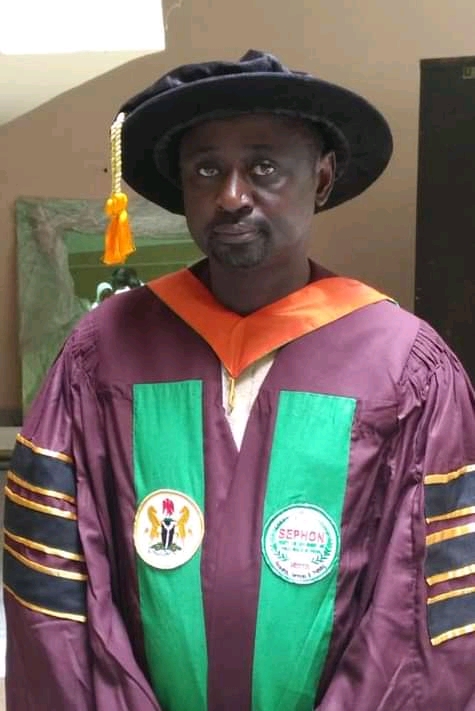
Some weeks ago, His Royal Highness, The District Head of Funtua, Sambo Idris Sambo, announced the confirmation of chieftaincy titles on some few outstanding sons of Funtua in recognition of their contributions to the town and the country as a whole. One of them is an unsung luminary in academia, and the health sector whose take off to educational journey began as Newton’s apple. But was it not William Shakespeare who likens the world to a theatre role with entrance – often by fluke, stage performance and exit? This time, Dr Umar Aminu’s entrance and performance will be profiled, and it will be quite the zinger.

Almost half a century ago, a religious scholar left Funtua for Katsina on a mission to supervise Islamic schools and carried his much younger brother with him. On a particular day, the curious lad wandered off to explore the new surrounding, and as fate would have it, he chanced upon a primary school in the neighbourhood. He surreptitiously tucked himself behind the door panel as he peeped into a class through the apertures relishing the nectar of the lesson.

He was to frequent the school many more times afterwards. Unknown to the school teachers and his brother, till the momentous day that his inert nature got the very best of him, he ventured an answer from his hideout to a puzzling question that appeared to elude the students sitting inside. Having gotten over his shock, the startled teacher identified where the voice emerged from, walked stealthily but tactfully toward the doorway and seized the kid. “he has to be enrolled,” thought the teacher. The brilliant boy in this tale was Dr Umar Aminu, and the elder brother was sheikh Aminu Liman of blessed memory. The anecdote was a watershed.

His academic sojourns would take him to Zamfara, Bauchi, Zaria culminating in him bagging a PhD in Public Health from Texila American University, USA. He gathered the mountain of knowledge and wealth of experience over the years working in public and private organizations and international agencies such as UNICEF, WHO, USAID, and FRIM. He brings to bear in solving various societal issues in Katsina state and beyond. To paraphrase sir Winston Churchill, what is the use of living if it is not to make this muddled world a better place for our posterity long after our departure.  

His first landmark contribution was to the health sector way back in 1999 when a glaring shortage of health personnel in the state was a cause of deep concern. Then, as a key member of the MSSN, he broached the idea at one of its meetings for establishing a centre for training health technicians who can, in the long run, make up for the inadequacy. The program began with only a handful of students and has metamorphosed into the world-class Muslim Community College Of Health Science and Technology, Funtua. Today, the school runs a wide range of health-related courses at ND and HND levels and draws a motley of students from every nook and corner of Nigeria.

His curiosity and a natural aversion to passivity and mediocrity made him the first to be on the ball whenever things appear to go south. That is why when there was statewide successive massive failures in SSCE between 1999 and 2003, a big blow to the quintessential reputation of the state in that regard,  instead of joining the wagon by stepping on the pedestal of lamentation, he met with stakeholders in the ministry to find out ways of ironing out the problem. He was one of the brains behind creating the refresher program, which, under the able stewardship of Malam Ilyasu Umar, has hatched hundreds of students who became medical doctors, pharmacists, engineers,  mathematicians, etc. Thus, leaving another indelible footprint in the sand of time.

His empathy and compassion dispose him to pursue numerous charitable causes, especially in education, where he has facilitated and personally offered many scholarships and grants to the less privileged. Moreover, his being a versatile and cynosure in education and business informed our decision to invite him to speak at our first (NIPES) public lecture themed ‘Our Economic Mindset’ held on February 2021. The advocate of functional education, self-development and entrepreneurship eloquently demystified our present unemployment crises that became ubiquitous clog and articulated sundry out of the box ways of putting a dent in the issue.

Dr Umar Aminu, The Danmasanin Funtua possesses most attributes our people recognize in the words of Anthony Kirk-Green as ‘Mutumin Kirki” in the book of the same title. These are truthfulness, trustworthiness, generosity, patience, good sense, bashfulness, courtesy, self-esteem, wisdom and scrupulous behaviour.  

“When a mother-cow is chewing grass,” said Chinua Achebe in Things Fall Apart, “its young watch its mouths”  We, the youngsters, have been watching from afar and up close and have drawn so much inspiration from his noble deeds. For these reasons and more, we join the joyous multitudes celebrating this well-deserved title. Allah shi tayaka riko, amin.

Zaharadeen Muhammad wrote from Abdullahi Aminci Road, Funtua, Katsina State via Zaharadeen2020@gmail.com.

Ogun: Local hunter allegedly murders herdsman, secretly buries him

By Muhammad Sabiu

In Ewekoro, Ewekoro Local Government Area of Ogun State, a local hunter named Saheed Ogundahun is said to have slain a Fulani herdsman.

The Ogun Commissioner of Police, Lanre Bankole, verified this on Monday while arraigning the suspect and others at the State Police Headquarters in Eleweran, Abeokuta.

Ogundahun was detained on March 13 for killing a Fulani herdsman with a Dane rifle, according to Bankole, adding that after killing the herder, the suspect buried him on his property in Ewekoro.

The dead herdsman’s body has been unearthed and sent to Ifo General Hospital mortuary for an autopsy.

“on credible intelligence, one Saheed Ogundahun, a hunter, was arrested in connection with the case.

“On interrogation, the said Saheed confessed that he shot the victim to death and buried him in the bush,” the police commissioner was quoted as saying.

Kaduna government imposes curfew on Jema’a and Kaura LGs

By Sumayyah Auwal Usman

The Kaduna State Security Council has imposed a 24-hour curfew on Jema’a and Kaura Local Government Areas. The government said this was to assist the security agencies to stabilize the situation in the areas, save lives and property and enable the restoration of law and order.

A statement signed by the Commissioner, Ministry of Internal Security and Home Affairs, Mr. Samuel Aruwan, said “Security agencies have full authorization to enforce the curfew. Government appeals to all residents of Jema’a and Kaura local government areas to cooperate with the security agencies in the urgent task of restoring peace and upholding law and order”

The government further condemned the violence and all acts of lawlessness that have occurred in the two local governments. The curfew followed the recent clashes that took place in the two communities.

Why campus journalism is a necessity

By Fatima Usman

Campus Journalism gives students the opportunity to hone and practice their journalistic skills and be the voice of change by getting readers to think about pressing issues that they probably wouldn’t have read anywhere else.

The endeavor provides a platform for students or student communities who look to expand their horizons beyond just the campus and discuss topics such as gender equality, human rights, or even the protection of animals.

Campus Journalism plays a role in information dissemination, enlightenment, and educating the general public just like journalism did in the broader society.

Quite unfortunately, students of communication who are supposed to be the engineers of campus journalism are the ones who have shown little or no interest in campus journalism practice on our campuses.

Many journalists doing exceptionally well in the mainstream media today were one time in their lifetime campus journalists. The like of Adejumo Kabir of the HumAngle, Adeyemi Ibrahim Olarotimi of Foundation for Investigative Journalism (FIFJ), and recently our own very one, Yakubu Mohammed of (FIJ).

The guys mentioned above are all products of campus journalism, doing exceptionally well in the mainstream media immediately after graduating from the university.

However, I see no reason why campus journalism wouldn’t prosper in our universities, looking at the impact of being people’s voice. Three things are involved in campus. You rather be a campus politician, campus journalist, or bookworm.

I think many students choose the former over the latter because of its monetary incentive. However, in campus journalism, it’s all selfless service where at a point in time, you get threatened with ratification because of one story or the other.

However, campus politicians get to receive dues from students they spent and be big guys on the campus without proper accounting. This makes many students choose politics over journalism on campus.

Setting Ibrahim Badamasi Babangida University Union of campus Journalists, which is still at its infant stage and doesn’t witness the desire to progress as it is supposed to, could be attributed to the unfriendly atmosphere given to the union by the University management.

Students are threatened whenever they make a publication, either good or bad about the university. Unfortunately, this has also killed the vibe of many students writers who are afraid of being expelled from the university.

In universities like the University of Ilorin (UNILORIN), Usman Danfodio University (UDUS), and Ahmadu Bello University Zaria (ABU), campus journalism is doing great because of the utmost recognition given to them by the University management.

Finally, as a campus journalist, you must learn how to report facts, nothing but fact, as nobody will give the ghost to threaten you when you do what you have to do rightly.

So, journalism is a selfless service and, when practiced appropriately, can correct the wrongs, tell the people what to do, how to do it, and when to do it.

I, therefore, call on any journalism student to have the habit of writing, as writing is the only difference between a journalism student and a science student.

Fatima Usman is a 300 level student of mass communication, IBB University, Lapai. She can be reached via usmanfatima499@gmail.com.

Early marriage: Groom, 18, weds bride, 16

By Tijjani Muhammad Musa

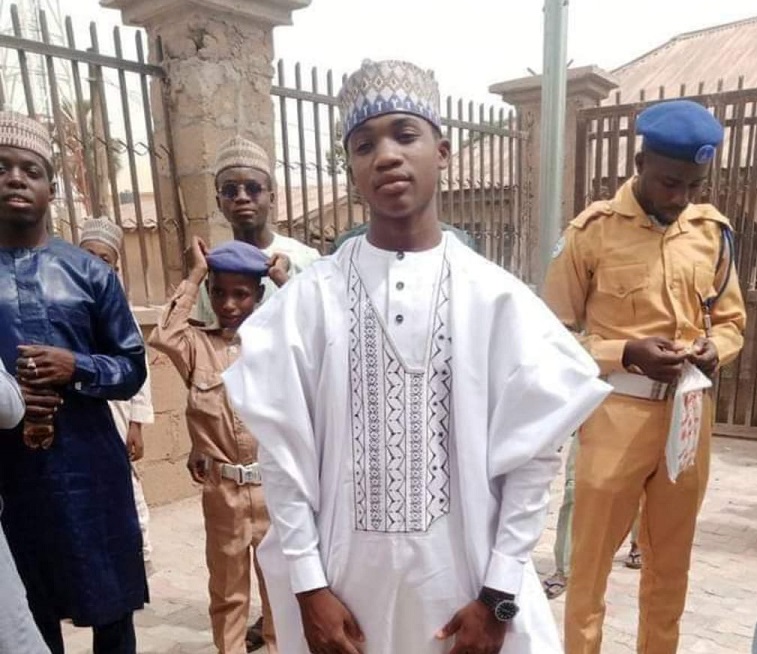
On a Friday, Tilden Fulani in Toro Local Government of Bauchi State witnessed something unique and rare in the marriage nikah of 18 years old Muhammad Ahmad Salihu and his bride Sumayyah Adam Ibrahim who is just 16!

According to our sources, the event which took place at the Ahlussunnah Wal Jama’a Izala Central Mosque of Tilden Fulani town was conducted in peaceful, exciting celebrations and fanfare.

With the Muslim Fulani lot of Northern Nigeria, it is a common thing to marry young. Marriage is often the preferred option once love and mutual understanding are arrived at rather than engage in illicit sex outside matrimony.

“And marry the unmarried among you and the righteous among your male slaves and female slaves. If they should be poor, Allah will enrich them from His bounty, and Allah is all-Encompassing and Knowing.” [Qur’an, 24:32]

The Messenger of Allah (SAW) said: ‘O young men, whoever among you can afford it, let him get married, for it is more effective in lowering the gaze and guarding chastity, and whoever cannot then he should fast, for it will be a restraint (wija’) for him.’ [Sunan an-Nasa’i, 3209]

So a sincere and hearty congratulations to the Ango (groom) and his Amarsu (bride). May Allaah SWT bless this early nuptial union. May He grant them peace and bless them with blissful offsprings and means of daily sustenance, amin.

Al-Khatib and Al-Shiraziy: A template for humility and mutual respect

By Ibraheem El-Caleel

I have always intended to share some history on the relationship between two great Islamic scholars who lived in the same era. They are both from Shafi’i Fiqh school. I find their story inspiring, and believe sharing it might motivate some students of knowledge to emulate the legacy they left.

These two scholars are: Shaikhul Islam Abu Ishaqal Shiraziy and Al-Imamul Hafiz Al-Khatibul Baghdadiy. Due to their expansive erudition in different fields of knowledge, both have a rich biography that can barely be covered appreciably in a article. We may only cut part of the history which fits into our topic. I will share their brief biographies individually below:

Abu Ishaqal Shiraziy: His name was Ibrahiym bn Aliyyu bn Yusuf, born in 393 AH. He was a versatile scholar who specialized in Fiqh. In fact, Al-Muwaffaqul Hanafiy nicknamed him the “Amirul Mu’mineen of the Fuqaha”. He has authored several Fiqh books of Shafi’iyyah specifically, and Usulul Fiqh generally. The famous of those books is “Al-Muhazzab fiy Fiqhil Imamish Shafi’i”. Imamul Nawawiy later on authored a commentary of this book and titled it “Al-Majmu’u: Sharhul Muhazzab”. Al-Majmu’ today is arguably the most referenced and most comprehensive compendium of the Shafi’iyyah. In fact Nawawiy himself in the muqaddimah (introduction) of the book noted that, although several scholars have authored Fiqh books, the most renowned books for training Fiqh scholars are Al-Muhazzab and Al-Wasit. Al-Wasit is a fiqh book by the intellectual Imam, Abu Hamidinil Ghazali.

All these are pointers to what a legend Al-Shiraziy was in Fiqh. He made strong footprints in Fiqh and nearly considered the most productive Faqih (jurisprudent) in the 5th Century of Islamic calendar. Although he was poor, he was still a zahid (ascetic), whose fear of Allah was evident in his actions. There was a time he entered a mosque and misplaced his 1 Dinar. Later on, he remembered and he went back to the mosque. He met 1 Dinar in the same spot he left but he became sceptical whether it was actually his1 Dinar or a 1 Dinar of someone else; since he is not the only person who could have forgotten 1 Dinar in the masjid. He left it there without picking it up. He didn’t want to consume from anything illegitimate (haram) or vague (shubha). Allahu Akbar. 1 Dinar (an equivalent of about N1,300 today).

Al-Khatibul Baghdadiy: His name was Abubakar bn Ahmad bn Ali, born in 392 AH. He was a versatile scholar with specializations in Hadith and Hadith Sciences, then General History. Imamul Dhahabi called him “the seal of the Hadith Masters”. It was said that since the death of Imamul Daraqutniy, Baghdad had not witnessed a great scholar of Hadith like Al-Khatib al-Baghdadiy. He was a man who dedicated his entire life to scholarship. He once studied the entire Sahihul Bukhariy from the female scholar Karimah Al-Marwaziyyah in just 5 days. For a second time during Hajj, he again studied the entire Sahihul Bukhariy in just 3 days from Imam Isma’il bn Ahmad Al-Naisaburiy! In Al-Dhahabi’s record, this is the fastest learning rate ever heard in history. I remember Dr Kabir Asgar in one of his Mustalahul Hadith classes suggesting that perhaps the reason why Al-Khatib learnt Sahihul Bukhariy twice from these two scholars was because he wanted to get a shorter chain of narration. Both Karimah and Isma’il were students of Al-Kushmeehaniy, who was a student of Firabriy, and Firabriy is a direct student of Imamul Bukhari. So Al-Khatib was motivated to learn Sahihul Bukhari twice from those two scholars just to have a direct short chain between him and Imamul Bukhari and perhaps an ijazah (license).

It was narrated that some Jews once brought a document to the Leader of State, claiming that it is a letter of Prophet Muhammad (Peace be upon Him), where he waived jizyah (tribute) from the people of Khaibar. They said it was the handwriting of Sayyidna Aliyyu bn Abi Talib and with some companions as witnesses. The Leader didn’t deny it, but he referred them to Al-Khatib, to investigate the trueness of this letter before it can be implemented. Al-Khatib looked at the document attentively, then he said, “it is fake!”. He was asked; how did you know that it is fake? He said, they placed Mu’awiyah bn Abi Sufyan as witness, and Mu’awiyah accepted Islam in the year of Conquest (8AH), and Khaibar was liberated in the year 7AH (before Mu’awiyah accepted Islam). They also mentioned Sa’ad bn Mu’adh as a witness, while Sa’ad actually died two years before the liberation of Khaibar. People were astonished of how Al-Khatib Al-Baghdadiy exposed this fraud.

Al-Khatib was a prolific author who didn’t miss a single aspect in Hadith Sciences without authoring a whole book on it. Abubakar bn Nuqtah said, “every sincere person knows that scholars of Hadith who came after Al-Khatib are indebted to his works”.
You can read further about the biographies of these scholars from “Siyar A’alamin Nubala” of Imamul Dhahabi and “Tabaqaat Al-Shafi’iyyah” of Imam Tajuddeen Al-Subkiy.

These are some of the lessons I would like to highlight about their stories:

Despite the fact that Al-Khatib was one year older than Al-Shiraziy, he still learnt Hadith from him. Meaning Al-Khatib was a student of Imam Abu Ishaqal Shiraziy. Age should never be a reason why you discriminate against a teacher, or a scholar.

There was a time Al-Shiraziy was narrating a hadith where Bahru bn Kunaiz was part of the chain of narrators. So he turned towards his student, Al-Khatib and asked him, what can you say about this narrator? Al-Khatib said, if you would permit me, then I will explain. The teacher (Al-Shiraziy) humbly came and sat among the students, then Al-Khatib gave a detailed explanation of this narrator. His teacher (Al-Shiraziy) praised him for this, saying, “This is the Daraqutniy of our time!”. The key lesson here is: as a teacher, do not feel shy or too arrogant to learn an aspect of knowledge from one of your students. If you know your student has more knowledge than you in a specific field, there is no reason why you shouldn’t learn from him. Also, as a student, do not feel so high of yourself because you have a better edge than your teacher in a specific field of knowledge. It should never decrease the respect you have for that teacher.

Despite the fact that Abu Ishaqal Shiraziy was a poor man, he didn’t follow ‘politicians’ to bootlick them to give him material benefits, to go for Hajj. He died without making it to Hajj even though he was a great Imam of Fiqh. He managed himself with the little that Allah has blessed him with. So as a scholar or student of knowledge, do not disgrace your image by frequenting politicians and leaders to beg them for financial enablers. Poverty doesn’t reduce your worth, but bootlicking does.

As we have seen in the case of Al-Khatib, there is no harm for a scholar to make himself available to offer scholarly assistance to the government of his city, state or country. Politicians should also learn that scholars are a great resource for you to utilize in effective leadership. They help you refine raw issues for ready, instant implementation.

Humility, simplicity and respecting people does not reduce your image. It rather boosts your image. This is why as part of a hadith in Sahihu Muslim, the Prophet (Peace be upon him) said, “وَمَا تَوَاضَعَ أَحَدٌ لِلَّهِ إِلاَّ رَفَعَهُ اللّهَ”. Meaning, “… and one who shows humility, Allah elevates him in the estimation (of the people).” These two scholars are both high-ranking, but they exude visible rays of humility. Today, more than 1,000 years after their deaths, their names are still mentioned in high regards.

May Allah grant Al-Jannatul Firdaus to the Imams Al-Khatibul Baghdadiy and Abu Ishaqal Shiraziy; and us. May Allah grant us humble hearts and zeal to learn from their depths of knowledge and good characters. Amin.

Ibrahiym A. El-Caleel

My deafness: A blessing in disguise

By Ibrahim Tukur

Becoming a doctor was my childhood dream. When I was a child, I had an overwhelming desire to save as many lives as possible. The dream was nurtured by my elder sister Maryam Tukur. But back in school, I never performed well in class. More often, I scored low in the exams. That was what principally irritated my father. Although my father couldn’t read nor write, he more often than not flogged me for performing poorly in the examinations.

When I was in primary two, my father employed a tutor to teach us at home but sadly, it never worked on me. Like a dumb, I never grasped anything the tutor taught me. That even made my father angrier.

While we were in the second term, I suddenly fell seriously ill and lost my hearing sense to meningitis. In my parents’ strenuous efforts to restore my hearing, they took me to different doctors and herbalists who prescribed me some medicines that never worked. Finally, after many abortive treatments, my parents gave up the struggles and left everything to Allah, the Exalted of all.

Life became very challenging for me when I became deaf. My friends gradually avoided me. I was often lonely in school and at home. My father became hopeless about my education. Even my dream of becoming a doctor scattered itself like broken glass. 

When my academic performance worsened, which my teachers constantly complained about, my father withdrew me from school and kept me at home doing nothing.

A year later, upon recommendation, my father admitted me into Government School for the Deaf, Malumfashi. That was where I began to thrive. It was there that I learned to write my name, nay, perceived life from extraordinary angles.

I’m currently a 400 level student at Bayero University, Kano (BUK). Unfortunately, due to some problems, I could not realize my dream of becoming a doctor. But Alhamdulillah. Deafness is not a barrier to greatness.

Probe JUTH over anti-Hausa-Fulani activities – MURIC

News Desk

An influential newspaper, the Daily Trust, yesterday published a damning report on discrimination against Hausa-Fulani Muslims resident in Jos, Plateau State, who are being forced by record officers at the Jos University Teaching Hospital (JUTH) to change their states of origin and local government areas before they can register to see a doctor.

Meanwhile, an Islamic human rights organisation, the Muslim Rights Concern (MURIC), has waded into the matter. The organisation described the forceful change of states of origin as ethnic cleansing and unlawful de-indigenisation. MURIC demanded a probe into the allegation.

This was contained in a press statement issued on Sunday, March 20, 2022, by the director of MURIC, Professor Ishaq Akintola.

The statement reads:

“An influential newspaper, the Daily Trust, yesterday published a damning report on discrimination against Hausa-Fulani Muslims resident in Jos, Plateau State, who are being forced by record officers at the General Out-Patient Department (GOPD) of Jos University Teaching Hospital (JUTH) to change their states of origin and local government areas before they can register to see a doctor.

“This, indubitably, is ethnic cleansing and unlawful de-indigenisation. It is horrendous, detestable and despicable. It is the most odious and insidious marginalization and encroachment on Allah-given fundamental human rights of any tribe that ever happened on Nigerian soil. It is unlawful, illegal, illegitimate and unconstitutional. We, therefore, demand full investigation which should start with immediate effect.

“It is highly appalling. We cannot imagine such inhuman practice happening to Nigerian citizens in a Nigerian state. Such audacity is criminal. There must be consequences for such temerity for the culprits, their sponsors and those who are encouraging them.

“The probe should unearth the identities of all the victims from the time the evil practice started with a view to reversing the wicked acts and restoring the states of origin and local governments of the victims.

“We are shocked that such a discriminatory practice is being allowed in a federally funded hospital where people’s state of origin should not matter at all, particularly for health care delivery. It points to the likelihood of more egregious and horrifying things happening in hospitals belonging to the Plateau state government.

“There is no doubt that the state government is complicit and should be held responsible. It is impossible that this highly reprehensible practice is happening without the knowledge and tacit approval of the state government. It is a big shame that this kind of illegality is being promoted by a state governor who swore to uphold the constitution and to provide welfare services to people of the state. Conscienceless power is subjugating powerless conscience.”

Man commends FG for daughter’s safe return from Ukraine

By Ahmad Deedat Zakari

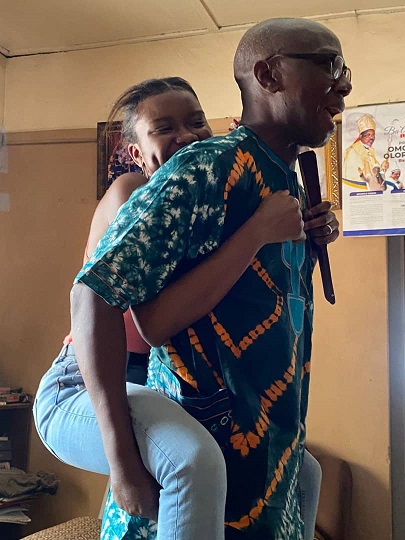
A parent simply identified as Amstel20111 on Twitter has commended the effort of the Federal Government of Nigeria, FGN, for the safe evacuation of his daughter from war-torn Ukraine.

He twitted a picture of himself backing his grown-up daughter on Saturday, March 19, 2022, while commending the Nigerian government.

“When my daughter got back home from Ukraine, I am grateful to God and the FGN, through all the agencies of government used for this reunion. None of you will mourn or sorrow over any of your children in Jesus name. Thank you. I am grateful, ” he twitted.

The post, initially made on Twitter, has been screenshot and shared on different social media platforms and has generated several pleasant reactions. Many people said amen and thanked God for his daughter’s safe return.