Month: March 2022

When a father dies!

By Kharajnah Muhammed

Imagine a big mango tree with many branches, leaves and sweet fruits feasted upon by her children while also enjoying her cool shade that comes with a soft breeze, covering their heads from the scorching sun.

All of a sudden, someone cuts her off from her root. She fells down weeping, wondering how her children would survive without her, while they drink their tears day and night, searching for food and shelter, with little or no one to help them.

This is what happens when a father dies, leaving behind his family. At first, so many people will come and commiserate with them, with sugar-coated promises. His family will have hope that at least someone will be there for them even when the head of the family is no more. But what happens afterwards?

The widow(s) and her/their children are left to wander in the streets, searching for food, shelter, job to sustain their lives. Only a few are lucky enough to find help from his relatives or friends in one way or the other. It’s scary how fathers keep dying daily, leaving their families behind. Most people nowadays only do things for someone alive, someone they know they can gain something from. As soon as he is no more, they forget everything about him or his family.

As parents, I want to advise us to build a future in our children because we don’t know what tomorrow holds. Help them discover their talents and work on building them. As a husband, invest in your wife or wives, for they will never abandon your children. And she might be the only person to take care of them when you are no more.

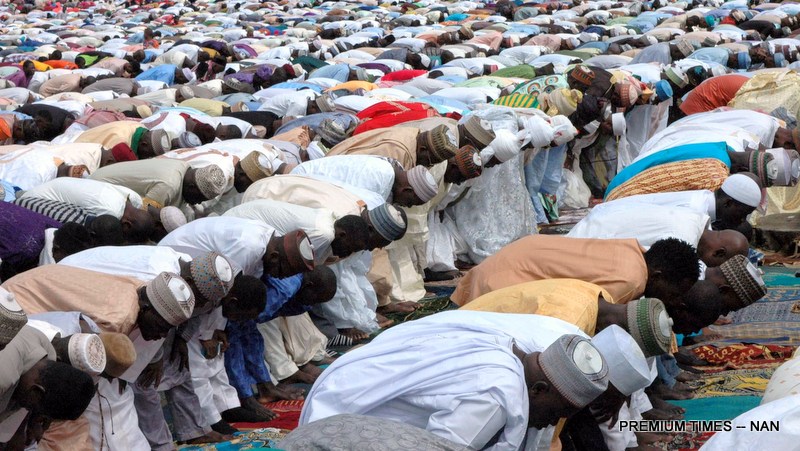
And now, Ramadan is just a few days away. Have you ever wondered what most orphans are going through? Most of them have little or nothing to put in their breadbaskets, but they can’t ask anyone for it because they were brought up so that they can keep their family’s secret so that people will not look down on them. So, even if they ask some people, they might not help them out and probably go about telling other people or using the children’s helplessness to their advantage, especially the girl child.

I want to urge us to please help the orphans with food, clothes, and other items we can give out this Ramadan in order to gain manifolds of reward from the Almighty. You don’t have to go far. Look around your neighbourhood and start from there. Some people would rather cook plenty of food and throw it away in the morning than give someone.

Though things are hard these days, there is no harm in giving out the little you can afford. You never know what it will mean to them.

May the Almighty ease things for us, amen.

Harajnah Umar Ragada can be reached via kharajnah@gmail.com.

The ‘world’ is like a book, he who doesn’t travel lives on a page

By Mubarak Shuaibu

I became very much acquainted with the above statement during my service year wherein, I met people from different ethnic and religious backgrounds. No superlatives to describe the experience I have accumulated over the period of one year, but in a short tongue, it’s a worthwhile one. From camping to my relocation all buried is a lesson.

Starting from the camp, I was in a room of 10(Annex) which comprises the major ethnic group in Nigeria; Hausa, Yoruba, Igbo and Fulani. Thus, it was a rare opportunity for us to come together, rub minds and learn our differences.

Shafii Abubakar Wababe the oldest in the room is a journalist (Senior Broadcaster at Radio Nigeria Kaduna) who has a vast knowledge of different cultures and places. Sadiq Kurawa(Computer Scientist) the youngest in the room, never travelled out of Kano except for the purpose of National Service. Although, Habibu Eleyinla is from Lagos had his B.Tech in ATBU Bauchi which gave him a brief knowledge about the Northern setting. Ogenna Oluigbo is a very jovial man from Imo state. Alu Owoichi(Information Technologist) from Benue.

While the rest of us, Sulaiman Funtua (Microbiologist) and Hamza Abdullahi (Economist) are both from Katsina, Ahmad Kwara(Civil Engineer) from Kwara, Bashir Abdulhamid (Archeologist) from Jigawa and myself (Industrial Chemist) from Bauchi. Can’t mention the number of debates we had about contemporary issues ranging from academics to sociopolitical.

These have expounded my perspectives on numerous issues. After our successful camping, we all parted as “better informed” personalities than we were. Then in came the next chapter of my NYSC experience, when I relocated to Christian dominant environs.

After a series of deliberations and outreaches, my initial plan was to ‘reject’ the PPA I was sent to. But I later convinced myself to stay, as it will be a wholesome experience. And as they say, the rest is history.

On arrival in my PPA, my heart was busy pulsating thinking about the new chapter I was about to embark on. It was a missionary school under the Christian Association of Nigeria (CAN).

And within a walking distance from the school was a ‘Theological College, this had me thinking with my heart in my mouth. I was out of sorts at that moment but meeting with the principal, a very kind Reverend Doctor Yusuf Hatiu proved to be the cornerstone as his warm reception dampened my fear. He even jokingly asked whether I can cope with the environment. According to him, most of the Muslim Corp Members use to reject that PPA, I irruptively replied to him by saying ” I’m here to change the narratives Sir”. He exclaimed, with a smiling face “that’s a very welcome idea shu’aibu”. 

He asked Tenerj Akeji (a corp member from Benue) to accompany me to our lodge. To much of my surprise, this pal carried my luggage up to the lodge. Amarachi Sheetal Grace from Abia state, in my first days, use to bring me food, Yemi will always come to me and ask whether I’ve any problems. This is how we mingled beyond the ethnic and religious line.

I quickly become much acquainted with the environment. Although I was later joined by another group of Corp Members as those we met were passing out, the mixture was always a good one to remember. The people of the environment welcome strangers with open arms. We equally respect their culture as respect is reciprocal. Muhammad Ameer(Maikudi) has helped me settle down quickly well, as he’s Fulani and knows a lot about the environment. The experience is mammoth to recount here. But overall, we have to embrace each other, learn to live together in harmony. The election is underway and politicians are setting ethnic and religious traps for the gullible Nigerians to fall foul. 2023 should be an election year devoid of ethnic profiling. There are “bad eggs” in each and every tribe but that has not made justification for stereotyping a particular ethnic group. NYSC scheme has emancipated a lot of youths from ethnicity and Elite’s manipulation. Some have established businesses in their town as a primary assignment while others have gotten a job.

The key takeaways:

1. It’s high time to do get rid of the deep-seated persecution complex that makes us see enemies where there are none. Hausa, Yoruba, Igbo, Fulani is not your enemy. 

2. We should read, learn and if possible travel to learn about other people’s culture. The lack of our interrelationships with tribes other than our own exacerbates the issue of ethnicity in Nigeria.

3. The National Youth Service Corp(NYSC)  is sacrosanct, and thus FG should enhance the scheme to achieve the primary aim.

4. We must do away with ‘stereotyping’, never put a particular ethnic or religious group in one basket. An exception always proves a rule.

5. Even, if you enter a room and before you enter, you believe everyone in the room hates you, you will not be confident when you enter, and as a result of your lack of confidence, you won’t make friends. And you will blame it on them not liking you.

That’s a sad indictment on all of us as Nigerians.

Mubarak Shuaibu writes from Hardawa, Misau Local Government, Bauchi State.

Nigerian soldiers neutralise scores of insurgents in Borno

By Muhammad Sabi’u

The Nigerian Army has on Monday confirmed that its personnel have succeeded in neutralising many ISWAP/ Boko Haram terrorists.

This was contained in a short post and photo evidence the army put on its official and verified Facebook page.

The post reads, “Ongoing offensive clearance operations records another feat as troops of Operation Desert Sanity destroyed ISWAP/BokoHaram enclaves around Ukuba & Camp Zairo in Sambisa forest, Borno State. Several terrorists were neutralized as troops recovered equipment & weapons.”

There are signs that the Nigerian Army has overpowered the terrorists operating in the Northeastern part of the country, who have been wreaking havoc on towns and communities in Borno, Yobe and, minimally, Adamawa States.

Would APC live long?

By Aliyu Nuhu

If APC said it wants to rule forever, it is not an offence but it is forgetting God, the ONE that stopped PDP from ruling for sixty years. Barely 16 years in power, PDP was thinking of even changing its name because of the level of hatred it attracted from Nigerians. Well, APC is making the same mistake. It is now a hated party already, except only for those in power and those that benefit from its bad leadership.

If you want to rule for 36 years you must first rule well. ANC has ruled South Africa for 25 years but was only lucky because South Africa has no serious opposition party, with the country sharply divided along racial line. In America none of the two parties, Democratic party and Republican party had ruled for more than 12 unbroken years. But there are exceptions. For example, Mexico’s Institutional Revolutionary Party (PRI), Mongolia’s Mongolian People’s Party (MPRP), Taiwan’s Kuomintang party have all enjoyed long tenures in power despite competing in multi-party systems.

The parties that ruled for so long were mostly in a one party system like in China, Vietnam and Cuba. These parties didn’t run down and steal from their countries. China and Vietnam are well governed. Cuba should be doing well if not for the diplomatic isolation and economic strangulation of its economy by the United States.

APC has some work to do if it wants to live long. There are a lot of jobs to do on internal security. That is the first deadly sin of APC. If it can work on that, well, Nigerians are not only forgiven, they are forgetful.

The second deadly sin is the economy. People are worse off than they were under PDP. No jobs, no food with high inflation and soaring fuel and electricity prices. The value of naira is falling daily with resultant effect of galloping inflation. In the last days of PDP Naira was exchanging dollar at 199. Today under APC Naira is officially 412 to a dollar.

The third deadly sin is unchecked corruption in all tiers and arms of government. Not up to PDP stealing but slow and steady APC is almost there.

After correcting the mentioned flaws, APC must know that it was a North and South-west Alliance that brought it to power, not Buhari and his campaign rhetorics and promises. Well that alliance is falling apart and breaking to pieces. To hold on to power, APC must mend fences.

But to its credit, even if it loses power after eight years, APC will leave something that it would definitely be remembered for. It would have built second Niger bridge, it would have built Abuja-Kaduna-Kano express, it would have built Kano-Kaduna rail, Lagos-ibadan express, it built an already running Lagos-Ibadan rail. The truth is most of the projects APC is handling are not suffering the fate of PDP projects where all the money were stolen. That is a big plus for APC. At state level many APC states are also delivering on infrastructure. PDP also did some projects at some state levels but left without completing many projects at federal level. Even the Kaduna-Abuja train was completed by APC. The same fate befell Itakpe-Warri rail which is supposed to be extended to Abuja.

It is well.

Aliyu Nuhu is a social analyst. He write from Abuja, Nigeria.

Who can deliver us from the clutches of tyrants in the jungle?

Nigerian Universities lament…

Are we not akin to nursing mothers?

With maternal tenderness and compassion, we breed.

Etiquettes and knowledge in our students

Isn’t it from our breast they suckle?

The milk of freedom and wisdom

To enable them differentiate right from wrong

And to make their future bright

But melancholically,  with choppers, these tyrants unceasingly chopped off our udders.

Who delivers us from the clutches of tyrants in the jungle? 

Nigerian students lament

Dear Mother, beloved patron of our course.

In every whisper, they hear your anguish

In lieu of salvation, to the ground, they malevolently choose to turn their ears.

From the serenity of academic society, they always exile us

To the ennui of waiting idly in our parents’ home

When and what will halt this malice?

When do we have our basic rights to education?

Who will shake sense in the diseased brain of these monsters?

Who can deliver us from their shackles?

Inhabitants of Northern Nigeria lament.

Our beloved students and varsities

Your blues and agonies we are sorry for…

By her visage, we say the country is extremely sick

And remedy from the omnipotent Lord we should only seek 

Strong security measures they feigned

Yet in homes, our lives are at stake

We are famished but our  farmlands irrigate with our blood

Enroute to worship, work,  business places we are waylaid

Quotidian reports place our pogroms and theft at a toll of  hundreds of thousands rate

But to the mercy of the blood-sucking beast we are always left.

Chorus: God we are helpless in the hands of tyrants. 

Only You can deliver us from the clutches of their mischief…

Abba Muhammad Tawfiq is a 500L Medical Rehabilitation Student University Of Maiduguri.

Kebbi farmer mysteriously loses five kids to boat mishap

By Muhammad Sabiu

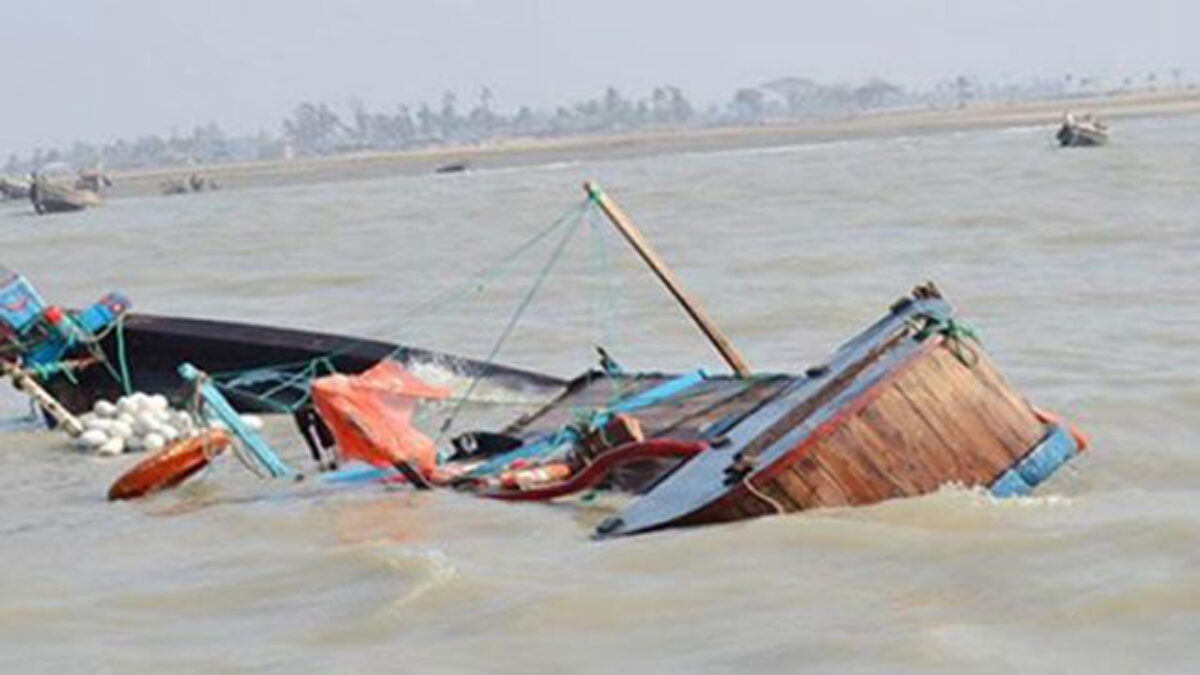
Musa Labaran, a farmer from Kebbi State, has lost five of his children in a boat accident on Wednesday.

The event occurred when a boat carrying Labaran, his five children, and two other passengers to their fields across the river collapsed due to strong winds near Yauri.

According to reports, while the other two passengers were retrieved alive, Labaran’s fifth child’s remains have yet to be discovered.

“The four bodies recovered are all of my children, three boys and a girl. The fifth one is a boy, and he is yet to be found.

“The boat capsized while we were in the middle of the river. I did my best to save them but couldn’t hold on to five of them. I held on to the girl while trying to swim to the river bank but eventually lost grip of her,” Mr Labaran said.

This is not the first time lives were lost in a boat mishap in the state, as some months ago, over 50 passengers, many of whom were children, were feared dead after their boat capsized.

Blue Deal on Water and Sanitation aligns with IsDB Water Policy, says IsDB Vice President

By Ahmad Deedat Zakari.

The Vice President of the Islamic Development Bank (IsDB), Dr Mansur Muhtar, said the action for the implementation of the Blue Deal on Water and Sanitation aligns with the key pillars of IsDB’s water policy.

Dr Muhtar stated this at the 9th World Water Forum held in Dakar on March 22, 2022, where he attended alongside a delegation of experts he led.

The Blue Deal is reportedly an action plan outlined by ministers in charge of water and heads of delegation assembled for the 9th World Water Forum in Dakar, Senegal (21-26th March 2022)

“We are well positioned to support member countries’ efforts in implementing the Blue-Deal actions through provision of financing, technical assistance, capacity development and leveraging Islamic finance instruments,” Dr Muhtar stated

Dr Muhtar stated that the IsDB water sector policy is concurrent with the actions advocated for in the Blue Deal.

“Capacity development and solutions transfer for an improved governance of the water sector is a very important pillar of the policy,” he added.

The Blue Deal aims to achieve the urgent need for water and sanitation targets outlined in the Sustainable Development Goals (SDGs) by 2030.

The World Water Forum, which is organized by the World Water Council and the host country, is the largest event that talks about global issues on the water. It takes place every three years, and the 9th Forum in Dakar is the first one to be held in Sub-Saharan Africa.

Yoruba land: The effects of discord among Muslims and the way forward

By Olorunkemi Barokah

The conflict between the southwest Islamic clerics has become something anomaly that needs to be addressed before it goes out of hand. I am on the ball on the clash of interest between those clerics that could be classified under ideological differences. 

The fact that one is practising Sufism or belongs to other Islamic religious denominations does not make them deserve being open to ridicule and other forms of abuse.

I’ve seen people ridiculing themselves on social media through verbal abuse and other forms of defamation. Well! I could assume that it’s not normal because it’s causing more harm to society than expected. 

From the logical point of view, I could assume that there is no saint among the religious folks causing confusion and distractions to the Islamic community in the Yoruba land. Instead, they are birds of a feather that flock together. They are not practising the so-called religious precepts they are preaching to society.

Islamic clerics are the ones who have brought misconceptions, confusion, and division into our midst by regressing the progress of Islam in the entire Yoruba territory. Their disagreement, ideological difference, lack of unity lack of maturity have brought nothing good to the progress of the Muslim community in the Western region. That threatens the future of the Muslim generations in the entire Yoruba race.

Typically, everyone has sects since diverse ideological views dominate the world.  Everyone cannot go in the same direction. Since our beliefs, aspirations, philosophies, and perceptions cannot be equal, we are all enhanced with different uniqueness. That’s why it is likely to have different schools of thought on the same course of studies. And the fact that there are different views does not make the notions of others irrelevant. Everyone will select their preferred theories based on their preference and the evidence that each theory assumes.

However, I guess morality should be the primary element of any sectarian credo since morality is the standard by which individuals are justified. That morality is based on kindness and the state of being responsible. 

It would have been better to promote Islamic consciousness to earn unity. Promoting moral duties would be better than promoting hate, superiority complex, and ideological difference, which will never help grow the progress of the so-called religious values and precepts preached.

Furthermore, in logic, there’s likely to have an argument raised to have a logical conclusion or fact about the subject involved. But, one sure thing is that there must be fact, an affirmative fact to conclude on, and if the truth is not within the premises, the conclusion would be probable. So, in this case, one cannot force the fact. Instead, the evidence on the hypotheses will make people accept the truth.

Nevertheless, I consider many of these religious sects and their self-acclaimed scholars irresponsible. They are only forcing their ideologies on people without setting a legacy, a pace, and values that will make people accept their claimed religious righteousness. Many scholars mentioned above and sects lack logical thinking, justice, beneficence, equity, finality, tolerance veracity, and even respect for persons. In their hands is where humanity is dying.

Nonetheless, in my opinion, it is a navel-gazing and anomaly act to terrorize others to accept one perception or belief. But on the contrary, those sects have seen crucifying and denouncing those who could not concur with their views as a diabolical enemy who should be subjected to verbal abuse and ridicule.

There are many ways of convincing others to believe or accept one’s standpoint without nagging on them. And it can be done without force or verbal abuse or exposing one another to ridicule. Dialogue remains the most veritable weapon in achieving that. Even if dialogue fails, visual/physical values would never fail. Since seeing is said to be believing.

Some of the notable scholars among the most populous ones doing better in promoting Islamic values are Imam Offa, the new Grand Mufti of Yoruba Land, Sheik Muheeden Bello, Mallam Yusuff Adepoju and others. I have never seen them abusing anyone or criticizing others.

The one I will ever respect is Imaam Offa for his contributions to the progress of Islam in the region. He’s the first acclaimed scholar to build a public library that will be available for anyone irrespective of their denominations and ideology. In addition, he’s currently building a top-notch Islamic hospital for Muslim benefit. This is what should always be promoted rather than fighting on General Islamic ethics obligations and particularistic obligations.

Moreover, if all these religious sects could demonstrate unity, I believe the various issues facing Islam today in western Nigeria will be reduced and deciphered! Issues like poverty, inequality in participation, and others.

These sects have all it takes to establish free Islamic schools, hospitals, libraries, a fort that could shelter the homeless Muslims. They could also set up law firms that will help get justice for vulnerable Muslims and even provide empowerment to the Young Muslims. 

Islam in this region needs more than fighting Sufists, Hamadiyyist, Salafiyyist, etc. Islam requires the collective efforts of all those scholars to help in all the areas above. So be united and stop your terroristic approach.  Enough of this quasi-intellectualism in a self-centred manner.

Olorunkemi Barokah wrote this article via olorunkemibarokah20@gmail.com.

UNIC, MAIN train journalists on SDGs

By Aminu Naganye

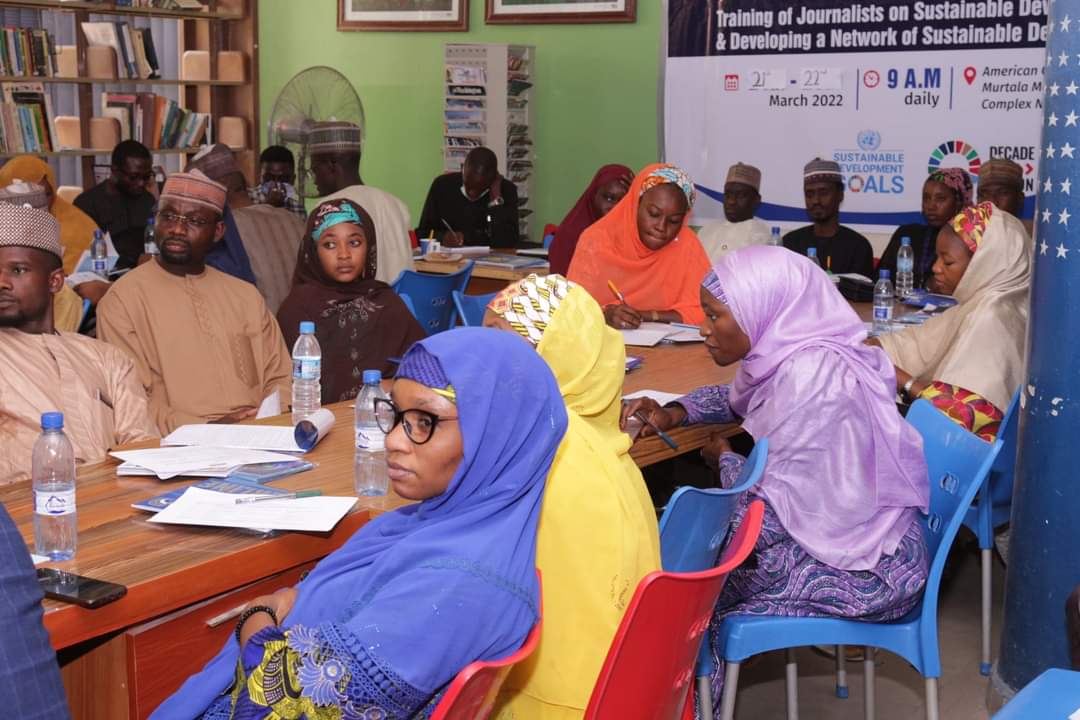
United Nations Information Centre (UNIC) Lagos, in collaboration with Media Awareness and Information for All Networks (MAIN), has organised a two-day workshop for journalists in Kano on mainstreaming Sustainable Development Goals (SDGs) into their routine journalistic activities.

The programme tagged “Training Journalists on Sustainable Development Goals (SDGs) and developing a Network of Sustainable Development Journalists” took place at the Kano State Library from Monday, March 21, to Tuesday, March 22, 2022. The event is a part of training for journalists across the six geopolitical zones of Nigeria on how to mainstream the SDGs into their professional engagements.

UNIC Director, Mr Ronald Kayanja, noted that the training was to expose the journalists to the key issues of the SDGs and how they can contribute their part toward achieving the 2030 sustainable development agenda.

Mr Kayanja, who was represented by Dr Oluseyi Soremekun, stressed the need for partnership and collaboration among all stakeholders toward achieving the SDGs at the stipulated time.

On his part, the Chairman of the occasion, Professor Lai Oso, said the objective of the training was to acquaint the participants with social, economic and environmental dimensions in reporting issues related to sustainable development. 

He said sustainable journalism should be people-centred and geared toward proffering solutions to identified societal challenges.

Head Technical, Office of the Senior Special Assistant to the President on SDGs, Dr Bala Yunusa, who was represented by Dr Zakariyya Mohammed, explained Nigeria’s progress and challenges in implementing the SDGs in Nigeria and called on the media personnel to remain supportive to achieving the SDGs and Nigerian Agenda 2050.

Dr Yunusa noted that Nigeria has recorded successes in the previous MDGs and is now determined to achieve more with the SDGs.

At least 50 journalists drawn from traditional media of radio, television, newspaper, and online-based news media participated in the workshop.

The participants were decorated with emblems as champions of the SDGs.

How I adopted Professor Maiwada’s style of classroom instruction: Tribute to a teacher and mentor

By Professor Salisu Shehu

The impact that teachers make on students vary in type, magnitude and degree. And as well, they differ in the way and manner they influence students. While to a great extent students unconsciously internalise/emulate certain manners, characters and styles of their teachers, in some cases that is done consciously and deliberately too. This is the fact that I am obliged to reveal as I pay tribute to my teacher and mentor all through my teaching career in the university. In other words, I am hereby proclaiming to the World that Professor Maiwada not only taught me, but he was in the top rank of my mentors and role models.

Professor Maiwada taught me Educational Psychology, Research Methods and Statistics in my second and third years of undergraduate studies and again he taught me the same courses at my master’s degree level. Indeed it was Professr Maiwada that made me love Educational Psychology and influenced me to eventually specialise in it.

I so much admired Professor Maiwada’s style of teaching. Once he enters the lecture room/theatre, after the usual greetings and courtesies between the lecturer and students, he would turn to the board (black as it was then) and write the topic and the outline of his lecture. He would then take students through the outline (sub-topics) to the end. His writing on the board and on paper was not only clear and legible but quite neat and beautiful. It would be difficult to hear students complaining that they did not understand Professor MAIWADA’S lecture. This is a style of instruction that I consciously and deliberately adopted up to this moment.

More importantly, my intellectual debut and voyage into the ISLAMIZATION OF KNOWLEDGE paradigm and school of thought were principally owed to the influence of Professor Maiwada. Two other teachers of mine that also influenced me in this regard are the late Dr. Musa Ahmed and Professor Aliyu Dauda. It was however, Professor Maiwada that really mentored me in this regard. When I wrote my M. ED Dissertation on: “A Study of the Islamic Perspective of Cognitive Development: Implications for Education”, supervised by the late Dr. Musa Ahmed, Professor Maiwada was indeed my defacto supervisor. He painstakingly read every single line of my work, meticulously corrected and advised me appropriately and where necessary.

Although, he surely had clear mastery of his subject matter of instruction, Professor Maiwada would never brag in the classroom or even try to make a show of it. He would, however, in his typical soft spoken manner, deliver his lecture with pedagogical effectiveness and mastery.

Professor Maiwada was not just a role model in the classroom. His entire teaching life presents an exemplary disposition of academic discipline, rigour and intellectual adeptness. Once he comes to the faculty he would either be in the class teaching or in the office going through students’ projects, dissertations and theses. He was never given to petty talks or sundry gossips. As he made his way to the office he would greet and answer greetings with a dint of politeness and humbleness. He was one of our older Professors that never sent their pens on leave. Not surprisingly, he was prolific up to the time of his retirement churning out papers and editing journal articles and book chapters and returning them within stipulated times. It was very rare if not impossible to hear any student complaining that Professor Maiwada had held his (project, dissertation or thesis) chapter beyond reasonable time without returning it read, improved, or corrected.

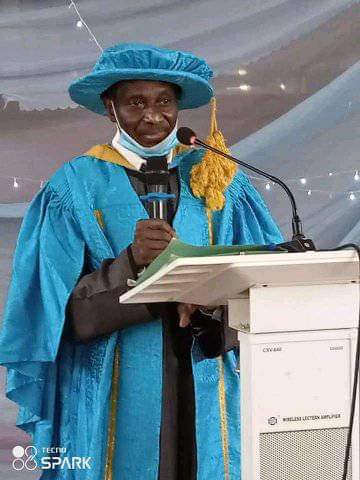
Though he was obviously apolitical, but destiny conferred on him the privilege of holding almost all academic/administrative positions of leadership in the university. Across three different universities (Bayero University, Kano, Al-Qalam University, Katsina and Northwest University – now Yusuf Maitama Sule University, Kano) the Katsina-born Professor was a Head of Department, a Dean, a Deputy Vice-Chancellor and a Vice-Chancellor without having to contest at any given time. For the records, he was the Pioneer Vice Chancellor of Al-Qalam University, Katsina. At two different times of leadership interregnum he acted as a Vice-Chancellor in both Bayero University, Kano and Yusuf Maitama Sule University respectively.

As the academic trail blazer that he was he presented, to my mind, the first ever valedictory lecture at the point of his retirement just last month before the commencement of the ASUU strike. Unknown to us all, he was only having barely a month and some weeks to his grave.

He purposely called to tell me about the lecture and the date that was scheduled. I missed it and out of respect and adoration I called to apologise. He told me that it did not hold but was postponed. When the second date was fixed he again called. I made it a point to attend. But as destiny would have it, I got an appointment of visa interview in Lagos on the same date. So I did miss it. I could not call to apologise again out of shyness.

It was only a few days ago I heard of his sickness. I could not even visit him in the hospital because I was out of Kano for a couple of weeks. I just got the shocking news of his death. It was such a tragic loss to the Ummah and indeed to the the academia and Bayero University, Kano.

May I use this medium to condole his immediate family, the Departments of Education and Special Education, the Faculty of Education and the Vice – Chancellor, Professor Sagir Adamu Abbas. Incidentally we were both his students, although not in the same class.

“Of the believers are men who are true to that which they covenanted with Allah. Some of them have paid their vow by death (in battle), and some of them still are waiting; and they have not altered in the least”. Suratul Ahzab, verse 23.

May Allah, al-Ghafur, al-Raheem forgive him and shower His Infinite Mercy on him. May He give us the fortitude to bear the loss.