Month: February 2022

EFCC partners with NYSC to fight corruption

By Ahmed Deedat Zakaria

The Economic and Financial Crimes Commission (EFCC) signed a Memorandum of Understanding with the National Youth Service Corps (NYSC). The MoU aims at a partnership that combats financial crimes. 

The EFCC Chairman, Abdulrashid Bawa, received the Director-General of NYSC, Major-General Shuaibu Ibrahim, at the EFCC headquarters in Abuja on Monday, February 21, where the MoU was signed. 

Addressing the audience at the event, Mr Bawa said the document is important as it will guide the two agencies on what is expected of them.

“We are delighted to have you. NYSC has been part of us from the beginning, as we have always had the opportunity of welcoming corps members to help us in one area or another where we have gaps in our staff, even though the sensitivity of what we do requires trained officers, but they are actually helping us a lot,” he said.

Bawa also commended the role of corps members in the fight against corruption.

“Corps members are agents of enlightenment. I want to assure you that our collaboration will address fraudulent acts, and I assure you that we will continue to sensitize members of the public on the dangers of corruption,” he said.

On the other hand, Ibrahim asked for the support of EFCC in arresting online scammers attempting to defraud unsuspecting Corps Members and the public. 

“All of us have to fight corruption for the sake of our country, and I can assure you that the NYSC will play its part as enshrined in the MoU,” he said.

APC Northern youths call for unity, drum support for Umahi

By Sumayyah Auwal Usman

Ahead of its national convention, youths of the All Progressives Congress (APC) from the 19 northern states under the auspices of Concerned Northern APC Youth Forum has called for unity among members of the party for a hitch-free convention. 

Addressing a press conference in Abuja, the Chairman, Concerned Northern APC Youth Forum (CNAYF), Hon. Suleiman Liba said, “the All Progressive Congress must stick to the plan and ensure we get it right through internal party democracy since true democratic tenets entail that a few may have their say, but the majority should have their way”.  

On the 2023 Presidential election, Hon. Liba said, “We must commend the readiness and resolved of the masses, especially within the Northern part of the country, to participate massively in the electioneering processes through to 2023”. 

According to the group, the Governor of Ebonyi State, David Umahi, stands as the worthy successor to President Muhammadu Buhari come 2023. They said, “the man’s antecedents of excellence speak volume, and his achievements in Ebonyi state are there for everyone to see”. 

“CNAYF further throws her weights behind the candidature of Engr David Nweze Umahi for President, as it reflects the wish of the people, especially from the North,” he said.

The death of Sule Matthew and the fall of Biafra

By Promise Eze

My heart was broken to smithereens when I read of how a 21-year-old Sule Mathew was horrendously despatched by unknown gunmen last week in Anambra state.

Sule Matthew graduated with a first-class from the Faculty of Communication, Bayero University, Kano, recently. The young man was on his way to participate in the forthcoming orientation programme of the National Youth Service Corps (NYSC) when he and other passengers were ambushed and butchered by unknown assailants.

It was reported that he lost his father a few months ago, but now his family has lost him. I think of the grief his mother would go through. I think of the agony and despair the bereaved family he left behind will suffer.

The young man had so much potential and could have done more for his country if allowed to live. I followed his Facebook page and it became glaringly clear that Igala land and Kogi state has lost a great individual, one who was ready to contribute positively to the development of his homeland. I saw that he was a fellow of a budding political movement, Gidan Yanci and also he was the cofounder of KogiYupp— a project that offers Kogi youth a chance to be involved in progressive political participation. But the young man was forced to wilt before he even bloomed.

He travelled to eastern Nigeria in a car, and he would return in a coffin. No thanks to the so-called unknown gunmen (UGM) who are responsible for his demise. UGM, a product of IPOB’s agitation for Biafra, came into the limelight in 2020. Their own way of demanding a new country is by attacking police stations, military checkpoints, and paramilitary officers.

UNG suddenly became worse than the ‘evil’ they were fighting. These mkpuru mmiri addicts now armed with guns colonized a once peaceful movement for a referendum and transformed it into an all-out war with the Nigerian government. Now, they’ve murdered a young man who has no business with whatever is going on in Eastern Nigeria. His only crime was going to serve his country.

It pains me that Sule was killed for nothing. It hasn’t been confirmed if ‘IPOB’s Unknown gunmen’ are responsible for the attack that led to his death, but we know that IPOB’s activities created a dark hole that armed robbers, hard drug users, kidnappers and cultists are fitting into. Now, anyone could carry out any attack and use the insignia of IPOB to cover his crime. This brings the question, ‘Is Biafra still worth fighting for?’ 

Ever since the resurgence of the call of Biafra, it’s been bloodshed after bloodshed. Chaos after chaos. Gunshots after gunshots. Igbo land which was known to be relatively peaceful is now a war zone. What kind of Biafra are IPOB and UGM clamouring for that demands so much blood? The blood of the innocent. The blood of Sule Matthew. The blood of the passengers who were killed too. If this is what Biafra entails then I do not want it to exist.

And I believe that the vast majority of Ndi Igbo would swear that they rather remain with Nigeria than involve themselves with this kind of Biafra—a Biafra where we all have to sleep with only one of our eyes closed.

Biafra died inside me the day I learnt about the death of Sule. May his soul rest in perfect peace.

Promise Eze is a journalist and writes via ezep645@gmail.com.

Alleged cocaine deal: Court rejects Abba Kyari’s bail application

By Ahmad Deedat Zakari

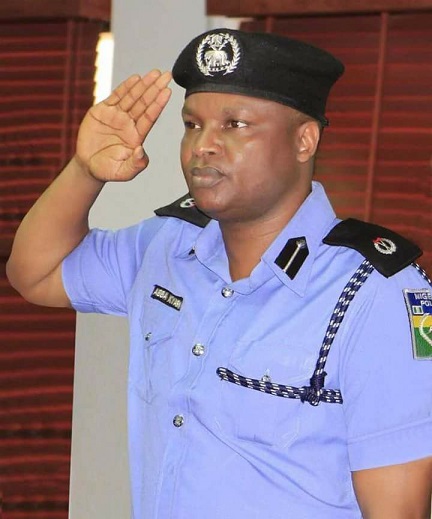
A Federal High Court sitting at Abuja on Monday, February 21, refused a bail application brought by counsel to the embattled Deputy Commissioner of Police, Abba Kyari.

Kyari’s Lawyer, Cynthia Ikenna, brought the ex parte application on health grounds. 

Mr Kyari has been held by the National Drug Law Enforcement Agency (NDLEA) on allegations that border on aiding and abetting drug pushing and running his own drug cartel since February 14. 

While ruling on the application, the trial judge, Inyang Ekwo, ordered the defence counsel to put the NDLEA on notice to that effect. He also adjourned the suit till February 24 for a hearing. 

Shortly after court proceedings, Ms Ikenna reportedly told journalists that her client is diabetic and hypertensive.

The allegation by the NDLEA came some months after Kyari was indicted in an internet fraud case involving him and the popular Instagram sensation Ramon Abbas alias Hushpuppi by a U.S. court. The U.S. government had been interested in Kyari’s extradition since then.

Harmful effects of skin bleaching

By Tijjani Muhammad Nura

Bleaching has been in practice for a long time worldwide. However, it doesn’t specifically side with one gender, although women are more than men. Nonetheless, in a report referred to by the World Health Organisation in 2016, Nigeria was reported as the country with the highest number of women that bleach their skin in the whole of Africa. 

While there is no reliable data to confirm which state bleaches the most in northern Nigeria, we cannot deny that Kaduna, Abuja, Taraba, and, most importantly, Kano will top the list in Nigeria. In addition, a few Nigerians are naturally light-skinned, while some are naturally raven. To this end, bleaching is more prevalent among women than among men.

In (northern) Nigeria’s meaning of the word “bleaching,” it’s a process where people apply skin-lightened products to their skins, regardless of the route through which they are administered, intending to change their complexion or skin colour to impress or comfort themselves. From most people’s viewpoints, this bleaching as a thing is influenced by the victims’ desire to impress and attract attention to their opposite gender, from women to men and men to women.

Bleaching products are available in different forms, and some come in the form of creams, oils, serums, and lotions. It still comes in tablets, and some bleaching products are also available in injectable form. The lightening creams encompass a broader spectrum of products designed to bleach and lighten the skin. The effect occurs by targeting cells producing melanin, thereby reducing its functions. The majority of the creams are made available to treat abnormal conditions like acne scars on the skin, not for bleaching the skin.

However, many users are ignorant of the damaging effects of the products on their health. They are dangerous to their skin and a threat to their health in general by affecting the functions of the kidney, liver, and immune system because they work by reducing a pigment called melanin in the skin.

Most bleaching products have an active ingredient called mercury, making them more dangerous because mercury is a toxic agent that can cause serious psychiatric, neurological, and kidney problems. In addition, pregnant women who use a skin lightener with mercury can pass it to their unborn children.

Nonetheless, there are several healthy ways to maintain healthy skin. And that includes avoiding using bleaching creams, using baby’s soap that does not damage the skin, using moisturizing creams during the harmattan seasons. Other ways involve applying sun creams that can boost skin protection from the sunny sun, drinking enough water daily, eating well-balanced food in its diet, and stopping applying perfumes to the skin. These, among others, would help maintain good, healthy, and super bright skin.

With all the above being said, this article aims to notify people about the dangers associated with using creams or any other bleaching products to bleach the body, especially the facial skin. It, therefore, aims at calling the attention of parents to caution their children to avoid it or order them to immediately stop using it if they have already started using it.

Tijjani Muhammad Nura holds a bachelor’s degree in Pharmacology. He writes from the Hardawa district of Bauchi State and can be reached via tijjanimnura@gmail.com.

Kwankwaso’s knowledge economy model: A dream shortened by greed

By Tijjani Ahmad

As a state that accommodates one out of every ten people living in the country, Kano has many competitive advantages over other states regarding development at the sub-national level. Looking at how economies worldwide are competing to finance development, mainly using domestic resources mobilisation, the easiest for the state is to leverage on its abundance of human resources.

As a governor of the state for the second time from 2011 to 2015, Rabi’u Musa Kwankwaso wanted to make Kano a knowledge-based economy by providing necessary education and skills, thereby making a large portion of the state’s economic growth and employment from knowledge-intensive activities. The governor understood how knowledge spurs more rapid growth than any other resources; therefore, he projected the potential of the state to use its population of teeming youth as a comparative advantage.

His revolution started with efforts to bridge the workforce gap in tertiary institutions by sponsoring more than 2,500 postgraduates and undergraduates to study abroad. In addition, he sponsored hundreds of undergraduates in private universities across the country. These beneficiaries were expected to come back and support the education sector of the state and beyond. 

These people were selected based on merit, and most of them occupied positions at various tertiary institutions in Kano state and Northern Nigeria in general. Recently, two of the beneficiaries were listed among the most cited scientists in the world.

The governor further created 47 technical colleges to revive technical and vocational education. These colleges were strategically located across 44 local governments to provide secondary school students in rural and urban areas with skills in various trades. 

Looking at how Kano businesspeople import textile and garments materials, the governor also established skills acquisition centres in more than 20 local governments in the state to serve as incubation centres for modern garment production. However, these centres were about to be launched when the present government truncated the effort. Only God knows the reason. 

I heard the governor on air saying that when these centres are launched, they would compete favourably and capture a significant share of the undergarments market in Nigeria and across the sub-region. This is because the centres have been equipped with the most modern techniques and technology in garment making industry.

Kwankwaso didn’t stop there. He introduced over 20 specialised training institutions to provide in-demand skills in agriculture, ICT, sports, tourism and hospitality, among others. One of them is the poultry training institute located at Tukui village of Makoda local government in the northern part of the state.

The institute is designed to offer formal and informal training in poultry production and management. Immediately after its establishment in 2012, the institute trained 4,400 women in basic requirements for poultry production and management practice.

These centres were meant to bridge the skills gap, provide employment to our teeming youth and reduce insecurity and over-dependency on grants by improving internally generated revenue of the state. Had there been continuity in the models employed by the former governor, Kano would have been on its way to reclaiming the past glory it is known for in terms of knowledge and commerce.

The hope of everyone who wishes good for the state is to consolidate this model by whoever would emerge as the state’s number one citizen in 2023. But, of course, this can only be possible if his priority is development.

Tijjani Ahmad wrote from Kano via ahmatee123@gmail.com.

Group threaten to occupy NNPC zonal offices over fuel scarcity

By Uzair Adam Imam

The Coalition of Concerned Northern Forum (CCNF)  has threatened to occupy all NNPC zonal offices and its subsidiaries if the current persistent issue of fuel scarcity is not being solved.

The group has also called on the NNPC’s Group Managing Director, Mele Kolo Kyari and Engr. Farouk Ahmed, the Chief Executive Officer of Nigeria Midstream and Downstream Petroleum Regulatory Authority (MDPRA), to resign.

They added that these people should tender their resignation within 72 hours over the persistent fuel scarcity in the country and their inability to solve the issue.

A statement jointly signed by the group’s chairman and the spokesman, Mallam Ibrahim Bature and Comrade Abdulsalam Moh’d Kazeem, respectively, disclosed.

The group also demanded that the NNPC management should make public genuine and comprehensive names of those involved in the current scarcity of petroleum products all over the country.

The statement reads: “if our demands are not met in the next three (3) working days, we shall occupy all NNPC zonal offices and its subsidiaries across our region and the Federal Capital Territory (FCT).

“The mistake made by NNPC under the current management has caused us a lot as a nation; for instance, they claimed it will cost our nation over N200 billion to mop up and sanitize the adulterated fuel, and at the same time, we don’t have enough facilities, so they will have to evacuate the bad products first before we can have access to the new products.

“As at today, the said products have already damaged many automobiles, generators, machines and other sundry equipment of citizenry nationwide.”

Musings on the solution to university education in Nigeria

By Ahmadu Shehu, PhD

Once again, there is a total blackout in Nigerian public universities. Last week, the Academic Staff Union of Universities (ASUU), the umbrella Union of academics working in Nigerian public universities, declared a one-month warning strike to remind the government of their promises signed just a year or two ago. 

It has been decades since the rift between ASUU and the Federal Government of Nigeria took the lives and progress of Nigerian students to ransom without a foreseeable end to the debacle.

ASUU was a child of necessity born out of the precarious situation Nigerian lecturers found themselves in the 70s under the various military juntas bent on killing the tertiary education in Nigeria as they did basic education. 

Thanks to radical scholars and the rise of socialism as an alternative economic and political ideology to capitalism the government prefers, ASUU got a deep ideological rooting. It also gets a wide acceptance among diverse social domains of the Nigerian society, who, like ASUU, were disenfranchised by and dissatisfied with the tyranny of successive regimes. 

The confrontations between ASUU and the military junta of Ibrahim Babangida and Sani Abacha made the association a front-wheel of social activism in Africa and gave it a legitimate voice that is believed to stand for the masses not just on education but also human rights and socioeconomic advancement. 

Over the decades, ASUU became very wealthy and stubbornly anti-establishment, which had assisted in its success against the government and lost popularity among Nigerians. But, these are topics for another day. 

While there are physical successes credited to ASUU struggles, the incessant strikes have killed many, delayed millions and subverted trillions of aspirations, destinies and successes of millions of Nigerians. Thus, one of the emergencies facing Nigerian university education today is this endless and worthless rift between ASUU and the Federal Government. 

A serious-minded government in Nigeria should have education as a priority. Any education policy that does not consider the solution to this rift is not comprehensive enough and may not solve the quagmire of education in Nigeria. 

How do we end this decades-old problem that has defied most solutions? Some people have advocated for the privatisation of Nigerian universities to have a purely money-driven university system reminiscent of the US-style, where citizens have to pay through their noses to acquire tertiary education. 

An opposite idea is one the one ASUU pursues. It is a totally free, accessible, and one hundred per cent public university education where all willing and qualified citizens can enrol and acquire tertiary education in fields of their choices and mental capabilities. 

ASUU’s idea is noble and ideal of a functional socialist society where education is an inalienable right of citizens. However, the situation in Nigeria and our economic ideology doesn’t allow for either of these ideas to work. It is why ASUU and the government have been going around the same hole of self-deceit and conscious pretence. 

To provide a lasting solution to this endless crisis that have killed our education and our economy,  I believe that privatisation is not the right solution, just as a costless education is not. We’re not America that the insensitive capitalists admire without reason nor the defunct Soviet Union that ASUU loves to imitate. These approaches do not fit our realities.

The alternative is for the government to collect and allocate special taxes to fund education. Again, we can see the models in Western and Central Europe, even in Asia, where citizens pay special taxes to fund education. In this regime, a specific percentage of all taxations will be allocated to education, and citizens will access this service which has been paid for in a different way, supposedly free of charge. 

Then, all federal universities shall submit and defend their budgets at the national assembly, effectively giving universities financial autonomy and removing them from the shackles of the ministry of education and, by extension, the cumbersome nature of mainstream Nigerian civil service. 

That means that each university will be an independent government entity responsible for 100% of its affairs without recourse to other government agencies. This equally requires that we abolish bottlenecks such as Tetfund or limit their capacity to specific funds. The ministry of education will only be a regulatory body in collaboration with the National Universities Commission (NUC). 

That way, the university management can be charged with the responsibilities of funds generation and management to the extent that lecturers no longer need ASUU as an association as all employees of a given university are totally within the purview of the university that employs them. The Federal Government doesn’t need to deal with the basic needs of university academics, such as salary and allowances.

In this model, academics take up their jobs knowing that their remuneration and social welfare are subject to their immediate employers, which is the university management. In turn, they submit their budgets yearly to the national budget and planning office, which will be debated and approved by the national assembly. Whatever they get is their own cup of tea. 

That effectively means that ASUU as an association will cease to exist because each of its members will be totally and absolutely under the purview of their immediate employers  – their home universities. There won’t be the federal government to fight. The common enemy will be gone, and there won’t be the basis for a national strike because each is on their own. 

This, as simple as it is in words, is a herculean task that cannot be easy to achieve. It requires a huge political will, legislative and administrative changes. 

No matter how long it takes, making universities entirely independent and autonomous while subjecting them to the same accountability measures prevalent on other government agencies is the surest, if not the only way to achieve a stable, qualitative and functional university system.

That way, there won’t be ASUU talk more of strikes, and the quality and quantity of education will be solely a responsibility of the universities and, therefore, the academics. 

Dr Ahmadu Shehu writes from Kaduna and can be reached via ahmadsheehu@gmail.com.

Kenya High Commissioner to Nigeria is dead

By Ahmad Deedat Zakari

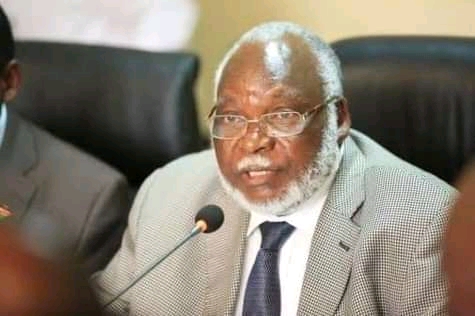
Kenya High Commissioner to Nigeria, Mr Wilfred Gisuka Machage died in an Abuja hospital on Saturday, February 19 at the age of 65. Machage’s twin brother, Sopester Magitar who was a Kenya Ambassador to Russia told newsmen of the sad development.

“It is a very sad moment that I have today lost my best friend and confidant” he reportedly said.

It was also gathered from sources close to the deceased that he fell ill and was rushed to the hospital where he died around 1pm.

Cops apprehend fake police inspector in Ogun

By Muhammad Sabiu

Police in Ogun State have detained a man named Akinyemi Thomas for impersonating a Nigerian Police Force Inspector.

The 38-year-old Thomas was apprehended on Wednesday while police officers from Sagamu divisional headquarters and the Divisional Police Officer, CSP Godwin Idehai, were on routine patrol in their area.

Under the bridge on the Lagos-Ibadan highway, cops spotted the guy in full police camouflage clothing.

On Saturday, Abimbola Oyeyemi, the spokesperson for the Ogun State Police, claimed that the suspect’s actions piqued the patrol team’s interest, and they stopped to question him.

Oyeyemi was quoted as saying, “Immediately the patrol vehicle stopped, the suspect took to his heels. He was then chased and apprehended.

“On interrogation, he confessed being a dismissed policeman, but using the uniform to extort unsuspecting members of the public.”