Month: February 2022

Road to Aso Villa 2023

By Ahmad Murtala

Ever since Asiwaju Bola Ahmed Tinubu declared his ambition to succeed President Buhari earlier this month, the political sphere off and online stirred up debates in favour of Tinubu and the potholes along his way. People cite some irrelevant motifs that may hinder Tinubu’s success. However, these are not paramount of any buyable candidate at the moment, and of course, for the electorate.

The intrinsic status quo of our polity entertains those factors that undermine the democracy and the governance—rating region, tribe, religion, age, school attended, above competency and capacity going even further to dig up the ancestral root of a candidate. The result we are cultivating under this administration says a lot about the mistakes we’ve committed in the past – from  2015 to date—by using only those yardsticks to scrutinize a candidate. Can we still pelt with our intelligence to subscribe to the same mistake of the past come 2023, which appears new dawn to our country?

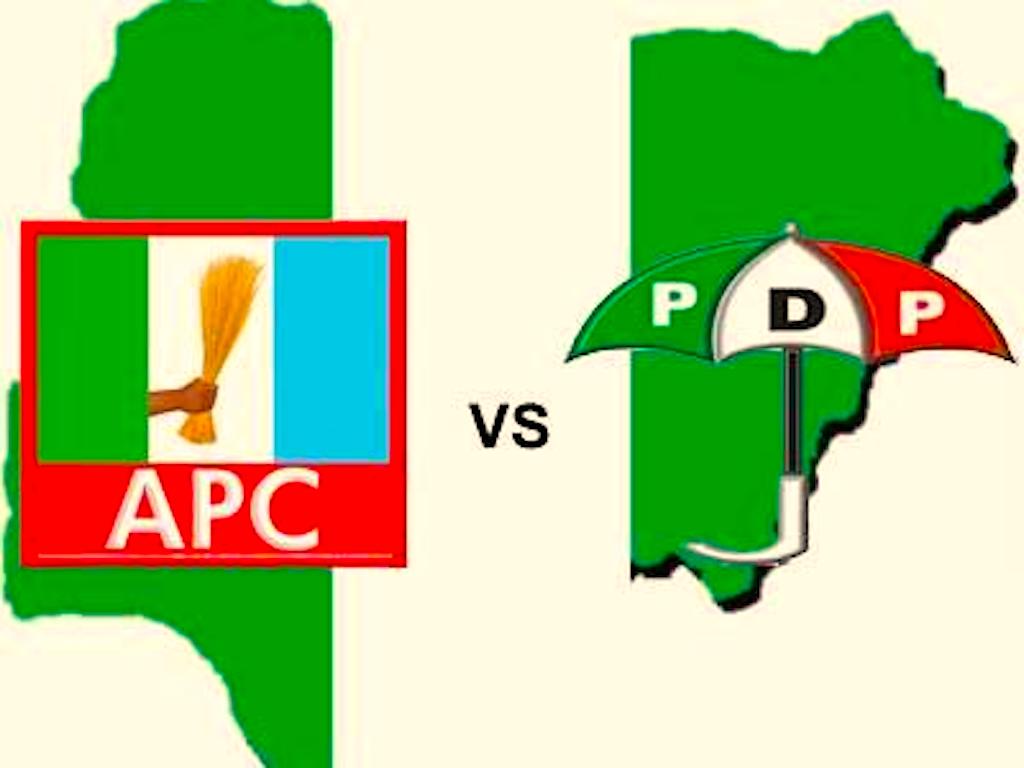
We imported the American presidential system of government, which is quite expensive and implemented its only cover page. It’s a multi-party system that compels too much spending which a saleable candidate capable of taking the lead is hindered from contesting by the processions. These include the ticket, the campaign, and the mobilization. In this context, two major parties are on the run, which the rest endorses the party that has the chance of winning in subterranean manoeuvre.

The Southeast has configured and domesticated PDP as its political party since 1999, while APC appears nascent in the region—the weakness of the ruling party and the deterioration of the security across the country under the watch of APC makes the nascent party lose its credibility far to the NE. If the president is to emerge from the region, two possibilities may arise.

First, northern people stereotype and characterize PDP as evil, callous and looters, which most of the states in the region are under. Second, APC has lost its shining plate before the people based on what appears on the ground since coming to power in 2015. Therefore, no matter the candidate’s credit from the SE, if APC deems it fit to give the flag bearer to the region to entertain zoning as postulated by some northern state governors, the chances are its success would be a bottleneck.

The polarization within the spheres of politics that SouthEast translates to secession if not given a chance to rule, it appears that PDP would have to play the same card of the last election, by choosing the running mate from the SouthEast, here the North would draw a line looking at the indices of the carnage their businesses faced in the region. Meanwhile, APC would play the South-West and the running mate from the North, perhaps a Muslim-Muslim ticket. The result would be determined by the primaries from the parties in a couple of weeks ahead.  

In those countries that have built the social establishments and have smooth working systems with literally little or no corruption, the age of presidential aspirants is not a matter of concern. We see Biden of US—unlike Nigeria when chunks of domestic battle are entangled yet to be addressed. The age of the candidate matters a lot in this context. Tinubu, who appears to be more robust so far from those who declared their aspiration, is brazenly feeble. If not a good diet and wealth make politicians appear strong, most of the politicians at the frontline ought to assume coach duties guiding the upcoming ones. We forbid the like we’ve seen in this administration by encasing the president in the Villa and plunging the country into anarchy.

From the view and the colour of the game, Atiku Abubakar, the former vice president, would swiftly take the PDP flag and Tinubu APC. Both have been dented by the people’s court to have maliciously accumulated wealth—having no other alternative polling box for the electorate. If history is to repeat itself, Buhari contested four times before he won. Now, Atiku is running on his fifth time is likely to have a smooth ride based on APC losing its credibility because of insecurity across the country. 

The extreme thirst for power to fulfil the ‘need hierarchy’ is not dangerous to the beholder alone. The motive is only to possess the authority without a sketched-architectural blueprint and clear manifestos which will coalesce with the national need. Buhari came on this platter, and the result is unbecoming.

So far, the two giants have not made it to the public the what-and-how to attend to the tangled problems agonizing every sector. The currently delicate security and imbalanced economy are at the top, strangling the country by the neck—finding it arduous to breathe. We, for now, don’t need the so-called ‘kingmakers’ who cannot heed or take advice from the public opinion but become foreign puppets—since, intrinsically, the presumption of superiority as the number-one citizen is established. 

Road to Villa 2023 must come from the parties and play the game card to sew the polarization across the region. The Villa in 2023 and beyond begs for a head that has both stick and carrot in his hands, the one who has a clear understanding of foreign policies and has immediate treatment to our problems, both short and long-term solutions. If to suggest best candidates, there are a multitude of them from SS, SW and NW, both fit in into position of President and Vice President, but for now, let’s see the outcome of the parties convention, which is the utmost decider.

Ahmad Murtala sent this article via ahmadmurtala@outlook.com.

Sympathising with a criminal is a crime itself

By Usama Abdullahi

Nothing could be scarier than seeing some people sympathising with the ruthless murderer of little Haneefa Abubakar. Anyone who does that does it out of unflinching apathy toward human’s life. Liu Jan, a Chinese billionaire businessman, was convicted of murder and executed in February 2015 simply because he ran a mafia-style gang. Likewise, one of his siblings and some other three associates were executed. 

If this could happen in a well-evolved, progressive and most populous country on earth, I wonder why it wouldn’t happen here in Nigeria. Does it mean Nigerians are the most softhearted people in the whole wide world? Of course, no. If issues of sympathy arise, I bet many Nigerians would bury themselves in shame because they are wont of barbarism.

Our hypocrisy knows no boundary and is second to none. It’s deep-rooted, and we seem not ready to change for the better. Innocent poor people are cruelly barbecued as chickens and kidnapped daily, yet the (un)repentant criminals are warmly received and mollycoddled. Their barbaric actions are overlooked. Unfortunately, those wounded and displaced to new unfavourable suburbs are left unaided.

It’s a grave sin to glorify or pardon criminals whenever they fake repentance. This is why our country breeds a generation of stubborn criminals and why insecurity thrives. Actually, we do no justice by neglecting the fact that those criminals are worthless and deserve to be tortured to death just as they did to our brothers and sisters.

We escalate the precarious situations of our dear nation by being soft on criminals. No doubt that laws in this country are imposed upon the labouring classes or less privileged ones. If the needy steal to feed their bereaved or starved families, they are burned to ashes when caught by mobs who are thieves themselves. Those disadvantaged are primarily refugees and victims of bad governance. I’m not trying to justify their crimes either. No, I am not. 

But who do you think should be burned to ashes unhesitatingly? Yes, the real unsparing and often politically sponsored criminals, I suppose. It’s true that the so-called sympathisers neither mourn the slain nor denounce the slayers. On the contrary, they are quick to condone and gloat over innocent people’s death. One who sympathises with a criminal is either crueller or no different than the criminal himself.

By excusing barbarism, we are trying to eliminate these two words, “deterrence” and “justice”, from our constitution. If criminals are not punished accordingly, there’s no “deterrence”; many people will probably carry out their unlawful activities without fear. And if justice can’t be done too, then this society is lawless. Until Haneefa’s murderer, Abdulmalik, faces the death penalty, I will never forgive our judicial system.

Usama Abdullahi wrote from Abuja, Nigeria. He can be reached at usamagayyi@gmail.com.

ABU student launches free cardigan campaign for Almajiri

By Ahmad Deedat Zakari

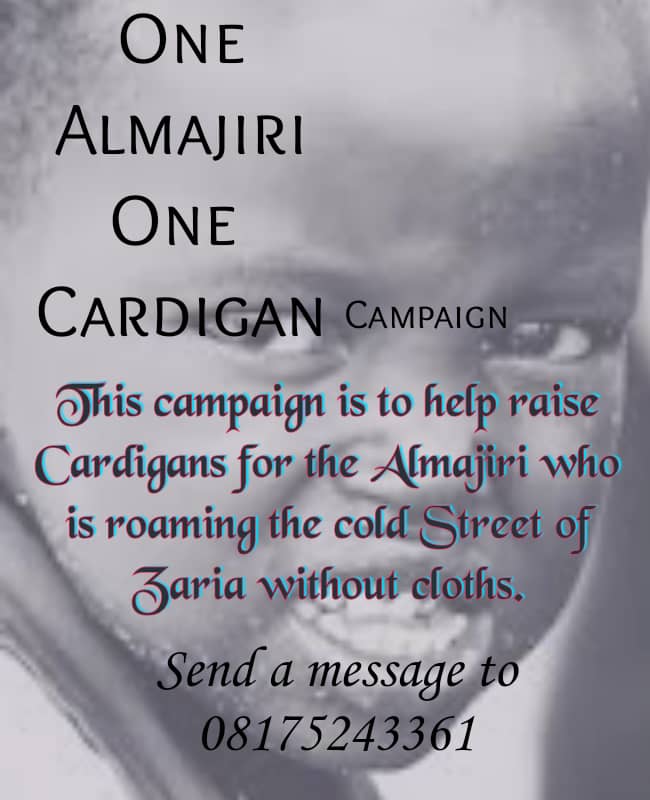
Lawrence Aklogado, a final year student of the Faculty of Law, Ahmadu Bello University, Zaria, has launched a campaign to donate cardigans for Almajiri roaming the streets of Zaria in the harmattan cold.

Mr Aklogado launched the kind and caring campaign on Monday, January, 31 and tagged it as “One Almajiri, One Cardigan.”

In an interview with The Daily Reality, Mr Aklogado stated his reasons for the campaign.

“Zaria was 4° degrees sometime last week. I walk to lectures every morning by 7 o’clock and see two categories of people. The student, staff and workers all rolled up in thick clothing yet complaining of the cold and the Almajiris who are putting on thorn clothing and yet not complaining of the cold.

These guys are white from head to toe, some of them not even having footwear. I only imagined how this period is hard for them. So I sat down and thought of how I could help. I don’t have money to buy cardigans and share because, truly, I was broke, and I don’t want to start telling anyone to please donate money for the almajiri. So the idea came to tell people to donate a cardigan for the almajiri.”

I designed the flier and started sharing it. The response was huge on the first day. And I am glad.” Mr Aklogado said.

When asked further on his target, he said, “My target is 100 plus cardigans for the Almajiris, and I have gotten 25 thus far. I go from hostel to hostel, and the main challenge is most students have just a cardigan too, but I am not giving up though”

The campaigner has been applauded by many people for the thoughtful and kind gesture.

Reps introduce bill to abolish Nigerian civil defence corps

By Muhammad Sabiu

A bill in the House of Representatives has been raised to abolish the National Security and Civil Defence Corps (NSCDC).

Shina Peller (APC, Oyo) sponsored the measure, which was read for the first time on Tuesday. It proposes repealing the NSCDC Act of 2007 and transferring the agency’s staff and assets to the Nigeria Police Force.

Mr Peller proposes, according to the bill’s description, to establish a transition management committee to oversee the NSCDC, write regulations, and implement processes for the transfer of the Corps’ assets and employees to the Nigeria Police Force.

Mr Peller claims that the NSCDC’s expanded functions are a duplication of police mandates, noting that “Fragmentation of security resources across multiple competing agencies is counterproductive.

“The mandate of the NSCDC has expanded that it has now become a duplication of the Nigeria Police Force. This has led to avoidable conflicts.

“Every single function of the NSCDC can be done or is being done by the Nigeria Police Force”. He added that” it is a “waste of scarce resources which has an annual budget of almost 100 billion.”

Mr Peller noted that “the assets and personnel of the NSCDC will be absorbed by the Nigeria Police, hence, no loss of job.”

As Tinubu commences the difficult and easy journey

By Zayyad I. Muhammad

The battle for the 2023 elections will be fascinating. Asiwaju Bola Ahmed Tinubu has commenced a challenging but exciting quest to be President of Nigeria in 2023. Tinubu would face five significant obstacles.

Firstly, his faith. Secondly, the choice of a running mate. Thirdly, the rugged politics the PDP would play – the PDP may present a northern presidential candidate and just ‘Siddon-look’, putting the APC on the defensive. And fourthly, how the North would vote relative to Omatekun and anti-Fulani sentiments in the southwest. And fifthly, Vice-President Yemi Osinbajo supporters are on the move, solely focused on the presidency with confidence.

Tinubu, a Muslim from the Southwest, might have a free sail at home because of the complex nature of the socio-political settings of the southwest. But to appeal to other zones in the country, he will be in a quandary regarding his choice of a running mate. If he picks a Christian from the North, the bulk of APC support in the North, particularly the Muslim North, will look the other way. If he chooses a Muslim from the North, the country will undoubtedly be against a presidential Muslim-Muslim ticket. However, if the PDP picks its presidential candidate from the North, he may get some ‘relief’ in the South

Operation Amotekun and Sunday Igboho’s January 2021 one-week ultimatum to Fulani herders to vacate the southwest, Tinubu’s old statement – ‘ I don’t believe in one Nigeria’ will be another weapon that will be used against him in the North.

Tinubu’s war chest is enormous. His political tactics are shrewd; his political structure is solid, widespread, and well-organized They recently ‘bombarded’ the North and scared their opponents. Tinubu is a good candidate but has a big dilemma, as mentioned above.

On the other hand, the 2023 presidential election battle will be exciting – PDP will be on the offensive, while the ruling APC will be on the defensive. The flag bearers of either political party will also have many political hurdles to cross.

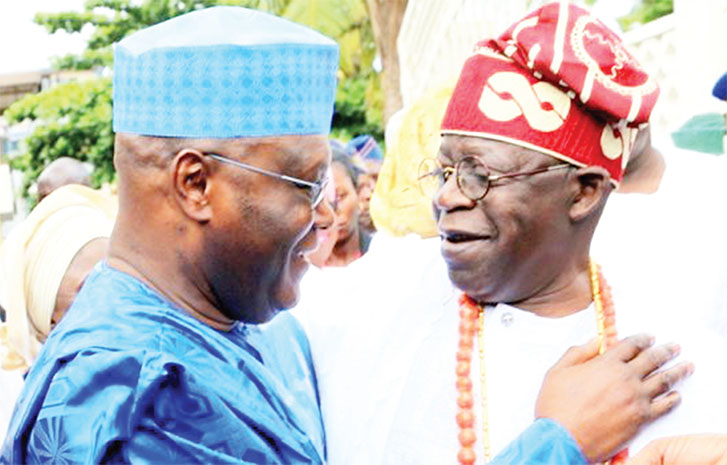
Most people expect the 2023 presidential election finale to be an Atiku vs a Tinubu game. Atiku vs Tinubu will be an interesting big game, a very BIG one. Two similar people with similar public perceptions and similar game styles; “I-know-you, you-know-me” scenario will come to play. The two have well-established political structures that can easily scare an opponent. They pay their bills; the contest would be 100 per cent politics, politics, politics- even the choice of the running mates. It will be a fascinating zero-sum game. Both have similar advantages and disadvantages.

Zayyad I. Muhammad writes from Abuja via zaymohd@yahoo.com.

On Buni’s 100 computer donation to Bayero University

By Kasim Isa Muhammad

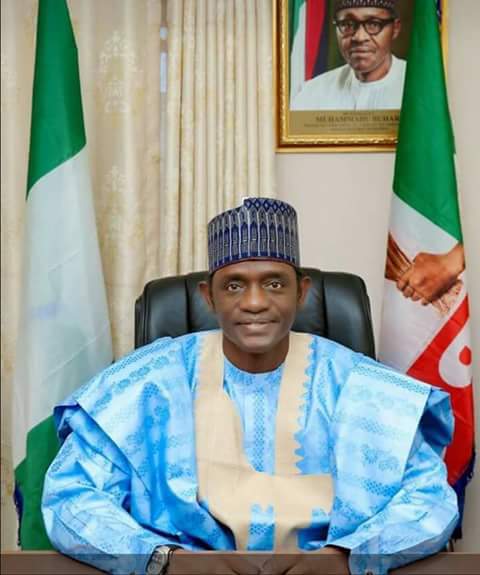
The donation of 100 computers to Bayero University Kano (BUK) by the Yobe State Governor, Mai Mala Buni, is politically uncalled-for. He should consider the poor institutional standards of his state—millions of indigenous students that voted for him battle a lack of various technologies. The donations to a well-furnished and developed Bayero University Kano could never yield a good result for the governor and the entire students of Yobe State.

However, while this may appear good news for Bayero University, it must be tempered by thoroughly examining Yobe State institutional standards and their critical administrative, social, and academic considerations to resurrect active education in Yobe State higher education institutions.

Yobe State University is among the recently initiated universities in Nigeria and is currently experiencing low student enrollment. Their sources are weak due to a lack of advanced facilities for carrying out academic activities and insufficiently advanced technology to train their thousands of students properly. Meanwhile, BUK is one of the top-ranked and accredited universities by the federal government of Nigeria. The university spends years running enough budgets and acquiring modern techniques with a large student enrollment every year. The university’s library is well advanced, and the federal government continues to meet its demand for achieving standard academic excellence in the country. 

There is something to ask the Yobe state governor. Did he ever visit the Yobe State University library and witness how old it looks? The whole Yobe State University building demands a proper renovation from the lecture rooms to the library, theatres, roads, other practical equipment for the medical and environmental science students to acquire knowledge.

There are similar institutions around the local government areas of Yobe that almost collapsed in infrastructure, while others have been struggling with instructional materials for decades without any state intervention. Such institutions are the College of Administration and Management Technology (CAMTECH), Potiskum, and the College of Health and Technology, Nguru, alongside others with poor infrastructure. The institutions spent years under the state government. Still, neither the governor nor the ministry of education attends to them for regular check-ups to monitor what changed those institutional needs to keep existing. 

In conclusion, it is not a bad idea to donate computers to other universities or limit the governor’s desire on where or who to contribute something to. Instead, it is a call of attention to share with the governor that institutions under his places of primary political responsibilities are structurally and academically collapsing to a great extent. The key factor to saving them lies in the hand of Governor Mai Mala Buni.

Kasim Isa Muhammad, Department of Mass Communication, University of Maiduguri.

Who will save our children?

By Lawi Auwal Yusuf

Any sympathetic person will surely ask himself these questions over the unfortunate fate of Almajiris: what wrong have they done to deserve such ruthless treatment? Are they not humans? Are they divinely condemned? Is it because we have heartless hearts? Or is it just because we have brainless brains? 

However, the Social Contract Theory extrapolates the relationship between the State, Citizens and Laws. Both the state and citizens have an overwhelming obligation to obey the law. These laws made it possible for leaders to assume the office and couples to marry and have legitimate children. Through these laws, leaders must cater to the needs of people and parents to take care of their children. Ultimately, justice is the philosophical underpinning and moral wisdom behind this idea. 

I wonder why leaders and parents breach the trust bestowed on them. Indeed, we need a professor in the law of trust to prove this before a jury so that the culprits will be locked up in prisons. 

Politicians have made these innocent children scapegoats of their misrule. They are severely castigated for offences committed by the government. Also, the lackadaisical and pitiless attitudes of parents worsen their plight. Even animals don’t dump offspring. On the contrary, they vigilantly look after them and guard them fiercely against any harm until they can take care of themselves.

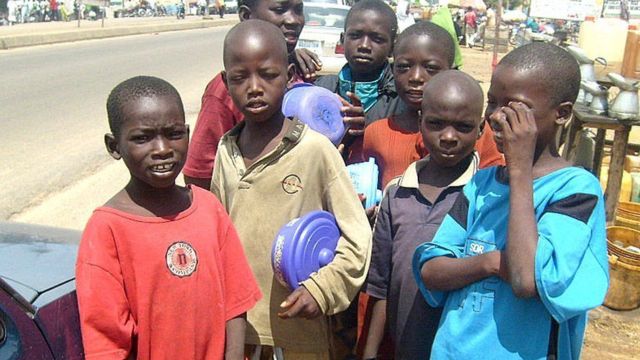
Everyone abandons these children. They are left on their own to fend for themselves. Therefore, they scavenge through garbage, looking for food, wearing shabby clothes. They wander freely without a specific purpose or destination, with no shoes in the scorching heat. They equally have no one to attend to them when they fall sick. It seems like the ancient Indian caste system is gradually manifesting in 21st century Nigeria, and Almajiris form part of the Dalit (Untouchables) social group. 

When you ask them to define democracy, they will tell you that “it’s a government of the elites, for the elites and by the elites.” This is because it is purposely designed to cater to the needs of nobles only in their perception. It’s nothing to commoners but an inevitable woe. So they see it as subjugation, tyranny and distress. 

Almajiris have carried the cross for too long. They’re tired of this impudent desertion and have endured this problematic situation, and cannot withstand it any longer. Finally, they’ve been pinned down by the neck and are crying out for help with a thunderous scream, “we can’t breathe!” But, of course, this is cruelty in its cruellest form. 

These children are the future custodians of our society. Their desolation denotes that we undermine its continuity, progress and prosperity. We will bequeath to them a country that negligently failed to help them, forsake their welfare and future. They will take over a nation unable to develop humans, plagued by injustice and misery. Hence, it is unlikely that they will be patriotic to Nigeria. Is this what we are preparing for the next generation?

Indeed, they will remember us as imprudent forefathers that ruined their lives, put them in dismay and plotted the doom. The ones that disappointed them, those that couldn’t save them from grief. Those ancestors whose labour had been in vain. Indeed, they will utterly forget us, let alone pray for our eternal rest. 

We expect Tsangaya schools to consistently roll out erudite personalities, honourable scholars like late Dr Ahmad Bamba, Sheikh Ja’afar Mahmud Adam, Prof. Isa Ali Pantami or prof. Muhammad Sani R/Lemo. Unfortunately, we saw something entirely different. 

Nowadays, Almajiris are not purposely taken to Tsangaya for learning. Due to a lack of awareness concerning contraceptives, parents incessantly born children they can’t support. At long last, they discard them. How will a minor learn without provision for his necessities, vehement supervision of parents and also fend for himself far away from home? It can NEVER be possible.  

Let’s assume there are only one million Almajiris in the North, and only 5% ended up in criminality. Hence, there will be an additional 50,000 criminals to terrify the region, which is about 15% of the police workforce. So, how many more millions are there? 

Consequently, we are paying the price for our actions and inactions. We are suffering due to failure to resolve this criminogenic problem. We’ve undergone the agonies of Maitatsine dogmatism, and now we are in the bondage of Boko Haram, banditry, kidnappings, to mention a few. Have we learned lessons, or we will remain indifferent? Or are we now determined to dispel the injustice and save these downtrodden children? 

Lawi Auwal Yusuf wrote from Kano, Nigeria. He can be reached via laymaikanawa@gmail.com. 

Of criminality, economic stability, birth control and northern Nigeria

By Zakari Abubakar

It is evident that whenever there is an upsurge in criminal activities in parts of northern Nigeria, a perennial debate usually rears its head among those interested in the root causes of the problem. This is understandable. Without identifying the cause of a problem, its solution may not be in the offing. Like virtually every year, this debate is also gaining traction in this early part of 2022.

Admittedly, this view adds to the existing number of discussions on this topic. Those who are following the debates are not unaware that there are a group of people who link the rise in criminal activities in the north and the rate of excruciating poverty among its people, mainly to the large number of children born in virtually every family in the region. This group of people base their argument SOLELY on the superficial and generalised assumption that people with a large number of children, more often, engage in irresponsible parenting.

Another reason why this group of people see an individual with a large number of children as a potential source of criminality and economic stagnation is that Nigerian authorities have for long been finding it difficult to provide social services such as education, electricity and other life essentials to these growing number of citizens which leads to more people becoming poor. This is where I find their argument too simplistic. Because the same authorities are providing these services to themselves, their families or their cronies.

Going back to their first argument, it is glaringly verifiable that for every individual with many children who fail to cater for them, hundreds, if not thousands, bore many children and saw to their responsible upbringing. This example is on the level of individuals. There are many more such examples on the societal level. For instance, several countries and regions of the world have nearly the same population as northern Nigeria or are more populous but are not facing the same challenges.

Those societies have considered such a phenomenon as a gift and therefore utilise it positively. To buttress this point, the five most populous countries in 2021, according to sources, are China, India, the United States, Indonesia, and Pakistan. Although these countries may be facing their security and economic challenges, the standard of living in those societies is by far more robust than what is obtainable in northern Nigeria.

To cite a specific example: about 90% of China’s population is Han Chinese. They are over a billion people, yet, there is no accusation from the rest of the population in that country or the Hans themselves that the Hans are a potential source of poverty or criminality. Similarly, the most populous state in India is Uttar Pradesh, with over 200 million inhabitants. But go to India. How does Uttar Pradesh fare compared to the rest of Indian territories in terms of economic prosperity?

No one is disputing that northern Nigeria is recently replete with a high rate of criminality occasioned by poverty among its growing population. But to solely link this problem with the region’s birth rate is to accord the topic attention that is less than it badly desires. For example, what about the other seemingly systemic problems that have to do with governance and political leadership?

One may say, why do people resort to adding problems for themselves by producing more children since the government failed to sustain their needs? Then I would say, instead of blaming those who fail to provide those essentials (though they are providing them for themselves and their families), we resort to blaming the poor, despite his effort to always get himself out of the effects of poor/bad political leadership?

Elsewhere, other regions of the world are complaining of a decline in their population. Thus, they outsource other remedies for their problems, like encouraging men and women to engage in economic activities. Therefore, no matter how small, we should demand accountability from our political leaders and seek other possible options that are more viable than resorting to birth control, which has its implication on man’s overall health.

Zakari Abubakar is with the Department of Physical and Health Education, Aminu Saleh College of Education, Azare. He can be contacted via zakariabubakarnng@gmail.com.

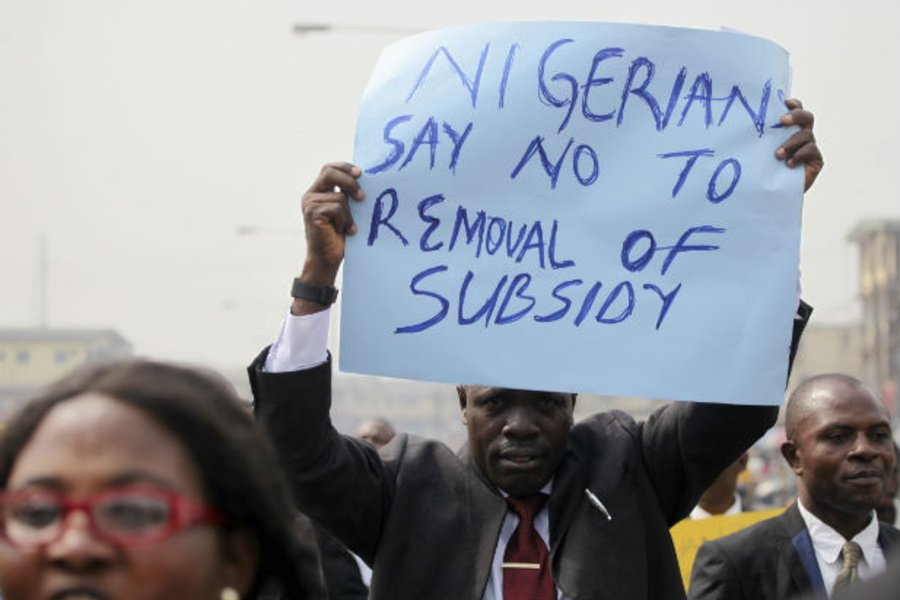
Suspension of subsidy removal: Nigeria narrowly escaped collapse 

By Lawan Bukar Maigana 

The Nigerian government was lucky enough to salvage itself from the intractable calamity it wanted to put itself in—the implications of removing subsidies on petroleum products from July this year. Whoever advised FG to suspend their noxious plans to remove subsidies on the products mentioned above is a true lover of the vast majority of Nigerians and Nigeria as a country.

Even though virtually every country in the world today battles an economic downturn, it is still unjustifiable for the FG to remove subsidies on petroleum products at this critical point. The country is fighting ethnoreligious conflict, refuse-to-end Boko Haram, kidnapping, banditry, mass employment, non-quality education, poor health services for the masses, illiteracy, and unpatriotic leaders, which other countries or most don’t. 

I said it even before the government took a second look at its ugly plan to make subsidies on petroleum products history at the detriment of patients citizens. Had the plan come true, the country would have scattered, and perhaps the avoided fear would have been unavoidable because no one can bear the impact of removing subsidies on petroleum products, not even the haves can. 

Nigeria would have had an unprecedentedly historic hike in foodstuff prices, transportation fare, building materials, medication, among others. And there would be a collapse of many companies in the country because they too cannot bear it, and the cost of living would be unbelievably unexplainable. 

The inflation rate has never been so alarming as today in the country, and it keeps rising every day. Yet, the FG wanted to turn a blind eye to it and remove subsidies on petroleum products from July this year until a group of genuine professionals reviewed the plan and finally rejected it because of the nation’s current state. 

Kudos to the considerate committee for being truthful to themselves. Every reasonable person knows that doing anything that will result in a hike in prices of commodities and services in Nigeria is untimely because most people are still ‘youth.’ Anyone who is economically unestablished is a youth regardless of their age. 

In 2021, the National Bureau of Statistics (NBS) extrapolated that “ Nigeria’s annual inflation rate rose to 15.63% in December of 2021, after eight straight months of decline, amid a slight acceleration in prices of major component food (17.4% vs 17.2% in November), linked to the increase in demand during the festive season. Upward pressure also came from non-food products, including transport (15%, the same as in November); clothing & footwear (15.1% vs 14.8%); miscellaneous goods & services (14.1% vs 14%); housing & utilities (11.1% vs 10.6%), among others. 

The annual core inflation rate, which excludes the prices of agricultural produce, rose further to 13.87% in December, the highest since April of 2017, from 13.85% in the prior month. Monthly, consumer prices inched up by 1.82%, the most since May of 2017, after a 1.08% increase in the prior month.

The Consumer Price Index (CPI) measures the change over time in the prices of 740 goods and services consumed by people for day-to-day living. The index weights are based on expenditures of both urban and rural households in the 36 states. The most important categories in the CPI are Food and Non-Alcoholic Beverages (51.8 per cent of total weight); Housing, Water, Electricity, Gas and Other Fuel (16.7 per cent) and Clothing and Footwear (7.7 per cent). 

Transports account for 6.5 per cent of the total index and Furnishings and Household Equipment Maintenance for 5 per cent. Education represents 3.9 per cent of total weight. Health is 3 per cent, Miscellaneous Goods and Services 1.7 per cent, and Restaurants and Hotels 1.2 per cent. Alcoholic Beverages, Tobacco and Kola account for 1.1 per cent of the total index, Communications for 0.7 per cent and Recreation and Culture for the remaining 0.7 per cent.” 

So, tell me how we can endure the impact of removing subsidies on petroleum products in Nigeria? I am happy that the Nigerian government has indefinitely suspended the planned removal of subsidies on petroleum products. 

Lawan Bukar Maigana writes from Maiduguri, Borno State, and can be reached at lawanbukarmaigana@gmail.com

Political crisis rocks Gombe as thugs storm Atiku’s campaign office, set PDP secretariat ablaze

By Uzair Adam Imam 

Suspected political thugs have stormed the campaign office of former Vice-President Atiku Abubakar, situated some few kilometres away from the Gombe metropolis.

The Daily Reality gathered that the office had its windows broken by the thugs while taking away valuable items like air conditioners.

The thugs were also reported to have set the Gombe State Secretariat of the opposition Peoples Democratic Party (PDP) ablaze. 

Confirming the incident, an eyewitness said that men in the area extinguished the fire with the help of Fire Service personnel.

Addressing reporters, PDP Chairman General Audu Kwaskebe (Rtd) blamed Youth Leader of the All Progressives Congress (APC) in the state, Kawu Lero, saying he was the one who led youths to burn the secretariat.

He added that they had already written a petition to the state police command for the appropriate action.

Meanwhile, State PRO of the APC, Mr Moses Kyari, alleged that it was PDP members that set their office ablaze “due internal crisis over control of the party structure.”

Efforts made to speak to the Police Public Relations Officer (PPRO) in Gombe, SP Obed Mary Malum, were fruitless.