Month: December 2021

President Buhari, others shun Sokoto tragedy, attend Akande’s book launch

By Sumayya Auwal Ishaq

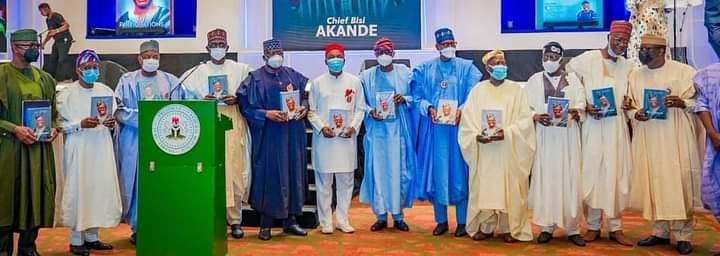
Amid the national grief over the death of 42 passengers burnt by bandits in Sokoto, President Muhammadu Buhari, Senate President, Ahmed Lawan; National Leader of All Progressive Congress (APC), Ahmed Bola Tinubu; Governors of Yobe and Kebbi States, members of the National Assembly attended the public presentation of a memoir of Chief Bisi Akande, titled “My Participations”.
 
President Buhari’s attendance is drawing condemnation from Nigerians who questioned his absence in Sokoto to commiserate with the families of the deceased and his perceived lack of empathy.

Sokoto Massacre: Presidency under fire for 48 hours silence

By Uzair Adam Imam and Muhammadu Sabiu

The Nigerian presidency has been criticised for failing to immediately offer its condolences to the families of the travellers from Sokoto State who were burnt to ashes by terrorists.

Reports have indicated that the bandits set a vehicle conveying no fewer than 42 passengers ablaze in Sokoto, northwestern part of the country.

What kept the presidency mute after the merciless killing surprised many people, who criticised the government for showing indifference to such a horrible incident.

The Daily Reality learnt that the merciless killing took place on Monday around 09:00 in the morning but was reported Tuesday due to some technical issues.

The security threat of this sort is one of the lingering issues that rock the northern region of the country and succeeded in turning it into a killing field. Scores of people are killed every day, and nothing tangible is seen from the people of authority.

An eyewitness confirmed the incident, saying: “The car which was transiting passengers from Sabon Birni was set ablaze at Gida Village, a few kilometres away.”

According to our source: “I was called when the incident was happening. My uncle, his wives and their four children were some of those that have been killed in the bus.”

Before the presidency mourned, the residents of Sokoto State have been voicing their complaints bitterly, saying that why should the president keep mute on such a brutal massacre of innocent travellers? According to them, this is a national tragedy that deserves national mourning.

Mu’azu Malami lamented that: “It is unfortunate and heartbreaking to have read what had happened to our brothers on Monday. This has indicated that there is a need for the government to do more to ensure the safety of its citizens. And I don’t buy the idea of banning vigilante groups in the state,” he added.

Before the presidency released its condolence statement, he lamented that: “Up to now, there has been no official condolence from the government.”

Chairman Arewa Media Forum, Comrade Abubakar Dahiru, in an interview with our reporter, lamented that: “Neither did the government mourn anyone nor did it take any action.

“In addition to that, the government has even banned the vigilante group in the state despite their tremendous contribution,” he added.

Abubakar Mande said that: “The incident is very sad, and the lives of people are no longer taken as important. As we are mourning this loss, another bad one will occur again. It goes on again and again as it is becoming normal.

“But the silence of the government not to comment about the issue comes to us with great shock,” Mande added.

Also, many social media users from Northern Nigerian aired their grievances over the delay by the presidential media team to offer their condolences, which they did 48 hours after the incident.

Sokoto massacre: A good time to pounce on the “bandits”

By Adamu Bello Mai-Bodi

The insistently repetitive activities of killer-bandits, who should now be clearly termed as “the most merciless terrorists” in the Northwestern part of Nigeria have been the source of anguish for the innocent dwellers of that region and travellers alike. Banditry has been a thorn-in-the-flesh of the Buhari administration ever since it started. Despite the government’s massive investment in that area, the banditry problem looks insurmountable to both the government and the community vigilantes. The perpetrators continue to unleash mayhem on helpless citizens. They mercilessly murder, rape, steal, kidnap and destroy the properties and farmlands of their unsuspecting victims with impunity.

“Terrorism is a dead-end street,” Pope Francis famously warned. The bandits in Nigeria have reached the end of a cul-de-sac on which they have been travelling, with just a slim chance of surviving any counter-offensive devised against them. Due to the fact that the dry season has arrived and the clearing of the bushes that serve as hideouts for bandits terrorizing towns in sections of the North has begun, these terrorists are attempting to explore a  cease-fire option with the beleaguered people, as disclosed by the Daily Trust.

There has never been a better time for the Nigerian military to strike and send these terrorists to the gallows than now. The fact that the gunmen are revealing their fragility and fear is a good omen. The federal government must not let this once-in-a-lifetime opportunity pass them by. Needless to say, restoring security is one of the APC-led government’s top priorities. The killer-bandits have been ridiculing the government’s determination to keep this vital promise of preserving Nigerian residents’ lives and property. Now is the moment for the military to retaliate and rid the country of these unscrupulous elements.

Local communities should be prevented from holding any peace talks with these heartless assailants because they will go back to the trenches at their convenience, especially during the rainy season when the bushy areas of the forest are dense. Therefore, it is time for a collective effort by our security architecture and the communities involved to ensure these killers meet their waterloo.

Another reason for them to be crushed to the end is the manifestation of their new evil agenda which leaves no one in doubt that all they need is complete destruction of Arewa. Looking critically at the recent merciless killing at Sabon Birni in Sokoto State, one would wonder, what do these terrorists need? What have the innocent travellers done wrong to them? The answer is, they are killers and they are all out to kill. Nigerian government should know that these terrorists need to be annihilated, otherwise they will continue to destroy Arewa to its final end.

Adamu Bello Mai-Bodi writes from Azare, Bauchi State. He can be reached via admabel86@gmail.com.

General Wushishi buried in Kaduna 

By Sumayyah Auwal Ishaq

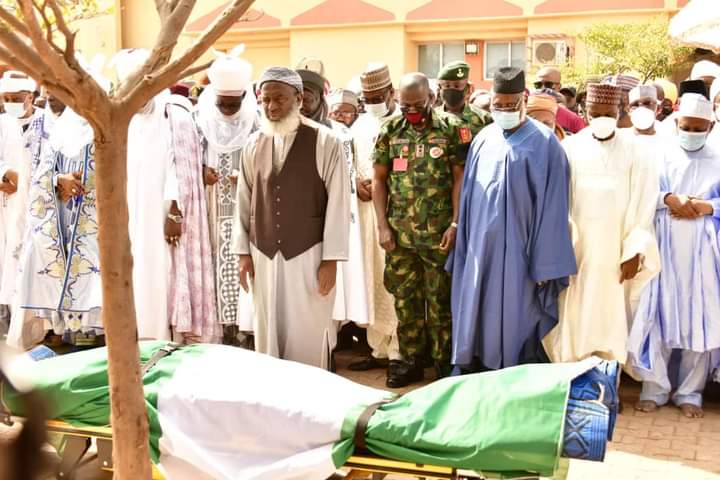
The late General Mohammed Inuwa Wushishi, who died Saturday in London, was buried at Unguwar Rimi cemetery in Kaduna this afternoon. The funeral prayer, which Dr Ahmad Mahmood Gummi led at Sultan Bello mosque, amid tears, was attended by hundreds of people from within and outside Kaduna.

The Governor of Niger State, Alhaji Abubakar Sani Bello, and other senior government officials of Niger State attended the burial. Other dignitaries included the Etsu Nupe, Alhaji Yahaya Abubakar, and numerous senior serving military officers.

It would be recalled that late General Wushishi was commissioned as a second lieutenant on 12 January 1962. He was Chief of Army Staff (COAS) from October 1981 to October 1983 during the Shehu Shagari administration. However, he was required to retire on 3 January 1984, after the 31 December 1983 coup in which General Muhammadu Buhari came to power.

Police arrest man for assassinating Katsina monarch

By Uzair Adam Imam

The police in Katsina State have confirmed the arrest of one of the suspected killers of Alhaji Abubakar Atiku Maidabino, the former District Head of Yantumaki.

Recall that late Maidabino was shot to death on June 1, 2020, alongside his night watchman.

The police spokesman in the state, SP Gambo Isah, made confirmation Tuesday while parading the suspect, Yusuf Abdulla.

He said: “In the course of an investigation, the suspect confessed to have participated in the crime along with the following suspected bandits: Shamsu, Ibrahim, Salmanu and Kabir (now at large, hibernating in the forest).

“The suspect would be charged with terrorism, murder, kidnapping, criminal trespassing and other related offences as soon as the investigation was concluded,” the SP added

In another development, reports have indicated that the command yesterday revealed that it succeeded in smashing a notorious gang of “transborder car thieves” which operated in Kano, Jigawa, Kaduna and Katsina states and transporting them to the Niger Republic for sale.

“Nemesis caught up with members of the gang when they were accosted with a stolen motor vehicle, Toyota Camry, light blue, with registration number JJJ 340 EF and another motor vehicle, Honda CRV, ash in colour, with registration number DKA 980 AH at a mechanical workshop at Kofar Sauri-Kaita Road, Katsina,” Isah said.

He added that the names of the suspects include: Usman Sani, 50, Lukman Magaji, 20, and Yakubu Ismail, 25.

“In the course of the investigation, suspects confessed to have stolen the motor vehicles from Kano and on their way to dispose of them at the Niger Republic. Suspects confessed to having disposed up seven motor vehicles at the same Niger Republic,” he added.

Forensic Science: An imperative tool for fight against corruption, insecurity, other woes

By Mubarak Shu’aibu

The insecurity challenge in Nigeria has assumed a formidable dimension that requires a stakeholder’s approach as it is being touted in various quarters and, in all honesty, necessitates a call for creativity and long-term work. The alarming rate of insecurity is no less disturbing despite the reform undertaken and a substantial share of the national budgets allocated to the security sector.

The sensation of insecurity citizens of our societies experience is one of the main threats against the quality of life in a democracy. Thus, this has caused public opinion to cry in favour of searching for solutions to the woes.  There is an acceptance that a lot needs to be done to turn the current malaise around, and espousing Forensic Science as a tool should be considered on the list of priorities as it would make a profound impact and or even lay a groundwork for the fight against insecurity. Proof for sexual offences, drugging, cold blood murder, bank robbery, identification of victims and other menaces could be decisively dealt with by forensic techniques.

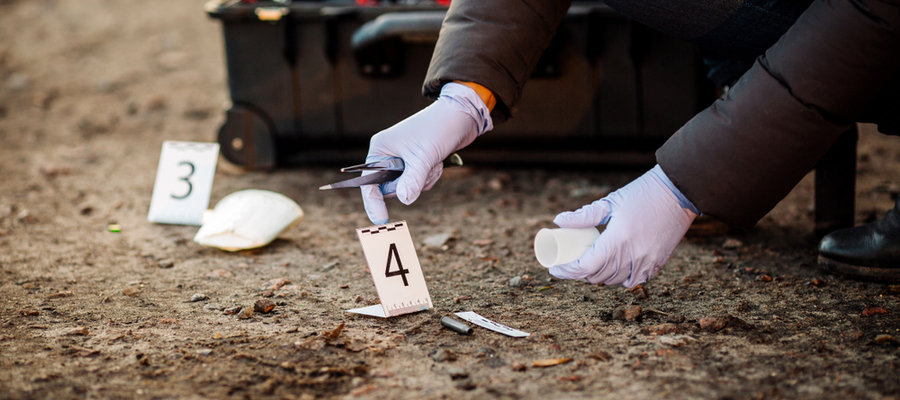
Forensic Science refers to the application of scientific methods in the recovery, analysis and interpretation of relevant materials and data in criminal investigations. It is both an intelligence and evidential tool to assist in the crime management and delivery of justice.

Scientific advances already play an essential role in solving crimes. According to the American National Institute of Justice, since 2009, the institute has funded forensic science projects worth more than $127 million, including approximately $116 million for 269 research awards and nearly $11 million for projects by federal partners. This funding has resulted in more than 900 reports, publications in scholarly journals and presentations. Therefore, it is a wise bit of business in a country like Nigeria, where the criminal activities are devoid of sophistication like that of America, to expend more resources in forensics.

Just as medical, agricultural and economic research are crucial for the advancement of a country, a sustained progression in the research underlying forensic sciences also is critical for advancing safety and the administration of justice. Unfortunately, Nigeria is hooked on instant highs and short-term fixes, which has ultimately and gruesomely halted our general progress as a country.

In retrospect, lack of intrinsic abilities on forensic had many arguing in favour of the Kano State Governor Abdullahi Umar Ganduje when his videos stacking dollars into his pocket were leaked. This event had the public stupefied, including President Muhammadu Buhari, who in the aftermath remarked that he didn’t know the extent of technology used to record the video, a matter that could quickly be settled within a fraction of seconds with good forensics in place.

In a similar terrain, a snake swallowed handsome money in the JAMB office, a fire outbreak in one of the finance offices in Abuja, the recent accident that occurred recording scores of deaths by one of the elite sons and many more stories whose verdicts to date remain surreptitious for Nigerians.

Bringing this to a close, I can say employing forensic science techniques in our fight against lingering insecurity and corruption should be considered inevitable and necessary. That will solve many other problematic issues such as sexual offences, drugging, cold murder, etcetera.

Mubarak Shu’aibu wrote from Bauchi State, Nigeria.

Nigeria: A nation with nominal Commander-in-Chief

By Amiru Halilu
“Nearly all men can stand adversity, but if you want to test a man’s character, give him power.” – Abraham Lincoln. 
When insecurity and ineptitude became the hallmark of former President Jonathan’s administration, Nigerians opted for a greener pasture in APC in 2015. People hoped that the candidate featured by the then major opposition party, APC, would be a leader with a big picture and capacity to overcome the deep-seated insecurity that bedevilled the country. Why? He depicted himself as someone, who was actuated by altruistic desire. But, sadly, President Buhari has never been that someone.
In less than one year in office, his ineptitude and lack of competence became apparent. At present, Nigerians feel like a lost cause, trapped in a lacklustre, ennui, directionless and uninspiring leadership. We have been bearing the brunt of his gross incompetence, cluelessness and nonchalant attitude towards compelling issues and burning problems. Nigerians now feel what it means to have a president who is so wildly unable to fulfil his responsibilities.
To Buhari, being a president is just to occupy the highest office in the land, chairing executive council meetings, delivering empty speeches, sitting at the comfort of the presidential Villa while assenting to bills that have nothing to do with citizen’s well-being, junketing from one country to another dissipating our little resources and wooing ghost investors. These are the major duties Buhari has been performing as a president and the requirements of being a president in his school of thought.
From the day former President Jonathan and President Buhari were inaugurated as the fourth and fifth democratically elected president of the Federal Republic of Nigeria, ‘competence’ got missing from the country’s leadership code. What do I mean by “competence?” The Oxford English Dictionary defines it as “the ability to do something successfully or efficiently.” What has Buhari done impeccably to distinguish himself from his predecessor? Virtually nothing! To some extent, he ends up making his predecessor a hero in the eyes of many.
Nigeria is technically at war yet, we have an intellectually handicapped president, who doesn’t even have accurate information of what is happening around the nation, who cannot do serious preparation of any kind, who has hollowed out the government, filled critical posts with lackeys and selfish money-grubbers, and who has taken governance like sophomoric kid stuff. Buhari has been behaving like a president of the most peaceful nation on earth, where citizens go to bed with their two eyes closed.
What is the essence of a president under whose stewardship the country becomes a shrink tree with dead branches. Anything that will make Nigeria a subject of ridicule in the comity of nations is happening under this amateurish government. So many embarrassing events that had caused the resignation of government officials in live and breathing countries had already occurred in this lethargic and non-functional regime yet, no one was sacked because the president is grossly incompetent; he accommodates mediocre and appreciates mediocrity.
Buhari’s leadership is characterised by disappointment, uncertainty, instability — occasion by emotional trauma, grief, sorrow and misery. The only dividend his administration is paying to Nigerians is precious living. The most disastrous event now in Nigeria is travelling by road. His so much indifference to the burning topic of the day — insecurity had set off a wave of opportunities for high-profile criminals to graduate from armed robbery to kidnapping.
Travellers are unsure of getting to their final destination without being kidnapped and taken to the bush in exchange for ransom. Just as other countries are progressing in other walks of life, ours is vice-versa. Northern Nigeria is about to be taken over by armed bandits and other terrorist groups, and Buhari is leaving a dangerous vacuum filled by increased attack after attack after attack! Incessant killings are gradually becoming a daily routine in northern Nigeria.
Education, the backbone of any developed society, is under a serious threat as many schools were compelled to close down owing to a series of kidnappings. Farming, the only recourse to abject penury, was since crippled by gruesome murders. Most of the farmers who have access to their farms have met the demands of the armed bandits operating in their respective areas.
When a nation had a nominal commander in chief, it’s doom.
Amiru Halilu writes from Kaduna and can be reached through haliluamiru@gmail.com or @AmiruHalilu.

Gov. Fintiri proscribes hunters associations in Adamawa

Adamu Ibraheem Jimeta

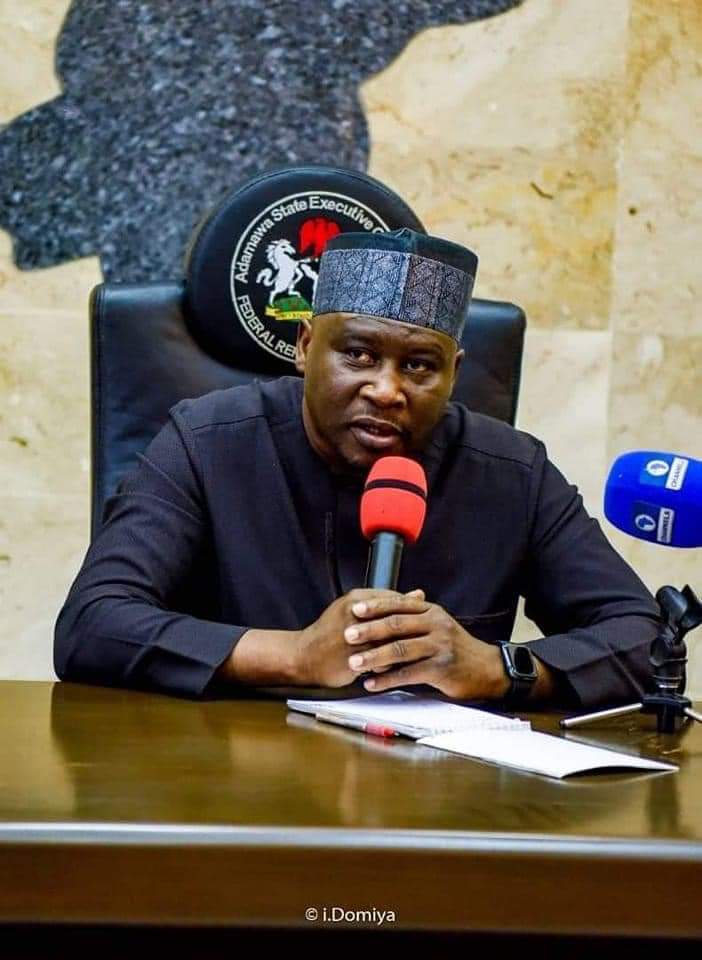
The Adamawa State Governor, His Excellency, Ahmadu Umaru Fintiri has declared the Association of Professional Hunters in Adamawa as illegal. In a statement signed by the Chief Press Secretary, Humwashi Wunisiko on Monday, December 6, 2021, stated that “The operations and activities of the hunters have become a source of concern and insecurity instead of the security it is fashioned to provide”.

He further said the hunters’ abuse of rules of engagement and lack of regard to the traditional institution and security agencies in the state, especially in the five local governments of Numan, Demsa, Lamurde, Guyuk and Shellenge have made the decision unavoidable.

The statement reads: “More worrisome is the fact that the association operates independent of any security organization in the 5 Local Government Areas, thereby giving room for suspicion of their motive and intentions especially that they operate in uniforms of our security agencies and at odd hours.”

While emphasizing that security is everyone’s business, Fintiri added, “No group or anybody will be allowed to take the Law into their hands, disrespect to security agencies and traditional institution.”

He finally directed security agencies and traditional institutions to collaborate and ensure that peace is maintained across the state before, during and after the Yuletide and new year festivities.

Harvest of parallel party congresses

By Abdulrazak Iliyasu Sansani

It is harvest time, where farmers all over the country harvest their crops. Some have already harvested the early maturing varieties of crops, while others are counting days to commence harvesting, or at least have started preparations for the harvesting of Agricultural produce after toiling, expending funds, and hoping of getting bumper harvest as a reward for everything.

It is an akin experience in Nigerian politics, where navigating through the political minefields entail passing the energy-sapping, complex, and rough terrains before reaching the point of achieving one’s political aspirations in Africa’s biggest democracy. It presents all the drudgery involved with manual farming and requires all the technical know-how needed to deliver the immaculate service of mechanised farming.

On  Saturday, October 16, 2021, the All Progressives Congress (APC), the governing party of Nigeria conducted their state congress in most states of the country, having done the same thing at ward and local government levels all over the country earlier. The main opposition party, the People’s Democratic Party (PDP) also went to the poll in a few of the states they were yet to elect their state executives elections namely: Adamawa, Kwara, Oyo, etc.

It was a hectic weekend. One that lived to its billing in most parts of the country. Postponements, cancellations, parallel congresses, declaration of winners, and the blatant gloating by those who purportedly won the elections in both parties, especially the APC which held congresses in more states. The APC state congress had to be called off in Taraba State to avert a grave security challenge that might have occurred, with the avalanche of thugs armed to the teeth and with their assumed battle-tested amulets, charms, etc, seen a few days to the day of the state congress in Jalingo. A decision I applauded whoever had a hand in it.

Parallel congresses held in so many states: Akwa Ibom, Kano, Ogun, Osun, Oyo, etc. Ogun is one state I guessed few would be astonished to learn that this happened. As there was no love lost between the governor, Prince Dapo Abiodun and his predecessor Senator Ibinkule Amosun. The DSS shielding the President caught in the midst of the two divergent political interests, at the last Presidential campaign rally in Abeokuta is still fresh in our minds. It was least anticipated that they won’t do anything to assert who truly holds the ace in Ogun politics.

In Kano where the good and hard-working people of Kano have always prided themselves to eclipse whatever anyone comes with to the ancient and historical state.  It indeed aptly lived up to that. As the people of Kano would always say, ‘Siyasar Kano Sai Dan Kano,’ which loosely translated as, the politics of Kano only a person from Kano would comprehend. Hence, I do solemnly affirm that this is not an attempt to stamp my expertise in Kano politics or anywhere, but a patriotic layman’s endeavour to effect changes in the weighty challenge to our democracy posed by parallel congresses across the country, which undermines it.

Parallel Congresses are colossal drawbacks to our internal democracy, which remains the basis of our external democracy. Both intra-party and inter-party democracy proceed to build a good nation when well nurtured. Unfortunately, it is the alternative to development that the harvest of these parallel congresses will reap for the people in dire need of development. What a sad reality for the brilliant and shrewd populace of Africa’s biggest economy.

We have seen these parallel Congresses across parties in Nigeria. It is not condemned to one party in Nigeria, though it is more prominent in the two parties with the highest members in Nigeria if at all we can determine genuine card-carrying members: APC and PDP. This clearly shows that these are the parties with the biggest stakes. Thus, the reason for ‘the battle for the soul of the party’. It points to the fact that drastic measures have to be taken to effectively address the conundrum. I must state that it is only a conundrum because there aren’t strong laws that strictly sanction those who engage in holding parallel congresses and other actions which we view to be less significant but have severe consequences on our democracy.

With the consequences already in the centre of commerce, Kano: reforms are long overdue. All our institutions have to be strengthened to checkmate the far-reaching implications to our democracy, which Nigerian power craving elite go beyond the limit set by our laws or cash in where it is silent on weighty issues. Legislation should be enacted in such a way that gives no room for parallel congresses. For having parallel Congress anywhere is an obvious admission of failure of our institutions, especially our laws of which the parties are products.

There can’t be two leaders of a single party at the same. Then why is it becoming more fashionable by every period of congress in the two major parties in Nigeria? Given that politicians are motivated by their ambitions, but would it still maintain its lure, if stiff punishments are in place for anyone whose actions lead to having parallel congress and other anomalies that belittle our democracy? It is highly unlikely.

All in all, injustice, greed, weak laws, disregard for standard and proper practice, and lack of stiff punishment among other issues are at the centre of its all. Therefore, when some people who believe they are or are rightly the leaders of a party based on the party’s constitution deny others a fair shot at achieving their ambitions and the authorities back then. Then it is bound to persuade them to seek whatever means to actualise their ambitions, especially when they are certain about the gross inadequacies of our institutions. Being fully aware that hardly would the offenders be penalised. They resort to whatever would lead them to success. This is a damning indictment of our system, institutions, and a sad commentary on our democracy. This has to change to a democratic nation that is firmly built on standards and strong institutions that are deeply rooted in conventional democratic practices.

Abdulrazak Iliyasu Sansani wrote from Turaki B, Jalingo, Taraba State.
The Kano APC ship on the verge of capsizing

By Musa Sa’adu

Political parties remain the only vehicle or platforms for candidates/politicians to aspire for political offices. This, however, leads to the emergence of various interest groups within a party. The groups work harmoniously together to pursue their common goals. However, the success or otherwise of a political party depends mainly on how the stakeholders manage these interest groups in the distribution of party positions, party tickets, appointments and the traditional largesse as the case may be. Failure to do these for any reason has, on so many instances, led to the internal party crises.

Kano APC faces the formidable opposition PDP-Kwankwasiyya that is waxing power to unseat them. Yet, the party is bedevilled with internal crises that by day slim and reduce its electoral chances comes 2023. Internal party crises are the primary driving force that negatively affect party performance in a poll. Before governorship elections in Kano that spring surprises are born out of internal party squabble and wranglings.

The 1983 election that produced Senator Sabo Bakinzuwo against a well-performing Governor Abubakar Rimi, seeking reelection resulted fromf party crises. The PRP crises that metamoposed into ‘Tabo‘ and ‘Santsi‘ factions, led by Malam Aminu Kano and Rimi respectively, forced Rimi as a sitting Governor to dump PRP for NPP to seek reelection. However, this was one of the cardinal reasons behind his Waterloo despite his performance in office throughout Kano and Jigawa.

In the botched Third Republic, one can learn a lesson from it. The popular and well-accepted SDP lost the Governorship election to NRC due to the internal crises in SDP, which was an offshoot of Santsi and Tabo from the Second Republic. After about three primary elections that produced an independent candidate, Engr. Magaji Abdullahi against Aminu Inuwa of Santsi faction and Ahmad Rufa’i of Tabo faction. The wrong choice of Ahmad Rufa’i as running mate to Magaji Abdullahi led to Santsi group to revolt and enter an agreement with NRC candidate Kabiru Gaya. This development changed the election outcome in favour of the NRC candidate.

Senator Rabiu Musa Kwankwaso, Malam Ibrahim Shekarau and, of course, Dr Abdullahi Umar Ganduje are no doubt the principal actors of the Fourth Republic Kano politics. The three have benefited and suffered the consequences of internal party crises.

Our memories are still intact on how the political hullabaloo, shenaniganism and internal party wranglings ruined the reelection bid of Governor Kwankwaso during the 2003 Governorship election. The defection of Danhassan, crises between Kwankwaso and some members of the National Assembly, notably the then speaker of the House Of Representatives, Hon. Ghali Na-Abba and perhaps General Buhari factor were among the contributing factors that led to the Kwankwaso/Ganduje downfall and the emergence of Malam Shekarau.

Likewise, Shekarau suffered the repercussions of internal party crises; his anointed candidate Salisu Sagir Takai was defeated by Kwankwaso/Ganduje. The crises between Shekarau and his deputy, Abdullahi Gwarzo, popularly known as Ruwa Baba, the over fifty thousand votes garnered by him during the Governorship election, has smoothly leveraged the second coming of Kwankwaso and Ganduje in the 2011 election.

The current turmoil rocking the Kano APC is a cause of concern to any committed party member. The internal crises that paved the way for two parallel conventions that produced Abdullahi Abbas and Haruna Zago representing Ganduje and Shekarau led factions respectively will create a hole that will gradually sink the Kano APC ship, and neither the Ganduje nor Shekarau will survive the mishaps including their supporters.

In politics, number matters; everyone is important! Don’t tell me someone who’s Governor for eight years and a serving senator doesn’t have political influence, and these G-7 members, as they fondly called themselves, are blessed with sturdy supporters and resources to bankroll political movements that can make or mar an election.

With the Tuesday court verdict favouring the Shekarau-led faction and considering the nature of Nigerian litigation processes, I’m afraid that whichever faction the pendulum swings and even if they won the general polls, the replica of Zamfara 2019 is imminent.

Both Ganduje and Shekarau should tread with caution; there is still time. They shouldn’t listen to the sycophants instigating the crises. Let them sit, discuss and iron out the grey and problematic areas and find out political solutions; otherwise, Kwankwaso will send them to political oblivion.

Musa Sa’adu wrote from Sumaila and can be reached through musasaadu0181@gmail.com.