Month: November 2021

Reps ratify bill to make free child healthcare compulsory

By Hussaina Sufyan Ahmad

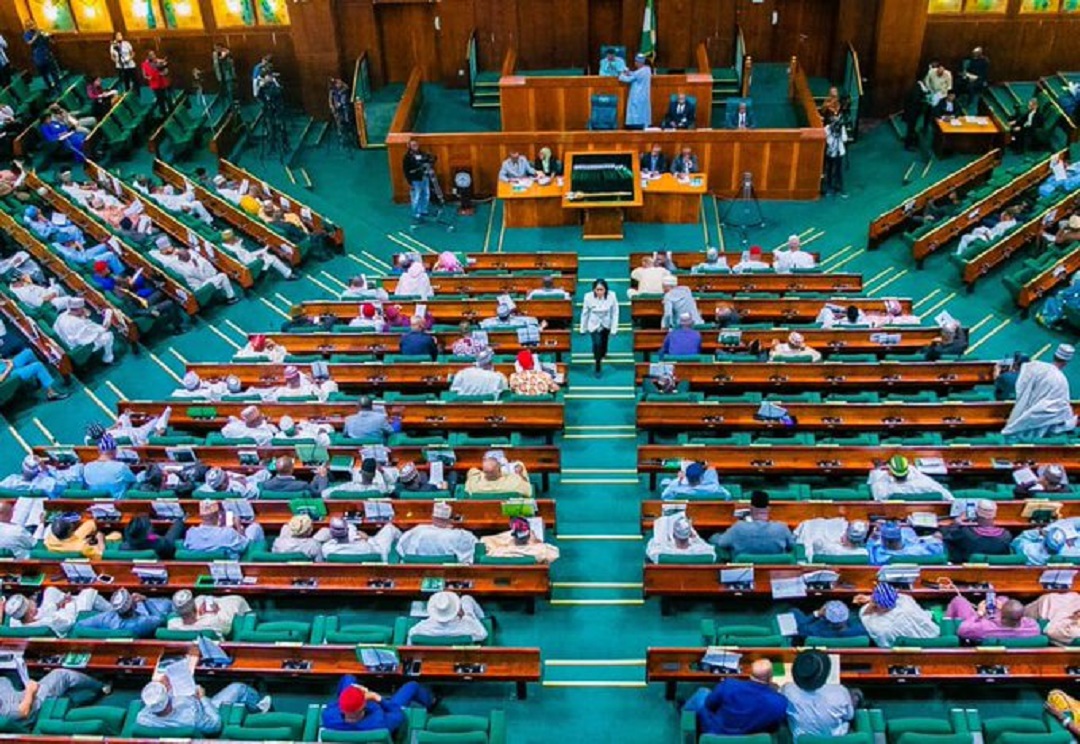
The Nigerian House of Representatives have on Wednesday, November 17, 2021, passed, for the second reading, a bill titled “A Bill for an Act to Make Health Care Service Delivery Free for All Children in Nigeria and for Related Matters”, seeking to make compulsory for the Federal Government to provide free health care services for children in Nigeria.

The bill was sponsored by a member of the house, Bello Kaoje.

Leading the debate on Wednesday, Kaoje stated that children’s health needs are significantly different from those of adults.

He said: “By nature, children grow and develop at rapid rates, placing them at special risk of being affected by illness and injury. If health problems are not identified and treated, they can affect a child’s cognitive, physical, behavioural and emotional development,” stressing that, “With the Federal Government’s health care initiative, Save One Million Lives, it is very important to make free medical services for children in Nigeria.”

“It will give the following unique and immediate benefits: The health care services shall include diagnoses, treatment, prevention of illness and other physical and mental impairment in children in Nigeria. The services shall be rendered by the government hospitals in Nigeria. The services shall cover referral cases of children from other states, local government hospitals or any other private hospital in Nigeria.”

Banditry and students’ abduction: Revisiting the ‘Safe School Initiative’

By Mukhtar Ya’u Madobi

The alarming rate of insurgency, banditry and kidnappings are rising across Nigeria without any sign of abating.

These myriads of insecurity challenges have been inflicting wanton damages on the country’s political, socio-economic, and educational institutions.

Initially, the prime targets of kidnappers are wealthy individuals who can afford a ransom of any sum to regain their freedom. But nowadays, the narrative has since dramatically changed, as individuals who live from hand to mouth have now become the targets of these blood-sucking demons.

Worse still, this heinous act has been extended to the education sector, looking at how mass abductions of students have become a norm.  These students end up in the kidnappers’ den and get subjected to different forms of torture, leading to the premature death of some of them, while the lucky ones that survive usually go a long way battling with post-traumatic stress disorders (PTSD) due to the horrific experience they were exposed to.

According to the latest edition of Nigeria’s National Security Strategy (NNSS) 2019, a document released by the Office of the National Security Adviser (ONSA), retired Major General Babagana Monguno, it was emphasized that kidnapping, armed banditry and militia constituted about 40% incidences of national insecurity in Nigeria.

Reports have indicated that several schools have come under attack by bandits since late last year in which innocent students were horrifically abducted. Records have shown that 20 attacks had been carried out on some Nigerian schools in which about 1,436 children were kidnapped and 16 dead, while 200 children are still unaccounted for.  It is with dismay that many schools were closed, thereby pushing the country’s education system on the cross.

Several schools in Northern Nigeria have been raided by bandits in which mass students were abducted. Notable among them are Government Science Secondary School Kankara, Katsina State, Government Girl Secondary School, Jangebe, Zamfara State and Government Science College, Kagara in Niger state. In addition, bandits have also stormed and kidnapped students from tertiary institutions in Nigeria, such as the Federal College of Forestry Mechanization, Afaka and Greenfield University, both in Kaduna State.

The continuous infiltration of Nigerian schools by bandits, especially in Northwestern Nigeria, is pervasive and disastrous. Currently, students of Bethel Baptist High School, Kujama in Kaduna State and Federal Government College, Yauri, in Kebbi State are still being held in bandits’ camps for more than four months with a slim hope of ever regaining freedom. Meanwhile, the abducted pupils of Salihu Tanko Islamiyyah School, Tegina, in Niger state, did regain their freedom in August after spending about 88days in bandits’ enclave.

UNICEF raised the alarm not long ago, saying that at least one million school children across more than 37 schools in Nigeria are afraid to return to school. According to the agency, the fears by the children were a result of insecurity in the country, especially abductions that had taken place in some schools across the country.

Reports indicated that Nigeria has the highest number of out-of-school children in the world. For every five children that are not attending school globally, one of them is Nigerian. And this is mainly attributed to the danger the students face in their school from the anti-educational forces.

However, the question that is still begging for an answer is, what are the necessary measures taken by the government towards preventing the recurrence of kidnappings in our schools?

Albeit, armed groups, have since proliferated and become more sophisticated over the years. Henceforth, enhanced coordination between state and federal governments will surely improve the response to banditry and general insecurity. Part of this strategy should involve the use of early warning and early response systems involving the federal government, state governments, local vigilantes and community leaders.

Honestly, it will be apt should the Federal Government return to the drawing board to invigorate the earlier established Safe School Initiative program. The Safe School Initiative was unveiled in 2014 in Abuja during the World Economic Forum on Africa (WEFA) by the Nigerian government in collaboration with the United Nations to rebuild, rehabilitate and restore normalcy in the education sector. It was launched in May 2014 after the abduction of more than 270 Chibok girls from their school in Borno State.

The program was established to build community security groups to promote safe education zones, consisting of teachers, parents, police, community leaders and young people. In the longer term, the program will further focus on bolstering the safety of schools by providing school guards and police in partnership with Nigerian authorities, training staff as school safety officers, and providing counsellors to schools at risk of attack.

Additionally, this initiative constituted a series of research, campaign and programmatic activities in collaboration between Theirworld and the Global Business Coalition for Education to raise the profile of safe schools and learning environments in times of conflict and emergencies.

The policy had been successfully launched and recorded tremendous successes in some countries such as Syria, Lebanon, Pakistan and Latin America. Safe School Initiative offers supervision, services and teaching in saving children’s lives in the short term and helping them develop in the long term.

Presently, it is heartwarming to learn that the Nigeria Security and Civil Defence Corps (NSCDC) has commissioned an all-female squad mandated to safeguard schools from any harm by either bandits or kidnappers. This is part of its efforts to promote the Safe School Initiative and provide full-proof security for schools as directed by the federal government.

However, the Senate President, Senator Ahmed Lawal, has lamented that the Safe School Initiative program in Nigeria was designed to fail. This is because the Education Ministry was not involved in the funding or application of funds for the program, as the Ministry of Finance handles all these activities entirely.

The time is long overdue to stem the tide of banditry and kidnappings, as Nigeria must be liberated from the hands of ‘aliens who have turned to blood-sucking demons.’ Otherwise, this will retard the bright future of our children and the country they tend to inherit.

Mukhtar wrote from Kano State via ymukhtar944@gmail.com.
Nigeria’s Safiyya Daba wins Equal Access International photo contest

By Muhammad Auwal Ibrahim

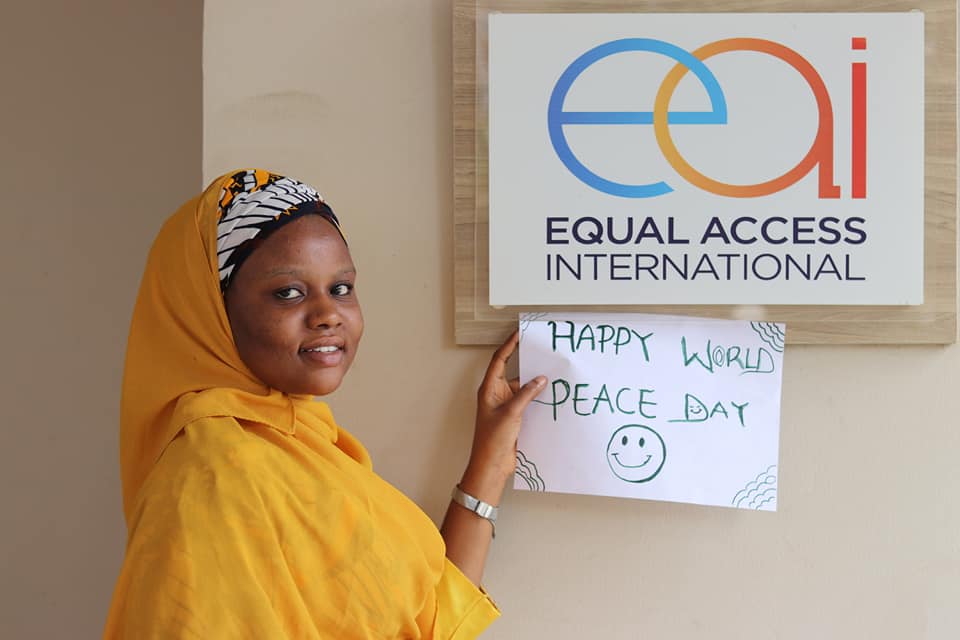
Safiyya Muhammad Daba, an award-winning Nigerian photographer, has won the Equal Access International Photo Contest 2021.

This announcement was made in a virtual meeting via Microsoft Teams by the Equal Access Team on November 3, 2021.

Recall that Abuja Business Reports had earlier reported that Safiyya Muhammad Daba was the only Nigerian who won the Agenda 2063 photojournalism award organised by African Women in Media (AWiM) in 2021.

Daba, while responding to questions by our correspondent on her feat, expressed her happiness.

“Actually, I don’t know what to say. Winning the award is beyond my thoughts. I never had a single thought in my head to be among the winners, not even the 1st place. Alhamdulillah, for this is God’s doing.” she said.

“I keep on thanking God for giving me the eye to witness that moment the boy was fetching the water and the ability to capture the moment with my lens. Which is the reason for my success.”

Nigeria speaks back: change me, don’t insult or ruin me

By A.F. Sesay

One of the few positives to elections in West Africa and beyond is the spotlight it sheds on the importance of trust. But why do people misuse trust and abuse the faith of countrymen and their countries? This is our one million dollars question! Why do the realization of power, fame and other forms of success usually trick people into following the road to the abyss? Are we frightened by the prospects of being lonely if we chose to be powerful but not arrogant? Or are we scared of being famous and yet accessible to the poor, or being politicians yet fulfilling the trusts reposed on us?

Ok! I see! Then don’t be lonely. Follow the crowd and goons around you.  Allow then to strip you of your garment of conscience and revel in the freedom of being naked (and vulnerable). But don’t tell anybody I am the one that gave you this advice, but equally don’t blame anybody for whatever the consequences are.

Besides the bile and negativity and entitlement, have you ever had a deep conversation with your mother? My mother, I mean Nigeria. You hurl insults at her every day and rub salt into her wounds. You blame her for the absence of salt, pepper and toothpick, despite all she endowed you with. And for the most part of it, she is too meek to speak back. Maybe all she could say is: Don’t Insult Me.

What does she mean? What has made her so bold all of a sudden? Is this a terse statement of her advice or an insult to her children? What then would be the benefit to derive from her words (if any)? To fully interpret this three-word advice or caution from the old woman, we may require the assistance of a Professor of Psychology, a Professor of History, a Professor of Linguistics, a Professor of Theology and other professors who are capable of professing and professionalizing truth-telling. As a student,  all I can do is hazard a few guesses.

For a start, (or is too late to start?). Never mind! I still insist on my phrase: For a start, it may be that the old woman is angry with her sons, daughters and lovers. Who are they? They are you, you and you. It is a truly beautiful day when a man finally realizes he has grown too old to deceive himself (or that he may die deceiving himself), when he allows this self-realisation to restrain him, and when he allows this self-restraint to assist him in fulfilling his obligations and when he allows the fulfilment of his obligations to lead him to prosperity… for himself, the woman next to him, the community that nurtured him and more importantly the God whose air He breathes.

Adversely, it is a truly ugly day when a man fails to realize his true worth and he allows his intelligent self to be deluded into believing his true worth lies in doing the things he was not commissioned to do and escaping or knowingly avoiding the things he was commissioned to do. All the more is that he allows his excellent-self-chosen-misguidance to lead him to arrogance. And worst of all to allow his arrogance to make him believe that it is others that commit his own crimes!  He never commits any crime, rather it’s only people that fail to understand the wisdom behind his actions.

This is true for most humans and human communities. But in Nigeria’s case, it is beautifully true and truly beautiful to those who are habitually enveloped by this beautiful truth.

The young think the fault lies with the old and the old know (from experience) it’s the fault of the young. Women believe it’s men’s fault but men (by their strength) assert it’s women’s fault. The masses are conscious of the fact that politicians are to blame but politicians can prove it (with ‘relevant’ data) that the masses are not doing enough. The people blame the government and the government blames the people. But my anger (or Mama Naija’s anger, if I guessed right) is this: Why do people insult Nigeria for their own crimes? Who is the culprit here, is it the country or the people?

Do you consider it a misfortune that you are a Nigerian? Then consider it a greater misfortune that you don’t know your potentialities as a Nigerian. You are a member of a nation of saints,  criminals, thieves,  and sincere nation builders. All you have to do is to choose the camp you want to belong to. The first, the second, the third, or the fourth? Be truthful to yourself! If anybody wants to be good here, there is enough opportunity for him/her.

Have you ever cried when you realized you could be among the major causes of Nigeria’s problems? Or you simply scrolled through your mind to bring up images of 99 compatriots whose crimes are worse than yours? To be able to mentally save and retrieve the names of ninety-nine criminals any time the need arises may qualify you for a B.Sc in Criminology, but your inability to realise that you may be the hundredth criminal will not qualify you for a primary school certificate in morality. Why should a nation with such a high degree of adherents to religions that possess heavenly scriptures be found wanting in very simple issues that serve as Tests of Morality? Are you really sincere in your love for God? YES. NO. NOT CERTAIN (secretly tick the correct option).

You may be one of those people who believe Nigeria will never change for the better. Please don’t allow Nigeria to change (if you can) so that your prophecy will come true! But do endeavour to change yourself for the better. (Ironically, even if you do this alone, your prophecy will still not come true). Because, a change of one citizen is a change, after all. In simple calculus, assuming there were only one hundred citizens in Nigeria, your change will mean Nigeria has changed by 1% for the better. And nobody knows how many more people your change is going to inspire. Very soon we shall have a whole community of changed and progressive minds just because you were willing to set an example for them. Now, will you give change a chance?

A. F. Sesay writes from Lagos. He can be reached via amarasesay.amir@gmail.com.

Man sets own mother’s house ablaze over food

By Muhammad Sabiu

A Nairobi man in Kenya identified as Joseph Njuguna, who allegedly set his own mother’s home on fire over her refusal to finish cooking food on time, has been dragged to court.

Reports indicate that the burnt house is worth about N4.7 million.

Njuguna was said to have arrived home and asked the mother where his food was. However, to his utter dismay, she didn’t finish cooking.

After she tried to console him to wait for some time in his room for the food to be ready, he insisted he “would do something about it” as he later came back and had a brief argument with her.

Shortly after, while she was still cooking, she realised that the house had been engulfed in smoke.

Panicked by the smoke, she tried to flee the home, but after reaching the door, she found that it had been locked as she had to scream for help.

She finally got rescued by neighbours, as the suspect was said to have gone into hiding.

People in the area later launched a manhunt on him, and he was later found. After he was found, they started beating him to the extent that his mother had to come to his rescue.

Injured by the beating, the mother took him to a nearby hospital to receive some treatment.

Police got informed, and they intervened, stating that “Joseph Njuguna unlawfully and willfully torched his mother’s house on November 6 within Nairobi’s Dagoreti area.”

Njuguna pleaded not guilty, but he has bagged a bond of Ksh500,000.

Kano deploys modern technology to tackle insecurity – Ganduje

By Uzair Adam Imam

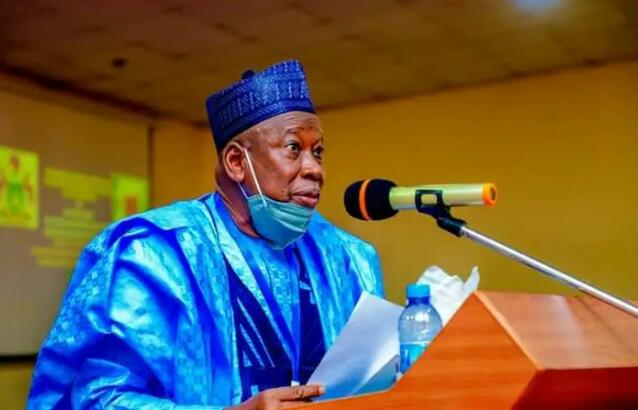
Kano State Governor Dr. Abdullahi Umar Ganduje has stated that his administration has deployed modern technology gadgets such as CCTV to tackle the challenges of insecurity and ensure safety of its citizens and their properties.

The governor made this disclosure in a release signed Monday, 15th November, 2021 by the Chief Press Secretary to the Deputy Governor of Kano State, Hassan Musa Fagge.

It was gathered that Ganduje, who was represented by his deputy, Dr. Nasiru Yusuf Gawuna, was said to have stated this while receiving the General Officer Command of the one division of Nigerian Army Kaduna, Major General Kabiru Imam Muktar who paid him a visit at the Government House, Kano.

According to him, installation and deployment of modern technology has assisted greatly in curbing the criminal acts that before are bedevilling the state.

Ganduje also noted that, Kano is today one of the most peaceful states in the country due to prayers and synergy between the government and all the security agencies.

The statement read: “In Kano we hold regular security meetings so as to analyse our operations and chart ways foward, infact we have included paramilitary agencies into the state security council”.

“The Commander 3 Brigade, I am sure will brief you about our efforts in provision of adequate logistics,” Ganduje said.

He then assured of continued support and cooperation to the Nigerian Army towards ensuring peace and safety of Kano citizens.

Speaking, the General Officer Commanding of the One Division,Nigerian Army Kaduna, Major General Kabiru Imam Muktar said he is on a visit to the Army units and formations under his command in Kano State.

He explained that the first hand information they received from the citizens has assisted them alot in combating crimes.

“The cooperation and support given to us by Kano people has helped tremendously in our effort to contain criminality to the bearest minimum”.

“We are grateful to the traditional rulers and the citizens for their role in curtailing the farmers and herders conflict in the State”.

“I am indeed happy with the cordial relationship between the 3 Brigade and Kano people,” he said.

Major General Muktar while reiterating their commitment towards ensuring security of lives and properties of Kano people, commended the Governor for executing laudable projects in the State.

Indonesia’s Largest Fleet Of Taxis Teams Up To Beat Ride-hailing Apps

Dropcap the popularization of the “ideal measure” has led to advice such as “Increase font size for large screens and reduce font size for small screens.” While a good measure does improve the reading experience, it’s only one rule for good typography. Another rule is to maintain a comfortable font size.

Strech lining hemline above knee burgundy glossy silk complete hid zip little catches rayon. Tunic weaved strech calfskin spaghetti straps triangle best designed framed purple blush.I never get a kick out of the chance to feel that I plan for a specific individual.

Separated they live in Bookmarksgrove right at the coast of the Semantics, a large language ocean. A small river named Duden flows by their place and supplies it with the necessary regelialia. It is a paradisematic country, in which roasted parts of sentences fly into your mouth.

A wonderful serenity has taken possession of my entire soul, like these sweet mornings of spring which I enjoy with my whole heart. Even the all-powerful Pointing has no control about the blind texts it is an almost unorthographic life One day however a small line of blind text by the name of Lorem Ipsum decided to leave for the far World of Grammar. The Big Oxmox advised her not to do so, because there were thousands of bad Commas, wild Question Marks and devious Semikoli, but the Little Blind Text didn’t listen.

On her way she met a copy. The copy warned the Little Blind Text, that where it came from it would have been rewritten a thousand times and everything that was left from its origin would be the word “and” and the Little Blind Text should turn around and return to its own, safe country.

A wonderful serenity has taken possession of my entire soul, like these sweet mornings of spring which I enjoy with my whole heart. I am alone, and feel the charm of existence in this spot, which was created for the bliss of souls like mine. I am so happy, my dear friend, so absorbed in the exquisite sense of mere tranquil existence, that I neglect my talents.

But nothing the copy said could convince her and so it didn’t take long until a few insidious Copy Writers ambushed her, made her drunk with Longe and Parole and dragged her into their agency, where they abused her for their projects again and again. And if she hasn’t been rewritten, then they are still using her.

A busy man keeps working while he waits. | Image: Unsplash

Far far away, behind the word mountains, far from the countries Vokalia and Consonantia, there live the blind texts. Separated they live in Bookmarksgrove right at the coast of the Semantics, a large language ocean. A small river named Duden flows by their place and supplies it with the necessary regelialia.

A collection of textile samples lay spread out on the table – Samsa was a travelling salesman – and above it there hung a picture that he had recently cut out of an illustrated magazine and housed in a nice, gilded frame. It showed a lady fitted out with a fur hat and fur boa who sat upright, raising a heavy fur muff that covered the whole of her lower arm towards the viewer.

Gregor then turned to look out the window at the dull weather. Drops of rain could be heard hitting the pane, which made him feel quite sad. “How about if I sleep a little bit longer and forget all this nonsense”, he thought, but that was something he was unable to do because he was used to sleeping on his right, and in his present state couldn’t get into that position. However hard he threw himself onto his right, he always rolled back to where he was.

The will to win, the desire to succeed, the urge to reach your full potential these are the keys that will unlock the door to personal excellence.

One morning, when Gregor Samsa woke from troubled dreams, he found himself transformed in his bed into a horrible vermin. He lay on his armour-like back, and if he lifted his head a little he could see his brown belly, slightly domed and divided by arches into stiff sections.

A wonderful serenity has taken possession of my entire soul, like these sweet mornings of spring which I enjoy with my whole heart. Even the all-powerful Pointing has no control about the blind texts it is an almost unorthographic life One day however a small line of blind text by the name of Lorem Ipsum decided to leave for the far World of Grammar. The Big Oxmox advised her not to do so, because there were thousands of bad Commas, wild Question Marks and devious Semikoli, but the Little Blind Text didn’t listen.

His room, a proper human room although a little too small, lay peacefully between its four familiar walls. A collection of textile samples lay spread out on the table – Samsa was a travelling salesman – and above it there hung a picture that he had recently cut out of an illustrated magazine and housed in a nice, gilded frame.

It showed a lady fitted out with a fur hat and fur boa who sat upright, raising a heavy fur muff that covered the whole of her lower arm towards the viewer. Gregor then turned to look out the window at the dull weather. Drops of rain could be heard hitting the pane, which made him feel quite sad.

YouTube removes “dislike” count across its platform

By Muhammad Abdurrahman

YouTube, the world’s biggest online video sharing and social media platform, has hidden dislike count across its platform. While the button will remain, but the “dislike” numbers will be only visible to the channel’s owner.
 
The Google-owned company further states that the move is meant to “help better protect our creators from harassment, and reduce dislike attacks — where people work to drive up the number of dislikes on a creator’s videos.“
 
The statement clarifies that:
 
|As part of this experiment, viewers could still see and use the dislike button. But because the count was not visible to them, we found that they were less likely to target a video’s dislike button to drive up the count. In short, our experiment data showed a reduction in dislike attacking behavior.
 
We also heard directly from smaller creators and those just getting started that they are unfairly targeted by this behavior — and our experiment confirmed that this does occur at a higher proportion on smaller channels.”
 
This came when some social media users, particularly Facebook, were calling on their developers to introduce the “dislike” button on those platforms. Given this development, social media experts suggested that users may not see the “dislike” option on Facebook, Instagram or other networking sites.

Greedy Nigerian leaders lack intellectual capacity to lead – Prof. Jega

By Uzair Adam Imam

Former Chairman of the Independent National Electoral Commission (INEC), Prof. Attahiru Jega, has described Nigerian leaders as greedy who lack the intellectual capacity and vision in terms of how to usher in developmental projects.

Jega stated this on Monday, 15th November 2021, at the Maitama Sule Leadership Lecture Series, organised by the Students Wing of Coalition of Northern Groups (SW-CNG), in Katsina.

He also added that the insecurity and economic challenges that have been bedeviling the country for a long time are as a result of the country’s bad leadership.

Jega said: “The major indices of these crises manifested themselves from the Northern part of this country, whether it is poverty, youth unemployment, security challenges, maternal mortality, out-of-school children, lack of girl-child education and early marriage as well as the challenge of reproduction of our females.

“Anything you can think of, the terrible statistics come from the Northern part of this country. And why is it so? That is the key question. Today, we remember the Maitama Sule, the Amadu Bellos, Isa Katais and many others.

“These were people who led and protected the North and ensured that the North developed in accordance with its ability and their own abilities as leaders. While we cherish the memories of what had happened in the past, what kind of leadership have we got from the Northern part of this country?

“We have so-called leaders who are selfish, who are not selfless, greedy, who have a narrow vision in terms of how this country can develop not to talk about the region where they come from. They really lack intellectual capacity to be classified as leaders,” he said.

Yoruba Muslims in Yorubaland: Revisiting interfaith dailogue and religious tolerance

Perhaps, it was the Mathew Effect that made Professor Kpareogi’s recent article on the plight of the Yoruba Muslims in their own lands so famous that it generated so much response as if, until the piece was made public, nobody was aware that Yoruba Muslims, who were in the majority in the Southwest, have been under powerful religious subjugation by the Yoruba Christians.

But even a casual observer will not fail to notice the recurring crisis across the Yoruba land over the use of Hijab by Muslim female children in the schools. Some of these sartorial choice crises trended long enough to attract the attention of everyone while some have to be settled at the courts. The infamous ruling by an Ikeja high court that because Christians would feel less righteous in the presence of Hijab wearing children, Muslim children should not wear Hijab to their schools, is still fresh in our memories. Delivering the judgement on 17th October 2014, Justice Modupe Onyearbor declared that “The non-Hijab wearing students will feel inferior to those who are putting on Hijab.” The judge, therefore, banned the use of Hijab for Muslim girls till an Appeal Court put aside that judgement.

The sartorial choice struggle is, perhaps, the most glaring among the many struggles being fought by the embattled Muslim majority in the region, this is mainly due to publicity it is generating and the will to resist the subjugation by the new generation of Muslims who firmly believed in self-determination. The case of Barrister Firdaus Amata who refused to jettison her constitutional right on December 12, 2017, an action for which she was denied entry into the International Conference Centre by the Body of Benchers, highlighted one of such struggles.

Apart from the Hijab struggle, the most glaring inequality the Muslims are struggling with is the fact that despite being the majority in the region, not a single Islamic court exists in the whole region. They are forced to either take their cases to the imposed Christian common law courts or Customary courts. This is more worrisome given that Islamic courts existed in Yorubaland long before the arrival of the colonial armies who abolished them and imposed their own courts. Islamic courts existed since 1842 in that region, according to MURIC.

Even the Yoruba Muslim’s peaceful move to introduce sharia courts in Yorubaland through constitutional means was fiercely tamed by the Christians in that region. On May 27 this year, the Pentecostal Fellowship of Nigeria (PFN) was eloquent in its submission that the introduction of Shariah Law in the South West should be ignored by the Senate.

Nothing highlighted how the Muslims in Yorubaland are struggling to free themselves from Christian subjugation than the declaration by some Muslim groups that they are not in support of the Oduduwa Republic as they will face persecution if actualized. This belied the widely believed notion that the Yorubas are homogenous and that religion plays a second or third role in their lives. It proves that for a long time, the Muslim majority were silenced into submission out of fear of “social ostracism”. Their passiveness was fully exploited by Christians and misunderstood by northerners.

Now that the passiveness is giving way to the rising tide of Islamic awareness in the region, things are getting clearer that the hyped religious tolerance in that region was indeed the domination of Christians over Muslims.
Ironically, this is coming just as some voices are maintaining a hyperbolic but erroneous assumption that the North is the den of religious intolerance even as facts are contradicting them.

Sheikh Nuru Khalid is among those who seemed to have fallen for this fallacy recently. In his clamour for Interfaith Dialogue, he recently claimed, among other things, that Interfaith Dialogue was necessary now given the bad light in which the terrorist organizations, like Boko Haram, are painting Islam and the high level of religious intolerance in the North.

If the Sheikh is right on Interfaith Dialogue’s effect on religious intolerance, he is very wrong on the Boko Haram claim. He is also very wrong in his charge that Muslims are to be blamed for religious intolerance in the region. Because of all the religious crises in this part of the nation, over ninety per cent were NOT caused by Muslims; they were just defending themselves.

Therefore, to insinuate that Muslims are to blame for religious intolerance in the country is insidious even if said in good faith, because it is a BIG lie.

It is flabbergasting to assume that had there been an Interfaith Dialogue, Boko Haram wouldn’t have happened, because among the reasons the terrorists have for fighting is what they called the systematic downplaying of religious teachings in order to please non-Muslims.

It is evident that both the terrorists and the Sheikh have agreed on the same erroneous definition of Interfaith Dialogue. Both seemed to give Interfaith Dialogue the definition of Syncretism. Many people speak about syncretism while they think they are discussing Interfaith Dialogue.

To differentiate between the two terms, just take the stands of late Nnamdi Azikiwe who said “We must forget our differences”, and that of late Sir Ahmadu Bello (Sardaunan Sokoto) who replied, “No, let’s understand our differences…” What Azikiwe said is syncretism while the stand of Sardauna connotes Interfaith Dialogue.

I don’t think anyone who knows that Muslims are the majority of the victims of Boko Haram or understood their mission will honestly insist that an Interfaith Dialogue would have been an antidote to their aggression.

Finally, while I am not saying (the Muslim) North is totally devoid of religious intolerance (this depends on your definition of the term), it is not true that we are the purveyors of intolerance, rather, we are at the receiving end of religious intolerance. This could be discussed in another piece.

Muhammad Mahmood writes from Kano.