Month: September 2021

Saudi military foils three ballistic missiles attack, blames Houthis

Aljazeera News agency reported that the authorities in Saudi Arabia say they have intercepted three ballistic missiles targeting the country’s oil-rich eastern region as well as the cities of Najran and Jazan in the south.

There was no immediate claim of responsibility for Saturday’s attacks, but the Saudi-led coalition fighting the Houthis in Yemen blamed the Iran-aligned rebel group. There were no reports of casualties.

A source familiar with the matter told the Reuters news agency that the missile aimed at the eastern region was intercepted over the city of Dammam.

Shrapnel from the missile scattered over the Dammam Suburb neighbourhood, injuring two Saudi children, while 14 homes suffered light damages, the official SPA news agency said, citing a statement by the defence ministry. Earlier, the coalition also reported the interception of three explosive-laden drones headed towards Saudi Arabia.

The attacks come four days after a drone hit Abha International Airport in the south, wounding eight people and damaging a civilian plane.

Yemen’s Houthis regularly launch drones and missiles into the kingdom, including aerial attacks aimed at Saudi oil installations. An attack in September 2019 on two Saudi Aramco plants in the east temporarily knocked out half the country’s oil production.

A source familiar with the matter told Reuters there was no impact on facilities belonging to state-controlled oil giant Aramco on Saturday and that the attack happened outside of Aramco facilities.

“The Ministry of Defense will take the necessary and deterrent measures to protect its lands and capabilities, and stop such hostile and cross-border attacks to protect civilians, in accordance with international humanitarian law,” the ministry said in a statement according to SPA.

The Saudi-led military coalition intervened in Yemen in 2015, backing forces of the deposed government of President Abd-Rabbu Mansour Hadi fighting the Houthis.

The grinding conflict has claimed tens of thousands of lives and displaced millions, resulting in what the United Nations calls the world’s worst humanitarian crisis.

While the UN is pushing for an end to the war, the Houthis have demanded the reopening of Sanaa airport, closed under a Saudi blockade since 2016, before any ceasefire or negotiations.

1 person killed, 1 other injured as gunmen storm Bauchi community

By Muhammad Sabiu

The Bauchi State Police Command has confirmed an incident that led to the killing of one person and injuring of another by some unidentified gunmen on Saturday in Burshin Fulani, a community on the outskirts of Bauchi metropolis.

Confirming the incident, a police spokesperson in Bauchi, Ahmed Wakil, told journalists that the deceased was a senior staff at the Federal Polytechnic, Bauchi.

He was quoted as saying, “Gunmen attacked Burshin Fulani village and killed one, Abubakar Muhammad, a senior staff of the Federal Polytechnic, Bauchi.

“He was shot on the neck and died on the spot. Policemen who rushed to the scene evacuated the victim to the Abubakar Tafawa Balewa University Teaching Hospital (ATBUTH), Bauchi, where he was certified dead.

Mr Wakil added that policemen stationed close to the scene of the incident quickly responded on hearing gunshots of the gunmen.

He said, “Our patrol team stationed at the polytechnic gate on hearing gunshots from the direction at about 4:000 am quickly rushed to the area, on sighting the light of the patrol van the gunmen fled.

“The deceased came out to rescue his children who were struggling with some people at the gate, and immediately he emerged, they shot him.”

Another cinema for Kannywood is a welcome development

By Habibu Maaruf Abdu

Since its inception, the Hausa film industry, aka Kannywood, has not been cinema-oriented. This is primarily due to the filmmakers’ lack of technology to make cinema-compliant productions and the negative perceptions of the cinemas by the industry’s immediate/target audience (the Muslim Hausa populace). Therefore, video film media (i.e. cassettes and CDs) became the cinema equivalent in Kannywood and remained its sole market. However, the industry later crashed after the scourge of piracy and the emergence of online video-viewing platforms, like Youtube, forced those video film media out of business.

Subsequently, many reputable production companies had to close shop or remain practically inactive. In contrast, some low-class and Chamama (comedy) producers kept on as their films are mostly cheaply made and targeted the masses who are less conscious of modern viewing facilities. It was until the establishment of Filmhouse Cinema at the Kano Shoprite that the film business starts sprouting up again. Big budgeted Kannywood movies, made with state-of-the-art technology, began to overflow the only multiplex cinema.

Also, as people accept and patronise the cinema more, comes a realisation of the need to enhance film shows. Thus, the industry signed a deal with some cinema owners in Kano to show some selected films during the 2018 Eid festival. However, there is a more profound development recently. Platinum, another multiplex cinema for screening Kannywood movies, was opened in Kano.

The emergence of these multiplex cinemas is a welcome development for Kannywood. We all know that it’s on the cinemas that film industries stand. If the mighty Hollywood and Bollywood, for instance, still retain cinemas as the prime platforms for releasing their films, there is no other way for the embattled yet up-and-coming film industry. TV stations and online platforms (Netflix, Amazon Prime, iRokoTV, Northflix, etc.) should be more beneficial for the audience in Diaspora, as proposed by a Kannywood scholar, Muhsin Ibrahim.

In addition, it’s high time we disregarded our anachronistic views against cinemas. These newly opened cinemas are, after all, modern and standard for all and sundry. Nor is it for thugs and whores. There is no smoking and drugs. They are multiplex, with each room having stylishly arranged rows of comfortable padded seats. They are peaceful places to get entertained and have fun in a completely different way from the open-air, single-screens we had before.

Our religious clerics should stop denouncing these cinemas. They should, instead, promote Kannywood in general for more decent and educated people to join the industry. Their bashings, often based on unfounded rumours, will never help matters. Kannywood has come to stay, and it’s better to have them in Kano, a more Islamic state, for the government to regulate their activities than elsewhere.

Finally, I emphasise what Muhsin Ibrahim suggests to our big men: instead of building a state of the art filling stations all around Kano, why don’t they construct cinema(s)? The market is there. They should conduct some feasibility research and invest in this business.

Habibu Maaruf Abdu writes from Kano, Nigeria. He can be reached at habibumaaruf11@gmail.com.

We are herders, not terrorists

Ahmadu Shehu, PhD.

Once upon a time, the Fulani were the aristocrats of West Africa – the wealthiest, most intellectual hegemony in the West African sub-region. They were and still are the traditional rulers, Islamic scholars, leaders of the black civilisation, a melting point of the Arabian and Western cultures assimilated into the river of African traditions. These are the most physically appealing, Caucasian-like Africans; skinny, silky-haired, relatively light-skinned and tall. These were the kings of Africa, founders of the Sokoto, Futa Jalo and the Masina empires.

Back in history, the Fulani conquered kingdoms, took over cities and established polities across the region, for those were the days of war and conquests. But, they have also found cities that are capitals of states and nations, which have become business enclaves of all kinds, and for all Nigerians, nay Africans. From a barracks, they founded Sokoto; from a valley, they created Gombe, and from a hill, they established Yola. They went across mountains, and on the rocks, they found Jalingo. In the deserts, they founded many other cities, talk of Niamey, the capital of Niger, Maroua, Garoua, Ngaundere, etc., in the southern end of the Fombina empire. In these urban centres lie the fortress of fortunes for the Igbo, employment for the Yoruba and civilisation for the Hausa. From these cities comes the livelihood of all Africans, education for everyone and sustenance for all folks. The Fulani provided beef, the manure on which most of the Nigerian crop production relies. These are the employers of millions of people, teachers for many and mentors for others.

The triumvirates and their disciples, such as Nana Asma’u, bequeath West Africans the richest traditions of scholarship, the most valued native literature and a civilisation that has been resilient for centuries. This academic scholarship bequeaths northern Nigeria a space on the world map, drawing global scholarly attention, indigenous metalanguage, indelible history and a proud place in the comity of nations. At inception, the Fulani were the key and lock of the sub-Saharan economy, providing, subsidising, protecting and developing Nigeria with all that was needed. Like other ethnic groups, the Fulani gave their lives for Nigeria – Premier Ahmadu Bello, who inspired Prime Minister Sir Abubakar Tafawa Balewa, Murtala Muhammed, the Yar’adu’as and Shehu Shagari, to mention a few of the Fulɓe folks who served this country with distinction.

They served as the first line of defence for cities, the defenders of our religions and traditions. Even today, they are the leaders of most local security outfits that lay their lives to protect Nigerians against Boko Haram, kidnappers, armed bobbers and other terrorists bred by the failed Nigerian justice system. They are found at most gates of the elites, protecting the lives and property of Nigerians from Sokoto to Port Harcourt and from Maiduguri to Lagos. They are trusted with arms and ammunition to defend their Christian Igbo, Hausa or Yoruba bosses and are brave enough to lay their lives for the unknown passersby. 

But where are these people today? How did they become the villains in the lands, cultures, civilisations, nations and economies they helped build and sustain? The answers to these questions lie in the historical injustice, failure of leadership and sustained discrimination and demonisation of the most essential, most conservative section of the Fulani population. The travail of the herding Fulani began right at the peak of the Fulani empires. First, the hegemony created centuries ago recognised this category of its population for being good at military matters. Then, subsequent traditional administrations continued on the same lane, deploying the same people for warfare and nothing more. The results? They continued in the traditional ways of life and became even more sophisticated at combat.

The colonial rulers neglected this population, focusing only on the taxes, which they significantly contribute more than anyone else. Instead of the native authorities to reinvest these taxes in the integration, education and socioeconomic emancipation of this population, they squandered the resources. So, for our grandparents and parents, and indeed our brothers and sisters still on the cattle routes, nothing has changed in their lives since the 1900s. For us, no change has happened!

Then came the natural discord between herders and farmers, regardless of ethnicities. Then population explosion; sixty million people became two hundred million in sixty years, cohabiting the same 923768 Km2, sharing the same forests, water and other natural resources.

Again, climate change and environmental degradation took over most parts of the Sahel. Major grazing fields and waters, such as Lake Chad, have dried up, and herding folks have multiplied by dozens. Ethnoreligious crises have overtaken much of the Lake Chad region, pushing herding populations down south, searching for water and green pasture. Over there, farms have encroached all lands, including major highways, food insufficiency, joblessness, and economic degradation have forced families into the deeper forests in search of livelihood. Resource control sets in, and crises become inevitable.

Unfortunately, no one came to our rescue on time, as our sedentary brothers moved to modernity, leaving us at the mercy of the forests. Although we are one ethnic group, bound together by language and traditions, the socioeconomic and modern (dis)advantages have created a strong barrier; distinct kinship emerged, often leading to animosities and hostilities. They got the power, wealth, knowledge and resources. But, they have disassociated from us, laughed and called us Mbororo, “the unenlightened”, as stories of our perceived naiveté go viral in cities and communities.

Our closest friends – the farmers – with whom we enjoyed cordial relationships due to mutual economic interests have become enemies of necessity. Just as our lives depend on our herds, their own lives depend on their farms. Call it the clash of economic interests! With this, crises set in; lives lost, and livestock diminished. The large, vast country becomes a small spot, as we were chased away wherever we went. Our cattle were rustled both by our own impoverished, unemployed youth and neighbours. For any slight provocation or disagreement, our means of livelihood – the livestock – are targeted and killed, often leading to reprisals.

But, this situation has been stage-managed until governments in some northwestern states began ceding ancestral grazing lands to farmers and urban development. When herds diminish, herders settle down to crop farming. Thousands of people came out of this economic depression but woke up to landlessness without notice. Add this to the historical aspects, social deprivation and economic dislocation, you find that criminality is the natural turn of events. As usual, the Nigerian governments are ad-hoc, simplistic, never interested in long-lasting solutions and even scared of reality. Instead of addressing these issues head-on, criminals were made political thugs, monies and weapons provided, all for political greed.  

The natural promise land for such a criminally profitable business is more membership, innovations, and recruitments. Similarly, the natural candidates are those with similar backgrounds, social and cultural affiliations and mental dispositions. In this way, the Fulani folks are made the majority in the ongoing banditry and kidnapping. Therefore, the old circle is repeated.

Evidently, the fire-power in the hands of these bandits is far beyond their reach. The economic strength, resources and sophistication are not the kinds obtained by mere herders in the bush. That says a lot about their masters in cities, higher places and strong networks from other ethnic and social backgrounds. So, like they were deployed as foot soldiers for warfare centuries ago, and then as a conduit for taxations and money-making in cooperate Nigeria, they are today deployed as the bush soldiers, arm-bearing, front-raw men in the terrible enterprise that is kidnapping and banditry in northern Nigeria.

Look at it this way. If the billions made in this wicked trade were to be traced, they indeed wouldn’t be found in a ruga or a Fulani settlement. They might, instead, be found in dollar, pounds and naira accounts held by the very ethnic groups that are so quick to demonise millions of the herders’ kinsmen.

When it is elections circle, politicians would turn to the criminals, deploy them and win elections, and promise afterwards, to end them. When the security agencies arrest them, their bosses and other beneficiaries pay huge monies to get them released, damning the justice system and the nation’s well-being. Therefore, the truth is that just like Boko Haram are not Kanuri, Maitatsine not Hausa, IPOB and drug pushers not Igbo, Yahoo-Yahoo not Yoruba, these criminals are NOT Fulani. They are Nigerians and must be treated as such. Because we, the Fulani herders, are not terrorists. We are victims of socioeconomic circumstances. 

Dr Ahmadu Shehu is a nomad cum herdsman, an Assistant Professor at the American University of Nigeria, Yola, and is passionate about the Nigerian project. You can reach him at ahmadsheehu@yahoo.com.


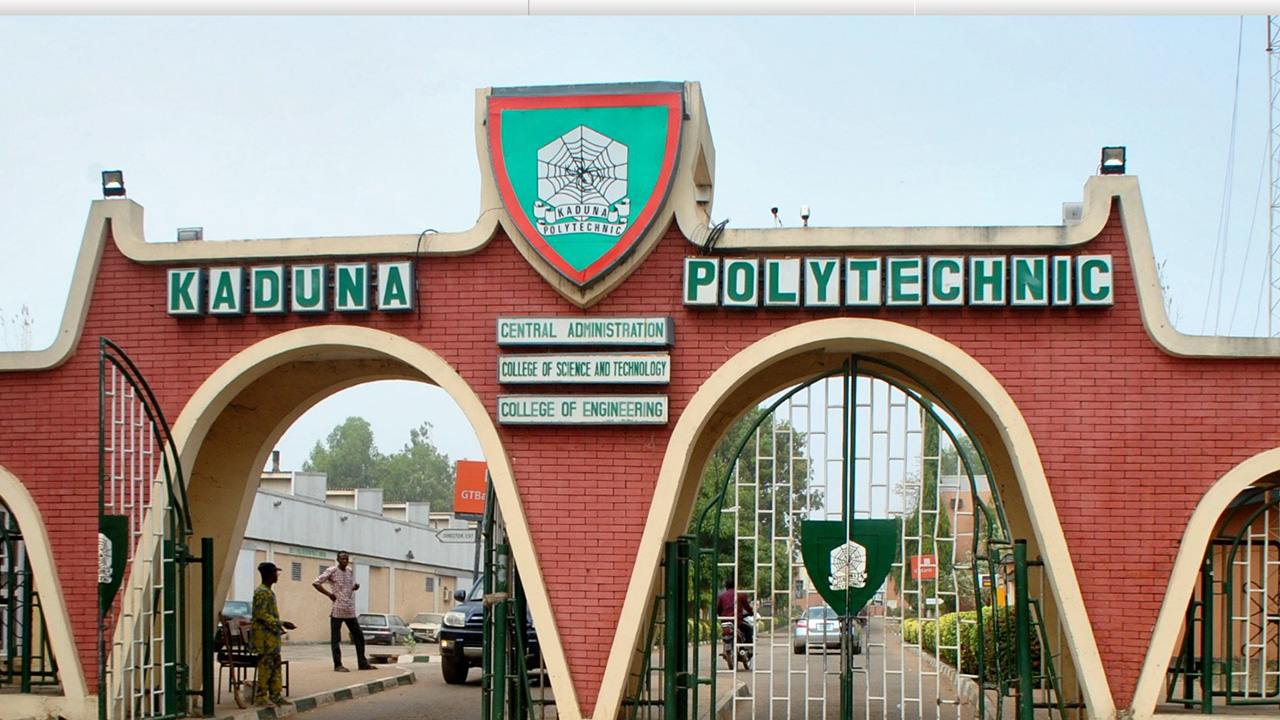
Kaduna Poly expels 85 students, suspends 8 others

By Sumayyah Auwal Usman

The management of Kaduna Polytechnic has expelled 85 students for their involvement in examination malpractice and suspended eight others. 

A statement issued on behalf of the Registrar, Dr Muhammad Sani Musa, said the decision to expel and suspend the affected students was reached at a meeting by the Academic Board held on 25th August 2021, thereby recommending different levels of punishment for the students, depending on the degree of involvement. 

The list includes forty-four (44) HND students and forty-one (41) ND students. Their expulsion was said to have been prompted by the approval of the report of the Academic Board at its extraordinary meeting held last week.  

The affected students have been asked to vacate the institution’s campuses immediately and hand over all polytechnic property in their custody to their respective heads of department.

See the list below:

Niger: Local hunters eliminate 47 bandits

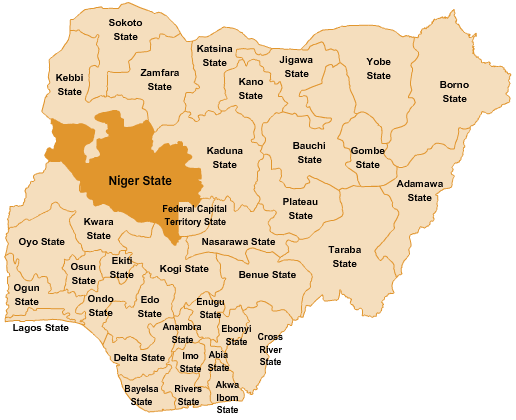
Media reports coming from Niger State in the north-central part of Nigeria have it that about 47 terrorists, also known as bandits, have on Wednesday been eliminated by “local hunters.”

The terrorists are notorious for unleashing terror on the communities in the Shiroro axis in Niger State.

The local hunters were said to have raided the hideous of the bandits in their large number in a riverside community that is located between Shiroro and Rafi Local Governments.

A police officer, who pleaded anonymity, confirmed the raid on the terrorists.

He was quoted by PRNigeria as saying, “I can tell you for a fact that the bandits met their waterloo. At least 47 of them were eliminated by the hunters who participated in the operation.”

Niger State suffers incessant attacks by bandits who kill innocent people and kidnap students in large numbers.

A recent incident of abduction in the state was the kidnap of over 80 Islamiyya students in a community called Tegina.

Many of them, however, recently regained freedom after spending many days in captivity.

Think! Don’t let social media destroy you and the nation

By AF Sesay

The internet’s primary role is to connect the world through an interconnection of devices. After many years of building, testing, deploying and repeating the process, we have reached an epoch wherein we have billions of humans living one click away from one another. What a fantastic feat!

Yet, the journey to a better world is far from what we envisioned. With the rise of Fake News and the acerbic toxicity of views and counter views on the internet, we are yet again at this crucial juncture: What do we do next to better the lot of humanity, and how can the internet help?

While I don’t boast of an answer to any of the two, I dare say the crux of the job is shifting the paradigm from the internet of believers to the internet of thinkers! Something like a ‘thinkernet’, you know!

The internet, while very transformational, paid little attention to re-education, which could have been a core mission. And with the realisation that it could be a veritable tool for making money, things took a worse turn. So we are here now: a world where ad sense determines what truth gets told and what gets suppressed, a world where influencers can share the most foolish things and get a million humans taking actions in the next second, a world where the most erudite are kept at the margins of conversations because the nature of their jobs leaves them with little time to establish and maintain massive followership on social media.

We all know something has to be done, but we are unsure what needs to be done.

One way I have always thought of is to leverage and massively scale technologies that make it easy to reward truth and suppress falsehood on the net. This is difficult, considering the thousand or more-year-old dialectics on what is true and what is false, who is right and who is wrong and blah blah blah.

I wouldn’t really want to go that path because it is likely the deepest rabbit hole humanity has ever dug. So what I will rather ask us to do is to venture on the path of classifying contents consumed on the internet from the least harmful to the most harmful. Harm, in this case, is anything that has the propensity to cause loss of human life, not as compensation for another loss or greater evil.

And this could first be applied to the news that gets shared and the ones that get suppressed. Just the way we decentralised news breaking and sharing through social media, it’s high time we decentralised news verification and suppression of harmful content through a combination of simple technologies like the effective use of spreadsheets and emerging technologies like Blockchain. We have to create means to identify and reward truth whilst suppressing fake news.

Closely related to this is seeing this as a behavioural issue and not completely a tech problem. Therefore, massive design of new materials and Curriculum aimed at rewarding truth and fighting fake news are necessary.

We have got to do this work together—all of us and right now.

AF Sesay is a writer based in Lagos. He can be contacted via amarasesay.amir@gmail.com.

Azare New Market: Appeal to Gov. Bala to construct roadway pavement

By Tajuddeen Ahmad Tijjani

Let me draw the attention of the listening Bauchi State governor, Senator Bala Muhammad, to the nail-biting hardships of Azare New Market, Katagum LGA, on the urgent need to construct rural roads in the said area for the economic development of the zone and beyond.

Azare is the Bauchi state’s second-largest city and is also the headquarters of the Katagum zone. It is bordered on the east by Damban LGA and Potiskum, Yobe state. On the south by Misau local government and Jama’are local government in the west; and on the north by Itas/Gadau LGA. All these towns rely heavily on the Azare market for their commercial activities. That’s why Azare economic viability is very significant, particularly in the state and northeast in general.

Remember that the former Central Market was destroyed by fire on June 18, 2018. This caused traders and business people to relocate to the new market built during the military administration of Theophilus Bamigboye. Though recently, the market was expanded, and new shops were erected with the donations made after the inferno of the old market. Unfortunately, this new market lacks a rural road that would facilitate the transfer of goods and farm produce from rural areas to markets with significant concentrations of demand.

Unfortunately, the fire that destroyed the ancient market spread due to a lack of access roads for fire engines. The lack of roadway pavement in the new market, God forbid, could exacerbate the situation. Also, the government should checkmate, as a matter of priority, new allocations of shop spaces by local government administration, particularly around the current access road, to avoid repeating previous mistakes.

The new market is situated off Kano road. However, lack of access road delays in conveying farm products and movement of people to acquire their daily demands. In the same vein, people find it very difficult, especially during the rainy seasons. Moreover, drainage and flooding cause severe hardships to the people. It looks like a pond, especially after rainfalls. 

Governor Bala has made infrastructural development a top priority without a doubt. This has transformed the narrative. Necessary infrastructures are essential for growth. As a result, we’re appealing to our state’s workaholic leader to come to the people’s rescue. Internal Revenue will perhaps increase due to this because the inflow of goods and services will be greater than before.

For Bauchi to become the envy of other states, good infrastructure must be put in place, which would, indeed, attract investors to inject their resources into the state. We’re all aware of how insecurity has drastically retarded development in the northeast. Thank God, Katagum and Bauchi are relatively peaceful, which made them a destination for economic activities. But, without good roads, the gains made, would be diminished.


Tajuddeen Ahmad Tijjani writes from Galadima Mahmoud Street, Kasuwar-Kaji Azare, Bauchi State.

The errors we call “skill”

By MA Iliasu

When the self-acclaimed experienced butcher of Malam Abubakar Imam’s famous tale, “Dan Hakin da ka Raina” in Magana Jari Ce, Anunu, aimed to manoeuvre the pagan who came to sell his bull, he thought he was outwitting a villager to his own gain. But when the pagan burst his bubble by returning the favour in the most brutal way possible, he realised karma had no menu.

However, beyond such simplistic arguments on karmic justice lies a cogent spill-over effect that people like Anunu, who are the very people in our contemporary societies and the ones this piece addresses, never care to understand. Superior logic has proved that from the time Anunu cheated the pagan, the probability of his coming back to the market narrows very small despite drawing the score. And from that day, he may never trust another trader in any market ever again. This means Anunu had ridden off a valuable trader for his cattle market. And equally important is the fact the more Anunus there are in the society, the more pagans who boycott markets and cultivate trust issues will exist. Unfortunately, the effect will be an interactional rigidity in which people lose confidence in one another, significantly hindering the flow of socioeconomic activities in any organised society. And that’s among the major threats we’re facing in our contemporary societies.

Recently I attended a training in which an expert was hired to teach a skill. At the first encounter, the primary concern of the host was that how trustworthy was the trainer. Because the last time they hosted a similar training, the trainer developed a method that would save high cost, to which they applauded, but to which they had also later come to cry. The man accumulated and embezzled what was saved at the very realisation of his ability to do so and disappeared. And when he was reached out for an explanation, he asked for the accounting evidence, which didn’t exist. So, he got away with it like Andy Dufresne did the prison warden in Shawshank Redemption.

The behaviour along such a pattern of thinking is bedevilling the core of our existence. The primary underlining concern is the rising population of people who grew up admiring, and therefore imitating the cunning in the accounting prowess of Mr Duffressne without realising the gravity of the factors that forced his hands into the action. And so they do it all the time, everywhere and in anything. Unprovoked and with an ignoble feeling of conquering expertise. From bankers who manoeuvre their books to launder money, real estate agents who double-sale plots of land, marketers who sell lower quality products, pharmacists who exploit monopoly of knowledge to overcharge patients, bricklayers and mechanics who drag small work into big, borrowers who run without repayment, hire-purchase and leasers who sabotage the asset intensionally, to even students who charge their parents higher school fees than the demands of the school authority.

More discouraging is the pace with which the behaviour is fastly growing and sadly veiled as a skill that shall be integrated into the conduct and norms of polite society. It’s devastating how an individual identified with an outstanding ability to plot an ignoble moral hazard can be in high demand. The intriguing dimension is that more people are becoming more interested in milking the last bit of everything they wish to exchange, regardless of the moral and legal rights to do so—courtesy of poverty of contentment, lack of good moral upbringing and basic fear of God.

The emerging bracket of youths is so obsessed with what Ibn Khaldoun called “an unnatural way of making a living”, possibly because the output of the natural ways are too slow and demanding of patience, hard work and endurance that they don’t have. And along with that rising collective behaviour, we’re being left at the mercy of a society in which nobody trusts anybody, largely because nobody is trustworthy. The negative aspect of which dilemma causes the death of confidence between individuals and organisations that riddles the conduct of every socio-economic endeavour. Consequently, it often perpetuates the groundwork of the crises that are assassinating the prospects of our major micro industries.

The mass media is jam-packed with reports of crime and unemployment. This has a strong correlation with how the youths demand wealth to come quickly. Therefore, they get methodically radicalised. Likewise, how the middle-aged are giving up hope, thus, resenting moral hazard. Or how the capital owners fear the behavioural infidelity, therefore, save their cash, and, finally, how the three components suffocate the economy and culminate into such an unfavourable avenue of investment. Many are retreating into the fear of market individuals like Anunu and organisational drivers like Andy Dufresne, even though the people may constitute the larger aspect that considers the same action, which rounds up the gravity of our comedy of errors.

The best way to reverse the situation is to reflect and reconsider. It’s beyond certain that if individuals do not understand the advanced consequences of their actions, mediocre moves and poorly-conceived individual actions will keep being mistaken for skills. And when they’re considered skills, they’re being rewarded. At the same time, the effect of reward is encouraging further action of similar magnitude. So indeed, the best solution is mitigating our individual actions. Only that way, we can have a stable ecosystem and social platforms that’ll enable prosperity.

MA Iliasu writes from Kano. And can be reached through his email: muhada102@gmail.com.