Month: August 2021

What Nigerian government should do about blasphemy

By Abdul-Hamid Abubakar Zubair

The ungovernability, which is crystal clear, toward the act of showing contempt and lack of reverence to sacred religious deity/deities is imminent and very alarming. If not seriously challenged and tackled by the constituted authorities, especially at the federal level, that may, unfortunately, aggravate severe tension even to the dogmatical secular democratic doctrine, believed to be a workable formula that has an answer to all national issues. 

It holds true, you like it or not, the fact that religion matters in Nigeria. Most people are firmly bound to one of the two major faiths, Islam or Christianity, and thus, it is a duty call for any person in power to uphold, respect, and support people’s various beliefs. The people have the right to practice their religion. Blasphemy is unacceptable and is punishable even according to national laws in the criminal codes as enshrined by both customary and Shariah laws. You can’t shift secularism to this place – at least, it is not yet the time.

Observing closely how cascades of blasphemous thoughtlessness and rashness have been unravelling in recent times, you can sense new dimensions and order of hidden treacherous agenda, purportedly insinuated by servile demonic elements. It is not by mere serendipity but a carefully thought out and planned memorandum.

In the North, there are more than four blasphemy suits filed in courts. The two trending cases include Yahaya Shariff Aminu, 22, a musician, and Umar Faruk, 16, both in Kano. The latter has been overturned and acquitted, and the former has been sent for a retrial by the Court of Appeal.

Another classic take-away example was the just concluded dialogue that features the controversial Shiite scholar, Abdul-Jabbar Nasiru Kabara, following his deliberate inciteful utterances and wrong interpretation and exegesis of Sunnatic traditions (Hadith), and after his request to the Kano State government to do justice and convene a physical dialogue with other Kano Islamic Clerics from the Salaf, Tijjaniya and Qadiriyya Sects. The aftermath of the conversation proved the bitter truth that was heavy and unfavourable to the eccentric Shiite cleric. 

I heard of a similar ordeal from Sokoto. A man allegedly made similar blasphemous utterances against the Prophet Muhammad (PBUH). However, we were supposed to be brainwashed by the excuse that he was suffering from temporal madness. Meanwhile, dementia was his alibi.

Taking a close look at these, one may ruminate over some questions and conclude that all these are not coincidental but planned.

Insecurity is a current social issue at hand. It has perturbed the entire nation. A lot of societal menaces are happening.  This trending problem of blasphemy coupled with insecurity will produce a severe stale. If it finds a place to stay, it will add salt to an injury, and the pain will be intolerably excruciating. 

There should be no room for apology for a deliberate blasphemous act. Anyone found guilty must be seriously punished and his actions thoroughly condemned. The same thing goes for all media outfits. Through that only, peace can prevail. 

Some personalities and deities are insurmountable, untouchable in major religions that should be demarcated by the power authorities and declared as a “no-go” zone. In strong terms, it should be stipulated that anything the Christians, Muslims, or any other religion recognised by the authority; within the Nigerian Province, which is considered alien or goes against the standard teachings – especially blasphemous utterances must be punishable. The government should get a grip on these with a strong and clenched fist.

The government should seize the day while it’s still dawn and make hay while the sun shines before things turned out of hand.

Abdul-Hamid Abubakar Zubair
Federal University Gashua, Nigeria.
E-mail: ibntaimiyya@fugashua.edu.ng
Phone no.: +2348138171001

Kashifu Inuwa’s two years at NITDA

By Adamu Usman Garko

It was not startlingly surprising when Dr Isa Ali Pantami, on one of his official sojourns to Mallam Kashifu Inuwa’s hometown, did a public eulogy of the NITDA Boss as one of the most inquisitive, determined, and honest persons he has effaced in his sojourn as a public figure. This encouraged the Honourable Minister to recommend Kashifu to the President as a befitting figure to head NITDA spearheading IT operations under the Ministry of Communications and Digital Economy. 

Kashifu has efficiently headed NITDA for two graceful years, and at this point, it is crucial that we retrospect on his strides borne out of his application of experiential know-how coupled with sterling leadership since his resumption to office. After graduating from the renowned Abubakar Tafawa Balewa University, Kashifu furthered to the Massachusetts Institute of Technology (MIT), a world-class institution famed for her vast repository of tech training and knowledge. 

After graduating cum laude with a master in IT Operations, Business Transformation and Solution Architecture, Kashifu proceeded to arm himself with professional certifications to deepen his technical expertise and broaden his capacity from Harvard University, the University of Cambridge, and IMD Business School. 

Asides from his stellar strides in the classroom, he has exemplified his technical expertise in public and private capacities including but not limited to the Central Bank of Nigeria (CBN), Galaxy Backbone, and IP Operations team, where he championed numerous projects aimed at helping the society at large. 

Hence, leading NITDA (National Information Technology Development Agency) in this graceful and glorious manner should be no subject of surprise. Still, a candid appraisal of his strides since the resumption of office is important to inspire other agency heads in the country about the prospects and potentials hidden in Nigeria as a whole, especially in the IT sector. 

In just two years of taking over from Dr Isa Ali Pantami, Kashifu Inuwa has made notable strides, especially in positioning the agency as an inextricable player in the IT sector of the country. Most recently, the agency, under Kashifu’s authority has kick-started capacity development programs on e-governance and digital infrastructure for executive members of all states in Nigeria and has begun the execution of this program in Kano state, Nigeria. 

Also, under the able leadership of Kashifu, the launch of the Nigerian National Public Key Infrastructure has seen the light of the day. In addition, the NITDA Strategic Road Map and Action Plan 2021–2024, which is in line with the digital economy policy and strategy for a digital Nigeria that was launched on the 20th anniversary of the agency, has also been on a high rise. 

In addition, the spike in the contribution of ICT to the nation’s gross GDP from 0.5% in 2001 to about 14% in 2020, which has paved the way for innovative creations in the sector, is all thanks to policies implemented by Kashifu’s office in conjunction with the Ministry of Communications and Digital Economy at large. In the same light, with programs like the Digital State Initiative, the National Adopted School For Smart Education (NASSE), among other programmes that have catered to the capacity development of the country’s young population, the Digital Nigeria dream keeps inching closer to actualisation. 

To augment the aforementioned contributions, the agency has continually distributed digital gadgets and equipment to the Nigerian populace and NGOs, which are inclusive and consistently equipped and funded digital economy centres countrywide. This has birthed pioneer sterling projects like creating a National Center for Artificial Intelligence and Robotics, the first of its kind in the country, to oversee the harness of the largess of potentials the AI industry can bring to the country. Also, The National Policy on Virtual Engagement in the Public Service has witnessed smooth execution.

It will be herculean to detail the strides of Mallam Kashifu Inuwa as the Chairman of the NITDA in just one article. However, as a loyal protĂ©gĂ© of Dr. Isa Ali Pantami, Mallam Kashifu has proven time, and over that quality leadership is not impossible with the right people in the right positions, which has positioned him as the subject recipient of numerous awards from various fronts. Most recently, The Northern Youth Council of Nigeria tagged him as the “Icon of Humanitarian Service,” an award of excellence as SDG Humanitarian Icon of Societal Transformation, the Blueprint Public Service Award, among others that testify to the excellence of Kashifu Inuwa. 

There is hope!


Adamu Usman Garko writes from the city of Gombe State.

Plateau: 8 suspects nabbed over killing of 3 women

By Muhammad Sabiu

Eight suspects in connection with the murder of three women in Rafin Bauna community in Bassa Local Government Area of Plateau State have been apprehended by Troops of the Special Task Force, Operation Safe Haven (OPSH)

The arrest was confirmed in a statement on Tuesday by the Media Officer of the task force, Maj. Ishaku Takwa, in a statement.

Recall that an incident occurred in which suspected gunmen raided a community, attacked three women on a farm, and instantly killed two and injured one, who later passed on.

In the statement, the army officer said, “Troops of OPSH this afternoon arrested 8 suspects in connection with the shooting of three women on a farm close to Rafin Bauna general area in Bassa.

“The troops earlier responded to a distress call and immediately mobilised to the scene and discovered 2 of the 3 women were shot dead on the spot, while one of the women sustained gunshot wounds.

“Unfortunately, the injured one later died while receiving treatment at the hospital.”

Isa Abba Adamu: the unsung hero

By Salisu Yusuf

Sunday, 8th of August, 2021 was a black day for the family of Malam Isah Abba Adamu, the BBC Hausa Service, its listeners, Kano people, the Hausa community in London, and the Hausa community globally over the sudden death of the Kano-born, renowned broadcaster, Malam Isa Abba Adamu. He was the first Black person to have headed the BBC Hausa Service. He was also the Executive Editor of BBC Africa Service.

Malam Abba Adamu has made an enormous contribution in the Hausa language policy formulations, which are policies put forward by ethnologists for language sustenance against language attrition (waning and death). For example, it’s a well-known fact that the Hausa Service has contributed a lot in the lexical modernisation of some new words to Hausa, especially the recent computer terminologies: kwamfuta, na’ura maikwakwalwa, megawati, etc.

Nowhere has late Isa contributed than in areas of translation. Millions of Hausa users will miss his voice, translation skills and interpretative nuance, especially from English news and reports to their exact Hausa versions.

Stations like BBC Hausa (in which Malam Isa was a figurehead and contributor) have attracted many non-Hausa speakers to news in Hausa. This has contributed to the increase in the Hausa speech community. Ethnologue estimated that over 47 million people now use the Hausa language as second language users. Language prestige is another factor in language development because a language attracts more users worldwide. The Hausa language enjoys high patronage as one of the most widely used mediums in the world. People such as the late Malam Isa are among the factors responsible for the prevalent use of the language in Nigeria and all over the world, where it’s used for literacy and information dissemination.

Lastly, the BBC Hausa is also involved in Hausa corpus planning. This involved creating a standard variety of language in spelling and grammar. BBC Hausa uses the Kano dialect in its broadcasts as it’s considered more standard even though with some modifications.

Late Malam Isa Abba Adamu will be remembered for his sonorous voice and more for his catchphrase during broadcasts: “Ana sauraron Sashen Hausa na BBC ne daga tsakiyar London, ni kuma nine Isa Abba Adamu.”

May the Lord in His infinite mercy forgive Malam Isa Abba Adamu and grant him Jannatul Firdaus, amin.

Salisu Yusuf writes from Katsina. He can be contacted via salisuyusuf111@gmail.com.

Human rights in Islam

By Adamu Sani (Tj Chinade)

It appears that some people think of human rights was only theorised by the Western world and scholars. However, this perception proves inaccurate because Islam is the ultimate religion that left behind nothing in confusion. To understand this, Almighty Allah says, “…..We have neglected nothing in the Book (Glorious Qur’an).” (Qur’an 6:38). Given this verse, most of what the western people theorised has its roots in Islam. Meaning that if someone searches deeply into the topic, someone may easily trace its origin from the Glorious Qur’an and Hadith of the Prophet. Therefore, human rights have been discussed and recognised by some organisations as detailed in Islam, since Almighty Allah is the Creator of the universe.

What differentiates between human rights in Islam and the western perspectives is that Almighty Allah and all laws that give rights in Islam are derived from the primary sources. In contrast, in western perspectives, it is man-made laws, and the leaders provide the rights to their respective people of their States or Nations. It should be clear that human beings are all the same in the sight of Allah. The rights and privileges that Allah has granted to man as a human being will be enjoyed by all individuals, regardless of colour, religion, geographical location, nationality, among others. All the rights should be recognised and respected by every Muslim. The following are some of these rights.

1. Right to Life

The first and foremost fundamental right is the right to live and respect human life. The Glorious Qur’an states: “If anyone killed a person, not in retaliation of murder, or spread mischief in the land, it would be as if he killed all mankind…” (Qur’an 5:32). According to this verse, the punishment of taking life in retaliation for murder or spreading mischief on the earth can be decided only by a proper and competent court of law. In addition, if there is any war with any nation or country, it can be determined only by a properly established government. In whatever case, no human being has any right by itself to take human life in retaliation or for causing mischief on this Earth. In another place, Almighty Allah has condemned the killing of any soul without a reliable measure as He is saying;  “… and kill not anyone whom Allah has forbidden, except for a just cause (according to Islamic Law)…” (Qur’an 6:151).

2. Respect for the Chastity of Women.

In Islam, the chastity of women must be respected and protected under all circumstances, everywhere, regardless of her religion or even if she has no faith. A Muslim is forbidden to be in any illegal relationship with a woman. Almighty Allah emphasises this in the Glorious Qur’an, thus: “And come not near to the unlawful sexual intercourse. Verily it is Fahishah (i.e. anything that transgresses its limits)” (Qur’an 17:31).

3. Right to Basic Standard of Life.

The Glorious Qur’an enjoins upon the Muslims about the economic right. Allah says: “And in their properties, there was the right of the beggar and the Mahrum (the poor who does not ask the others)”. Qur’an 51:19.

4.Right to Freedom.

Islam has clearly and categorically forbidden the barbaric practice of enslaving a free man or selling him into slavery. Because of this, the unequivocal statement of the Prophet reads, “There are three categories of people against whom I shall by myself be a plaintiff on the Day of judgement. On this three, one who enslaves a free man, then sell him and eat this money”.

5. Right to Justice

It is also the most important and valuable right Islam has given to man as a human being. Almighty Allah calls upon humankind to respect justice in many places in the Glorious Qur’an. One of these places is where Allah says: “O you Who believed! Stand out firmly for Allah and be just witnesses and let not the enmity and hatred of others make you avoid justice. Be just: that is nearer to piety, and fear Allah. Verily Allah is Wel-Acquainted with what you do.” (Qur’an, 5:8).

The above verse clarifies that Muslims have to be just not only with ordinary human beings but even with their enemies. It is noteworthy that justice in Islam is not limited to Muslims but all people regardless of their race, colour, tribe, nation or religion – the entire humanity. This indicates the boundless mercies of Almighty Allah to his creators.

6. Equality of Human Being

It should be clear that Islam not only recognises and confers absolute equality between men irrespective of any colour, race, or nationality but makes it an essential and significant principle and a reality. To understand this, Almighty Allah says: “O mankind! We have created you from male and female and made you into nations and tribes that you may know one another. Verily the Honourable of you with Allah is that (believer) Who has Taqwa (Qur’an, 49:13).

The above verse suggests that the division of human beings into nations, races, tribes, and group is for the sake of distinction so that people of one tribe or group may easily recognise their partner once they meet. This further indicates that the superiority of one man over the other is only based on one’s faith, purity of character and high morals, not based on colour, nation, tribe and language.

7.Right to Freedom of Expression

Islam also gave human beings the right to freedom of speech, but with a limitation, this can be seen in one of the Hadith of the Prophet reads: “Say good, or be silent” This Hadith clearly shun away the spreading of fake news and hate speech.

By 

Adamu Sani (Tj Chinade)

07030045189

adamusani3828@gmail.com

After The Daily Reality’s article, Netflix Naija considers Kannywood filmmakers

By Muhammadu Sabiu

Barely thirty hours after The Daily Reality online newspaper published an article on the need to include Kannywood filmmakers in the Netflix Naija written by one of its editors, Muhsin Ibrahim, the streaming service has finally considered the adjuration made in the said article.

Muhsin Ibrahim, a PhD student at the University of Cologne, Germany and a teacher at the same institution, wrote an article titled “Dear Netflix Naija, there are films and filmmakers in northern Nigeria.” It was a reminder to the streaming service that Nigeria is of different cultures and religions. Therefore, according to him, it should not be treated in such a way that only films from a section of the country would be included in the streaming giant.

“Nigeria’s diversity cuts across many things, chiefly cultures, ethnicities, religions and regions. […] Due to these complexities, the country is a house to two significant film industries—Kannywood and Nollywood—with many smaller ones operating under these brands,” Ibrahim wrote.

Making his plea on behalf of the Kannywood filmmakers, the PhD candidate added, “I am not an agent of division, not at all. I am, instead, an advocate of fairness and inclusion of all, regardless of their culture, ethnicity, region, religion, among other diversities. Therefore, northern Nigerian filmmakers and their films should equally be aboard the ship Netflix captains in Nigeria.”

What were Kannywood filmmakers’ reactions?

A few hours after this newspaper published the article, Falalu A. Dorayi, a famous Kannywood member, took the entire article’s screenshots to his Instagram account, with the caption“A very good write up! Thank you very much for speaking on our behalf. @muhsin2008 Ibrahim”. The screenshots generated about 2.3k likes and over a hundred comments.

Also, Ali Nuhu, another prominent member of the Kannywood film industry, posted screenshots of the whole article with the same caption, under which several other members of the industry commented, including this:

@rahamasadau: “Hmmm, I wish I can [sic] add to this article…🤔👀”.

Acceptance of the Adjuration by Netflix Naija

Confirming the acceptance of the adjuration made in the article, Mr Ibrahim wrote on Facebook, “Sequel to the publication of my article on The Daily Reality last Saturday, Netflix Naija contacted a Kannywood director whose work they ignored for nearly a year. Thus, we shall soon watch a Kannywood production on Netflix. Nothing is more delightful to a budding writer.

“My informant, a Kannywood heavyweight, expressed his happiness, adding that “see the impact of writing”! He doesn’t know that I am probably happier. The Daily Reality is here to make a difference.

“May Allah help us, bring back peace to our region and country at large, amin.”

Kannywood, a predominantly Hausa-Muslim, Kano-based film industry, produces movies mainly in the Hausa language. The cinema has been facing tough challenges that revolve around its members’ handling of religion, culture and the likes.

Lionel Andrés Messi: the end of an era

By Abdulrazak Iliyasu Sansani

As the most followed game in the world, football has moments that its fans don’t envision. Sometimes they do but keenly wish it never comes to pass. For Football Club Barcelona fanatics, that day came three days ago. 

For quite some years, Messi has been embroiled in a crisis with the Bartomeu led board. So naturally, this has affected the Argentine, who has come to identify and be identified with everything Barcelona. For someone who came as a child with growth deficiency, signed on a napkin, only to defy all odds, and cement his status as one of the greatest players of all time, arguably, the greatest player of all time. 

I first got to watch Messi play in FIFA under 20 World Cup, Netherland 2005, where he went on to score two penalties in the final and win the Cup against my dear country, Nigeria. From there, I knew a generational talent had emerged. Still, little did I know that that young man from Rosario would go on to win all competitions he has contested, except the FIFA World Cup, which he could still win in a trophy-laden career that has made only the great Brazilian utility player, Dani Alves to have won more titles in the history of the round leather game. 

There is every reason not to doubt this phenomenal player. If I ever had any doubts about the magical Messi, all were quelled when on March 10th 2007, aged just 19-years-old, the youngster was the star of the show in El Clasico, outshining his illustrious teammates Samuel Eto’o and Ronaldinho, to win a vital point for his team by scoring a hat-trick in club football most prominent feature, against the greatest football club in history, Real Madrid. On that day, for me, Messi proved beyond any iota of doubt that he would be one of the greats. 

With everything going on well from that point: with all his abundant talent, the right atmosphere, and everything in place. Still, Lionel Messi’s transformation from football prodigy to become one of the few players that deserve a place in the debate of the greatest players of all time, with so many claiming he is the outright GOAT, is impressive. Irrespective of your opinion in this debate: there are so many facts that concur with such views. 

Rarely has the world seen a better all-round football player who could function as a midfielder as well as a striker flawlessly. A player who often competes with the most clinical strikers for golden boots while struggling it out with the best midfield maestros for the most assists in so many seasons. Lionel Messi is out of this world. 

While you might not support him, you cannot deny the fact that what Messi does on the pitch, season in season out, for more than a decade, at the highest level, is the dream of every young footballer from my remote village of Sansani, to Jalingo, Bali, Arochukwu,  Ogbomosho, Freetown, Lome, London, Paris, New Jersey, and to all the nooks and crannies of the world. 

The home training I got abhor hatred. It absolutely doesn’t permit it. This has influenced all my activities. This is why some would be astonished to know that I am a Real Madrid football fan and writing all this for the greatest player of our biggest rivals, FC Barcelona. But I cannot hate greatness. If any player has made the difference for Barcelona in El Clasico, it is Leo. This had often been the difference between success and failure for Barcelona and Real Madrid too. 

To some, it should be a significant factor in making me antagonistic towards anything Messi. But I don’t think so. Of course, I cannot hate the defence-splitting passes, the vision, the offensive nous of bringing something out of nothing, the breathtaking dribbling, which once produced a physics-defying goal. No, I don’t do my things this way. 

I cherish greatness; I bow before the best in awe; I celebrate the mercurial Messi knowing this genius has entertained the football world to stupor. Wherever he goes, I wish him the very best. All things being equal, whichever club he goes will naturally have the edge to achieve their lofty ambitions. 

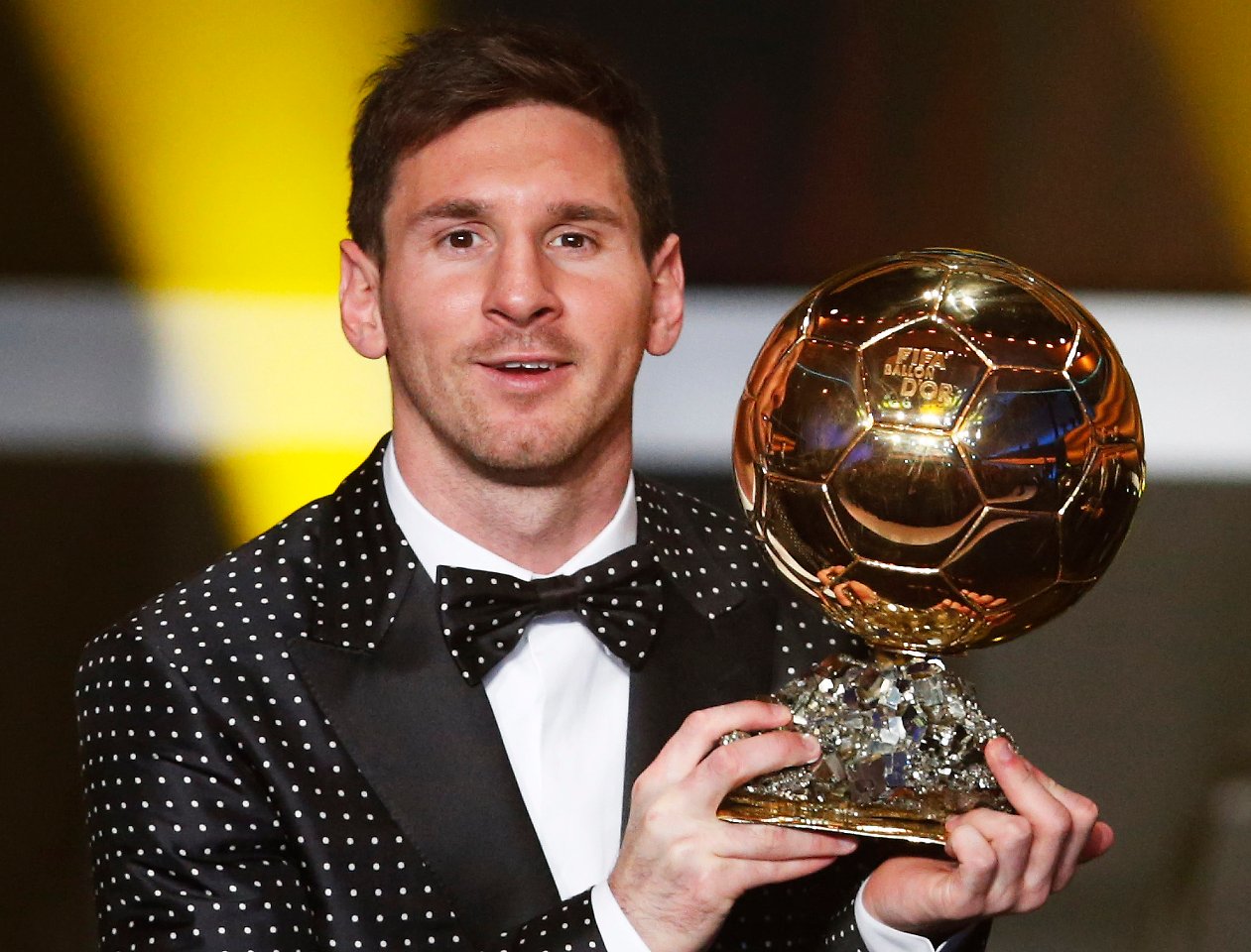
For those who will always view Messi’s greatness through warped lenses, I say to them don’t waste your precious time, the six-time Ballon d’Or winner has nothing to prove in this beautiful game that he has already broken almost every record breakable and set new ones, which for want of space I won’t list them here. However, they are well known by football supporters worldwide. 

Yes, he can’t break all the records; none can. But, of course, you are allowed to continue to raise the bar for him, and this football living legend will have a little problem proving you wrong while effortlessly doing what he loves best, playing football and winning trophies. 

Abdulrazak Iliyasu Sansani, a Real Madrid fan, wrote from Jalingo, Taraba State. He can be reached via abdulrazaksansani93@gmail.com.
Niger State confirms abduction of commissioner for information

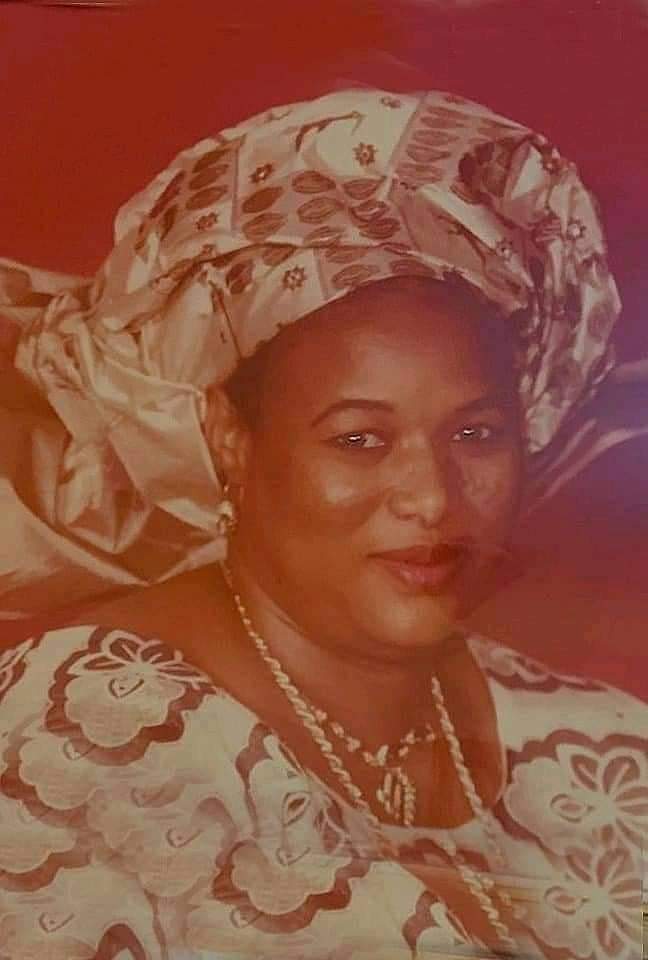
Niger State Government has confirmed the kidnap of the Commissioner for Information, Mohammed Sani Idris.

The Commissioner was said to have been kidnaped by bandits at about one o’clock in the early hours of today from his home at Baban Tunga village in Tafa local government of the State.

Security agencies are however already on the trail of the bandits to hoping to apprehend them.

Mary Noel-Berje
Chief Press Secretary
to the Governor of Niger State.

Pantami: Should we worry about the current situation or the Minister’s past?

By Bilyaminu Abdulmumin

Perspective is what makes any matter arising be two way. Hiding behind this aegis, everyone will prefer to go with the view that suits them. This is similar to what I learned from a Nigerian saying, mind the message, not the messenger. Those who the message favours would go with it; otherwise, they would instead focus on the messenger.

Similar to this phenomenon in court proceedings is the aspects of either substance to the case or technicalities. So, all evidence would be presented in a case; you will think that’s the end for the accused, only for him to turn around and rely on technicalities. 

Before the historic 2015 general election, the then ruling party, PDP, sought to cling to General Muhammadu Buhari’s WAEC certificate. The attempt was to take on the person of Buhari instead of what he stood for, but it failed. I doubt he had written the exam, but he possibly rode on the back of official consent to progress. So the allegations could be valid, just like the claims he stood for. It depends on what favours who.

However, the Tsunami of change at the time was too strong to allow taking on the Buhari’s past. This is the kind of force required to douse the rising dust against Dr Ali Isa Pantami, the Communication and Digital Economy minister.

There are emerging signs of commitments from the Minister Pantami to revamp the sector. It is easy to understand how this will go a long way to better the nation’s insecurity.

The abuse of SIM cards in Nigeria has been very rampant, lamented by many. Bandits increasingly go on rampage, kidnapping and negotiating for ransoms undetected. Getting the SIM in Nigeria is as easy as anything effortless. Therefore, heinous activities by the underworld men continue in perpetuity. So the Minister wants to bring sanity to the ministry.

For auditing purposes, a directive was issued to halt the sale, activation, and registration of new SIM cards on December 9, 2020. Without reference to any conspiracy theories, those who are not happy with the development instead chose to descend on the Minister’s previous affiliations and sympathies. The views that the Minister reportedly renounced.

In a desperate attempt to propagate this interest, to say the least, one news media ended up undoing itself by displaying timid journalism prowess in its inability to differentiate truth from myth. 

This media published the famous video of fierce debate between Dr Pantami and Muhammad Yusuf, using it as evidence for the latter’s terrorism tendency. If there is any evidence that could absolve Pantami from what they claim, it is that debate, not what the Pantami distractors want us to understand. However, we can still learn a lesson from the development.

Dr Pantami, a rare gem in the north, an authority on both Islamic and secular education, would display the human sign (weakness) by renouncing the views he held earlier in his life. It is an excellent reason to keep on any idea between iron fist and kid-glove; it is religiously and politically wise. A similar issue is currently hunting Governor Nasir El-Rufa’i.

A video recently shared by 21st-century chronicles El-Rufa’i taking full advantage of insecurity during the Jonathan administration to score points for himself and his party.  El-Rufa’i criticised everything about insecurity in the video that he is not doing today. No regard to the reasons he gave as to why he has changed his decision.

The current standoff between Pantami and his distractors is an attempt to look beyond the effort being made in the country’s communication sector. But as for those calling for secured Nigeria, let the audit for SIM subscribers and vision for the country’s database (linking the NIM and upcoming BVN) continues.

Bilyamin Abdulmumin is a Chemical engineering PhD student at Ahmadu Bello University, Zaria. He can be reached via bilal4riid13@gmail.com.