Month: August 2021

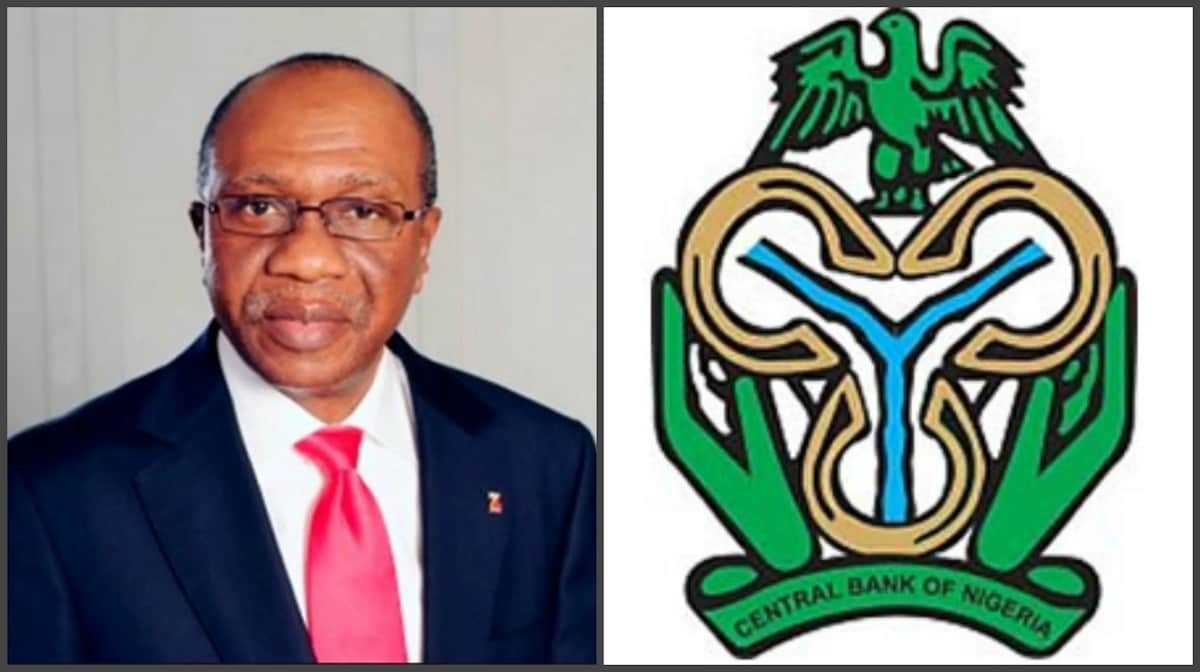
CBN abandons non-interest loan facility for Nigerian Muslims

By Muhammad Abdurrahman

Despite millions of applications by Nigerian Muslims for the Central Bank of Nigeria’s interest-free interventions, the apex bank decides to discard this critical project.

A year ago, on July 24, 2020, the Central Bank of Nigeria (CBN) unveiled series of guidelines for the non-interest financial interventions under its Agri-Business, Small and Medium Enterprise Investment Scheme (AGSMEIS), Micro, Small and Medium Enterprises Development Fund (MSMEDF), the Accelerated Agricultural Development Scheme (AADS) and host of others. Millions of Nigerians, especially Muslims guided by the sermons of prominent clerics and the assistance of many Muslim IT specialists and academics, applied for these CBN’s interventions.

Nevertheless, more than a year later, there has not been any information or explanation from the CBN regarding these crucial programmes. As a result, Nigerians are now left only with speculations, which are gradually gaining ground.

Many people alleged that some interests within the bank and the country’s financial architecture sabotage the interventions, with all the consequences on the Federal Government’s acclaimed concern for integrated development.

In a statement signed by the National Secretary-General of the Da’awah Coordination Council of Nigeria (DCCN), Engr Ahmad M.Y. Jumba said, “It will be a great disservice for the Federal Government, which has been widely applauded for this milestone, to allow this intervention to end up in the dustbin of calculatingly sabotaged policies and programmes. If the CBN is serious, why then the delay in implementation even as it continues to implement other programmes?

“The Da’awah council calls on the authorities concerned to expedite action and make those interventions immediately available, accessible and affordable. At a time when many Nigerians are suffering from extreme poverty and hunger, when small businesses are crumbling due to lack of capital, when millions of youth are roaming the streets with no jobs and no access to start-ups; at this time of hyperinflation amidst dwindling incomes, we find it suicidal for the CBN to remain conspicuously silent about a programme that has all it takes to support Nigerians get out of poverty and put our dear nation on the path of inclusive growth and sustainable development,” Jumba lamented.

Some applicants contacted by The Daily Reality cried out that as is the norm for Muslim faithful, they had resorted to prayers and anticipation for God’s intervention. On this note, Jumba also added that:

“It is our hope that the Federal Government will fulfil its promise by directing the CBN to immediately release the modalities for accessing those interventions in the shortest possible time.

“We will call on all religious leaders, Imams, in particular, to use their pulpits and deliver QUNUT against any person who is deliberately engaged in sabotaging the interventions,” Jumba concluded.
DSS disrupts Saudi Arabia’s job interview in Abuja, disperses doctors, nabs journalist

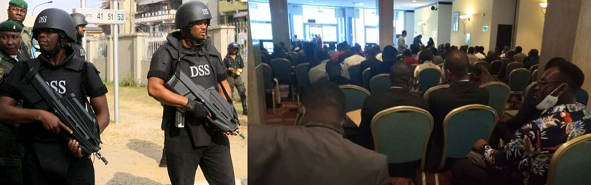
Men of the Department of State Services Thursday stormed Sheraton Hotels in Abuja, where the Saudi Ministry of Health was interviewing doctors for recruitment.

The DSS operatives arrived at the interview venue, dispersed the medical doctors and arrested Marcus Fatunde, a journalist that works with the International Centre for Investigative Reporting.

However, the journalist was later released, and the interview exercise has been suspended.

Most of the doctors at the interview venue were either unemployed or poorly paid.

Doctors in Nigeria have on several occasions embarked upon industrial action due to bad working conditions and underpayment.

Elitism and the future of Nigerian masses

By Salisu Yusuf

Saturday, the 21st of August, 2021, marks a black day in our march towards achieving social equilibrium among Nigeria’s two social classes: the poor and the elites. The picture on social and conventional media of President Buhari, former President Jonathan, Atiku Abubakar, Femi Fani-Kayode, etc., dining, laughing, exchanging banter, posing for the camera at Bichi speaks volumes on the future of the masses in Nigeria.

On the one hand, these men would quarrel, argue and set their followers against each other just to win elections. But, on the other hand, they shower elitist solidarity to one another when anyone in the circle is celebrating or mourning. Alas, it’s the poor who’s socially excluded even though it’s through him they rode to power. 

While the glitz and glamour were going on at Bichi and Aso Villa, in Batsari, Danmusa and many palaces, people are running for their lives; some are bereaving the dead ones. Moreover, many are abducted by bandits. For example, over 150 Islamiyya students from Attagina (Tegina) in Niger State were, for months, in captivity. Six died, including a three-year-old boy. What do you think if these children belong to the upper class? It’s high time our politicians show class, empathy and maturity.

Today, Nigeria represents every aspect of George Orwell’s Animal Farm. “All animals are equal, but some animals are more equal than others,” says the satiric work! Clover, one of the most loyal and hardworking characters, symbolises the Nigerian poor. For the poor is the only symbol of loyalty and toil to the Nigerian state like Clover. Clover’s realisation toward the end of the novel of betrayal of the so-called revolution depicts the current sad reality:” if she herself had any picture of the future, it had been a society of animals set free from hunger and the whips, all equal, each working according to his capacity, the strong protecting the weak.” 

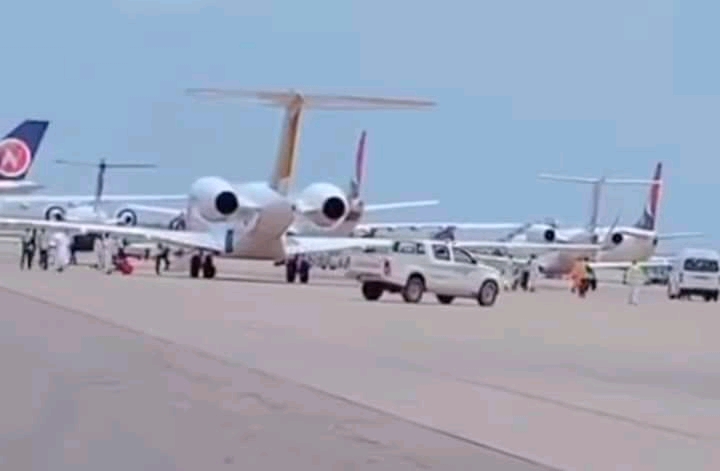
Photos of the number of jets grounded at Aminu Kano International Airport on social media depicts the sad reality. On the one hand, it reveals the massive gap between the elites and the poor. But, on the other hand, it reveals the security situation in the country and why our elites are reluctant to address it; they travel on planes, we travel by road, where kidnappers set up roadblocks. 

From the wedding scene, receptions, the phones distributed, to Abuja where the bride is conveyed, the glamour exhibited reflects how far we’ve regressed to the version of 18th-century capitalist Britain and its attendant ‘Enclosure System’. Oliver Goldsmith sums up our predicament in his famous ‘The Deserted Village’ when he says, ” to see profusion one cannot share, to see ten thousand baneful arts combined.. to pamper luxury and thin mankind.” 

Today, there are designated federal parastatals and ministries such as Petroleum, Finance, CBN, Federal Inland Revenue, etc., where the children of the poor can’t work; for them, these covetous places are uncharted territories. They’re meant for the rich.

Today, our leaders are attributed with everything elitist and why elitism represents. One salient legacy our man will be remembered is his earnest response to elites’ birthdays. They’re the hallmarks of elitism because they’re the only group who celebrate it. However, a poor isn’t after birthdays; he contends with his security and daily bread in a hostile socio-economic environment. Thus, he neither gets the bread nor feels secured; he’s barred from farming by a group that catches him and demands a ransom from his low-income family members who are too hungry to pay.

Sadly, the so-called ardent supporters couldn’t differentiate between sad reality and fantasy. Those who sometimes cried in the past, when we were in the new normal, can’t cry now when the new not normal sets in. We’re besieged from every angle of our home. The attack on the Nigerian Defence Academy (NDA) this week is the last straw…the definition of Nigeria and what it symbolises: chaos.

The government has so far mastered the art of rhetoric. They can rhetorically speak in the language the criminals understand; but can’t speak in the language the Talakawa understand: that provides the basic social services.

Never in the history of politics in Nigeria has a political figure garnered so much goodwill and solidarity from the poor like President Buhari. But, alas, the goodwill and the solidarity aren’t reciprocated. A conscientious man can’t sleep soundly when his subjects are daily hunted like dogs. Those poor masses who toil and sweat… 

As for now, the hope of the poor is so slim, for hunger, bandits, and elites besiege him.

Salisu Yusuf writes from Katsina. He can be reached via salisuyusuf111@gmail.com.

Social media users celebrate 7th anniversary of World Hausa Day

By Muhammad Sabiu

The Hausa-speaking community on social media, especially Facebook and Twitter, is today celebrating World Hausa Day for the seventh time.

However, Nigeria’s Twitter ban early this year has reduced much of the day’s celebration on the microblogging site.

The day was first introduced and celebrated in 2015, courtesy of concerned social media users such as Jamila Kabiru Fagge, Abdulbaki Jari, Bashir Ahmad, Salihu Tanko Yakasai, Faisal Abdullahi, Ila Bappa, Maryam Ado, others. The objective was to promote the Hausa language, its development and the challenges it faces as one of the major languages in West Africa.

The day allows Hausa users to come up and post witty Hausa sayings and make corrections as to how the language is used in conformity with its orthographical rules.

Hausa is one of the most spoken languages in Africa. It is spoken in about 30 African countries, with over 100 million speakers.

The language gathers momentum each day as several renowned media organisations broadcast in it. For example, media houses like the BBC, VOA, DW, Radio France International and the like broadcast in the Hausa language.

However, some social media users lament some challenges that the Hausa language and its people face today.

For example, Nurudeen Dauda wrote the following in his article: “Our people almost regarded begging as [a] profession. All well-meaning Hausas should and or must make [a] serious effort towards discouraging our people from begging. After all, we are not the only people suffering from poverty in Nigeria. It is among all!”

Hushpuppi: IGP receives panel report on DCP Kyari

By Ishaka Mohammed

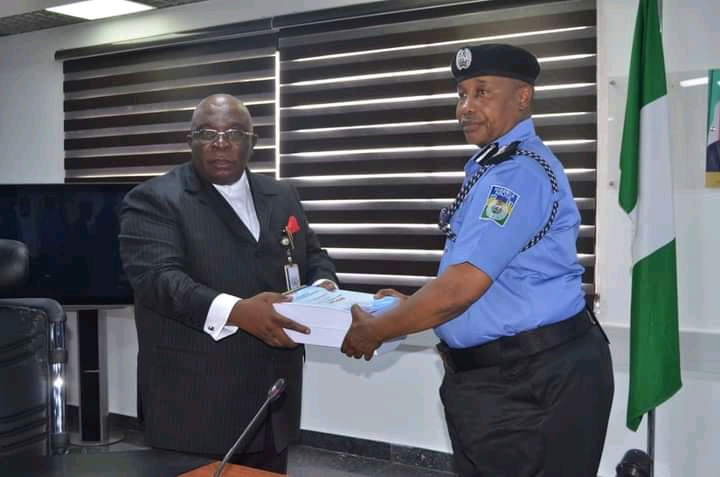
The Inspector-General of Police, Usman Alkali Baba, has received the NPF Special Investigation Panel (SIP) report on the alleged indictment of DCP Abba Kyari. 

In a statement signed by the public relations officer of the Nigerian Police Force, CP Frank Mba, the IGP received the report on Thursday, August 26, 2021.

The IGP commended the panel and assured the general public that appropriate actions would be taken after carefully reviewing the report. “[IGP] reiterated as always the commitment of the Force to justice for all,” the statement reads.

According to the chairman of the panel, DIG Joseph Egbunike, “The report presented contained the case file of the probe, evidences and findings as well as testimonies from DCP Abba Kyari and other persons and groups linked to the matter.”

Recall that the panel was inaugurated on August 2, 2021, to probe the alleged indictment of DCP Abba Kyari by the American Federal Bureau of Investigation (FBI). The case centres on Mr Kyari’s involvement in a multimillion-dollar transnational fraud involving Ramon Abbas, aka “Hushpuppi”, who is currently in the custody of the US authorities.

ISWAP suffers heavy casualty as 43 members die in gun duel with troops

By Muhammad Sabiu

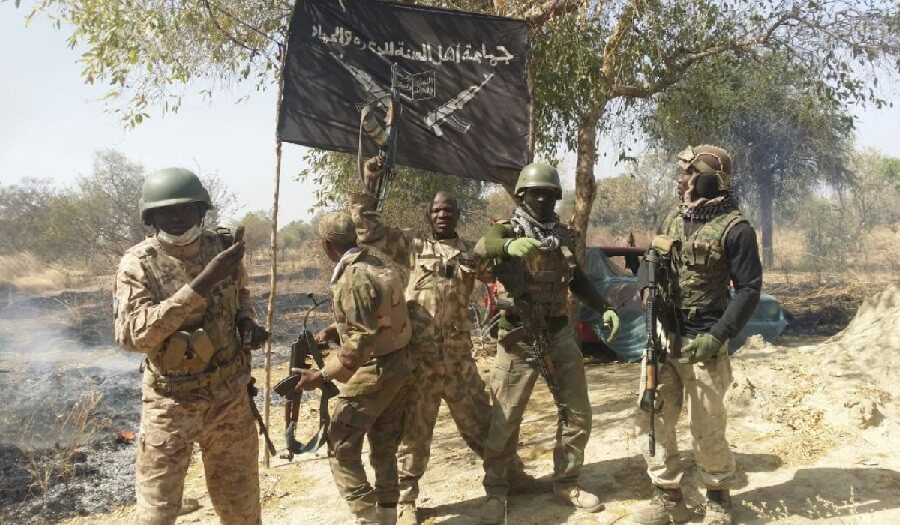
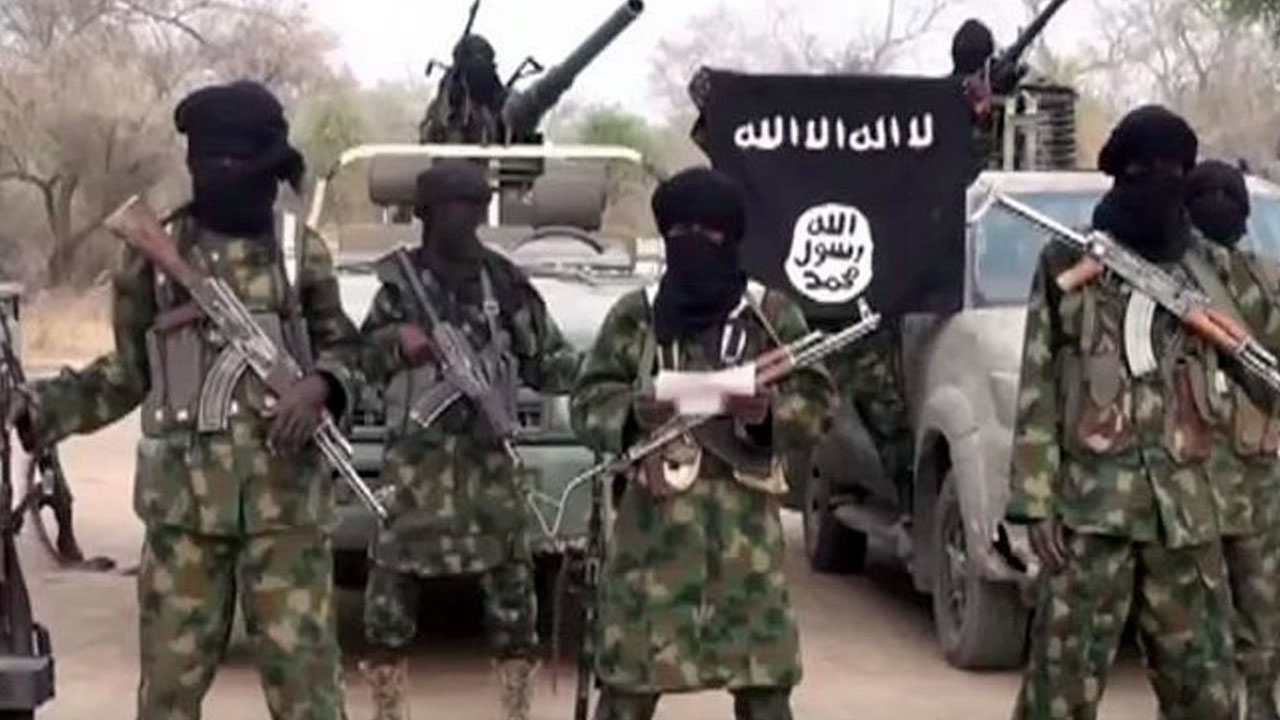
The ISWAP terror group in the northeastern part of Nigeria has suffered a heavy casualty on Wednesday as at least 43 of its members were killed in a gun duel with troops of the Multinational Joint Task Force (MNJTF).

Unfortunately, a military official said that seven soldiers also lost their lives during the battle.

Sources in the know of the incident stated that the troops came under a heavy attack by members of the terror group in Diffa province of Niger Republic.

A spokesman of the joint task force, Colonel Mohammed Dole, praised the soldiers for preventing the insurgents from attacking them.

The colonel, in a statement, said, “Troops of the Sector deployed in Baroua came under heavy attack by suspected BHT/ISWAP criminals in the small hours of Wednesday 25 Aug. 2021.”

“At the end of the encounter, a total of Forty-Three (43) dead bodies of BHT/ISWAP insurgents were scattered around the engagement areas.”

Colonel Dole also disclosed that an unnamed leader of the terrorists was captured alive. 

He added that a “large cache of arms, ammunitions were recovered, and four enemy gun trucks were destroyed.”

Kaduna signs MOU with NNPC and GACN on gas utilisation and expansion

By Sumayyah Auwal Ishaq

The Kaduna State Government, under the leadership of Governor Nasir El-Rufa’i, has signed a memorandum of understanding (MoU) on gas utilisation and expansion with the Nigerian National Petroleum Corporation (NNPC) and the Gas Aggregation Company of Nigeria (GACN).

During the signing ceremony today in Kaduna, the governor said the MoU has brought nearer the availability of a significant additional energy source for businesses and residents in Kaduna State.

“For the Kaduna State Government, this project is a welcome boost to our investment and job creation strategy. It will create jobs and provide skills for artisans who will work on the gas pipelines and associated infrastructure. Beyond that, this project will power the industries that have responded with enthusiasm to our investment promotion campaign,” El-Rufai said.

On his part, the General Managing Director, NNPC, Mele Kyari, said the management of NNPC would make sure the partnership work. He also commended the governor for his excellent leadership skills.

Matawalle advises FG to declare state of emergency on security

By Muhammad Sabiu

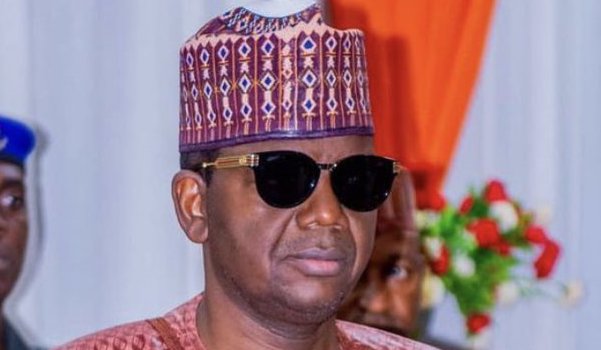
The governor of Zamfara State, Muhammad Bello Matawalle, has advised the Federal Government to declare a state of emergency on security.

Mr Matawalle made the recommendation when he hosted Ali Janga, the Assistant Inspector-General of Police, in charge of Zamfara, Sokoto and Kebbi on Wednesday.

The governor also expressed his concern over the incessant attacks of bandits on communities in the northwestern part of the country, which, according to him, are what call for the declaration of a state of emergency on security.

A statement made available by Zailani Bappa, Special Adviser, Public Enlightenment, Media and Communications, indicates that the governor said: “No one feels safe anymore, and the only way to return the country on the path of sanity is to act out of the box.”

He also praised the federal government and security personnel for their diligence in the fight against killings in the region.

Nevertheless, he said, “extra effort is required to contain the growing security problems that are mounting by the day.

“The problem in Zamfara State is quite unique from those in other places and therefore require very careful and constructive solutions to control it.”

The state has, over the years, suffered killings and kidnappings, which lead to the death and displacement of countless people.

Many insurgents killed as Boko Haram, ISWAP battle each other

By Muhammadu Sabiu

In what would be tagged as “tremendous success” in the fight against insurgency in the northeastern part of Nigeria, members of the two terrorist groups operating in the region, Boko Haram and ISWAP, have engaged in a deadly battle, which left many dead.

The incident occurred in northern Abadam, Borno State, last weekend (Sunday, August 22, 2021), when some members of Boko Haram, who attempted to surrender, came under a heavy attack by irate members of the ISWAP in the Dumbawa community.

Angered by the decision of Boko Haram members to surrender to Nigerian troops, the leadership of the ISWAP “placed a death sentence on any fleeing member in the Lake Chad axis,” an intelligence source in the know of incident disclosed.

PRNigeria quoted the source as saying, “The deadly attack was coordinated by one Abba-Kaka, a self-acclaimed ISWAP Governor of Tumbumma, Commanding Marte, Abadam, Kukawa and Magumeri, leading to a heavy gun battle that lasted for hours which resulted in the killing of over 25 terrorists including three Commanders while many other militants, who ran in different directions with their families were left with bullets wounds.”

According to PRNigeria, the rift between the two groups has deteriorated following the execution of Boko Haram members by ISWAP members and the refusal of the latter to include the former in the appointment of some key positions.

Another source was also quoted as stating, “Some high ranking Commanders bearing the titles of ‘Amir’ and ‘Khaid’ (Chiefs) at under the Shekau’s Caliphate in Sambisa were reduced to ordinary militants fighters after paying allegiance to the ISWAP leadership.

“Some JAS Commanders and their loyalists were already contemplating pitching their tents against the ISWAP by joining forces with the Bakura and Krimima Led-JAS Factions that have been battling the ISWAP around the axes of Lelewa, Duwa, Wallal and Hauwa Bulumwa villages in the Niger Republic.”

Recall that in the past weeks, scores of members of Boko Haram have laid down their arms and surrendered to Nigerian troops.

Nigerian Railways: Plea to include SOKEZA

Bilyamin Abdulmumin

Compared to the road, rail is the most preferred means of transportation, safety, security, economy, and comfort.

This particular means of transportation can be a way of improving the life of connected regions. With the railway development, goods are easily transported out, which maximize income. Therefore, goods from other areas are easily shifted in better cost of goods and services for the local masses.

The prosperity of the cities where the rail stations are located, when in full function is made from heaven. 

During its heyday, Kaura in Zamfara State was a farm produce hub bustling with social and economic activities though it has become a caricature of its former self.

Like Kaura, the Zaria railway station was once a vibrant centre. A visit to the site now could quickly bring the prosperous memory back to life. In nostalgia, a friend narrated how the Zaria Nigeria Railway Corporation (NRC) staff attracted a lot of pride and glamour, therefore becoming a dream of every unemployed person.

Since coming into power, President Muhammad Buhari made it clear that railway construction will top his priority. The president argued that it could be accessed by both the poor and wealthy compared to airlines, which only elites can access.

There are signs of commitment towards this vision of President Muhammad Buhari as various activities toward the railway construction are undertaken by his government.

There are four major lines: Lagos-Kano, Warri-Itakpe, Port Harcourt-Borno, and Katsina-Maradi.

The first segment of Lagos-Kano, Abuja -Kaduna was started by the previous administrations and completed by the present. President Buhari made this point clear at the commissioning of the Abuja-Kaduna segments, perhaps to water down the heat of the debate the project generated from the public.

The second segment of Lagos-Kano, Lagos-Ibadan, was newly constructed and commissioned by this administration which earned them considerable goodwill.  While the third segment, Kano-Kaduna, was flagged off this year, the Abuja-Kaduna and Lagos-Ibadan were commissioned in 2016 and 2021, respectively. This 1300km standard gauge rail, when completed together with other segments, will connect states of Oyo, Osun, Ekiti, Kwara, Niger, Lagos, Kaduna and Kano 

Itape-Warri, inaugurated early this year, connects to the Lagos-Kano line. This brought two other states of Delta and Edo to the federal line

Port Harcourt-Borno traverse almost all the south-eastern and north-eastern states of Nigeria: Abia, Anambra, Imo, Ebony, Enugu, Rivers, Benue, Nasarawa, Jos, Bauchi, Kaduna, Gombe, Yobe and Borno 

Katsina-Maradi was flag off earlier this year. It connects two more other states of Katsina and Jigawa to the national rail line

From the four railways mentioned, virtually all the Nigerian states were connected to the federal rail (including some states outside the country), but Kebbi, Sokoto and Zamfara, fondly called SOKEZA, are conspicuously left out

It is imperative to consider this region for at least two reasons. First, as an agriculture hub, the SOKEZA holds a vital position in the federal government drive for agriculture revolutions, so providing an effective means of transportation will go a long way to complement their work. Second, unfortunately, this region is not doing well based on the numerous human development index given by United Nations Development Programs (UNDP), such as education and per capita income. However, this wallowing at the bottom of the human development index can be reversed with infrastructure development such as railway development.

The nine senators, 25 members of the house of representatives from the region, appear not to be doing enough lobbying on the issue.

A glimpse of hope came in 2017, during the Minister of Transportation courtesy visit to the Sultan of Sokoto, where he confirmed the Federal Executive Council (FEC) approval to construct the rail lines to link the three states.

The minister also said, if the SOKEZA is connected, “then, President Buhari’s mandate of connecting all the 36 states of the Federal through railway would be achieved.”

President Buhari later promised the crowd of supporters gathered at Halliru Abdu Stadium, Birnin Kebbi, during the 2019 general election campaign that “My administration will extend the railway project to Kebbi State, which will come from Gusau to reach Sokoto and finally Kebbi State.” 

Four years after the FEC approval and three years since the presidential campaign promise, the flag off to Kebbi-Sokoto-Zamfara-Zaria remains more like a fantasy.

For the spirit of the average 1.5 million voters who have been standing still behind the president in each of his five presidential aspirations, the federal government should consider a speedy commitment to connecting the SOKEZA to the national rail network.

Bilyamin Abdulmumin is a PhD candidate in Chemical Engineering at ABU Zaria. He is also an activist for a better, informed society.