Youth inclusion

Nigerian Youths: Beyond sycophancy to running for offices

Usman M Shehu

Do not wait until the conditions are perfect to begin. Beginning makes the conditions perfect.— Alan Cohen

It is unfortunate that Nigerian youths are preoccupied with PR and brown-nosing politicians on social media, mistaking sycophancy for loyalty or mentorship. Not only that, but we are comfortable scrolling TikTok, posting pictures on Instagram,and debating at what age we should start paying attention to the state of the nation, let alone running for office. Why are the youths indifferent to our sick polity that is rotten from the core? Why are they comfortable staying on the fence and serving as spectators instead of actors? Why do our youths somehow believe that they are the leaders of tomorrow and not of today?Though it is the norm that young people, while growing up, usually learn from the older generation, what is there to learn from our current crop of terrible politicians who hold our nation by the jugular? They hide under the guise of “politics is a dirty game.” The old guard have the money, the influence, and the networks; what is lacking or is in decline are vision, energy, and perhaps conscience and discipline—attributes that are essential for good leadership. Unfortunately, what they have will not be willingly given, and what the youths need often seems lacking or absent. The joy of the youths when the Not Too Young to Run Act was passed by the National Assembly and signed into law on 31 May 2018 by President Buhari quickly dissipated when they realised that reality is different from what is written on paper or in Senate resolutions. It does not surmount all the barriers. Money continues to dominate our polity. Only a few youths can afford party nomination forms; the cost of contesting is so enormous that even the smallest elective office is far beyond the reach of most young people. Political parties prefer candidates who can fund them. These challenges are reinforced by the illusion that youths are inexperienced, impatient, and unprepared for leadership.

But then I often ask myself: do we have what it takes to lead, especially now that we are bedevilled with so many crises? It is like a person afflicted with multiple diseases—these include an identity crisis, the collapse of leadership from top to bottom, and a sick civil society. Fixing these issues is daunting even for
experienced and seasoned leaders, let alone those still learning the ropes. It will only be possible through self-education, mentorship, and massive orientation and mobilisation. As Usman Sarki, Daily Trust columnist, rightly put it: “A new generation of rational leaders must arise from the ranks of men and women unafraid to confront entrenched interests, guided by data, driven by conscience and inspired by service.” A corrupt youth cannot be good for the health of our Federal Republic. Only youths of integrity can enhance the good health of our community.

Youths must acquire relevant skills such as adaptability and emotional intelligence, educate themselves, and build strong networks. For youths to be taken seriously, they must be sober, visionary, disciplined, and driven. Before we hold others accountable, we must start with ourselves. With the desire for change
and disillusionment with the status quo, youths can become actors, seize power, and replace some of the politicians who treat power as if it has no expiry date—which is why they often disappear from the spotlight without warning.

In a nation where political power is seen as conquest and humility as weakness rather than virtue, the youths must be brave and courageous in asking for power or running for office. We must sketch a realistic roadmap and hold a vision of rescuing our polity that is being dragged down the drain. With the election season only inches away, the time to act is now.

Usman M Shehu

Nigeria backs BRICS vision for global restructuring, youth inclusion — Tinubu

By Muhammad Abubakar

President Bola Ahmed Tinubu has reaffirmed Nigeria’s commitment to the ideals of the BRICS bloc, emphasising the need for financial restructuring and a reimagined global order that reflects the aspirations of emerging economies.

Speaking at the ongoing BRICS summit in Rio, Tinubu stated that the group must evolve beyond its economic identity to become a “beacon for emerging solutions” based on solidarity, self-reliance, sustainability, and shared prosperity.

Talking about Nigeria’s youth-driven demographic, the President emphasised the importance of shaping global policies that address the specific concerns of young people, who comprise 70% of Nigeria’s population.

“Nigeria is not a passive participant in global affairs,” Tinubu declared. “We are taking bold, homegrown steps to accelerate renewable energy, mainstream climate action, strengthen urban resilience, and expand healthcare access.”

He concluded with a strong message of determination: “The world is changing. Nigeria will not be left behind. We will help lead the way.”

Security, youth empowerment, and innovation take centre stage in my first two years in office – Tinubu 

By Maryam Ahmad

President Bola Tinubu has outlined significant gains in national security, youth empowerment, and innovation as his administration clocks two years in office, asserting that the groundwork is being laid for a more secure and prosperous Nigeria.

In a comprehensive national address, President Tinubu said his administration had improved collaboration among security agencies and made substantial gains in previously volatile regions. “In some areas of the northwest, hitherto under the control of bandits, our gallant armed forces have restored order,” he said.

The President emphasised the role of young Nigerians in national development, citing innovative programmes at the National Agency for Science and Engineering Infrastructure (NASENI), such as electric vehicle assembly, drone engineering training for women, and local manufacturing of rapid diagnostic kits.

“These initiatives are creating jobs, restoring dignity to work, and opening up a future of possibilities for our youth,” Tinubu stated.

Under the Renewed Hope Agenda, the federal government has also embarked on large-scale infrastructure projects, including major highway reconstructions, rural electrification through solar initiatives, and enhanced support for farmers to boost food security.

In a nod to cultural diplomacy, the President announced plans for the Motherland Festival—a global event that will showcase Nigeria’s cultural heritage, creativity, and tourism potential.

Tinubu also acknowledged the contributions of the Nigerian diaspora and introduced new policies, including a diaspora bond and non-resident BVN, to encourage greater engagement.

“Our direction is clear, and so is our resolve,” the President said in closing. “The real impact of our governance objectives is beginning to take hold. The future is bright.”

Tinubu’s youth conference and the echoes of the past

By Lawal Dahiru Mamman

For 13 years, the Zambian national side had acted as a formidable barrier between Nigeria and footballing success, much like an inspirational goalkeeper. But on a fateful day, approximately 80,000 Nigerian supporters made the pilgrimage to the National Stadium, Surulere, in Lagos, to witness a potentially historic occasion.

That day provided the ultimate platform for the challenge, where Nigeria successfully broke the Zambian jinx for over a decade. This is a summary of a piece titled “The Match that Broke the Myth,” written by Uzor Maxim Uzoatu in the 1980s.

Nigeria has participated in international conferences and organized similar events at national and subnational levels. Specifically, national conferences often provide comprehensive reports for implementation after extensive deliberations from stakeholders nationwide.

But much like the imaginary soccer team above, which endured losses for 13 years, outputs from our symposia appear to be hexed. Reports are submitted, but implementation remains shelved due to forces akin to the Zambian inspirational goalkeeper.

For enlightenment, two precedents come to mind. Since 1999, President Muhammadu Buhari is notably the only president who has not convened a national conference. The late President Umaru Musa Yar’Adua is an exception, owing to his brief tenure and subsequent nine-month battle with ill health, which ultimately led to his passing.

In February 2005, President Olusegun Obasanjo convened the “National Political Reform Conference.” The gathering was an avenue to reassess, refocus, redefine, and redesign Nigeria’s political landscape to strengthen the bonds of unity.

Accordingly, it sought to enhance democratic consolidation processes, strengthen structures to solidify values that promote democracy and good governance, and open boundless opportunities for all Nigerians to be and feel part of the evolving political process and socio-economic development.

The committee was encouraged to conduct comparative studies, considering Nigeria’s unique realities, specificities, and historical context, to ensure a comprehensive understanding of the issues at hand during that era.

Four hundred and two delegates attended the conference, held between February and July 2005. Copies of the report from that conference were submitted, but nothing substantial happened afterward.

President Goodluck Jonathan convened another conference in 2014. The panel, chaired by retired Chief Justice Idris Kutigi, was assigned to advise the government on the framework for a national dialogue. To accomplish this, they consulted widely with Nigerians, ensuring that diverse perspectives were represented.

The conference, attended by approximately 500 delegates from across Nigeria, proposed substantial reforms. These included scrapping the current system of 774 local authorities to reduce corruption and save costs, creating 18 new states, revising revenue allocation, decreasing the federal government’s share of national income while increasing those of the states, and modifying the presidential system to include parliamentary elements.

Other key recommendations included power sharing and rotation, specifically advocating for the rotation of the presidency and the circulation of governorship among three senatorial districts in each state. These proposals aimed to promote greater representation, equity, and national unity. However, after passing over 600 resolutions and producing a 10,335-page report submitted to the presidency, the recommendations were never implemented.

On October 1, 2024, President Bola Tinubu, adhering to the tradition of past leaders, addressed the nation. At the time of his national broadcast, the country was uncertain whether the sequel to August’s #EndBadGovernance protest, Fearless in October, would take place.

Among numerous announcements, the president declared a National Youth Conference to assemble youths from across Nigeria for meaningful conversations that drive nation-building. Whether this particular aspect of his speech helped shelve the proposed protest remains uncertain.

What is the model for selecting delegates? What topics will be discussed during the proposed 30-day conference? While every youth awaits a response, it is important to note that numerous issues impact the youth, who constitute over 60% of the federation’s population.

In economic terms, recent statistics indicate that over 40% of Nigerian youths are unemployed, leaving millions of young people feeling disillusioned and despondent. This figure may actually be higher, given the ongoing challenges the nation faces in data collection and storage. Will this pressing issue be addressed at the conference?

According to the National Bureau of Statistics (NBS), an astounding 63% of the population—approximately 133 million individuals, nearly six out of ten Nigerians—live in multidimensional poverty, with the majority being youths. Will poverty be included on the conference’s agenda?

Limited access to quality education, caused by inadequate infrastructure, scarce resources, and a lack of strong support systems, leaves the dreams of many unfulfilled. According to the United Nations Educational, Scientific and Cultural Organization (UNESCO), the student loan scheme through the Nigerian Education Loan Fund (NELFUND) does not assist the 20.2 million uneducated young Nigerians. Will this become a subject of debate?

The National Drug Law Enforcement Agency (NDLEA) reported in 2023 that approximately 14.3 million Nigerians are involved in drug abuse, with young people predominantly affected. Regrettably, one in four women also participates in this harmful practice. Given its consequences, including widespread unproductivity and elevated crime rates, this critical issue merits discussion at the conference.

Despite youth affirmative action policies aimed at ensuring 30% representation in the public sector—including federal and state executive councils, boards of parastatals and agencies, and local government councils—and 35% representation in political party leadership positions, electoral bodies, and legislative assemblies for individuals between 18 and 35 years, there remains a significant issue of gross misrepresentation and inadequate youth participation in governance and decision-making.

Numerous other issues also impact Nigerian youth, such as migration for better opportunities, cultural constraints, child marriage and early pregnancy, cybercrime, youth radicalization, the role of young Nigerians in science, technology, engineering, and mathematics (STEM), and the erosion of cultural identity and values. These topics deserve thoughtful discussion.

As of the time the president promised to work toward modalities for this conference and the selection of delegates in “close consultation with our young people through their representatives,” skepticism looms large.

At the State House in Abuja earlier this month, the president inaugurated the planning committee of the National Youth Conference, tasking the youths—whom he described as the “heartbeat of the nation”—to seize the opportunity to redefine their future. Nigerians keenly await the modalities that the committee will set.

Our hopes lie in the words of Eric Teniola, a seasoned columnist, who said after the 2014 National Conference: “A conference will not solve all our problems, but it will give us a platform to exchange ideas and maybe iron out our differences. A conference may halt our present drift to anarchy.”

Therefore, we hope that this National Youth Conference, proposed by the president and his team, will be ‘The Conference that Breaks the Myth’ of unyielding conferences in Nigeria.

Lawal Dahiru Mamman writes from Abuja and can be contacted at dahirulawal90@gmail.com.
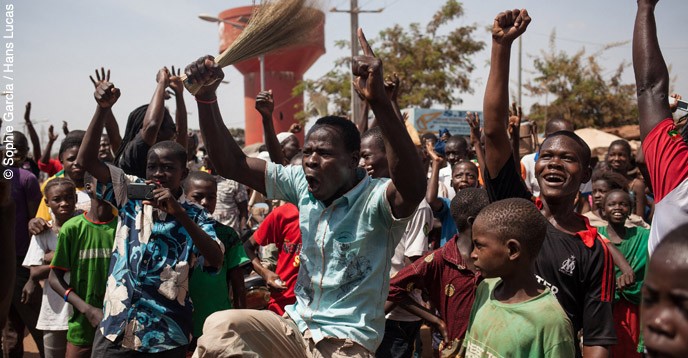
Governor Radda appoints 32-year-old Naufal Ahmed as DG ICT Directorate

By Isah Miqdad

The Executive Governor of Katsina State, Malam Dikko Umaru Radda, PhD, has approved the appointment of Naufal Ahmed as Director General (ICT Directorate).

The appointment, which is with effect from 14th August 2023, is based on the conviction that Mr Naufal will serve faithfully, diligently, and in the best interest of the service.

As the visionary founder of the esteemed Kirkira Innovation Hub, Naufal has pioneered the establishment of the first-ever technology hub in the region. This groundbreaking initiative has served as a transformative force, equipping countless young individuals with vital technological skills and providing them with a platform to thrive.

Naufal’s remarkable career as a tech ecosystem builder has been nothing short of extraordinary. With an unwavering passion for innovation and youth empowerment, his impact on the tech landscape of Katsina and Nigeria at large is undeniable.

He has been a sought-after speaker and organiser at numerous conferences across Katsina and the country, sharing his insights and inspiring others to embrace innovation.

In recognition of his outstanding achievements, Naufal has received numerous accolades, including being named among the Opportunities Hub’s 100 Most Influential Youths for his significant contributions to youth development and entrepreneurship.

MAYE seeks youth involvement in politics

By Ahmad Deedat Zakari

Nigeria Meaningful Adolescent and Youth Engagement Working Group (Naija MAYE) has called for the involvement of youths in politics and urged political parties to ensure health and development agenda in political parties manifestos in the country.

The call is an aftermath of a one-day summit organized by MAYE and held at Belmont Hotel in Abuja on Wednesday.

In a press statement signed by the Chairman of MAYE, Olympus Ade Banjo and other leaders of the group, the group charged the Nigeria political class to ensure the involvement of youths in politics and prioritize health and development in their party manifestos

The group also lamented the slow implementation of the Sustainable Development Goals (SDGs). They noted that many Nigerians are yet to experience the economic and political dividend of the SDGs.

At the end of the summit, Naija MAYE was quoted to have made the following suggestions:

1:- “Ensure inclusivity of youth health and development agenda in all 2023 party manifestoes blueprints, and campaign messages.


2:- Review the Basic Health Care Provision Fund (BHCPF) to recognize adolescent and youths as part of vulnerable population by improving access to quality youth friendly health care services.

3:- Adopt innovative and diverse approaches in financing social health insurance for young people taking into consideration that they are about 70 percent of Nigeria’s population and the high rate of unemployment which is about 40 percent.


4:- Ensure National Council on Health should approve reduction of age of independent access to sexual and reproductive health services including HIV testing from 18 to 14years.

5:- Ensure a comprehensive range of sexual and reproductive health services required by diverse groups of young people is integrated into training curriculums of healthcare providers at all levels of training
Ensure that policies supporting youth and female engagement in governance is actively implemented. Ordinary people should be given opportunity to serve from the local government to the Federal level.
Strengthen Micro Finance to give reduced interest rates to young people’s mini and small scale businesses.

6:- Create meaningful occupational counselling structures for young people in secondary schools and institutions.”