University Education

Cost of university education in Nigeria: Facing the reality

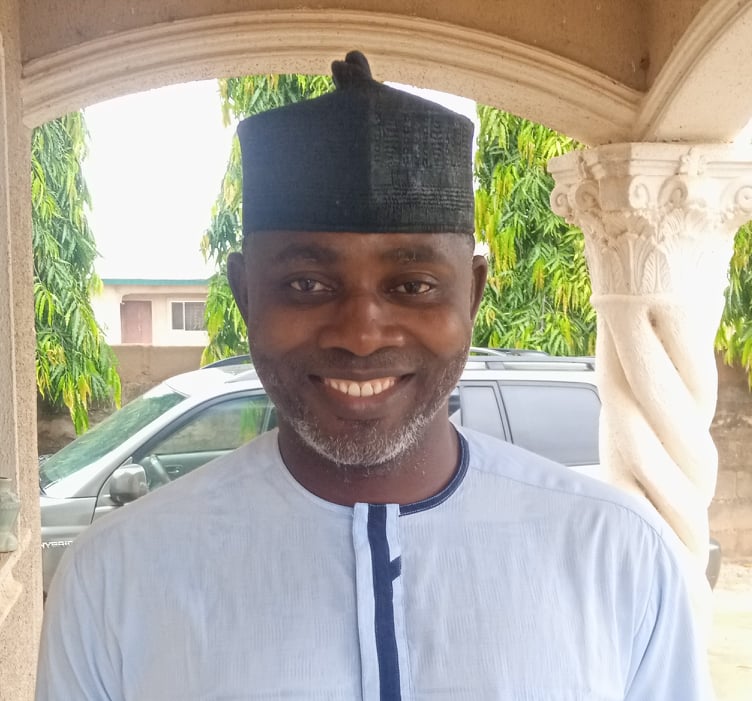
By Salim Ibrahim Isa

Since late last year, many public universities have released revised fees, primarily reviewed upwards in unprecedented percentages (mostly more than a 100%). Students, parents and other stakeholders have expressed shock, with many blaming the Academic Staff Union of Universities (ASUU) for being behind the increase as a response to the Union’s fallout with the Federal Government last year and members of the Union laying responsibility to the executive councils of respective universities.

Whatever the reason for the increase and whoever is behind it, the rising cost of education is a reality students and other stakeholders have to face, for it is doubtful to be reversed.

It will be useful to consider the following discussion, especially by students who would be directly affected by the fee hike.

Choice of courses

Choosing a course to study has been a longstanding issue. Many students go to university to study courses for years only to realise later that they could have made better choices regarding their aspirations. With education being more expensive, prospective students will save themselves much disappointment later in their studies or after graduating by researching courses before applying for them and making informed decisions. Nobody wants to pay massive amounts of money to study a course only to find out later that it has no job prospects or something like that.

Alternatives to degrees

It is not a divine revelation that everybody must have a degree. Colleges of education, polytechnics and other higher institutions offer various types of training and award multiple certificates, which can be as useful as a degree, depending on how the holder uses acquired knowledge. A student who cannot afford the higher costs of a university education shouldn’t lose all hope. It is still OK to seek other affordable alternatives and acquire training and certification.

Many non-degree holders have had spectacular achievements the world over. The most important thing is the training and how and to what use it is put.

Distance learning

Thanks to the internet, a significant number of universities all over the world now offer many courses online. This eliminates the burden of physical presence and its attendant financial implications, making the courses a lot cheaper while maintaining the quality of the courses. Many of these courses have flexible payment schedules, so students can pay in instalments and flexible classes, allowing students to work while studying. One may explore the availability of courses of choice both within and outside Nigeria and enrol in a good course at a good university. In addition, students may apply for discounts and fee waivers to make their studies even more affordable.

Scholarships and sponsorships

Governments, universities, foundations, companies and even individuals within Nigeria and abroad offer scholarships and financial aid to students under various schemes to subsidise education. Some scholarships involve moving to the supporting country/institution, while others support candidates locally. Sponsorships may also be complete or partial. A good way to be up-to-date on scholarship information is to subscribe to scholarship advertising websites and make a good network, especially in academia. Students need to remember, however, that all scholarships have criteria, and many of these criteria revolve around sound academic performance. Nobody wants to waste money on candidates who are not serious about studying, so all need to buckle up.

Salim Ibrahim Isa wrote via saalimibraheem@gmail.com.

University Degrees vs Skills debate: A consequence of our purposeless education system?

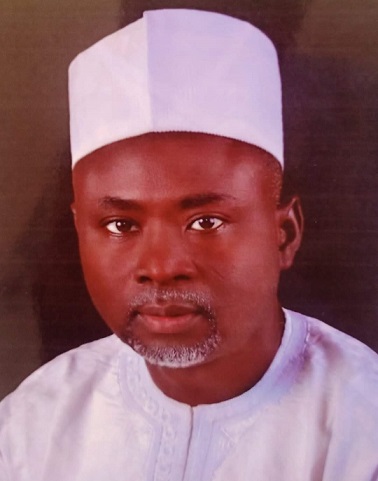
By Prof. Abdelghaffar Amoka Abdelmalik

A recently published book by Dr Ali Isa Pantami has rekindled the debate between degrees and skills. Even though the book focused on digital skills, “educated” Nigerians are trying hard to separate skills from university degrees (education). That someone graduated in computer science without being able to write a computer code does not mean that all graduates in computer science cannot write computer code.

Public primary and secondary schools have collapsed, and there is no debate on a possible mission to rescue them. The public universities are on the path to the state of the public primary and secondary schools, and all we want is to keep the kids in the class to MILT (manage it like that).

Some of the questions that came to my mind as I watched the debate were: What is skill? Can you truly separate skills from university degrees? What qualified you to receive a degree from a university? What skills do you need to survive in Nigeria? What skills do we need to propel Nigeria to a particular height? Just digital skills? What are the available jobs in high demand in Nigeria? Over the last 20 years, tell me about a job that was advertised, and after all the screening, they could not get a qualified graduate in Nigeria with the appropriate skills for the job.

The debate on degrees and certificates is getting more interesting. It is more interesting to me this time around as the Northern elites champion it. We are growing up.

I did my National Youth Service in a secondary school in Bagwai, Kano state, between 2000 and 2001. One weekend, I went to the market to get some stuff and met the Senior Teacher. I jokingly asked why he was in the market and didn’t let the wife do the shopping. That led to a lengthy discussion where I mentioned the General Hospital, Bichi. As of then, there were 3 Doctors, all male, at the hospital. Two were Yoruba and one Igbo. They were all Christians. There was no female doctor. I told him that they need to encourage their daughters to go to school so that we can have their daughters as Doctors in those hospitals. I guess I was wrong. Degrees are useless.

We are fond of mentioning our iconic automotive designer, Jelani Aliyu, as an example of skills rather than degrees. This is a very interesting example with a missing background. Jelani was a very good student and truly left the university for the polytechnic because he wanted a more practically oriented program. That is what polytechnics are originally meant for. So, after finishing his HND from the polytechnic as the Best All-Round Student, he got a scholarship from the Sokoto state scholarship board to study automotive design at the College for Creative Studies in Detroit, US. They got certificates every step to show that he has acquired the requisite skills. The rest is history.

You see, anyone can write a book on degrees vs skills, especially people at high places whose entire success is based on their degree certificates. But can the book change our reality? Not likely. Only a few Nigerians actually read books. A long post on Facebook is even difficult to read. We prefer to use the time to argue over who is the football G.O.A.T. How do we change that? There are several challenges to deal with to save our system.

But then, by the virtue of your degree certificate, you got a job as a Graduate Assistant at a public university. You built on that to have your Master’s degree in the university. And being a lecturer in a public university, you got a scholarship for PhD in the UK. With a PhD degree from the UK, you got a job offer as an Assistant Professor at a university abroad. Then, a few years later, you got an appointment outside academia. I guess a skill was identified that took you to all these places. There was no record of industry experience. So, all the skills were acquired at the university. So, what is your problem with the university? If you have got all these skills in the university and the necessary skills that your students in your department need to have are missing, then we should blame you for it.

All that you are was built on your degrees, and the same degrees are suddenly no more important but skills? We are supposed to be the light of our society. So, what is skill? What do we do in the universities? Are university environments unskilled environment? Where do you get the skills? Meanwhile, their kids are in university acquiring degrees. My guess is that you need skills, while their kids need degrees to manage your skill.

One of my senior colleagues once told us during an undergraduate lecture in the ’90s that physics makes you think. That’s a skill. He said, whatever you decide to do after graduation, physics will help your thinking. Sometimes back, I had a discussion with one of our graduates who switched from physics to IT after graduation, and he said IT is a piece of cake compared to Physics. He said he finds it easy having studied physics. Of course, let’s preach skills and not degrees while our best graduates are been harvested by the US, Canada, France, Norway, England, Germany, etc.

Recently, there were some trending Master’s graduation lists from UK universities where the graduates were 99% Nigerians. The tuition fee for the master’s program can start a business in Nigeria, but they decided to give the money to the UK university to acquire a certificate that will qualify them to work in the UK. Their first degree from Nigeria got them admission to a Master’s program in the UK. That qualifies them for the two years post-study visa to get a job. They don’t intend to come back, and they will get a job there with a university degree.

Shaquille O’Neal found it offensive when he walked into business meetings, and people would only talk to his representatives. He felt he was lacking something and found it necessary to enrol in a Master’s degree program at the University of Phoenix. He told them that he wanted somebody to teach him in class but was informed that the course he enrolled for was only taught online and that he can’t be taught alone. He asked for the requirements to have a physical class, and he was told that they needed a minimum of 15 students. Shaq paid for 15 of his friends to join him in the Master’s program. There was a gap, and he got a degree to fill it. It is up to you if degrees are skillless.

Barrister Jimoh Ibrahim recently got a Doctor of Business degree from Cambridge Judge Business School, University of Cambridge. He is a billionaire with an MSc in Major Programme Management from Oxford, an MBA from Cambridge, a Certificate in International Tax Law from Harvard, an MPA from Ife, and a Bachelor of Law from Ife. He has been a billionaire. What does he need another degree for?

Our universities are not in the best form, nor are our polytechnics the way they were during Jelani’s days. We watched public educational institutions degrade over the years without any resistance except ASUU. That we have lost some vital components of what made a university a university is not a global case. It’s a peculiarity that we have to deal with to save our system. Our efforts should be towards reviving the lost skills that ought to be acquired at each level of our education, from primary schools to polytechnics and universities. 

Sadly, instead of making efforts to save the education system of the country and direct it toward the developmental needs of the nation, we are arguing over degrees and skills while they are taking the extra steps for the further destruction of public universities. The people telling you to go for skills instead of degrees have got their kids in schools abroad or private universities. What are they acquiring there? Unskilled knowledge? They have systematically destroyed what made the university a university but complained of a lack of skills. Double standard.

Since our brothers are championing the commercialization of public universities and skills rather than degrees, I hope our general hospitals in the North have got enough doctors so that we can close down our degree programs for medical sciences. What about law, finance, etc.? Optic fibre, which has revolutionized medicine and telecommunication, was a product of research from the university. A simple physics concept (total internal reflection in a material) that was engineered. Endoscopy and broadband transmission are not products of questionnaires but skilled thinking.

The World Bank recently said it will take northern states 40 years to catch up with their southern counterparts considering the current growth rates. Meanwhile, northern leaders don’t seem to bother about that but doing politics with the education of the people. I was informed today that grasses have taken over some of the primary schools in a state in the North-central. If we are to stop going to school, we need to start telling them to lead the way on the skills we need to survive in the North and make Nigeria work. Is it farming, as the president advised?

In a recent World Bank report, the Bank stated that “despite its vast natural resources and a young, entrepreneurial population, development in Nigeria has stagnated over the last decade, and the country is failing to keep up with the GDP growth of its peers. Declining private investment and demographic pressure push young Nigerians to pursue opportunities overseas”. Lack of skilled leadership and not a skilled workforce is possibly responsible for this.

It wasn’t a lack of skilled workforce that caused the massive unemployment in the country. There won’t be unemployment if there are jobs. There can’t be jobs if there is no job creation or an enabling environment for job creation. We are quick to forget that every certificate, degree or not, comes with the requisite knowledge and skills. The certificate is to show that you have acquired the prescribed skills. Of course, some find a way to get it without getting the requisite skill. This is Nigeria, where everything is possible. That is a systematic problem. That is why there is an interview.

Are you dealing with incompetent graduates? Blame your hiring process or yourself for not conducting the required interview. That you can’t find a job in Nigeria does not mean you don’t have the skill to get a job. The jobs ain’t just there. Go and study in the UK. If you stay back, you will get a job without any need to know someone that knows somebody. But if you dare return to Nigeria out of that thing called “patriotism” to contribute, you may need to buy a job or know somebody at a high place to get that dream job.

The problem is that we don’t even know what we want. No strategic plans. Everyone is just looking out for his pocket. After seven years, there is no clear education policy for the country. They said there are not enough resources to properly fund education, but they can’t produce a sustainable funding model for education. We are still living and surviving in lamentation mode.

They said a country cannot grow beyond the level of education of the people. Meanwhile, the education system of the country is in a deep mess, and no one is calling for a discussion on the sort of education that we need to aid our development as a developing nation. Every opportunist sits in the comfort of his office to push a policy through our throat, policies that will naturally die after they are out of the office. 

It was entrepreneurship yesterday and that made them introduce entrepreneurship as a compulsory subject in secondary schools and as a general studies course in the universities. But which entrepreneur will go and sit as a secondary teacher in a class to receive slave wages of N40,000 per month? The course is taught at the university by colleagues struggling to get home with their take-home pay.

The subject is taught by people struggling with monthly salaries and doesn’t know what entrepreneurship looks like aside from what they read in the book. The government that introduced the policy, as usual, did not make adequate provisions for it to be taught. But they are happy to have introduced the subject. Not sure of how many entrepreneurs we have produced from the teaching of the courses. Today, it is skill acquisition. Are we confused?

Just like the “entrepreneurship” package of yesterday, “Skills rather than Degrees” seems to be the new gold mine among those in government with different packages for funding from the government. At least we have started spending billions on skill acquisition across states. A report from Vanguard on April 6, 2022, says over N6.2 billion was spent to train and equip 16,820 Bauchi youths in the art of smartphone repairs. That’s about N368,609 per person.

You can write books on skills and get Bill Gates to write the foreword, but that won’t change our situation until we are willing to change it. We are not getting it right with our education system, and we have refused to ask honest questions and find answers to them. Some of the skills needed to be acquired at the university are missing due to system failure, and we pretend that all is well. All that our leaders want is to hear that students are in class and manage it like that. The quality of the teaching is not important to them. After all, their kids ain’t there. Unfortunately, we don’t see anything wrong with the MILT syndrome, and some of the victims even consider questioning/challenging the leaders as insubordination.

A member of this government is championing the “Skills and NOT Degrees” campaign, and he has written a book on it. I did not know that ministers have the luxury of time to write books while in office, despite their tight schedules. Well done, sir. I hope the idea will not die in May 2023 after leaving office.

There is no doubt that all is not well in our universities, from the hiring process to the interference of professional bodies to funding to the strangulation of the system by government agents to the killing of motivation to the localization of the universities to the internal politics to the quest for positions to the loss of a scholarship, etc. But condemning the university system that made us because of our mindset against ASUU won’t solve our problem unless we ask the right questions and find answers to them.

Why did the public primary schools collapse? What is the basic skill requirement at the primary school level? Why are those skills missing? What are the deliverables at the secondary schools? How did we lose it? We had the Government Technical Colleges. What happened to them? Can we restore them? What are the expectations from the polytechnics and the university for national development? What are the obstacles to making the expectations a reality? How do we get rid of the obstacles? The University education system is a universal purposeful system that has not changed. Ours is what we made it to be. We must revive the purposeful educational system towards our developmental needs as a developing nation.

Restoring our universities and other educational institutions to the state they are meant to be needs an honest approach. But window dressing our challenges won’t solve the problems if we don’t tackle them from the root. If we don’t sit to deliberate on the sort of education system we need to aid our development as a developing nation, we’ll keep moving around the clock while our situation keeps deteriorating.

Abdelghaffar Amoka Abdelmalik, PhD, wrote from Ahmadu Bello University, Zaria. He can be reached via aaabdelmalik@gmail.com.
Federal University Birnin Kebbi gets new Bursar

By Uzair Adam Imam

The newly appointed bursar of Federal University Birnin Kebbi (FUBK), Malam Ibrahim Lawal, has assumed duty officially on Monday, December 19, 2022.

This was disclosed in a statement signed Monday by Jamilu M Magaji, the school’s Public Relations Officer.

According to the statement, until his appointment, Lawal was the Deputy Bursar as well as the Ag. Director of Procurement at Federal University Gusau, Zamfara State.

The statement read, “Ibrahim Lawal attended Faki Road Primary School, Kaduna, from 1985 to 1990. He proceeded to Command Day Secondary School, Kaduna, where he got the Senior Secondary Certificate Examination (SSCE), after which he moved to Isa Kaita College of Education, Dutsen-ma, for an Interim Joint Matriculation Board (IJMB) examination between 1998 and 1999.

“Mal. Ibrahim obtained B.Sc. in Accounting, a Master’s in Business Administration and M.Sc. in Accounting and Finance from Ahmadu Bello University, Zaria, in 2005, 2011 and 2018, respectively. He’s currently pursuing a PhD in Accounting at the Nigerian Defense Academy, Kaduna.

“Mal. Lawal started his career at Bulet International Nigeria Limited as Executive Officer (Accounts) in 2006. Thereafter, he worked in various organizations where he rose through the ranks to become Chief Accountant at Federal University, Wukari, Taraba State; Deputy Bursar and Ag. Director of Procurement at the Federal University Gusau.

“The new Bursar is a Fellow of the Association of National Accountants of Nigeria (ANAN), a Member of the Society for Forensic Accounting and Fraud Prevention, as well as a Fellow of Certified National Accountants.

“The new Bursar shares a vision to improve and maintain a highly distinguished Bursary Department with financial integrity in the management of the University funds through the provision of exceptional services to the University community, the nation and beyond,” the statement added.

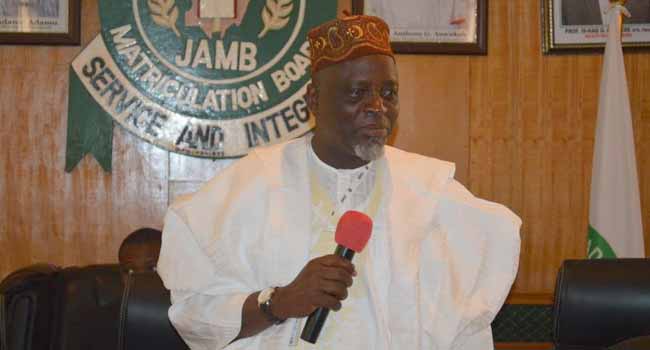
JAMB begins automation of admission process in 2023

By Uzair Adam Imam

The Registrar of Joint Admissions and Matriculation Board (JAMB), Prof. Is-haq Oloyede, said the body would refrain from receiving physical letter from any institution or agency except through its Interactive e-Brochure and e-Syllabus System (IBASS).

He disclosed this during training on the use of IBASS for vice chancellors, provosts, rectors and other administrative staff of tertiary institutions. The training took place in the six geo-political zones.

Oyelede said with the introduction of IBASS, tertiary institutions no longer have to come to the board for programme accreditation or admission processes.

He said, “Communication between NUC, NBTE, NCCE on one hand and the institution on the other hand and in some cases with JAMB have been very chaotic and unnecessary waste because the institution will have to come all the way from maybe Port Harcourt or Ahmadu Bello University, Zaria to say this programme has been accredited or introduced for us.

“Immediately a programme is amended or approved by NUC, NBTE or NCCE, it is immediately transmitted to the institution and once it is transmitted to that institution, it is only that institution that will see it. And JAMB will immediately see it.

“NBTE will not see the NCCE work nor will NCCE see what is going on in NBTE. It is individualised to the issues of the communicators,” Oloyede said.

FUL students struggle with accomodation issues

By Ahmad Deedat Zakari

The students of Federal University, Lokoja, FUL, are not finding it easy as they are confronted with the accommodation problem.

Weeks after the university resumed academic activities, following the suspension of the Academic Staff Union of Universities, ASUU strike, many students are stranded. Many are yet to find a place to live.

The tenancies of most students had expired during the ASUU strike. However, the continuous stay of some students whose tenancies expired had led to quarrels between them and their landlords.

The problem of accommodation in Nigerian universities is not peculiar to FUL students. However, the students are devastated as the school has no functional hostel on the two campuses.

The Daily Reality spoke to many students of the institution who were mainly afraid and sought to speak only on the grounds of anonymity.

A student said many of the departments had been moved from the Adankolo Campus of the institution to the main campus at Felele, and students were asked to begin lectures there in January. According to her, the students can not afford accommodation on the two campuses and are still writing examinations on the Adankolo Campus. She also said landlords are unwilling to take part payments for the remaining months in Adankolo Campus.

Other students narrated their ordeals of living with friends and relatives pending when they get accommodation.

It was also gathered that the flood, which ravaged many parts of Lokoja, is another reason accommodation has become more complex and expensive.

Just In: KASU gets new vice-chancellor

By Sumayyah Auwal Ishaq

The Governor of Kaduna State, Malam Nasir Ahmad El-Rufa’i, has appointed Prof. Abdullahi I. Musa as the substantive Vice-Chancellor of the Kaduna State University (KASU).

A statement made available to journalists in Kaduna shows that Prof. Musa is the current University’s librarian.

He holds a PhD in Library Science from Emporia University, Kansas, and an MBA from Bayero University, Kano (BUK).

The new vice-chancellor also obtained his bachelor’s degree in Library Science from BUK and a master’s in Library Science from Ahmadu Bello University (ABU), Zaria.

Kano-based academic’s name appears on global 2% top scientists

By Muhammadu Sabiu

Dr Sani Isah Abba, a specialist in optimization algorithms and artificial intelligence from Kano, had made it to the global list of the top 2% of scientists in their field by a joint research evaluation metric developed by Stanford University’s Elsevier and the Meta-Research Innovation Center.

Abba is a certified engineer and a lecturer at Base University Abuja, Nigeria.

According to a document obtained by The Daily Reality (TDR), Abba has published more than one hundred research articles and book chapters.

He also presented at numerous regional, national, and worldwide conferences.

The academic did his BSc, MSc and PhD at Bayero University Kano, Sharda University India and Near East University Cyprus, respectively.

TDR understands that his works can be accessed on Google Scholar, Research Gate and ORCID, among other academic platforms.

Igbinedion university gets NUC’s approval for course in Cybersecurity, 10 others

By Uzair Adam Imam

Eleven additional academic courses have been approved for Igbinedion University, Okada, by the National Universities Commission (NUC).

The development was made public on Friday by the institution’s Registrar, Mr Friday Bakare, in a statement made available to journalists in Benin.  

Bakare disclosed that the NUC’s approval to commence the new programmes is contained in a recent communication to the University by the Executive Secretary of the NUC, Prof. Abubakar Rasheed.

The courses included: “B.Sc Industrial Chemistry, B.Sc Cyber Security, B.Sc Pharmacology, B.Sc Software Engineering and B.Eng Environmental Engineering.

“Others are B.Eng Mechatronics Engineering; PGD, M.Eng & PhD. Civil Engineering; PGD, M.Eng & PhD. Petroleum Engineering; PGD, M.Eng & PhD. Computer Engineering; M.Sc & PhD. Sociology; and M.Sc & PhD. Geography and Regional Planning,” he said.

He states that admission into the new programmes will commence from the ongoing 2022/23 academic session.

‘ASUU’s requests meet deaf ears’ – Atiku Abubakar

By Uzair Adam Imam

The presidential candidate of the Peoples’ Democratic Party (PDP), Alhaji Atiku Abubakar, consoles with the Academic Staff Union of Universities (ASUU), saying their genuine requests had met with deaf ears in Nigeria.

Atiku Abubakar stated this in a statement he issued and signed on Wednesday in celebration of the United Nations’ World Teacher’s Day.

Abubakar’s impassioned statement decried about the incessant strike which has been eight months now since lecturers shut down public universities to press their demands home.

He stated, “I wish to observe this all-important day by identifying with Nigerian teachers. I wish to identify with them in their moment of grief occasioned by poor working conditions over the years.

“Specifically, I use this medium to console Nigerian university lecturers whose genuine requests have met with deaf ears, and who have now stayed for over seven months without salary.

“Teachers are the backbone of a nation. They are the bedrock on which national development rests. Indeed, many educators have opined that, no nation can rise higher than the quality of its education system, and no education system can rise higher than the quality of its teachers.

“This means that no nation can make any meaningful progress in any sector without having well-trained, experienced, happy and well-remunerated teachers. A situation where some states are owing teachers’ salaries of up to five months, or even more, is unacceptable,” he stated.

ASUU strike and the disorientation at the presidency

Abdelghaffar Amoka Abdelmalik, PhD.

The major newspapers published the speech delivered by the president at the “Fourth National Summit on Diminishing Corruption in the Public Sector” on the 4th of October 2022. In the speech, the president said, “corruption in the education system from basic level to the tertiary level has been undermining our investment in the sector, and those who go on prolonged strikes on flimsy reasons are no less complicit.” The Academic Staff Union of Universities, ASUU, is the union on strike, so the newspapers reported it with headlines that “Buhari accuses ASUU of corruption”.

The president definitely does not have a thorough understanding of the issues that led to the strike else he won’t call the struggle for the proper funding of the universities, better conditions of service for lecturers, the release of the white paper on the visitation panel reports, among other important demands as “flimsy reasons”. It is sad and most unpardonable that the president has got no proper information on the structure and workings of the university. Otherwise, he would have queried that ridiculous and false statement when the speechwriter presented the speech to him for presentation. So unbelievable that our president is not aware that ASUU is not the same as the university management.

To correct this unfortunate misinformation from the president, in the university, there are heads of departments who are academics who receive N50,000 every 3 months for operational expenses. We have the Deans and Directors who are also academics which is the next level of leadership in the university. The Directorates receive N60,000 every 3 months for operational expenses. Is the misappropriation of these N20,000 per month, which comes irregularly that is corruption by ASUU members?

Then, we have the principal officers, which include the Vice-Chancellor (an academic), the Registrar (a non-academic), and the Bursar (a non-academic). There is also the Council chaired by an appointee of the government. You can’t appoint politicians looking for jobs as University Council chairs and blame ASUU for corruption. ASUU is just a union and does not manage the affairs of the university. Then, there is the Presidential visitation panel that is meant to visit the university every 5 years to check the management of the resources of the university.

It’s true that the management of the university could be corrupt. There is no doubt about it. But since the administration of President Buhari took over in 2015, the “corruption fighting” president seems to have found accommodation with corruption in the university that it failed to send a visitation panel to any federal university. ASUU was worried about that, and part of the demands of the 2020 ASUU strike was the constitution of the visitation panel to all federal universities. Paradoxically, it took the strike by the union of supposed “corrupt lecturers” for the anti-corruption FG to send visitation panels to the federal universities in 2021 to check “corruption”.

However, a year after the panels submitted their reports, the same FG that is accusing ASUU of corruption has refused to release the White Paper on the panels’ reports for implementation. Part of the demands of this strike is for FG to release the White Papers. The “corrupt ASUU” is pushing the anti-corrupt government to fight corruption in the university. Isn’t that amazing? It goes without saying by its inaction, indifference, and condemnable refusal to set up visitation panels and release the White Papers after ASUU forced it to set up visitation panels to all federal universities, the FG under President Buhari is aiding corruption in our universities.

Meanwhile, you can’t be complaining of corruption but rewarding alleged corrupt people. The former VC of the Michael Okpara University of Agriculture, that was accused of academic fraud, financial embezzlement, and administrative impunity by the ASUU branch of the university, made the list of the people to be awarded a national honour by the president. Same with the former Council Chairman of the Lagos State University, who, with the VC, deployed the pension of Staff for the purchase of luxurious cars.

Does it make sense to accuse the university managers of corruption and then nominate university managers that were accused of corruption for national honours without taking steps to investigate these allegations? That’s a joke. By the way, what is the correlation between the poverty wages of Nigerian academics with corruption in the universities? Does that explain why Nigerian lecturers are one of the poorest paid in the world?

The president further said that he task our academics to attract endowments, research, and other grants to universities, polytechnics, and colleges of education similar to what obtains in other countries. It has been rightly said that “if wishes are horses, beggars too will ride”. It does not take rocket science to know how those universities referenced achieved that. An endowment is not attracted by academics but by the university council and management. President Buhari should stop his trademark and uninspiring blame game and should be talking to the people he appointed as Council chairmen for our public universities.

The truth is, research grants are not attractive using an empty room as a lab. No international donor will fund empty space. Only the existence of avalanches and modern facilities are used to attract grants. When I got a PhD grant in 2008, I took the grant to a university in the UK because they have the required facilities for the research. For the 3 years, the UK university got thousands of pounds through me. That’s a return on investment. What have we put in place to attract such? That’s what we should be worried about. That’s why ASUU is asking for the required funds to be injected into the system to make our universities attractive for grants, as it’s obtained in other countries.

Despite the horrible condition of service of academics in the country, Nigerian academics are winning research grants. An Associate professor at Bayero University Kano recently received a research grant of £969,680 from Wellcome. A senior lecturer at Ahmadu Bello University Zaria recently won a research grant of about 48,000 USD from Geophysics Without Borders. Other researchers from the Federal University Dutse won a grant of $59,930 from The World Academy of Science (TWAS) and €220,801 from the African Academy of Science on renewable energy. These are just a few of the grants won by academics within the strike period.

The president’s speech was focused on ASUU, and the speechwriter chose his words with the utmost malice and mischief. There are sex scandals in every sector of the country. The rehash and blackmail of sex stories in the universities have become much like an expired drug with no potency. The stories of sex for jobs and contracts and sorting jobs and contracts in Abuja are in public space. Every sector has got the good, the bad, and the ugly. So, academia can’t be immune to the ills in our society.

But then, universities are still much better. They have rules and regulations that guide their operations, and they are enforced. Several lecturers have lost their jobs due to sex scandals or other similar offences. But we have a minister in this government that was accused of sexual harassment in 2020. If a student is a victim of such an act on campus and he or she refuses to report for appropriate actions to be taken, then you can’t blame ASUU for it.

Our Union frowns on sexual harassment in all its ramifications in our universities and is up in arms combating this evil. Hence, this speech which is similar to the words of their filthy-mouthed attack dog and other government agents at the presidency at this time, is an indication that it is either the people around the president are not telling him the truth about the strike or the depth of the poverty of sincerity is underestimated.

It is equally indicative that the administration has run out of ideas and initiatives to resolve a simple issue like the ongoing strike action. The Speaker of the House of Representatives, in an effort to bring an end to the 7-month-old crisis, has met with the president. Let’s hope that those agents of destruction around the president will allow him to think.

What baffled me is the fact that the Visitor to the university is publicly lamenting when he has not taken any action for 7 years to address all his allegations against the University. You are the president, sir. Please use your executive powers to solve problems, not passing bucks. Dear sir, you lament everything from the economy to insecurity to education, but lamentations won’t solve our problems. You need to be proactive, sir. You are the president; time is almost running out. Better late than never.

Finally, despite the way that academics in Nigerian public universities are handled, our research outputs are visible in the global research database. If political office holders should make one-tenth of the efforts and sacrifices made by academics in our public universities, they will be celebrated as heroes in office.

Professor Abdelghaffar Amoka Abdelmalik wrote from Ahmadu Bello University, Zaria.