University Education

ABU announces multiple jobs for students, calls for applications

By Ishaka Mohammed

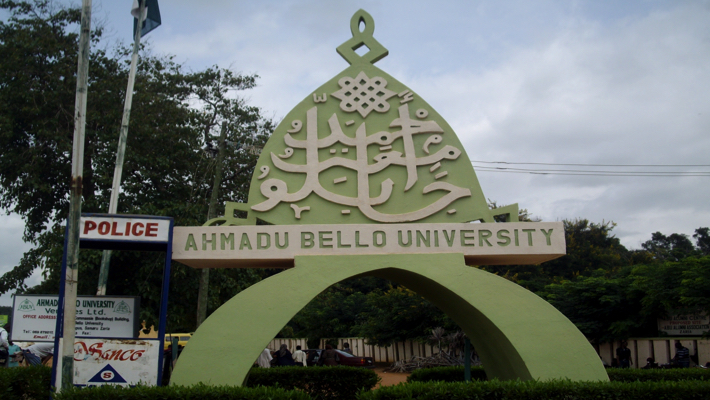
The management of Ahmadu Bello University (ABU), Zaria, has created numerous job opportunities for its current students. This is contained in a special bulletin dated Tuesday, January 9, 2024.

According to the director of the Counselling and Human Development Centre, Dr Sa’adatu Makarfi, the initiative named Students Work/Study Scheme aims to provide financial support to needy students and enhance their educational experience.

The scheme welcomes interested and capable students to work in areas such as coaching (for primary and secondary school students), research assistance, computer operation, harvesting, babysitting, laundry and car washing. Students can equally work as masters of ceremonies, and those with other specific skills are also encouraged to apply.

Interested students are to visit any of the Guidance and Human Development Centre offices at both the Samaru and Kongo campuses for registration or more information.

The Daily Reality gathered from some ex-students of ABU that the Centre has been assisting needy students who can work while studying, but this is probably the first time it is publicly calling for registration.

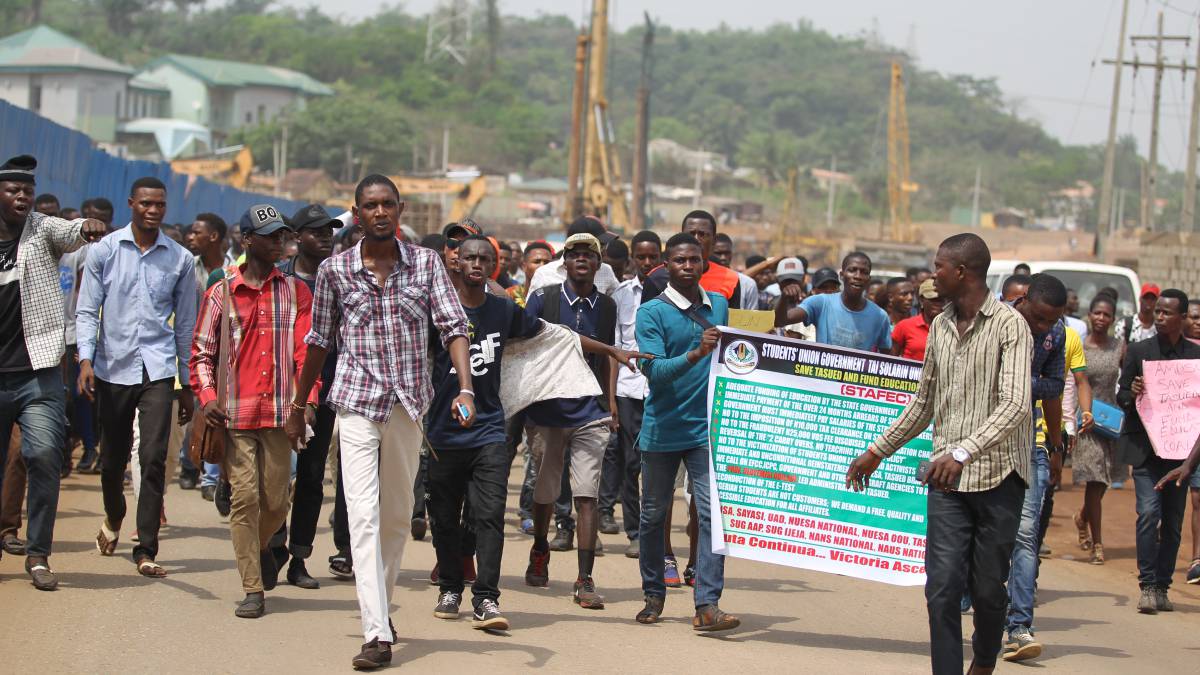
Struggles of students: A cry for justice

Usman Muhammad Salihu

In the hustle of everyday life, many people find themselves navigating through challenges, and for some, the journey includes the demanding world of academia. A recent encounter with a university student sheds light on the harsh reality students face on the path to education, especially in Nigeria today.

As a graduate waiting for our results to be released, I engaged in a rickshaw business. As I was moving through the city of Jos, Plateau State, I picked up a young woman who, by all appearances, seemed to be a dedicated university student. Little did I know that the shadows of academic hardships marred her journey.

Her phone conversation with a fellow coursemate delved into the frustrating realm of carryovers and spillovers. According to her, some lecturers seemed to wield their power recklessly, subjecting students to the ordeal of repeating courses, even after graduation. What struck me was the claim that these burdens were inflicted upon students who resisted inappropriate advances.

With a frustrated tone, the young lady spoke of the financial strain that accompanies repeating courses. Despite the current economic challenges faced by many Nigerians, students find themselves compelled to pay registration fees to rectify the consequences of what appears to be an unjust system.

If the allegations are indeed true, and this is a manifestation of the notorious “sex for grades” issue, it raises serious concerns about the ethical conduct within our educational institutions. It is a cry for justice that cannot be ignored.

In response to these distressing revelations, a collective responsibility falls upon the government, the Students Union, and the wider public. The government must ensure a thorough investigation into these claims, holding accountable any lecturer found guilty of such misconduct. The Students Union has a vital role in advocating for the rights of its members, providing support, and pushing for systemic changes that protect students from exploitation.

Moreover, the public must not disregard the struggles faced by these students. Awareness is the first step towards change. By shedding light on these issues, we collectively contribute to fostering an environment where students can pursue education without fear of victimisation. Only through collective action and a commitment to transparency can we hope to eradicate these hardships and create a safe space for education to flourish.

Usman Muhammad Salihu writes from Jos, Nigeria, via muhammadu5363@gmail.com

Neo-liberalism and Cotonou degree alternative

By Dr Kabiru Danladi Lawanti

The whole Cotonou degree is criminal and all those involved need to be fished out and punished. Some people might see us as harsh or maybe insensitive for saying this. 

There are things we cannot say in public, but one needs not to be prophet of doom to predict that Nigeria cannot withstand this onslaught and will eventually crash. 

Our desperate quest for certification through whatever means led us to this situation. Parents are desperate to have their kids in the university, some even underage (we saw 15, 16 and 17 year olds being pushed to universities), whose mental capacity is too elementary to grasp or cope with challenges of university education.

The crises in higher education and the adoption of neo-liberal policies that have no place in a developing country like ours also contributed to this confusion. Consequences of commodification of knowledge is enormous in a country with no strong institutions to checkmate excesses and greed of capitalists. The results is the proliferation of degree mills all over.

Adoption of neo-liberal policies means cutting funding for public services like education, health and sanitation. Nigerian public universities suffer from these policies. Funding was cut, citing many reasons. The results is restrictions in admissions. When you have many applying to enter university and the slots are few, universities have to admit based on quota. Therefore, few can be admitted.

Parents, in their desperate efforts to get their children into universities, started sending their kids to some African countries for bachelor’s degrees – Uganda, Benin Togo, Ghana, Sudan, Niger Republic, etc. 

Another reason is the dichotomy between degree and HND. Many people affected by stagnation in their places of work because of HND opted for a way to have a degree that can help them get promoted. Many went for the Cotonou degree. Since it is acceptable by MDAs or they made it acceptable, most of them started trooping to these mushroom universities to obtain these degrees to get promoted.

Then we have people who can’t cope with rigorous nature of our public university system. I know a lot who not only failed exams, but are withdrawn from diploma programmes, but appear after 6 months with a degree from these degre milling centres. Others could not pass UTME therefore unqualified to enter public universities. Cotonou degree provide an alternative.

The last, in my opinion, are those running from ASUU strike. Many parents justify purchasing the Cotonou degree because of the unending industrial disputes in the public universities.

I don’t want to talk about the “motor park gang” led by former minister of education Adamu Adamu and his National Universities Commission (NUC) executive secretary, who bastardised the university system for only God knows why. They have killed what remained of our public university system.

Lastly, some of our private universities are not any different from the “Cotonou universities”.

President Bola Tinubu needs to do a lot more to rescue the situation. I like how the Minister of Education, Prof. Tahir Mamman, handles the situation. But sincerely, the students of these dubious universities, their agents, officials from Federal Ministry of Education, NUC and the other places need to be rounded up, arrested and punished according to our laws.

Kabiru Danladi Lawanti, PhD, wrote from the Department of Mass Communication, ABU Zaria, via kblondon2003@yahoo.com.

KASU demands 10 essays from applicants seeking lecturing jobs

By Ishaka Mohammed

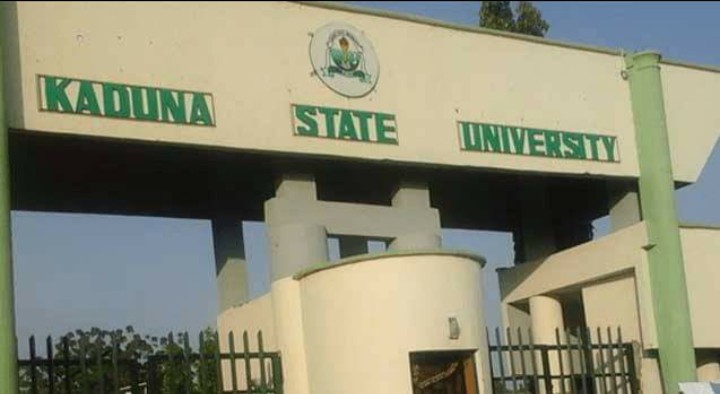
In its latest recruitment exercise, which commenced on December 18, 2023, Kaduna State University (KASU) is demanding ten essays from every applicant seeking a lecturing position. 

The Daily Reality gathered from an applicant that the writing section is one of the ten steps in the application process. The essay topics revolve around technology in education, teaching philosophy, assessment formats, critical thinking development and journaling.

KASU opened its recruitment portal on December 18 for qualified individuals seeking lecturing jobs in the various departments. The positions include contract, internship, graduate assistant, assistant lecturer, lecturer II, lecturer I, senior lecturer and professor.

The application is completely online, and interested individuals are to create accounts at https://recruitment.kasu.edu.ng and submit their applications on or before December 31.

Founded in 2004, KASU has about 40 academic departments and is the only state university in Kaduna.

N476,000 Law School fees and the fate of the indigents

By Abdul Mutallib Muktar

The journey to the bar has always been quite challenging and frustrating, especially for those students who are from financially disadvantaged homes. These students usually have to endure some terrible experiences for five years or more in order to obtain LL.B from their respective universities. It is sad that after this genuine struggle and heroism, the students get out of the race at the point of registering for the Nigerian Law School because they cannot raise the humongous school fees.

Most of the 2023/2024 applicants for the Nigerian Law School this year are students who graduated from the universities in 2023. This means they spent about seven years instead of five undergoing LL.B programme because of the perennial ASUU strikes and Covid-19 that disfigured the academic calendar. Students of public universities have a sad story to tell of the above.

What stands as a dishearteningly unclimbable mountain for most law students from public universities is the payment of the Nigerian Law School fees which rose to N476,000 for registration alone this year. Before the registration, one must apply for the law school which consumes about N45,000, including the faculty charges. A flashback of some few students who could not apply because they had no N45,000 let alone N476,000, touches the heart.

Over the years and especially after the unfortunate removal of fuel subsidy, Nigerian economy has fallen into an unprecedented quagmire which sent the masses into a regrettably more pitiable condition. A lot of parents who thought they could continue to take care of the higher education of their offspring gave up and have now lost their financial balance and are only struggling to provide food for their families. It is this reason that turns many students drop outs in the last few years.

Many of the graduates who applied for the Nigerian Law School this year are struggling to reach out to either their representatives, senators, governors or philanthropists but to no avail. The letters written to them could not reach them, so also the true state of affairs of this set of their constituents. In fact, this is what fundamentally prompted this write up–perhaps it may be a speedy channel of passing the message across to them. This is the time when these law school applicants will truly appreciate any sort of help from their leaders.

Few months ago, some governors, such as His Excellency, Abba Kabir Yusuf, refunded the school fees to those who registered for the last session of the NLS. May God reward them. Although the governors have a right reason for choosing to refund and not otherwise, it is my humble suggestion that the school fees should be better paid than refunded because the biggest challenge lies in paying it. If the governors continue on the refund policy, only the capable hands will continue to benefit. With the refund policy, the philosophy behind the support will surely be defeated.

I am using this medium to humbly invite the attention of the Honourable members of the State Houses of Assembly, the National Assembly and Their Excellencies, the governors of our various states to render assistance either in form of support or sponsorship of the Nigerian Law School applicants from their respective constituencies. It is additionally a time when philanthropists across the country can help too. Without this gesture, I am quite sure many law graduates will have to face the fate of not attending the law school. As contained in a notice signed by the Director General of the Council of Legal Education, Prof. Isa Hayatu Chiroma, SAN, lectures for the Bar Part I and Bar Part II commence on 11th December, 2023 and 15th January, 2024 respectively.

Abdul Mutallib Muktar (LL.B, B.L in view) wrote from Kano via via abdulmutallib.muktar@gmail.com.

Nigerian Academics: The job, the passion, the disappointment

By Abdelghaffar Amoka

I travelled home in 2012 after my PhD and one of my older cousins asked when I would become a Professor. I laughed and told him it would still take some years, and I jokingly told him I was not keen on becoming a Professor. He became angry at my response and said I should get the Professor for them even if I didn’t want it. After I left him, I began to wonder what is in that rank that some people want at all costs.

I can still remember the huge congratulatory messages I received after my friend and colleague shared on Facebook the news of my promotion to that rank. Sometimes I reflect on those messages and imagine how rich I would have been if those congratulatory messages could be transformed into cash. Here we are struggling, and some of us can’t even drive our cars any longer.

The Nigerian Professor

Becoming a Professor, the peak in academia, is something most academics look forward to. The title still comes with some prestige and perceived false benefits attached to it by outsiders. I once read a post on Facebook that said professors are stingy. Poor professors and the public want them to spend the money they don’t have. I went to buy a seat cover for my car a few years ago and the seller said lecturers have money but refused to spend it. I asked how much he thinks a professor is earning, and he said it can’t be less than N700,000. I laughed very hard.

I have written a lot on the remuneration of academics in Nigerian public universities, but many still don’t believe the figures. Yeah! Too bad to be true as compared with their perception. I had a discussion with one of our PG students, who is a lecturer in a state polytechnic, about salary disparity in the Nigerian public sector yesterday, and the salaries of university lecturers came into the discussion. I told him the figures, and the smile on his face showed that he didn’t believe it but couldn’t say I was lying. So, I logged in to the university portal and showed him my payslip. The gross, the deduction, and the net. We met again today, and he said that until yesterday, he never believed that a Professor on step 4 was earning less than N600,000.

Again this is the salary of academics in any federal government university in Nigeria. The quoted value is for step 2, the rank:

~The Assistant Lecturer’s net salary with all his allowances is N118,279 (105 USD).

~Lecturer II’s net salary with all his allowances is N129,724 (115 USD).

~Lecturer I net salary with all his allowances is: N160,809 (142 USD)

~Senior Lecturer’s net salary with all his allowances is: N222,229 (197 USD)

~Reader (Associate Professor) net salary with all his allowances is: N277,179 (245 USD)

~The professor’s net salary with all his allowances is N332,833 (294 USD).

The University workers are perhaps the only federal government workers whose salary is yet to be reviewed since 2009, that is for 14 years despite inflation. Those who were already professors in 2009 are still receiving the same salary since then. Your comfort is key to your output.

Aside from the academic work and the research and publication work that forms the bulk of your promotion criteria, you are loaded with administrative responsibilities without responsibility allowance. They call it ‘community services’. You can be denied promotion if you don’t have enough of the said “community services”.

If you happen to travel outside the University for a conference and you are lucky to be funded, the travel allowance is as follows:

~Duty Tour Allowance (DTA) for the professorial cadre is N16,000 per night.

~Duty Tour Allowance (DTA) for Senior Lecturer cadre and below is N12,000 per night.

~The transportation allowance is N20 per km.

If a Professor is to travel 200 km for an assignment that lasts for a day, he will get a DTA of N32,000 for 2 nights for his hotel accommodation for 2 nights and feeding and N8,000 for transportation. That is a total of N40,000. Despite the fact that FG has approved a new DTA for public service in September 2022, the universities can’t afford the new rate a year later. I applaud the patience of my colleagues, but the patient dogs are dying of hunger.

Meanwhile, education is said to be key to national development.

Dear prospective academics, I love academia. For me, it is not a job but a way of life. However, ask questions before you wish to join academia and become a Professor. The job as it is at the moment can’t pay your bills for a decent life.

Abdelghaffar Amoka Abdelmalik, PhD, wrote from Ahmadu Bello University, Zaria. He can be reached via aaabdelmalik@gmail.com.

The Nigerian university professors and their sad reality

By Prof. Abdelghaffar Amoka

A part of the activities of the university professors is serving as external examiners to universities other than theirs. The appointment of external examiners is a worldwide practice for quality control. Professors can be external examiners for undergraduate or postgraduate programs. While the external examiner for a postgraduate program can be for a day if it involves just a student, appointment as an external examiner for an undergraduate program lasts for a whole academic year.

The external examiner is required to moderate the question papers and marking schemes of all the final-year examinations for the first and second semesters of the program. The Examinations Officer will travel to the university of the External Examiner with the question papers and marking schemes for the Examiner to moderate for each semester. I travelled to Kano for that exercise as an Examination Officer between 2006 and 2008. At the end of the academic year, the External Examiner is required to travel to the university to examine the students’ final-year project and also to moderate the answer booklets and results.

I was recently appointed as an External Examiner for the physics department of a Federal University about 210 km from my university. I moderated the question papers and marking schemes for both semesters. At the end of the session in October 2023, I was invited to the external examination of the students’ projects. While planning to go there, I inquired about the number of students to be examined, and I was told they were a bit above eighty (80). I was like, wow! The funny thing is that you do this job, especially as a first-timer, without knowing how much you will be paid for it.

I was wondering how I will examine 80 students in two days. The university is about 210 km from Zaria, and I need to analyse the economics of the trip. If I am to drive my car, I will spend about N40,000 on fuel for the round trip. But my instinct was telling me that using my car would cost more than I would be paid. So, I joined a public transport, and it cost me about N4,500 to get to the University.

Four passengers, including myself, were squeezed like sardines in a pack in the vehicle’s passenger seat.

I got there, examined the 80 students, and moderated the answer booklets of their final-year students for two full days. I examined 40 students each day. I was exhausted and needed enough space to relax, returning to Zaria. So, I paid for two seats, which cost me about N9,000. This made us three on the passenger seat to Zaria.

Just a few days ago, I received an alert of the payment for the one-year job. I got an alert of N138,920 six weeks after the job. My breakdown shows that I was paid N80,000 honorarium for the one-year job as an External Examiner for the university, N50,000 for accommodation for two nights to examine 80 students (25,000 per night), and N8,920 for transportation from Zaria to the university and back to Zaria (223km x 2 x 20 naira per kilometre). Payment for two nights implies that it was assumed that the job was done in one day. Yes, the university management assumed that I examined 80 students in one day.

At the end of the day, and even without using my car, I spent more on transportation than I was paid. For the moderation and examination of the students for an academic session, I was paid N1,000 per student for the exam moderation, reading of the project work, and oral examination of the students.

However, there was a circular in 2022 that reviewed duty tour allowance (DTA) and transport allowance per kilometre for public service. According to the circular, a Professor is meant to get N37,500 per night as DTA and N75 per kilometre for mileage. While it is in operation at every other MDA, under the current fuel subsidy removal regime, university professors are expected to travel at N20 per kilometre and can’t lodge in a hotel that costs more than N25,000 per night.

While the political class has subjected academics to abject poverty, the managements of our universities are still expecting us to travel with N20 per kilometre, lodge in a hotel that is not more than N25,000 per night, and then do oral examinations for 80 students in one day. They possibly felt that we could manage it. After all, we are already used to poverty. It’s sad that the political class does not regard us. We have lost respect in society and don’t seem to have regard for ourselves within the university system.

At least this university paid even though what was paid was ridiculous. I also got a nice reception from the department. For over a year, the other university has yet to pay the N50,000 for the professorial assessment of their staff and refund the N2,500 postage charges to send the assessment report. That is Nigerian academia.

Dear public university managers, why do we find it challenging to spend money on academic activities, the main activities of the universities? Does it still cost you 20 naira per kilometre to travel to Abuja for an official engagement on behalf of the university? The excuse is always that the university has no money. Then, why do we pretend that all is well when it is not? Why do we window-dress our programs for accreditation when we can’t adequately fund the programs? Why should we be expected to drain our blood to keep public universities open?

External moderation and examination are requirements for the award of degrees, and they should be properly funded. Otherwise, It should be suspended till there are enough funds to execute that component. If we want to make progress, we must stop the window-dressing approach and tell ourselves the truth.

Dear senior colleagues, I greatly respect your sacrifices and the risk of travelling between states these years on our bad roads for external examinations at this ridiculous honorarium and allowances. I don’t want to blame you for the sustenance of this slavery. But this treatment continued because you accepted it and MILT for these years. Even as teachers, we need a proper reward here on earth as we all strive for heavenly rewards.

Our old senior colleagues are already used to it. But to the new professors who will be taking up external assessment responsibilities, before going out for any external assignment, the supposed community service, to other universities, you need to be sure that the transport allowance will take you to the place to do the job and that the night allowance can afford decent accommodation.

Don’t be enslaved by the words “community service”. There is no free meal anywhere in the world. Somebody must pay for anything called a free meal.

Abdelghaffar Amoka Abdelmalik, PhD, wrote from Ahmadu Bello University, Zaria. He can be reached via aaabdelmalik@gmail.com.

The “Boko Haramisation” of University Education in Nigeria

By Kabiru Danladi Lawanti, Ph.D.

Since 2018, when Nigeria’s public universities started announcing hikes in school charges or what is popularly known as service charges, the survival of indigent students in these universities has become threatened. Public universities are the last hope for children from poor backgrounds. According to Emmanuel Onwubiko, the National Coordinator of the Human Rights Writers Association of Nigeria, over 70% of youths from poor backgrounds attend these universities. Therefore, denying these institutions funding is a direct declaration of war on Nigerian youths.

While it becomes necessary for public universities to increase the shortfall in government funding, the increase in school fees means millions of youths will be denied the opportunity to acquire a university education. To say that Nigerian public universities are underfunded is an understatement. That our public universities are in serious crisis is a fact. That universities are unable to achieve the goals of contributing to national development is sadly true.

Two schools of thought exist on this issue. On one hand is the Academic Staff Union of Universities (ASUU), which opposed increasing school fees. Their argument is quite simple: increased school fees automatically mean denying the children of the poor the opportunity to acquire a university education. They argue that there is a need for more citizens to have a university education. The logic is simple: more people with university education in the population automatically translate to positive economic growth, social development, and political cohesion.

To show their seriousness in what they believe in, ASUU had to go on strike several times for several years, starving their members to push forward with this idea. However, there are people who believe education should be removed from social services. They argue that since students are the direct beneficiaries, then the funding of universities should be shifted “from society to the students who are the beneficiaries of the higher incomes their degrees will provide.” These are the advocates of “commodification of university education.”

There are broadly three sources of funding for public universities in Nigeria, as identified by Professor Olanrewaju Fagbohun, the former Vice Chancellor of Lagos State University. These are government grants or subsidies, student/parent contributions (charges fees or allied non-instructional fees) and the income derived by the institution from commercial or quasi-commercial ventures or services, investments, donations, and endowments.

With overpopulation, teeming unemployed graduates, falling standard of university education, corruption in the management of university education and the shift from a mixed economy to a neoliberal economic system since 1986, Nigerian universities are left struggling to survive. Also, the attitude of the people’s government towards education since democracy’s return in 1999 has combined to suffocate the system already in the ICU.

However, in 2017, the universities came to grapple with a very hostile regime under President Buhari. The regime not only cut funding to public universities but imposed an embargo on the recruitment of academic staff in the universities. For over six years now, universities have not employed any fresh staff. Where they are employed, they are imposed on Vice Chancellors from Abuja. Departments no longer have the power to recommend to the VC to retain the best-graduating students in the departments. IPPIS was the last straw that broke the camel’s back. Departments are short-staffed, and IPPIS stopped universities from engaging contract staff, visiting and adjunct lectures and sabbatical staff.

These are the issues that Nigerians need to look at holistically. As it is now, most people have realised the mistake of not supporting ASUU to force the government to investigate the crises of the public universities. The reality clearly shows that indigent students or children from poor backgrounds cannot afford university education. While many analysts gave ASUU strikes the Boko Haram Logic interpretation, no one sees the onslaught on public universities by government agents as “bokoharamisation” of the university education. It is a disservice to Nigeria to remain silent about the current crises confronting the Nigerian public universities and find our voices when ASUU declares strike. This is succumbing to Boko Haram’s wishes. Already, our public primary and secondary schools are in ruins, and it will take the grace of God to resuscitate them. We are now confronted with the collapse of the public university system.

What is the way forward?

Addressing the current crises requires all stakeholders in the Nigerian Educational System. This is a matter of saving Nigeria from collapse. Already, parents have taken 60% of the burden of educating their children in the university. Parents now pay from N50,000 to 250,000 a year for service charges for their children. They provide for their upkeep – accommodation, feeding, laundry, clothing and, of course, purchase of textbooks. Added to that, they take the burden of transporting their children to and from the schools every now and then when the need arises, which can be weekly, monthly, or quarterly. Already, they are involved in funding their children’s education at the university.

The government is supporting universities with infrastructure payments of staff salaries (both academic and non-academic). The government also pays a fraction of the running cost to the universities. TETFUND will not be counted as government funding because it comes from 2% education tax contributions. People in government are leveraging on this and using funding as a weapon of control, as we saw in 2022 when ASUU members were starved for eight months for declaring an industrial dispute with their employer.

Industrial disputes should not be seen as confrontations or a narrow material interest of “greedy lecturers” or “Boko haram logic” of denying Nigerians the opportunity to acquire a university education. It should be seen as a patriotic intervention to salvage a collapsed system.

The commodification of university education in developing nations like ours is never a solution to the lingering crises in the public university system. Commodification destroys “the value of intellectual challenge and exploration by reducing knowledge to quantifiable, job-oriented results”. In fact, commodification is what derives the idea of a “skills rather than degree” gang promoted by a former minister.

I deliberately ignored the push by the present regime of education banks that will serve as lending institutions for university students because it is deceptive, unrealistic, and impracticable in a country like ours. What we need is an acceptable cost-sharing formula that is realistic and acceptable to all stakeholders. And this can come only through negotiation and mutual agreements between university unions, parents, and the government. We need to start this conversation to save our public universities.

Public Universities: the FG’s new revenue generation goldmine

By Prof. Abdelghaffar Amoka

The Academic Staff Union of Universities (ASUU) has been in a battle with the Federal Government of Nigeria over the funding of the public universities. The facilities that made our universities to still have a semblance of a university were products of ASUU strike. ASUU was so passionate over public universities funding to the point that the public began to think that such funds, when released, are paid into ASUU’s account. Even some journalists that are supposed to be properly informed shared in the ignorance or misinformation.

You read headlines like “FG releases 2 billion naira to ASUU for university funding”. ASUU pursued funding at the expense of its members’ welfare. The battle has been on funding to an extent that the younger generation of academics began to wonder why their welfare is not at the top of the union’s demands. The consoling words from our veterans have always been: You get true fulfillment when you have an ideal working environment.

The battle took a new dimension last year, during the reign of the ex-president Muhammadu Buhari, who had no agenda for education aside from establishing more universities without funding plans. Yeah! Buhari came to re-write the story of our university system. The number of the underfunded new tertiary institutions were listed as his major achievements. A strike on funding and the renegotiation of conditions of service that should not have lasted for more than four weeks, if sincerely handled, was dragged on for eight months and the lecturers starved. A few died and many survived and are still surviving but not an item on the demands on the needs of the universities was treated.

While ASUU was fighting for adequate funding, the FG had a hidden plan. It publicly declared that the universities will have to generate their money to partly fund themselves. The public couldn’t see the implication of the statement. The statement received support from some Nigerians whose education was funded from primary to PhD with public funds. However, besides this declaration, they are also seeing the universities as revenue generation institutions rather than institutions to be funded. They were wondering why they should keep funding these institutions when they are supposed to be generating revenue for the government.

Having conceived the idea to make federal universities an internally generated revenue (IGR) source for FG, their challenge was how to make these institutions generate revenue for FG without backlash. The only obstacle to the plan is ASUU that is always using strikes to force to unwillingly release some funds for the universities. ASUU was on strike again. They find their trouble annoying and something must be done. They engaged their friends that are former union leaders to develop the strategy to clip ASUU. Hunger strategy was found most effective and that was deployed and the rest was history.

From the experience of the last strike, call for a referendum on strike today and the members will tell you that if they will lose their salary for a one day strike, they won’t join. They are still paying their debt. So, they began starving the universities of funds.

Universities like Ahmadu Bello University (ABU) and Unilag, whose electricity bills are around 120 million naira per month, are given about 150 million naira per annum for operational expenses. How they pay their bills was left as their business. So, to keep up with the bills, the universities began to review the service charges. The universities estimated what can run the universities and appropriate charges were put together as fees for students. There were outcries on the fee increment. Some called it tuition and that got FG worried.

FG had to come out with a press release. They acknowledged the increment but that FG has not introduced tuition. The increase in fees as announced by various universities was to reflect the current economic reality; mission accomplished. However, the FG didn’t see these increased fees as service charges, they saw them as IGR by the universities and hence became interested.

As the universities were busy announcing the revised fees, the Minister of Finance suddenly remembered that there was a circular FMFBNP/OTHERS/IGR/CRF/12/2021 dated December 20, 2021 that said all partially funded FG Agencies should remit 40% of their IGR to FG. Universities are currently expected to remit 40% of the fees collected from the students to FG as revenue generation. These service charges in the universities are referred to as Gross Internally Generated Revenue. The deduction is effective from November 2023.

This means that if a student is charged N2,000 for an ID card, the university will give N800 out of it to the FG. It doesn’t matter to the FG if the cost of the ID card is truly N2,000. If a student is charged N10,000 as laboratory charges for chemicals and consumable, the university will give N4,000 out of it to the FG as revenue. If every student is charged N30,000 for electricity, water and sanitation bills, the FG will enjoy N12,000 out of it as revenue. It doesn’t matter if the remaining amount is not enough to pay those bills. If a student is charged N15,000 for a field trip or SIWES, the FG will take N6,000 out of it. If a student pay N5,000 as examination fee, the FG will take N2,000 from it as IGR for the FG. etc.

The insensitivity of the government to the needs of the people has gotten that bad. Public universities are the government’s new revenue generating agencies. This 40% revenue is expected to be paid by kids whose parents are earning less than N100,000 per month from the same FG. As they are milking the people dry, they have refused to cut off the cost of governance. The NASS members that were supposed to drive a car of 7 – 8 million naira by law got 160 million naira cars as against the law.

The bad thing is that the government will deduct 40% from the money as it is paid. It is auto-deduction. They will take their share before the universities even have access to the money. The announced fees were calculated to barely take care of the basic needs of the universities. So, how will the universities be run without the 40%?

My opinion…

Dear parents, tight your seat belt and the revised fees of your kids in any federal higher institution increased by 40%, thanks to FG quest for IGR. ASUU has done its bit for us Nigerians. It should not be a major discussion at the ongoing NEC. Nigerians should be allowed to fight their fight. The fight should now be left for the students and their parents. If they are willing to fight, ASUU members can join as parents. If they are not ready, we all MILT and move on as usual. After all, we are used to suffering and smiling.

The university managements, Senates, and Councils should find an appropriate way to introduce the 40% FG IGR from the universities into the fees. The universities that are yet to announce their revised fees should add the FG 40% university IGR to their fees. It should be separated from the university charges. It can be called “40% FG IGR charge” as a separate item. So that the students and parents will know what they are paying for. They need to know that rather than FG funding the education of their kids, something ASUU has fought for and prosecuted over, FG is now generating revenue from them as they pay their kids fees.

©Amoka

The other degree I have earned

By Sulaiman Maijama’a

Seeing some photographs yesterday that we took in 2019 when we were leaving Sa’adu Zungur Hall of the Bayero University, Kano, as we finished level 200, I remembered several events, particularly during my stay in the hostel. I was filled with mixed feelings of nostalgia, reminiscing about my BUK days, the good and bad experiences, and the culture shock I had to contend with as a fresh university student.

In 2018, when we secured admission, my friend Shamsuddeen insisted that we stay off campus. I did not like the idea, so I reported him to our teacher and mentor, Mallam Abdul Ahmad Burra, to be a judge, knowing that Mallam would be on my side. Mallam Abdul directed that we live in the hostel, saying, “The experience you have when you live in the hostel is another degree in itself. Never miss that.”

The experience began soon after we settled on the 18th of March, 2019, in our number D-56 room on the first floor of Sa’adu Zungur Hall. Six of us were the occupants. Kamal Abdulsalam, Shamsudden A Musa and I were in Mass Comm, Bashir Dalhat read Geography Education, Sirajo Basiru read Economics Education, and Abdul studied Political Science. All of us in the room were voracious readers, what people call “mayun Boko”.

Our room was almost always locked because we left for class or library day and night, and so, we were addressed and addressed each other as Prof. The trouble was, when someone said prof alone, we got confused as to whom he was referring to because we were all bearing the title. One day at the Vice Chancellor’s mosque, I loudly said “Prof. Kamal”, referring to my roommate Kamal Abdulsalam, when I caught the attention of Professor Aliyu Kamal of the English Department. To his surprise, he saw me approaching a student whom I  addressed as Prof.

Unlike other rooms, our bond had blossomed into becoming a family, sharing food and water and even requesting little money when needed. We soon realised that one of us was living a miserable life. In the morning, he would take Gari, water in the gallon, wear squeezed clothes and go to lectures. We all were concerned about his condition and began to talk about how we could help him. God had saved us when News later got to us that he was a millionaire in their village. We were all shocked and began to keep him under surveillance.

I once escorted him to the Eco Bank ATM to withdraw cash. He wanted  2k but mistakenly added a zero to the digits. When the ATM dispensed 20k, we looked each other in the eyes; I was surprised that he had such money in the account, and he was concerned that I saw his money. We had to enter the bank hall and redeposit the cash instantly, and he begged me not to tell anyone I saw that money.

We began to see real shege when we moved to our number D-40 room on the first floor of Idris Garba Hall on  20th January 2020. On the very first day, one of the room members said we were contributing money to buy padlocks, something that in our previous hostel, one of us would just buy and share the keys without asking a penny. D-room is usually allocated to 4 students, but each one could come with one squatter as is the tradition. In this instance, one person came with three settlers and himself (enough number to be allocated a complete room) and insisted they stay in the room. We called an urgent meeting in a small corner and chased away two.

There was one roommate who set an alarm ringing around 3:00 a.m. daily. The whole room would be disturbed and wake up, but the person who placed the alarm never woke up before 7 a.m. It was in level 300 when my young-looking face misled this person into thinking I was a small boy. In the morning, he would toss a Lipton at me and say, “Sulaiman, put tea for me”. He would ask, “Sulaiman, what is the time?, “Bring me sugar, “Bring me a mat, “Do this, do that”.

At the onset, I thought it was normal assistance between roommates, but later, when I realised that he had made me his Personal Assistant, I called it quits. This person would buy all the delicious things in this world; think about eggs, fish, meat, milk, etc., but would request the basic ones like sugar and Maggi from one of us.

In the same room, someone spent the whole night pressing his phone but would fall asleep just before dawn prayers, wake up around 10 a.m. and pray. He never attended 8 am lectures.  We also had two overnight debaters. These people returned to the room in the middle of the night and began to debate loudly until all the room members woke up. When they were scolded, they would humbly say they were sorry. We couldn’t fight further!

In our final session, when we stayed in number D-16 room on the ground floor of the same Idris Garba hall, beginning on November 1st, 2021, we were more mature and tolerant. But there was one character who would wake up in the middle of the night and turn on the light while everyone in the room was asleep. When we complained that he infringed on our rights, he said he turned on the light because he was pressing his phone and did not want the screen’s reflection, so turning on the light reduces the reflection. When he was out, we removed the bulb. Until we graduated, we did not have a bulb in our room.

Maijama’a wrote via sulaimanmaija@gmail.com.