By Marzuq Ungogo
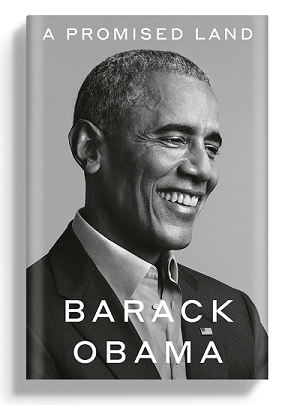
I have read Barack Obama’s A Promised Land for the past five months. I started with an E-book and bought the hard copy, hoping to speed up my reading. While I have read dozens of books this year, this 751-page book is the most impactful I have read.
Obama started with a summary of his life and his foray into politics while trying to avoid repeating details present in the Dreams from My Father and Audacity of Hope. After that, in an impressively comprehensive style, Obama described the chronology of events in the Democratic Party nomination.
One thing was clear that in addition to the fact that he was well prepared, Obama happened to be in the race just in time when there was a need for a fresh voice, a different perspective at the face of the failure of the familiar. His informed opinion about the Middle East and Afghan war, the American economy and the plight of ordinary citizens, have endeared Obama to many. Notably, Obama put forward an agenda for national unity using stories that revealed how much reality and fate Americans share beyond racial and demographic characteristics. The fact that he was running against a respected woman, Hillary Clinton, with a track record of excellence and dedication to family made the competition for the Democratic candidature very tough. However, it did not come as a surprise when Obama won the candidature, making history as the first black person to go that far.
However, the race even got hotter as Obama faced the Republican candidate John McCain and his running mate Sarah Palin. But he was ready! Obama was able to speak in a language young people, progressives, people of colour, minorities, anti-war, affordable healthcare advocates, and environmentalists could understand. Benefiting from a coordinated network of internet-savvy young volunteers, Obama’s message ‘Yes, We Can’ spread far and wide, growing number of supporters and currying more dollar donations. Knowing fully that many of his potential voters, the youth and minorities, were not registered to vote, a part of his campaign was dedicated to ensuring new voters were duly registered.
As Americans went to poll in November 2008, victory was well in sight for the 47-year-old contestant. Barrack Hussain Obama won the seat of the 44th President of the United States of America following a victory in both electoral college and popular votes.
Going forward, the book dedicated some chapters on how Obama assembled his cabinet and staff. There were two key priorities, economy and security. Unfortunately for Obama, he won the seat when a recession was ripe, arising from Wall Street and other financial malpractices. Sadly, the Bush administration underestimated the whole situation and its impact on average citizens who lost both their mortgages and jobs. Therefore, Obama and the new team started working on injecting and stimulating the economy before his inauguration. Given his promise to minimise America’s troops and funding in the Middle East and Afghan war, strategic appointments related to security were also carefully made to ensure that.
Obama was not economical with words on his proud The American Recovery and Reinvestment Act. This detail provides outsiders like me with a deepening explanation of the American senate and house politics in a straightforward language. Factors and concepts such as the filibuster, lobbying, the categories of republicans and democrats, and the arts of political compromises were alive throughout. The project involved injecting 800 billion dollars into the account through multiple sectors. This big money was hoped to halt the worsening of the recession, build consumer and investor confidence and at the same time drive some infrastructure development.
At last, the bill was passed to the relief of the economic team. As Obama would claim later in the book, the project has tremendously contributed to putting the US economy in shape. In addition, Obama worked towards a bill that protects consumers against future recklessness of the banks and other financial institutions. A similar level of detail was used to describe the politicking around Obamacare Act and decarbonisation agenda, and so on.
In a dedicated section of chapters ‘The World as it is’, Obama narrated his global political agenda, actions, visits, and collaborations. Obama generously educated his writer about the structure and place of Iraq and Iran in the scheme of Middle East geopolitics, of course, through the American lens. The writer did the same epistle on Russia, China and other world political players. He narrated his famous visits to Russia, China, Egypt, Japan and other countries in an attempt to promote world peace and extend a handshake with America’s perennial rivals. Although there were some futile attempts at balance, the writer didn’t hesitate to black paint Iran, Russia, and China in that typical American cliche. Nevertheless, ‘A promised land’ provides an interesting short course on global politics.
Another part, ‘In the barrel’, was dedicated to an exhaustive account of Obama’s life as the US President and other day-to-day internal affairs. Disasters, damage control, action, response, bills, acts, and politics all sandwiched in a maze that keeps the president of the USA exhausted. This was followed by the last part, ‘On the High Wire’ centred around the fight against terror and yet again the complex international politics. Notably, Obama proudly gave a detailed account of the Abbottabad raid that led to the successful neutralisation of Osama Bin Laden in 2011. The book was carefully terminated at that point, amplifying victory against evil and a sense of fulfilment for the families of victims of 9/11.
Obama tried not to go into details on the politicking process for the 2012 presidential election. This suggests that the stories were saved for another day, likely packaged currently in a different book.
The author’s mastery of language, the gift of oration, interesting sense of humour and occasional sarcasm have beautified the book in a manner that captures the imagination of the reader.
In summary, the writer successfully highlighted lessons in politics of principles, the audacity to dream the ‘impossible’, the perseverance to push against all odds and the smartness in utilising modern technology and the resource of young people. The book also extolled the virtue of intense preparation for aspiring leaders. In addition, this book highlighted the achievements of Obama’s first presidency, especially the control of economic recession and creation of jobs, better access to healthcare, decarbonisation efforts, international alliance and fight against terror.