UNESCO

MIL Policy Integration: MAIN, in collaboration with UNESCO, trains media executives, senior editors, and content creators in Kano

By Nusaiba Ibrahim

Media Awareness and Information for All Network (MAIN) in collaboration with the United Nations Educational, Scientific and Cultural Organisation (UNESCO) has conducted training for media managers, senior editors and content creators from the Northwest region on the Integration of Media and Information Literacy (MIL). The two-day event took place in Kano State from May 19 to 20, 2025.

In his welcoming address, the Chairman of MAIN, Prof. Jide Jomoh, Lagos State University, appreciated all the participants and guests for sparing time out of their busy schedules to attend the session. He also appreciated the support of the Kano State government. Some of the objectives of the training, he said, included ensuring that editorial policies are reviewed in line with the rise of technology and the emergence of AI, as well as strengthening the capacity of journalists with the skills needed to combat information disorder.

To declare the event open, Hon. Commissioner for Information and Internal Affairs in Kano State, Alhaji Ibrahim Waiya, expressed his gratitude on behalf of the Kano State government to MAIN and UNESCO for organising the event. He said the training comes at a time when journalism is facing challenges on issues brought by information disorder. He noted that the training will surely equip the participants with the practical skills they need, especially for national development.

Also speaking during the occasion, Adamu Salisu, the State Coordinator of NBC, Kano State, who represented the Zonal Coordinator, said there are indeed blurred gaps between content creators and journalists, which make activities quite uneasy for media managers today. He added that “Integrating MIL is not merely a theoretical exercise but a practical necessity.”

Notable presentations on the first day of the event were made by Dr. Ruqayyah Yusuf Aliyu of Bayero University Kano, who spoke on MIL in Journalism – Challenges and Prospects, and Dr. Helen T. Olojede, the Head of the Department of Philosophy at the National Open University, who discussed Media and Information Literacy Responses to Generative AI. The sessions presented participants with the opportunity to discuss contemporary issues surrounding information disorder, combating misinformation, using AI and technology ethically, and how MIL can be integrated into media practice for the benefit of the public.

Also, during the session, Ms. Yachat Nuhu, from the Communication and Information sector, UNESCO Abuja, gave an overview of the organisation’s work on media and information literacy. Additionally, Dr. Oluseyi Soremekun, the National Officer of the United Nations Information Centre (UNIC), discussed extensively the issues and competencies of understanding Media and Information Literacy.

The second day of the training was focused more on discussions and active participation from the attendees. Prof. Jimoh led a discussion on MIL and national development, reviewing the editorial policies of selected media organisations. Participants were later divided into groups for in-depth discussions, and thereafter, representatives from the groups presented on the key competencies needed to support the implementation of policies and strategies on MIL in their respective media organisations.

In their various remarks, the participants stated that the program has achieved its objectives to the tune of 80 per cent. Media practitioners from The Daily Reality, the Nigerian Union of Journalists, Katsina State Television, Abubakar Rimi Television, Freedom Radio Kano, Daily Trust and the Vanguard Newspaper, as well as Hausa_Fulanii, a notable northern Nigerian blogger, among many others, participated in the session.

Finally, the session concluded with the formation of the Nigeria MIL Media Executive Network, which will be chaired by Mr. Abba Zayyan, a seasoned media professional in Nigeria. The training will also be replicated in the other zones of the country, as that of the North West was the first.

Nusaiba Ibrahim Na’abba is a freelance journalist and communication specialist from Kano, Nigeria. She can be reached via nusaibaibrahim66@gmail.com.

The Kano durbar UNESCO inscription: Beyond the jubilations

By Salim Yunusa

The formal inscription of the annual Kano Durbar by the United Nations Educational, Scientific, and Cultural Organization (UNESCO) on its Representative List of Intangible Cultural Heritage of Humanity is a welcome development to not just Kano but Nigeria as a whole. The nomination, adopted on the 6th of December, 2024, in Paraguay, at the 19th session of UNESCO’s Intergovernmental Committee for the Safeguarding of the Intangible Cultural Heritage, makes it the 8th element to be inscribed from Nigeria. UNESCO is a specialised agency of the United Nations that promotes peace and security through international cooperation in education, science, culture, and communication.

According to many sources, the Kano durbar is the world’s largest procession of colourful horses. It has evolved with the history, religion, culture, and tradition of the Kano people over time. It is usually done to mark the Islamic holidays of Eid-el-Fitr and Eid-el-Adha, among other special celebrations. While other similar durbars are carried across almost all Northern Nigerian cities such as Zaria, Katsina, Bauchi, Gombe, Hadejia, Maiduguri and Sokoto, the Kano durbar stands out due to the sheer number of participants, tourists, spectators and days of celebrations.

This global recognition is a significant milestone, celebrating one of Nigeria’s most vibrant cultural festivals. Renowned for its majestic horse parades, traditional regalia, and music, the Kano Durbar reflects Northern Nigeria’s cultural pride and rich heritage. While the jubilations over this achievement are justified, it is essential to explore the opportunities and responsibilities that come with the UNESCO inscription.

 Beyond the celebrations, stakeholders must now prioritise preservation, promotion, and leveraging this global acknowledgement to foster tourism, break down stereotypes, and drive cultural and economic development in Kano and Northern Nigeria as a whole.

Kano—and Northern Nigeria as a whole—is a goldmine of culture and tradition preserved for ages, although these are currently under threat of extinction. The Dye Pits of Kofar Mata, founded in 1498 and spanning five centuries, are at risk of becoming extinct due to disrepair and unsustainable practices in recent times. The walled city of Kano is gradually disappearing to give way to commercial structures along the busy roads of Kano. There is a growing threat of climate change eroding sites like Dala Hills, Gidan Makama and others due to neglect. Sustainable protection and preservation of sites like this must be done for future generations.

This particular UNESCO inscription underscores the need to preserve the Kano Durbar for future generations through strategic documentation and archiving of the festival’s history, rites, and performances. High-quality visual content and written materials can help maintain its essence while creating accessible records for global audiences. This will effectively engage the youth, which is vital to ensure the tradition remains dynamic.

In addition, effective and efficient collaboration between the Kano Emirate council, non-governmental organisations (such as MACOBA, UNESCO, Global Shapers, etc.) and government agencies (NICO, Ministry of Arts and Culture, Tourism Development, etc.) is necessary to provide funding, technical support, and regulations that safeguard the festival’s cultural integrity.

In a state like Kano, boasting the highest population in the country and being the most populous in Northern Nigeria, the Kano Durbar has the potential to become a cornerstone of Nigeria’s cultural tourism, becoming a blueprint for other durbars across the region. To achieve this, a well-coordinated tourism strategy is essential. This could include partnering with airlines, hotels, and tour operators to create attractive travel packages for domestic and international tourists. Marketing campaigns highlighting the Durbar as a unique travel experience should be launched across social media platforms and international media outlets. Collaborations with influencers and travel bloggers can also amplify its appeal.

Furthermore, enhancing the visitor experience is key. Infrastructure around festival venues should be improved, with better roads, accommodations, and festival-specific amenities. Creating dedicated viewing platforms and cultural villages can also enrich the experience for attendees, making the Durbar more accessible and enjoyable.

Beyond cultural pride, the inscription opens doors for economic development. Investments in Durbar-themed merchandise, souvenirs, and artisanal crafts can generate revenue for local communities. E-commerce platforms can facilitate the sale of these items to a global audience.

Additionally, recognising the festival as an international heritage can attract global partnerships and funding for sustainable development initiatives in the region. Furthermore, technology offers endless possibilities to promote the Kano Durbar. Virtual reality (VR) and augmented reality (AR) experiences can bring the Durbar to audiences unable to attend physically. Comprehensive online platforms can offer ticket sales, merchandise, and interactive content, ensuring year-round engagement with the festival. These digital initiatives can transform the Durbar from a localised event into a global cultural phenomenon.

Finally, the festival could serve as a hub for cultural exchange, inviting participants from other regions and countries to share their traditions and learn about the Durbar, fostering mutual respect and understanding. It could be so much more, with proper organisation and intention by the stakeholders involved.

The UNESCO inscription of the Kano Durbar is a momentous achievement that places the festival on the global stage. However, this recognition comes with responsibilities. By preserving its legacy, harnessing its tourism potential, and leveraging technology and cultural exchange, stakeholders can transform the Durbar into a beacon of Nigeria’s cultural excellence. Beyond the jubilations lies an opportunity to turn this acknowledgement into a catalyst for cultural pride, unity, and economic development. The time to act is now.

Salim Yunusa writes from Abuja, Nigeria and can be reached at syunusa@gmail.com.

The challenges of integrating Almajiri traditional schools into mainstream education

By AbdulMajid Haruna

Several policies on education span across four decades, and yet Nigeria is still grappling with the menace of out-of-school children. Recent statistics from UNESCO projected a figure hovering around twenty million, with a significant portion of the children being the Almajiri Quranic students. 

Issues such as inconsistent government policies, poor implementation, inadequate funding, and limitations in terms of the scalability and scope of interventions provided by non-state partners and international donors have hindered efforts to address the problem. However, cultural and religious resistance remains a significant barrier.  

The classical system of Quranic Almajiri education imbibes Islamic teaching that every Muslim must acquire religious knowledge. However, culturally, the system aims to instill self-reliance and a sense of responsibility in the social and moral training of the child through hardship, toil, and hunger.

Sufism, the doctrine on which the system was founded, frowns at self-indulgence and believes asceticism and humility to be the hallmarks of a seeker of knowledge. This sentiment was echoed in the Weekend Triumph Newspaper of August 26, 1989, by Abdulkareem A. Bello, who describes the system as “the old wine in an old bottle”. 

In this article, Samaila Ado, an Almajiri in the Kano municipality, was reported to have said, “Our deplorable and wretched condition is a symbol of selflessness and humility.” According to Samaila, a true Almajiri is not concerned with worldly gains but rather is busy preparing for eternal life, which is more paramount.

Historically, the system had flourished owing to the support from the state’s public finances, the local community, and the philanthropic efforts from elites that catered to the modest needs of the children. During this time, the Almajiri scholars were artisans who, during their lecture-free hours, engaged in farming, fishing, well construction, production, masonry, trade, and tailoring. Most were farmers of the iconic Northern Nigerian cotton and groundnut pyramids. Some engaged in leather tanning and shoe and bag making in the old Sokoto empire. 

Sadly, however, the system has failed to adapt to the realities of the twenty-first century, with the modern Quranic Islamiyyas overshadowing the traditional Tsangayas and the Western secular education providing the safest route to climb up the socio-economic ladder. But more worrisome is the report that said six out of ten Almajiri pupils never find their way back home, and many lose their lives through street violence, ritual killing, kidnapping, disease and hunger.

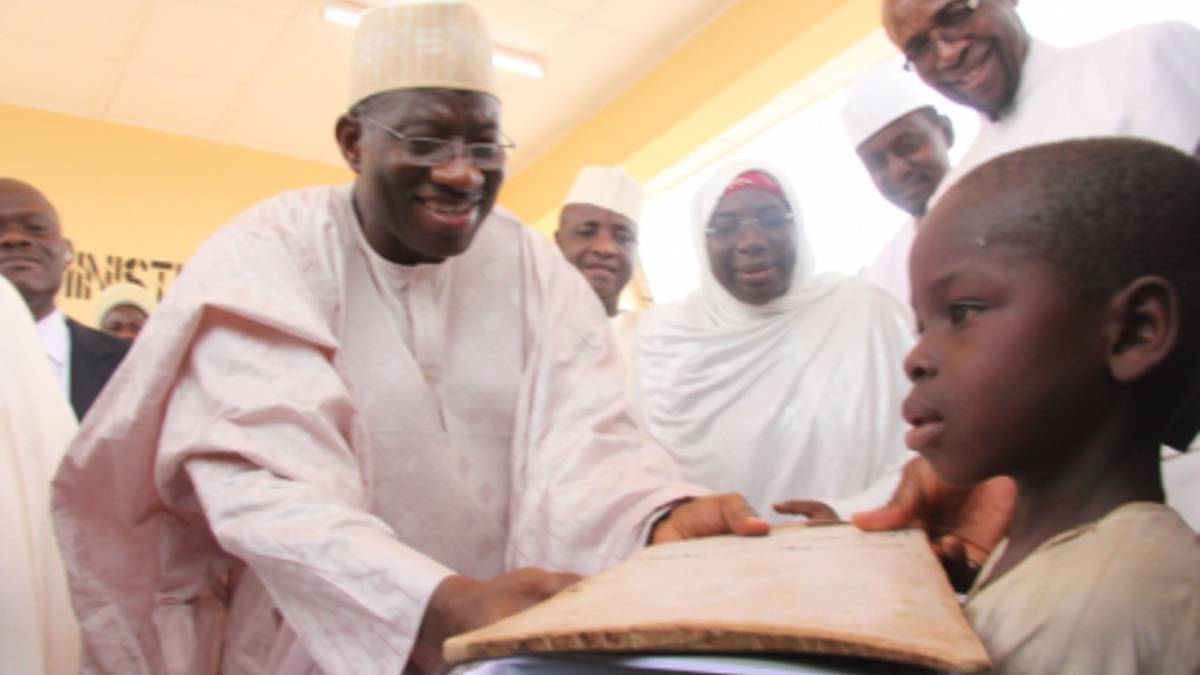
Over the years, Integration has proven difficult due to the inadequacy of our policies. A careful analysis of the failure of Jonathan’s Almajiri integrated Model Schools by the Former Director of the Universal Basic Education Commission, Professor Ahmed Modibbo Mohammed, at Arewa House In Kaduna revealed that the lack of sensitisation and mobilisation of the nation affected the level of buy-in leading to a decrease in support and acceptance of the new system.  

Qualitative assessment research corroborated this analysis, carried out among Almajiri communities in Adamawa State. It demonstrated that including secular subjects was one of the major reasons parents did not welcome the program. 

Time and again, our policymakers have underplayed the subtle but widespread sentiment among the Islamic traditionalists who fear the new order poses the danger of erasing the cultural identity of the people. In a 2021 report published by The Resource Centre for Human Rights and Civic Education (CHRICED), Sheikh Bakura Assusaawi was remarked to have said: “Every Islamic scholar had gone through the system which shows us that there is indeed a great benefit in that system which we cannot afford to lose. There is no other help apart from helping the religion, and when we all neglect to do that, there is never a way forward.”

This allegiance to the old system and aversion towards Western education is rooted in the early events of the 20th century. On October 9, 1902, Fredrick John Lugard replaced Arabic & Hausa-Ajami (Hausa written with Arabic alphabets) with English & Romanized Hausa as the official language of Northern Nigeria. 

This single act in history changed the region’s educational scholarship trajectory. Not only did it render the rich knowledge produced in Ajami in the fields of humanity, science, and social science by the preeminent Sokoto caliphate obsolete and dying, but it relegated those proficient in this script to the background because to be “literate” and “employable” means to speak English and to write in the Roman script.

Tragically, the British also failed to recognise the Almajiri schools and abolished their state funding, tagging them as mere religious schools. This linguistic displacement brewed an identity threat in the people’s social psyche, igniting disdain and antagonism for the new system introduced by the colonial state and the Christian missionaries. 

Unfortunately, a century gap is still not enough to change the thought patterns of the Almajiri community. A recent story shared by a Twitter user about his late colleague’s son aptly drives home my point: 

The colleague had died, and the possibility of sponsoring the child’s education was hanging in the balance because the grandmother was standing in the way. She wanted the son to be enrolled in an Almajiri Quranic school instead of a secular Western school. 

The Twitter user was baffled because the grandma wouldn’t budge even when it was suggested that the child attend a formal school on weekdays and the Almajiri school on the weekends.

Many juxtaposing factors remain underpinning enrolment in traditional Almajiri education, barring socio-religious commitments and an aversion to Western education. These include rural-urban migration in search of greener pastures, disbanded families due to divorce or the death of the breadwinner, poverty, irresponsible parenting, and bad governance. 

Integration begins by fixing the stated problems, but reorienting society to the limitations of this age-long conservative approach to Islamic scholarship takes precedence.  Ever since the pilot scheme of 1964 to modernise Islamic schooling in the Northern Nigerian government headed by Sir Ahmadu Bello that ran successfully for few years before coming to a halt after his assassination, subsequent education policies namely Universal Primary Education (1976), National Primary Education Commission (mid-1980s), Universal Basic Education Act(2004) and Ministerial Committee on Madrasa Education (2009) which led to the establishment of President Jonathan’s Almajiri Model Schools have suffered detrimental setbacks.

Policies are cathedrals in the grand scheme of things; reality is the quicksand sinking them to the bottom. The government and relevant stakeholders must develop the political will to implement policies to their very ends. Most importantly, they must engage in intensive enlightenment, mobilisation, and re-orientation of the populace through the mass media, town hall meetings, and active involvement of the traditional Ulamas and leaders. 

AbdulMajid Haruna is an education thought leader and an inclusive education advocate primarily focused on vulnerable Almajiri children. He can be reached via abdoulmajeed570@gmail.com.

Governor Bala: What is the position of education in Bauchi State?

By Ukasha Rabiu Magama

The last time the Bauchi state government recruited teachers in its primary and secondary schools was in 2014-2015 when Dr Malam Isah Yuguda was in power. Since then, no single teacher has been employed again in the sector, though there have been cases of retirement, changes of cadres, and death.

It may not interest readers to hear that with these sad and unwelcome developments, Bauchi state has been enumerated among the states with many out-of-school children in Nigeria. According to UNESCO, in October 2022, Bauchi had the highest figures, amounting to 1,239,759.

These alarming figures are not unconnected to the government’s failure to recruit apt teachers, provide enough instructional materials and non-payment of staff salaries. This weird and mind-boggling development has thrown thousands of Bauchi kids out of school and, sadly, others to street begging and other criminal activities. 

Imagine a primary school having one teacher with a population of about 350 pupils. There are many schools in the Lame district of Toro local government with only one teacher. Also, not just Lame district but almost all primary schools in the state’s rural areas face similar problems. Pupils receive classes under the shed trees with no chairs. Hmm! Primary schools and even our secondary schools are in terrible condition.

Recently, the Daily Trust newspaper reported how the lack of teachers and infrastructure forced the closure of many primary schools and turned pupils into farmers in Alkaleri, the governor’s local government. Still, Daily Trust gathered that multiple public primary schools, especially in the semi-urban and rural areas of the state, are either run by volunteer teachers hired by the community development committee or by public-spirited individuals in their quest to attract parents and children who are shunning school.

Surprisingly, the authorities are aware of the situation. There was a time when Korijo Usman, the SUBEB director of state, told journalists that there were 79 primary schools in Misau’s local government, and each school had one teacher.

The governor had once condemned the system while expressing dissatisfaction with the Dumi school’s bad condition. He stated that he was unhappy with SUBEB and the state’s ministry of education. 

Therefore, if the governor can condemn the system and nothing has been done to fix it, then our kids’ future is at stake. Also, the government has indicated its ineptitude to restore the system.

If the World Bank and other NGOs could donate huge funds, just revamp the system. I accused the state government of embezzling the funds since nothing has been done yet.

However, the dilapidating condition of the schools must be attributed to the activities of vandals and the negligence of the host communities; government negligence contributed to nearly 70% of the problems. It is undeniable that unscrupulous elements are carting away schools’ belongings, having government agents as masterminders.

Therefore, education in Bauchi state is on the verge of collapse as there are many no’s. As such, I’m calling on the present administration of Bala Muhammad Abdulkadir to employ sufficient teachers, build enough classes, and renovate the abandoned ones as a matter of urgent public importance. 

Notwithstanding, paying teachers’ salaries on time and promoting those who are supposed to be promoted would help revitalise the education sector in the state; if not, the whole system will soon collapse, and the position of the state education sector will be nowhere to be found. 

Ukasha Rabiu Magama writes from Magama, Toro, Bauchi State, and can be reached at Ukasharabiu95@gmail.com.