Umrah

Before your next Umrah…build a Waqf

By Abdullahi Abubakar Lamido

The dusty path to Al-Ma’arif Islamiyyah School was unusually quiet that Wednesday afternoon, except for the gentle crunch of sandals on gravel and the animated voices of two young girls wrapped in flowing white hijabs.

Unknown to many passersby, the conversation between these two girls wasn’t just about school or homework. It was about something deeper—something that could transform communities: the power of Waqf. As they walked, they debated a topic that many adults still struggle with: Should we prioritise spending on annual Umrah trips or invest in sustainable Waqf projects that empower girls through education and skill-building?

“Ameena, wait for me!” called out Hafsah, adjusting the corner of her veil.

Ameena slowed down and turned with a grin. “Wallahi, you’re always dragging your legs like an old lady.”

They both laughed.

But as they turned the bend, Hafsah lowered her voice and leaned in. “By the way, my aunt and her entire family are travelling for Umrah again this Ramadan. That’s like the fifth time in a row! Imagine the reward, subhanallah!”

Ameena nodded with a smile, but her eyes said more. “Masha Allah. No doubt, Umrah is virtuous. The Prophet SAW said in Sahih al-Bukhari, ‘Umrah to Umrah is expiation for the sins committed between them.’ And in another Hadith, ‘The performance of Hajj and Umrah removes poverty and sins just as a furnace removes the impurities from iron.’ So yes, it is beautiful.”

Hafsah beamed. “Exactly! That’s why they go every year. My aunt says you can never get enough of Makkah. The barakah there is like no other.”

Ameena stopped, picked a tiny stone, and tossed it thoughtfully. “I agree. But I can’t help thinking… what if, just what if, they did something different this year? Take the entire amount they usually spend—tickets, hotel, feeding, shopping—and invest it in a Waqf. A sustainable, income-generating waqf specifically for girls’ education and skills development.”

Hafsah blinked. “A waqf? Instead of Umrah?”

“Not instead of,” Ameena corrected gently, “but perhaps before another one. Let’s say they make a solid waqf just once. From then on, the proceeds can fund multiple Umrahs and sponsor tens—maybe hundreds—of girls like us. Wouldn’t that multiply the rewards?”

Hafsah frowned slightly. “Hmm. But that’s not the same spiritual feeling as being in Makkah.”

“True. But listen to this Hadith,” Ameena said, eyes lighting up. “The Prophet SAW said: ‘Whoever goes out to seek knowledge is in the path of Allah until he returns.’ That’s in Sunan al-Tirmidhi. And in Sahih Muslim, the Prophet said that feeding the hungry, helping the poor, or removing a harm from the road are all Sadaqah. These actions have also been likened in reward to Umrah.”

She continued, “In fact, Imam Ibn Rajab said some charitable actions—because of their benefit to society—can surpass voluntary Hajj and Umrah in reward!”

Hafsah looked unconvinced. “But those are small things. Can they compare to walking between Safa and Marwa?”

Ameena smiled knowingly. “Let me share a story about our Islamic heritage, as reported by Ibn Kathir—one of the great scholars and righteous predecessors, Abdullah ibn al-Mubarak, once set out for Hajj. Along the way, he passed through a town where a young girl was seen taking a dead bird from a garbage heap. 

Curious, he followed her and learned that she and her brother had nothing to eat, surviving off scraps and carrion due to poverty and oppression. Ibn al-Mubarak was so moved that he cancelled his pilgrimage, gave her all the money he had set aside for Hajj—except a small portion for their return—and said: ‘This is better than our Hajj this year!’

Can you imagine? A scholar of his stature suspended the journey of a lifetime because he saw a greater reward in feeding the poor.”

Hafsah bit her lip, thoughtful.

“And what of the Hadith in Sahih al-Bukhari,” Ameena continued, “where the Prophet SAW said: ‘He is not a believer whose stomach is filled while his neighbour goes hungry.’ Don’t you think our people—who travel yearly for Umrah with their entire household—should ask themselves if their neighbors are fed, educated, and safe first?”

There was silence for a while. Then Hafsah asked, “But maybe they feel their own worship is more important.”

Ameena didn’t flinch. “Worship is important. But Islam is both ‘ibadah and mu’amalat—personal devotion and social responsibility. A society where girls are unskilled, uneducated, and poor is a society in crisis. Allah says in Surah Al-Balad, ‘But he has not attempted the Ascent. And what will make you know what the Ascent is? It is freeing a slave. Or feeding on a day of severe hunger, an orphan of near relationship, or a needy person in misery.’ That’s the real struggle.”

She paused, then added, “And here’s a shocking stat: According to UNICEF, more than 50% of girls in Northern Nigeria are out of school. Many of them end up as child housemaids or hawkers. Imagine if we had waqfs in every state—centres for literacy, vocational skills, business mentorship. Wouldn’t that be more pleasing to Allah than redundant luxuries?”

Hafsah exhaled slowly. “You’re making too much sense. But some people say they don’t have the time or knowledge to create a waqf.”

“They can partner with existing foundations,” said Ameena. “Or even just dedicate a part of their wealth to it. Start with a shop, a farm, or a borehole project. Let it generate income. Let it teach a girl to write, to code, to recite Qur’an beautifully, to become a teacher, to stand tall.”

By now, they were at the gate of the Islamiyyah school.

Hafsah turned and looked at her friend. “You know, Ameena, if your words were a waqf, they’d be multiplying rewards already.”

Ameena chuckled. “Then let’s start the first one—with our pens, our voices, and our footsteps.”

They both stepped in, side by side, into a class that taught not just religion, but purpose.

Inside the classroom, the discussion continued to swirl in Hafsah’s mind. That evening, as they sat under the neem tree during Qur’an revision, she whispered to Ameena, “You know what? I’m going to talk to my parents tonight. I’ll share everything you said—every Hadith, every idea. Maybe they can be the first to try this new way: build a waqf before the next Umrah.”

Ameena smiled, eyes glowing. “And I’ll talk to mine too. If they see how serious we are, and how much it could benefit the Ummah, I believe they’ll listen.”

The next day, during break time, the girls called a mini gathering under the school’s mango tree. A handful of curious classmates sat cross-legged in the dust, munching on groundnuts and zobo. Hafsah stood up and declared, “We want to tell you about something that can reward you even after you die. Something more powerful than a yearly trip to Makkah…”

She spoke. Ameena backed her up. Together, they planted a seed.

Later that afternoon, they approached their teacher, Ustaz Sani, known for his stern look but soft heart. A little nervously, they explained their idea.

To their surprise, Ustaz Sani leaned back, eyes shining. “Ameen! This is the spirit of Islam! The Prophet SAW once said, ‘The most beloved of deeds to Allah are the most consistent, even if they are small.’ 

But let me add more,” he said, reaching for a worn book on his desk. “Imam Al-Ghazali wrote that a waqf is a shield for society, a way to preserve faith, knowledge, and dignity. Some waqfs in history lasted over 700 years, sponsoring scholars, doctors, and imams! Even the famous Al-Azhar University in Egypt started as a waqf.”

The girls’ faces lit up.

“Keep spreading the message,” he urged. “You are not too young. Let your classmates know. Let your family hear. Let the whole Ummah remember:

Before your next Umrah… build a Waqf.”

Amir Lamido wrote from Gombe and can be contacted via lamidomabudi@gmail.com.
How Harvard University sponsored students for Umrah

By Muhammad Jameel Yusha’u, PhD

On Friday, I spent the early morning hours participating in a boot camp on negotiation. It was part of the effort of Professor Rand Wentworth to build the capacity of his students in negotiation. The boot camp was facilitated by Monica Giannone.

Immediately after the boot camp ended at 12 pm, my friend Alibek Nurbekov and I proceeded to the Friday prayer. As I was about to enter the prayer hall, Dr Khalil Abdur-Rashid was also arriving. Dr Khalil is the Muslim Chaplain at Harvard University and teaches courses at Harvard Kennedy School and Harvard Divinity School.

“Sheikh Khalil, welcome back from Umrah,” I said as he made his way into the prayer hall.

“Good to see you, Jameel. I need to talk to you after the prayer,” he said, and I nodded in agreement.

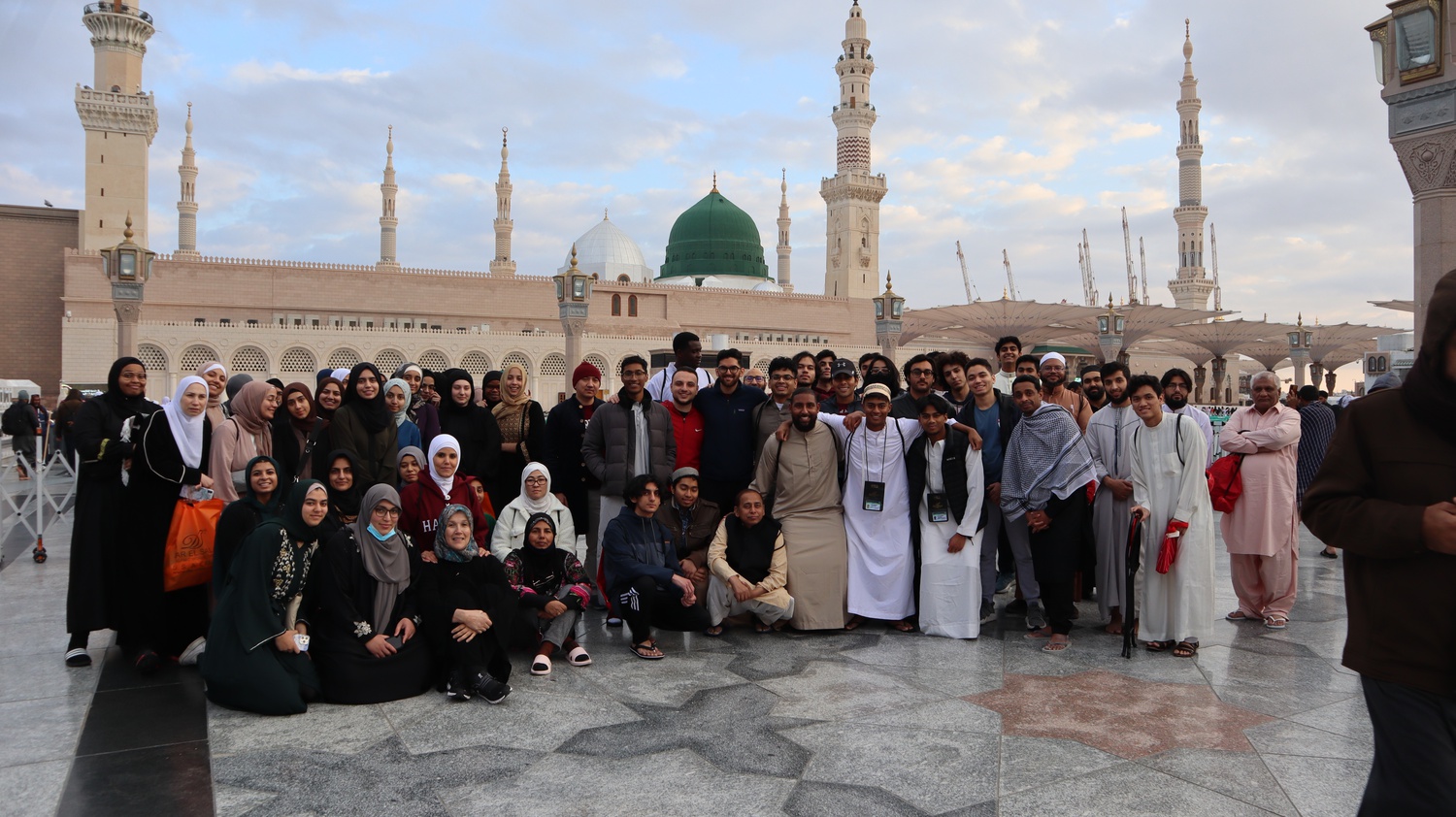
Dr Khalil led a group of students and other members of the Harvard Community to participate in Umrah, the lesser Muslim pilgrimage, where Muslims visit Makkah and perform the Umrah rites. They also visit Prophet Muhammad’s (PBUH) mosque in Madina and other historical places in the Kingdom of Saudi Arabia.

I came to know about the Harvard Umrah trip during the welcome orientation for students led by Dr Khalil last year at the beginning of the fall semester. He announced that some donors had provided scholarships for Muslim students to attend the pilgrimage, and he played a video for us on the experience in 2019 when they went on a similar voyage. Many students pledged to join the group for the trip in January.

Organising trips to different countries is a common tradition at Harvard University during the January break. Many trips were organised to Brazil, Singapore, Mexico, Saudi Arabia and more. The Harvard chaplaincy also utilised the break to organise the Umrah from 4th-14th January 2023.

Quoting Dr Khalil, The Harvard Crimson reported that “a generous donation from a graduate of Harvard Business School and a parent of two current Harvard undergraduates allowed the University to offer the trip at no cost to first-generation, low-income Muslim students. The donation for this year’s trip reportedly totalled approximately $100,000.”

As the Friday prayer finished, I waited patiently for Dr Khalil. As he came out, he asked me to walk towards his car. He brought a gift from the car and handed it to me. “This is a gift from the Umrah.” His wife Samia, who is also the female Muslim Chaplain, said, “it is a little gift for your girls.”

I thanked them in appreciation and headed home to enjoy the rest of the evening with my family. You can find the full story on the Harvard Umrah trip entitled “Spiritually Stimulating: Harvard Students Embarked on First Umrah Trip in Four Years.” (https://lnkd.in/et_dEBer).

Takeaway: Spiritual well-being is important in helping students to have a balanced educational experience.

Muhammad Jameel Yusha’u, PhD, is a candidate for a Mid-Career Master’s in Public Administration at Harvard University, John F Kennedy School of Government. He can be reached via mjyushau@yahoo.com.

Tribute to my late mother, Zainab Basiru (1957-2022)

By Nasiru Manga

My dear mother, as pilgrims converge at Mount Arafat today, marking the climax of this year’s Hajj, I can’t help but shed tears, remembering that it was one of the lifetime ambitions you didn’t live to fulfil as you passed on precisely 155 days ago. Had you been alive and healthy, you could have been among the over one million pilgrims standing at the plain of Arafat today in observance of one of the five pillars of Islam that not every Muslim is lucky to perform.

I know you craved nothing in this world more than seeing yourself circumambulating the house of God, Kaaba al-Musharraf, in Makka and visiting the holy prophet of Islam (PBUH) in Madina. This informed my decision the first time I was blessed with fortune enough to sponsor your pilgrimage about three years ago.

I remember your reaction vividly when I broke the good news to you as I was seated a few meters away, facing you after you finished your Duha prayers one Saturday morning. Your face radiated with joy instantly upon hearing my plan, and for the first time in my life, I noticed tears of joy cascading down your cheeks despite your effort to stifle them. This image of you has kept flashing on my memory all these five months since you met your creator. I remember how you made me blush as you kept showering me with prayers and words of blessings as it was your wont in every little thing done to you.

We started all the necessary preparations for your Hajj. That was when I got to know your actual date of birth, as I had never discussed it with you before. You told me you were sixty-four and born on Sunday, the 7th day of Ramadan. So, using the Hijri converter, I arrived on 7th April 1957, the date we used in all your official documents to anticipate your lifting up to the holy land.

I remember how we had an animated conversation over the phone on the first day you started attending the weekly lessons organised for intending pilgrims in Dukku. You excitedly told me what transpired at the session in minute detail from the attendants, the number of lessons’ teachers and all each of them said, while I was keenly listening, interrupting you only for more clarification. However, we were disappointed when the organisers brought the session to an end a few weeks later. To our disappointment, we learned that there would be no hajj in 2020 due to Covid-19 pandemic restrictions in the world, including the Kingdom of Saudi Arabia, thereby upending your plan to fulfil your lifetime ambition of answering the call of Prophet Abraham (PBUH).

I remember your response when it was suggested that you perform Umrah, when the Kingdom of Saudi started relaxing its Covid-19 restrictions. You told me over the phone that I should allow God to decide. You insisted that it should be Hajj first before Umrah. And you added: “If Allah so will that I will be there, they will push me even in a wheelbarrow, but if it was already written in lauhul mahfuz that I will not perform hajj, there is nothing you can do about it”.

Your health condition started deteriorating during the Covid-19 imposed two-year hiatus from Hajj. You had been a hypertensive patient, a regular visitor to the Federal Teaching Hospital Gombe, but you were never on admission until barely six months before you departed us. And even during your on and off admissions to the hospital, you were hopeful that the restriction would soon be lifted, and you would witness this day on the mount of Arafat. In fact, it was why you agreed to be hospitalised after your grandchildren convinced you that you should take your treatment seriously for this important day.

When I last saw you on a hospital bed, along with my wife and your grandchildren, you looked frail and not the spirited and good-humoured Maama I knew who would tease her grandchildren lovingly. But despite your condition, you were conscious of time for five daily prayers. The following day when I visited you, I heard you complain in a barely audible and soft voice about how your granddaughter did not wake you up in time to observe Subh prayer. I take consolation like a soothing balm in knowing that, as a follower of Tijjaniyya Sufi order, your mouth was full of Azkaar when you were placed on a ventilator about an hour before you took your last breath on 2nd Rajab 1443 (4th February 2022) after Juma’at prayer. It was around 3 pm that I received an unforgettable call from my kid bro and your youngest child informing me of the inevitable.

It’s been five months since you left us, Maama, but we have yet to come to terms with the vacuum you created. It has left an ineffable deep void in our hearts. Now I feel down every morning I wake up. I cannot hear your voice over the phone; listen to your never-ending prayers for me until I cut off the call. Your prayer for me, which I believe catalyses my success, is what I miss greatly. Images of you kept flashing in my memory when I last set my foot in your room which was a source of comfort and joy to everyone around you, especially your grandchildren, who thronged it for the daily goodies you preserved for them. My last call with you was on Wednesday, two days before your death, when I informed you of having an additional grandson, and I remember how you teased the new child calling him Moɗadimbo since his elder brother was called Moodibbo.

You taught me in your words and deeds how I should be generous and a happy giver, believing that what I give out to others is what’s mine, not what I spend on myself. I also learned altruism from you, as you were always concerned about the well-being of others above yours. The first time I brought you some stuff, you shared almost everything in my presence. This taught me a lesson not to buy things for you alone: I had to include my stepmother and uncle’s wives.

I remembered when once I visited you and discovered that your fan was not working. After buying you a new one, you insisted I  should do the same for my stepmother as her own wasn’t functioning too. Any time I visited, you would remind me to see so and so person, and while on the phone, you would tell me to call and felicitate or commiserate with so and so person, and you would ask me the next day whether I carried out your command.

I often felt guilty for hiding some of my problems from you because of your extreme care and concern for me. However, this was out of my respect for you, too, as you became more affected by my problem than I do. Missing you now is a heartache that will never go away.

On this Arafat day, which you had been longing for, I pray to Almighty Allah to grant you al-Jannatul Firdaus and forgive your shortcomings.

Nasiru Manga wrote from Dukku, Gombe State, via nasman@gmail.com.

Too many people at Umrah this year: why?

By Ibrahim El-Caleel

I can’t understand this obsession with the population at Umrah this year. Some people are taking it too far. Asking why should people be going for Umrah when poverty is biting harder.

The Haramain have been under restricted access since the global Covid-19 blues in 2020. Extremely few people accessed the Haramain throughout the year 2020; just a little above that accessed it in 2021.

In 2022, the Haramain have resumed operations in full swing. The world has moved on Covid, becoming more attentive to Putin’s war.

If the Haramain has remained under restricted access for two consecutive years, commonsense should tell you that a lot of people will troop in immediately everything is back to normal. You have a ‘merger’ sort of attendees from three years – 2020, 2021 and 2022. Also, it is something of joy and divine praises that finally, we can visit the sacred sites to their fullest capacities.

This is only a fair idea on why it is this full. It could have even been fuller than this had it been its affordable.

You come across writings that “recommend” or “advise” Umrah attendees on a ‘better use’ of their money, towards feeding than lesser pilgrimage. We do so with all dictatorial might as if going to the Ramadan Umrah is a misplacement of priority. Social media has helped show how some of us can be more dictatorial than Hitler himself.

Why do we feel this sense of always telling rich people what to do with their money, especially in religious matters? The entitlement is beyond me.

Umrah is not a mere tourism. It is an act of worship. Umrah in Ramadan is even a more serious act of worship, lucratively rewarding with the sincere intentions.

In a hadith, Prophet Muhammad (Peace Be Upon Him) said, “an Umrah made in Ramadan is equivalent (in reward) with performing Hajj with me (the Prophet)”. This hadith is authentic, and has been transmitted by both Imamul Bukhari and Imām Muslim. At least.

This is why apart from Dhul Hijjah, Ramadan is the next month you see Muslims traveling to the Haramain Al-Shareefain. It is with purpose. They have the money to go after a specific huge reward, that’s why. In most cases those of us who don’t have money don’t even pay attention to ahādith like these. I remember the late Shaikh Albaniy Zaria in his Saheehul Bukhari lessons in Kitabuz Zakah. The Shaikh saw a lot of people sleepy, dozing off. So he said, one of the reasons why some people sleep off during Zakah lessons is because they don’t even have the wealth which qualifies for Zakah. They are not rich. This is why they find it hard to pay attention to understand the topic. Rahimahullah.

Therefore, Umrah and Umrah in Ramadan are not tourisms please. Rich people have their reasons for embarking on them. Good, valid reasons. Do not be talking as if they are misplacing priorities. Saying they should use the wealth to feed the poor, instead of doing Umrah. Do you know whether they are already doing so? Or since when did you become the divine regulatory directorate where people must come and confess their acts of deeds so that you are aware?

I think it is important we get down from this moral horse. You have an iPhone, a Redmi Note, an expensive Versace shoe, a Toyota Corolla. You buy 10gb mobile data monthly. Have you ever considered down-tiering from these things to cheaper things so as to use the differentials to feed the poor? Why don’t you sell off your Toyota and buy a Lifan motorbike, and use the balance to feed the needy in this Ramadan? After all, all you need is a transporting automobile. It doesn’t have to be a car, talk less of being a Toyota!

If you haven’t been doing this, do not get obsessed with ‘advising’ people on how to rank their Nawafil acts of deeds based on your perceived scale and degree of importance. It ain’t your place. It ain’t my place either.