Tsangaya

KAYI Microfinance Bank: Empowering Tsangaya schools for economic transformation in Northern Nigeria

By Rabiu Alhassan Elkanawi

As Nigeria continues to champion financial inclusion and socio-economic development, KAYI Microfinance Bank has taken a decisive step to address the needs of remote communities through an initiative named Grassroots Empowerment and Engagement Project.

Recognising the unique challenges faced by Tsangaya (Almajiri) schools in Northern Nigeria, KAYI Bank has launched a pilot program across four states—Kano, Katsina, Kaduna, and Jigawa—targeting these centuries-old learning centres to boost financial literacy, entrepreneurial activities, and access to digital banking services.

Tsangaya schools have traditionally offered Islamic knowledge, basic literacy, and numeracy skills, primarily in Arabic. Many of these centres are located in areas with little or no access to conventional banking facilities, leaving them vulnerable to financial exclusion. Poverty and unemployment continue to be rampant in these communities, where students (almajirai) often resort to street begging to meet their needs. This new program by KAYI Microfinance Bank directly tackles these issues by positioning Tsangaya instructors and leaders as community champions of digital financial inclusion and economic empowerment.

Piloted in August 2024, the program provides each participating Tsangaya school with a range of resources valued at about five million naira. This includes training sessions on financial literacy, business management, and start-up funds. These investments enable each school to establish and operate a cash point business, offering critical services such as deposits, withdrawals, and transfers. By eliminating the need for community residents to travel long distances to access banking, the initiative significantly cuts costs and eases residents’ financial transactions.

The empowering nature of this approach promotes trust in financial institutions. Community members can interact with familiar faces—teachers and leaders from the Tsangaya schools—who have undergone comprehensive training to provide financial literacy and other training to the community and effectively manage these cash points. Over time, the program will enhance economic engagement, stimulate local entrepreneurship, and help reduce poverty rates in historically underserved regions.

By placing financial tools within reach of marginalised populations, KAYI’s initiative offers a sustainable solution. Stakeholders, including students, parents, and local traders, gain firsthand exposure to the benefits of digital banking. Basic financial concepts—saving, budgeting, and prudent money management—are introduced in an environment that respects the community’s cultural norms and values.

This program’s potential extends beyond immediate monetary benefits. Supporting Tsangaya schools contributes to the broader goal of social development and community upliftment. If children have better prospects for skills acquisition and financial stability, fewer may be compelled to resort to street begging. Building trust and familiarity with digital banking services encourages more people to open savings accounts, apply for microloans, and engage in entrepreneurial endeavours.

KAYI Microfinance Bank’s efforts align with the broader objectives of financial inclusion strategies set by the Central Bank of Nigeria (CBN). With many remote regions in the North still lagging in access to credit and other essential banking products, the bank’s model provides a blueprint for how financial institutions can partner with local leaders to overcome distrust and logistical barriers. Further replication of this approach will likely spur economic activities, reduce unemployment, and help alleviate poverty.

As the pilot program continues, KAYI plans to monitor and measure outcomes to refine and expand the model. The ultimate goal is to replicate the initiative across more states in Northern Nigeria and beyond. The bank envisions a future where every region, no matter how remote, can participate actively in the digital financial system, thereby nurturing entrepreneurship and uplifting entire communities.

KAYI Microfinance Bank is a beacon of corporate social responsibility. By creating a culture of financial literacy among grassroots populations, the bank has set a high standard for other financial institutions to follow. By merging profit-driven objectives with a genuine commitment to social impact, the bank has created a virtuous cycle: stronger local economies, lower poverty rates, and a more inclusive financial ecosystem that can drive sustainable development across Nigeria.

Rabiu Alhassan Elkanawi writes from Kano, and he can be reached via email at alhassanelkanawi@gmail.com.
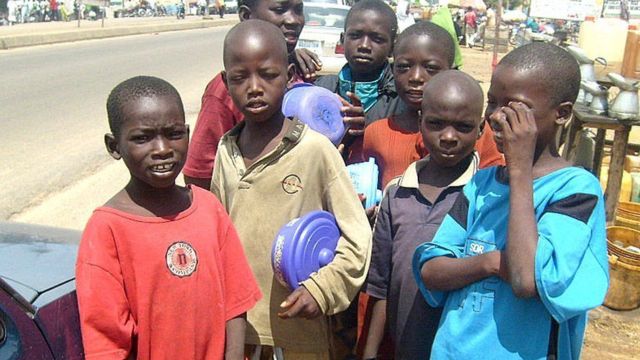
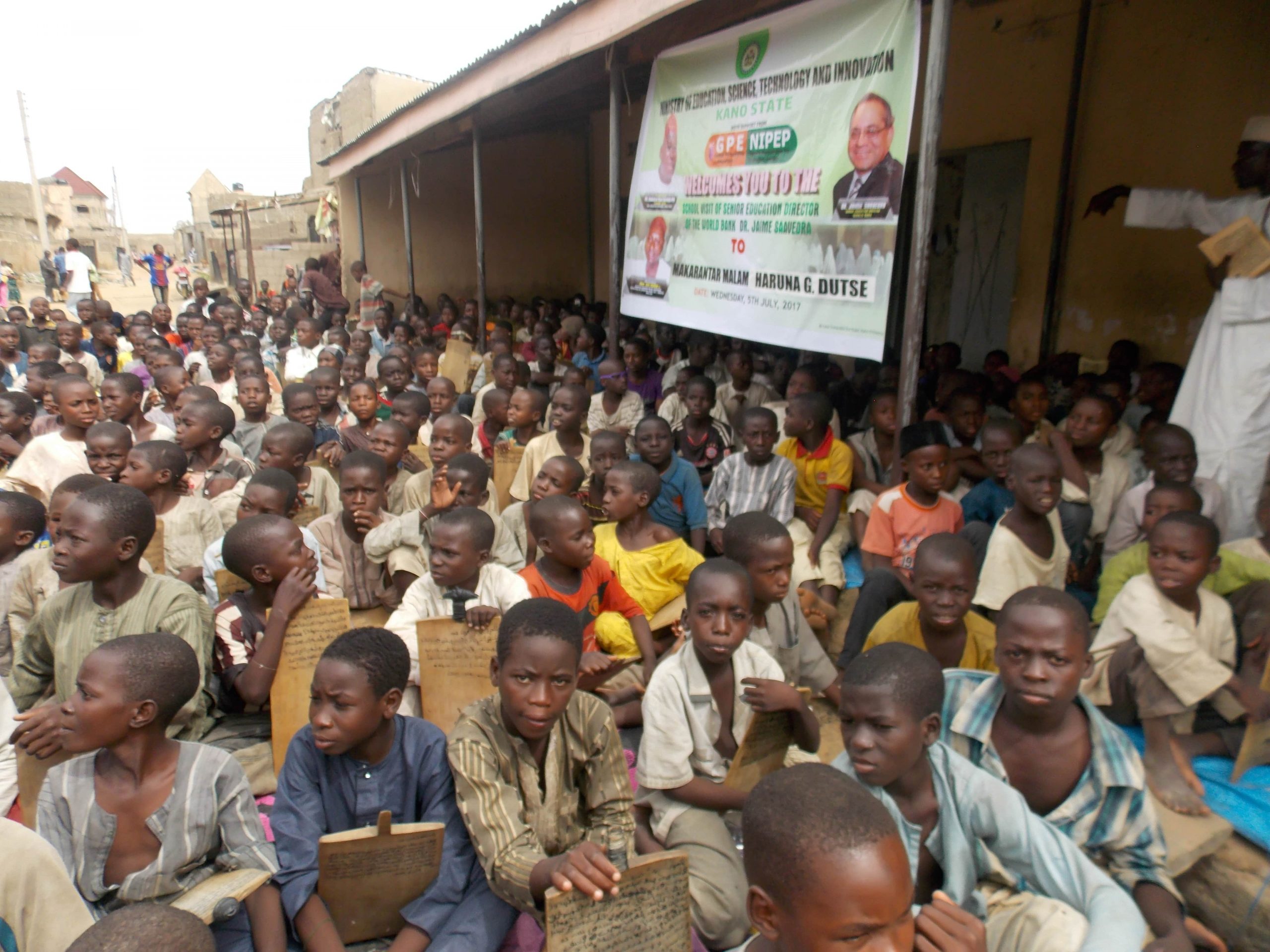
Who will save our children?

By Lawi Auwal Yusuf

Any sympathetic person will surely ask himself these questions over the unfortunate fate of Almajiris: what wrong have they done to deserve such ruthless treatment? Are they not humans? Are they divinely condemned? Is it because we have heartless hearts? Or is it just because we have brainless brains? 

However, the Social Contract Theory extrapolates the relationship between the State, Citizens and Laws. Both the state and citizens have an overwhelming obligation to obey the law. These laws made it possible for leaders to assume the office and couples to marry and have legitimate children. Through these laws, leaders must cater to the needs of people and parents to take care of their children. Ultimately, justice is the philosophical underpinning and moral wisdom behind this idea. 

I wonder why leaders and parents breach the trust bestowed on them. Indeed, we need a professor in the law of trust to prove this before a jury so that the culprits will be locked up in prisons. 

Politicians have made these innocent children scapegoats of their misrule. They are severely castigated for offences committed by the government. Also, the lackadaisical and pitiless attitudes of parents worsen their plight. Even animals don’t dump offspring. On the contrary, they vigilantly look after them and guard them fiercely against any harm until they can take care of themselves.

Everyone abandons these children. They are left on their own to fend for themselves. Therefore, they scavenge through garbage, looking for food, wearing shabby clothes. They wander freely without a specific purpose or destination, with no shoes in the scorching heat. They equally have no one to attend to them when they fall sick. It seems like the ancient Indian caste system is gradually manifesting in 21st century Nigeria, and Almajiris form part of the Dalit (Untouchables) social group. 

When you ask them to define democracy, they will tell you that “it’s a government of the elites, for the elites and by the elites.” This is because it is purposely designed to cater to the needs of nobles only in their perception. It’s nothing to commoners but an inevitable woe. So they see it as subjugation, tyranny and distress. 

Almajiris have carried the cross for too long. They’re tired of this impudent desertion and have endured this problematic situation, and cannot withstand it any longer. Finally, they’ve been pinned down by the neck and are crying out for help with a thunderous scream, “we can’t breathe!” But, of course, this is cruelty in its cruellest form. 

These children are the future custodians of our society. Their desolation denotes that we undermine its continuity, progress and prosperity. We will bequeath to them a country that negligently failed to help them, forsake their welfare and future. They will take over a nation unable to develop humans, plagued by injustice and misery. Hence, it is unlikely that they will be patriotic to Nigeria. Is this what we are preparing for the next generation?

Indeed, they will remember us as imprudent forefathers that ruined their lives, put them in dismay and plotted the doom. The ones that disappointed them, those that couldn’t save them from grief. Those ancestors whose labour had been in vain. Indeed, they will utterly forget us, let alone pray for our eternal rest. 

We expect Tsangaya schools to consistently roll out erudite personalities, honourable scholars like late Dr Ahmad Bamba, Sheikh Ja’afar Mahmud Adam, Prof. Isa Ali Pantami or prof. Muhammad Sani R/Lemo. Unfortunately, we saw something entirely different. 

Nowadays, Almajiris are not purposely taken to Tsangaya for learning. Due to a lack of awareness concerning contraceptives, parents incessantly born children they can’t support. At long last, they discard them. How will a minor learn without provision for his necessities, vehement supervision of parents and also fend for himself far away from home? It can NEVER be possible.  

Let’s assume there are only one million Almajiris in the North, and only 5% ended up in criminality. Hence, there will be an additional 50,000 criminals to terrify the region, which is about 15% of the police workforce. So, how many more millions are there? 

Consequently, we are paying the price for our actions and inactions. We are suffering due to failure to resolve this criminogenic problem. We’ve undergone the agonies of Maitatsine dogmatism, and now we are in the bondage of Boko Haram, banditry, kidnappings, to mention a few. Have we learned lessons, or we will remain indifferent? Or are we now determined to dispel the injustice and save these downtrodden children? 

Lawi Auwal Yusuf wrote from Kano, Nigeria. He can be reached via laymaikanawa@gmail.com. 

The misfortune of Tsangaya students in Nigeria

By Lawi Auwal Yusuf

The Tsangaya system in northern Nigeria started more than a century ago. It is a traditional and informal system of Islamic education where male children are taken to a far place from home to memorise the Qur’an and study other religious books. This will help them to concentrate more on their studies than in the comfort of their homes. They can be seen in every part of the region, and they mostly come from rural areas and are predominantly taken to the cities, while some come from neighbouring countries.

It has taken a parallel dimension in the last decades as there has been a massive influx of these young children into the urban areas.

This rural-urban migration is exacerbated by rising poverty in the countryside, dilapidated infrastructures, unemployment, rising cost of living and a corresponding decline in the standard of living. Moreover, monetisation of the rural economy, desertification, effects of climate change and lack of social amenities worsen the situation.

Similarly, this mass movement has its repercussions on the metropolitan areas such as overcrowding, squalor housing and homelessness, poverty, the spread of diseases, starvation, poor sanitation, joblessness, criminal activities and fanaticism.

The pitiful and awful plight of these vulnerable children, including minors of about five, is very sorrowful, disheartening, and sympathetic. These oppressed kids below the legal age of responsibility and accountability roam in nooks and crannies of cities hungrily begging for food wearing tattered, shabby and ragged clothes without shoes in the scorching heat. They wander from house to house, in marketplaces, on the streets, motor parks/stations, mosques, traffic intersections and social gatherings in search of livelihood. They scavenge through refuse and garbage, looking for food and other valuable materials. These miserable children sleep on the roadsides, under bridges, marketplaces, uncompleted buildings and other unfortunate places under intense bites of mosquitoes and other insects.

Moreover, they defecate in the open as there are no toilets to use. They equally lack access to safe drinking water, prophylaxes, vaccines and immunisations that can help to prevent them against dangerous diseases.

Some of them are not much acquainted with their parents, siblings and other extended family members. They know little about their hometowns. They depart home when they are too young and are rarely visited or go home to reunite with their families, while others never return. Some years ago, I overheard one of them narrating his ordeal that there were only two rooms in their mud house. One was for the parents and the other for the children. The father wanted to marry a second wife while there was no vacant room to accommodate the bride. So he enrolled them in Tsangaya school and arranged the children’s room for her. This is why tribal and political bigots revile and vilify the Northerners on this savage and barbaric behaviour.

These filthy children are left to fend for themselves as no one cares about them. Everyone abandons them. They do not get the psychological support, love and affection of their parents and the bond of kinship ties. They live their entire unwholesome lives away from home. In addition, they also fall victim to child labour, exploitation and abuse. Hence, the teachers and other older co-students ruthlessly maltreat the younger ones and confiscate the food and money they get.

They have equal rights to benefit from the state resources and the public treasury like every citizen. They have equal rights with the children of the so-called prominent personalities, the President, governors, ministers, lawmakers and traditional rulers whose kids are taken to Europe and America to study. They also have the rights to normal life, adequate healthcare, decent shelter, and qualitative education with the requisite skills to make them marketable in the labour market and equal opportunities. Unfortunately, they have been deprived of these constitutional rights and are treated in their fatherland as sub-humans.

In their teenage, they spend much of their time on the course of their subsistence than their studies. Therefore, only a few of them receive the desired education. The unfortunate ones grow up without adequate knowledge, socialisation, professional training, and skills that necessitate them to wander the street and do menial jobs. Appallingly, some end up in theft, mugging, thuggery, drug dealing/addiction, sexual and other street offences.

It is very irritating that these vibrant, vigorous and exuberant youths are not made very productive to our nation. It vexes me to see them idle, redundant and wandering freely without a specific purpose or destination. Had they been adequately trained and made more productive to the society, they would have become professionals in different fields and therefore facilitate its development. It would have been more advanced than it is now. Sadly, all the intelligence, talent and youthful exuberance are being squandered negligently and not made helpful for their benefit and the whole society.  This is why Nigeria still lags behind its peers.

This mindlessness of the Nigerian authorities resulted in the December 1980 fracas in Kano. Maitatsine took advantage of this and brainwashed thousands of his students into extremism and fundamentalism. The conflict, which lasted for almost three weeks, put the city at an impasse and led to the loss of nearly 5,000 lives, including Maitatsine himself and enormous property worth millions were destroyed. The survived students initiated another tumultuous disturbance in the subsequent years, whereas in Bulumkuttu, Maiduguri and Kaduna in October 1982, over 3,000 lives were lost. Other riots broke out in Yola in 1984, where over 1,000 people were killed, and more than 60,000 people were displaced. And it also took place in Gombe in 1985.  

Furthermore, Boko Haram is more destructive, disastrous, and catastrophic that analysts see as an offshoot of the Maitatsine sect re-emerged with similar ideologies, putting the country in a war for more than a decade. Maiduguri has the largest concentration of these students, where you can find a Tsangaya school with thousands of students. Since the beginning of their offensive attacks in 2009, tens of thousands of lives were lost, and more than 2.3 million people were displaced, and roughly 250,000 fled to the neighbouring countries. The Global Terrorism Index declared it the world’s deadliest terror organisation in 2010. They have engaged in mass kidnappings of innocent civilians, including schoolgirls in Dapchi and Chibok and aggravated famines and food insecurity.  

The government should reinvigorate the Nigerian educational system to meet international standards. Similarly, there is a need to introduce an integrated educational system that will completely uproot the dichotomy between Islamic and Western education that will correspond with our religion and culture. A system that will give room for the memorisation of the Qur’an, Islamic subjects alongside the other conventional subjects to be acceptable to all. This was what Muslim countries like Sudan, Libya, Malaysia, Pakistan, Saudi Arabia, Egypt and many others have done. A similar provision should be put in place for Christians to be fair and just to all. In addition, primary education should be entirely free, compulsory and accessible to all.  

The governments at all levels should make genuine efforts to eradicate poverty in the villages, combat desert encroachment and revamp agriculture which will help tremendously improve the income of the rural dwellers. And also provide adequate and effective infrastructures and social amenities to make their lives better and easier.

Apart from all these, the government should urgently evacuate and return them all to their homes and enact a statute that will be strictly and rigorously enforced outlawing this incessant desertion. The legislation should also oblige the parents to be responsible for their children’s custody, supervision, and safekeeping.

There is a difference between a man and a father. The latter is a title of birth and guard. So, it is natural to take up the mandate; it is unnatural not to.

Lawi Auwal Yusuf writes from Kano, Nigeria. He can be reached via laymaikanawa@gmail.com.