Teens

Falcons, D’Tigress receive millions — Northern world champions snubbed by Tinubu, rescued by Atiku

By Salisu Uba Kofar-Wambai 

There is no doubt that football remains one of the strongest unifying forces for Nigerians, especially during major tournaments when our national teams fly the green-white-green flag at continental or global competitions. The story was no different recently.

The nation erupted in joy when the Super Falcons delivered a stellar performance at the recently concluded African Women’s Championship, coming out victorious in style. For their success, the players were rewarded with ₦160 million, luxury apartments in Abuja, and national honours of Officer of the Order of the Niger (OON).

Before the cheers died down, another shock arrived from the basketball court. Nigeria’s women’s basketball team, D’Tigress, achieved victory in Africa for the fifth time — an unprecedented milestone in the continent’s history. They also received ₦160 million, national honours, and additional perks from the Tinubu administration as recognition for making the country proud.

These are well-deserved accolades, and we congratulate them wholeheartedly. But in the backdrop of Nigeria’s biting economic hardship — worsened by currency devaluation and the removal of fuel subsidy — one cannot ignore that the families of these women are now among the lucky few.

It is also not lost on observers that all these celebrated athletes hail from southern Nigeria, where culture and religion give more room for women to thrive in such sports. For northern women, however, social norms and religious considerations largely shut the door on similar opportunities.

The resentment deepens when we recall another recent achievement — this time not on the field, but in the arena of intellect. A group of Nigerian students from the North travelled to London and conquered the world, emerging champions at the prestigious English-Speaking and Debate Competition. Unlike the Falcons and D’Tigress, these young women did not just defeat African teams; they beat the entire world.

Yet, to the disappointment of many, the president’s response was a mere congratulatory statement issued through his media aides. No grand reception, no cash reward, no national honours. To some in the North, this is another example of what they perceive as a lopsided and selective reward system — a reflection of the same imbalance they accuse the administration of in project allocations. This, despite the North delivering 64.5% of the votes that secured the president’s 2023 electoral victory.

Thankfully, there was a silver lining. Former Vice President Atiku Abubakar stepped in, awarding the victorious students scholarships to pursue their education to any level they desire. This gesture is commendable and serves as a reminder that recognition and reward should not depend on geography or political convenience.
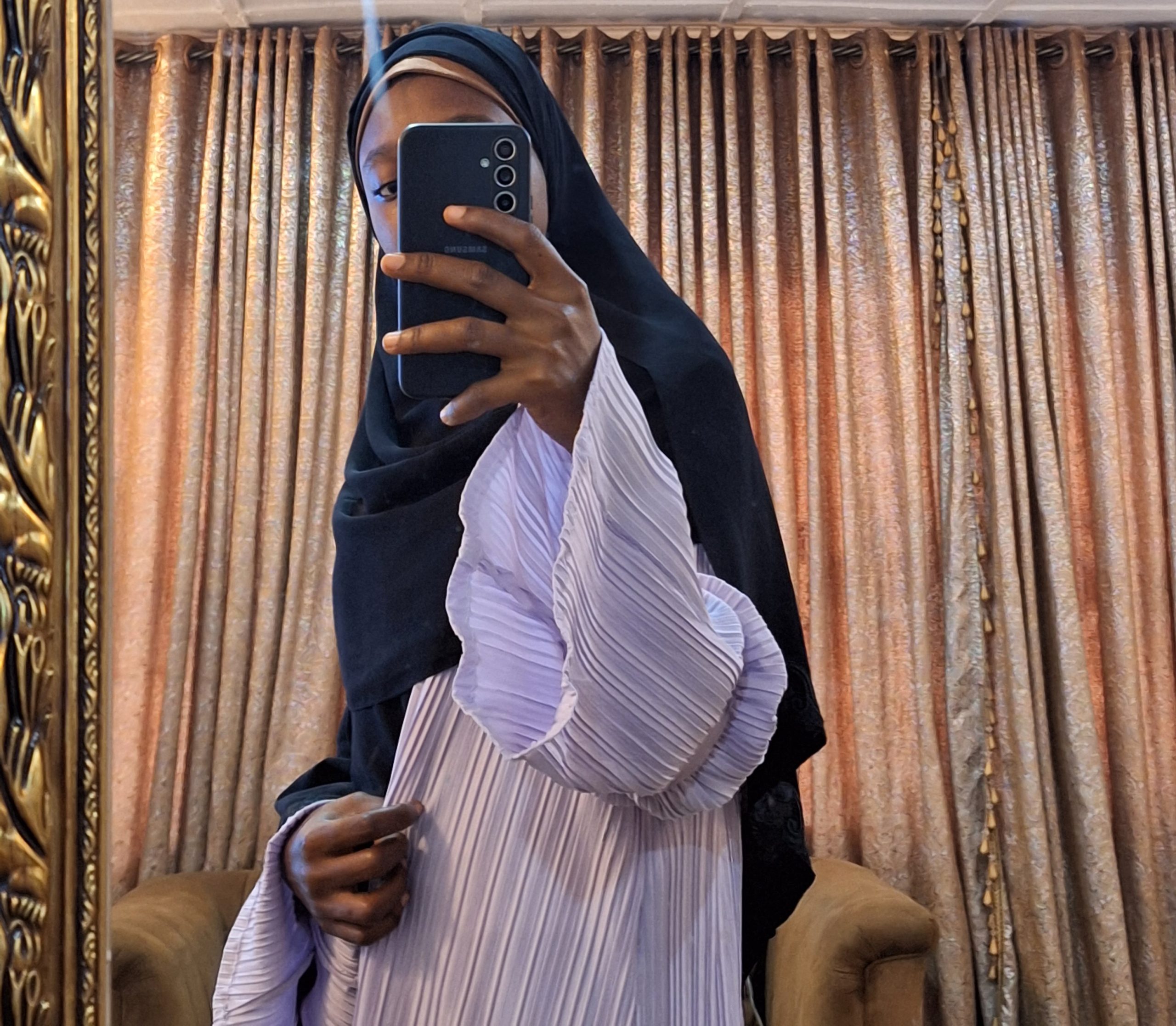

Curbing career choice struggles in teenagers

By Munirah Ibrahim Yusuf

Growing up as a teenager, one of the most challenging questions you could ask me was the almighty… “What do you want to be in the future”? I dabbled from one self-proclaimed pretty “Science course” to another for years…

All I knew was that it had to be a course in the Science field. First, it was ophthalmology, then pharmacy, and even estate management. Who am I kidding? It was a crisis.

It felt worse when I got to SS1 and saw the other options I could have had in different fields, like art and commercials. I was good in their subjects too.

I couldn’t quite understand why I chose to go to the Science Field. I couldn’t find why I decided to go there, so I held on to the fact that Allah was in control and had led me to pick it with good faith.

Years later, one morning….it hit me like a revelation. I suddenly knew why I never went to art or commercial class. It was because “THEY WERE NEVER AN OPTION”.

A certain teacher we looked up to had categorically told us things that created the impression. For example, whoever was blessed with anything close to an IQ had nothing to do with anything other than in the science field. And, like, that’s where the money is….And, like, that’s where great people and great professions belong….blah blah blah. 

Who wouldn’t want to be Great, tho? I subconsciously ruled out other fields. I still remember when we were asked to pick classes after JSS3. I knew I wanted to choose “Science” but didn’t want anything too deep in science (medical science) because of all the blood and flesh business. 

I had settled to write down courses I thought wouldn’t have too much messy work (blood, wounds), and Opthalmology was what I went with (LOL again, who am I kidding?)

Secretly, many people still regret the paths they chose in their education. Family, friends or society influenced some of us,and now we have discovered what we want for ourselves.

Let’s think about it; I don’t know about you, but in my area, kids around ages 12-14 are already in JSS 3, where they get to choose fields. Is a child that young capable of knowing what’s best for them? It’s screaming NO. The schools differ, ranging from private or government-owned, but most I’ve seen make them choose a field after JSS3.

I heard about a principal who would make the JSS3 finalists come to school during the long break after their Junior NECO exams. He would then teach them art, sciences, technical and commercial subjects and finish with some exams.

This system gave the students a little insight into what they would be dealing with when they got to Senior class and helped them make better choices regarding the subjects they found more intriguing and good Counselling. Great, don’t you think? May Allah bless his soul. Either way, no one seems to do that anymore, and we have to move on.

As a teacher or an educator whom kids look up to and adhere to with all beliefs, you should be careful with the kind of information you give kids.

Courses might be ranked, but the individual is responsible for how much utility they can produce using it. Every course is important. If not, it would not be a cause to study. (P.S.: We will talk about the effect of our country on education some other day).

As a parent or caregiver, it is important to practice mindful parenting and carry out routine checks with your kids to understand their choices and lifestyle and make sure they choose the best for themselves.

Many of us had that ‘follow follow’ stage that comes with growing up. And then you snap! And you reach the point where you have to take a step back, assess the situation and realise that this is not who you want to be.

Then, we live our lives trying to find ourselves with ever-changing wants and needs. Many of us are past that now, but you might know a kid or two going through these struggles. It is easy to recognise these stages when they talk and be on the lookout for help.

Let us give them better than we had.

Munirah Ibrahim Yusuf can be reached via ibrahimnurah99@gmail.com

Teens, social media and mental health

By Muhsin Ibrahim

Social media has a double-edged function. It can uplift you or do the exact opposite. It largely depends on the people and pages you interact with. Worried about their teens’ mental health, Utah became the first US state to regulate teen social media access this week.

According to a BBC report, “under the measures enacted on Thursday, a parent or guardian’s explicit consent will be needed before children can create accounts on apps such [as] Instagram, Facebook and TikTok.”

People of all ages can have their mental health wrecked on social media if they aren’t cautious. Some of us crave attention or other’s validation. Thus, people do crazy things to get more “likes” or ensure what they do gets their friends’ applause. That is one thing some of your social media ‘friends’ will never grant you because they are not your friends in the true sense of the word. So, the earlier you understand this, the better.

Of course, you should not be carefree. Each culture has its codes, and so on. So, consider these etiquettes but worry not about people’s attention or endorsement. Social media friendship is primarily fake. Folks, especially teens, can’t understand this. Thus, trolling push them to lose self-esteem, hate themselves, and some take their lives!

I salute the government of Utah. I am sure more states in the US and elsewhere will do the same. However, as ours (in Nigeria) will likely not do the same anytime soon, parents and guardians should do more. As it’s very challenging to deny your kids access to social media, monitor whom they interact with and the pages they visit.

Muhsin Ibrahim lives and works in Cologne, Germany. He can be contacted via muhsin2008@gmail.com.