By MA Iliasu
This one is a personal experience about our society’s current state of affairs and the ills they may be carrying instead of any brainstorming discourse. It started a little more than two years ago when a young man, pressed by the excessive frugality of his godfather, looted his quarterly savings and ran away to Cote d’Ivoire. Fortunately, the godfather didn’t get mad at him on the belief that the boy ran away with what was worthy of his long years of servitude. Months later, he came back, maybe after receiving assurance about his immunity. Most people developed an interest in the bold-albeit-stupid young man, mostly about why he would betray his godfather cum cousin’s trust. But knowing people’s tendency for moral hazard, I thought it shouldn’t surprise anyone why he did it. Quite differently, I am more interested in why he chose Cote d’Ivoire above all the places to run within Nigeria and nearby. To me, the choice seemed very odd, which surely can’t be a coincidence. I shall explain why.
Firstly, the place is very far from here, and in my experience, our people aren’t very fond of distance. Secondly, the excessive cultural and linguistic variation would shake the thoughts of any young man of such age and education, who are primarily monolingual and inept on homogeneity. Thirdly because of the infamous homesickness and risk aversion. Thus, what warrants the overlooking of such defining factors should rationally be investigated beyond the naivety of a scared young man. But it may also be wondered why would I be so interested in something that doesn’t directly concern me.
As a rule, a wise guardian tasked with the responsibility of an immature youth that can’t be within his sight all the time is only right to extend surveillance on the developments surrounding new trends, norms, habits and idiosyncrasies that inform the conduct of the respective age bracket. The young man belongs in the age bracket that must interest any guardian.
He said, “a kola nut trader who used to stop at Mariri (a kola nut market in Kano) arrived in Ujile (another kola nut market in the metropolis) once told us about the opportunities that await in the kola nut farms and industries in Cote d’Ivoire. He portrayed that as far better than any job we do here”. I smiled because I predicted that. “And what did you discover when you arrived? Was he telling the truth?” I asked him. “He was, but partially,” the boy replied. “The opportunities aren’t better than the ones here. But the environment in Ivory Coast is far more liberating and nourishing. You can’t separate the rich from the poor based on food. They’re not very sensitive to what happens between a man and a woman, even if she’s not his wife. And that alone is a reason for me to stay,” he added.
“Holy God,” I sighed. The boy’s account was revealing and taking an exciting dimension, so I asked him again, “How many of you went there (Ivory Coast)?” He replied: “We were seven. But many others were aiming to reach Libya and Algeria to work in the goldmines or become professional footballers. Other groups were set to follow also.”
I became dumbfounded that many young men have taken the risk of fleeing to the far West and North Africa for different reasons and confessed my concern to a friend who lives in a neighbourhood away. To my utmost surprise, he told me that his younger brother too had, four weeks ago, led a group of young men and ran away to work in the goldmines in Libya. More unfortunate is that it’s against their mother’s wishes. I lamented at how a tragedy of such magnitude could occur without myself being informed. And he laughed it off with the claim: “it is nothing serious. Such has been the norm for a while down here”.
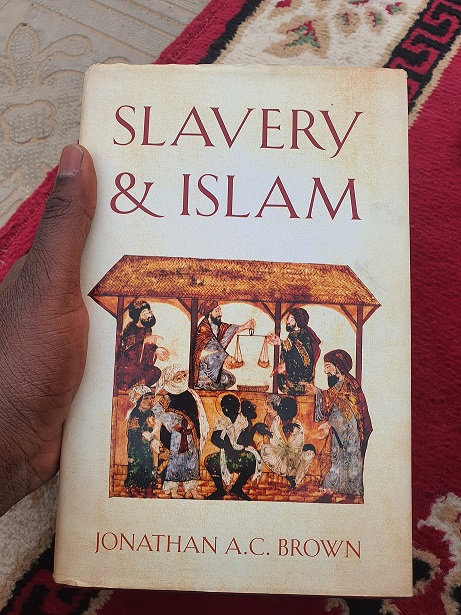
A month later, he informed me that the boy had made it to Libya. They started working but later got apprehended and sold into slavery. I couldn’t believe it. Slavery in the 21st century? But he erased my doubts when he outlined the financial plan they were putting in place to buy the boy’s freedom. “Merciful God,” I said, “man has turned into a commodity”. In a short while, the boy made it back alone to meet the troubles of other boy’s parents, who blamed him for their children’s departure.
The depth of my grief grew big; emigration as a function of trade and brain drain isn’t particularly worrying. After all, the young men have attained the age of choice. What they do within the boundaries of the reason is even welcoming. But the unique circumstances surrounding the decisions of those youths must worry any sane person.
I pondered how the young men came from a society where the emerging youths are characterised by risk aversion, phobia to distance, homesickness, monolingualism and relative poverty of world-class skills. And they’re certainly not traders; they are relatively ignorant and unskilled labourers. On the other hand, some of them are pretty talented in sports and athletics. So it’s obvious, what’s happening isn’t brain drain but a willed-slavery. Indeed the forces that rattle the youths into overcoming those fears heedlessly warrant an investigation.
Let me say the obvious: the ravaging unemployment has since become the fuel of thuggery, pick-pocketing, phone-snatching, armed burglary. The rotten state of public education has produced more cunning kids who discovered they should rather hawk sachet-water than waste their time in a place that resembles a poorly-kept third-world prison than a school. The parental nonchalance plagues the family institution is graduating malnourished, under-schooled, undisciplined, wicked, and mentally unprepared rotten eggs. Coupled with the unfortunate trend of social organisation, people no longer serve as their brother’s keepers. Immorality, especially amongst youths, is being granted a place in the code of conduct, excuse in the intelligentsia and warming reception in the mainstream opinion. While the moral police are either questioned on a far-fetched basis or upon a deliberate loyalty for cancel culture.
It wouldn’t require an expert to predict how the future looks bleak. Critically it asks the question of the accuracy of the relative size of any sample. However, it’s scary that when a menace breakout like a bushfire, a small sample only tells the story of the little that appears obvious. The reality in Kano, amidst the meagre of the sample size, is an emerging bracket of youths being radicalised into emigration-cum-slavery in North Africa. And the weak social forces can only hope to stop them.
MA Iliasu can be contacted via muhada102@gmail.com.