Skills rather than just degrees

Pantami’s three faces

By Zayyad I. Muhammad 

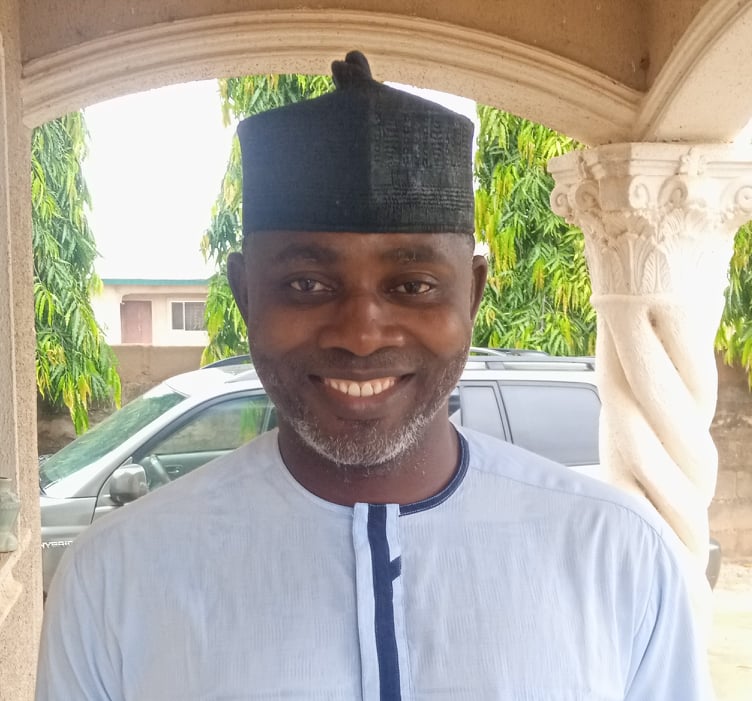
Isa Ali Ibrahim Pantami, former Honourable Minister of Communication and Digital Economy, an Islamic sheikh, and a UK-trained Ph.D. holder, has found himself in a triangular situation: an Islamic sheikh, a politician, and an academic. This revered status means any issue that affects his personality will always be a hot topic and attract public scrutiny.

Pantami’s full transformation into a politician who is eyeing the ‘ballot box’ was noticed during this year’s Ramadan Tafsir; his style of delivery and the content of his messages were noticeably altered. Traditionally known for his sticking to religious contents during tafsirs, this time, the sheikh took every opportunity to showcase his extensive knowledge of the economy, geography, and global politics. This shift did not go unnoticed by the audience and observers.

Pantami’s discussions were peppered with references to economic policies, geographic strategies, and the intricacies of international relations, signalling a significant change in his focus and priorities. Pantami continues to align himself more closely with political aspirations, and his body language has also evolved to reflect this new ambition. 

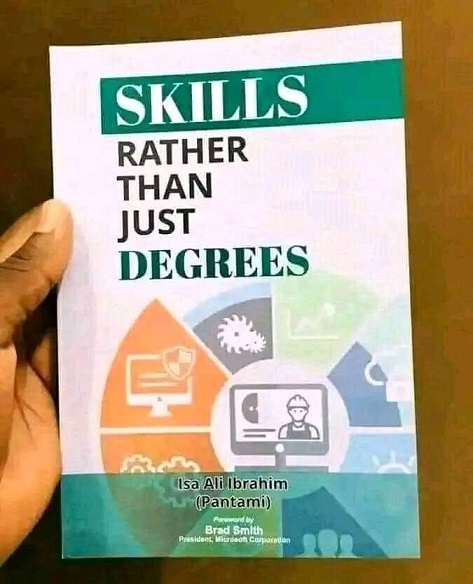
Recently, controversies, debates, and discussions have emerged about Pantami’s books, Skills, Rather than Just a Degree and A Scholar’s Journey: Navigating the Academia. These books trended for a while and reignited old controversies about how he obtained his professorship. This situation has also awakened Pantami’s political adversaries, who view his behind-the-scenes early efforts to enter the Gombe state governorship race as an encroachment on their territory.

Many politicians, especially in his home state of Gombe, are upset with Pantami because they view him as an outsider who seized opportunities to occupy their ‘slots,’ first as the Director-General of NITDA and later as a federal minister representing Gombe State. However, after eight years of working independently, he now seeks their support to establish himself in their domain.

Conversely, the majority of Pantami’s critics regarding his appointment as a professor are academics. In contrast, most of those who backed the critics were Pantami’s political opponents and their supporters.

One of Pantami’s critics was reported to have penned this: 

“Mr. Pantami was only for the most part a Lecturer 1 or 2 where he first served and didn’t spend a whole working career in the university system or in a university’s employment,” he was “made” a Professor by a university where he never worked, taught, sat in its Senate, worked in its committees, never examined or marked UG or PG exam scripts, and his whole promotion papers were never processed at the departmental and faculty levels, and, indeed, he never had a payroll number… Mr. Pantami was thus never a scholar in the classical or academic sense of that word. I wonder whether he’s now teaching or giving classes or seminar papers at any university after his leaving office in May 2023.”

On the other hand, supporters of Pantami’s professorship encompass academics with a fondness for him, members of religious groups, his students, and his political associates. 

In fairness to Pantami, having held a ministerial position, he is already entrenched in politics. Moreover, the criticisms in his books predominantly consist of one-off comments rather than comprehensive analyses or academic discourse. Furthermore, Pantami’s challenge for a debate on his book is yet to take place. 

The debate about Isa Pantami’s books, professorship, and foray into politics has three divides: his adherents, his opponents, and those sitting on the fence. The views of his followers and critics are well known and are often based on their perspectives. However, those sitting on the fence have, on many occasions, provided valid points both for and against Pantami.

Isa Ali Pantami’s transition from an Islamic scholar to a politician and professor has sparked both controversy and applause. His political opponents view his entry into politics as an intrusion into their territory, while his academic critics regard his professorship as ‘unearned.’ On the other hand, his supporters perceive his multifaceted identity—as a sheikh, a politician, and a professor—as exceptional among his peers.

Zayyad I. Muhammad writes from Abuja via zaymohd@yahoo.com.
Skills or Degrees? You may need both to thrive

By Nusaiba Ibrahim

For over a year, I have been working alongside other creatives in my department after I assumed my role as a content writer and website manager with a higher education institution. The department in which we work is formally referred to as the Media and Communication Department, but somehow, maybe before I joined, it became known as the Creative Department.

Whenever we attend a meeting, we are termed the creatives. Only along my journey did I realise that two or three of the team members had undergone degrees in disciplines that had little or no bearing on the creative industry. The team—a social media manager, a content writer or website manager, a graphic designer, a motion designer, and a creative support staff member—has one thing in common: we possess skill sets that are within the creative industry. Yet, we all have degrees.

During our usual chitchats, I realised that the social media person I had met was a history graduate with a second degree in the same field. He’s doing wonderfully well today in Lagos because of his exquisite skills as a brand marketer and manager. The new staff member who assumed the role is a biology graduate; the motion designer studied industrial design; the graphic designer and I studied mass communication; and the creative support staff studied quantity survey and obtained a postgraduate diploma in the same field.

From the faculty to operational staff to even students, the creative department comprises geniuses skilled in producing exceptional creative pieces that would be admired by the university’s community and beyond. Hence, the department is admired by many. Simple casual discussions with students and staff, whether in or out of the office, never ended without passionate statements like “I will stop by to learn one or two things” or “I’ll come to learn a few things.”

When I was putting this piece together, a faculty member, a friend of the creative department, had come in to drop a request. While going out of our office, he was tempted to read the title of the article. He read it carefully and said, “I think I disagree with you. I am of the opinion that skills are better than degrees.” I turned and tried to explain that the topic didn’t mean degrees were superior to skills or vice versa. They could be used to complement each other when necessary.

This particular faculty member only left me with more thoughts about the debate. He’s a faculty member with a B.Sc. and Master’s degree in International Relations and is very much appreciated by the institution due to his expertise in teaching. He is yearning for a skill set. I understand he must not have realised he could do well as a public speaker, as that is what he’s most notable for. Hence, he didn’t value his proficiency in public speaking, which is now widely applauded. Later that day, he came into our office to further explain his passion for learning graphic design or motion design.

With these current debates, which have awakened people’s desire to invest more in skill sets, I think we are on the path to building the future we’d envisioned to be far. We are getting closer to a better Nigeria. Nonetheless, you might still need a solid foundation from degrees that will familiarise you with values and etiquette that will propel your career.

I’d say this regarding the book title by Prof. Pantami, ‘Skills rather than Just Degrees’, that stirred the Arewa atmosphere a week ago (which I haven’t read). I’m only saying this based on the evident experiences of the revered scholar and the book title. Sheikh Pantami possesses three degrees: a B.Sc., an M.Sc., a Ph.D., and other academic qualifications. He is also a distinguished Islamic scholar who has been lauded adequately due to his skills in teaching Islamic education through his exceptional preaching.

To showcase the relevance of having both, the Sheikh used his wealth of technology experience to serve as a minister and accepted a professorial award (which has generated so much back-and-forth). In the process of serving as one of the ministers under former President Buhari, he definitely acquired more administrative and political skills, making his career stronger.

So you see, the title wouldn’t have become a bone of contention if people had realised the Sheikh was writing to explain the benefits of obtaining both, but just a little bit of emphasising skills. But works of art unleashed on the world are open to criticism. This is something authors and artists cannot control; hence, the Sheikh faced reactions due to his publications.

One of the things I’ve learned amid other creatives is skills and academic upgrades. I tell you, we’ve learned so much from each other. We often see ideas from similar perspectives when it comes to designs, motion graphics or writing. Three out of four yeses is always a pass for any content. We have become part of one another’s journey and a great team. Despite our skill-based engagements, we’d encourage one another to further our degrees.

Whether you have skills or degrees or both, use what you have to get what you want in life. With degrees, you can pursue a particular area of interest and gain something extraordinary. Likewise, with skills, you can also realise your potential. So, the big idea is to use any of the two to gain something beneficial for yourself.

Nusaiba Ibrahim Na’Abba wrote from Kano. She can be contacted via nusaibaibrahim66@gmail.com.

Pantami challenges critics to debate on “Skills Rather Than Just Degrees” 

By Sabi’u Abdullahi

Shaykh Isah Ali Pantami, an academic and author, has challenged the critics of his book “Skills Rather Than Just Degrees” to a debate at a location of their choice.
 
This challenge comes after some academics took to social media to criticise the book without reading it, according to a Facebook post by Yakubu Sani Wudil, a close associate of Prof. Pantami.
 
In the post, Wudil wrote: “Some indirectly criticise without reading the book and, ironically, also go ahead and make recommendations the same with the advocacy of the book.”
 
He added that Prof. Pantami is ready for an intellectual debate on any campus in Nigeria, saying: “The author will be available for the intellectual debate as early as tomorrow in sha Allah, if the venue is not too far from Abuja.”
 
Wudil invited critics to nominate three representatives for the debate, which will be coordinated by a team of academics including himself, Adeolu Akande, El-Bonga, Dr. Adamu Tilde, and Realoilsheikh.
 
He stated that the venue, date, and time will be chosen by the critics, as he was quoted as saying, “The floor is yours to choose the venue, the best among the critics to be adopted by the consensus of all of them, just specify the date & time.”
 
Prof. Pantami’s book “Skills Rather Than Just Degrees” is currently being translated into other international languages.
 
According to Wudil, “Praises and thanks are due to the Almighty. Among the 5 books authored by @ProfIsaPantami in the last 2 years, #SkillsRatherThanJustDegrees has been the most popular and impactful by far.”
 
The debate challenge has sparked excitement in academic circles, with many eagerly awaiting the intellectual showdown.

The graduate skills that you ignored

By Prof. Abdelghaffar Amoka

When I was an undergraduate student, one of my lecturers during a physics class told us that physics makes you think better than others. We were wondering how. He said we don’t have to pick up a physics job after graduation but that whatever we decide, the skills acquired while studying physics will lead us through. That I later found to be true when I look at my classmates and their different endeavours.

In another class, the lecturer told us we should learn not to compartmentalise our brains. Let all that we have in our heads work together. During my undergraduate days, we were constantly reminded that as we pass through the university, we must allow the university to pass through us.

I was passing by the Department of Mathematics this morning, and my eyes captured their sign oars. On the signboard was the motto: “Critical thought for a critical mind”. The department claimed to be a place to develop critical minds. I have seen critical minds from there that are bankers, entrepreneurs, etc.

We were discussing this morning, and a friend narrated to us how he got a job as a marketing officer, a position he never applied for. He applied for the position of Admin Officer, and to end the interview after responding to all the questions from the panel members, the DG asked him why he didn’t apply for the position of Marketing Officer. He answered that he did not study marketing and he felt that from his degree, he was only qualified to be Admin Officer. The DG then responded that with his communication skill and confidence, he would do well as a Marketing Officer and was hired as a Marketing Officer.

One of the top skills required from a graduate is communication skills, and your training in the university includes that. Graduates need to be able to effectively get the message across, including in verbal and written formats. It’s also about listening and understanding other views. Good command of languages for projecting a confident, professional image and for good communication with clients and colleagues. If you don’t have it, you should blame yourself, not your university.

Aside from your hard technical skills, the other skills expected from a graduate are Time management, flexibility or adaptability to respond to unexpected changes in circumstances or workload effectively. Ability to work in a team to take on the responsibility to ensure your team achieves its goals. Critical thinking and problem-solving skill to approach problems and resolve issues from different angles is also highly valued.

Interpersonal skills to build positive working relationships, good communication, persuasion, and negotiation. Being flexible in your thinking and being open-minded and curious, and creative thinking that will help in problem-solving and innovation. The ability to understand others towards finding solutions that allow both parties to achieve their goals or come out of a situation. Leadership, the ability to bring something extra to a team, is essential. You are required to have a basic knowledge of the field. And guess what? You should have learned all these skills in school.

These are embedded in some of the activities we ignored in school. Some of them look routing, but there are important lessons in them. Time management is ensuring you hand in your assignment or report at the due date and time. That lecturer who locks you out of the lecture room, because you are 10 minutes late to his class, has nothing to benefit from you missing the class. He is training you to respect the time and be punctual. They say time is money, and punctuality is the soul of business. Flexibility to handle unexpected workloads is managing your time to take extra lectures and extracurricular activities. The ability to work in a team ensures that your practical or presentation group achieves its goal within the specified time.

Giving a class assignment or exam questions that require a little thinking is building your critical thinking to deal with challenging situations. You have classmates with diverse beliefs and ideologies to develop interpersonal relationships with and get to understand them. You are made to have seminar presentations to develop your ability to present an idea to the public and defend it. You are meant to lead a practical or study group for a reason. You are learning to be a team leader. Campus associations and societies are not there just for fun. Some of the union leaders grow to become political leaders.

So, don’t let anyone discourages you from pursuing a degree program, except it’s your choice not to go for a degree. Pursue your degree and pay attention to the requisite skills for the degree.

If you didn’t get these skills as you are graduating, stop arguing over skills vs “just” degree and blaming your university and lecturers for failing to acquire the skills during your study. You just passed through the university and did not allow the university to pass through you. Go and develop it; it is not late. Maybe you are the one that the book is referring to.

However, let me remind you that if you have these skills in Nigeria, it will be easier to use them to get a job outside than in the country. To get a job here, you may need the extra skill of knowing someone that knows somebody that knows another person to get a job. I learn some jobs are on sale. If you have the cash to buy one, I wonder if you need these skills.

An ex-aide to the Chairperson of the Federal Character Commission was reported to have confessed before a House of Representatives ad hoc committee investigating job racketeering at ministries, departments and agencies (MDAs). He said he had sold federal employment slots to job seekers at the directives of his former boss. According to him, some paid N1 million, others N1.5 million.

Finally, our problem is not skills or degrees; we have these in abundance and even export them abroad (the Japa phenomenon). Our problem is creating a system where the son of nobody can become somebody without knowing anybody. Our present system is not sustainable. It’s a disaster waiting to happen.

Abdelghaffar Amoka Abdelmalik, PhD, wrote from Ahmadu Bello University, Zaria. He can be reached via aaabdelmalik@gmail.com.

Still on “Skills Rather than Just Degrees”

By Sulaiman Abba Aliyu

A person that went through formal schooling system and attained what he has attained because of that system will never downgrade the system. The system has done so well for him to downgrade it, he has reached his/its zenith, something many of the young bloods can only dream of and yet some among them find fault in a book published by him with a title they feel offended by, most without even going through the book. What happened to the saying “Don’t judge a book by its cover”? Don’t tell me you’ve judged it by its title!

I am not trying to justify what the author said for I believe he wasn’t trying to do so either. It’s just a friendly reminder from a person who has seen what you have not seen, worked where you haven’t worked, traveled places you didn’t even dream of. He’s not trying to downplay your “hard earned” degree, my dear graduate.

Let us get to the reality of things in this country and almost everywhere around the world. A degree is a paper issued to someone affirming that he/she has gone through the process of a university education and nothing more. If you are a university student or graduate or infact a student anywhere, you know that there are a lot of ways through which people earn their degrees, some earn it in a legitimate way and others otherwise. In universities, we have seen ladies complaining of how some lecturers harass them (demand for sex) so they will be awarded marks.

Again, how many of your colleagues cheat during exams and unluckily for them they weren’t caught up to their final years or even up to their graduation? How many more others do you know that theirs is just to memorize what is given to them even without understanding anything and passing the exams that way? I bet they are much more than those that are good at what they are studying. Do you then expect yourself as an employer to stick with first set of people just because they have a degree? For the sake of your company, your answer must be NO!

On the part of employers, how many people with good results have they employed and they delivered? Or do you mean because you have a degree and your employer knows how hard it is to earn a degree he/she won’t fire you if you cannot deliver? How many of those with lesser qualifications delivered in their work places because they have the required skills? Many! Or should they all be fired because they do not have a degree? Put yourself in the employer’s shoe and do what will save your company or enterprise.

I’ve seen and heard of so many people without degrees who excel in their endeavors. Some brought value to what they do beyond measures. Their biggest asset were the skills they possessed. And I’ve seen so many with certificates who destroy businesses because they lack the needed skills. These skills include; leadership skills, communication skills among others.

As a graduate, would you rather give your car to a mechanic with the skill of fixing the car or give a graduate with a first class degree with no skill to fix your car?

Your degrees are important nobody dares to downgrade them! But skills, if unemployed, increase your employability and if already employed, accelerate and simplify your job for you.

Do your degrees, if you can’t afford a degree find a skill and engrave it! You’ll appreciate yourself for making that decision.