Sheikh Dahiru Bauchi

Tragic 2023

By Bilyamin Abdulmumin

The year 2023 has been marked by a series of tragedies, from the Tudun Biri bombing incidents and the tragic Jos massacre to the unsettling homicide of eight-year-old Ibrahim and the perplexing saga surrounding Yayu’s murder orchestrated by Chuchu.

 The airstrike mishaps that hit the faithful at Tudun Biri gathered to celebrate Maulud sent haunting echoes across the nation. Nigerian forces claimed it was a mistake. They mistook the Maulud gathering for terrorists. But wait, having carried out this kind of ‘mistake’ not once or twice, one question readily comes to mind: why does the army drone never mistake terrorists? 

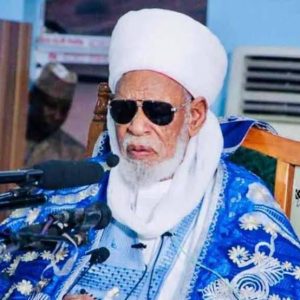
Although the mishap is a national tragedy, there emerged a silver lining: uniting all Muslims, regardless of the sect, to not only condemn but pressure the government for compensation; in this regard, the Shia sect carried out a peaceful demonstration. Sheikh Dahiru Bauchi changed the community’s name after the incident from Tudun Biri to Tudun Maulud to commemorate the incident. At the same time, the rest of the public pressured the government at different levels to show serious commitment.  

National events like this serve as Mecca for political figures. So, all the 2023 presidential candidates took the opportunity to show concern one by one. President Bola Tinubu was represented by high-profile delegates, including the deputy president and Kaduna state governor, Peter Obi, who visited the injured- this gesture can go a long way to improve Obi’s sheer lack of appeal in North; of course, Kwankwaso was there, and Atiku didn’t only condemn but asked for prob. May the soul of the departed rest in Jannatul Firdaus

While the year was rounding off, another sad news mixed with surprise shook the internet. A lady named Hafsat Surajo murdered a man called Nafiu Hafizu in a highly complex manner. According to her, she killed him, a house boy, by police investigations after he had successfully stopped her from taking her life, but shockingly, she instead stabbed him to death. This revelation left so many questions at the lips of Nigerians, begging for answers:  how did he save her but could not save himself? And when in the process she gets small knife bruises, why rush to medics for treatment? How does someone who is at the point of ending his life become so concerned about a minor injury? But someone has the answer to this puzzle: he said since she has feigned mental illness, the mood usually swings, which means she can be mentally ill at the time of the killing but afterwards become normal.

Now, Hafsat side of the story alone. The next burning question is how an ex-lover could become a business partner on earth. Is an ex not usually defined as vindictive, and we see all sorts of unfriendly memes about them flooding social media?  Now, let’s throw reason in the air: after becoming a business partner, ending up as a house member would be unfathomable. There are more questions than answers to this saga.

One of the conclusions many drew was that the husband was utterly insensitive and not jealous of his family. Not only allow a business partner in his residence but also allow a ‘romantic relationship ‘with his wife to a foreigner, perhaps to give meaning to their account, they opted to call him a house boy. Let’s throw the logic into the air again and assume he missed all the signs and writings. He was the first to know about the incident; why conspire to hide it? The more you look, the less you see in this.

Plausible rumours had it that Hafizu was killed because he insisted on his plan to marry, which Hafsat was jealous about. Many ask if this is why they have to go to such lengths instead of divorcing their husband and marrying the love of their life choice. 

 One suspicious beget another, given the high level of romantic intimacy between them that surfaced on the internet, the public began to doubt the child’s actual father. To make matters worse or better, the child looked more like the deceased than the husband. This multidimensional saga threatens to dwarf all similar cases in the past. Which used to be between couples, like the case involving Bilyamin and Maryam Sanda, or unmarried lovers, like the case concerning a Chinese man and Ummita, but this case appears to be a combination of the two.

Bilyamin Abdulmumin is a doctoral researcher in chemical engineering at ABU Zaria.
Sheikh Dahiru Bauchi’s letter: I am surprised by those who are surprised

By Dr. Dikko Muhammad

I’m surprised that some people find the said letter of Sheikh Dahiru Bauchi surprising. The fact is that many Nigerians see the courts as departments for the pursuance of politicians’ interest and more often, as stalls for the sale of “justice” to the highest bidder. And they have reasons to believe so. Why?

Senator Bulkachuwa told the Senate, on camera, that his wife, a former President of the Nigerian Court of Appeal, “extended her help to his colleagues” while in office.

A recently retired justice of the Supreme Court complained a lot of its workings. Not to mention the complaints against the top Oga of the Supreme Court who once led other justices to complain against the former top Oga of the Supreme Court.

Series of conflicting judgments are becoming a defining feature of ours courts.

The idea of the court as an umpire is fast becoming extinct. If any unknown backbencher politician wants me lock up tomorrow, being Sunday, don’t be surprised for the lines of judges ready to grant his request.

Where justice is delayed and denied, fears and favours determining verdicts, faith in the court is eroded. This is why our country has become a planet of jungle justice. People think that the courts are haven for criminals. The densely populated prisons in Nigeria are a repulsive testimony to the putrid stench of our entire judicial system.

So, it’s now left for our courts to either redeem their battered image or continue to sink into the abys. They’re designed to be the last refuge for the oppressed, not a refuse for the oppressor. If writing a letter would make it deliver justice, we should all be letter writers to the Supreme Court.

Dikko writes from Katsina State, Nigeria.

Unlocking West Africa’s Intellectual Legacy: The book unborrowed from Yale Library for 120 years

By Muhammad Jameel Yusha’u, PhD

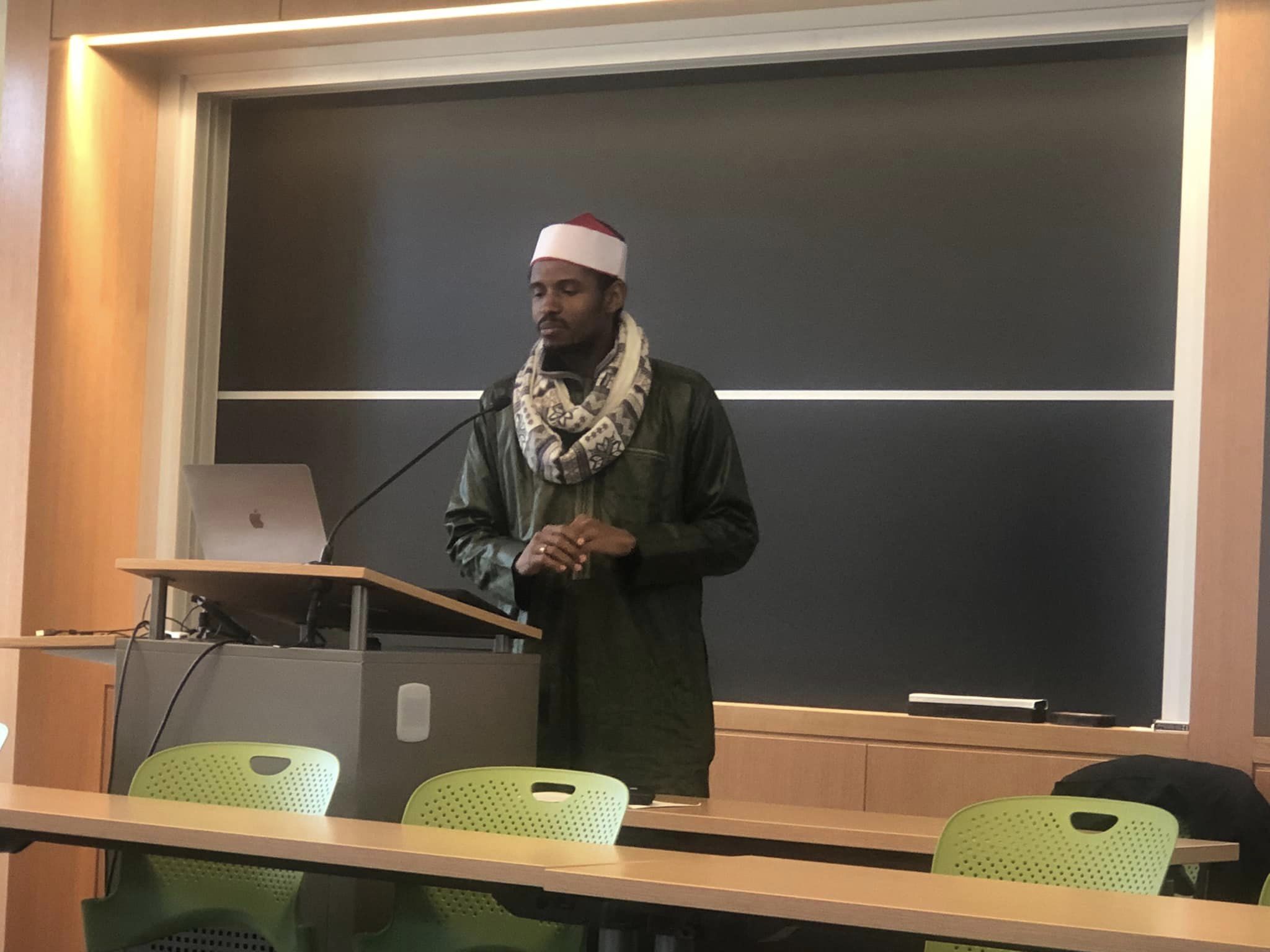
On Friday, March 3rd, 2023, I attended two events at the Divinity School. The first was a lecture convened by Professor Ousmane Kane, and the second was a joint symposium called the Zaytuna-Harvard Symposium. These two events shared similarities in that they both aimed to highlight the intellectual heritage of sub-Saharan Africa in various fields of knowledge and the importance of traditional means of knowledge acquisition.

The former was a presentation by Ustadh Umar Sheikh Tahir, the son of a prominent Nigerian scholar Sheikh Tahir Bauchi and a current PhD candidate at Columbia University. His presentation was titled “Rediscovering 18th Century Knowledge Tradition: Alkashinawi’s (d.1742) Intellectual Networks in Bilad Al-Sudan and Hijaz.” The latter was a presentation by Sheikh Hamza Yusuf, President of Zaytuna College, who spoke on “The Arts of Understanding Prerequisites for Unlocking the Islamic Tradition.” Sheikh Hamza Yusuf studied traditionally with scholars in Mauritania, West Africa.

Ustadh Umar presented the story of Muhammad Alkashinawi, a West African scholar from today’s Katsina province in Northern Nigeria. Alkashinawi developed proficiency in Arabic language, logic, mathematics, and jurisprudence in West Africa. When he moved to Hijaz, his scholarship was acknowledged, and he became a respected scholar from whom society was learning. When he died in Egypt, he was buried in the cemetery of scholars. Alkashinawi’s story highlights the journey of a scholar whose intellectual depth was developed in West Africa and whose scholarship transcended geographical boundaries.

The uniqueness of Alkashinawi’s work was not as prominent as it should have been, and Ustadh Umar’s work is more relevant in that he is translating Alkashinawi’s book into English. Interestingly, some of Alkashinawi’s work is only available at Yale University, and his book was not borrowed from the library at Yale for 120 years until Ustadh Umar asked for it.

The unborrowed book from Yale Library for 120 years

Sheikh Hamza Yusuf’s presentation highlighted the importance of traditional means of knowledge acquisition and how it translates into scholarship that transcends geographical boundaries. Both presentations mesmerised the audience, providing evidence that knowledge is a human heritage that belongs to those who work to acquire it. It is neither the monopoly of a region, ethnicity, nor race but a heritage that beautifies a society that values it.

During the symposium, I sat among the students of Zaytuna College. One of the students asked me where I was from, and I responded Nigeria. He then introduced me to one of his schoolmates from Texas, who was a descendant of Sheikh Uthman ibn Fodio. I found it interesting how the family of Uthman Dan Fodio crossed the Atlantic and still keeps the story of their genealogy intact.

Takeaway: Knowledge is a human heritage. It belongs to those who work to acquire it.

Muhammad Jameel Yusha’u, PhD, is a candidate for a Mid-Career Master’s in Public Administration at Harvard University, John F Kennedy School of Government. He can be reached via mjyushau@yahoo.com.

Does Sheikh Dahiru Bauchi contradict the Sultan?

By Malam Hassan Mohammed

You see, I have a lot of issues with Mallam Dahiru Bauchi when it comes to the sighting of the moon for the commencement and ending of Ramadan. The man has been, in the past, a deliberate source of unnecessary controversy and in the process dividing the Muslim Ummah. But we have to be fair to him this time. He did not ask anyone to break his fast, eat today and also observe Eid-el-Fitr. He did not contradict the Sultan or anyone in the position of authority to make the pronouncement of the termination of Ramadan whether locally or internationally.

In fact, listening to the conversation (the audio is almost everywhere) you’ll hear that even after serious pressure from some unscrupulous dudes who were discussing with him, the man was careful to refer to the Sultan. He was clear. He initially said that though it can be accepted that the moon may have been sighted in Doma (Nasarawa) and Abuja if as they claimed there are witnesses. But he could not tell people not to end Ramadan or that they could not if they chose to. Or call them people who knowingly violate injunctions.

However, he (1) specifically asked them if the Sultan is aware or had announced, which took the dubious guys aback because they didn’t expect that push back from him. And (2) when he got tired of their pressure he pushed back by saying just wait till next tomorrow, regardless of the claims that the moon has been sighted in Doma, Abuja and Niger Republic. If you can’t listen to the all 3:42 minutes, you may fast-forward to minute 1:33 where and when he asked if the Sultan has been informed and instructed that he must be informed so he will announce. And also 3:38 where he said he will not lead Eid, so they should wait.

The man simply ceded the right to announce the ending of the fasting to the constituted authority by saying, “If you are in Nigeria, you have no justification for breaking your fast unless you have not heard (the instruction of the Sultan). For that, we will not observe Eid. We are going to wait till next tomorrow. They should wait”.

These guys that were with the revered Sheikh and many others are used to the usual rebellion that they thought the Sheikh will simply agree and announce that the fasting should end and Eid to be observed today. To be fair to him, especially this time around, he didn’t. This is because one of our major problems with respect to moon sighting is that there are people who consider not accepting to commence the Ramadan fasting or ending it with the rest of Ummah/everyone, this is an act of rebellion. It is to them, a continuation of the denominational war. So, irrespective of the religious injunction and obligations, and also irrespective of their own beliefs as at the time of moon sighting, they must reject whatever the authorities say.

That this year’s Ramadan, the commencement and ending of the fasting, is not controversial as it usually is, is a serious letdown for them. If you pay serious mind to the nearly 4 minutes discussion, you’ll hear that Sheikh Bauchi was probing as he was also careful not to reject the idea that those who said they have sighted the moon completely have done so, but to also tell them that while he is not saying they lied, he emphasized that he desperately tried to avoid that, but he will not end his own Ramadan. That’s the wisdom of elders and of the learned, not the exuberance of young people who rebel in unnecessary and unhelpful controversy.

This shows that Sheikh is always at loggerheads with authorities over when to commence the Ramadan fasting because of his philosophical conviction and not because of ideological differences. So, if you end your Ramadan fasting just chest it. Don’t lie against the old man. Don’t use him. Just say that you just feel like it. It’s just about you and you, and nothing else. Try using another excuse for why you endured 29 days of fasting but cannot take just one more day. It is you, and you. Not Sheikh Dahiru!

Hassan Mohammed is a social analyst. He writes from Kaduna, Nigeria.