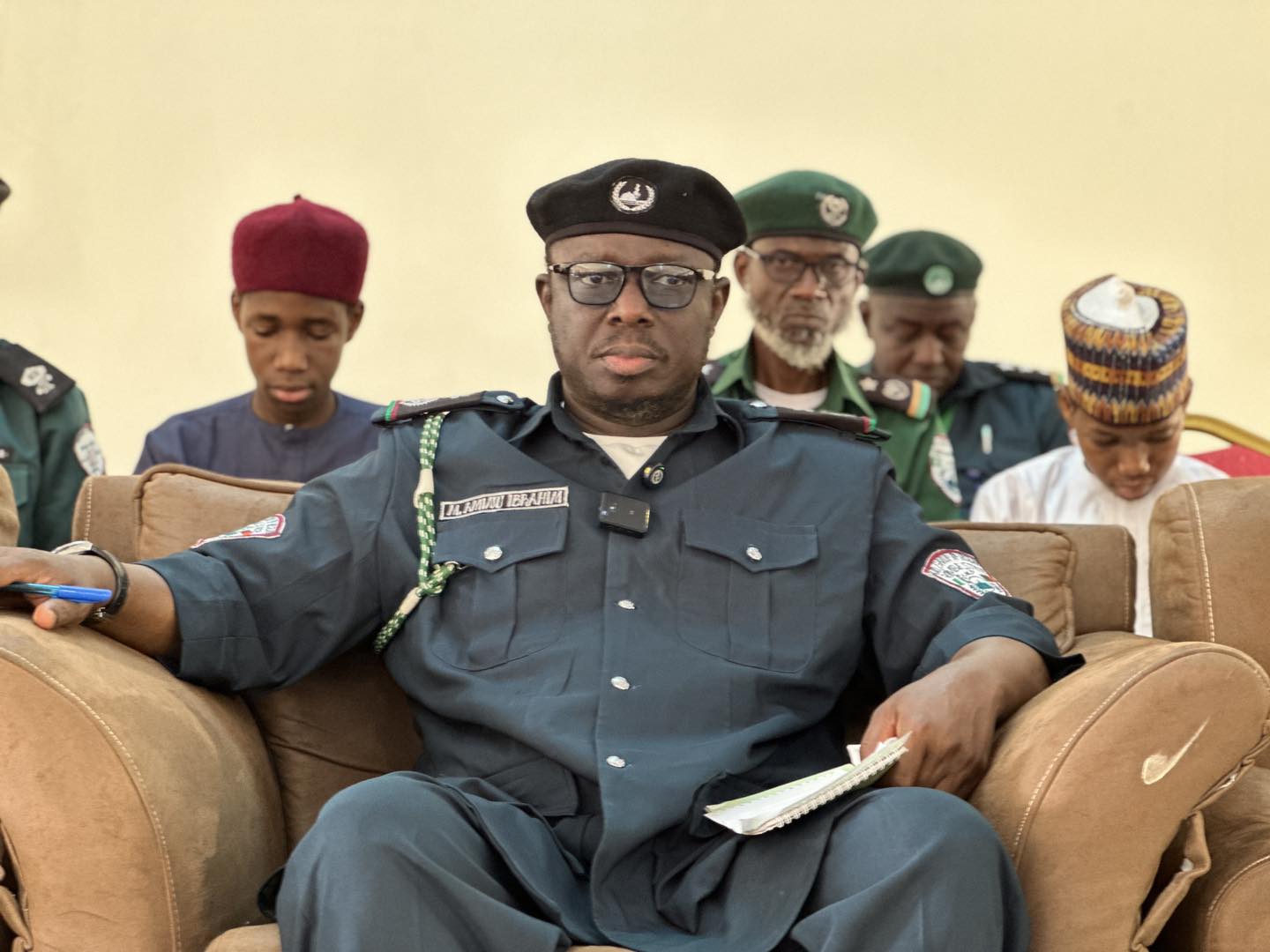
Sheikh Aminu Daurawa

Gov. Yusuf congratulates Sheikh Daurawa on receiving honorary degree

By Muhsin Ibrahim

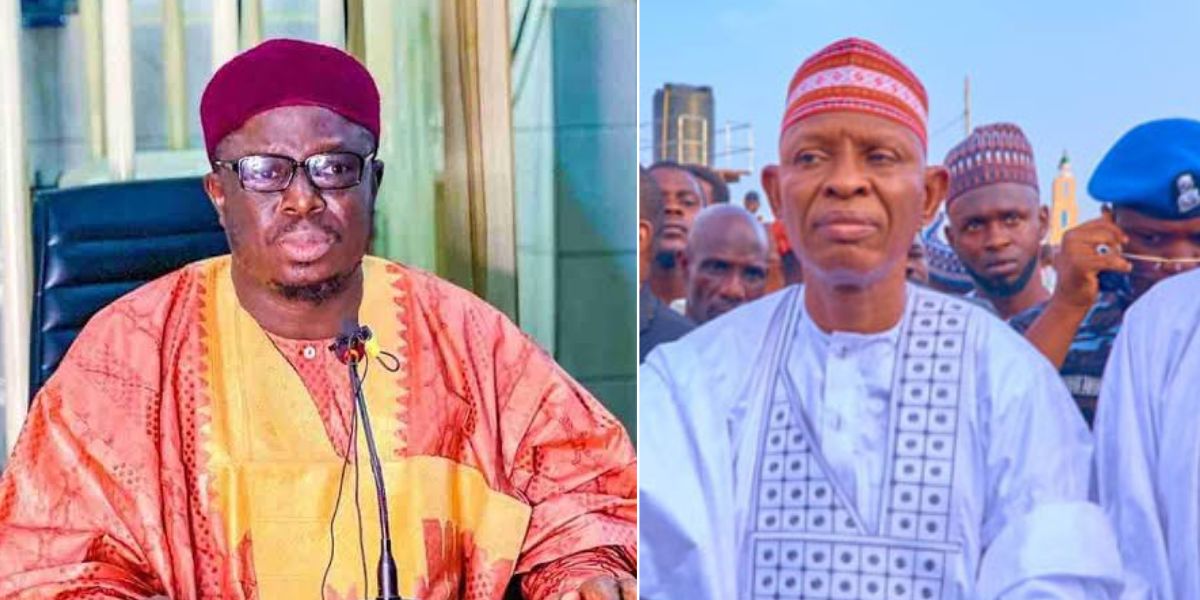
Kano State Governor, Alhaji Abba Kabir Yusuf, congratulates Sheikh Aminu Ibrahim Daurawa, the State Commander-General of Hisbah, on receiving an honorary doctoral degree from Usmanu Danfodio University, Sokoto. The award was conferred during the university’s 42nd convocation on September 6, 2025.

Governor Yusuf praised Sheikh Daurawa for his contributions to Islamic scholarship and his efforts in promoting morality and societal values in Kano. He emphasised that the recognition reflects the recipient’s dedication to eradicating immorality and fostering justice, bringing pride to Kano State.

The governor also assured ongoing support for Daurawa’s endeavours in serving humanity and Islam. He prayed for divine guidance and blessings to continue serving the community.

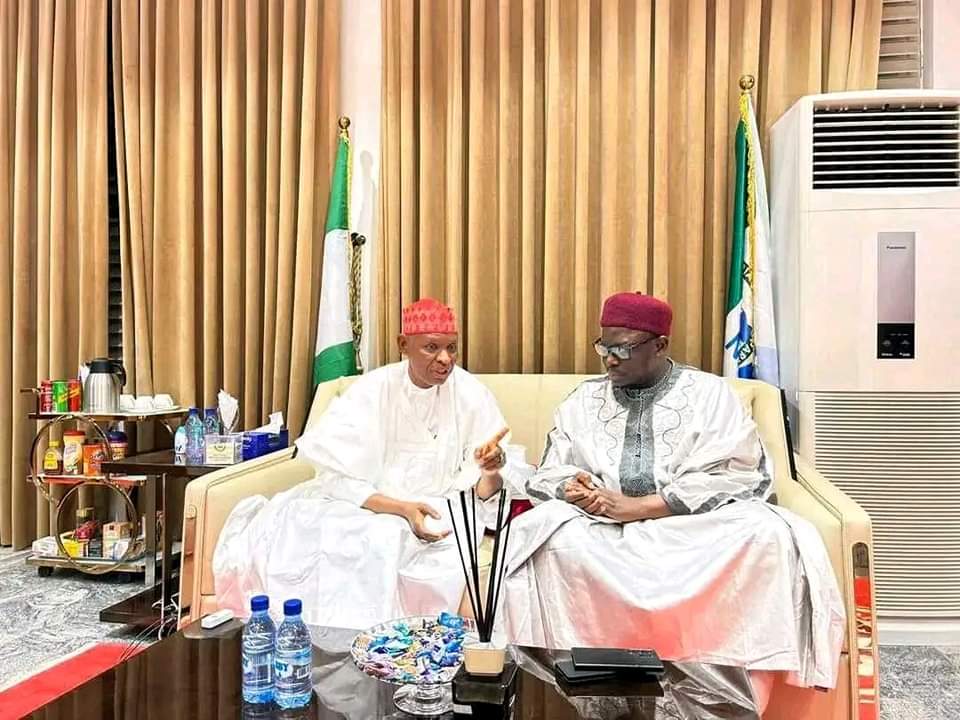
The congratulatory message was conveyed during a meeting at the Kano Government House, as announced by the governor’s spokesperson, Sanusi Bature Dawakin Tofa.

Give honour to whom honour is due: Reflections on the conferment of an honorary doctorate on Sheikh Daurawa

By Murtala Uba Mohammed

Just last Saturday, September 6, 2025 (equivalent to 13th Rabi’ul Awwal, 1447 AH), the prestigious Usmanu Danfodiyo University, located in Sokoto—the historic seat of the Sokoto Caliphate—took the bold step of awarding an Honorary Doctorate Degree to Malam Aminu Ibrahim Daurawa, a renowned erudite Muslim scholar. Indeed, there could be no better place in sub-Saharan Africa to honour such a distinguished scholar than the city that once served as the headquarters of the Muslim Caliphate and home of the revered Shehu Usmanu bn Fodio.

Malam Daurawa, the current Commander General of the Kano State Hisbah Board, was born some 56 years ago in the ancient city of Kano. His birthplace, Daurawa, lies just east of the Kano City Wall near Kofar Mazugal. He studied Islamic sciences under many teachers, including his father, Malam Ibrahim Maitafsiri, who was celebrated in his lifetime for his expertise in Qur’anic exegesis. Malam Daurawa’s depth of Islamic scholarship is remarkable. In addition, he pursued formal education up to the college level.

Through his teaching and preaching, Malam Daurawa has commanded great influence among Hausa-speaking Muslims across Nigeria, Niger, Cameroon, Chad, and Ghana. His reach also extends to countries with sizeable Muslim populations, such as Saudi Arabia, Sudan, and Egypt. 

Right from his childhood, Malam Daurawa has been known as a person of truth, honesty, forthrightness, humility, and impeccable integrity. This was evident during his early involvement in the Islamic Tajdīd Islamy (JTI), known for challenging Ibrahim Zakzaky’s then-concealed Shi’ite identity. While JTI exposed the deception of Zakzaky’s movement, Daurawa eventually disagreed with some members due to his conviction that Islamic scholarship should embrace a wider horizon of jurisprudential schools and perspectives. His zeal for knowledge led him to step away from the group in pursuit of deep and extensive Islamic knowledge—a commitment that has contributed greatly to his current status as one of the leading voices in Islamic learning.

Even before the dawn of Nigeria’s Fourth Republic and the spread of private radio stations, Malam Daurawa has already established himself as a dedicated teacher of Islamic knowledge, nurturing countless study circles. My first encounter with him dated back to 1999, when he commenced lessons on Imam an-Nawawī’s Riyāḍ al-Ṣāliḥīn at our mosque, Sa’ad bin Abī Waqqās Masjid, in Zango, within the historic city of Kano. That experience left an indelible mark on me.

I vividly recall the year 2002, when, as a student at CAS Kano, I listened to him delivering a lecture on Islamic history and the Sokoto Caliphate. It was then that my admiration for him deepened. The ease with which he narrated history; so fluent and effortless, as if reading directly from an unseen manuscript,was nothing short of remarkable.

His scholarship reminds me of the words once spoken about Ibn Taymiyya by one of his contemporaries thus: “I saw Ahmad ibn Taymiyya as if he had a calabash filled with knowledge before him; he would give what he wished and withhold what he wished.” Truly, Malam Daurawa is a fountain of knowledge, a wellspring of wisdom that flows generously to all who care to listen. His presence is not merely that of a preacher but of a guide whose words illuminate minds and inspire hearts.

By 2003, Malam Aminu’s gift became even more evident, particularly through his teaching sessions in various study circles within Kano city. Among the most famous of these were Triumph Mosque in Fagge, where he taught Zād al-Ma‘ād by Ibn Qayyim al-Jawziyyah, later adding al-Shifā’ bi Ta‘rīf Huqūq al-Musṭafā by Qādī ‘Iyād. He also taught at Kawu Iliya Mosque at the Brigade area. I cannot forget his short-lived teaching of Imam Mālik’s al-Muwatta at Abdurrahman bin ‘Auf Mosque in Kofar Wambai. Unfortunately, that circle of al-Muwatta was disrupted by hired miscreants who came and attacked disciples. Despite the commotion and fitnah stirred against him, Malam Aminu was willing to continue teaching. However, as we later learnt that the elder patron of the mosques, Alhaji Yusuf Abdullahi, advised that the lessons be suspended. Even so, Malam once introduced teaching of Sharh al-Sunnah by Imam al-Barbahārī at Sa’ad Mosque in Zango.

With the proliferation of private radio stations, especially from 2000s onwards, Malam Daurawa rose to greater prominence through his program Kundin Tarihi aired on Freedom Radio in Kano. The program quickly became immensely popular because it introduced a unique style of narrating the history of the Prophet Muhammad (SAW), his family and companions and Islam. With a distinct approach, Malam Daurawa presented history with clear references to its sources and explained the lessons to be drawn from it. He also responded to questions in an engaging and captivating manner. This style of teaching and narrativity of Islamic history won admiration across doctrinal—even from those who did not always identify with his Salafi creed. Before long, people across the city eagerly tuned in to his lectures. As a testimony to this impact, I recalled that the Bayero University-based double Professor, Abdalla Uba Adamu, on more than one occasion, mentioned that two scholars stood out to him: Sheikh Ibrahim Khalil and Malam Daurawa. He explained that Sheikh Khalil impressed him with his fatwa (legal verdict) and cordial relationship with the university community, while Malam Daurawa captivated him with his Kundin Tarihi program.

Usmanu Danfodiyo University, Sokoto, made it clear that it was Malam Daurawa’s lifelong service and dedication to the community that earned him the honorary doctorate degree. Anyone familiar with the revival of the Hisbah Board under his leadership can readily attest to his commitment. At various times, when the institution became comatose, Malam Daurawa was always there to resuscitate it. He has served three separate terms as Commander General of the Hisbah: 2011–2015, 2015–2019, and from 2023 to date; the longest cumulative leadership in the board’s history. A clear sign of his competence is the way he successfully served under three different governors namely: Senator Rabi’u Musa Kwankwaso, Dr. Abdullahi Umar Ganduje, and Engineer Abba Kabir Yusuf.

Beyond the Hisbah, Malam Daurawa’s leadership qualities are reflected in his service as Imam of Friday mosques, most notably the Ansarussunnah Mosque in Fagge. During the month of Ramadan, for many years, he traveled to Gombe to conduct Qur’anic tafsir. He has also established schools where children learn Qur’anic memorization and Islamic studies. Those who know him affirm that wherever Malam Daurawa resides, he establishes circles of learning for children, women, and youth. Always innovative in his pedagogy and propagation, he once advanced the idea of translating Islamic teachings and recording them in Hausa, Fulfulde, and English in an attempt to extend Islamic propagation to the far and extreme ends of Nigeria and beyond. The blessings of his knowledge have touched not only the wider community but also his home and family.

Furthermore, Malam Daurawa is an accomplished author, with more than thirteen publications in different areas of Islamic studies. One of his works, Sa‘ādatul Muslim fī mattafaqa ‘alayhi Bukhārī wa Muslim, has become a widely used teaching text in Islamiyya schools. His concern with social reform also inspired him to author books such as Kimiyyar Aure (The Science of Marriage) and Sirrin Maza (The Secret of Men).

Anyone who reflects on the life of Malam Daurawa will recognize that he is a divine trust for the community; tireless, unyielding, and sincere in every responsibility he undertakes. Indeed, Usmanu Danfodiyo University has made a wise and deserving choice in honoring him. While I congratulate Malam Daurawa on this recognition, I also congratulate the University for seizing the opportunity to bestow honor where it is truly due. Malam Daurawa is not a man of wealth who dispenses riches, nor a man of political power who grants favors. What he possesses is his time and his knowledge, and the community has long been reaping the benefits of this priceless treasure. God willing, he stands among the very best of people—khayr al-nās man yanfa‘u al-nās (the best of people are those who benefit others). May Allah reward him abundantly, elevate Usmanu Danfodiyo University, and bless all centers of learning across our nation.

Dr. Murtala is a bilingual writer who holds a PhD in geography and teaches at Bayero University Kano

In search of a link between some Hisbah operations and Shari’a implementations

Isma’il Hashim Abubakar

A few weeks ago, the Kano State Hisbah Board stole the limelight when a brief misunderstanding erupted between the Kano State Governor, Abba Kabir Yusuf, and the Hisbah leadership. The Muslim public, represented by religious leaders and the elite, played a significant role in calming tensions and restoring peace in the issue, which everyone welcomed with sincere happiness and unique hope that the short altercation would result in the promotion and reinforcement of Hisbah. 

In the two articles I penned within the clusters of that misunderstanding, I stressed that Hisbah is virtually the only government institution that transcends abstract symbolism and remains the lively organ that operationally contributes to the implementation of the Shari’a project, which was once the highest ambition of the Nigerian Muslims. I emphasised that all Muslims should regard Hisbah as their delicate property that should not be, in the least, jeopardised by internal or external commissions, omissions or inactions of any individual, no matter how highly placed, let alone common people who can just be dealt with and cracked down by responsible leadership.

One of the top functions of Hisbah is to serve as a machinery that supports the process of Shari’a implementation by deterring people from committing crimes, apprehending suspects, and presenting them before Shari’a courts for proper investigation and ruling. Of course, at different stages, Hisbah commendably serves as a forum for reconciliation and solving social disputes, which at times pleases and satisfies opposing parties in a better way than courts do. Nonetheless, this is never an excuse for the institution if it operates so that its effort to intervene in matters and find solutions for them becomes counterproductive to the letter, spirit and goals of Shari’a, which the board was primarily established to protect. 

Although preserving dignity is a principle that characterises Hisbah’s operations, as a government force backed by law, the board is not expected to provide cover or leeway for criminals to evade the wrath of the law. Shari’a will cease to have its proper meaning if criminals assume they are not to be treated as culpable and should, in principle, be deterred from, cautioned against, or punished for flouting Islamic law. 

In light of how some Hisbah officials handle cases both at the headquarters and various branches in the 44 local governments, some categories of criminals now utilise Hisbah to get their crimes tacitly covered as they further pursue their fiendish goals by conniving with or approaching some elements within the board. They no longer fear legal penalties that their crimes could lead them to, but could even summon the courage to approach the board to confess their crimes and demand certain rights that may have followed the consequences of their crimes. 

To be clearer, by citing examples, in a recent report I watched, which was broadcast by Tozali Magazine Online TV, a Chinese master in a company in Kano impregnated the daughter of his driver. When this crime was unmasked, the people involved tried several ways to abort the six-month pregnancy. After failing to get rid of the mess since medical experts refused to conspire with the Chinese fellow and his illegitimate in-laws, the case was taken to Hisbah, who is said to have searched for a solution for them. 

The report has it that the Hisbah leadership has resolved that the Chinese man, who earlier sought to silence his poor driver through pecuniary consolation, should just now marry the girl despite her heavy pregnancy so that the matter would be put to rest. If this report is true, with all its attendant jurisprudential intricacies, similar to what has allegedly occurred repeatedly in several branches of the morality police, then the institution needs to review its operations. 

As a Shari’a implementation body, when a suspect admits committing a crime as felonious as this, which involves adultery and attempts at feticide, is the expected response from Hisbah to look for a solution or to make a comprehensive investigation and forward the case to Shari’a court for judgment? Is Hisbah not shielding adulterers and providing escape routes for suspects who attempted to commit a feticidal crime? The punishment for an adulterer is clear; to be stoned to death and 100 lashes for the girl who seems to be unmarried since her Chinese lover, according to the report, did not rape her or use any form of coercion to have carnal knowledge of her. How could all this be replaced by forcing these criminal parties into marriage? 

A knowledgeable person heads the Hisbah, and the wisdom behind resorting to marrying culprits of this nature is a motive to preserve human dignity, conceal wrongs committed and prevent an illegal child from being born from perpetual bullying and stigmatisation. But yet, is this enough reason to sacrifice divine injunctions and render them obsolete? From what we read in the Glorious Qur’an and interpreted by the Messenger (SAW) through his speeches and deeds, suspects could only be shielded if the matter is not taken to authority or the relevant legal agency has not got hold of the felons. Concerning a set of crimes and their penalties, Allah says:

“illa alladhīna tābū min qabli an taqdirū ‘alaihim fa’lamū anna Allaha Gafūrun Rahīm” (except those who repent before they fall into your power, then know that Allah is Most-Forgiving, Most-Merciful) [ Sūrat al-Mā’idah: 34].

In several instances, the Prophet (SAW) warned that once a matter was presented before his court, then Allah’s law would take precedence over all other concerns. However, the Prophet (SAW) took pity on an illegal child born by a woman from the al-Ghāmidī clan. As a result, he asked her to go and take care of her child when the woman returned after she successfully weaned the child. She insisted that she must be punished according to the divine law; the Prophet (SAW) did not look for any other solution but applied the law to her, which, interestingly, promoted her posthumous virtue and spiritual rank. Worthy of notice also, nothing was heard about the man responsible for her illegal birth, nor did the Prophet himself ask her to mention him, just as the child was also integrated into the society without inscribing a permanent taboo on his status. 

Of course, many will argue that the penalties above are practically infeasible, but yet rewarding the felons with marriage is also discouraging and counterproductive to the goals of Shari’a. A midway solution is at least to apply a warning penalty (ta’zīr) on the criminals by serving their sentences to spend years in jail, which will be done by the court.

The scenario of Ɗan Chana and his street in-laws represents one of the many cases that evince Hisbah’s indecision to fully side with the spirit and letter of Shari’a as fully enshrined in the state law and is still the main legal framework that ought to guide Shari’a implementation process. It is now common to see a girl carrying a small child and asking for the address of Hisbah to report a case of her love affair, which resulted in the birth of a bastard whose alleged father refuses to adopt, take care of, or just abandons. The girl will summon enough courage and temerity to shamelessly divulge her secret affair just because she is confident she won’t be served with proper Shari’a law. Her aim for approaching Hisbah is not to repent and make amends but rather to wheedle her way into favour and capitalise on the institution’s power to extort money from her accomplice, who may have even denied being responsible for the unwanted birth. 

Even if Hisbah won’t pursue the case to the court, which it should, it should at least explain to girls like this that pregnancy and birth are enough evidence to prove a woman guilty of adultery or fornication, unlike in men’s cases, which primarily demands eyewitnesses or personal confessions. After all, illicit relationships do not have a sanctity similar to marriage, which has a Shari’a cover. As such, failure by a partner in illicit relationships to fulfil certain duties should not be equated with marital disputes between spouses. If a whore pretends that she is innocent and goes on to claim damages or demand a right, then what makes her different from a legitimate housewife or a divorcee? 

In the same manner, men accused of raping innocent girls are sometimes relieved from their burden through local arrangements with victims’ families such that in the long run, money will be the prime solver of the dispute, and suspects get away once they make commitments to take care of certain clamours about their victims.

The disconnect between some operations of Hisbah, which is portending a gloomy future for the institution, shall be one of the priorities of the governing council of the board, but also the head of government, who now does not have any doubt about the institution’s significance and dearness to the Muslim public. As we are in an era of normalisation of strange and weird mores and practices, Hisbah should be highly cautious and extra-careful not to be an agent through which barbaric, savage and amoral attitudes will be mainstreamed. 

Lovers who lack fear of God or a woman who falls so low to trade with her dignity in exchange for cash will continue to be emboldened to make a claim when any of them feels cheated in an illegal deal. No matter how rich or influential a man is, he shouldn’t be given a cover to get away with his crime just for pledging to take care of his rape victims. The application of appropriate legal sanctions is the only solution and guarantee for the safety of all parties, including the Hisbah and its leadership.

Isma’il writes from Rabat and is reachable via ismailiiit18@gmail.com.

Shaykh Aminu Daurawa, Gov. Abba K. Yusuf and the triumph of Hisbah in Kano

By Isma’il Hashim Abubakar, PhD

In my previous article, which predated and possibly heralded the public announcement of the voluntary and, of course, short-lived resignation of Shaykh Aminu Daurawa from his post as the Commandant-General of the Hisbah Board, I challenged what many people alleged to be a political romance between the Kano State Government and Murja Kunya, a rising TikToker who achieved notoriety through her lecherous utterances, unblushing gyrations, and licentious dances that not only defy moral codes but also corrupt the norms and values of Muslim society in northern Nigeria.

In that write-up, described by some as extremely blunt and overly radical, I chronicled a brief history of Hisbah and marshaled the unequal clout the morality police institution used to wield during previous Hisbah commandants and the immense sacrifices each of them made, which ultimately reinforced Hisbah and made it the most enduring and impactful religious bureaucracy established by the government since the return of Shari’ah at the turn of the century. I juxtaposed the achievements of Hisbah during previous leaderships against the commitment of the current command under Daurawa and concluded that the cleric was changing the course of how things used to be before his ascendancy as the Board’s head.

This view gains legitimacy through some of the Shaykh’s public confessions that, unlike during his predecessors’, he has modified and limited the ground operations of Hisbah such that he commands his guards to avoid storming and chasing elites, powerful figures, and places owned by influential personalities, while restricting their raids and arrests to the poor and weak masses who have no one to intervene and secure their release. This, to me, sounds counterproductive and explains why Murja Kunya nearly defeated Hisbah after she was arrested and jailed while awaiting trial, before her mysterious escape from prison.

To be candid and honest, Daurawa’s arrest of Murja was a courageous and commendable move, although certainly itself an act of defiance of a theory he formulated, which showed that he perhaps underrated Murja, and that was why he thought she belonged to the class of powerless masses, the supposed target of Hisbah’s wrath.

Meanwhile, the sudden announcement of Daurawa’s voluntary resignation after Governor Abba Kabir Yusuf’s public speech, which Daurawa and thousands of listeners received with dismay and interpreted as an authoritative demoralization of Hisbah, was ironically, based on the development that followed the resignation, a blessing in disguise. This awakened not only stakeholders but also remote audiences to the essentialness of the existence and backing of institutions like Hisbah. Having earlier decried Daurawa’s “soft” approach and selective application of his mandate, his resignation should be welcomed by me and those who have reservations about his policies.

However, like many pro-Hisbah fellows, I ironically found his sudden resignation shocking, albeit trying to live by the dictates of my admonition in my previous essay, thanks to the circumstances through which he almost vacated his seat. I spent the whole day after listening to the short clip of the scholar announcing his resignation, contacting and discussing with friends, and deliberating on who might be the right candidate to succeed Daurawa. Some of the names I heard allegedly being peddled and imposed on the conscience of Governor Abba sincerely scared me a lot.

One of those candidates is even a crony and closest representative of an infamous scholar who almost ignited a war in Kano due to his poisonous and blasphemous preachings before he was finally convicted by the court and is now still languishing in jail. It suddenly dawned on me, as it did to thousands of the audience, that Daurawa’s resignation would hardly lead to the reform of Hisbah we crave and the brave and intrepid posture and outlook that we aspire for the head of Hisbah to wear and maintain. In fact, whoever would have succeeded Daurawa would merely do the bidding of the Governor and avoid unleashing Hisbah’s wrath on people connected with the Governor’s political victory, even if they are as worthless as Murja Kunya.

It was this similar feeling and the fear of the decline of Hisbah’s influence that virtually alerted concerned Muslims to wade into the matter and, at different levels, embarked on calls and campaigns to have an understanding between the Governor and his cleric appointee to recant the resignation and to have a rethink on the position and function of Hisbah amidst growing disappointment at how immorality is holding sway in cyberspace and social media domains within the region. The mission for reconciliation sponsored, led, and facilitated by the Coalition of Ulama in Kano, besides the calls for Governor Abba to make peace with the Hisbah boss that stormed different quarters from various constituencies, has been very fruitful.

Sincere happiness and celebration for the triumph of Hisbah are now the stuff that spectators have to feast on these days, with pre- and post-reconciliation group photographs of the Governor, Daurawa, and the peacekeeping team flooding social media from all angles. Daurawa himself expressed happiness that the worries and reservations he earlier nurtured, which likely but also partly justify his diplomatic approach, will now be a thing of the past since there is a renewed commitment from the government to support, empower, and stand with Hisbah.

Daurawa’s recent efforts to synergize the function of Hisbah, mobilize, and secure more support for Hisbah from various groups and levels of people, as expressed in his public address and illustrated by his recent visits to important arms of government, including the Grand Khadis, are chiefly commendable moves.

The gaps created by Murja’s illegal escape from prison, which will hopefully now be checkmated, and the subsequent resignation of Daurawa all evince the previous lack of a commensurate and strong network that Hisbah ought to have had, which would have made its work easier. With the Sultan of Sokoto, the highest Muslim royal figure in Nigeria; top business moguls; prominent Islamic clerics across different sectarian divides; senior government officials; technocrats; academics and intellectuals; as well as the overwhelming majority of concerned Muslims within northern Nigeria all backing Hisbah and pledging unanimous allegiance to its commandant, the Board now has adequate authority to tackle and contain immorality on a larger scale and without, in the slightest sense, any class discrimination.

There is no better time than now to expand the scope of Hisbah and extend its activities to other Muslim states within the region. Sheikh Daurawa will be a very good asset, particularly as he reviews some of his previous approaches, to spearhead an advocacy movement to institute a unified Northwestern Hisbah command or zonal network, officially and legislatively endorsed by state governments in order to effectively counter the rising challenge of immorality that is spread largely on social media platforms.

The approachability, broadmindedness, and openheartedness that informed Governor Abba Kabir’s swift acceptance and accommodation of criticism and correction have restored some hope to the public of having a governor who would combine the leadership qualities of decisiveness, intrepidity, hard work, foresight, wisdom, and clemency at one time—the principal behavioral dispositions, part of which define Engineer Rabiu Musa Kwankwaso and his longtime political counterpart, Malam Ibrahim Shekarau. These are expected to come into play in Abba’s expected commitment toward and prioritization of Hisbah activities, particularly by reforming the administrative aspects of the Board, by first appointing a formidable governing council peopled with members who will be devoted to their job ahead of considering it a political favor through which to get material gratification. The best pool to draw on will be the same peacekeeping team that ensured the reconciliation between the Governor and Hisbah commandant.

Previous senior Hisbah officers as well will be of great importance as part of the governing council. An upward review of the monthly allowance from ten thousand Naira for Hisbah guards, such that it triples their current take-home pay, will be a visible indication that the Governor is now in full support of Hisbah. The Governor will be wiser if he takes singular caution by distancing himself from the pseudo-cleric he appointed as a religious adviser. The opportunist appointee, who is rubbishing Hisbah’s mission by advising his boss to reward Murja Kunya and integrate her into his cabinet, seems to be on a mission to drag the Governor into an unnecessary but suicidal fight with the religious constituency. With elements like this in the corridors of power, the sudden triumph of Hisbah will remain incomplete unless Murja Kunya faces the severe wrath of the law.

Isma’il writes from Rabat, the Kingdom of Morocco and can be reached via ismailiiit18@gmail.com.

Kano: Sheikh Daurawa reconciles with Governor Yusuf, resumes work as Hisbah chief

By Muhammad Abdurrahman

Kano State Governor, Abba Kabir Yusuf, has reconciled with the Commander General of the State Hisbah Board, Sheikh Aminu Daurawa, who had resigned his appointment last week.

Daurawa, who resigned from his position through a video that went viral while attending a retreat organized in Kaduna, stated that his decision was influenced by the public’s criticism of the Hisbah operatives and their actions.

Speaking to journalists about the development, the spokesperson to the governor, Sanusi Bature Dawakin Tofa, confirmed the reconciliation on Monday.

Dawakin Tofa said the reconciliation was achieved through the intervention of respected Islamic clerics and a meeting with the governor that lasted for hours.

Some of the people in attendance include Prof. Salisu Shehu, Dr. Saidu Dukawa, Sheikh Abdulwahab Abdallah, among others.

Hisbah saga: governor’s public condemnation, misstep in leadership

By Umar Sani Adamu

The recent public criticism by Governor Abba of the Hisbah board in Kano State has sparked controversy and raised concerns about leadership decorum and responsible governance. While it is crucial for leaders to address concerns and seek improvement within government agencies, the manner in which Governor Abba chose to express his dissatisfaction raises questions about his leadership style and the potential consequences of his actions.

First and foremost, criticizing a government agency publicly, especially one tasked with religious and moral enforcement like the Hisbah board, can create unnecessary tension and undermine public trust in the institution. Governor Abba’s decision to air his grievances in a public forum instead of handling them internally or through diplomatic channels demonstrates a lack of discretion and undermines the credibility of the Hisbah board.

Furthermore, by openly criticizing the Hisbah board, Governor Abba risks exacerbating existing tensions within the community and fueling resentment towards the agency. This could potentially undermine the effectiveness of the Hisbah board in carrying out its duties and could lead to a breakdown of law and order in the state.

Additionally, Governor Abba’s public criticism of the Hisbah board without offering concrete solutions or constructive feedback demonstrates a lack of leadership maturity. Effective leaders understand the importance of providing constructive criticism in a constructive and respectful manner, focusing on solutions rather than simply pointing out problems.

Moreover, Governor Abba’s decision to publicly criticize the Hisbah board instead of engaging in private dialogue with relevant stakeholders, such as Sheikh Mallam Daurawa, further highlights his disregard for diplomatic protocols and his tendency to prioritize personal agendas over the well-being of the community.

Adding the context of Murja Kunya’s situation provides further insight into the potential implications of Governor Abba’s public criticism of the Hisbah board. Murja Kunya, a social media influencer, has been accused by the Hisbah board of encouraging indecency and immorality. In this context, Governor Abba’s public condemnation of the Hisbah board could be interpreted as a form of protection for Murja Kunya.

By publicly criticizing the Hisbah board’s handling of the situation, Governor Abba may be perceived as undermining their authority and potentially shielding individuals like Murja Kunya from accountability. This not only weakens the effectiveness of the Hisbah board in enforcing moral standards within the community but also sends a troubling message about the government’s commitment to upholding moral values and protecting societal norms.

In light of these circumstances, Governor Abba’s public condemnation of the Hisbah board takes on an even greater significance. It not only raises questions about his leadership style and approach to governance but also calls into question his commitment to upholding moral standards and protecting the well-being of the community.

Therefore, it is imperative for Governor Abba to reconsider his approach and prioritize responsible leadership that fosters constructive dialogue and collaboration, while also upholding the values and principles that are essential for the well-being of society as a whole.

Umar Sani Adamu (Kawun Baba)