Secondary School

Ghana adopts local languages as medium of instruction in schools

By Muhammad Sulaiman

The Government of Ghana has introduced a new education policy mandating the use of local languages as the primary medium of instruction in all schools across the country.

Announcing the policy, Minister of Education, Haruna Iddrisu, said the decision marks a major step toward resetting Ghana’s education system to better reflect the nation’s linguistic and cultural realities. He emphasised that children learn best in their mother tongue, which enhances understanding and cognitive development.

“The use of our local languages in classrooms will not only improve learning outcomes but also help preserve Ghana’s rich linguistic heritage,” Iddrisu stated.

The Ghana Education Service (GES) has been directed to oversee the nationwide implementation of the policy. The move is expected to significantly reduce the dominance of English in the country’s early education system and promote inclusivity through indigenous languages.

Malam Garba Umar Saleh: A teacher with a difference 

By Sani Surajo Abubakar

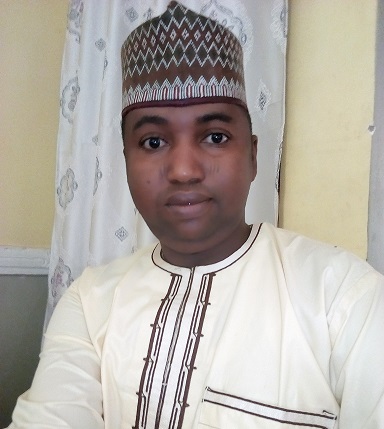
“Gurubi”, as he was fondly called by his colleagues, the teaching and non-teaching staff of Army Day Secondary School, Bukavu Barracks, Kano, remains a name that resonates in the ears of many who studied in the school in the late 80s, 90s, and years after.

Malam Garba Umar Saleh embodied the spirit of a true teacher. His commitment to education and passion for nurturing young minds were evident in every aspect of his work. 

It is with profound sadness that we reflect on the life and legacy of the late Malam Garba Umar Saleh, a dedicated teacher at Army Day Secondary School and other secondary schools. His passing left an indelible void in the lives of those who knew him, particularly his students, colleagues, and the broader community.

 He approached his role with diligence, patience, and kindness, making him a beloved figure in schools. His dedication to his students went beyond the classroom, as he often took extra time to mentor and guide them, both academically and morally.

The impact of Malam Garba Umar Saleh on his students cannot be overstated. He had a unique ability to make complex concepts accessible and engaging, inspiring a love for learning in countless young minds. His unwavering support and encouragement helped many students overcome challenges and achieve their full potential. His legacy lives on through the countless lives he touched, and his influence will continue to shape the futures of those he taught.

His colleagues at the Army Day Secondary School and other Schools also held him in high regard. His collaborative spirit, professionalism, and positive attitude made him a valued member of the school community. He made significant contributions to the school’s mission, consistently striving for excellence and innovation in education.

While Malam Garba Umar Saleh is no longer with us, his legacy endures. The lessons he imparted, the values he instilled, and the love he showed to his students and colleagues will forever be remembered. His life serves as a powerful reminder of the profound impact one individual can have on the lives of others.

As we remember Malam Garba Umar Saleh, we honour his memory by upholding the values he cherished: dedication, compassion, and a commitment to making a difference in the lives of others. His story is a testament to the enduring power of education and the profound impact one teacher can have.

This tribute serves as a heartfelt acknowledgement of the remarkable life and contributions of Malam Garba Umar Saleh. May it inspire others to follow in his footsteps, dedicating themselves to the noble cause of education and service to humanity. 

A 1982 NCE graduate of the Advanced Teachers College Gumel, the deceased was employed as Master III by the then Kano State Ministry of Education and posted to Government Girls College (GGC) Dala as his first port of service.

In his quest for knowledge, the late Garba Umar Saleh enrolled in a degree programme at Bayero University Kano and graduated with a Bachelor of Arts (BA) in Education/English in 1989.

He spent most of his teaching years, spanning more than three decades, at GGC Dala, Army Day Secondary School (Boys), Bukavu Barracks, and Muhammad Vice Adamu Government Secondary School Kuka (MVAGSS), serving as a classroom teacher, Senior Master, and Vice Principal, respectively.

Towards the tail end of his service period, he was redeployed to the headquarters of the Kano State Senior Secondary Schools Management Board (KSSSSMB) as Deputy Director, Training and Recruitment, a position he held until his last breath, some weeks before his exit from the service. 

  May Almighty Allah, the most Exalted, grant his gentle and innocent soul rest in peace, and Jannatul Fiirdausi be his final abode, the fortitude and solace for all of us to bear the irreplaceable loss. May his legacy continue to inspire future generations? 

Sani was a student at Army Day Secondary School, Bukavu Barracks, Kano, and is currently on the Staff of the Kano State Ministry of Information and Internal Affairs.

Brazil bans phones in schools, joining global trend

By Abdullahi Ibrahim

To enhance concentration and minimize disruptions in Brazilian classrooms, the use of mobile phones by elementary and secondary school students has been officially prohibited during school hours.

The new policy aims to enhance academic performance and encourage healthier social interactions among students.

Brazil joins a growing list of countries, including the Netherlands, France, and Italy, which have implemented similar measures to address concerns about the negative impact of mobile phone use on education.

Proponents of the ban argue that limiting phone use fosters a more engaging learning environment, while critics highlight potential challenges in enforcing the policy and addressing emergencies.

Education officials in Brazil have expressed optimism about the initiative, emphasizing its role in creating a more focused and collaborative atmosphere in classrooms.

The global trend reflects a broader debate on balancing technology’s benefits with its potential drawbacks in education.

More than 1.2 million candidates registered to sit for SSCE with us—NECO

By Muhammadu Sabiu 

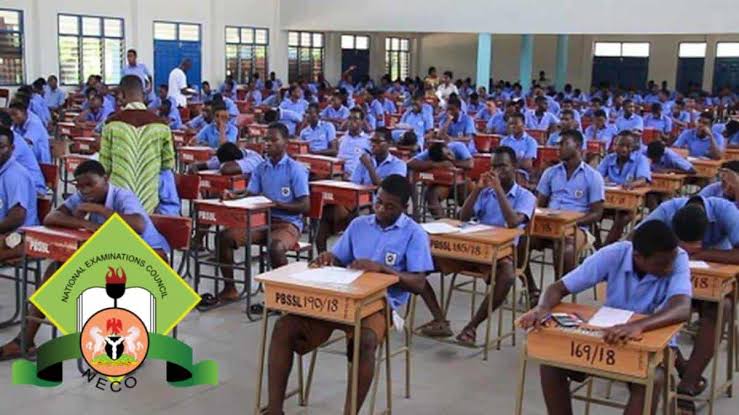
A total of 1,205,888 applicants have enrolled for the current 2023 Senior School Certificate Examination, or SSCE, which is being administered by the National Examinations Council (NECO). 

The Head of Information and Public Relations, Azeez Sani, revealed this in a statement on Friday in Abuja. 

In Jos, while observing the administration of the exam in various schools, Prof. Dantani Wushishi, the NECO registrar, was quoted by Mr. Sani as having stated that 601,074 of the candidates were male and 584,814 were female. 

Based on information gathered from around the nation, he expressed satisfaction with the SSCE’s overall performance in 2023. 

The registrar noted that the 2023 SSCE, which will be finished next week, was the best organised in recent years.

Malam Saidu Jibrin Kwani: A case study of a strong man vs strong institution debate

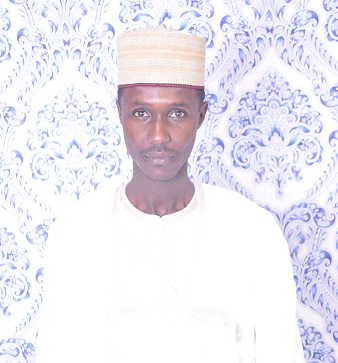
By Nasiru Manga

Anytime Nigeria’s myriad problems and challenges are raised in a discussion which also involves how to turn around the country’s fortune, it more often than not leads to a fascinating argument among intellectuals as to which is more important between establishing a solid institution which produces successive good leadership or having a leadership of strong men to engender strong institutions. In that instant, I find myself vacillating between the two opinions. I find both of them valid and very difficult to be disputed. It’s a case of a chick and an egg dilemma regarding which must have existed first, the chick which laid the egg or the egg from which the chick was hatched.

Reasoning with either of the points, I reflected on my teenage experience in secondary school more than two decades ago. I then relate the arguments with the leadership of five or six successive principals in my secondary school, Government Arabic College, Gombe. How these principals managed the school was a practical example of the validity of the two arguments depending on the side one takes.

One of the principals, in particular, stood out. He is Malam Saidu Jibrin Kwami. His exemplary leadership during his stint as the school’s principal afforded me the feeling of what good leadership can do, even in a small school environment. Before him, his predecessors couldn’t make any difference. The principal who succeeded him couldn’t equally build on his achievements. It’s also proof that without a vital institution, a strong leader’s efforts come to nought if he leaves the stage and succeeds by a weakling. For my readers to deeply appreciate why Malam Saidu Jibrin Kwami’s exemplary leadership towered above the rest of the principals, let me take you down memory lane of what was obtainable in the school.

The system was, and until we left the boarding secondary school in 2002, the principal, in addition to the daily management of the school, was in charge of students feeding. I didn’t know whether the funds for the feeding were released to the principal directly from the state ministry of education or the ministry provided the school with all foodstuffs. It released some funds to the principal for the daily running of the school and buying groceries. But I did know that the school store was getting restocked regularly.

The three square meals day in and day out consisted of mostly pap with sometimes two pieces of ƙosai served as breakfast. The pap had no sugar, and perhaps, due to how it was prepared, it had a sedative effect on students during school hours. Black tea with rumpled tiny bread was served as breakfast once a week. The lunch and supper were either tuwo made from processed maize, mostly half-done, called gabza by students or eba made from gari, served alternately for lunch and supper. The soup for the gabza or eba, mostly miyar kuka, was prepared with little to no spices and bereft of any accompanying protein in the form of meat. Rice which one couldn’t tell whether it was a jollof rice or simply white rice without soup, was served on Thursdays. The meat was served only once in a blue moon.

It is needless to say that the rations were not enough for students. Worse of it, many students used to end up not having their rations as what was given to the cooks to prepare was barely enough to go around. The service was, therefore, on a first-come-first-served basis, excluding senior students who needed not join queues. If one missed his share, that was all, and he would be told “ka bi Yerima“, an expression meaning “you have missed, there is nothing for you.” It was said that the cliché “ka bi Yerima” has its historical origin in one of the Gombe princes who sought and lost his father’s throne to then Emir of Gombe, Alhaji Shehu Abubakar. So “ka bi Yerima” means one followed in the footsteps of the prince, a loser. Ask me not about its authenticity.

To be fair to the principals of my secondary school, the situation was almost the same in all boarding public secondary schools, at least in Gombe and Bauchi states, around that time and even some years before that, as confirmed by those who attended the boarding schools before us. There were, of course, slight differences here and there occasioned by changes of different school administrators depending on their level of prudence and management of resources.

One incident I can’t forget during my first year was a riot in the school. The then-principal was unbelievably niggardly. Students’ rations which were, to start with, too little, only enough to feed a three-year-old baby, became so frequently inadequate to go around. Kun bi Yerima became the order of the day as more and more students started missing their rations at the dining hall. This was exacerbated by the fact that it was towards the end of a term when the foodstuffs brought from home by students and some money given to them by their parents to complement the school feeding programme had finished, thereby forcing many to rely on the food provided by the school which was not enough. There was also a shortage of water in the school.

So, one morning, some senior students from SS 2 and 3 woke up and said they had had enough. They took to the school’s streets chanting slogans that the principal should go and that he was a thief. After gathering, they headed to the school’s staff houses, where the principal lived. They started pelting stones at his house. He escaped by a whisker, and the school got shut down for a few weeks.

Upon resumption, we met a new principal and were informed that about seven (7) students, leaders of the protest, were expelled from the school. But still, there was no significant improvement in school feeding or academics. We only had three to four subjects maximum, out of the nine subjects we were supposed to have daily. The only exception was when we had teaching practice students from the Federal College of Education. And during that time, permanent teachers virtually abdicated their responsibilities, leaving everything to the student-teachers. Another two principals we had afterwards couldn’t effect any change. Their priorities were neither students’ academic nor their nutritional well-being.

Then came the revolutionary principal, Malam Saidu Jibrin Kwami. We were in SS 3, about five years after that principal against whom students revolted, and the fourth in the succession of principals since we enrolled in JSS 1.

The first thing he undertook was an improvement in our academics. He frowned at some teachers habits of sitting and chit-chatting in staff rooms without attending classes. He declared that he wouldn’t condone their flagrant negligence of duty. He insisted that every teacher must not miss his lesson twice weekly without a genuine reason. We then started having completed nine lessons on an unprecedented day.

How did he achieve that? He gave all class monitors notebooks to use as registers where each teacher would write their name and append their signatures at the end of their period. At the end of the class every day, the class monitors would queue up at his office, where he checked the register of each class to see if there was an absentee teacher. He also told us in the assembly that we should report any teacher we observed wasting away their period of 30 minutes or 45 minutes blabbering instead of teaching.

Malam Jibrin Kwami also introduced extra evening classes (which we called prep) daily, save weekends. Before him, there was not much importance attached to it by his predecessors. Only junior students used to attend it, and it wasn’t daily. But during his time, he supervised the evening classes himself; and he would personally go around hostels to chase out stubborn senior students who would rather stay put in the hostels while the prep was ongoing. If he sighted a student loitering about, he would shout from afar, “Who is that gardi?” He also ensured that all the classrooms and all the streets from students’ dormitories leading to the classes were fully lit so that students wouldn’t complain of darkness. There were no Discos then, and NEPA was genuinely faithful. How he achieved that, beat me.

You may be wondering what happened to our food, right? Suffice it to say that during his short period as the school’s principal, we also saw what our parents enjoyed in public schools in the ‘70s and ‘80s. He told us that he also finished in the same school in 1982, and it was unfortunate that things had deteriorated to that level.

Most days of the week, our breakfast became tea (not just black tea, but with milk) and bread as against pap. And we started feeling the taste of sugar in our pap too. White rice and stew, tuwo and eba started competing as our lunch and supper, with rice winning most times. Pieces of meat suddenly appeared in our daily meals, and the soup started having condiments.

One day, he summoned us as the school’s prefects, informed us that we would notice a change in our meal the next day, and urged us to survey and feed him about the change.  He told us the meat price was high, so he decided to alternate the meat with fish. So he wanted us to sample students’ general opinions on the fish substitute as he knew some people didn’t like fish. Such a thoughtful leader!

Unfortunately, as they say, good things hardly last; his tenure as a principal was short-lived. No sooner had we started enjoying his good leadership than he got elevated and appointed as the secretary of our state’s pilgrim board. The school was literally thrown into mourning upon hearing the news.

The man who succeeded him couldn’t properly step into his shoes. Things started deteriorating very fast. Before you know it, we were back to square one. This is the case of having a strong man without a strong institution. And the strong institution doesn’t exist in a vacuum; it has to be built by strong men.

Nasiru Manga can be reached via nasmang@gmail.com.

We’ve not postponed date of commencing exams—NECO

By Muhammad Sabiu

Contrary to rumours claiming that the exam had been postponed to a later date, the National Examination Council has declared that the 2022 Senior School Certificate Examination would begin on Monday, June 27, 2022, for school-based applicants.

Azeez Sani, the council’s head of information and public relations, revealed this information in a statement to journalists in Minna on Saturday.

Sani urged interested parties to reject rumours that the examination would be delayed.

“State Ministries of Education, Principals, Commandants and all stakeholders are enjoined to disregard any speculation on the alleged postponement of the examination,” Sani said, adding that “the Council has put all necessary measures in place to ensure a seamless conduct of the 2022 Senior School Certificate Examination.”

Why do we lack a reading culture?

By Aliyu Muhammad Aliyu

We often ask ourselves the question, “why do we lack reading culture in our contemporary society?” The answers we get are associated with our background and perspective on the issue. To a teacher, knowledge of all fields and disciplines is documented mainly in writing. We explore and acquire it by reading relevant resource materials of our interest for their information. We read enough literature persistently to acquire what is sufficient to be knowledgeable through either the education process or self-learning. To read and continue reading, the reading itself has to be easy, attractive and exciting to the reader. In this way, it becomes second nature and a hobby unwitting.

As a common saying, “the beginning of everything is the most important.” When a child learns how to read and comprehend the information, write what is understood by their readers, and express themselves verbally, effective communication skills manifest, hence reading culture and knowledge acquisition. This marks the beginning of intellectual independence achievable only through standard, sound and comprehensive primary education.

Children are taught to be literate in primary schools; they familiarize themselves with alphabets and numerals, words recognition, pronunciation, formation of sentence and paragraph and finally, the whole passage comprehension and composition in mother tongue and lingua franca. Reading begins by reading adventure stories in which the heroes get into difficulties. Then, using the suspense technique, the readers’ interest is held until they find how the heroes escape in the end. This boosts readers’ imagination and interests, which results in reading more stories searching for ways to be heroes themselves. With age, the readers grow older and develop an interest in how people think, talk, feel and handle situations and circumstances. That makes them critical in their thoughts and figuring out how to solve their problems through someone’s experience put in writing.

A society that adopts a reading culture will produce vibrant youth of revolutionary character that will be satisfied only with the best from anyone in all circumstances. On the contrary, anything one does with difficulty, the interest in that particular issue gradually fades away until one loses it completely, more so on the reading activity as energy and time consuming are immense. Those who are incapable of reading a quarter of the minimum words expected per minute of an average reader will certainly lose interest in reading since they are expending what isn’t worth it when they can use the same amount of effort that bear fruit in other activities comfortably. They have to abandon reading and then lose all its life-changing attributes.

The cascade of events that lead to poor reading culture begins with poor primary school back and forth. Pupils attend poor primary schools and leave without learning anything substantial. They move to secondary school still without learning much because of a lack of foundation to support the lessons taught. Somehow, they manage to pass the final exams by exam malpractice or otherwise. They get admissions to higher schools of learning and can sail through in different ways. Some do that by cheating, and others with great difficulty of mere rote learning due to inefficient lecturers that are probably victims of poor primary education or lazy in evaluating their students’ performances.

The poor products are the so-called qualified teachers that are given the available teaching job in primary school to continue the vicious cycle. It is common knowledge that one learns much less than one is taught. So, this indicates that a negligible amount of knowledge and motivation is to be learnt from incompetent teachers. Moreover, this results in the decline of knowledge in every generation.

The only way to correct this existing problem and prevent its future occurrence is to recruit enough competent primary school teachers. They should also be given sufficient orientation training that focuses on what they are to teach according to the syllabus and continuously retrain all existing teachers. Furthermore, educated parents and guardians are to monitor the ability of their children’s literacy and numeracy by themselves to ensure their performance since results are faked by teachers, especially those private schools to mislead parents.

Primary school leavers taught by competent primary school teachers don’t need to spend a dime on them in private secondary schools because they’re well equipped to muddle through and even be among the best in the current unsound state of public schools. A qualitative primary education that leads to unlimited reading culture and curiosity is what the first-generation students and their successors got and proved to be highly knowledgeable in virtually all fields of learning despite their lower certificates. Contrary to what is currently obtainable with those with all the degrees but never fails to hide their ignorance of general knowledge and simple basics that were not obtainable right from primary school.

To fix a society, fix education. To fix education, fix primary education, as simple as it sounds.

Aliyu Muhammad Aliyu wrote from Kano via amabaffa@yahoo.com.