Sanitation

Abuja faces sanitation crisis as contractors threaten strike over unpaid wages

By Anas Abbas 

Abuja may soon face a sanitation crisis as contractors responsible for cleaning the city have threatened to suspend operations from September 25 over the non-payment of nine months’ wages.

The Association of FCT Solid Waste and Cleaning Contractors (AFSOWAC), which oversees sanitation services across 44 lots in the capital, raised the alarm in a letter to the Coordinator of the Abuja Metropolitan Management Council.

“Despite our loyalty and sustained service delivery, we have not received payments since January 2025,” the group said. “We have reached a point where passion and commitment alone cannot sustain this essential service. Without payment, we cannot continue.”

According to the association, its members clear more than 1,000 tonnes of refuse daily using over 100 refuse trucks and 60 tippers, while engaging more than 3,000 workers. Many of these workers, it said, depend solely on the job for their livelihoods.

AFSOWAC disclosed that contractors had kept operations afloat by borrowing heavily from banks and informal lenders, but warned that such means had been exhausted. It added that the Abuja Environmental Protection Board (AEPB), which supervises their contracts, had continued issuing daily directives without addressing the financial challenges.

The contractors further lamented the deteriorating state of the Gosa dumpsite, describing it as “deplorable” and urging urgent intervention to improve access roads and equipment.

They also called on the FCT Administration to expedite the procurement process initiated in October 2024 and review payment rates to reflect current economic realities, such as the removal of subsidies and the devaluation of the naira.

The association warned that a strike would trigger a rapid build-up of waste in Abuja, a city renowned for its relative cleanliness, and could expose residents to serious public health risks.

“We can no longer guarantee uninterrupted services in the Federal Capital City without urgent payment,” AFSOWAC cautioned.

Kano gov’t vows tougher measures against sanitation violators

By Uzair Adam 

The Kano State Government has expressed strong dissatisfaction with the movement of vehicles and the operation of motor parks during environmental sanitation hours, warning that violators will face strict penalties.  

The Commissioner for Environment and Climate Change, Dr Dahiru Muhammad Hashim, issued the warning on Saturday while overseeing the end-of-month sanitation exercise across motor parks, markets, and major roads in the state.  

He announced plans to block key roads to prevent travellers from entering Kano during designated sanitation hours. 

The commissioner also highlighted gaps in waste management, emphasising the need for immediate intervention.  

“The issue of vehicle movement during sanitation hours will not be taken lightly, especially for those coming from outside Kano who continue to violate our regulations. 

In the next exercise, we will deploy adequate security and block some roads leading into the state,” he said.  

Dr Hashim also criticised motor parks that remained operational during the sanitation period, stressing that such actions would not be tolerated. 

“Some motor parks continue their business activities in defiance of the law, which is unacceptable. We will take decisive steps to ensure compliance,” he added.  

He urged residents and travellers to respect the restrictions and adjust their travel plans to avoid disruptions. 

He reiterated that any individual or transport operator caught violating the directive would face strict penalties.  

“I want to express my displeasure over the continuous movement of vehicles during sanitation hours. This is a clear violation of existing regulations, and anyone who fails to comply will face appropriate sanctions,” he warned.  

Meanwhile, Dr. Hashim commended the residents of the Kauyen Alu community in the Tarauni Local Government Area for actively cleaning their environment, including cemeteries, drainage channels, and surrounding areas.  

The Chairman of Tarauni Local Government, Alhaji Ahmad Muhammad, lauded the commissioner’s commitment to environmental cleanliness, assuring him of the local government’s ongoing efforts to eliminate open defecation and enhance sanitation standards.  

During the exercise, the task force arrested 28 offenders and imposed fines totalling N78,000 on those who violated sanitation laws.

Menace of Malaria: Kano residents cry out for gov’t intervention

By Anas Abbas

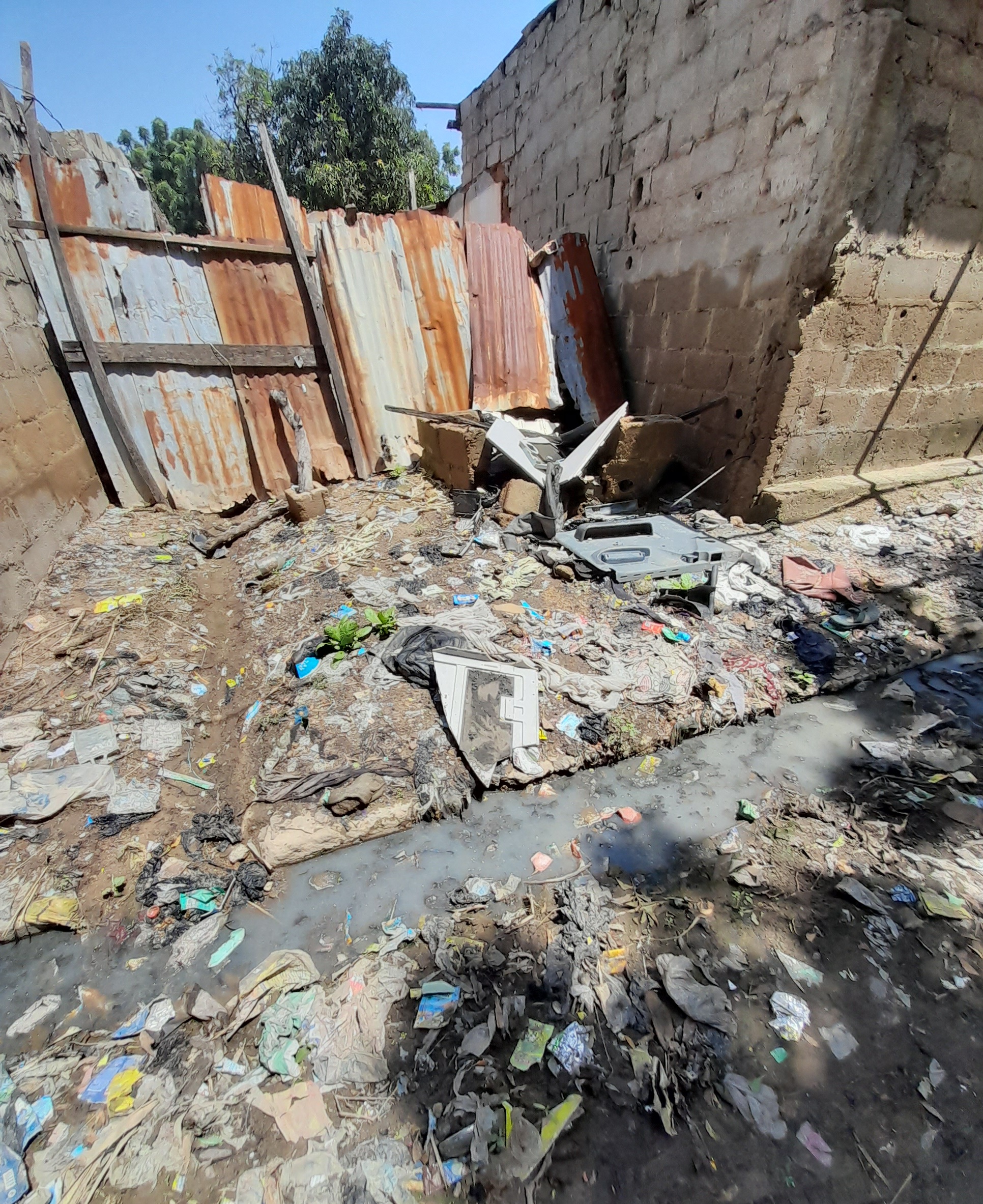
Residents of some areas in Kano State are sounding alarm over a severe mosquito infestation linked to rampant refuse accumulation.

The situation has raised public health concerns, particularly regarding the rising cases of malaria, a disease predominantly transmitted by mosquitoes.

Situation on ground

In several neighborhoods, stagnant water and heaps of garbage have created ideal breeding conditions for mosquitoes. Local residents report an alarming increase in mosquito populations, which they believe is directly contributing to a surge in malaria cases.

Residents’ Concerns

Local residents have voiced their frustrations regarding the government’s failure to address this growing health crisis. They highlight that the absence of mosquito control initiatives, such as spraying insecticides and promoting sanitation, has allowed mosquito populations to flourish.

“We see mosquitoes everywhere, and they are the main cause of malaria in our community,” lamented Khadija Umar. “The government needs to take action before more lives are lost.”

“We are overwhelmed by mosquitoes, and many of us are falling ill with malaria,” Amina Yusuf, a resident of Danrimi area. “We need immediate help from the government.”

The lack of effective waste management and sanitation services in these communities have exacerbated the problem. Many families are struggling to cope with the health implications, with some reporting multiple cases of malaria within their households. “It’s heartbreaking to see our loved ones suffer because of something that can be prevented,” lamented Saad musa.

The call for government action

Residents are calling on the Kano State government to take urgent action.

They are demanding the implementation of mosquito control initiatives, including regular insecticide spraying and improved waste management practices.

Additionally, public health campaigns aimed at educating the community about malaria prevention are seen as essential steps toward tackling this growing crisis.

Health expert warns that without immediate intervention, the situation could worsen, leading to further health complications for vulnerable populations.

Usman Sani Sa’id, a health practitioner, is urging the government to prioritize initiatives that educate communities on mosquito eradication and distribute mosquito nets.

“Malaria disproportionately affects developing countries, with poor hygiene being a significant contributor. However, when communities maintain cleanliness by sweeping homes and disposing of sewage, mosquitoes are less likely to thrive,” he emphasizes.

Sa’id, highlighted the necessity of community education, asserting, “It is imperative that we raise awareness about malaria prevention. The government must adopt measures such as spraying insecticides and implementing other preventive strategies to safeguard the health and lives of our residents.” His passionate plea underscores the urgent need for a collaborative effort in combating malaria and enhancing public health.

Sickening state of hostels’ toilets in Nigerian Universities

By Abdullahi Adamu

THE rot in federal and state institutions is taking a toll on the hostels and most especially in the national ivory towers.

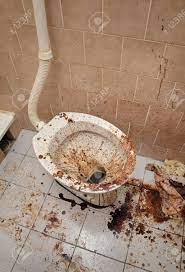
Besides being overcrowded, many of the hostels lack basic amenities. Investigation in some public high
institution across the country revealed that many of the hostels were filthy as the taps in the toilets and
bathrooms were dry. Most of the taps are only there as decorations, and some of them have never worked for once. They never dropped a single drop of water since their installation.

As an undergraduate, back then, taking one’s bath in the bathroom or even easing oneself in the toilet
was usually a hurdle because of the sanitary conditions of the facilities. Even though there were porters
who came daily (apart from Sundays) to clean, the high number of persons using the facilities coupled
with the water situation was a major challenge. Also, some of the few staff, who sometimes do their best, leave the place at the hands of the killer viruses and bacteria around.

“Due to the limited number of students which the available hostel spaces could cater for, we found ourselves in a situation where a room that is originally meant for four students was being shared by eight students – that is to say, each of the legal and bonafide occupants had a “squatter”. This is in addition to students living off campus who also had to share the same facilities as there were none (toilets) around the lecture theatres – a number that is far beyond the projection at the inception – effectively making it almost impossible for the toilets to be neat.” in many tertiary institutions across the country. The nasty situation in hostels in many tertiary institutions leaves a sour taste in the mouth.

A student in IMO state University said the situation has worsened to the extent that some students take
their bath outside the bathrooms due to long queues and the ugly scene inside.

Another factor which leads to this unhygienic and ugly conditions of the toilet facilities in our public high institutions is the crude and improper usage by the students. Most of the students in Nigeria campuses throw away their internal dirt and defecate like uncivilized people.

For the girls’ hostel, it is also another nightmare. Most girls defecate and urinate in plastic or rubber containers, then empty it into the toilet to avoid contracting infections. Even at that, the toilets are not a place to even visit for any reason, unless when it is the last and only option.

It is more comfortable for me to defecate inside the bush along the post-graduate school to avoid
contracting any disease or foul smell of the school’s toilets.”, one postgraduate student said. Despite fee increasing and enormous internally generated revenues (IGR), including subventions from the
federal and state government amounting to billions of Naira, sanitary conditions of toilets across hostels
in Nigeria universities is appalling. May be this is why almost all our toilets across the country look so bad and unkempt. This is place where knowledge and morals are expected to be, but even the basics of a healthy and decent life are completely absent. No wonder!

Abdullahi Adamu can be reached via; nasabooyoyo@gmail.com

Poor sanitation painting a bleak future in Kano State

By Usman Ibrahim Na’abba

Ahmad Sulaiman’s face is cheerless as he continues to grapple with thoughts of how poor sanitation and adequate hygiene bother his community. Ahmad lives in one of the densely populated communities in Nassarawa LGA, Unguwar Gaya, in Kano State. Not only does he lament that their community efforts are all in vain, but he is not hopeful about the well-being of his community in the coming years.

Sanitation and proper hygiene have been among the critical focus areas for governments at all levels in Nigeria. Hence, prominent international organizations carrying out activities across developing countries have factored these challenges into their projects and programs.

Organizations like United Nations Children Emergency and Fund (UNICEF) have been present in Nigeria for decades delivering projects in child health and WASH. The priority given to Water Sanitation and Hygiene (WASH) is so because poor hygiene and sanitation advance the spread of child killer diseases like communicable diseases such as Cholera, Diarrhea, Typhoid, etc. Moreover, it allows for the continuity of Malaria, a disease Nigeria has grappled with for a long time.

For Ahmad, the dream of having a disease-free community continues to run farther as they continue to chase after it. For over a year, his neighbour’s soak-away pit has filled up to its brink, releasing some of its contents to an open culvert close to it in his community.

Sanitation has deteriorated over the years due to negligence. It is the responsibility of both citizens and the government to have a clean environment. He admits that “passing by the open is extremely excruciatingly nauseating and terrifying, not to talk of neighbouring the area”.

In the past administrations, Kano State has formally declared every last Saturday of the month for general cleaning of markets, motor parks, culverts, hospitals and surroundings around communities with strict restrictions on movement. The session ends by 10:00 am, and it’s almost always expected that proper sanitation of surroundings is effectively discharged – dumping of refuse is executed correctly, and drainages are cleared, among others.

People like Ahmad have now become more aware of the utmost importance of hygiene and are more responsible in ensuring they keep tidy surroundings to combat diseases. However, the current overflow of a soak-away neighbouring dramatically contributes to environmental and health menaces that his community battles.

“Every member of this neighbourhood is at risk of contracting a health problem. Even passers-by aren’t spared of the stinking smell coming out of the unkempt soak-away”, he said. The pit also leads to an open culvert linked to many houses around his community. Hence, the danger of the odd combination is incomprehensible.

“I have tendered complaints to the mayor of the community countless times. It has been over one year, and nothing has been done. Tenants occupy the house, and I’ve observed that they don’t really care about the impact of what their negligence would cause,” he admitted. Upon understanding the dangers associated with improper sanitation by the tenants, he also proceeded to meet them one-on-one, but that hasn’t been helpful either.

Tenants occupy a significant number of houses around the area, which is why there are numerous hygiene and sanitation problems. However, he explains that “only a few people are concerned about the health impacts of overflowing soak-away and refuge problems. This is because tenants often feel it is the responsibility of house owners to take care of such things rather than themselves”.

Towards the end of July, Ahmad’s concern rose due to the anticipated heavy rainfall and possible flooding by the Nigerian government through the Nigerian Meteorological Agency (NIMET), which he believed could deteriorate their health plight because of the unkempt soak-away pit. He then, together with a friend, who is also his neighbour, collaborated and submitted a written complaint to the Kano State Ministry of Health through the office of its secretary.

Only after their report did the ministry of health send officials to their neighbourhood to check the extent of the problem. Because the property belongs to tenants, the officials from the hospital that visited said that “if they didn’t repair it, they would sell some part of the house that will be equivalent to the money to repair the hazardous soak-away for them since they are not ready to take any action”. As I speak, the soak-away pit is as it is now. Ahmad tried to call the officials again, but they couldn’t respond to him or come back to the community and take the action they intended.

Usman Ibrahim is a 200-level student of the Department of Information and Media Studies, Bayero University Kano.