Russia

Ukraine slams Infantino over comments on possible Russia ban lift

By Sabiu Abdullahi

Ukraine’s sports minister has criticised Fifa president Gianni Infantino over comments suggesting that world football’s governing body could reconsider the ban placed on Russia, describing his remarks as “irresponsible” and “infantile.”

Russian national teams and clubs were suspended by Fifa and Uefa in February 2022 following Russia’s invasion of Ukraine, a decision that has kept the country out of major tournaments, including the 2022 World Cup, Euro 2024 and the 2026 World Cup.

Despite the ongoing war, Infantino said the ban “has not achieved anything” and “has just created more frustration and hatred,” adding that “having girls and boys from Russia being able to play football games in other parts of Europe would help.”

Reacting in a post on social media, Ukraine’s sports minister, Matvii Bidnyi, said: “Gianni Infantino’s words sound irresponsible – not to say infantile,” adding that they “detach football from the reality in which children are being killed.”

Bidnyi stated that more than 650 Ukrainian athletes and coaches, including over 100 footballers, have been killed since the start of the war, and added: “War is a crime, not politics,” insisting that Russia’s flag and national symbols “have no place among people who respect values such as justice, integrity and fair play.”

Serhii Palkin, chief executive of Ukrainian club Shakhtar Donetsk, also condemned Infantino’s comments, saying they “represent a complete detachment from reality” and amount to “an attempt to pretend that war and aggression do not exist.”

He warned that football cannot ignore events outside the pitch, stating: “Football cannot exist outside reality and it has no right to turn a blind eye to evil,” while stressing that any move to reintegrate Russia would carry “responsibility for complicity in the silencing of war crimes.”

Although Russia has played matches against some non-Western nations outside the Fifa and Uefa framework, the ban remains in place, even as Ukraine continues to oppose any steps toward Russia’s return to international sport.

African men recount how Russia lured them into Ukraine war

By Sabiu Abdullahi

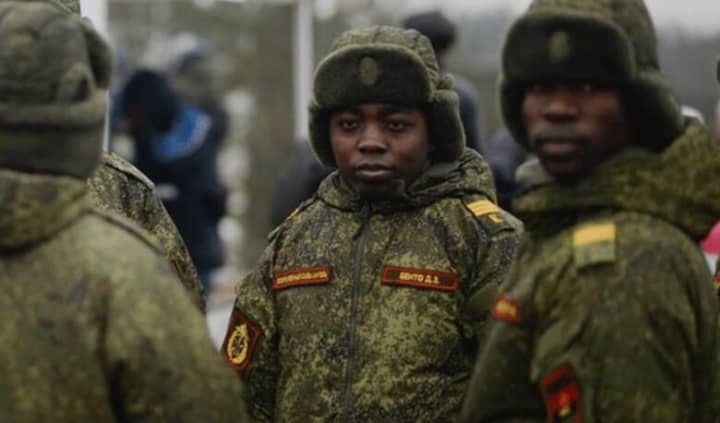
African men searching for work are being misled, pressured and pushed into combat roles in Russia’s war in Ukraine, leaving many dead, injured or missing, according to accounts from victims, returnees and families.

For Anne Ndarua, the pain is constant. Tears fill her eyes whenever she speaks about her only son, Francis Ndung’u Ndarua, a 35-year-old Kenyan who travelled to Russia six months ago after being promised employment as an electrical engineer. Today, she does not know whether he is alive.

Anne said she last spoke directly with Francis in October. Since then, there has been no contact, apart from disturbing videos that later circulated online and revealed what several African families now describe as a lethal recruitment scheme.

According to a CNN report, Anne received a video in December from an unknown Kenyan number. In the footage, Francis warns fellow Africans against travelling to Russia in search of work. He says job seekers are being forced into the Russian military and sent to fight in Ukraine.

“You’ll end up being taken to the military even if you’ve never served in the military, and you’re taken to the frontline battle. And there are true killings,” he says in the video. “Many friends have died in the name of money.”

About a week later, another video appeared online. It shows Francis in military uniform with what appears to be a landmine strapped to his chest. He looks visibly terrified while a Russian-speaking man shouts racist insults and says Francis will be used as a “can-opener” to break through Ukrainian positions.

“It’s so traumatising,” Anne told CNN. She said she could not watch the clip after her daughter described it to her. Anne explained that speaking publicly was her last hope of prompting action from authorities in Kenya and Russia.

“I’m appealing to the Kenyan and Russian governments to work together to bring those children home,” she said. “They lied to them about real jobs and now they’re in war with their lives in danger.”

Before leaving Kenya, Francis lived with his mother in a small settlement outside Nairobi and had no job. Anne said he paid about $620 to a local agent who claimed he could arrange legitimate work in Russia. She later became alarmed when her son reported that he had been pushed into military training shortly after arriving.

Anne said Francis spent only three weeks in basic training before being deployed to the front lines in Ukraine.

A broader CNN investigation points to widespread recruitment of African men by agents linked to Russia. These recruiters allegedly promise civilian jobs, high wages and Russian citizenship, yet many recruits end up conscripted into one of the world’s deadliest conflicts.

CNN reviewed hundreds of chat messages, visas, military contracts, flight records and hotel bookings, and interviewed African fighters and those who managed to return home. The findings describe deception, pressure, unpaid salaries, racism and extreme risk.

Although precise numbers are unknown, governments in Kenya, Uganda, South Africa and Botswana have confirmed that dozens, and possibly hundreds, of their citizens have been drawn into Russia’s war. Media reports across Africa tell similar stories, which have led several governments to warn citizens against suspicious job offers linked to Russia.

Russia’s Defence and Foreign Ministries did not respond to CNN’s requests for comment. The Russian embassy in Nairobi also declined to comment.

CNN spoke with 12 African fighters still in Ukraine, from Ghana, Nigeria, Kenya and Uganda. All said recruiters initially offered civilian roles such as drivers, factory workers, technicians or security guards. They were promised signing bonuses of up to $13,000, monthly pay of up to $3,500 and Russian citizenship after completing service.

Instead, they said they were forced into the army on arrival, given minimal training and sent to combat zones. Several said they were compelled to sign contracts written only in Russian, without translators or legal advice. Many also reported that their passports were seized.

Despite Russian law requiring foreign recruits to understand the language, none of the Africans interviewed said they spoke Russian.

Several fighters said promised payments never arrived. Some accused recruiters or fellow soldiers of stealing money from their bank accounts.

“One Russian soldier forced me at gunpoint to give him my bank card and PIN,” one African fighter told CNN anonymously. “Nearly $15,000 was withdrawn. I’ve been here seven months, and I haven’t been paid a single cent.”

He added that four men who travelled to Russia with him have since died.

Documents examined by CNN indicate that the contracts are far more restrictive than advertised. They include open-ended combat duties, strict loyalty clauses and financial penalties for leaving. The contracts also allow authorities to restrict movement, seize passports and impose long-term secrecy obligations. Promises of retraining or civilian employment are only available after at least five years of service and under limited discharge conditions.

On social media, a different message circulates. In one popular video, a Nigerian man in Russian military uniform encourages Africans to enlist, describing the process as “very, very easy and very good, no stress.” Other clips appear in Igbo, Swahili, Twi and Pidgin English. Ghanaian soldier Kwabena Ballo boasts in one TikTok video: “My salary can feed your father, mother and whole family for two or three years.”

Most African fighters interviewed by CNN reject this portrayal. They described constant danger, racial insults from commanders, unpaid wages and bodies of fellow Africans left on the battlefield for months. Some spoke of colleagues who lost limbs without compensation and suffered severe psychological distress.

“The war here is very hot, and many people are dying on both sides,” said the only African fighter who told CNN he intended to complete his contract. “This was not what these guys expected.”

Despite such accounts, Russian state media continues to highlight African recruits as honoured volunteers. Lawmakers praise them publicly, while televised citizenship ceremonies present Russia as inclusive.

Patrick Kwoba, a 39-year-old Kenyan carpenter, said he believed the online images. After seeing an African friend in the Russian army appearing prosperous on social media, he paid an agent $620 and was promised a $23,000 signing bonus.

“I thought I was going to be a security guard, not a combatant,” Kwoba said in Nairobi after escaping.

He described his four months in Ukraine as “hell.” After three weeks of training, he was sent to the front and later injured during a Ukrainian drone and grenade attack.

“When I asked for first aid using the code ‘3-star,’ my Russian partner chased me away and started shooting at me,” he said.

Kwoba escaped during recovery leave in St. Petersburg and made his way to the Kenyan embassy in Moscow. Embassy officials helped him return home with temporary travel papers.

“So long as you’ve stepped in the Russian military, you escape or you die,” he said. “If you finish your contract, they still force you to stay.”

Kwoba still needs surgery to remove shrapnel from his body and says he is lucky to be alive.

Another returnee, 32-year-old Kenyan photographer Charles Njoki, applied through a Russian army recruitment portal to support his pregnant wife. He sold his car to fund the journey and arrived in Russia within a week. While he was in training, his wife miscarried, news he learned days later because recruits’ phones had been taken away.

Njoki was injured in a drone strike and now lives with permanent damage to his hand and spine. He believes African fighters were deliberately placed in the most dangerous positions.

“They tell you that you’ll guard places, not fight,” he said. “But you end up on the front line.”

Epstein emails allege Bill Gates suffered STD after sleeping with Russian women

By Sabiu Abdullahi

Newly released emails attributed to the late Jeffrey Epstein allege that Microsoft co-founder Bill Gates contracted a sexually transmitted disease after encounters with Russian women.

In a memo Epstein wrote to himself and dated July 18, 2013, the convicted sex offender made a series of claims about Gates. The memo reads: “To add insult to the injury you them [sic] implore me to please delete the emails regarding your STD, your request that I provide you antibiotics that you can surreptitiously give to Melinda and the description of your penis.”

Epstein later sent himself another email, which he composed in the voice of a different person. In that message, the writer described alleged tensions in the Gates household and his purported role in assisting Gates. The email states: “I have been caught up in a severe marital dispute between Melinda and Bill…

In my role as his right-hand man, I have been asked and wrongly acquiesced into participating in things that have ranged from the morally inappropriate, to the ethically unsound and have been repeatedly asked to do things that get near and potentially over the line into the illegal…

From helping Bill to get drugs, in order to deal with consequences of sex with Russian girls, to facilitating his illicit trusts [sic], with married women, to being asked to provide Adderall for bridge tournaments, as I am a medial doctor, but have no presriptions [sic] writing ability.”

The allegations outlined in the emails have not been independently verified. Gates has not issued any public response to the claims as of the time of filing this report.

The released files also contain undated photographs that show the Microsoft billionaire in the company of Epstein at undisclosed locations. One image includes a woman whose face has been redacted.

The materials were released by the United States Department of Justice.

‘Norway foolishly denied me Nobel Peace Prize despite ending 8 wars,’ cries Trump

US President Donald J. Trump has renewed his long-standing claim that he deserved the Nobel Peace Prize, arguing that his actions strengthened NATO and prevented wider war in Europe.

In a social media post, Trump said Norway—a NATO member and host country of the Nobel Peace Prize committee—“foolishly” failed to award him the prize, despite what he described as ending multiple wars and forcing NATO allies to increase defence spending. He claimed his leadership deterred Russia and elevated U.S. global standing.

Trump concluded by asserting that NATO depends primarily on American military strength, crediting his presidency for rebuilding U.S. power and saving millions of lives.

Putin calls European leaders “little pigs” as he vows Ukraine war goals will be met

By Maryam Ahmad

Russian President Vladimir Putin struck a defiant tone in a speech to his defence ministry, insisting that Russia’s goals in the war in Ukraine “will undoubtedly be achieved,” either through diplomacy or by “military means.”

While signalling openness to what he described as “substantive talks” with the United States, Putin dismissed European leaders in crude terms, referring to them as “little pigs” as they discuss proposals to increase funding for Ukraine.

The comments come as diplomatic activity intensifies in Europe. Ukrainian President Volodymyr Zelensky is expected to join European Union leaders in Brussels on Thursday, where discussions will focus on continued political, military and financial support for Kyiv amid the protracted conflict.

Russia convicts deceased LGBTQ travel agent of extremism

By Sabiu Abdullahi

A court in Moscow has delivered a posthumous conviction against an LGBTQ travel agent who died in custody one year ago, intensifying concerns about Russia’s clampdown on people it claims oppose “traditional” values.

The ruling, issued on Friday, declared 48-year-old Andrei Kotov guilty of extremism. His death was reported in November 2024 after he was found lifeless inside his cell at a Moscow pre-trial detention facility.

Kotov, who operated a travel company named Men Travel, had previously told the court that officers assaulted him on the night of his arrest in November 2024, stating: “Fifteen people came to me at night, beat me, were punching me in the face.”

Despite his death, authorities continued prosecuting the case.

Rights groups said this decision was intended to instil fear within the LGBTQ community, which has faced escalating pressure under President Vladimir Putin.

Reports from Mediazona indicated that the Moscow Golovinsky Court found Kotov guilty of engaging in “extremist activity” and of allegedly involving minors in pornography.

His lawyer said in December 2024 that investigators informed her the cause of death was suicide.

Human rights advocates argued that the government used the case to send a message. Russia has intensified legal and social restrictions against LGBTQ individuals, especially since its military campaign in Ukraine, which pushed the country further into strict conservative policies.

Putin has long criticised anything he believes contradicts “traditional family values,” describing such influences as foreign and un-Russian. In 2023, the Supreme Court outlawed what it referred to as the “international social LGBT movement” and labelled it an “extremist organisation.”

Human Rights Watch said that decision “opened the floodgates for arbitrary prosecutions of individuals who are LGBT or perceived to be, along with anyone who defends their rights or expresses solidarity with them.”

Although LGBTQ people have never experienced broad public acceptance in Russia, activists say conditions have worsened sharply in recent years, with increased risk and intensified state hostility.

Russian court sentences Colombian national to 28 years for fighting alongside Ukrainian forces

By Sabiu Abdullahi

A court in Russia’s Kursk region has sentenced a Colombian citizen to 28 years behind bars after finding him guilty of fighting as a “mercenary” with the Ukrainian Armed Forces against Moscow.

The sentencing was announced on Tuesday, with Russian authorities stating that the man took part in combat operations within Ukraine’s military, including in the border region of Kursk.

In its ruling, the court declared that the individual had participated “in the armed conflict as a mercenary in the Armed Forces of Ukraine,” and added that he was “sentenced to imprisonment for 28 years.”

Russian officials have consistently maintained that foreign nationals who support Ukraine on the battlefield are violating Russian law.

The Colombian’s involvement on the side of Kyiv further reflects the international dimension of the ongoing war.

The conviction comes amid continued hostilities between Russia and Ukraine, which have seen rising casualties on both sides.

It also aligns with Moscow’s broader efforts to clamp down on foreign fighters it accuses of aggravating the conflict.

The Russian government has not released the name of the convicted individual, nor has it provided further details regarding the specific charges or dates of the alleged combat activities.

The situation remains a stark reminder of the far-reaching consequences of the war, now drawing individuals from different continents into its orbit.

Pope Leo XIV calls for peace in Ukraine and Gaza in his first Sunday message

By Hadiza Abdulkadir

In his first Sunday message as Pope, Leo XIV made a powerful plea for peace, urging an immediate end to the conflicts in Ukraine and Gaza. 

Addressing the faithful gathered in St. Peter’s Square, the pontiff called for “an authentic and lasting peace” in Ukraine, emphasising the devastating human cost of the ongoing war. 

He further implored for a ceasefire in Gaza, demanding the release of all Israeli hostages held captive.

“The world yearns for peace,” Pope Leo XIV stated, his voice resonating across the square. “We must strive for dialogue and understanding, putting an end to the violence that inflicts immeasurable suffering. In Ukraine, let the weapons fall silent, and in Gaza, let the hostages be released.”

His message underscored the Vatican’s continued commitment to promoting peace and reconciliation in conflict-plagued regions. 

The Pope’s appeal resonated with many, who hope his words may inspire concrete action toward achieving a lasting resolution.

Zelenskyy calls for peace talks, expresses readiness to work with Trump

By Hadiza Abdulkadir

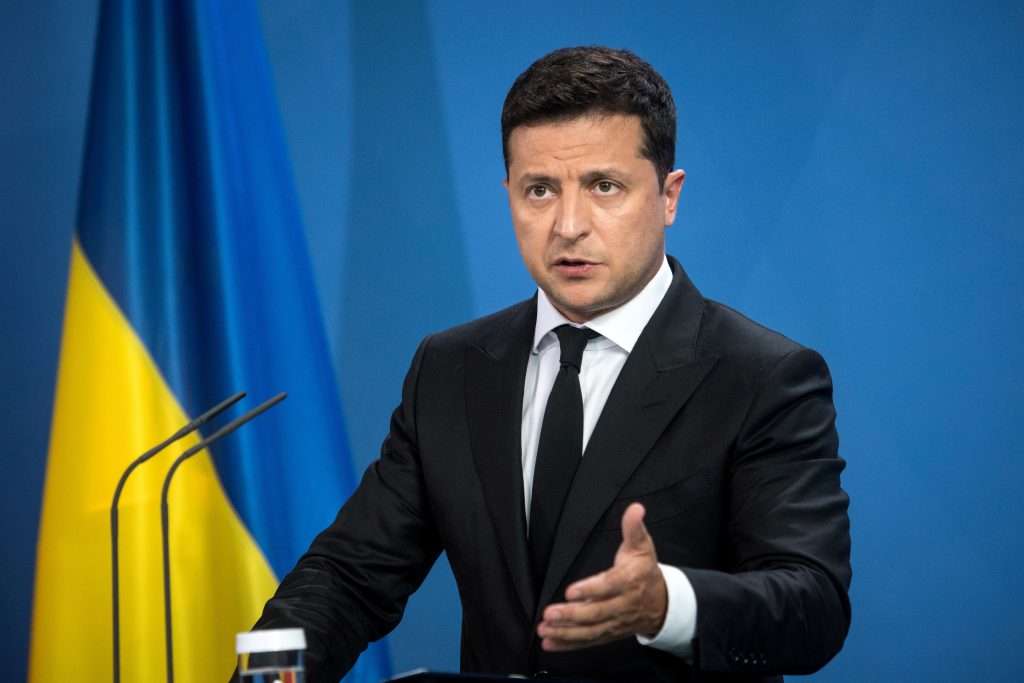
Ukrainian President Volodymyr Zelenskyy has reiterated his country’s commitment to achieving peace and stated that his country is prepared to negotiate as soon as possible. 

In a statement posted on social media, Zelenskyy emphasised that “nobody desires peace more than Ukrainians” and expressed his readiness to collaborate with U.S. President Donald Trump’s leadership to secure a lasting resolution. 

He proposed initial measures, including a prisoner exchange and an immediate ceasefire on aerial and naval assaults, contingent on Russia’s reciprocity.

Zelenskyy also acknowledged the critical role the U.S. has played in supporting Ukraine’s sovereignty, particularly highlighting Trump’s past decision to provide Javelin missiles. He stressed the importance of continued cooperation with Washington and expressed disappointment over a recent White House meeting that did not go as expected. 

Calling for constructive dialogue, Zelenskyy urged U.S. officials to work together to make things right and advance peace efforts.

The Ukrainian leader reiterated his country’s readiness to sign a security and mineral resources agreement at any moment. He described the deal as a step toward stronger security guarantees and expressed hope for effective implementation.

Zelensky accuses US of appeasing Russia as peace talks begin in Saudi Arabia

By Sabiu Abdullahi

President of Ukraine, Volodymyr Zelensky, has expressed concerns that the United States is attempting to “please” Russian President Vladimir Putin as peace negotiations aimed at ending the nearly three-year-long war commence in Saudi Arabia today.

The talks, which exclude Ukraine and the European Union, were organized under the directive of US President Donald Trump.

This decision has prompted European leaders to hold emergency discussions in Paris over concerns about the potential outcome.

Zelensky has warned that any agreement favoring Russia could lead to Europe’s military “weakness,” particularly if Moscow is allowed to dictate the terms.

A delegation comprising senior officials from both Russia and the US arrived in Saudi Arabia on Monday, but Ukraine’s leader has expressed discontent over what he perceives as conciliatory remarks from US officials toward Russia.

Earlier reports indicate that Zelensky made it clear on Monday that Ukraine would reject any peace deal that does not involve his country and the United Kingdom.

“The US is now saying things that are very favourable to Putin… because they want to please him. They want to meet quickly and have a quick win. But what they want — ‘just a ceasefire’ — is not a win,” Zelensky said, as translated by broadcaster ARD in an interview conducted in Munich.

During his campaign, Trump pledged to end the Russia-Ukraine war within his first 100 days in office. Last week, he announced that he had spoken directly with Putin regarding a swift resolution to the conflict.

Reports suggest that any potential agreement may heavily favor Russia, including provisions that would prevent Ukraine from joining NATO and hinder efforts to reclaim territories lost since 2014.

Despite this, Zelensky has firmly stated that Ukraine “will not sign just anything in order to be applauded,” emphasizing that “the fate of our state for generations to come” is at stake.

He also dismissed the idea of conceding Ukrainian land occupied by Russian forces, affirming: “We will reclaim it all.”

Meanwhile, European leaders convened an urgent meeting in Paris on Monday to discuss strengthening their military independence and increasing support for Ukraine.

While they opposed the US approach to peace negotiations, they also highlighted the importance of maintaining NATO unity.

Zelensky has cautioned that Europe’s security remains fragile if it cannot depend on US military support. However, he noted that Ukraine has grown more resilient over the past three years, stating that “Putin wouldn’t be able to occupy us the way he wanted to.”

Nevertheless, he acknowledged that “there will definitely not be a Ukrainian victory without US support.”

He also revealed that he and Trump had discussed the deployment of foreign troops to oversee any future ceasefire agreements.