Robots

RAIN and shaping Nigeria’s AI, robotics’ future 

By Aminat Akinyemi

As the year 2022 came to a close, the world was thrown into a frenzy after a US-based AI firm, OpenAI released a groundbreaking solution called “chatGPT”, which could converse, reply to text messages sent by humans and answer almost any question as accurately as if it were human itself and all-knowing. This solution even proves to have the capacity to write news articles, public speeches, academic papers, and computer codes and can go as far as discussing matters relating to your local traditional recipes. 

Today, unlike a decade ago, countries are now competing fiercely towards attaining AI supremacy.

This is not surprising as recent events have proven that AI, Robotics, Blockchain and Cybersecurity have a huge impact on national security, intelligence, healthcare and food security. With fast advances in technology, there is no doubt that the next decade presents an opportunity for countries to redefine their future and improve the quality of life, healthcare and availability of jobs through the needed up-skilling of their workforce and re-modelling of their industries.  

Deviating from an age-long Nigerian tradition of simply waiting to import and consume any latest technology in the world rather than contribute to its development, the nation is lucky to have some leaders that are keeping tabs on global developments and are guarding the coast keenly. 

For example, in 2019, a young Nigerian, Olusola Ayoola, after bagging his PhD in the area of Nuclear Robotics and working extensively with the UK government, decided to return home to establish Nigeria’s first fully functional robotics and artificial intelligence facility, Robotics & Artificial Intelligence Nigeria (RAIN) for training, research and product development. 

Since its establishment, RAIN has proven to be world-class and has even attracted international students and recognition from the Deputy Secretary General of the United Nations, Ms Amina J. Mohammed, the United Nations Development Programme (UNDP), USA and Canada missions in Nigeria, as well as First Bank of Nigeria Plc., Institute of Chartered Accountants of Nigeria (ICAN), Nigerian Society of Engineers (NSE), the National Institution of Electrical and Electronic Engineers (NIEEE), the Office of the Surveyor General of the Federation, the Federal Ministry of Youths and Sports, the National Information Technology Development Agency (NITDA) and the National Space Research and Development Agency (NASRDA).

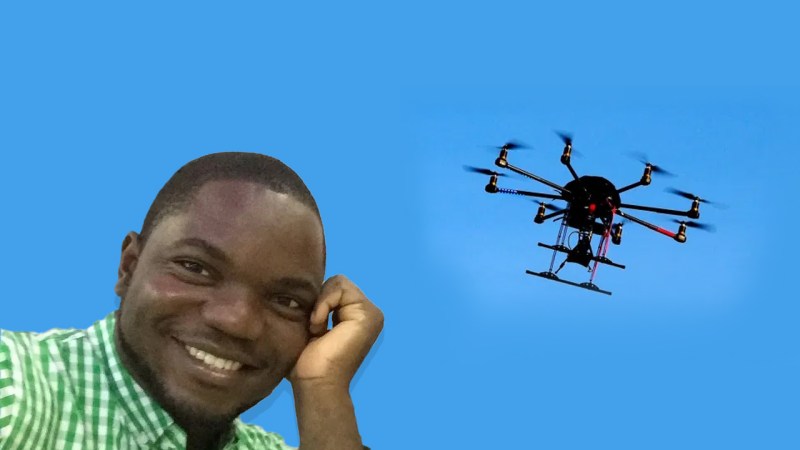
Some of the groundbreaking research carried out at RAIN include unattended baggage detection, a mini weather station, an AI-based Traffic Light System, a ground robot vehicle and unmanned VTOL aerial vehicle (IMORP), CETHED and RAINSC75/76.

The great feat which RAIN has achieved without any support from the Government and this fact only makes one want to ask what an intervention grant will do to the growth of technology in Nigeria.

This must have been the thought of Honorable Oluyemi Adewale Taiwo, a federal lawmaker representing Ibarapa East/Ido Federal Constituency, Oyo State. In January 2022 and on the floor of the green hallow chamber, Honorable Taiwo moved a motion for the house to encourage the federal government to liaise and work with RAIN, especially during the course of tackling the insecurity. The house unanimously adopted the motion and passed a resolution in support. 

Honourable Taiwo did not stop at that. The pragmatic lawmaker followed this up with the ministry of science, technology and innovation until he successfully got the nod of the ministry to provide such an intervention grant. 

This is a confirmation of his stewardship to his constituency. However, the nation could do with more of his kind that will direct the federal government’s attention to burgeoning areas within the economy that can help return this nation to the path of greatness. No doubt, with this intervention grant being well managed by the tested and proven management of the Robotics and Artificial Intelligence Nigeria board, the nation can only expect to move upwards from this point onward. 

The Chief Executive of RAIN, Dr Ayoola, has confirmed that there are lofty plans in place including the construction of a Centre for Excellence in Drone and Unmanned Vehicles for Geospatial Intelligence, provision of training scholarships to the youths of Nigeria, particularly those from Ibarapa East/Ido Federal Constituency, and the improvement of AI Robotics product prototypes up to the required military standards.

While the efforts of Honorable Taiwo are not common in this part of the world, it is not unexpected as he was basically doing what a genuine representative of the people would do in order to preserve the indigenous technological firms in his constituency, promote their global advantage and protect the future of the youths in such communities through up-skilling.

Let it be known that when Nigeria becomes a great country, it is the sacrifices of genuinely honourable men like Hon. Taiwo of House of Rep and his supportive colleagues in the National assembly, the Honourable Minister of Science, Technology and Innovation Senator Adeleke Olorunnimbe Mamora, as well as the permanent secretary of the ministry, will be mentioned for praises. Now, let Nigeria’s global competitiveness in AI and Robotics begin.

Aminat Akinyemi writes from Ibadan and can be reached via aaebunoluwa@gmail.com.

Robots and the future of human labour

By Kabir Musa Ringim

As a graduate of Computer Engineering and holder of MSc Information Technology, I’m sceptical to write about this topic which is quite controversial, because of the divergent views by two opposing groups of people about it. I will explain this later.

The world is currently in the information age, also known as the computer age. Although it began in the mid-20th century, characterized by a shift from a traditional industry established by the Industrial Revolution to an economy primarily based upon Information Technology, the biggest challenge now is how robots have started taking over many jobs previously meant for humans.

While the innovation of technology has dramatically improved our day-to-day activities, it has also proven that we no longer need actual human beings to help with many of today’s jobs soon, thanks to robotics.

A robot is a machine programmable by a computer capable of carrying out complex actions automatically. According to the Britannica dictionary, a robot is any automatically operated machine that replaces human effort. However, it may not resemble human beings in appearance or perform functions in a humanlike manner. By extension, robotics is the engineering discipline dealing with robot design, construction, and operation.

As the definitions above show, robots are here to replace humans in workplaces, markets, the army, etc. Though robots are still under development, the history of robots has its origins in the ancient world. During the industrial revolution, humans developed the structural engineering capability to control electricity so machines could be powered with small motors.

Already, machines and robots have started replacing humans in many workplaces like banks, industries, markets, and media houses in Nigeria. For example, automated Teller Machines (ATMs) allow banks to employ few tellers, while the internet enables them to have few customer care representatives. Nowadays, you don’t need a hardworking secretary to type your work when you can easily dictate to a computer what you want to write and get it printed.

Office workers in public and private institutions have already started feeling the heat. A robot can do a job that 20 persons can handle in a week in a day. Governments now give less priority to office workers and more priority to the health and education sectors when it comes to employment and recruitment. But it is just a matter of time before this status quo changes because the education and health sectors will soon start experiencing the tsunami of job loss.

Soon, schools don’t have to recruit many teachers when a single tutor from anywhere in the world can teach thousands of students online and have their exams and tests marked by a computer program or robot.

Health institutions will soon require the services of a few health workers, medical doctors, and consultants since a patient can get a prescription for himself by talking to a robot or chatting with a consultant that renders online services. Also, robots can soon perform surgeries. 

Security outfits will face massive job loss with the development of robot police and soldiers. A robot will be stronger, more loyal, more reliable, and more accurate than humans, in addition to it being a machine, as such, emotionless and immortal. Moreover, one robot can fight thousands of humans on a war front. Drones are now more preferred than having an air force officer flying a warplane to enemy camps.

Media houses like TV and radio stations don’t need to employ OAPs, presenters, newscasters, and language translators in a few decades to come, because machines and computer programs can handle their jobs. Instead, news editors and program managers will simply work on program contents and news and upload them into a special computer program (robot) for presentation, translation, and subsequent casting on air.

Same case with employing sales girls and sales boys at retail stores, shops, and supermarkets. Who will go shopping when people can easily order what they want to buy online and get it delivered to their doorstep? Likewise, cleaners, houseboys, office messengers, cooks, and labourers will all cease to exist because of robots.

Other jobs that robots will take away from humans include, but are not limited to, telemarketing, automated shipping services, sewer management, tax preparers, photograph processing, data entry work, librarians and library technicians, etc.

But with all that I mentioned above, I’m not trying to spell doom for the next generation of youth who will graduate from school and start looking for jobs in a few decades. As I have stated from the beginning, there’s a divergent view on the topic. Some people view robotics as a weapon to wipe out humans from industries, the military, offices, workplaces, etc. In contrast, others view it as a significant development that will improve lives, which is needed to be embraced by all.

For me, humans by nature, since time immemorial, have had survival instincts, and no technological development was able to render people jobless. If a job is no longer in existence, humans will always find themselves a better alternative. When industrial machines came into being in the 19th century and replaced millions of menial labourers, humans found a way to survive them; the same way robots will be integrated into our daily lives. By the way, remember that humans make these machines and robots, not the other way round.

Kabir Musa Ringim is HOD Computer Engineering, Binyaminu Usman Polytechnic, Hadejia, Jigawa State.