Ramadan

Police arrest man for allegedly killing wife over iftar meal dispute

By Uzair Adam

The Bauchi State Police Command has confirmed the arrest of a 50-year-old businessman for alleged culpable homicide after a domestic dispute with his 24-year-old second wife turned fatal.

Command spokesperson CSP Ahmed Wakil, in a statement on Sunday, said the incident happened in the Fadaman-Mada area of Bauchi during an argument over food ingredients and fruits for breaking the Ramadan fast.

Reports indicate that the disagreement escalated, leading to the husband allegedly striking his wife with a cane.

She reportedly collapsed and lost consciousness in their home.

Authorities rushed her to the Abubakar Tafawa Balewa University Teaching Hospital, where medical personnel confirmed her death.

Wakil said the police have taken the suspect into custody and recovered the cane allegedly used in the assault as evidence.

The deceased’s body has been placed in the mortuary pending an autopsy.

Commissioner of Police Auwal Musa reassured the public of the command’s commitment to justice, stressing that domestic violence is a serious offense with severe consequences.

“The Police Command remains dedicated to ensuring the safety and security of all citizens while holding perpetrators of criminal acts accountable,” he said.

Ramadan: Atiku urges Nigerians to extend charity beyond family

By Uzair Adam

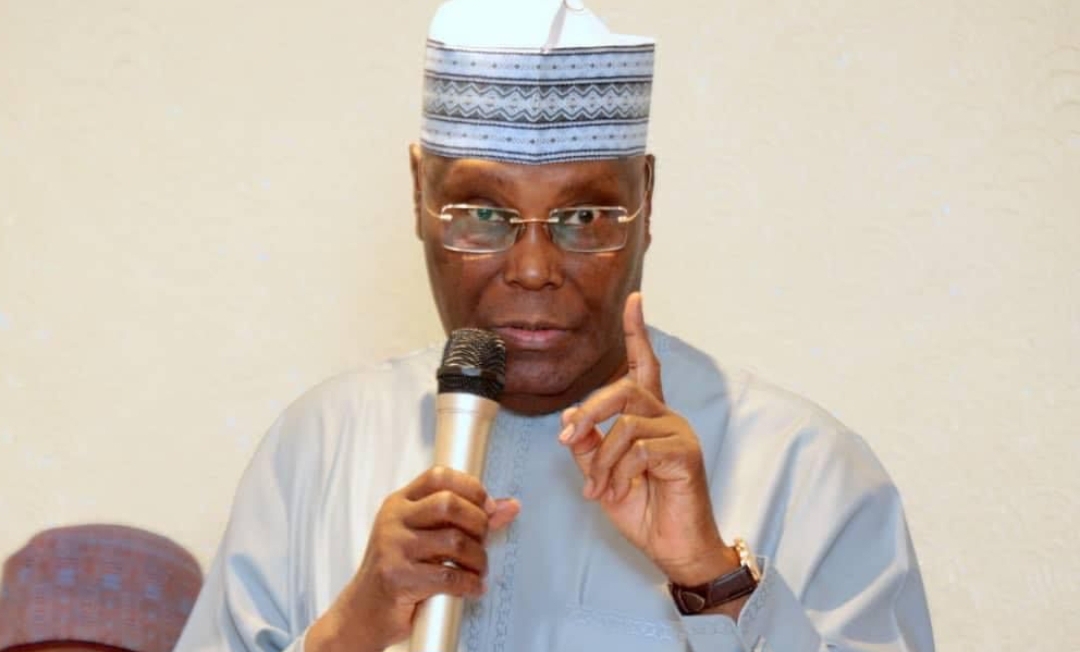
Former Vice President Atiku Abubakar has called on Nigerians to extend acts of charity and kindness beyond their immediate families, especially during the holy month of Ramadan.

In a statement issued in Abuja to mark the commencement of Ramadan, Abubakar emphasized the importance of generosity, urging Muslims to follow the example of Prophet Muhammad (SAW).

The statement qouted him to have said, “It is important that in Ramadan, we extend our hands of charity and affection far beyond our immediate families.

“The lifestyle of noble Prophet Muhammed (SAW) should be our guide, as he taught us the immense benefits of being generous, especially during the month of Ramadan,” he said.

The former presidential candidate of the People’s Democratic Party (PDP) in the 2023 general elections also called on Muslims to pray for Nigeria.

Additionally, he urged governments at all levels to provide necessary support to ease the hardships faced by citizens during Ramadan and beyond.

JUST IN: Sultan announces start of Ramadan Saturday

By Uzair Adam

The Sultan of Sokoto and President-General of the Supreme Council for Islamic Affairs, Alhaji Muhammad Sa’ad Abubakar III, has declared Saturday, March 1, as the first day of Ramadan.

He made the declaration in a nationwide broadcast, stating that the Sultanate Council’s moon sighting committee had received credible reports from traditional rulers and religious leaders across the country confirming the sighting of the new crescent.

The Sultan urged Muslims to dedicate themselves to worship during the holy month and use the period to pray for Nigeria and its leaders.

He also called for peaceful coexistence among citizens and encouraged wealthy individuals to support the less privileged in observing the fast with ease.

While praying for God’s guidance and wisdom for the nation’s leaders, he emphasized the importance of unity and compassion during Ramadan.

Ramadan crescent sighted in Saudi Arabia

By Uzair Adam

The crescent moon marking the beginning of Ramadan has been sighted in Saudi Arabia, the moon sighting committee announced on Friday evening.

The Daily Reality reports that with this confirmation, the holy month will commence on Saturday, March 1.

Observatories across the Kingdom, including those in Sudair and Tumair, confirmed the sighting of the moon.

This follows an earlier call by the Supreme Court on Thursday, urging Muslims to look for the crescent on Friday evening.

The court advised anyone who sights the moon, whether with the naked eye or binoculars, to report their observation to the nearest court or contact a local center for guidance on submitting their testimony.

Saudi Arabia’s moon sighting committee routinely monitors the skies ahead of Ramadan’s expected start date and encourages other Muslims to participate in the sighting process.

Ramadan feeding: Misallocation of resources in Jigawa State

By Garba Sidi 

On Monday night, 27th January 2025, the Jigawa State Commissioner for Sports and Information announced to journalists that the State Executive Council approved the sum of ₦4.8 billion for the 2025 Ramadan Feeding Program.  

An estimated 2022 population survey indicated that Jigawa State has approximately 7,499,100 people, making it the eighth-largest state by population. Of this population, 45.2% are below the age of 15, while 49% are between 15 and 59. Females constitute the majority at 50.4%, compared to 49.6% males. Understanding these demographic trends is critical for addressing the state’s challenges.  

I oppose the State Council’s move because the state has many pressing issues that require far greater government attention than a Ramadan feeding program. These funds would be better spent addressing healthcare and education problems.  

According to the National Mass Education Programme Initiative (NMPI 2022), over half of the children (51.1%) aged 6–15 in Jigawa State do not attend school. Additionally, Jigawa is one of the poorest states in Nigeria, with a poverty rate of 87.02%, reflecting severe challenges across economic, health, and education sectors.  

To clarify the situation for Jigawa residents, we must examine how last year’s Ramadan feeding program was conducted. As the Commissioner for Sports and Information stated, the state government contributed 55% of the program’s funding, while local governments covered 45%.  

Jigawa has 27 local governments, each grappling with dozens of unresolved issues. Their grants are insufficient to address even a quarter of these problems, and their chairpersons have done little tangible work for the people’s well-being. If 45% of local government funds are diverted to Ramadan feeding, I doubt they will even have enough to pay workers’ salaries.  

Last year, 609 centres distributed food (Kosai [bean cake], Kunu [porridge], and Kolo rice) during Ramadan. This year, the government intends to increase the number of centres to 630, with each centre providing meals for 300 people daily. Multiplying 300 by 630 results in a total of 189,000 people fed each day. Over 20 days, this programme would reach 3,780,000 people.  

Let us compare this to the approximate population of each local government and the number of beneficiaries:  

Dutse 400,000  

Hadejia 350,000  

Kazaure  300,000  

Ringim 280,000  

Gumel  270,000  

Birnin Kudu 250,000  

Kafin Hausa 240,000  

Gwaram  230,000  

Jahun 220,000  

Gagarawa 210,000  

Maigatari 200,000  

Babura 190,000  

Guri 180,000  

Kiri Kasama 170,000  

Auyo 160,000  

Malam Madori 150,000  

Gwiwa 140,000  

Yankwashi 130,000  

Taura 120,000  

Roni 110,000  

Sule Tankarkar 100,000  

Garki 90,000  

Buji 80,000  

Kaugama 70,000  

Birniwa 60,000  

Kiri Kasamma 50,000  

Miga 40,000  

If this huge amount of money were budgeted for healthcare or education, all Jigawa residents would benefit. Everyone falls ill at some point, and education is essential for ensuring our children live as dignified humans—not animals.  

Garba Sidi wrote via sidihadejia@gmail.com.

1446AH: Sultan of Sokoto declares Friday start of Sha’aban month

By Sabiu Abdullahi

The Sultanate Council Advisory Committee on Religious Affairs announced yesterday that the crescent moon marking the beginning of Sha’aban 1446AH was not spotted anywhere in Nigeria.

This declaration, made in collaboration with the National Moon Sighting Committee, holds great significance for Muslims as Sha’aban precedes Ramadan, the holiest month in Islam.

According to Prof. Sambo Wali Junaidu, Chairman of the Advisory Committee, “no credible reports of moon sighting were received from any part of Nigeria.”

Consequently, Thursday, January 30, 2025, will be observed as the 30th day of Rajab 1446AH as his Eminence, Alhaji Muhammad Sa’ad Abubakar, the Sultan of Sokoto, has accepted the report and officially declared Friday, January 31, 2025, as the first day of Sha’aban 1446AH.

As stated, “The announcement is significant for the Muslim community, as Sha’aban is the month preceding Ramadan, the holiest month in Islam. The declaration ensures uniformity in the Islamic calendar, guiding religious observances across Nigeria.”

The Sultanate Council urged Muslims to adhere to official announcements regarding Islamic dates and prepare spiritually for Ramadan.

Prominent clerics who made my days during 1445 A.H Ramadan (III)

By Isma’il Hashim Abubakar 

Shaykh Musal Qasiyuni was the third among the scholars whose lessons I listened to throughout Ramadan. I was attracted to his lessons almost two decades ago, much by the accent and the tone of the hymns with which he and his audience opened and closed the lessons, and they were, to me, at the start, more of an esoteric language.

Qasiyuni’s zeal for the preservation of norms and values, the eradication of vices and immoral ventures, and his expression of concern toward the plight of the masses are evident in his lamentation of how things have turned in Muslim societies, which portrays him in the same reformist and activist light that Salafis are often depicted.

Malam Qasiyuni condemned the attempt to incorporate medical tests among legal requirements that must be presented before marriages are contracted. However, he acknowledged that the tests are essential, safer, and more sustaining for the marital union and the future of the couple’s family. The scholar’s point is if leaders are encouraged to pad new legislations into injunctions of marriages, which are already comprehensively sanctioned by Islam, a time would come when leaders would smuggle harmful laws which would only strangle legitimate marriages and pave the way as well as promote promiscuous associations between men and women as it has been normalised in not only western but also many Muslim countries.

In this year’s Ramadan, like the previous years, Qasiyuni had painstakingly treated sensitive themes that have remained the bonds of sectarian contention among the major Sunni Muslims, particularly between Sufi brotherhoods to which he belongs and their Salafi counterparts. These include the concept of bid’a and the central thematic components that revolve around it, such as litanies, liturgical actions, and performances like maulud anniversary and awrad. Qasiyuni offered an extremely polemical and revisionist interpretation of these themes while seeking to legitimise them in line with his Sufi conception and practice.

The hallmark and motive of all these elucidations are an attempt to arrive at a conclusion on which among the many strands of Sunni Islam is on the right path and, hence, most deserving of salvation. In this case, Qasiyuni was more flexible and accommodating as he expanded on the prophetic report, foretelling and warning about the sectarian fragmentation that Muslims would experience. He argued the report has all it takes to be exploited by each of the strands of Sunni Muslims, and going by the letter and spirit of the Hadith, which points to the vast majority as one of the yardsticks for identifying the most authentic and righteous group which merits salvation, according to Qasiyuni, Sufis would have more legitimate claims that conform with what obtains in reality. 

Interestingly, however, Qasiyuni dismissed this sectarian conclusion favourable to his theological understanding of Islam and appraised that rather than interpret the Hadith from a creedal point of view, which of course has been the dominant method of scholars for centuries, the Hadith should better be seen from the viewpoint of meritorious virtues, conducts and manners such as kindness, truth, selflessness, humility, resilience, which the Prophet (SAW) and his companions had exhibited throughout their lifetimes. In this way, members of each sect and Islamic societies, including not only the Salafi competitors but peripheral and marginal sects like Shia, can be regarded as a salvaged group in Qasiyuni’s opinion. 

Although this view sounds too malleable and points to the degree of Qasiyuni’s broad-mindedness and tolerance, it shall remain problematic and challenging to accept for several reasons, one of which is the consensus among Muslims that creed and beliefs take precedence over all actions and since even non-Muslims could exhibit the virtues outlined by Qasiyuni, downplaying the creedal substances and theological aspects as prime barometers for assuming the status of righteousness and uprightness as far as Islam is concerned, is unacceptable.

The love and affection of Muslims toward the Prophet SAW are meeting points which, according to Qasiyuni, should be the basis for Muslim unity and common solidarity, but also the mirror which shall reflect in the relations among Muslims and have common solidarities irrespective of their sectarian differences. Moreover, Qasiyuni stressed that Muslims must respect and love anyone or anything that connects to the Prophet, no matter to what small degree and anyone who hates it is condemned and wretched.

One point that shall remain problematic in Qasiyuni’s unification theory is the Shiite doctrine of hatred toward the Prophet’s companions would automatically disqualify them and remove them from the umbrella of unity which the great Qadiri Shaykh is advocating.

Like Dr Rijiyar Lemo, Qasiyuni also vehemently challenged those who cast doubt on Hadith and accused some of the Prophet’s companions and famous collectors of Prophetic traditions. Qasiyuni’s reaction to this issue seems to be a rejoinder against his brother Abduljabbar, who is still languishing in jail for stirring loud controversy about this issue. Interestingly, Qasiyuni himself mentioned Mustafa al-Sibā’ī’s masterpiece, al-Sunnah wa Makānatuhā fī al-Tashrī’ al-Islāmī as a concerted response and healing answers to all those who nurture any scepticism around the Sunnah or the process of its compilation and transmission.

Although still having a few issues to disagree with the Ahlussunnah proper, like the fate of the Prophet’s uncle, Abū Tālib, the Kabara cleric used this year’s Ramadan season to repeatedly stress his loyalty to Sunni Islam and refute Shiism, which then debunks the widespread rumour that the man had gravitated to the Shiite camps.

Even if on sectarian grounds one disagrees or even refuses to listen to Qasiyuni, one cannot deny that the text he teaches during Ramadan, which is unanimously accepted by the Sunni Muslim world, is a robust inspirational source of reverence to Prophet Muhammad (SAW). 

Northern Nigeria is indeed blessed with so many scholars; the ones highlighted in this article (parts 1, 2 & 3) are just a drop from the ocean. They offer a significant representation of how the Ramadan season is made distinct and unique through disseminating Islamic knowledge. I highly regret not getting the opportunity to closely and regularly listen to more scholars such as Shaykh Umar Sani Fagge, Shaykh Isa Ali Pantami, Shaykh Ibrahim Maqary, Shaykh Muhammad bin Usman, Professor Salisu Shehu, and above all, my teacher Professor Muhammad Kabiru Yunus. But while I was too lethargic to listen to them all, I still wished Professor M.K Yunus’s tafsir recordings were available for public consumption. 

May Allah reward these scholars abundantly and elongate their lives to keep benefitting the Ummah.

Isma’il writes from Rabat and is reachable via ismailiiit18@gmail.com.

Prominent clerics who made my days during 1445 A.H Ramadan (II)

By Isma’il Hashim Abubakar 

Dr. Bashir Aliyu Umar was the second teacher whose tafsir I did not miss not only this year’s Ramadan but also many years ago. I had the privilege of attending the tafsir personally several times, which was conducted at Al-Furqān Mosque at GRA, Kano before I left Nigeria five years ago. Dr. Bashir’s erudition and dexterity in addressing contemporary issues that were paraded to him while using sophisticated jurisprudential techniques are enough credentials to attract listeners and students like me.

Additionally, I personally cherished the tafsir session because whenever I heard Malam Sa’idu Harun, the recitation assistant (mai jan baki), it reminded me of Shaykh Ja’far’s tafsir which always proved unique with the recitation of Malam Sa’idu. Dr Bashir’s tafsir would appeal to intellectuals and listeners with a background in Western education. 

Dr Bashir explained verses which mention scientific and universal phenomena excellently and more lucidly. Atheists would find the correct answers to many of their questions and clear up many misconceptions through the exegetical exercises undertaken by Dr Bashir. Drawing on a view of the late Shaykh Isa Waziri on a similar issue, Dr. Bashir, in one of his tafsir sessions, argued that Nigerians are likely robbed of divine bounties similar to what befell the inhabitants of Saba’. 

Dr Bashir is an extraordinarily easygoing and calm person, so much so that at times, he allowed his recitation assistant to decide which question he would respond to either due to its substance or when there was no time and the recitation assistant was eager to fill the venue with his sonorous voice. 

I was surprised, however, when during the closing session of this year’s tafsir on the 28th day of Ramadan, Dr Bashir refused to answer a question about the legal status of bleaching in Islam, which, according to the questioner, has been said to be lawful by some scholars. Dr Bashir’s refusal to respond to the question elicited the interest of the audience to unanimously thundered “Allahu Akbar”, which left a suggestion that the answer to the question was well known to everyone and it might have just been posed to trigger needless, belated controversy. Unlike many scholars, Dr Bashir does not bother to ask new converts if they were forced or they willingly chose and decided to embrace Islam. 

One of the unique episodes with which Dr Bashir’s final tafsir has been characterised for some years is the courtesy visit of his nonagenarian father to bless the occasion and, at times, make sobering reflections on some of the clerical trajectories of his scholar-son. To my knowledge, only Dr Bashir is continuously lucky to have his aged and royal figure father appear during his tafsir and publicly endorse his son’s venture.

Isma’il writes from Rabat and is reachable via ismailiiit18@gmail.com.

Prominent clerics who made my days during 1445 A.H Ramadan (I)

By Isma’il Hashim Abubakar 

No doubt, the holy month of Ramadan is a special season that always reactivates our religious consciousness and hikes the level of our spirituality. As Nigerians are passing through unprecedented inflation and increase in prices of commodities, this year’s Ramadan came with a hope that it offered an opportunity for Muslims to use the medium for deep reflections, improvement and promotion of piety and righteousness, but also to devote their time for supplications so that Allah would take them out of the woods and mess they have been grappling with over the years.

One interesting feature of Ramadan season is the commitment of Muslim scholars to deliver religious lessons and to, in a more concentrated fashion, bring the Muslim public closer to Islamic teachings in such a way that they would graduate from Ramadan school with paperless certificates that attest to their participation in one month course for reform of faith and creed, learning and relearning of worship and liturgical formulas and practice, refreshing minds with Islamic history and so on.

Although a few scholars teach books apart from the Qur’anic text, including works on some themes such as traditions and biography of Prophet Muhammad (SAW), interpretation and exegesis (tafsir) of the Glorious Qur’an, the queen of heavenly scriptures and the apex Islamic text, is the dominant exercise that makes the month unique and the best of all other months. Returning to the Qur’an during Ramadan is a universal custom for Muslims, but Nigeria’s religious sphere annually unveils a scintillating atmosphere that other Muslim climes would hardly rival. Pairing a male chief Mufassir and a female recitation assistant (mai jan baƙi) seems to be a strange feature of this year’s tafsir, which elicits so many brouhahas.

As an age-old exercise, tafsir in Hausaland has seen several transformations and shifts both during pre-colonial and contemporary eras, which saw the emergence of hundreds of mufassirun (interpreters of the Qur’an) of varying calibres and credentials. However, the post-independence era has never seen an eloquent, erudite and versatile interpreter of the Islamic scripture like the prominent cleric, the late Shaykh Ja’far Mahmud Adam, who was assassinated in 2007 while leading dawn prayer in his mosque in Kano. Even by accounts and confessions of his critics, opponents and detractors, Shaykh Ja’far was proven and credited to have excelled all his peers and contemporaries in analyzing and expounding the verses of the Glorious Qur’an. His annual Ramadan tafsir at Ndimi Mosque in Maiduguri was a matchless and extraordinary religious conference that reawakened Muslims and renewed and revived Muslims’ interest in the Qur’an and the process of making meaning out of it. 

When Shaykh Ja’far exited the scene in a historic and memorable manner, having been assassinated by unknown gunmen, which enhanced his posthumous popularity and brought millions of Muslims to his camps, many young and upcoming scholars adopted his method of tafsir and not only sought to replicate his path but also rose to earn his popularity, prominence and influence. 

However, God destined that Shaykh Ja’far’s friend and longtime colleague, Dr Muhammad Sani Rijiyar Lemo, would be unanimously accepted to succeed the former in especially the Ndimi Mosque tafsir conference, which later relocated to Bauchi due to persistent insecurity in Maiduguri. Rijiyar Lemo’s erudition was vouched for by no other person more than Shaykh Ja’far himself, who during his lifetime repeatedly mentioned Rijiyar Lemo as a colleague on whom he relied in many respects, particularly in matters pertaining to Hadith authentication, the area in which Rijiyar Lemo specialized.

Interestingly, as sources informed me, when Rijiyar Lemo finished his PhD in Madina in 2005, he intended to stay in Saudi Arabia to work with a research and publication centre. Still, Ja’far prevailed upon him to return to Nigeria to engage in the Da’awah arena, insisting that he would be more useful at home than in Saudi Arabia. It must be a form of karama that Ja’far would successfully persuade a friend to come back to Nigeria, not knowing that he would be his successor within two years in many of his religious engagements.

Rijiyar Lemo’s relocation to Masallacin Gwallaga in Bauchi provided a fertile ground for him to effectively continue with the tafsir exercise and his method, which radically differs from his predecessor’s and makes his rendition more favourable to advanced students of Islamic knowledge. Perhaps one does not have to conduct further research when invited to present tafsir elsewhere and could just have to listen to and summarize the exhaustive tafsir rendered by Rijiyar Lemo. I have made it one of the few lessons I rarely miss within and outside Ramadan. 

Besides the main task of interpreting the verses of the Qur’an, answering questions at the beginning of the conference and leading the session of conversion to Islam by giving the testimony to new converts by the scholar, one of the top themes which Rijiyar Lemo’s tafsir focused on this year was stressing and underscoring the position of Sunnah as an essential component of Islamic legislation. Rijiyar Lemo’s defence for Sunnah came at a time when the year witnessed simmering misunderstandings and social media exchanges about the position of prophetic reports in some popular Hadith collections and the degree of their authenticity. This debate was ignited earlier by Abduljabbar Nasiru Kabara, who was imprisoned after he failed in the historic debate, which then silenced his impasse and briefly paused discussions on the matter. The matter returned, it seems when after he visited Iran to deliberate the plight of Palestinians, Dr. Ahmad Gumi prodded and stirred the discussions through his utterances, which were interpreted by many as a continuation of the task of condemnation of Sunnah which Abduljabbar Kabara started.

Rijiyar Lemo’s response was complemented by a mention of several references for readers, such as Mustapha al-Sibā’ī’s masterpiece and grand defence for Sunnah titled “al-Sunnah wa Makānatuha fī al-Tashrī’ al-Islāmi’ī“. Needless to say, hearing the names of new books is among the countless benefits of listening to Rijiyar Lemo’s tafsir in particular and other Islamic lessons in general. From all indications, Rijiyar Lemo has the ambition to publish an excellent tafsir of the Qur’an before or immediately after interpreting the whole Qur’an in Bauchi or Kano, where he also replaced Shaykh Ja’far at Usman Bin Affan Mosque, Gadon Kaya.

Ismail Hashim Abubakar, PhD, wrote from Morocco. He can be reached via abuarqam89@gmail.com.

Governor Abba K. Yusuf’s admin under scrutiny: Mismanagement and controversies rock Kano

By Umar Sani

Governor Abba Kabir Yusuf’s tenure in Kano State has been marked by a series of controversies and challenges, with the most recent scandal surrounding the Ramadan feeding program shedding light on broader issues of governance, priorities, and accountability. As we delve into the intricacies of these matters, it becomes evident that there are systemic failures that need to be addressed urgently to restore public trust and ensure effective governance in Kano.

The Ramadan feeding program scandal serves as a microcosm of the larger issues plaguing Governor Yusuf’s administration. This program, which is meant to provide essential support to the less privileged during the holy month of Ramadan, has instead been tainted by allegations of corruption, mismanagement, and inhumane practices. Reports indicate that resources allocated for the program have been misappropriated, with food meant for the needy ending up in the hands of those who are already well-off. Furthermore, there have been disturbing revelations of substandard food being distributed, posing health risks to the recipients.

Such egregious mismanagement not only squanders public funds but also undermines the intended purpose of welfare programs, which is to alleviate poverty and provide a safety net for society’s most vulnerable members. It reflects a blatant disregard for the welfare of the people and a failure to uphold the principles of transparency and accountability in governance.

However, the issues plaguing Governor Yusuf’s administration extend beyond the mismanagement of specific programs. There are deeper underlying problems related to governance, priorities, and political dynamics that must be addressed comprehensively.

One key issue is the misplacement of priorities. Despite the pressing need for investment in critical sectors such as healthcare, education, and infrastructure, resources have been diverted towards superficial endeavours associated with Governor Yusuf’s political agenda. The phenomenon of Abba Gida Gida, characterized by flashy projects and grandiose gestures, has overshadowed genuine efforts to address the socio-economic challenges facing Kano State.

The emphasis on political symbolism over substantive governance reflects a fundamental disconnect between the government and the governed. Instead of focusing on initiatives that have a meaningful impact on people’s lives, Governor Yusuf has prioritized activities that serve his political interests and consolidate his power base. This shortsighted approach not only undermines the credibility of the government but also exacerbates the suffering of the ordinary citizens who bear the brunt of poor governance.

Moreover, Governor Yusuf’s close association with the Kwankwasiyya political movement has further complicated governance in Kano State. While political alliances are a common feature of Nigerian politics, the tight grip of Kwankwasiyya on the state’s affairs has stifled dissent and marginalized opposing voices. This monopolization of power has created a culture of impunity where accountability is sacrificed at the altar of political expediency.

The entrenchment of Kwankwasiyya in Kano’s political landscape has also fueled factionalism and polarization, undermining efforts to foster unity and inclusivity. Instead of governing for the collective good, Governor Yusuf has been preoccupied with consolidating his grip on power and silencing dissenting voices within his own party and the opposition.

Furthermore, the lack of effective checks and balances has enabled corruption and malfeasance to thrive unchecked. The absence of independent oversight mechanisms has emboldened corrupt officials to exploit public resources for personal gain, exacerbating the state’s economic woes and widening the gap between the rich and the poor.

To address these challenges and chart a path towards genuine reform, Governor Yusuf must demonstrate a commitment to transparency, accountability, and inclusivity in governance. This requires a paradigm shift away from political patronage and towards evidence-based policymaking that prioritizes the needs of the people above partisan interests.

In addition, there is a need for robust institutions and mechanisms to curb corruption and hold public officials accountable for their actions. This includes strengthening anti-corruption agencies, empowering civil society organizations, and promoting a culture of transparency and accountability across all levels of government.

Moreover, Governor Yusuf must prioritize investments in critical sectors such as healthcare, education, and infrastructure to improve the quality of life for all citizens. This requires prudent resource management and strategic planning to ensure that public funds are utilized efficiently and effectively to address the most pressing needs of the population.

Furthermore, Governor Yusuf should endeavour to build bridges across political divides and foster a spirit of inclusivity and cooperation in governance. This means reaching out to opposition parties, civil society groups, and other stakeholders to solicit their input and support in addressing the state’s challenges.

Ultimately, the road to meaningful reform in Kano State will require courage, vision, and a genuine commitment to the principles of democracy, good governance, and social justice. Governor Yusuf has a historic opportunity to leave a positive legacy by addressing the root causes of the state’s problems and charting a new course towards prosperity and progress for all its citizens. However, this will require bold leadership and a willingness to challenge the status quo in pursuit of a brighter future for Kano State.

Umar Sani wrote via umarhashidu1994@gmail.com.