Qur'an

Against the Hadith Problem

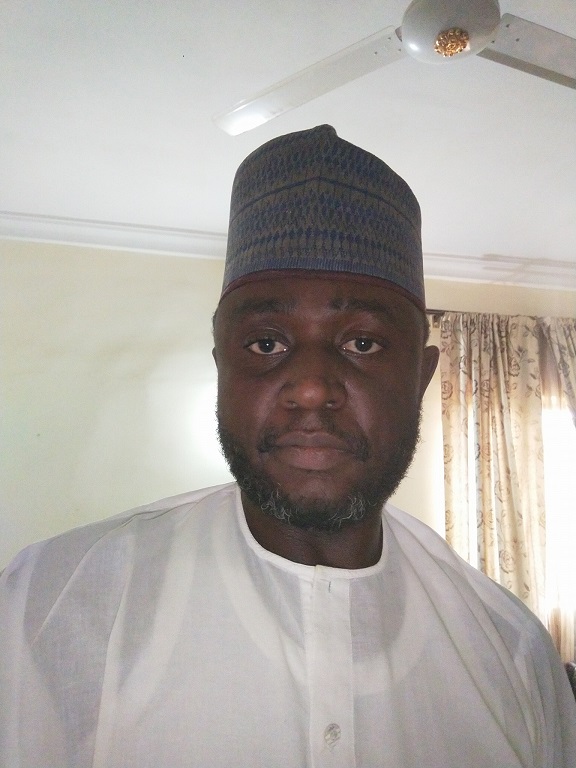
By Ibraheem A. Waziri

My essay, Against Shaykh Masussuka: A Qur’anic Case for the Reliability of Hadith, stirred more interest than I anticipated. While many readers agreed with my central thesis, a number of them raised a pointed concern: why did I not address what is often called the “Hadith problem”? By this, they meant those reports that, at first glance, appear to contradict the Qur’an, or else propose rulings not congruent with Islam’s basic principles. Some go further, suggesting that certain hadiths diminish the Prophet’s sanctity or undermine the very values the Qur’an upholds. Others, from the opposite direction, are said to elevate hadith to a position of near-supremacy over the Qur’an itself, much as common law sometimes treats judicial interpretation as weightier than the statute it interprets.

To my mind, the reason I did not write directly about this so-called “Hadith problem”, but instead focused on why we must agree primarily on the existence of hadith as a legitimate vehicle for obtaining the correct principles of the deen, is simple: the problem is not new. No community, secular or religious, has documented and curated its tradition more carefully, rationally, and continuously than Muslims have with hadith. As such, Muslim scholarship has wrestled with these questions beautifully and intellectually more than a millennium ago. Much of what trends today on social media is only an echo of debates settled centuries earlier. My earlier essay, The Eternal Quartet: Understanding the Hadith Debate in Northern Nigeria, already sketched how the primary Sunni schools, both juridical and theological, addressed questions of hadith authenticity and authority. The framework they produced is so robust that it continues to guide our practice today.

The Method, Not the Myth

When a hadith seems to contradict the Qur’an, the real issue is not substance but method. Classical scholars approached every report through layers of scrutiny. First came the isnād: if a report’s chain of transmission was weak or fabricated, the discussion ended there. Second was Qur’anic alignment: no solitary report could overturn what the Qur’an had decisively established. Third was the Prophet’s sanctity: any report that appeared to impugn his character was re-read against the sīrah and the Qur’an’s testimony to his moral standing. Fourth came the tools of uṣūl al-fiqh: harmonising general and particular, weighing abrogation only with proof, and applying great maxims such as no harm and no reciprocating harm. Finally, scholars asked about context: to whom did the Prophet speak, in what situation, with what effective cause?

Regarding the sanctity of the Prophet of Islam, a deeper interpretation even suggests that each authentic hadith that seems to cross the Prophet’s moral standing should be understood as teaching something different, excluding the Prophet himself, even if he appears as the reference point. For example, the authentic hadith that says the Prophet’s parents are in Hell should not be read as condemning them personally, but as teaching that whoever dies in disbelief faces that fate. Likewise, the hadith of Umm Haram is not to be taken as evidence of inappropriate closeness but as a lesson on boundaries with one’s mahrams.

This is why many supposed contradictions dissolve under discipline. A hadith regulating a temporary abuse does not become a timeless principle. A narration that seems to permit harm is reined in by the Prophet’s own maxim forbidding it. The method resolves what appears chaotic.

Qur’an First, Sunnah Beside

Another anxiety is the claim that the hadith has been placed above the Qur’an. But this is more perception than reality. The Qur’an is always first in rank. The Sunnah explains and operationalises it. The Qur’an itself gives the Prophet that mandate: “We revealed to you the Reminder so that you may explain to people what was sent down to them” (16:44). It calls him “an excellent example” (33:21), insists that “whoever obeys the Messenger has obeyed Allah” (4:80), and commands: “Whatever the Messenger gives you, take it; whatever he forbids you, abstain” (59:7). These verses do not set up rivalry between Qur’an and Sunnah but complementarity. To say the Sunnah explains the Qur’an is no more than to rank it higher than to say a manual outranks the constitution. Both are necessary, each in its domain.

The Eternal Quartet

Why, then, do sincere scholars differ? Because difference is built into the system. Sunni Islam produced four major theological orientations — Muʿtazilī, Ashʿarī, Māturīdī, and Atharī — and paired them with four juridical schools — Ḥanafī, Mālikī, Shāfiʿī, and Ḥanbalī. This “eternal quartet” explains why equally devout scholars may reach different conclusions about solitary reports, analogy, or custom. Some demand mutawātir reports for theology, others accept sound solitary ones. Some lean on the practice of Madina, others on text alone. Yet all remain within the same qibla.

This plurality is not a weakness but a civilisational strength. No other intellectual tradition has institutionalised difference in this way while maintaining unity. Where others splintered, Islam built a square strong enough to hold its four corners together.

Empires on the Quartet

These paradigms sustained real societies. The early ʿAbbāsid caliphate ran on a Ḥanafī–Muʿtazilī synthesis during the miḥna era. The Seljuks, Timurids, Mughals, and Ottomans all thrived on Ḥanafī–Māturīdī orthodoxy, the Ottomans for nearly seven centuries. Across the Maghrib and the Sahel, Mālikī fiqh and Ashʿarī creed underpinned the Almoravids, the Marīnids, the Songhay under Askia Muhammad, and the Sokoto Caliphate. The Shāfiʿī–Ashʿarī pairing defined the Ayyūbids and Mamlūks in Egypt, spread to Yemen and the Horn of Africa, and later carried Islam to Aceh and Malacca. Meanwhile, Atharī–Ḥanbalī frameworks underpinned the First and Second Saudi states and continue to inform the Kingdom of Saudi Arabia today.

No other religious-intellectual system has produced such enduring political architectures across continents and centuries.

Survival Through Shock

Even more impressive is how these paradigms survived colonial disruption. Islamic institutions such as awqāf, market regulation, and family law provided continuity, enabling Muslim societies to withstand conquest and modern upheaval. The frameworks built centuries ago still help communities navigate modernity.

Take finance: much of today’s Islamic banking rests on Ḥanafī tools such as istiḥsān (juristic preference), ḥiyal (legal stratagems), and the use of custom. Mālikī reliance on maṣlaḥa (public good) grounds policy and governance contributions. What looks like accommodation is, in truth, tradition applying timeless principles to new realities.

Nigeria’s Sahelian Inheritance

Closer to home, Nigeria’s Muslim communities have drawn heavily on this inheritance. The Sahelian empires were governed through Mālikī fiqh and Ashʿarī creed. These frameworks enabled our communities to transition into the modern Nigerian state without collapse. Resident colonial and post-colonial scholars such as Shaykh Abubakar Mahmud Gumi, drawing on Mālikī usūl, issued fatwas that justified the abolition of slavery, the acceptance of modern banking, the embrace of Western education, and participation in political, military, and democratic institutions. His rulings were not departures but faithful applications of classical principles to new circumstances.

What To Do With a Troubling Hadith

Still, an ordinary believer may encounter a hadith that feels alien or offensive. The tradition offers a compass:

1. Verify authenticity, for many reports are weak or fabricated.

2. Read it alongside the Qur’an’s universals of justice, mercy, and tawḥīd.

3. Ask which domain it addresses: creed, law, or character, each with its own thresholds.

4. Probe its context: was it aimed at a specific abuse?

5. If two sound readings remain, prefer the one that safeguards the Prophet’s dignity and the Qur’an’s objectives.

That preference is not modern softness but classical orthodoxy.

 Continuity, Not Collapse

The so-called “Hadith problem” is not an unsolved crisis but a well-worked conversation. Classical Islam built methods strong enough to filter and contextualise reports, intellectual diversity broad enough to hold multiple paradigms, and social institutions durable enough to withstand colonial dislocation. Today, as Muslim societies grapple with modern institutions, these frameworks continue to guide us.

To imagine that the hadith undermines the Qur’an is to misread the tradition. To treat hadith as above the Qur’an is equally mistaken. The truth lies in the system: Qur’an as charter, Sunnah as manual, and juristic tools as governance.

The Messenger is trustworthy. The methods used to preserve his words are reliable. Our task is not to discard them under modern doubt, nor to exalt them beyond their station, but to apply them with the seriousness that once gave our civilisations their strength.

Ibraheem A. Waziri wrote from Zaria. He can be reached via iawaziri@gmail.com.

Two physical proofs of Allah’s existence

By Tijjani Muhammad Musa

Many atheists, agnostics, freethinkers and others like them, their biggest tool of argument is to demand real, empirical evidence to show them of Allah’s Existence. Challenging any who believes in Allah as the Creator of the universe to give them something they can see, possibly touch, as a vital criterion or condition, not just for them to acknowledge God’s Existence, but also for them to accept Islam or any other religion, for that matter.

Many scholars would engage them in deep scholarly discussions, citing all kinds of examples and pointing to various creations and phenomena, both physical and abstract, to depict Allah SWT’s presence. Still, the atheists would bring up counter-submissions to keep themselves on their side of the argument. And on several occasions would reject all efforts to prove to them, through logic and reasoning, the existence of a Supreme Creator and Being as the architect of man’s existence.

One of such encounters had the atheist explaining away the Quran as nothing ingenious or miraculous beyond the Arabs’ known prowess for poetry, memorisation and oral transfer of information from generation to generation. Thereby negating and dismissing a fundamental point to note about the man through which the contents of the book were revealed. 

Prophet Muhammad SAWS in himself is the ultimate, undeniable, physical evidence of Allah’s existence to any who doubts that. For the duration of his life in Arabia, in the 6th century and beyond, his prophethood stands to show any denier of God’s existence (atheists, etc) that he was not on his own, but had someone behind his doings. And who is that? Muhammad SAWS gave all the answers; Allah Subhanahu Wa Ta’ala (SWT)

Actually, I’m not pointing at the poetic eloquence, memorisation capacity or storytelling prowess of the Arabs, because the Rasool SAWS was not a poet, nor the Quran a story book and his mission was not just for the Arabs, but drawing our attention to the inability of the Prophet SAWS to read or write. He was al-ummiy. That singular fact is enough to prove to anybody that the source of all his information in the Quran must be someone or something or from somewhere beyond all human dimensional existence.

And, being truthful, he did put forward the claim that he is a messenger from God (Allah) Almighty. Sent with a divine creed, a book, which he kept track of its revealed verses, in bits and pieces, verses by verses, paragraphs by paragraphs, chapters by chapters (114 of them) for 23 whole years. An ILLITERATE! That in itself is way beyond comprehension, even for a genius who was engaged in all facets of daily human activities

And again the CONTENTS of the Quran, in various fields of knowledge from within and outside of man, from within and outside the earth, from our atmosphere into outer space, from how the earth formed to its sustainance, from atoms to fingerprints, to insects, to animals, their anatomy and much more.

On the scientific knowledge front in biology, embryology, geography, medicine, physics, mathematics, aviation, space travel, oceanography, agriculture, sociology, drone war, moral ethics, future predictions, relativity of time, communication, etc. A person, uneducated or taught or discipled by any human, cannot produce such a vast amount or array of knowledge in an era when research and documentation were virtually non-existent amongst his people. It’s simply IMPOSSIBLE!

Again, consider his predictions about the advent of Ad-Dajjal, the computer, the internet, AI, the digitalisation of life, and much more. Information science knows next to nothing about. Only through trial and error does science stumble upon one small piece of knowledge after another, confessing to not knowing anything about virtually everything. A case of the blind walking in the dark, searching for something he knows not of. Even with light, only what he stumbles upon will he show.

There’s even a security code woven into the structure of the book’s contents, using the odd number 19 to mathematically safeguard the revelation from ever being corrupted, from the time of the Messenger till the end of time. Again, the book presents a challenge for anyone to bring a chapter like one in the book; if there’s any doubt about its source being from Allah! No one has yet met up. Yet, atheists will keep hyping science this, science that. What does science know? Almost nothing compared to what’s contained in the Quran, wAllahi.

How can all that knowledge across various aspects of human endeavours come from someone who was unlettered, only to be proven correct by science over the past 1400+ years and to this day? Who dares to claim such a feat, such a possibility? A man who could not differentiate A from Z or 1 to 10? Yet Muhammad SAWS attributed it all to whom? Not to himself, but to Allah SWT alone. Now, ask yourself, why would he do that? Still, some people will come and say that because they cannot see God, then He AWJ does not exist.

What more? The proof of his prophethood, THE HOLY QURAN, is here for all to see, touch, read, challenge, debunk and more for its authenticity. The Rasool didn’t say it was his making, but that it was Allah SWT’s revealed verses. And just because you want to be what… You choose to dismiss such living proof that its author is non-existent!? Aren’t atheists amazing? They have always wanted physical proof and evidence of Allah AWJ’s existence. Well, then, Prophet Muhammad SAWS is it, for one. Even if they have never seen him, at least they have heard of him. 

And if that’s not good enough for any, the Holy QURAN didn’t just fall from the sky, right? How did it come into existence, out of the blue or from an abracadabra spell?

Tijjani M. M. wrote from Kano, Nigeria.

Sheikh Lawan Makama: A legacy Qur’an and community service

By Kamal Alkasim

As I embark on writing about the history of our community, I am compelled to share the remarkable story of Sheikh Lawan Makama. His life’s work has had a profound impact on thousands of students, including myself, through his tireless dedication to teaching the Qur’an and founding a prestigious Islamic college.

We affectionately called him ‘Baban Makaranta’ (Father of the School) because of his unwavering presence and guidance. He would often be seen at the school, writing on the Allo (wooden slate) for students, mentoring teachers, and caring for us like a father.

When I spoke to one of my teachers and his son, Shehu Lawan Makama, about his father’s legacy, he shared a profound insight: ‘In our family tradition, every child is expected to teach in school before pursuing any business venture.’ This legacy lives on through the Ma’ahad Sheikh Lawan Makama, a renowned college for Qur’anic studies in our community, Kofar-Ruwa.

The college offers a comprehensive curriculum, with morning and afternoon sessions focused on Qur’anic studies, followed by evening classes on Hadith and Islamic theology. The quality of education in our community is a testament to the excellence of his school. Sheikh Lawan Makama’s impact extends beyond the classroom, as his commitment to community service has left an indelible mark on our society.

Sheikh Lawan Makama’s contributions to community services were multifaceted. His children would often lead Islamic events, including Ramadan prayers in various mosques. As students, we would attend school during the day and participate in community services in the evenings.

Growing up in a family that values the Qur’an, I had the privilege of attending many of these events. Sheikh Lawan Makama instilled in us strong moral values and good habits, emphasizing the importance of integrity and character. His reputation was such that if someone from his school misbehaved, the community would say, “This isn’t the habit of Sheikh Lawan Makama’s students.” His legacy is built on the principles of good character, and those who know him can attest to this.

Sheikh Lawan Makama’s family reflects his commitment to the Qur’an. All 16 of his children are Qur’an reciters, and thousands of students have memorized the Qur’an through his school. The students who lived in his house were treated like family members, receiving food, clothing, and care. One of my classmates shared that they felt no difference between themselves and Sheikh Lawan Makama’s biological children.

As someone who values documenting history, I aim to preserve Sheikh Lawan Makama’s legacy accurately, ensuring that future generations can learn from his remarkable life and contributions. May God bless him with knowledge, wisdom, and eternal peace.

Kamal Alkasim wrote from Kano, via kamalalkasim17@gmail.com.

Against Shaykh Masussuka: A Qur’anic case for the reliability of Hadith

By Ibraheem A. Waziri

About three decades ago, at the beginning of my youthful years, around Bakinruwa, Sabongari, Kaduna, I first encountered the idea of “Qur’an-only” Islam. Shaykh Uthman Dangungu, who had passed through the Izala movement, began to promote it in our neighbourhood mosque near Kasuwan Gwari. He was not the first—Muhammadu Marwa Maitatsine had pushed something similar in Kano State in the 1980s, though in a harsher, less workable form. Since then, my philosophical self has wrestled with such currents—Wahhabism, Shi‘ism, Sufism, Boko Haramism, and more. Each encounter has been a struggle for clarity and stability, for faith, and for cultural continuity in our fragile postcolonial Nigerian modernity.

Now, with Shaykh Yahya Ibrahim Masussuka—my generational peer—reviving the Qur’an-only argument, it seems fitting to reflect again. This time, however, I do not begin from theology alone. I lean on the wear and tear of intellectual toil, and on the reflective gifts of experience—what philosophy, logic, and science have taught me about human beings and the trustworthiness of transmission.

Philosophy has long asked: Can knowledge survive without tradition? Plato, in The Republic, warned that truth severed from the teacher–student chain becomes mere opinion. Aristotle, more grounded, argued that reason itself grows from custom, habit, and inherited practice. If Plato guarded against instability, Aristotle reminded us that even rationality needs a body —a living community —to give it shape.

Modern science adds its own perspective. Research in psychology shows that while humans are prone to bias or fatigue, under structures of accountability and community, they are remarkably capable of fairness and truth-telling. Integrity, in fact, often comes naturally. In other words, people can be trusted, though they must be guided.

The Qur’an itself affirms this. It does not portray humanity as unfit to bear the truth. Instead, it honours our moral agency while calling for systems of verification. “And thus We have made you a just community that you may be witnesses over mankind, and the Messenger a witness over you” (2:143). To be a witness requires the ability to observe, remember, and transmit faithfully. Surah Al-Tawbah (9:122) goes further, encouraging some believers to remain behind, study religion deeply, and teach others. That is nothing less than a Qur’anic endorsement of scholarship—the very task Hadith scholars later undertook.

The Qur’an also acknowledges our dual moral compass— “By the soul and He who proportioned it, and inspired it with its wickedness and righteousness” (91:7–10). Hence, the command in Surah Al-Hujurat (49:6) to verify reports before acting. That balance between trust and scrutiny is the same principle that shaped the science of Hadith.

Even in worldly matters, the Qur’an demonstrates confidence in structured testimony. The long verse of debts in Surah Al-Baqarah (2:282) lays out detailed rules for recording contracts with witnesses. If humans can be entrusted with preserving financial records, surely they can also be tasked with documenting the Prophet’s words—so long as there is a system of accuracy and verification.

This brings us to the heart of the matter. The Qur’an-only stance insists that Hadith is unnecessary. Yet the Qur’an itself says otherwise: “We revealed to you the Reminder so that you may explain to people what was sent down to them” (16:44). The Prophet’s explanatory role is not contained in the Qur’an’s text—it lives in his sayings, actions, and approvals. Surah Al-Ahzab (33:21) refers to him as “an excellent example” for believers. But how would later generations know his example without the Hadith?

Other verses go further: “Whoever obeys the Messenger has obeyed Allah” (4:80); “Whatever the Messenger gives you, take it; and whatever he forbids you, abstain from it” (59:7). These are not time-bound commands. They apply to all Muslims across generations. And they assume access to the Prophet’s guidance—something only Hadith provides.

Seen this way, Hadith is not an intrusion upon the Qur’an but its necessary partner. The Prophet was sent not only to recite but to teach and model. His companions and the generations after them, through discipline and painstaking verification, preserved that model. The Hadith tradition is not perfect—no human endeavour is—but it was forged as a check from within Islamic culture, not imposed from outside. It is part of the Qur’an’s own vision of a community of witnesses.

At its core, then, the debate is not only about scripture but also about how we see human beings. If we assume people are too weak or biased to preserve truth, the Hadith collapses. But if we recognise—as both the Qur’an and science do—that humans, when guided and structured, can be reliable witnesses, Hadith stands on solid ground. The Qur’an-only position misses this deeper point. It mistrusts human agency in a way the Qur’an itself never does.

In Nigeria, where cultural streams converge and clash—Sahelian traditions meeting global influences—the Qur’an-only approach risks severing us from the rich heritage that has sustained Muslim communities through colonialism, civil strife, and modern pressures. My own journey—from that mosque in Kaduna to today—has taught me that certainty lies not in subtraction but in integration: the Qur’an as foundation, illuminated by the Prophet’s Hadith, upheld by our God-given moral agency.

As this debate resurfaces in our time, we would do well to remember: the Qur’an trusts us, commands us, and makes our testimony central to its unfolding. To follow the Qur’an, then, is to follow the Prophet. And to follow the Prophet is impossible without Hadith.

Ultimately, as Surah Al-Baqarah reminds us, we are called to be witnesses. Let us honour that calling by trusting the mechanisms Allah has provided—including Hadith, which brings the Prophet’s example to life for every generation 

Late Alaramma Malam Idi Nakamaku: A Qur’anic memorizer par excellence

By Ibrahim Sulaiman (Jama’are)

In circa 1993, my late maternal grandfather, Malam Musa Nagari (d. circa 2017), took me to Malam Idi Nakamaku’s Makarantar allo (a traditional Quranic school) in the Gandun Sarki quarters of Jama’are town, where I was enrolled as a Titibiri (an elementary student). He purchased a new allo (a wooden slate used as a hand-held writing board by students) for me, which I guessed he bought from the Jama’are weekly market. 

Even though they weren’t the same age, I realized that Allaramma Malam Idi and my Malam Musa Nagari were good friends. 

I was already enrolled in Abdulkadir Ahmed Primary School (formerly known as Zango Kanti Primary School). I usually attend the afternoon session at Malam Idi’s school alone with his regular Almajirai (students), most of whom come from nearby and distant towns and villages around Jama’are. 

That was a foundational journey I first had in Islamic studies. 

Sometimes, my maternal grandfather, Malam Musa Nagari, would lead me to school, hand me over to Allaramma, and jokingly say, ‘Ga dalibinka, Dan Izala’ (here is your student, member of Izala). This is because my father had already been a member of Izala (JIBWIS) since the early 1980s. (For an exploration of this statement and the struggle for religious space between Izala and other Sufi groups in Jama’are, see my MA thesis, ‘A History of JIBWIS/Izala in Jama’are, 1986-2015,’ submitted to the Department of History at Bayero University Kano in 2022.)

That was the start of it. Since then, whenever Malam sees me or I pass by him, he calls out, ‘babban dalibi’ (a senior student), even though I stopped attending his school when I was at the Titibiri level. True to form, he asks, ‘ya karatu’ (how’s studies), now referring to conventional education, and concludes with, ‘Allah ya yi albarka’ (may God bless).

As Malam is no longer with us, I will miss his prayers. Whenever I’m in Jama’are, I can hardly pass by Malam without stopping to greet him, and he has always been generous with his usual prayers.

Malam Musa Nagari and Malam Nakamaku have been a school for me. They have been a veritable source of inspiration. 

Malam Nagari, though a grandfather, was a no-nonsense type. We rarely exchanged banter, unlike typical grandparents in a Hausa/Fulani setting like Jama’are. He was a disciplinarian in the real sense of the word. Although we spent a lot of time together at home, on the farm, and in his vocation of building houses, that familiarity did not breach any contempt, as they say. Malam Musa Nagari once told me something I knew was intended to inspire me. ‘Ibrahim, let me tell you. Do you see my farms in their numbers? I only inherited one from my parents…’. This is a way of telling a teenager to ‘be hardworking’!

From Malam Idi Nakamaku, I learned the principle of goodwill. Even though I left his school to probably join Izala Islamiyya, Malam Idi has never stopped considering me his student, referring to me with the term baban dalibi. This has never been a source of concern for him; he simply wants to know how I’m progressing, even at the conventional school level. Malam never ceases to ask such questions; the last time we met was last year during Eid el-Kabir. 

To me, Malam Idi Nakamaku’s life epitomized an enduring commitment to promoting Quranic studies (what a blessed life!). It symbolizes selflessness and service to humanity, along with complete submission to the will of God. I believe Malam Idi Nakamaku embodies the traditional classical eclectic ascetic lifestyle characterized by Zuhd (asceticism or self-denial to achieve Ridhal Allah, meaning God’s pleasure) of early Sufi scholars, which continues to endure into this century.

The demise of Allaramma Malam Idi Nakamaku on March 4, 2025, was a great loss and, indeed, irreparable to the entire Jama’are Emirate. May his soul, along with that of his good friend Malam Musa Nagari, continue to rest in Janna til Firdaus.

Ibrahim Sulaiman (Jama’are) wrote from Abuja via ibrahimsulaiman193@gmail.com.

A reflection on dimensions, death, and the eternal four: Ramadan 2025

By Ibraheem A. Waziri

MashaAllah. As the crescent moon rose to herald Ramadan this year, on this twentieth day of March 2025, a profound stillness has settled over me. The fast silences my body’s clamor, the long nights of prayer elevate my spirit toward the heavens, and my thoughts drift into the boundless expanse of the unseen. This Ramadan, I find myself wrestling with the nature of dimensions—what they signify, how they shape our fleeting lives, and how death might unlock realms beyond our earthly reach. 

The Qur’an unveils glimpses of this mystery: seven heavens layered in divine order, Jannah’s gardens of eternal serenity, Jahannam’s depths watched by stern guardians, and Allah’s timeless, infinite dominion. The number four—etched into our 4D reality and echoed in a hadith debate I explored last week—anchors my reflection, while the nineteen of Surah Al-Muddathir, mirrored in the nineteen letters of *Bismillahir Rahmanir Rahim*, stirs my soul. Could death guide us through a cosmic graveyard of stars into these dimensions, as some now ponder in awe?

Let us begin with dimensions as we experience them in this Duniya, this transient abode. We dwell within three spatial dimensions—length, width, and height. A minaret pierces the twilight sky; its shadow stretches wide across the sun-warmed earth, and its foundations sink deep into the soil. Time, the fourth dimension, flows relentlessly forward, a current bearing us from the first whispered adhan of Fajr to the tranquil hush of Isha. 

These four—three of space and one of time—form our 4D reality, a spacetime framework we navigate with every breath and every step we take. Yet science, with its insatiable curiosity, gazes beyond this familiar quartet, proposing extra dimensions—ten, eleven, or perhaps far more—coiled tightly at scales too tiny for our eyes to discern or sprawling across unseen planes our hands cannot grasp. These are not mere directions to wander but subtle layers, bending the forces of gravity, energy, or the very essence of creation in ways that stretch our comprehension.

In 2018, a Northern Nigerian Hausa broadcasting Television Station, Arewa24, in a documentary about space named black hole mutuwaren taurari (Mortuary of Stars), but I preferred mak’abartar taurari—the Graveyard of Stars—as a more evocative term. Here, death is a profound key, a passage to what lies beyond. In this 4D shell, we are tethered—our physical forms bound to the limits of space, our lives measured by the steady march of time. 

The Qur’an, however, assures us that the soul, the ruh, endures beyond this fragile vessel. When we die, might that soul break free, slipping into a fifth dimension, a sixth, or even further—realms where Jannah’s rivers ripple with mercy and Jahannam’s fires blaze with justice, domains veiled from us until Malak al-Mawt, the Angel of Death, carries us across the threshold? 

Physics offers a faint echo of this possibility: higher dimensions might surround us, omnipresent yet inaccessible, hidden behind a veil that only death can part. Some astronomers link each soul to a star wandering the cosmos; when a person dies, their star might collapse into this graveyard, bearing their ruh along. Could this black hole be a portal, a barzakh, where dimensions unfold beyond our sight?

The Qur’an sketches this vastness with strokes of majesty. “He who created seven heavens in layers,” proclaims Surah Al-Mulk (67:3), urging us to reflect on the nature of these layers. Are they celestial skies arching above our world, glowing in the twilight? Or could they be universes, dimensional planes, each distinct yet interconnected, ascending beyond our perception into a hierarchy only Allah fully comprehends? 

Our 4D reality, with its glittering stars and sprawling earth, might be the “lowest heaven,” as Surah As-Saffat (37:6) suggests, with its adorned lights, while six more heavens rise above, reachable only when death turns the lock. Time, too, bends in Allah’s presence—Surah Al-Ma’arij (70:4) likens a day with Him to fifty thousand years of our earthly counting. In these higher dimensions, time might not flow as we know it; it could stretch into an endless horizon, loop upon itself, or fold into an eternal now—a reality death alone might usher us into.

Yet it is the number four that steadies my wandering mind, a pattern I cannot unsee. Just last week, in *The Eternal Quartet: Understanding the Hadith Debate in Northern Nigeria*, I wrote of a debate stirring Northern Nigeria’s Muslim online space—Shaykh Prof. Ibrahim Saeed Ahmad Maqari and Shaykh Prof. Sani Rijiyar Lemo clashing over the degree of certainty in different categories of Hadith rather than dismissing their essence outright. 

I framed the scholars’ dispute through four lenses: reason, belief, doubt, and rejection, a quartet mirrored in Islam’s four legal schools—Hanafi, Maliki, Shafi’i, Hanbali—and four theological paths—Mu’tazila, Ash’ari, Maturidi, Athari. Maqari, with his Ash’ari and Maliki roots, demands the unshakable certainty of Mutawatir hadiths, those narrated by many, while Rijiyar Lemo, grounded in Athari and Salafi trust, upholds authentic Ahad narrations with strong chains, even if from fewer sources. Four emerged as a complete, balanced square: Maqari’s logic seeking widespread proof, Rijiyar Lemo’s faith in vetted tradition, the doubters’ hesitant questions, the rejectors’ outright dismissal. As I dwell in our 4D spacetime, I see it again—four as our foundation, the root from which higher dimensions might grow, a motif threading through faith, nature, and the human heart.

Then comes a piercing verse—Surah Al-Muddathir (74:30): “Alaiha tis‘ata ‘ashar”—“Over it are nineteen.” Nineteen angels guard Jahannam, their number stark and resonant, a mystery that stirs my soul to its core. Are these guardians confined to our 4D frame, or do they stride across dimensions, overseeing a hell that burns beyond our spacetime? This deepens when I count the letters in Bismillahir Rahmanir Rahim—ب س م ا ل ل ه ا ل ر ح م ن ا ل ر ح ي م—nineteen in all, the sacred invocation that opens every surah but one. Could this parallel—nineteen angels, nineteen letters—hint at more, perhaps 19 dimensions woven within or alongside the seven heavens? Science freely posits dimensions; string theory suggests ten or eleven, but the Qur’an’s seven and nineteen numbers carry a divine weight. From our 4D base, the seven heavens might rise as broad realms, each enfolding finer layers, totaling 19—a cosmic framework death unveils, where the nineteen serve as eternal watchmen.

Consider the black hole, this mak’abartar taurari. Could it be barzakh, a liminal space bridging dimensions? Does it cradle Jannah’s tranquility or Jahannam’s torment? Some wonder: might the Day of Judgment spring from this starry graveyard, an event science cannot yet name, where fallen stars—and souls—rise into new dimensions? We perceive only four in this Duniya, but black holes might harbor twelve, as some speculate. Add seven for Jahannam’s planes, and we reach 19—four we know, eight in Barzakh’s depths, seven in Saqar’s fire, guarded by nineteen, as Allah declares, “Alaiha tis‘ata ‘ashar”. Last century, scholars like Khalifa Rashad stirred debate with new readings of this verse—could it point to such a cosmic order?

Envision it: our 4D reality as the first heaven, rooted in four—length, width, height, and time. Six more heavens ascend, each a dimensional cluster, totaling 19 with Barzakh and Jahannam’s layers. Surah Fussilat (41:12) says each heaven has its command—unique laws across these planes, from fifth to nineteenth. His Kursi (Surah Al-Baqarah 2:255) spans them, the nineteen as sentinels in its scope. The Qur’an says the soul’s end wanders in the space between the dimensions of fire (dread) or peace (natsuwa). Death might thrust us through mak’abartar taurari into these 19, where nineteen angels stand guard.

As Taraweeh’s verses wash over me this Ramadan, I feel four and nineteen entwined. If 19 dimensions veil Jannah, Jahannam, or more, might they host others—angels, jinn, beings unseen? Science puzzles at silence; death might unveil a chorus. In sujood, fasting’s clarity sharpens this: the Qur’an bids us marvel. Whether seven heavens hold 19 dimensions via a starry graveyard, death is our key—a mercy cloaked as an end.

Breaking my fast, dates sweet with Jannah’s echo, I feel tethered to this vastness. Our 4D world—fourfold in dimensions and thought—is a breath, a shadow of Allah’s infinite craft. Ramadan 2025 is my pilgrimage—through hunger, hope, and “Alaiha tis‘ata ‘ashar”, mirrored in Bismillahir Rahmanir Rahim—toward a reality where death, from our fourfold root, opens the door to seven heavens, nineteen dimensions, and Allah’s eternal truth. Allah Shine masani.

Walking Down the Memory Lane | The Kabara Tafsir and Surat Yusuf

By Prof. Abdalla Uba Adamu

A few comments about the ongoing Ramadan Tafsir at the Palace of the Emir of Kano conducted by Sheikh Qaribullah Nasir Kabara (translator, Qadriyyah) and Muhammad Hadi Gwani (reciter, Tijjaniyya) brought back nostalgic memories for many people. The conversation was started by Muhsin Ibrahim. Perhaps only those living or having lived in Kano may probably know of this Tafsir that has been consistently going on since about the 1940s, shifting location only once, from Chiranci to Kofar Kudu in Kano. On Sunday, 16 Ramadan/March 2025, I was part of a TV discussion on the Tafsir and its meaning to me. This was what promoted this sharing of memories. 

Tafsir is the scholarly interpretation and explanation of the Quran. It helps to clarify the meanings of verses, their context, linguistic nuances, and the reasons for their revelation. The combo of Sheikh Qaribullah Kabara and Sheikh Hadi Gwani in Kano is one of the hundreds of Tafsirs conducted during Ramadan in Islamicate northern Nigeria. 

Each individual has their preferences for the reciter/translator combo. Mine, inherited from my father, was for the Kabara Tafsir. The reason is up close and personal. I was born on 14th Ramadan 1375, or 25th April 1956. My father was informed of my arrival while he was at the Tafsir in the inner chambers of the Emir of Kano’s Palace near the reciters. My father was a Qadiriyya adherent and disciple of Malam Nasiru Kabara. 

The nostalgia was ignited by Muhsin’s reflections of Surah Yusuf, which was recited on the 9th day of every Ramadan. Perhaps the Surah draws the largest crowd apart from the day of the ending of the Tafsir (Hattama). I have always marveled at why there is a surge of attendees on any day the Surah is being recited/translated. I remember being annoyed one year when I was slightly late and had to virtually push and shove through a huge crowd – often “standing room” only – to get to my reserved seat deep in the open space of the Place just before the door leading to the “Soron Isa” antechamber. All eager to listen to Surah Yusuf. 

Significantly, the Juz’i containing the Surah ends on Ayat 52. But on Friday, 17th December 1999/9th Ramadan 1420, as I noted in my own copy of Yusuf Ali’s Translation of the Holy Qur’an, which I used as a guide in following the recitation, Sheikh Qaribullah suggested to complete the Surah to its 111 Ayats to maintain the narrative structure and continuity of its events. Thus, on the day, the Tafsir lasts longer than on other normal days, while the Tafsir on the following day, starting directly with Surah Al Ra’ad, always ends up being the shortest night of the Tafsir. 

There are many reasons for the attachment of thousands of people – some who attend the Tafsīr on the Surah Yusuf day only. While this has many lessons, I will examine it from an ethnographic perspective. The story of the travails of Prophet Yusuf has one central cultural importance to the Hausa – “haƙuri can dafa dutse”/Patience is a virtue. This was indeed played out by the way Prophet Yusuf went through so many challenges in life – simply because of the stupendous natural beauty bestowed on him by Allah (SWT) to begin with. 

But his trials centered around what I call “yan ubantaka,” sibling rivalry and jealousy inherent among siblings of different mothers. This is a theme in Hausa family structures where offspring sharing only a father seem almost always at each other’s throats. Of course, not all households are like this – I am sure you know some households with perfect harmony, despite different mothers (might even be your own particular circumstance). However, the general experience of many Hausa is precisely as described in Surah Yusuf – bitter rivalry towards the more outstanding brother – whether junior or senior. Attendees of the Tafsir, therefore, get solace at the spiritual formula and lesson of patience and perseverance and go home uplifted that, as for Prophet Yusuf, “komai nisan dare, gare zai waye”/there is light at the end of the dark tunnel. 

Another significant historical moment in the Kabara Tafsir was what I called The Switch. On 29th March 1990,equivalent to 3rd Ramadan 1410, while reading Surah Al-Ma’idah, Ayat 20, Mal. Nasiru stopped the translation. With an emotionally charged voice, he prayed for the Emir Alhaji Ado Bayero (the host of the Tafsir). Then he informed the congregation that the Emir had given permission for Qaribullah Nasiru Kabara to continue the translations. The massive roar of Allahu Akbar takbir startled the mass of Swallows (Bilbilo) perching on the trees in the Emir’s mangrove area (Sheka), where they took off en mass. It was indeed an emotional moment. Right away, Mal. Qaribullah took over the translations, and in a well-synchronized manner, Mal. Hadi led him through the recitation, changing the tonalities of his recitation with Mal. Qaribullah matching him tone for tone. More Takbirs followed every hill and valley of their voices. It was a truly historic moment. 

Finally, a massive controversy concerning filming the story of the Prophet Yusuf erupted in Kano in 2009. Luckily, it was not from Kannywood producers, who, aware of the prohibitions of depicting prophets of Allah in any visual form, dared not even attempt it. However, in 2009, a TV series, Yousuf-e-Payambar or Joseph, the Prophet, was screened at the 2009 Cannes Film festival. The 45-episode series was produced by Sima Film Productions, an affiliate of the Islamic Republic of Iran Broadcasting (IRIB). 

Although the series’ dialogue was in Persian, soon enough, the Lebanese Al Manar TV station, owned by the Shi’a Hezbollah, started re-broadcasting the series with Arab dub-over voices of the Farsi dialogue, and became available through the Middle East satellite TV networks. It was a Shi’a TV show, since apparently in the Shi’a understanding of Islam, there was nothing wrong with depicting Prophets in any visual medium. Further, the story of Prophet Joseph had universal constants that made it appealing throughout the Muslim world, regardless of doctrinal inclination. 

In the summer of 2009, a young Muslim Hausa student studying at the Al-Azhar University in Cairo somehow downloaded the entire Yousuf-e Payambar series with Arabic voice-over dubbing in his laptop and brought it to CD marketers in Kano, the biggest commercial centre in northern Nigeria. In Kano, somehow, it was dubbed over in the Hausa language. It was an instant hit. The marketers subsequently copied the series into eight-volume DVDs and released them to traffic light markets common in most African urban centers.

However, no sooner had the DVDs entered the market than two prominent Muslim clerics in the Shari’a State of Kano appeared on public radio and condemned the Series. These were Sheikh Amin Daurawa and Sheikh Ibrahim Khalil, the latter of whom was the Chairman of the powerful Kano State Council of Ulama. In their ‘fatwa’ – Islamic ruling – echoing the Al-Azhar proscription of visually representing a Prophet of Allah (SWT), they argued it is prohibited to depict any Prophet in any form visually. The basic problem was that while Shi’a filmmakers produced the Prophet Yusuf TV series, the consumers in Kano were Sunni and did not make the sublime distinction about the interdiction of prophetic images between Sunni and Shi’ite interpretations of Islam.

The fatwa resulted in the Kano State Censorship Board’s banning the sales of Joseph the Prophet DVDs and arresting and prosecuting marketers and vendors who sold the DVDs. However, while the series was banned in Kano, it became readily available in neighboring States, especially Kaduna and Bauchi, where Shari’a law was implemented more flexibly.

The Kabara Tafsir is available on the YouTube Channel I created specifically for it. So look for it if interested. If you want to know more about the controversies and censorship of the Prophet Yusuf CDs in Kano, read my article, “Controversies and restrictions of visual representation of prophets in northern Nigerian popular culture.” March 2017. Journal of African Media Studies 9(1):17-31. The journal publishers don’t want their articles on academic social media networks (ASMN),but they say nothing about personal sites! So, if you want to download the entire paper, it is Acibilistically available at this link.

For those old enough, there is also an Egyptian poster of the Prophet Yusuf/Zulaykha in the presence of her husband, al-Aziz (Potiphar) encounter (fully depicted in the TV series) which, together with other Prophets and saints, were also freely sold in Kano in the 1960s. This gives a historical perspective to how artists tried to portray this popular Islamic narrative in popular culture. The poster is in the article.

Bandits demand N30 million ransom for Katsina Qur’an recitation champion, family

By Uzair Adam 

The Katsina State Government has confirmed that the winner of the National Qur’anic Recitation Competition, Abdulsalam Rabiu-Faskari, along with his father and brother, remains in the custody of their abductors.  

In a statement issued on Friday, the state’s Commissioner for Information and Culture, Dr. Bala Salisu-Zango, clarified that contrary to some media reports, the victims were still alive.  

Rabiu-Faskari, an ABU final-year medical student, was kidnapped alongside his father and brother two days ago while returning to Faskari from Katsina, shortly after being honored by Governor Dikko Radda for his outstanding performance in the competition held in Kebbi.  

The commissioner noted that Rabiu-Faskari was set to represent Nigeria at the upcoming international edition of the competition.  

“The government has been made aware of reports suggesting that the young scholar was killed by his abductors. However, the latest information reaching us confirms that he and his family members are alive and in captivity,” Salisu-Zango stated.  

He further revealed that the kidnappers were demanding N30 million for their release.  

Governor Radda condemned the abduction, describing it as unfortunate and assuring that efforts were underway to secure the victims’ safe return.  

“My heart is with the victims, their family, relatives, and friends. We pray for their safe release. The government is taking concrete steps to ensure their rescue,” Radda said.  

He urged security agencies to intensify efforts in tracking down the kidnappers while reaffirming his administration’s commitment to addressing the security challenges in the state.  

The governor also called on the public to offer prayers for the safety of Rabiu-Faskari and other abductees.

The eternal quartet: Understanding the hadith debate in northern Nigeria

By Ibraheem A. Waziri

Last week, the Muslim online community in Northern Nigeria was abuzz with a debate between two prominent scholars: Shaykh Prof. Ibrahim Saeed Ahmad Maqari, Imam of the National Mosque, and Shaykh Prof. Sani Rijiyar Lemo, a well-known teacher and writer. They are discussing hadiths—sayings of the Prophet Muhammad—and their reliability. 

Maqari insists that only Mutawatir hadiths, which are passed down by many narrators, are certain. In contrast, Ahad hadiths, coming from fewer narrators, lack certainty; Da’if hadiths are doubtful; and Maudu’ hadiths are fabricated. Rijiyar Lemo argues that Ahad hadiths with strong chains—like those found in Bukhari or Muslim—are as trustworthy as Mutawatir hadiths, also rejecting both Da’if and Maudu’ hadiths.

This may appear to be a new split in Islam, but it isn’t. It’s an old debate reemerging, reflecting four fundamental ways we think: reason, belief, doubt, and rejection. Maqari and Rijiyar Lemo each adhere to one of four classic Muslim paths. Let’s simplify it to demonstrate that this isn’t a crisis—it’s just part of our nature.

The Scholars’ Stances: Old Roots, Modern Voices

Maqari aligns with the Ash’ari and Maliki approach. He’s cautious: only Mutawatir hadiths, widely shared and undeniable, confirm the Prophet’s words, especially for core beliefs. Ahad might be true but aren’t certain, Da’if are shaky, and Maudu’ are fabrications. His stance is logical, demanding solid proof.

Rijiyar Lemo takes the Athari and Salafi route. He’s straightforward: Ahad hadiths with strong chains are as good as Mutawatir—no need for a crowd if the narrators are reliable. He discards Da’if and Maudu’, trusting the vetting process.

This echoes a thousand years of Muslim thought, split into four theological groups—Mu’tazila, Ash’ari, Maturidi, Athari—and four legal schools—Hanafi, Maliki, Shafi’i, Hanbali. Maqari’s Ash’ari/Maliki; Rijiyar Lemo’s Athari/Salafi. The others linger in the background, forming four ways to see faith.

 The Fourfold Lens: A Universal Impulse

This isn’t just about hadiths—it’s how we view everything, through four lenses:

– Reason: “Prove it—how many narrators? Are they solid?” Maqari’s fans value his logic, insisting on Mutawatir’s wide agreement for certainty over Ahad’s limited sources.

– Belief: “My scholar says it’s true.” Rijiyar Lemo’s supporters trust a single Sahabi’s word if the chain is sound, no extra proof needed—just faith in the process.

– Doubt: “Are we sure? What if it’s wrong?” Questions linger for those unsure about either side.

– Rejection: “This is outdated nonsense.” Some walk away entirely.

Northern Nigeria’s Muslim online space shows all four: some cite Mutawatir facts for Maqari, others trust Rijiyar Lemo’s Salafi roots, a few question both, and some dismiss it outright. These align with the four schools, too. Picture a grid—reason on one side, revelation on the other—yielding four pairs:

– Reason + Reason: Hanafi and Mu’tazila  

  Hanafis use analogy and judgment for rules; Mu’tazila apply logic to beliefs like free will. They’re strict: theology needs Mutawatir or Ahad with three-plus narrators; rules use authenticated Azizi (strong Ahad). Reason leads.

– Reason + Revelation: Maliki and Ash’ari

  Malikis mix reason with Medina’s practices; Ash’aris back faith—like God’s traits—with logic. Maqari fits here: Mutawatir for beliefs, authenticated Ahad for rules like prayer times. Revelation guides reason.

– Revelation + Reason: Shafi’i and Maturidi

 Shafi’is prioritize hadiths and Qur’an, sorted logically; Maturidis use reason within scripture’s bounds. Mutawatir for theology, authenticated Ahad for rules like fasting. Revelation’s first, reason aids.

– Revelation + Revelation: Hanbali and Athari

Hanbalis stick to texts; Atharis take the Qur’an and hadiths as is. Rijiyar Lemo’s here: authentic Mutawatir or Ahad work for both beliefs and rules. Revelation rules.

Maqari’s Ash’ari/Maliki stance demands Mutawatir for certainty; Rijiyar Lemo’s Athari/Salafi view accepts authentic Ahad.

Four Across the Ages

Four isn’t just in this debate—it’s a pattern across time and cultures. In the West, psychologist Carl Jung saw four as a symbol of wholeness, like in mandalas or personality types—thinking, feeling, sensing, and intuiting. Stephen R. Covey’s four quadrants divide tasks by urgency and importance, offering a complete way to manage life. Game theory maps four outcomes—win/win, win/lose, lose/win, lose/lose—covering all possibilities in decisions, much like Karl Popper’s fourfold reasoning tests ideas through trial, error, doubt, and rejection. Four directions—north, south, east, west—guide us; four elements—fire, earth, air, water—once explained the world; four schools shape Islam. Even a Sudanese Sufi song by Abdurrahim Albur’iy, Misr al-Mu’mina, celebrates four in nature and Islamic history:

“We call upon You with the four and the four books,  

And the 114 surahs [Qur’an],  

With the six angels and the four noble ones,  

With our Prophet Muhammad and the four caliphs,  

And the six after them and the four imams,  

And the seven jurists and our four poles,  

The pegs of the earth in the four directions,  

The substitutes and the ten chiefs in four,  

Preserve my three and four limbs,  

And keep our four sides from the resting place,  

Remove the body’s illness in its four temperaments,  

Bless our week until Wednesday (fourth day),  

The ninety days of the year in four,  

And our seven seas and our four rivers,  

We are saved from four and gathered with four.”

Fours—caliphs, books, rivers—tie faith and life together across time.

Philosophy Meets Faith: Why Four?

Why four? It’s simple and complete. Two (yes/no) is too basic, three (yes/maybe/no) lacks balance, and five’s cluttered. Four’s just right: two ways to agree (reason, belief), one to question (doubt), one to reject. Like a square, it’s steady, covering all sides—seen in nature, history, and our debates.

Nothing New Under the Sun

Don’t let Northern Nigeria’s Muslim online space hype fool you—this is old news. Ash’ari scholars like al-Ghazali sought proof, like Maqari; Athari ones like Ibn Taymiyya trusted texts, like Rijiyar Lemo. Mu’tazila favored reason; Maturidi blended it with faith. Four schools, four views—same as today.

It’s loud now because Maqari’s at the National Mosque, and Rijiyar Lemo’s books reach many. People care about the Prophet’s words. But it’s not a new split—just two notes in an old four-part tune.

Takeaway: Embrace the Quartet

Don’t worry about this debate. It’s not Islam breaking—it’s alive, with views fitting four natural slots: Maqari’s logic, Rijiyar Lemo’s trust, plus doubt and rejection. Next time Northern Nigeria’s Muslim online space heats up—over hadiths or anything—spot these four: thinkers, believers, questioners, and naysayers, blending into many combinations. It’s how we work. Maqari and Rijiyar Lemo pick two corners of a square we’ve all been drawing forever. It’s not chaos—it’s our pattern.

MSSN-ABU expresses sorrow over kidnapping of its member, calls for prayers

By Hadiza Abdulkadir

The Muslim Students’ Society of Nigeria (MSSN), Ahmadu Bello University (ABU), Zaria, has expressed deep sorrow over the tragic kidnapping of one of its members, Abdussalam Rabi’u Faskari, a 300-level MBBS student. 

The incident, which also involved two members of his family, occurred as they traveled home from the Government House of Katsina State.

Abdussalam, known for his academic excellence and deep religious commitment, is not just a promising medical student but also an accomplished Islamic scholar. 

He is an Imam at the College of Medical Sciences mosque. He also secured the first position in the 60Hizb category at the last National Musabaqa (Qur’anic competition).

The MSSN community, along with the wider Muslim ummah, is now calling for fervent prayers for his safe return, as well as for other victims of similar tragedies. 

The statement from MSSN urged all students to remain steadfast in their faith, emphasizing that “with hardship comes ease” (Qur’an 94:6).

This unfortunate event is part of the growing security crisis affecting Nigeria, where kidnappings for ransom have become alarmingly frequent. 

Calls for more decisive government intervention and lasting security solutions continue to mount as families and communities grapple with these distressing incidents.