Prophet Muhammad (SAW)

Jungle justice is ugly, but blasphemy is not exactly pretty

By Ishaq Habeeb

I know emotions are tense at the moment, and people are understandably choosing their words carefully not to appear fanatical or “un-woke”, but as we condemn the lynch mob that murdered Deborah in cold blood, let us also condemn her recklessness to save the next Deborah from other such murderous lynch mobs abound.

Deborah was only right to caution people to stop posting irrelevant, least of all, religious messages to a school platform, comprising people of varying faiths, formed solely for sharing academic updates, but dead wrong and at once suicidal, to speak blasphemously about a man whom she – should – know (since she spoke the Hausa language, a tribe, about 80/90% of whose natives are Muslims) majority of the group members, hold in the highest esteem.

Sadly, in Nigeria, you only need to become an Admin of a WhatsApp Group – with a clear cut mission – to know how practically impossible is it to govern Nigerians and have them obey simple rules.

I understand that it is hard to blame the dead in moments like these, but there are young people here who are reading our takes on topical issues, and our takes to shape their ideas and actions.

So, condemning only the lynch mob while ignoring the victim’s manifest, brash and unbridled lack of respect for other people’s revered personalities is, to say the least, lynching the stark truth to appease our emotions, and that is both shortsighted and dangerous.

We must do well to avoid living in half-truth denial and speak the whole truth from both sides so that young observers will not go around believing it is okay to do what Deborah did and that the only person to blame squarely is the lawless lynch mob.

Obviously, we can’t reason lynch mobs out of jungle justice(s). Still, we can reason with our living sister Deborahs to study their environments and always be mindful of their utterances, and this isn’t limited to people’s belief systems. It cuts across all strata of people’s lives endeavours. A stitch in time, as they say, saves nine.

Conclusively, as the regional coordinator of a Pan African movement, I’ve had to, on several occasions, scold/remove members for posting Friday/Sunday messages to the movement’s WhatsApp platform, even though it has a self-defined purpose and a strict rule against posting ANY irrelevant and PARTICULARLY religious messages.

As an admin, I’ve been called many atheistic names privately by those shambolic recalcitrants for simply doing my job, as clearly spelt. I fear if they could have their way, perhaps, I may as well face Deborah’s fate.

Ishaq can be reached via: simplyishaqhabeeb@gmail.com.

Slavery and Islam: Some notes

By Prof. Abdussamad Umar Jibia

The trending topic that every Nigerian is talking about is the execution of a young woman who insulted the personality of the Prophet of Islam (May peace be upon him). There is not too much I have to say on it. It is clear that Nigerian Muslims have spoken. We have a redline; no one would insult the Holy Prophet of Islam and get away with it. If democracy is all about what pleases the majority and protects the right of all, then there should be a law criminalizing any attack on the personality of our Holy Prophet with the appropriate punishment; unless some people feel it is part of their right to insult him. If, on the other hand, democracy is about being anti-Islam and crossing its redlines, then our problem has just begun.

The discussion on the Sokoto incident as I followed it on social media has revealed the level of hypocrisy in many of those who claim to be Muslims. Many commentators were not worried about the magnitude of the evil the woman committed but the way she was executed. Others would say, “She should be taken to a court of law”, etc., as if they are not the same people who would condemn any law that applies execution as the punishment for blasphemy.

Specifically, in a Whatsapp group I belong a particular person was so deep into his attack of the “perpetrators of the murder” that he went out of his way to be making other unsavory comments about Islam. The particular point I took him on was his association of slavery to Islam. To him it was the British who liberated slaves relying on a colonial document written by Lugard.

But he is not alone. A Northern writer with large followership among Northern elites once accused the Arabs of killing slaves because we don’t have African Arabs like we have African Americans. That, to the best of his imagination was because Arabs killed their slaves.

The danger is not about these people but the unsuspecting followers they can influence. Unfortunately, most social media followers are fascinated by beautiful grammar even if it is bereft of facts. In particular, I have always wanted to respond to the claim on the killing of African slaves by the Arabs. With my discussion with another Northerner I decided to write a few lines on this.

It is well known that it is not Islam that came with slavery. Islam came and met the practice of enslaving fellow humans well established not only in Arabia but in all other societies. The methods of acquiring slaves and the way they were treated were devoid of sanity in most societies. These methods were practiced before Islam came and continued to be practiced after the coming of Islam in societies where the impact of Islam was yet to be felt. Sadly, even in some Muslim societies where ignorance or selfish desires prevailed some of these methods were practiced.

One way slaves were acquired was through war. In war, the victor could treat the vanquished enemy the way he liked. They could simply kill them, torture them to death, put them under their control as soldiers or otherwise make them slaves.

Another way slaves were made was through guardianship. A father or grandfather had absolute authority over his offspring. He could sell or gift them away as slaves; could lend him or her to someone else, or exchange him or her with another’s son or daughter. A community chief could sell out one or more of his subjects as slaves.

Invasion was another method. In many cases, strong communities invaded weaker ones, enslaved all men, women and children and sold them. This is chiefly how many Africans found their way to other continents as slaves.

Other methods include pawning, tribute, etc. depending on the geographical location and time in history.

Islam restricted the means of enslavement to only one method. Jihad. The Qur’anic meaning of the word is maximum struggle in spreading and defending the message of Islam. As long as falsehood is confronting the truth and evil is opposing good and mischief and its doers are standing in the way of reform, Islam does not allow Muslims to seclude themselves with rituals and look the other way. Just like a Muslim is enjoined to give Zakah that symbolizes kindness, he is enjoined to perform another form of worship that symbolizes opposing evil. That is Jihad. Of course this write-up is not about Jihad.

When Jihad becomes an armed struggle and prisoners are taken, a favour is done to them. Instead of being killed they are taken to Muslim community as slaves to serve as house helps, on the farm and help in other activities not beyond their ability.

Of course, it is not a rule in Islam that war captives must be enslaved. Captives can be released freely by the leader or after payment of ransom (Q47:4). Both of these happened during the lifetime of the Prophet (Salllahu alaihi wa sallam). Peculiarities of situation would always guide the leader. Islam also prohibits torturing the enemy or mutilating their body as practiced in other climes.

The rules of treating slaves are summarized in the following Hadith, quoted in parts, “They are your brothers and servants. Allah Has put them under you. Whosoever has his brother under him, he should feed him from what he eats and clothe him from the type of cloth he uses. Do not assign them to do any work that is too much for them. When you assign them, help them.” (Bukhari and Muslim reported it).

In addition to this golden rule of treating slaves, Islam introduced incentives for freeing slaves. For example, freeing a Muslim slave would emancipate the freer from hell fire on the Day of Judgment, according the Holy Prophet (May peace be upon him) himself. Kaffara (expiation) for incorrect breaking of fast, abrogation of oath, killing by mistake, zihar, etc. can be done by freeing of slaves, sometimes as the first option.

The claim that Arabs killed their slaves stems from ignorance of the above and the fact that intermarriage took place between Arabs and freed slaves. Even in modern day America or Europe, how many whites marry blacks? The former still look at the latter as slaves. The fact is that even among themselves, enslaved people in America were not legally allowed to marry until recently. One woman was allocated to several slaves to share, so she gave birth to another slave whose father did not matter. This beastly practice was unheard of in what our ‘liberals’ condemn as “puritan” Islamic societies.

The Shiite-brainwashed “intellectuals” probably forgot that in Islam a master can have intercourse with his female slave subject to laid down conditions and when she gives birth to any child she qualifies for her freedom and her child has full rights of a child. Some of the famous early generations of Muslim rulers were children of such slaves. A handy example is Abdurrahman bn Muawiya of Spain. The only maid slave the Holy Prophet had, Maria, was an African and she gave birth to his son Ibrahim. This is unheard of in western societies.

I challenge any believer in western civilization to cite an example where a white master married a slave.

Thus, slaves were integrated into the Arab/Muslim society. Not only were they integrated but many of them learned Islam and excelled in Islamic scholarship. The list is long but a few would suffice. Nafiu m. Abdullahi bn Umar, Ata’ bn Abi Rabah, Tawoos bn Kaisan, Yazid bn Abi Habeeb, Makhul, Maimoon, Addhahhak, Ibrahim Annakha’iy are some of the famous scholars of early Muslim generation who were originally slaves.

Coming down to recent history of West Africa, what confused many who get their knowledge of Islam from secondary sources is the conduct of some West African kings. For example, Kano and Zaria were Muslim states and war between them was far from being Jihad. People enslaved as a result of that war were enslaved unjustly and Allah will judge between them and those responsible for their enslavement.

Another wrong pre-colonial enslavement method was raiding of minor tribes by major tribes for the purpose of generating slaves. Such slaves were kept in the palaces of traditional rulers or sold out to foreigners. This is clearly outside what Islam permits, regardless of whether or not such major tribes are predominantly Muslim.

Sheikh Abubakar Gummi had very tough times trying to educate some traditional rulers who still kept such slaves in their palaces that such practice was unIslamic.

Most western-educated people in Muslim societies are misled by Shiite propaganda. It is well known that Shiites have deep animosity towards Arabs and Islam.

Prof Abdussamad Umar Jibia

Leave our Prophet alone!

By Dr Bala Muhammad

His name is Muhammad. And all of us, now One and a Half Billion Souls and counting, love him beyond compare. In fact, we so love him that others just can’t understand or comprehend. They don’t get it, and they can’t get it, for they know not this kind of love. We love him more than we love our parents; indeed we love him more than we love ourselves! The moment we hear his name invoked, we immediately add: “May the peace and blessings of Allah be upon him.” O we so love him, Muhammad!

He left us more than 14 centuries ago, yet it is as if he daily lives amongst us. There is no day that passes without his name being called, and praised, by each one of us. To us, he is inviolable, unjokable. He is leave-alonable. We don’t joke about him. To us, Muhammad the Prophet is a serious matter. In anything concerning him, we are, we swear by Allah, fanatical, fundamental, impatient. We love him; you don’t, and you can’t understand. So we say to them, just leave him alone.

We are so many, and O how we so love him! A billion-plus loves! Yet some people who don’t understand us, or our Prophet, think they can just play with his name, and his person, and his dignity, and hide under ‘freedom of expression’ or similar Western jargon. We say to unto them: just leave him alone! May our fathers and our mothers be a ransom for you, O Muhammad! O Rasulullah!

They have done it again! Filmmakers and cartoonists and writers who think they can make fun of our Prophet and go scot-free should know this fact: you may abuse a Muslim’s father, you may abuse a Muslim’s mother, you may abuse everyone abusable, but never poke fun or abuse our noble Prophet Muhammad. On that, we are fanatical, we are fundamental; end of discussion. May the peace and blessings of Allah be upon you O Rasulullah!

But we should all remember that the forefathers of these insensitive filmmakers and cartoonists and writers were not like them. They acknowledged and praised our Prophet as the greatest person to have ever lived. His name Muhammad, indeed, means praiseworthy. SallalLahuala Muhammad.
Michael H. Hart in his book on ratings of people who contributed towards the benefit and upliftment of Mankind chose Muhammad at the top of his list of the Greatest Hundred. He writes: “My choice of Muhammad to lead the list of the world’s most influential persons may surprise some readers and may be questioned by others, but he was the only man in history who was supremely successful on both the religious and secular levels.” (The 100: A Ranking of the Most Influential Persons in History: New York, 1978).

George Bernard Shaw, the great philosopher, said about the Prophet: “He must be called the Saviour of Humanity. I believe that if a man like him were to assume the dictatorship of the modern world, he would succeed in solving its problems in a way that would bring it much needed peace and happiness.” (The Genuine Islam, Singapore, Vol. 1, No. 8, 1936).

Historian John William Draper in his well-known work, ‘A History of the Intellectual Development of Europe’, observes: “Four years after the death of Emperor Justinian, was born at Makkah, in Arabia, the man who, of all men, has exercised the greatest influence upon the human race.”

Dr Annie Besant in her book, ‘The Life and Teachings of Muhammad’ (Madras, 1932) says: “It is impossible for anyone who studies the life and character of the great Prophet of Arabia, who knows how he taught and how he lived, to feel anything but reverence for that mighty Prophet, one of the great messengers of the Supreme. And although in what I put to you I shall say many things which may be familiar to many, yet I myself feel whenever I re-read them, a new wave of admiration, a new sense of reverence for that mighty Arabian teacher.”

David George Hogarth (1862-1927) English archaeologist, author, and keeper of the Ashmolean Museum in Oxford says of Prophet Muhammad:

“Serious or trivial, his daily behaviour has instituted a canon which millions observe this day with conscious mimicry. No one regarded by any section of the human race as a Perfect Man has been imitated so minutely. The conduct of the Founder of Christianity has not so governed the ordinary life of His followers. Moreover, no Founder of a religion has been left on so solitary an eminence as the Muslim Apostle.” (Arabia, Oxford, 1922).

Edward Gibbon (1737-1794), considered the greatest British historian of his time, says of our Prophet: “The greatest success of Muhammad’s life was affected by sheer moral force without the stroke of a sword.” (History of the Saracen Empire, London, 1870). Gibbon adds elsewhere: “His (i.e. Muhammad’s) memory was capacious and retentive, his wit easy and social, his imagination sublime, his judgment clear, rapid and decisive. He possessed the courage of both thought and action.” (History of the Decline and Fall of the Roman Empire, London, 1838, vol.5, p. 335).

Professor Keith L. Moore, one of the world’s most prominent scientists in the fields of anatomy and embryology, and author of the book ‘The Developing Human,’ which has been translated into eight languages, was in Saudi Arabia in 1981 during the Seventh Medical Conference in Dammam. Professor Moore said: “It has been a great pleasure for me to help clarify statements in the Qur’an about human development. It is clear to me that these statements must have come to Muhammad from God because almost all of this knowledge was not discovered until many centuries later. This proves to me that Muhammad must have been a messenger of God.” SallalLahuala Muhammad.

Thomas Carlyle, in ‘Heroes and Hero Worship and the Heroic in History,’ (1840) says: “The lies (i.e. Western slander) which well-meaning zeal has heaped round this man (Muhammad) are disgraceful to ourselves only.”

Mahatma Gandhi, speaking on the character of Muhammad said: “I wanted to know the best of one who holds today’s undisputed sway over the hearts of millions of mankind…I became more than convinced that it was not the sword that won a place for Islam in those days in the scheme of life. It was the rigid simplicity, the utter self-effacement of the Prophet, the scrupulous regard for his pledges, his intense devotion to his friends and followers, his intrepidity, his fearlessness, his absolute trust in God and in his own mission. These, and not the sword, carried everything before them and surmounted every obstacle. When I closed the 2nd volume of the Prophet’s biography, I was sorry there was not more for me to read of the great life.” (Young India).

Alphonse de Lamartine (1790-1869), the French poet and statesman, says of our Master: “Philosopher, orator, apostle, legislator, warrior, conqueror of ideas, restorer of rational dogmas, of a cult without images; the founder of twenty terrestrial empires and of one spiritual empire; that is Muhammad. As regards all standards by which human greatness may be measured, we may well ask, is there any man greater than he?” (Translated from Histoire de la Turquie, Paris, 1854, vol. II).

They will continue to provoke us by mocking our Rasul. But we should be ahead of them by being circumspect in our protestations. We must remember that Allah says “Wa la taziruwaziratuwizraukhra”. The consequence of this blasphemy is a burden on those filmmakers, cartoonists and writers. And they will bear it, in sha Allah.

Please tell all of them: just leave our Prophet alone!

This article was written by BALA MUHAMMAD and first published by Weekly Trust (Nigeria) on Saturday, 22 September 2012. It’s reproduced here with the author’s permission.

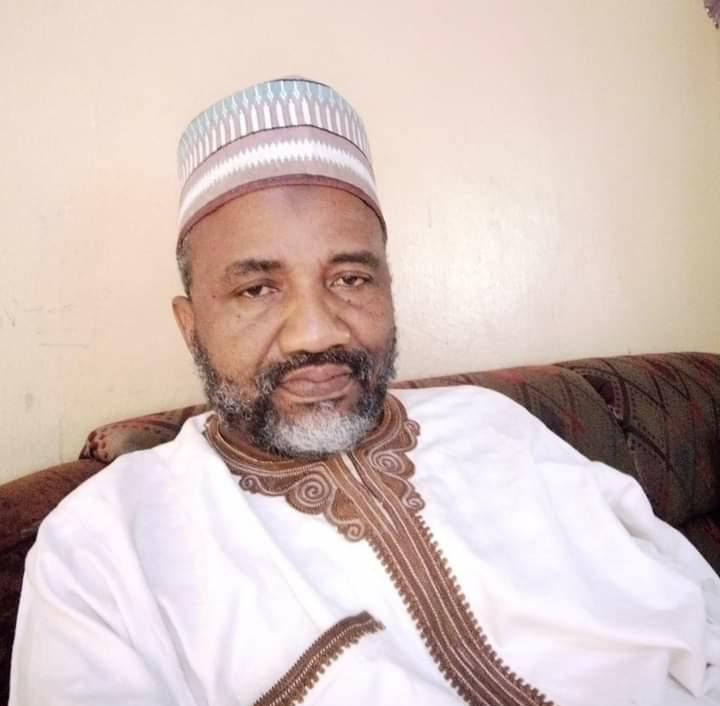
Tribute to my uncle, Sheikh Hamza Muazu (1982–2022)

By Omar Muaz

In the name of Allah, the Beneficent, the Merciful. All praise is due to Allah, the Lord of the world, the Creator of death and life, the Everliving, the Self-subsisting by whom all subsist; slumber doesn’t overtake Him nor sleep; whatever in the heavens and world is His. “Every soul will taste death, and you will only be given your [full] compensation on the day of resurrection. So he who is drawn away from the fire and admitted to Paradise has attained [his desire]. And what is the life of this world except the enjoyment of delusion” —Qur’an

My uncle, Hamza Muaz, is the best definition of detachment as far as the world around me is concerned. “Had it not been our culture to wear babban riga and to put on caps, I would spend my life wearing jalabiya—a white ankle-length shirt, with long sleeves, that buttoned up to the neck.” he once said that to us while advising us to renounce luxuries and worldly pleasure for the one in the afterlife.

I have seen humble people on this earth and have read biographies of thousands of humble people, but what kind of my uncle’s humbleness? That? I have never seen nor have I ever read of its ditto. I have lost words to highlight his positive features. But I know, and yes, they’re confirmed by many people who know who he was, that he was religious, trustworthy, loyal, devotional and very determined.

Hamza Muaz was born in 1982 in a small village of Hawul Local Government Area of Borno state. He attended The Islamic University of al-Madinah al-Munawarah, where he held a Bachelor’s degree in Hadith and Islamic Studies. It’s still fresh in my mind the reading moment we had together. Around 2019, when I visited him in Abuja, I remember he taught me Hadith throughout the days. So, I can say without a number that his hobby was “teaching.”

While battling the throes of his illness, “Only in this world,” he paused, and I realized he needed water “…learn, learn because it’s only through that, you could earn light for the hereafter.” So he told me after taking the water. He barely talked in his sickbed, but whenever he got to, he injected into us “knowledge.”

There was a night when everyone was sleeping except him and me. He smiled and reminded me of two prophetic traditions on sickness. “No fatigue, nor disease, nor sorrow, nor sadness, nor hurt, nor distress befalls a Muslim, even if it were the prick he receives from a thorn, but that Allah expiates some of his sins for that,” I said indeed. He said, “I am nothing compared to our beloved prophet, Muhammad (PBUH)…” while shedding tears, “Aisha (R) reported that she had never seen anybody suffering so much from sickness as Allah’s Messenger (PBUH).”

“This is true!” I interrupted. “Therefore, If Allah wants to do good to somebody, He afflicts him with trials.” He concluded with this Hadith and dozed off. May his soul rest in peace. All he did in the hospital besides taking his medication was reciting Qur’an and teaching people.

Rest in peace, Abban Hammad. He was married with a son, Muaz, named after our grandfather and nicknamed “HAMMAD”, which has overtones of being praiseful. Treasure? I know he left behind over 1000 books (may the books be beneficial to the world). That was him. O Allah, forgive my uncle, Hamza Muazu, and elevate his station among those who are guided. Send him along the path of those who came before, and forgive him and us, O Lord of the worlds. Enlarge for him his grave and shed light upon him in it.

Omar Muaz sent this article via muazuumar45@gmail.com.

ISLAM: Disagreement is not a blessing but a scourge

By Abdullah Yahaya

In contrast to the popular belief that the disagreements which existed between the famous scholars of the early post-Qur’anic time [The leaders of the four schools of thoughts] and still exist between the contemporary Islamic scholars—that the variation in some of their juristic rulings is a blessing—is an antithesis to the correct teaching and lessons of the Qur’an and the authentic sayings of the Prophet [PBUH]. In no single incidence would you find either in the Qur’an or authentic hadith in which disagreement is encouraged. However, there are a plethora of divine injunctions where Allah and His Messenger [PBUH] frowned on disagreements or conflicts. 

In Suratul Anfal 7/46, Allah (SWT) says, “And you should obey Allah and his apostle, and do not dissent, you will crumble, and your strengths will fade away”. Another indication of the negative effects of disagreement happened when the Prophet Muhammad [PBUH] was alive. Two people among his companions engaged in a fierce dispute inside the Prophet’s mosque during the dawn prayer [Subh], and it happened that at that night the Prophet had a dream about the actual date in which the Night of Decree “Lailatul Qadr” will fall on. Upon reaching the mosque, the Prophet saw the two disputants and quickly went and reconciled them. As a result of that delay caused by their disagreement, the Prophet forgot about the contents of his dream and the Ummah is left until today in doubts of the actual date of Lailatul Qadr. The instances are too numerous to list out. Al-Subqee said, “Kindness and compassion require that we should eschew disagreement.”

The above and many other Quranic and sunnatic injunctions and the sayings of our guided forbears [Athaar] are combined efforts meant to stifle the adverse effects of disagreement, which include fragmentation of the Ummah, disunity, loss of strength and self-esteem among the Ummah and so on. The holy Qur’an has more of these examples.

Surat Daha, 20/83-97, explicitly relays to us what happened to the Israelites “Banu Israel” when Prophet Musa (AS) went to discuss with Allah, after which Musa Thamiri manufactured a calf from the clay embellished with gold and said it was their god and that they should worship it. Prophet Haroun (AS), whom he left as his representative, tried to call them to order to no avail. When Musa AS returned and met them in that situation, he reprimanded his brother and asked why he did allow them to commit polytheism. He said, “Oh my brother, seize me neither on my beard nor on my head, for I was afraid that you would say I cause a rift between Banu Israel just because they refuse to listen to me”, replied Prophet Haroun (AS).

With the above evidence, one can deduce that Islamic preachers ought to be extra heedful in airing to the public what will cause rift and disagreement between the Muslim community, especially on issues whose knowledge or ignorance will not harm someone’s belief. Moreover, disagreement in juristic rulings between our scholars is not a blessing but a scourge. This is considering the number of fractionation and fragmentation caused within the Muslim community then and now.

Abdullah Yahaya can be reached via abufudaily88@gmail.com.

JIBWIS quizzes Dr Jalo Jalingo over comments on Prophet’s parents

By Muhammad Sabiu

The national leadership of the Jama’atu Izalatil Bid’a wa Iqamatis Sunnah (JIBWIS) alias Izala, headed by Sheikh Abdullahi Bala Lau, has in a meeting held in Abuja on Wednesday asked its controversial national secretary, Dr Ibrahim Jalo Jalingo, to desist from discussing and publicising controversial issues.


This is coming amidst the criticism and bashing Dr Jalo receives, especially on social media, over his position that the parents of Prophet Muhammad (SAW) “would not be in Heaven.”


The Islamic organisation’s statement released through its Facebook page said the meeting was held by its top-ranking executive members. It has resolved to make it necessary for any member cleric to have a knowledge-driven discussion before publicising any controversial topic.


It also asked all its social media handlers to pull down any content that promotes the controversial thought of the secretary, adding that what is now required is prayer looking at the security challenges bedevilling the country. 


Many people describe Dr Jalo’s position as balderdash and disrespectful to the person of the Prophet (SAW).

Prophetic treaty as blueprint for peace in Nigeria and beyond

By Abdullahi Adamu Faggo

There is nothing which, indisputably, guarantees peace and harmonious existence than justice. Justice alone can end banditry, kidnappings, communal clashes and ethno-religious crises, amongst others. A lack of it espouses the notion of reprisals, retaliation, and jungle justice within the affected areas. It allows marauding hoodlums, bandits and thugs to unleash an onslaught on equanimous, meek and defenceless communities. 

Islam promotes justice, provides practical solutions to lingering and inexorable brawls in different communities. Therefore, I expect that any perspicacious and sagacious leader/follower will accept that justice is the only mechanism that protects the inalienable right of everyone, guards against the plundering of properties by brigands and prevents the inviolable souls from being attacked. 

Further, most incessant attacks on various communities continue to linger because the culprits, accomplices, and syndicates usually go scot-free. For example, the recent attack on innocent Muslim commuters in Rukuba, Jos, where suspected disgruntled Christian militias killed about 28 of them in cold blood, unchallenged. The incident has portrayed the level of lawlessness and injustice in our society. Likewise, atrocities committed by some Muslim/Christian herders on both Christian and Muslim communities are also part of the examples of dominant and pervasive injustice by our leaders for deliberately refusing to bring the malefactors to book for justice to prevail.

In contrast, the system of justice, which was both advocated by Jesus and Muhammad (may Allah be pleased with them both), ensures proper retribution for the wronged, the subjugated, the oppressed and defenceless citizens. Exultantly, this system was the one that Prophet Muhammad (SAW) used to end the sustained hostility and animosity between Al-Aws and Al-Kazraz, who happened to be the archenemies of one another.

Thus, when Prophet (SAW) migrated to Madina, he signed a treaty between them (Aws and Kazraj), Muhajirun (immigrants) and even non-Muslim allies. This had provided lasting solutions that brought about peace and harmony between them. Below is part of the treaty they gave credence to in the presence of SAW, as contained in Ar-Rahiq Al-Maktoum:

1. They should resist and stand against injustice or seek to appropriate something unfairly, encroaches upon or causes mischief among believers;
2. They all should stand against one who does so even if he were one of their offspring;
3. If one kills a believer intentionally and there is evidence for that, he will be retaliated in like, unless the family of the slain person pardons him;
4. All believers are to take a stand against him;
5. A believer is not allowed to advocate or give shelter to an initiator of evil or troublemaker. 

If our society today will adhere to these teachings, extrajudicial killings will indubitably come to a standstill.

Abdullahi Adamu Faggo is an academic staff at the Bauchi State University, Gadau. He can be reached via abdullahiadamufaggo@gmail.com.

Sheikh Zarbaan Al-Gamidi is dead

By Ibrahim Siraj

A renowned Islamic scholar and Chief Imam of the historic Qubaa Mosque in Medina, Sheikh Muhammad bin Abdallah Zarbaan Al-Gamidi has been reported dead. He died Friday, according to sources familiar with the development.

Sheikh Zarbaan was a teacher, mentor and father figure to all Nigerian graduates of the prestigious Islamic University of Medina. He was instrumental in the admission of hundreds of Nigerian students into the prestigious University through the Daura intensive training he coordinated for several years since the inception of the programme in Nigeria.

Prominent among Sheikh Zarbaan’s students are the late Sheikh Ja’afar Mahmud Adam, Drs Muhammad Rabi’u Umar, Bashir Aliyu Umar, Abubakar Muhammad Sani, Ibrahim Ilyas, Ibrahim Jalo Jalingo, Isa Suleiman, Muslim Ibrahim, Sheikh Abdulwahab Abdullah, Professors Mansur Sokoto and Abdallah Saleh Pakistan, to mention but a few.

He will be remembered for his special attachment to his Nigerian students, whom he mentored up to his final moment on earth. Every year, he would call some of them during the annual Ramadan Tafsir to pass a message of goodwill and encouragement.

He recently donated his entire book collection for the benefit of Nigerian scholars. The books were received through Dr Abubakar Muhammad Sani and will be kept in a library in Dutse for access by the public.

He was a friend to many prominent Nigerian scholars and philanthropists such as late Sheikh Aminuddeen Abubakar, late Halifa Sheikh Isyaku Rabiu and Alhaji Aminu Dantata. May Allah have mercy on him and make Aljanna his final abode, amin.

Sahara under the guise of Afenifere

By Sulaiman Maijama’a


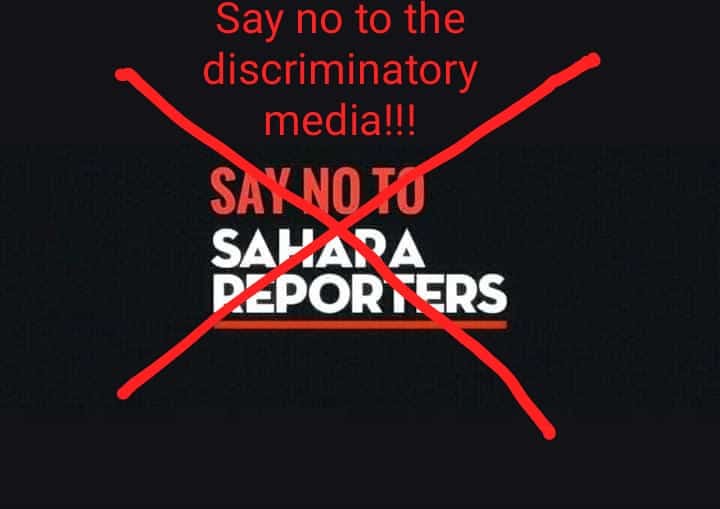
Suppose there is anything more flabbergasted, more blasphemous than what Abduljabbar Kabara had committed against our noble prophet (SAW). In that case, it is the report published by Sahara Reporters comparing the “Hijrah” of our most respected prophet to the evacuation of this Yoruba secessionist leader, whom I will not dignify by calling his name. Though attributed to Afenifere (Yoruba socio-cultural organisation), truth be told, Sahara Reporters is just disguising under the group to have unleashed their long-buried malice against Islam, which they are known for.


The contentious report pricked the sensitivity and sensibility of every Muslim faithful. If a fervent believer of Islam were to be given a choice between an assault on their prophet and assault on their parents, they would, before a blink of an eye, opt for the latter because of the enormity of love we have for him.


Don’t be deceived by the fact that the media outlet removed the report, owing to the heavy pressure put on them. Taking it down alone is not enough to comfort Muslim Ummah to spare them. Suppose Abduljabbar, one of the leading Islamic clerics from the North, could be dragged to prison by the same Muslim Northers for blasphemy and sacrilege against the prophet. How, then, could any group that has people with a proper cognitive ability not take stock of their utterances? I assumed if the Abdujabbar saga did not symbolise the deep reverence Muslim Ummah have for the prophet, nothing could do.


Afenifere instead of this your illogical comparison, since Nnamdi Kanu, another secessionist group leader, was recently apprehended from a foreign street and arraigned in a courtroom and later remanded just like how Sunday Igboho was arrested in Benin City, charged and jailed, it would have made sense if you had compared Igboho and Kanu, since they are like cousins, having the same mission of tearing Nigeria apart. Moreover, both have foreign passports; if things get out of hand, they can flee the country, leaving innocent people in a disastrous situation just like they did now.


But since you have misused simile, I still find it difficult to relate the point of comparison. The most acceptable annals of history in the world attest to the fact that prophet Muhammad (SAW) brought peace and harmony among the adherents of different religions. He is the most tolerant and Noble person ever lived on earth who preached to his companions to jettison racial prejudice. So is Sunday preaching unity or disunity?


Afenifere, in your statement, you made it clear that “there is nothing wrong with Yoruba Nation activist, Sunday Adeyemo, seeking asylum in another country where his safety can be guaranteed.” 


Prophet Muhammad (SAW) left Makkah mainly because he was denied “right to religion”, and when departing Makkah for Madinah, he went along with all his companions. This indicates the concern he had for his people, meaning the safety of his people is of equal importance as his safety. It also signifies the mission was out of honesty. Why Sunday fled Nigeria alone?   If his security can be guaranteed in another country, what is the fate of the people he left in Nigeria, whom he used and who are at the forefront of the clamour for a sovereign nation?


Maijama’a writes from the Faculty of Communication, Bayero University, Kano. He can be reached via: sulaimanmaija@gmail.com.

Afenifere Article: Sahara Reporters’ editors are to blame

By Salisu Uba Kofar-Wambai

Though conflicts, for the most part, originate in the social world beyond the media, it is through the different media of journalism and circulation of news that many of them become publicly known and, often, pursued. Moreover, it is through many media lenses that the conflicts are variously defined, framed and visualized. Hence, media must always be socially responsible in its reportage not to stir up violence through its operations.

Journalism is a serious business in a multi-ethnic country like Nigeria, a country with over 400 ethnic groups, two major religious groups belonging to several sects, among other diversities. The media, especially the online newspapers, which serve as a watchdog and mirror of the society, cannot afford to be biased, lopsided and insensitive in the way they report such ethno-religious issues in the country.

Nigeria is a unique country on earth. You can hardly get a country that’s almost equally divided along two religious lines as Nigeria. Unfortunately, many studies conducted have shown the dirty hands of media in fanning the embers of hatred, animosity and conflicts they ought to have resolved among the followers of the two faiths.

The demonization of Fulani, the reportage of Sharia issues in the early 2000s, Boko Haram coverage, Niger Delta militancy reports, recent secessionists uprisings were all given oxygen by the media to survive, which seriously poses a threat to the unity and integration of the country.

However, irresponsible newspapers and so-called professionals working in the industry are to blame. The recent derogatory reportage of the unguarded utterances of the Afenifere, a Yoruba social-cultural organization, by Sahara Reporters is a textbook example of media complicity in causing violence in the country.

It looks like the Sahara Reporters had underrated and underestimated the profession’s ethics regarding such a sensitive and slippery issue. The editors haven’t done their onus professionally. Editing is a process of preparing language, images, or sound for presentation through correction, condensation, organization and other modifications. So, given the complex configuration of Nigerian society, an editor ought to be versatile and very knowledgeable of religious sensitivities. Newsroom desks must be given their cause to do their works. For instance, should the editor-in-chief be busy, the subeditors in the religious desk should handle it.

An editor is a gatekeeper who controls and sifts what will be disseminated to the enormous and varied readers, who have emanated from different social backgrounds, religious beliefs, and ethnic nuances. Therefore, an editor in a Nigerian newspaper ought to be someone with deep comparative religious knowledge who knows the sensitivities of every belief and faith. 

In a heterogeneous society like Nigeria, an editor must be Mr Know-All to escape falling into a ditch and trap of such violence invocation.

He should be aware that If Christians can compare every dimwit, imbecile character with Jesus (PBUH), Muslims don’t do it this way. In Islam, Prophet Muhammad (SAW) is sacrosanct, inviolate. Thus, no one should compare the Prophet with any being, let alone Sunday Igboho, a run-away character the Nigerian government sees as a criminal and murderer.

I thought these so-called editors would take a lesson from what Isioma Daniel did, who tried to align Prophet Muhammad SAW with the dirty beauty pageants in the early 2000s. It turned out to be the worst professional blunder by Thisday newspapers. That single act that could be corrected by almighty editing led to gigantic violence that claimed more than 200 innocent souls in Kaduna.

 I also wonder that Afenifere apologists have more Muslims than Christians in their membership; they ought to know this. Therefore, that’s why many were suspecting that what transpired was deliberately done to instigate war.

Sahara Reporters is the only newspaper that reported such an incident as such. Most media outfits have abandoned the reports for their editors knew the consequences. They look at the news items and the society at large.

No matter what, the professional interest must not be mortgaged to religious and ethnic ties. We must allow competence and expertise to overshadow those personal interests.

Salisu Uba Kofar-Wambai is a PhD student at the Department of Mass Communication, Bayero University, Kano. He can be reached via salisunews@gmail.com.