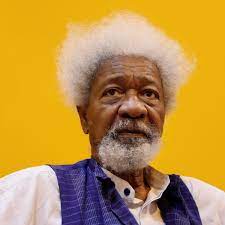
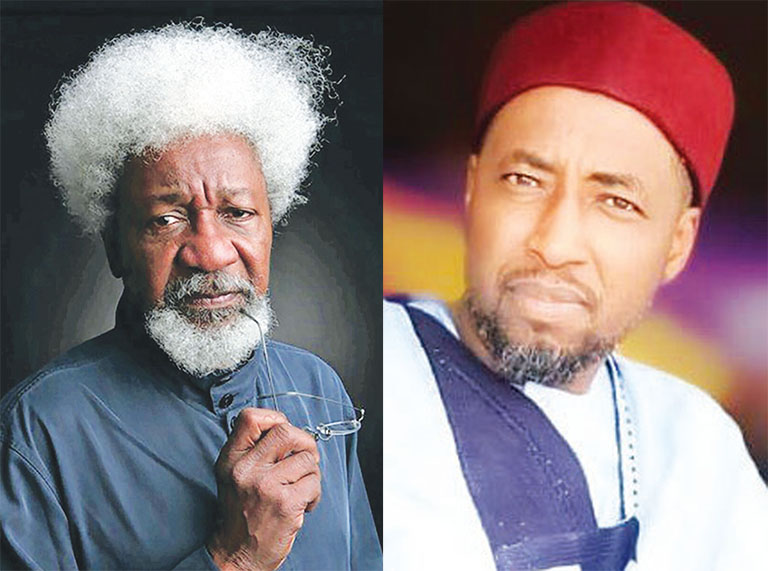
Professor Wole Soyinka

Why I accepted national theatre renaming—Soyinka

By Sabiu Abdullahi

Nobel Prize winner, Professor Wole Soyinka, has revealed the reason behind his decision to accept the renaming of the National Arts Theatre in Lagos after him.

Soyinka, who spoke on Thursday during the reopening of the Wole Soyinka Centre for Culture and Creative Arts, said he once believed the landmark could never be restored.

He explained that he had considered the facility beyond redemption until the Bankers’ Committee carried out a comprehensive renovation.

The literary icon admitted that he agreed to the honour reluctantly, stressing that he had always criticised leaders who attached their names to public monuments.

“I have to stand up in public and watch my name being put up as yet another appropriator. It just didn’t seem very well for me,” Soyinka said.

He further noted that he was ready to “eat his words” if the remarkable transformation of the National Theatre was the cost of having it renamed in his honour.

The Proliferation of National ‘Honours’ 

By Amir Abdulazeez

If we can recall, on 7th October, 2015, a 19-year-old student, Hassan Mohammed Damagum, sacrificed himself to save others from a suicide bomber who attempted to attack a mosque during the Subh (Dawn) prayer at Buhari Housing Estate in Yobe State. Hassan had sensed that the individual standing next to him was a suicide bomber trying to kill people. The boy was said to have confronted the bomber, who blew both of them off. 

Again, on 25th January 2017, Yakubu Fannami, another student from Borno State who was just in SS1, died a hero while preventing a suicide bomber from entering the Darrusalam Science and Islamic Academy in Maiduguri. Fannami tackled the female suicide bomber, preventing her from reaching the mosque and detonating her explosives, thus saving the lives of many worshippers.  

To the best of my research, which may be inadequate, neither of the two boys was publicly given significant national recognition. Nigeria’s story is replete with the neglect of brave and heroic citizens who had sacrificed a lot and even laid down their lives to save others. 

Since 1999, Nigeria has always chosen to reward and honour many lazy elites who contributed virtually nothing but became huge beneficiaries of government patronage and corruption. Every President has made it a duty to bestow national honours on his chosen elites as one would do with his personal property.

In line with the routine tradition of his predecessors, President Bola Tinubu used the June 12, 2025, Democracy Day to confer over 100 national honours, some posthumously. As expected, many awardees are members of his administration and personalities very close to him. A section of the awardees list portrays a belated compensation package to a gang of Abacha victims, who actually need justice more than honour.

While people like Prof. Humphrey Nwosu (CON), Prof. Wole Soyinka (GCON), Alhaji Balarabe Musa (CFR), Bishop Matthew Hassan Kukah (CON) and Femi Falana, SAN (CON) truly deserve their awards, it would have been wiser and more balanced to include people like Late Bashir Tofa (Abiola’s NRC opponent), Late Abubakar Rimi and Magaji Abdullahi (two important SDP figures who miraculously delivered Kano, Tofa’s State, to Abiola) and, of course, M.D. Yusufu, the presidential candidate of MDJ, who was Abacha’s sole challenger in his bid to undemocratically transform into a civilian president, among others. Perhaps, they would be remembered by this or another President in the next set of awards, for at this rate, every political household name, dead or alive, may soon have a national honour in Nigeria by 2030.

What exactly is this national honour, and who deserves it? The honouring system was originally envisioned as a prestigious recognition of exceptional service to the nation. It was formally established by the National Honours Act No. 5 of 1964 to inspire patriotism, reward merit, and foster national unity. 

The structure of national honours, divided into two orders (Order of the Federal Republic and Order of the Niger) and eight ranks (GCFR, GCON, CFR, CON, OFR, OON, MFR, MON), was designed to reflect degrees of national impact. However, the system’s proliferation and indiscriminate distribution have undermined these distinctions, often placing true heroes, statesmen and national icons equal or below some presidential sycophants, political loyalists and officeholders, regardless of their performance or public standing. 

The early years of Nigeria’s national honours system reflected its original purpose. Recipients such as Dr. Nnamdi Azikiwe, Sir Ahmadu Bello, Chief Obafemi Awolowo and Mrs. Funmilayo Ransome-Kuti were honoured for verifiable and transformative contributions. However, over time, the politicisation and personalisation of the awards diminished their integrity, giving way to an annual ritual often characterised by hundreds of questionable awardees whose contributions to the nation are neither tangible nor verifiable. In the past 15 years, things have gotten worse as the selection system itself has been incompetently reduced to a mechanism marred by political patronage, duplication and credibility crises. 

Today, the integrity of this noble initiative is in serious jeopardy, with widespread scepticism about its selection process and relevance. Ideally, recipients should be individuals whose lives exemplify ethical integrity, measurable public impact and selfless service. However, the current trend favours tenure over achievement and proximity to power over merit. Politicians under corruption investigation, individuals with no tangible contributions and business moguls with opaque wealth have all made their way into the honours roll. Prominent Nigerians have rejected national honours in protest. Chinua Achebe, Gani Fawehinmi and Wole Soyinka famously turned down honours, citing corruption, misgovernance and the lack of transparency in the process. Their principled refusals sent powerful messages about the need to restore the system’s credibility. As Achebe aptly put it, ‘a government that fails its people cannot in good conscience bestow honours’.

Numerous scandals have exposed the flaws of the system. In 2022, the conferment of awards to serving ministers during a prolonged ASUU strike and the inclusion of people accused of corruption represented a new low. Even more embarrassing were administrative blunders such as conferring posthumous awards to please certain interests and duplicating awards to the same person under different titles. Meanwhile, countless unsung heroes remain ignored. Rural teachers shaping future generations, healthcare workers battling epidemics without protection and community leaders mediating conflicts receive no recognition. 

The establishment has reluctantly recognised a few non-elitist Nigerians in the past. The belated honour to Dr. Ameyo Stella Adadevoh (posthumous OON, 2022), whose sacrifice averted an Ebola catastrophe in August 2014, only came after sustained public pressure for about eight years. In August 2018, then President Muhammadu Buhari and the United States Embassy honoured the Bauchi State-born 83-year-old Malam Abubakar Abdullahi, a Muslim Imam in a village in Plateau State. He sheltered and fed 300 Christians for five days to prevent them from being killed in an uprising. The old man ran from one corner to the other, stopping youths who wanted to enter the mosque to get hold of his guests. Eventually, they gave up after realising that the only way to execute their evil plan was to kill the old man. That was how he saved their lives. I am not sure whether the man was given any national honour beyond that presidential acknowledgement.

If we are to continue like this, I will suggest the renaming of the awards to “Special Presidential Honours”.  The National Honours Act, last revised in 2004, offers the President near-total discretion, with little room for public input or institutional checks. With time, it has been turned into a presidential farewell affair as outgoing Presidents routinely populate honours lists upon leaving office to pay back loyalists. Recent attempts at reform, such as the proposed National Honours and Merit Award Commission, represent a step forward but are insufficient on their own. Far-reaching legislative and administrative reforms are needed to restore the honours’ integrity. This includes public nominations, independent vetting panels, open selection criteria and mandatory justification of award decisions. 

A critical reform must also introduce public objections and transparency mechanisms, such as publishing nominee shortlists and designing revocation protocols. Honours should be rescinded from individuals found guilty of crimes or misconduct post-conferment. The system should no longer shield disgraced figures or treat national honours as irrevocable symbols of status, regardless of later behaviour. Furthermore, awards should be capped annually to preserve their exclusivity. Honouring fewer, more deserving Nigerians will increase the prestige of the titles and prevent undeserving awards. Most importantly, the honours system must reconnect with the grassroots. By recognising farmers, nurses, teachers, inventors and humanitarian workers, Nigeria can turn the system into a true tool of national inspiration. 

All these are, by the way, because ordinary Nigerians no longer care about leaders honouring themselves and their cronies. No impoverished Nigerian has the luxury of waiting to be honoured by someone whose honour is questionable himself. All Nigerians are asking for is guaranteed security to farm, stable power supply to produce, quality and affordable education to learn, reliable healthcare to survive and a stable economy to thrive. When they can provide this, they can go on naming and renaming national monuments after their wives and continue with the vicious cycle of self-glorification in the name of national honours.

Twitter/X: @AmirAbdulazeez 

Soyinka distances self from any religion

By Muhammadu Sabiu

The Nobel Laureate, Wole Soyinka, has stated that he does not need a religion and does not worship any gods, stating that he does not practise any religion.

At a public presentation of his two-volume collection of essays on Sunday, Soyinka made this revelation and said he saw nothing wrong with embracing mythology as an integral part of his creative process.

As a mythologist, he added, people have the right to fabricate stories about themselves based on their personal experiences.

The professor was quoted as saying, “Do I really need one (religion)? I have never felt I needed one. I am a mythologist.

“But religion? No, I don’t worship any deity. But I consider deities as creatively real and therefore my companions in my journey in both the real world and the imaginative world.”

Wole Soyinka, Ibrahim Maqary and Western Neo-Paganism

By Ibrahim Ado-Kurawa

Wole Soyinka is a Nobel Laureate who won the highest prize for his work in Drama, where he excelled. But as everyone knows, no one who opposes Western ideas will win that prize. In fact, those who oppose their indigenous worldviews are more likely to win it. A good example is Neguib Mahfouz, the Egyptian anti-Islamic intellectual. Ibrahim Maqary, on the other hand, is an Islamic scholar who became prominent at a very young age because of his proficiency and erudition. They are from divergent backgrounds. Soyinka was nurtured in the neo-pagan Western intellectual tradition. Maqary was nurtured in the Muslim intellectual tradition of Sudanic Africa.

The neo-pagan Western Civilization, sometimes referred to as Western Christian Civilization, considers itself as the superior civilization, and all others must judge their practices according to its criteria. The West, since Enlightenment, has continuously incorporated pagan traditions. Hence Roberts’s conclusion that “Europe once coterminous with Christendom is now post Christian and neo-pagan” (Roberts 1996: 583).

The Islamic and Sinic Worlds have resisted Western intellectual domination. Therefore Ibrahim Maqary and other Muslim scholars always speak their minds damning the irritation of Western neo-pagan inspired scholars. Soyinka will insist that he is independent, but this is not true. His ideas of freedom are not original but primarily influenced by Western Neo-Paganism. He is not even a pan Africanist compared to Walter Rodney, Ngugi and Franz Fanon, who resisted colonialism. He was only engaged in sophistry, which is a form of intellectual cowardice.

Yes, there are elements of African traditionalism in Soyinka’s ideas, but they are those acceptable to the West. They include his anti-Islamic and anti-Muslim postures. He supports animism in Muslim majority Yoruba land. Hence despite his liberal pretensions, he never opposed the killings of innocent Hausa Muslims in Yoruba land by Sunday Igboho and other Oduduwa terrorists as much as he opposed the extra-judicial killing of Deborah Samuel in Sokoto.

Like his Western patrons, Wole Soyinka never opposes the killings of innocent Muslims. Hundreds of Hausa Muslims and non-Muslim northerners have been killed by IPOB and unknown gunmen in the South East. Yet, Wole Soyinka and Christian Bishops never protested loudly as they did for the extra-judicial killing of Deborah. Their conception of human beings is rooted in the Western intellectual tradition where the other has no value.

Why has the Neo-Pagan West become so inhuman even though Man has been the pivot of its philosophy since Renaissance? This could only be understood within the context of European history and the abolition of Christianity, and the entrenchment of secularism. Jesus (peace be upon him) did not come to destroy the Law of Moses but to confirm it and give glad tidings of the coming of Ahmad (SAW), the last Prophet. Therefore his followers remained Jews until the conversion of Paul. And eventually, Jewish Christians under the leadership of James, who upheld the Law, were obliterated (Wilson 1984: 126-7). This paved the way for emphasizing only the teachings of Jesus relating to personal piety, and people were encouraged to regard Caesar as supreme in worldly matters (Mark 7: 17).

Subsequently, Christianity became the Roman Empire’s official religion, and the clergy wielded power and influenced decisions. During the theocratic phase, in some areas, the clergy ruled, and the Pope, as the head of the Christendom, crowned the Kings and Emperors. The Church abused this privilege because Pauline Christianity was not equipped for this purpose. This necessitated a Reformation led by the Protestant fathers. In most parts of Europe, the clergy were made to revert to the position Paul intended for them. Many scholars have shown how Protestant ethics led to capitalism (Raghuram 1999: 236). The Catholic areas of Europe also followed these steps, and the influence of religion in public life was gradually reduced. Europeans believe that they were backwards in the Dark Ages because of the influence of the clergy, which caused the “Christian disease” (Lewis 2002).

With the curing of the “Christian disease,” religion became marginalized in Europe, and there was a shift from God as the pivot of philosophy to Man (Aminrazavi 1996: 384). This was the Enlightenment philosophy. According to Kant, one of the greatest Enlightenment philosophers, this current facilitated the emergence of man from his self imposed infancy and inability to use his reason without the guidance of another (Inwood 1995: 236-237). The Enlightenment philosophy preached equality for citizens of the nation but encouraged brutality and even genocide against others.

For example, the French revolution, which was a product of Enlightenment that gave birth to the republic based on “liberty, equality and fraternity”, but it restored slavery after it jailed Toussant L’Ouverture, the leader of the revolt in Haiti who was inspired by the French revolution (Time, December 31, 1999 p. 164). This shift from God to Man led to all the atrocities committed by Westerners who came to regard themselves as superior and all others as expendable. They lost the compassion of Christianity and became Christians in name only. And they were always willing to use Christian missionaries for this agenda. As confirmed by Pope Paul VI, the apostles who were extremists were also willing to be associated with the European imperialists because they regarded all non-Christians as heathens.

The public aspect of Christianity was abolished because the clergy misused the privilege. This was why Roy made his statement: “Secularity and politics are born of a closing of Christian thought onto itself” (Roy 1994: 8). Fukuyama also observed that: “Christianity in a certain sense had to abolish itself through a secularization of its goals before liberalism could emerge” (Fukuyama 1992: 216). This made it possible for some Western Christians to hate others and commit the worst crimes in human history: colonialism and Nazism. As a result, more than fifty million people lost their lives during the Western-inspired Second World War, the worst in human history.

This Western imperialist epistemological vision has enabled Western leaders to commit the worst atrocities against humanity despite human rights pretensions. European Americans committed genocide against Native Americans and Africans to build their economy. It is universally acknowledged that Western leaders lied when they invaded Iraq, as there were no weapons of mass destruction.

They spent trillions of dollars to destroy Muslim countries: Iraq, Afghanistan, Libya and Syria, causing the worst humanitarian crisis. Since World War II, the worst conflict has been the resource war in the Democratic Republic of Congo (DRC) caused by Western companies. Over three million people have lost their lives. No one cares about these atrocities in the West, but their diplomats can talk about Deborah in Nigeria.

Wole Soyinka and some Christian leaders can show their outrage against the extra-judicial killing of Deborah but not the massacre of innocent Muslims in the South East precisely because their worldview is rooted in the Western intellectual tradition. Muslim lives are nothing to people like Wole Soyinka. Hence, he was one of those who signed the petition that the murderers of Tafawa Balewa, Sardauna and military officers of northern origin should be released because the lives of Muslim and non-Muslim northerners eliminated do not matter. And now they want the mob that killed Deborah to be prosecuted simply because she symbolizes the violation of the sanctity of the Prophet (peace and blessings be upon him), not because of any humanitarian consideration since they are selective.

Wole Soyinka has no respect for the Prophet of Islam (peace and blessings be upon him). There is no problem with this since he is an acclaimed unbeliever, but he should show understanding of the Muslim position as an intellectual. Ibrahim Maqary, on the other hand, as a Muslim scholar, considers the position of the Prophet of Islam as more important than the world and what it contains. Therefore, just as Western imperialists can destroy countries to satisfy their hedonistic lives, Muslims are willing to sacrifice their lives for the Prophet (peace and blessings be upon).

Muslims have no history of genocide against non-Muslims or cruel destruction of countries as in the case of Iraq, Libya, Afghanistan and Syria or evil obliteration of communities like Tafawa Balewa in Nigeria.

Muslims, unlike Western Christians, have not abolished Islam; therefore, they cannot tolerate infringement on the sanctity of the Prophet. This is the worldview of the Muslims, and why should anyone query it? Must Muslims adopt a Western neo-pagan worldview? This can never happen. No Muslim scholar has ever called for the extra-judicial killing of anyone who violates the sanctity of the Prophet. It is the responsibility of the state to take action against those who commit this crime.

There is no doubt Wole Soyinka will continue his pretentiousness that Ibrahim Maqary should be sacked from the position of Imam of the National Mosque. This is one of the reasons why he was awarded the Nobel Prize – to promote Western neo-paganism against Islam. Ibrahim Maqary, on the other hand, will continue to attract the respect of the Muslims for protecting the sanctity of the Prophet (peace and blessings be upon him). Muslim scholars will also continue to maintain their position that Prophet must not be insulted and, at the same time, no mob action or human rights violations of innocent citizens.

Ibrahim Ado-Kurawa is the Editor of Nigeria Year Book and Who is Who. He can be reached via ibrahimado@hotmail.com.

Sokoto Blasphemy: Soyinka demands sack of National Mosque’s Imam

By Muhammad Sabiu

Professor Wole Soyinka, a Nobel laureate, has demanded that the Imam of the National Mosque, Professor Ibrahim Maqari, be fired for his remarks on Deborah Samuel, a 200-level student at Sokoto’s Shehu Shagari College of Education, who was lynched for blaspheming Prophet Muhammad (SAW).

Soyinka made this appeal in Abuja, Saturday, during the one-year commemoration of the late former Chief of Army Staff, Lt.-Gen. Ibrahim Attahiru, and the launch of Niran Adedokun’s biography of the late general.

Prof Soyinka claimed that the Islamic preacher directed his followers to take the law into their own hands.

Recall that the Imam of the National mosque Professor Maqari spoke strongly against the insulting comment made by the late college student, stressing that making such a comment was taboo.

The Nobel Laureate condemned religious lynching and demanded that the Imam be removed from office as an apostate of humanity’s credo

He was quoted as saying, “It is no longer sufficient for all to declaim that Islam is this and that, that the Sharia is thus and thus, that Prophet Mohammed set this or that example and made this or that humanistic pronouncement.

“We have gone beyond theocratic rhetoric that merely pays lip service to civilized norms. Let all pietistic denunciations be backed by affirmative action.”Prophet Muhammad (SAW) is the most beloved person to the

Sokoto blasphemy: Soyinka demands sack of Abuja National Mosque imam

Prof. Wole Soyinka, a Nobel laureate, has demanded that the Imam of the National Mosque, Professor Ibrahim Maqari, be fired for his remarks on Deborah Samuel, a 200-level student at Sokoto’s Shehu Shagari College of Education, who was lynched for blaspheming Prophet Muhammad (SAW).

Recall that the imam spoke strongly against the insulting comment made by the Shehu Shagari student, stressing that making such a comment was taboo.

Mr. Soyinka claimed that the Islamic preacher directed his followers to take the law into their own hands.

On Saturday, he spoke in Abuja during the one-year commemoration of the late former Chief of Army Staff, Lt.-Gen. Ibrahim Attahiru, and the launch of Niran Adedokun’s biography of Attahiru.

The Nobel Laureate condemned religious lynching and demanded that Professor Maqari be removed from office as an apostate of humanity’s credo.

He was quoted as saying, “It is no longer sufficient for all to declaim that Islam is this and that, that the Sharia is thus and thus, that Prophet Mohammed set this or that example and made this or that humanistic pronouncement.

“We have gone beyond theocratic rhetoric that merely pays lip service to civilized norms. Let all pietistic denunciations be backed by affirmative action.”

Prophet Muhammad (SAW) is the most beloved person to the Muslim faithful, who have the view that on no account should anybody make a derogatory or disrespectful remark against him.