Professor Abdussamad Jibia

Goodbye, Muhammadu Buhari, I love you

By Prof. Abdussamad Umar Jibia

“Fellow countrymen and women. I, Brigadier Sani Abacha of the Nigerian Army, address you this morning on behalf of the Nigerian armed forces. You are all living witnesses to the grave economic predicament….”

That was on the 31st of December 1983. I was a Form Five student at the Government Secondary Technical School,Mashi. But the school was on its first-term vacation. So, I was at home. I was sitting with my father that early morning when someone came in to announce that the Army had overthrown President Shehu Shagari and that “rediyo baya Magana”, meaning the radio was silent. It was after my father sent for his transistor radio that I understood what the man meant. Normal radio programmes were not running. The radio station we listened to those days was mainly Radio Kaduna. Occasionally, we listened to Rima Radio, Sokoto, a Nigerien radio channel and Radio Kano. There was no Katsina State, so no Radio Katsina. No FM. No social media.

The only voice Radio Kaduna was airing was that of Brigadier Sani Abacha with the historical coup speech at regular intervals, filled with military music. Since my father did not go to Makarantar Boko, he asked me to translate, and I did that with the confidence of a final year student ready to take the WAEC examination in five months. Yeah, only WAEC. No NECO. No NABTEB. Nothing else except WAEC. 

But that was not the point. Everyone was anxious to know Shagari’s replacement. It didn’t come immediately. Later in the afternoon, a Yoruba voice (later identified as Tunde Idiagbon) spoke to announce the acceptance of the “voluntary retirement” of service chiefs. While they were still waiting, another General (Ibrahim Badamasi Babangida) spoke; he asked Nigerians to remain calm as they awaited the speech of the new Head of State and Commander-in-Chief of the armed forces. 

The speech did not come until midnight, when many of us were already asleep. The following morning, my father didn’t need me for translation as Radio Kaduna was airing the translated speech of the new Head of State, Major General Muhammadu Buhari. I saw happiness on the faces of the adults. I understood that they were happy because the new Head of State was not another Kaduna Nzegwu or an Aguiyi-Ironsi. 

That was the beginning of the Buhari story. For those of us in secondary schools, nothing changed. Our holiday ended and we went back to our boarding school. In the whole of what is now Katsina state, I knew of only one day secondary school. That was the one in Katsina town, and it was owned by the Government. All the other schools I knew were boarding schools and public schools.

We sat for the WAEC GCE O-level exam and passed with the necessary credits and distinctions. My BUK pre-degree admission came quickly, and it was after I reported and registered that I understood that Buhari had removed the feeding subsidy in tertiary institutions. So, we were on our own.

Buhari was overthrown in August 1985, and that was the beginning of his popularity. Four months after he was overthrown, Nigerian students went on a rampage to protest the IMF loan. It was followed by the unpopular SAP. The more General Babangida introduced new policies, the more popular Major General Buhari became, even though he was in prison. People were tearing Babangida’s pictures and pasting the pictures of Buhari, his prisoner, on their vehicles and business premises.

The interview Buhari gave The News magazine after his release from detention made him even more popular among the elites and demonised Babangida. In the interview, Buhari spoke about the “fifth columnist” in his administration,which was understood to be a veiled reference to Babangida.

Fast forward to 2015, as a democrat, Buhari became the President after three failed attempts. The experiences of Nigerians were bitter, depending on who was involved. To the victims of banditry like us, he was a failure. To university lecturers like me, he destroyed tertiary education. To the Shiites, he was a murderer. To the masses, he is synonymous with hardship.

However, regardless of how you see Buhari, you must admit that he was sincere. He was incorruptible and meant well for Nigeria. Buhari would have been the best president Nigeria had if only he had ensured accountability in his Government.

May Allah have mercy on the soul of Muhammadu Buhari and admit him into the highest level of Firdaus. Amin.

Professor Abdussamad Umar Jibia wrote via aujibia@gmail.com.

Alleged support of bandits: Time to investigate Bello Matawalle

By Prof. Abdussamad Umar Jibia

On the 10th of June 2020 at about 5 pm, armed bandits stormed Kadisau village of Faskari Local Government Area of Katsina State. The bandits, who came on dozens of motorcycles, opened fire on the villagers, killing anyone unable to escape alive. Fifty-seven people, including men, women and children, were killed in the operation that lasted four hours with no intervention from Federal security forces, who were said to be on the highway 5 kilometres away. The criminals later moved to nearby villages, where they killed an additional 30 people.

Ado Aleru, a well-known bandit commander in Zamfara state, led the bandits. Katsina state police command later declared Ado Aleru wanted and put a price of five million Naira on his head.

Two years later, precisely on Saturday, 16th July 2022, Nigerians were shocked to hear that the man responsible for the murder of innocent Nigerian women and children was turbaned with a traditional title in Zamfara state. 

The turbaning of Aleru was a gathering of some of the most deadly criminals responsible for acts of terror in the Northwestern and North central geopolitical zones of Nigeria. On the ground to witness the ceremony were officials of the Zamfara State Government, including the state Commissioner of internal security. In other words, the turbaning was done with the knowledge and approval of the State Government under Governor Bello Matawalle. Surprisingly, some senior police officers graced the occasion without arresting the person they declared wanted two years earlier.

Soon after the ceremony, the Katsina State Government under Aminu Bello Masari indicated its disapproval of the chieftaincy title conferred on the criminal. It maintained that it was still looking for Ado Aleru.

Years later, nothing changed. The centre remained weak, and life continued. However, the people of Zamfara did what was needed by voting Matawalle out of power in the 2023 election.

If the only atrocity the former Governor of Zamfara State committed was facilitating the conferment of a traditional title to such a deadly criminal, he deserves retirement from Nigerian politics and prosecution after office. Alas! He was rewarded with a ministerial position in the ministry that is supposed to rid Nigeria of terrorists like Ado Aleru. Only in Nigeria. Allah Ya sauwake.

Recently, additional allegations have been made about how the then-governor of Zamfara state hobnobbed with bandits and supported them with the lean resources of the Zamfara people. I am referring to a viral video of a Sokoto-based Islamic Scholar, Sheikh Murtala Bello Asada. Asada, who claimed that he had incontrovertible evidence on all his claims against the former Governor, challenged Matawalle to take him to court. 

Among the allegations Sheikh Asada made against Matawalle is his support of one Haruna Dole. According to Asada, Haruna, a famous bandit kingpin with more than 500 rifles under him, was arrested and taken to Police Headquarters Abuja. Sheikh Asada added that Bello Matawalle, as the Governor of Zamfara state, made a phone call and asked for Dole’s release. The criminal was released to one Bashar, who signed and received the bandit on behalf of Governor Matawalle. He said the document carrying Bashar’s signature and picture would still be available at the Force Headquarters.

According to Sheikh Asada, Matawalle is also a friend of the dreaded bandit Bello Turji. Asada mentioned a visit Turji paid to Zamfara State Government House when Matawalle was Governor. Turji had lunch with the governor, who served him personally. Later, the governor gave him an undisclosed amount of cash and allowed him to return to the bush to continue his criminal activities.

Another bandit kingpin who was friends with Matawalle was Chedi. According to Asada, Matawalle bought a house for Chedi in the Gidan Dutse quarters of Gusau. Uncomfortable with it, residents of Gusau protested and made a mob attack on Chedi and ended his life. Matawalle then ordered the arrest of several people. On the day of their arraignment, overwhelming crowds of Gusau people stormed the court, and Matawalle had no choice but to order the release of the people. It ended there.

In addition to all these, Sheikh Asada listed some criminals who allegedly received Hilux operational vehicles from Matawalle when he was Governor. They include Turji, Aleru and Halilu Sububu.

The allegations are weighty and sum up to one thing: the current Minister of State of Defence deployed to the North West by President Bola Ahmed Tinubu to fight banditry, an alleged friend of bandits who supports them financially.

The position of anybody interested in protecting the lives and property of Nigerians would be clear. Mr President should investigate these allegations and, if found true, prosecute the former Governor. Yes, allegations are allegations until they are investigated and found to be true. But if the Nigerian government refuses to conduct a transparent investigation, what would prevent Nigerians from believing them?

But even as investigations are carried out, Mr Matawalle has no business remaining in the Ministry of Defence. Maybe another ministry.

If the executive branch is not ready to take action, where is our National Assembly? Do they believe these allegations against a government official in charge of fighting security are not serious? Go figure!

Professor Abdussamad Umar Jibia wrote from Kano via aujibia@gmail.com.

How can President Tinubu stop the August 1 protests?

By Prof. Abdussamad Umar Jibia

It is no longer news that the Asiwaju Bola Ahmad Tinubu-led Federal Government has been inviting anyone it considers influential to help it prevail on Nigerian youth to stop the planned August 1-10 protests. The organisers of the protest, as I was told in most of the social media platforms I asked, are hunger, insecurity, and poverty, among the other things mentioned by the angry youth. 

Food sufficiency and security of lives and property are the necessary requirements for the prosperous living of any society. Every other thing follows. 

The fact about the people Tinubu has been inviting is that Nigerians consider them part of their problem. Traditional and religious rulers, politicians, etc., no longer command the respect they used to command in those days. A hungry man is angry with every other person, including a fellow hungry man. So, how can they listen to the pot-bellied traditional and religious leaders of these days? 

Certain other things have not been helpful to Tinubu. At this critical moment of his administration, he should not have allowed the controversy around Dangote Refinery to surface. Even before the removal of the oil subsidy, we were told that the Dangote refinery would provide a final solution to the problem of fuel supply, which has been part of our national life for a few decades. Just as production is set to begin properly, we are being told that Dangote refined fuel is not good after all and that the refinery has not been licenced. How do you expect Nigerians to be happy?

Since the altercation between Dangote and NNPC officials started, Nigerians have become aware of the Tinubu family’s underground oil business. I was just reading an essay in a social media group about how Oando, a Tinubu family-owned company, began to refine oil in Malta and export it to Nigeria through a series of underground moves. 

True or false, the story is now well known to every Nigerian who can afford a China-made Android phone. The onus is on the Tinubu administration to give its own side of this story. Until then, Nigerians will continue to believe that the Dangote Refinery initiative is being killed to advance the personal interests of the President. Would that not be enough to mobilise them to protest?

However, President Tinubu can avert the protests by taking certain bold steps, which would only take a patriotic leader to implement.

Tinubu, as a devout Muslim, can copy from Umar bn Abdulazeez, an Umayyad Caliph. Before Umar became the leader of the caliphate, he led a very lavish lifestyle like his wife, who was a princess of the caliphate. As soon as he assumed office, Ibn Abdulazeez put all his wealth and that of his family into the public treasury. He lived the rest of his life humbly and died honourably. Today, he is remembered as one of the best examples of leadership in human history. Is that too much for President Tinubu?

Mr President should remove every obstacle around the proper take-off of the Dangote refinery. It doesn’t matter whether or not Alhaji Aliko Dangote supported the APC candidate in the 2023 presidential election. Dangote is a Nigerian, and Nigerians stand to gain from his investment. The Federal Government should provide the refinery with Nigeria’s crude oil and make sure the price falls to the barest affordable minimum without short-changing the investor. Note that the present hardship confronting Nigerians began with the removal of subsidy and the rise of fuel pump price. 

President Tinubu should give licences to other Nigerians who want to set up refineries. As a matter of national policy, the importation of refined petroleum products must stop immediately.

The Tinubu Government should give a timeline it can stick to for the resumption of operations of its three refineries. Nigerians are aware that billions of Naira are spent every month on personnel and overhead costs for refineries that are not working. On the other hand, hardworking Nigerians are now being promised a paltry N70,000 as minimum wage.

Banditry and kidnapping must be ended to achieve food security and protect lives and property. To do so, President Tinubu should remove all bandits’ sympathisers from his government and give an ultimatum to his commanders to target and neutralise all bandits’ leaders, some of whom are now traditional rulers. Leaders of criminals are well known to the people and to the Government. It takes the will of the federal government to confront them.

Ending banditry and kidnapping would also effectively close down all IDP camps and return all campers to the farm. 

That is not all. The Federal Government should return the cost of electricity as they met it. This should be announced and effected immediately. It is noteworthy that Gencos and Discos were sold to public facilities at giveaway prices. Thus, they do not have the moral right to charge Nigerians prohibitively for their services, which, by the way, are not satisfactorily delivered.

The National Assembly can also play its own part by suspending its recess and taking a decision to end the regime of billions of Naira getting into the bank accounts of its members in the name of constituency projects and all manner of allowances. They should earn a salary equivalent to that of a senior civil servant in a Federal Ministry. 

To show their seriousness, all senators and rep members should immediately return SUVs bought for them with public funds. State commissioners are more numerous and use similar official vehicles even though they are not elected. This has been the argument of National Assembly members since 1999, but it is not valid. State commissioners have ministries under them, and you, as National leaders, are supposed to set an example for others to follow.

If this Government can do the above, and immediately too, it would have the moral authority to confront anyone who goes to the street to call for an end to bad governance. 

The constitutional conferences, restructuring, resource control, INEC, EFCC, etc., are all political and do not directly affect the common man on the street.

Professor Abdussamad Umar Jibia wrote via aujibia@gmail.com.
Miyetti Allah vigilante group as a potential disaster

By Professor Abdussamad Jibia 

Those of us from Jibia LGA of Katsina state have been mourning for the past ten days. Last week, bandits launched an attack on the Kukar Babangida community of Jibia LGA. The infamous guests had visited Kukar Babangida many times, but this is probably the worst. They killed the ward head, Alhaji Haruna, along with nine others. 

Kukar Babangida is located about 15 kilometres from Jibia on the Jibia-Katsina highway. It was called Kukar Zaure until sometime during the administration of General Babangida when he launched the annual tree-planting campaign at the village. On that occasion, the then Emir of Katsina, Alhaji Muhammad Kabir Usman, renamed it Kukar Babangida. Of course, for a local community to be validly renamed, it must have the blessing of the emirate. In its case, Kukar Zaure was renamed by the Emir himself. The annual tree planting campaign was a very good practice of military regimes that politicians have abandoned for no apparent good reasons.

Magaji Zaure, which is his traditional title, refused to relocate to either Katsina or Jibia as many of his colleagues have done. He has always stated that abandoning his people and running away would be a breach of trust. This time around, he paid the supreme price. If you have been following my writeups for the past eight years, you would understand the kind of frustrations our communities have been subjected to with respect to insecurity. Lives have been lost, women and girls disgraced, people kidnapped for ransom, farmers displaced from their farmlands and communities occupied.

This introduction would only tell you how badly in need people like me are for a solution to the problem of insecurity. That is why my curiosity was piqued when I came across a video clip yesterday.

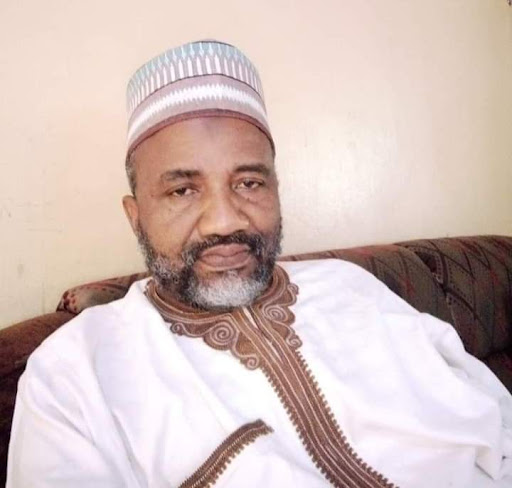
The clip, which is obviously a news item from a Hausa service of one of those big foreign radio stations, is about the launching of a vigilante group by the Miyetti Allah Kautal Hore Association. The activity, which took place in Nasarawa state, featured a parade by the new recruits in their uniform, a fashion parade by Fulani youth and an interview with the President of the Miyetti Allah group, one Alhaji Bello Abdullahi Bodijo. Very senior police officers also graced the occasion.

According to Alhaji Bodijo, the aim of establishing the group is to assist regular security forces to “peacefully” arrest criminals without killing the innocent. Asked whether or not they have obtained Government approval to establish the group, he only expressed hope that the Federal Government and its security forces would give them the necessary recognition. “We shall also help Nigerian Governors to tackle the problem of insecurity”. 

In Nasarawa state alone, Alhaji Bodijo stated they will recruit 4,000 members. First, they have already screened 2140 selected from different (Fulani) families. He promised to end the security problem in Nasarawa state in six months. While stating they have their traditional sticks, Alhaji Bodijo pledged to seek Government approval to obtain weapons allowed by law.

First, let me commend the Miyetti Allah group for their concern about the insecurity problem bedevilling Nigeria and, for the first time, admitting the contribution of their kinsmen to the problem. That most of the bandits operating in the North West and North Central states are Fulani is not debatable. This became well known during the time of Buhari when he directed Governors in the North West geopolitical zone to dialogue with bandits. All the bandits’ leaders that met with Governor Masari were Fulani, and they are well known, with some of them still moving unscathed even when the Federal Government is spending billions of Naira of taxpayers’ money on insecurity.

With the resolve and non-cowardly nature of Fulani, I do not doubt that if the all-Fulani group decide to face their criminal kinsmen, banditry will come to an end in a very short time. But are they ready to do it?

Miyetti Allah Kautel Hore group has itself been criticised for aiding and abetting criminality on several occasions. Perhaps the best known for this accusation is the immediate past Governor of Benue state. We can also recall that at a point in time, a Zamfara state commissioner of Police issued a warning to the Miyetti Allah group to bring an end to banditry in the state or face the wrath of the law.

The tone of Alhaji Bodijo does not suggest that the Miyetti Allah group is ready to face the criminal elements among their kinsmen, fire for fire. In fact, he mentioned the name of a hardened criminal in the North West and stated that they are ready to partner with people like him to end insecurity. But Alhaji Bodijo has a reply for me if he wants it. What is news about partnering with bandits if the Government, with its security forces and an obligation to protect lives and property, has dialogued with them several times? 

But come. Why Nasarawa state? Does the Governor have any interest in the new Miyetti Allah project? Politicians can be unpredictable. Many of them have been accused of using ethnic militia for their political agenda. Governor Abdullahi Sule should come clean on this.

Or does the Nasarawa project have anything to do with the “innocent” herdsmen killed by the military sometime in 2022? We are aware that the Horijo, Mallam Sanusi Lamido Sanusi, visited both President Buhari and President Tinubu to seek compensation for his tribesmen even though he has never done so with respect to the many innocent people killed by criminals suspected to be of Fulani descent. How are we sure that this project is not about revenge?

Assuming revenge is not the first idea. If an incident like the one in question happens again, can we rule out a confrontation between an armed Miyetti Allah vigilante group and the Nigerian Air Force? If the group has branches in all states of the Federation or at least the Northern states, would that not be a major disaster?

By the way, this is Nigeria, a multiethnic and multireligious nation. Any security outfit to be recognised by the Government at the state or Federal level must not be ethnically biased. While Fulani herdsmen (Fulanin daji as they are called) have a very good knowledge of the forest because of the nature of their occupation, the collaborators of forest-based bandits are usually hidden in the cities. The victims of banditry are mostly people in the villages, and they can tell the different ways in which bandits attack.  All these mean that an unbiased vigilante group must be composed of different categories of people, not just people with knowledge of the forest.

My advice for MACBAN is to modify their approach. Reach out to other interest groups and form an all-inclusive vigilante group. Government should do the screening with inputs from Miyetti Allah Kautel Hore and other law-abiding groups. 

Recognising the new group without modification is a potential disaster for Nigeria.

Professor Abdussamad Umar Jibia wrote from Kano. He can be reached via aujibia@gmail.com.