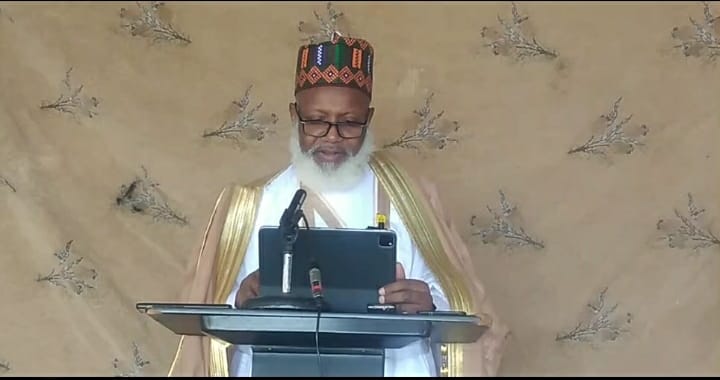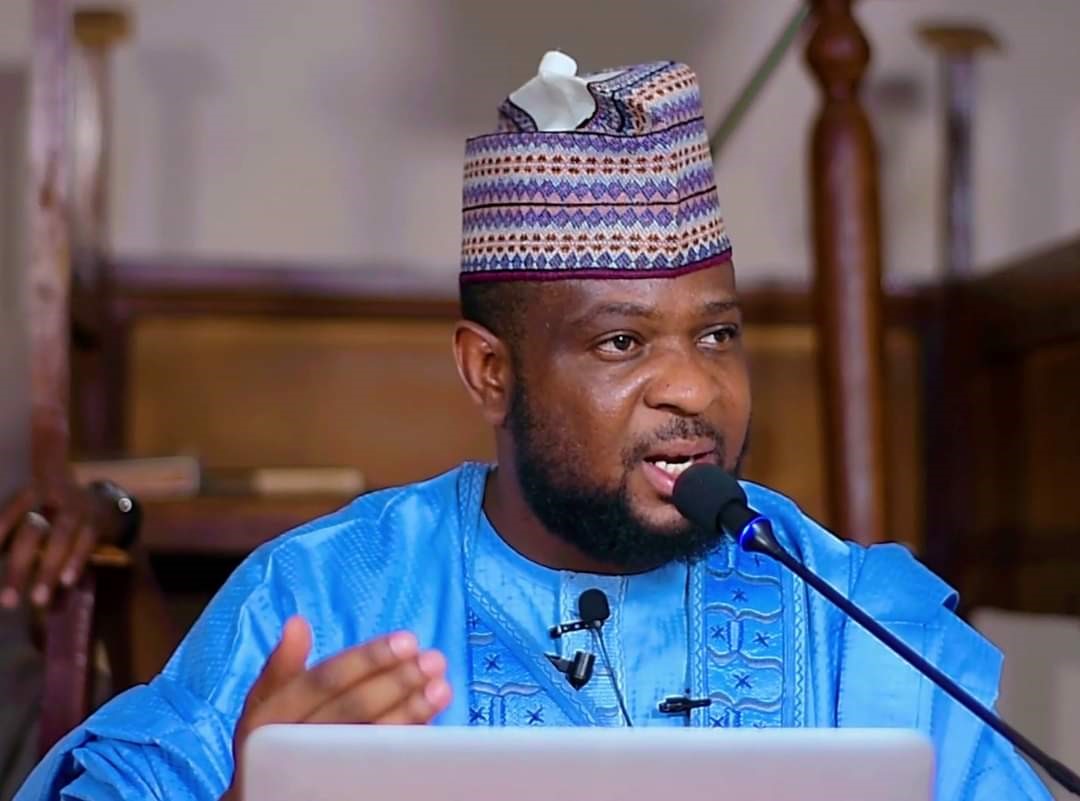
Prof. Mansur Sokoto

Malam Jabir Maihula: A hero archetype

By Abdulrahman Sani (philosopeace)

The German psychologist Carl Jung proposed archetypes as universal themes within the collective mental frameworks of humans. They represent the primary human drives, impulses, hopes, and desires that shape behaviours, perceptions, and actions. While he identified approximately seven archetypes, my interest lies in the Hero archetype, which symbolizes the relentless pursuit of excellence, growth, and overcoming challenges. I believe Malam is a living example of the Hero archetype.

Malam had a modest upbringing in Sokoto before gaining admission to major in Hadith Sciences at the Islamic University of Madina. After graduation, he furthered his studies with a postgraduate Civil and Criminal Justice diploma at the same university. Upon his return, he began teaching in Islamic schools. His breakthrough came through deputizing for his mentor, Professor Mansur, in his Sahih al Bukhari class.

Malam  as an Academic 

Malam’s primary training was conducted in Arabic. Still, due to his daring pursuit of excellence, he chose the unconventional route of pursuing a Master’s in Law at the University of East London instead of following the familiar path taken by others within his academic circle, which typically involves going to Sudan or Egypt for a Master’s in Islamic Sciences. Malam had to work on his English fluency to pave the way for a more multifaceted academic journey. His PhD journey was equally challenging, pushing the limits of his capabilities. Malam’s PhD was supervised by one of the foremost Taymiyyan scholars in Western academia, Professor Jon Hoover.

I recall calling Malam upon hearing that he had started his PhD and recommending that he look into Professor Hoover. Malam was pleasantly surprised that I knew about Hoover and informed me that Hoover was actually his supervisor. I became acquainted with Hoover through his book, Ibn Taymiyya’s Theodicy of Perpetual Optimism. In less than three years, Malam completed his PhD. He later published a portion of his research as a book titled Ibn Taymiyyah in the Literature of Contemporary Jihadists, an excellent book with a title I have reservations about, but that’s a topic for another article.

Malam’s work ethic as the Head of the Department of Islamic Studies at Sokoto State University was commendable. Despite his popularity and significant social influence, he never allowed these factors to impact his primary duties to his academic constituents negatively.

Malam as a Scholar 

Malam has mastered the social landscape in his relentless pursuit of excellence. The most important lesson from his scholarly life is to stay away from controversies and unproductive verbal spats while remaining true to one’s principles and beliefs. Although Malam is non-confrontational, it doesn’t prevent him from engaging in polarized intellectual discourse. He once wrote a booklet engaging with and critiquing a pamphlet written by one of the Sokoto scholars on a polarizing theological issue. Still, in his characteristic fashion, that discourse didn’t translate into conflict.

Apart from his scholarly rigour and eloquence, an even more impressive trait is his accessibility to all and sundry. He is not merely an ivory tower scholar buried in the dust of books, shielded from his immediate realities. Malam is a Hero archetype who is not afraid to take the road less travelled. He constantly evolves his da’wah to fit the spirit of the times while staying true to tradition.

Malam as a Public Servant 

Malam has just started his journey as a public servant and is making a significant impact with his meticulous approach to public service. I know for a fact that he had no financial incentive to take that job. It was purely out of giving back to his society. He occupies a sensitive position as the commissioner for religious affairs because of the sectarian divides but has been able to navigate those tricky waters and gain confidence across the religious divide.

A good documentary on his official Facebook page delves into his incredible accomplishments within just a hundred days in office. Still, beyond that, I am particularly interested in how he has made Almajiri Education a priority, laying a groundbreaking blueprint and even seeking international partnerships. It is an impossible challenge to overcome for so many reasons, but if there is anyone for it, it is Malam.

I have a lot more to say, but the Arabs have a saying that “the best of speech is that which is concise.” You might have noticed that I have purposefully refused to use the honorifics “Dr” or “Honorable” to describe Malam. It’s because Malam is more important than anything else. Finally, and even more importantly than positive appraisals, is prayer: May Allah guide him throughout this challenging journey of incidental public service.

Abdulrahman Sani (philosopeace) wrote via philosopeace@yahoo.com.
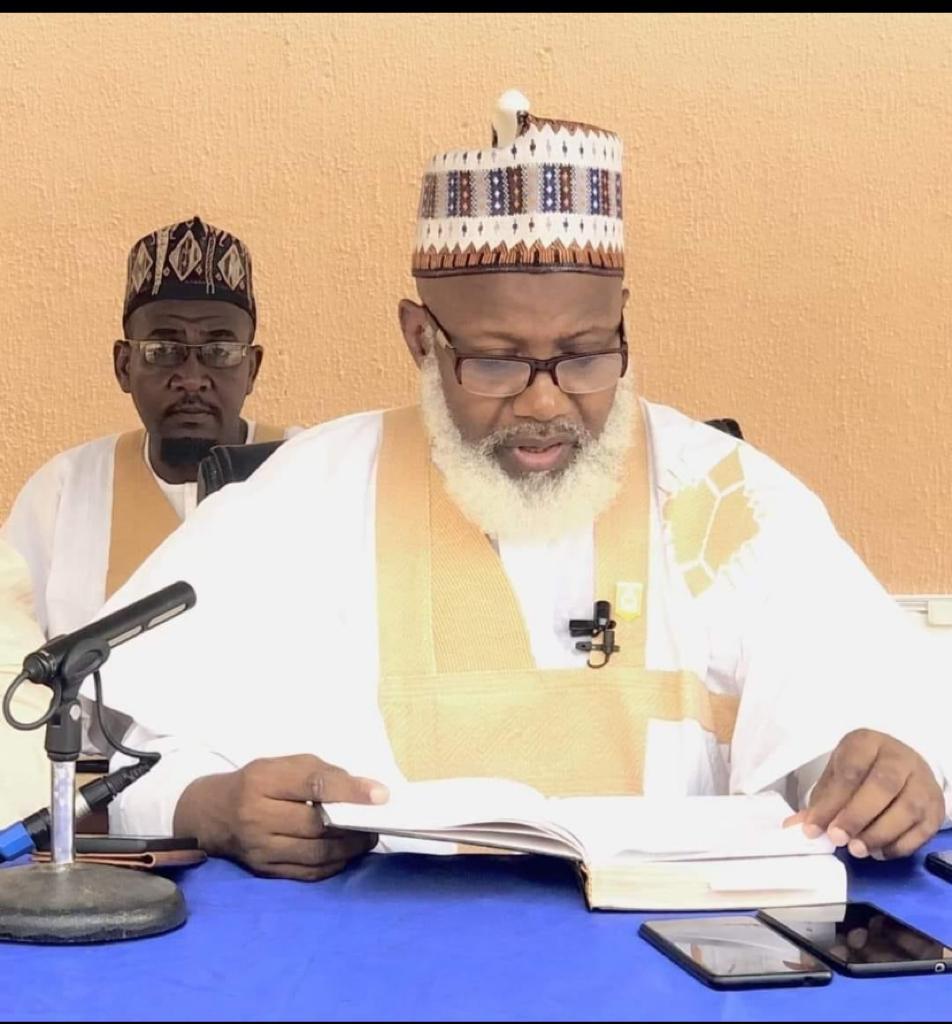
Food Inflation: Prof. Mansur Sokoto examines recent government actions

By Ibrahiym A. El-Caleel

Muhammad Mansur Ibrahim Sokoto mni, a professor at Usmanu Danfodiyo University Sokoto (UDUS) and the Chief Imam of Abu Hurairah Mosque, has commented on recent initiatives by the Kano State Public Complaints and Anti-Corruption Commission (PCACC) and the Federal Competition & Consumer Protection Commission (FCCPC) aimed at addressing the escalating inflation nationwide. His remarks follow President Bola Tinubu’s commendation of PCACC’s efforts in scrutinizing the alleged hoarding of goods by businesspeople.

The President, who spoke through his Special Adviser on Information & Strategy, Bayo Onanuga, lauded the Kano government and urged other state governors to follow suit. Earlier on Friday, FCCPC also reportedly sealed Sahad Stores, a popular Abuja shopping mall, over “misleading pricing practices and lack of transparency”, later reopening it after reaching a mutual understanding with the store.

The actions of PCACC and FCCPC have triggered discussions on social media as Nigerians grapple with rising commodity prices. Under Barrister Muhuyi Magaji Rimingado’s leadership, Kano State PCACC has reportedly sealed over a dozen warehouses, accusing businessmen of hoarding grains and essential commodities.

A widely circulated video showed a warehouse owner explaining that the stored grains were intended for supply to NGOs like the United Nations and ECOWAS, engaged in aiding internally displaced persons (IDPs) in North-Eastern states.

Professor Mansur Sokoto mni weighed into the conversation in two separate posts on his Facebook profile, initially posing five critical questions:

  1. “Is the ongoing food inflation solely attributable to businessmen storing grains in warehouses?
  2. Without warehouses for grains, where will imported commodities be stored before distribution for purchase?
  3. Does the surge in prices affect only food, or are other commodities like steel, wood, gold, petrol, and clothing also impacted?
  4. Have commodity prices simply risen, or is the devaluation of the Naira a contributing factor? If Naira devaluation is the cause, who is responsible?
  5. Are the commodities stored in these warehouses completely unavailable in the market, indicating hoarding?

The Islamic scholar emphasized that leaders should be aware of the actual sources of the prevailing hardship and avoid actions that exacerbate challenges. Responding to a commenter’s question on Islam’s stance on hoarding, Professor Sokoto clarified the following six points on what is permissible (halal) and forbidden (haram):

1. It is permissible for an individual to cultivate food crops in any quantity, whether for personal consumption or for storage, with the intention of selling at a later time, provided that he/she has fulfilled the obligatory almsgiving, known as “Zakah”.

2. It is permissible for an individual in need of food to purchase, consume, and store it to prevent potential future cost increases.

3. It is permissible for a businessman to store food crops that he has ordered, intending to sell them later, periodically, according to market demand.

4. It is permissible for a businessman to purchase a food crop during its season, anticipating future value increases, with the intention of selling it for profit. This is permissible according to a valid opinion.

5. It is both permissible and even encouraged for financially capable individuals to buy what they and their families will consume- including items they will give as charity- for a long time, especially when food prices are rising without clear signs of decline. This perspective aligns with the viewpoint of Shaikh Ibn Uthaimeen.

6. What is NOT permissible is for businessmen to acquire food during periods of high prices and hoard it with the intention of causing hardship to the public. Similarly, it is forbidden for businessmen to accumulate and store food during scarcity periods, withholding it from the market until demand peaks. At this point, they sell it at exorbitant prices. In such instances, government authorities are authorized to compel the businessman to sell the stored food at the standard market price without imposing a loss on the sale.

Having outlined these positions, Professor Sokoto critiqued the recent actions of breaking into warehouses, deeming them inappropriate. He questioned whether the businessmen violated Nigerian laws, emphasizing that their practice is not against Islamic injunctions as they maintain inventory for trade and strategic partnerships.

He implored the government to investigate the actual causes of hardships, citing fuel subsidy removal, Naira floating, border closure, and taxation as contributors. Professor Sokoto cautioned against temporary solutions, advocating for sustainable measures and discouraging the use of the National Strategic Grain Reserve to artificially lower food prices. He drew lessons from past strategies and urged the government to avoid short-term approaches.

Prof. Mansur Sokoto tells truth to power, tackles Buhari over insecurity

By Auwal Umar

The books of history and religion are replete with facts of many apostles of Allah, their companions, their followers, other great personalities, as well as some pious predecessors who audaciously confronted the most brutally imposing rulers of their times. Prophet Moses’ Pharaoh is the most prominent example from the time immemorial to date. Two days ago, an erudite Sokoto-based Islamic scholar, Prof. Mansur Sokoto, chose that path of honour that commensurates with the position of Islamic scholarship regarding the tear-shedding condition of insecurity and unprecedented carefree attitude about the general plight of the masses.

In the lecture, the Islamic cleric gave an overview of the multifaceted ways the occupant of the number one seat, the assumed Messiah, betrayed the mandate entrusted to him by the Nigerian masses. You may recall how President Buhari shed tears each time he was on the losing side at the polls and showed sympathy with our plight during the previous dispensations. Due to his long-standing and seemingly unfading popularity, people from every nook and cranny in the North supported him.

Prof. Sokoto recounted how an old woman of 100 years or thereabouts was optatively praying: “O God never take away my soul, lest I die without voting for Buhari to the presidential seat.” Some in the North died due to wild celebrations for his success. He commented on the support he enjoyed from some Islamic clerics, with some of them publicly invoking the wrath of Allah upon those that refused to vote for him. These bespoke the unalloyed love President Buhari enjoyed.

During the lecture, Prof. Sokoto brought to the fore some of the campaign promises Buhari used to make. He always assured the northerners and Nigerians in general that he would equate the value of Naira to a Dollar, improve the quality of education at all levels, reduce the pump price, among many other sugarcoated promises. Before Prof. Sokoto went on squarely to shed light on the height of insensitivity of President Buhari, he commended his efforts for restoring peace in the North in his first tenure before the worst came to worst. Specifically, the following are some key takeaways from Prof. Sokoto’s lecture.

Discriminatory and lopsided treatment against the North

As highlighted in the lecture, despite all the support president Buhari received before and after getting elected, he scrapped the pilgrimage subsidy. On every predicament that befalls the South, the President and his aides will quickly make a press release and take necessary actions but act quite differently when there is a similar occurrence in the North. Recently, 42 passengers were ruthlessly burnt down to ashes by bandits, but their lives were not worth a word of sympathy from the President. On the following day, ignominiously, the President headed to Lagos for a book launch by Bisi Akande. Ironically, there in the book, many blows of satire were landed on his face, which he might be unaware of. Again, bandits launched a series of attacks for four consecutive days, killing an APC gubernatorial candidate. A Kaduna state law-maker and a Katsina State Science and Technology Commissioner also fell victim to the same fate. Additionally, the former President, Shehu Shagari, lost his life, but President chose to go to the funeral of late Abiola’s wife. Even Prof. Ayo Banjo, treated with reverence, was quick to disown some facts credited to him in the book that seemed to be more important than the lives of charred passengers.

Misplacement of priorities

Buhari’s government is very good at misplacing its priorities. He borrowed a large sum of billions to share with some ghosts and nonexistent beneficiaries. Such funds can be used appropriately to address many problems bedevilling the nation.  Had the amount, vainly shared with less visible economic impact, been channelled for the general fixing of the power sector, the impacts from all its veins would have been visibly seen. Resident doctors’ lingering problem of strikes can be a thing of the past if just four billion naira would be dedicated to their cause. That is without talking about the flashy presidential weddings that gulped many billions in a day.

Failure of the government to address cattle rustling dilemma

The cleric hints at a crucial point that needs special attention. He lamented that many Fulanis’ cattle were stolen with no action taken against the theft, and the entrepreneurs of doom and downfall might have capitalized this. In other words, the problem of banditry is probably the result of retaliation by the aggrieved Fulani youth whose cattle were rustled, and the government failed to call the culprits to book. Such instances of “I don’t-care attitudes” by Buhari’s government can’t be numbered. If the government were seriously proactive on the issue, the chances are that we would not be in the present situation.

Wrong advisors and mediocrity

Despite the inexplicable delay of six months to appoint ministers, President Buhari picked one of the worst sets of cabinets, some of whom are unheard of even in the mass media. The President neither gave room for workable advice nor appointed competent hands to handle the job. Moreover, he does not listen to the voices of the experts, journalists, activists and Islamic clerics.

The cabinet goes unchecked

Once you are appointed to serve in Buhari’s government, you can do whatever you like because no one would hold you responsible for your actions or inactions. Buhari hardly gets his cabinet reshuffled because he does not care for accountability. If you were to assess his cabinet by any reasonable standard, the result would surely be awful. As a result, his cabinet members are often unruffled and well aware that they would be sacked only if they clash with some untouchable cabals.

Corruption, impunity and an unworkable justice system

Prof. lamented the high level of corruption in the government, with government officials routinely stealing public funds, with no fear of facing the consequences. He labelled the justice system under this administration as unworkable. Unfortunately, the arrests of kidnappers, bandits and insurgents always resurface on social media, but you never hear of them being sentenced. More often than not, some criminals confess their crimes not under duress but because of frailty in the justice system. And yet, they still go scot-free.

Yawuri students still in captivity

A responsible government can never be in peace when just one of its citizens is in danger.  One cannot begin to imagine the unspeakable horror of being held captive by those filthiest beasts, rapists and defilers. The worst thing now is that government does not even talk about them, much less of their potential release from their captors. These innocently helpless students have been in captivity for five months in this horrific condition. There are other similar scenarios in Niger and many other northern states.

Powerful task force on security

The cleric recommended that the government set up a team of presidential task force similar or even more robust than the Covid-19 task force to tackle insecurity head-on. The team should include experts, intellectuals, journalists, traditional rulers, elder statesmen and politicians to provide strategic advice and technical know-how.

State governors should be granted the power to act on the security of their states

Although state governors nominally bear the ceremonial titles of “Chief Security”, their power to act on security issues is limited. Thus, Prof. Sokoto advised that laws should be enacted to enable governors to act and direct the security agencies at their disposal. However, it is a bitter truth that no matter how willing a governor of a crisis-ridden state is, he is not much different from his poor citizens. 

The need to be more pious

Finally, the Islamic cleric emphasized the need for the President and the rest of us to be more God-fearing in all our doings. May Allah reward Prof. Mansur Sokoto for his invaluable words concerning the reality and the sorry state of the nation, amin.

Auwal Umar wrote from Kano. He is a graduate student at the Department of English and Literary Studies, Bayero University, Kano.