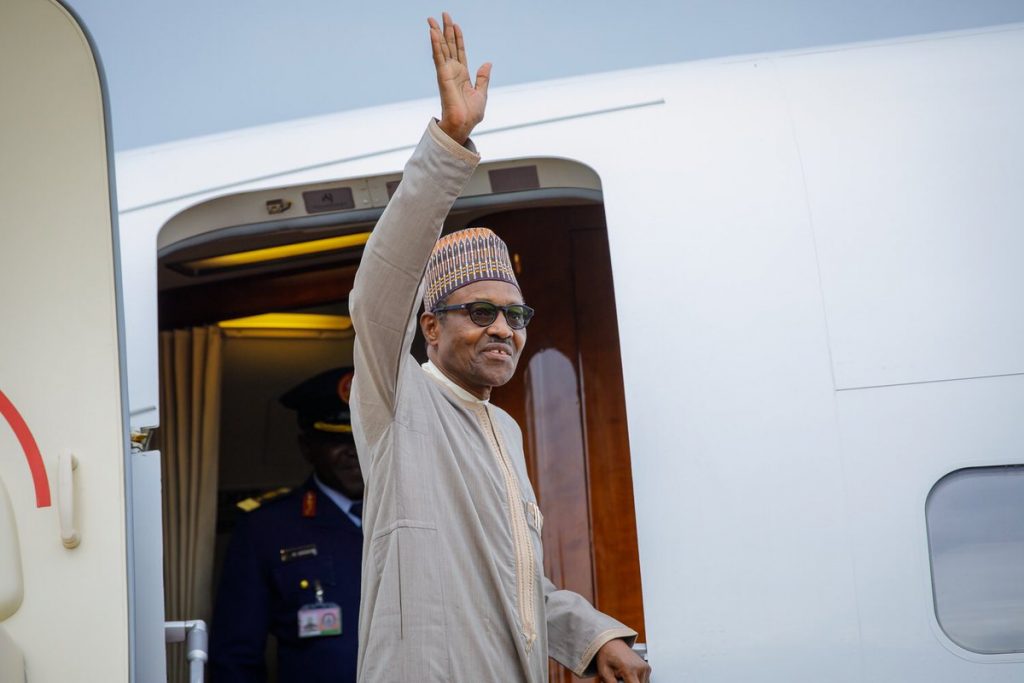
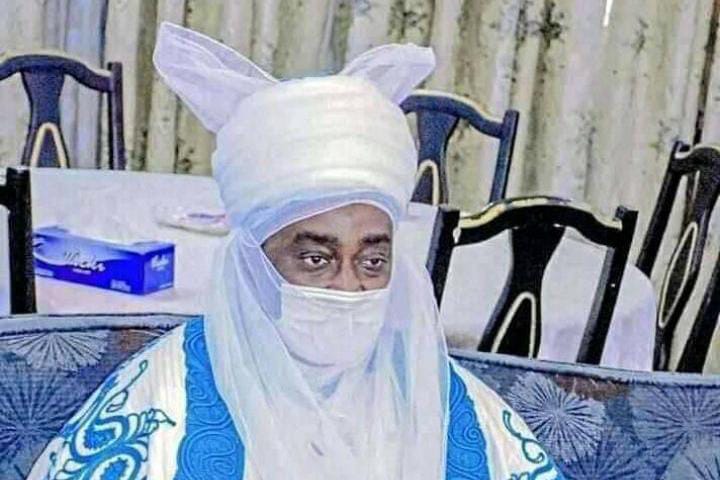
President Muhammadu Buhari

President Buhari reportedly fires new NYSC DG

By Muhammadu Sabiu

According to reports, Brigadier-General Mohammed Fadah, the director general of the National Youth Service Corps, has been fired by President Muhammadu Buhari.

Eddy Megwa, the NYSC spokesman, merely stated that a formal statement would be released on Friday when reached.

The Daily Reality understands that the president decided on Thursday, nevertheless.

Only six months had passed since Fadah was appointed director of the NYSC in May 2022 before he was fired.

Can Atiku Abubakar be trusted? 

By Yakubu Nasiru Khalid

If Atiku Abubakar can be trusted, why did he contest the presidential election five times and not win?

Atiku is the most frequent presidential candidate in Nigeria. He started contesting for a presidential position in 1991 under several parties, including the People’s Democratic Party (PDP). However, he has consistently failed all the time. 

Also, General Muhammad Buhari, the current president, contested for the presidential position from 2003-2015 and failed three times.

Eng. Rabi’u Musa Kwankwaso is the second presidential wannabe who contested the presidential primaries election. He has never stood for an election at the national level. Standing election at the national level is a lot.

Note: Whoever blindly and persistently needs to take a particular post in politics should not be voted because he only needs the immunity, favour, or title needs to prefix on their name, not the country’s property. Nigeria will only remain poor and unstable If Atiku wins.

Eyes measurement is enough for a wise; all those presidential contestants are on the same boat as Buhari. They are only dying to prefix the title of president to their names, not to lead Nigeria to the ever brighter state.

There are two major popular political parties in the South All Progress Congress APC and People’s Democratic Party PDP. However, the New Nigerian People’s Party NNPP is rare because it has few supporters.

This means the South’s votes are shared among two parties, PDP and APC, and Asuwaju Bola Ahmad Tinubu dominates almost all southern States. Therefore, Atiku will get fewer votes from southern Nigeria. This means Asuwaju Bola Ahmad has 63% of the votes, Atiku has 37% votes, and 10% will be shared amongst the rest parties. 

In the North, three political parties are populous, each with a large number of supporters. Atiku and Kwankwaso are northerners, and Bola Ahmad is from the South and the ruling party, APC. Kano is the largest state in the North that produces high votes, and each party will eat into the other. This means none has the majority. So they will be vulnerable to each other. Lagos’s votes are automatic belong to Asuwaju Bola Ahmad Tinubu.

Casting votes for PDP or NNPP is a waste. So, vote wisely for the solution for humanity. Nigeria needs a fresh, diligent and experienced leader. Age or educational status doesn’t matter a lot. Vote for someone who optimistically thinks Nigeria will be economically strong with a political cloud. 

Yakubu Nasiru Khalid wrote via yakubunasirukhalid@gmail.com.

Buhari returns to Nigeria after check-up in London

By Ahmad Deedat Zakari

President Muhammadu Buhari has returned to Nigeria after his routine medical check-up in London, United Kingdom.

Special Assistant on Digital Communication to the President, Bashir Ahmad, announced the President’s return in a Facebook post on Sunday.

He said, 

“President Muhammadu Buhari has returned to Abuja from London, the United Kingdom.” 

Amidst criticism of medical tourism, Buhari departed the country for the UK on October 31, 2022, for what the presidency described as a routine medical check-up.

The trip will be one of several medical trips the President has embarked on since assuming office in 2015, spending at least seven months abroad.

Questions on Naira redesign

By Abdulhalim Ishaq Ringim

Yes, there’s about N2.73 trillion outside bank vaults. This figure represents 85% of the N3.23 trillion in circulation. However, it only represents 6.5% of more than N49 trillion that is in circulation.

Now, let’s consider Nigeria’s unbanked population which stands at 64 million according to World Bank’s “The Global Findex Database 2021: Financial Inclusion, Digital Payments, and Resilience in the Age of COVID-19” report.

What financial intelligence, as a matter of specificity, does the CBN have regarding the magnitude of the money circulating within this highly populous unbanked system. If we were to assume all the N2.73 trillion is in the hands of these unbanked population, then the amount of money on a per capita basis would be about N42,000. Is that too much?

But we all know this assumption is far from reality because the banked population also hold cash for transactionary and precautionary purposes(as in the case of emergencies). So let’s extend our assumption by adding 50% of the banked population to the unbanked population and let the final figure be the number of people who hold cash either because they are unbanked or because of other purposes as transactions and precautions. The per capita cash amount would reduce to N28,000. Is that also too much?

For the hoarding claims, economically speaking, what is the incentive of hoarding cash in Naira considering the continuous devaluation and inflationary trend that has been wiping the value of the Naira against the dollar when there are various hedging options available? Does the CBN have any tentative intelligence that suggest massive hoarding or is this just another trial and error policy?

But let’s also assume there’s indeed hoarding and some people are holding suspicious money. Have the CBN thought of the possibility that the hoarders might now be forced to consider hedging options by flooding the market with money in exchange for hedging-compatible commodities? Have they considered the inflationary tendencies of such an eventuality? Check Dr. Adamu Tilde’s most recent post to appreciate the happening in real world markets. Is the recent sharp rise of the dollar value also a consequence of such tendencies?

The risk of counterfeiting has always been present. The CBN confiscated N64.7 million and N56.8 million in 2019 and 2022 respectively. Compared to the money in circulation, are these figures significant enough to evoke the need for a currency redesign?

If it is for the purpose of managing inflation and ensuring the CBN contractionary monetary policies become more effective, then let’s assume they succeed in mopping up most of the cash outside banking vaults. Is it increased money circulation that actually causes inflation or increased money supply? Isn’t the CBN culpable in the expansion of money supply through their unhealthy tendencies of printing money for government spending via ways and means? What are they doing about the money supply? What is the government also doing about deficit spending and the projected budgetary deficit for the coming year?

Is our inflation strictly a consequence of the Demand-pull Effect(caused by an increase in money supply or credit with commensurate increase in demand for goods and services and resultant price increases) or is it a consequence of a combination with the Cost-push Effect as a result of increase in Oil prices and other commodities(mostly as a result of global events plus local events e.g insecurity, oil theft, floods etc) that is gradually rippling and causing increase in the prices of production process inputs? Does the CBN also not think that the hike in the prices of commodities as a result of the consequence of hedging(possibility of which has been painted by Adamu Tilde in his recent post) would also contribute in aggravating the Cost-push as a result of hikes in production process inputs?

What is the CBN tackling exactly?

Abdulhaleem Ishaq Ringim writes from Zaria.

Why ‘The Atiku Plan’ is better for youth empowerment and job creation

By Abdulhaleem Ishaq Ringim

As rightly identified by policy documents of both Atiku Abubakar and Bola Ahmed Tinubu, young people remain the country’s most valuable assets. However, this tremendous resource base is severely underutilized, as evidenced by unemployment and underemployment numbers. This makes job creation and youth empowerment significant points of policy focus and concern for both candidates. 

Tinubu, to start with, in the 3-paged “Youth Empowerment and Entrepreneurship” section of his policy document titled “Renewed Hope 2023”, outlined a number of strategies his administration would implement if elected into office to ensure enhanced job creation, youth entrepreneurship development and empowerment. 

Identifying the lack of access to credit at the fore of the challenges impeding youth entrepreneurial development, Tinubu plans to ensure easy access to low-cost credit for youth-led enterprises and simplification of loan application processes. He plans to leverage the instrumentality of the CBN to develop suitable incentives for commercial banks in this regard and mandate federally owned and affiliated financial institutions to develop similar schemes. 

He also plans to bolster intergenerational business mentoring and cooperation with 2 million volunteer entrepreneurs and professionals across the nation committed to working with youth to find employment, hone job skills and create businesses. Per the plan, a Youth Advisory Council would be inaugurated to the Employment Action Plan the administration would develop if elected. 

In his bid to reform the National Youth Service Corps(NYSC), Tinubu intends to develop and strengthen a job-matching programme for graduates to enable more corps members to enter the private sector during their service years. Employers would also be incentivized to retain corps members at the end of their service.

Additionally, he intends to expand business incubation centres to support youth innovators to acquire and protect through patent and trademark registration, intellectual property and other proprietary rights over inventions and innovations. 

As far as governance and political appointments are concerned, his administration intends to preserve at least 3 cabinet positions for persons under 40, 6 more positions for persons under 50 and 20 per cent of political appointments to MDAs to persons under 40. A Presidential Fellowship Scheme would also be established to train future leaders. 

On the other hand, Atiku dedicated 10 pages to discussing his plans on “Job Creation”, where he outlined four pathways(to jobs ) his administration would create if elected President come 2023. 

The first pathway is the Informal Sector Pathway to Jobs. It starts with relaunching the National Open Apprenticeship Programme(NOAP). The programme would recruit 100,000 Master Crafts Persons(MCPs) annually who would, in turn, train 1,000,000 apprentices(especially those who have lost the opportunity to attend or complete basic education) on various trades and skills. 

The MCPS and apprentices(upon graduation) would be beneficiaries of 21st-century standard business advisory services, and their training clusters would serve as robust ecosystems that would guarantee ease of access to finance and other ancillary services. 

National Board for Technical Education(NBTE) would be mandated to create a credible, recognized and verified skills/competencies certification system for the beneficiaries of the programme. The certificates would serve as credentials for employment purposes in the “new-collar” or informal skills-based sector. The Programme, of course, would be operationalized in close collaboration with the private sector and relevant trade associations. 

The second pathway is the Entrepreneurship Pathway. It starts with working towards the speedy passage of the National Research and Innovation Fund(NRIF) Bill. When passed, the Fund would receive funding from the CBN’s MSME Fund, Development Bank of Nigeria, Bank of Industry and other private sector institutions and donor agencies. It is expected that at least 100,000 budding entrepreneurs will be added annually. 

Support from the NRIF will be in the form of grants, loans or equity investments in small enterprises. It shall be provided either as start-up capital or to scale up innovations that have already demonstrated a strong track record of impact and effectiveness. 

Atiku also seeks to introduce and actively promote a Graduate Trainee Internship Programme (GTI), which would target National Youth Corps members. The GTI will transfer useful employability skills to Corps members to increase their chances of finding sustainable employment. While they undergo entrepreneurship training, the NYSC will be matched with potential employers for internship/traineeship in the private sector. 

The technical and financial capacity of the Industrial Training Fund (ITF) would be grossly improved to operate its internship and apprenticeship programmes at a much higher scale to cover a minimum of 2 million workers per year.

The Schools to Jobs Pathway is the third pathway identified by Atiku. Here, a formal Technical and Vocational Education and Training (TVET) system will be supported and technical colleges and vocational skills acquisition centres will be re-positioned to produce skills and competencies for innovation and the creation of new ideas and products inside enterprises from where future jobs and future prosperity will derive. 

This would be followed by training of a low-level workforce, such as operatives, artisans, craftsmen and master craftsmen for commerce, industry, agriculture, and ancillary services. The absorptive capacity of the formal post-basic TVET and Vocational Centres will be increased from the current total enrolment and completion of fewer than 200,000 students to 500,000 in 2025 and 1,000,000 by 2030. 

Additionally, selected vocational training institutions would be remodelled into a one-stop shop to provide vocational training, entrepreneurship (accounting, management training expertise), life-skills programmes, etc. 

Enterprise start-up training programmes to be delivered by SMEDAN would be provided to the graduates of technical and vocational training centres who opt for self-employment. Upon completion of the training, participants will submit business plans to Micro Finance Banks and apply for loans from the Bank of Industry, which will be supported by a start-up grant from the National Innovation Fund. 

Graduates of the technical colleges will receive loans and Business Development Service coaching and support from SMEDAN/ Business Development Service Providers. On successful repayment of loans, graduates will receive a final grant (matched to the value of the original loan value) to boost their businesses.

The fourth and final pathway, as outlined by Atiku, is the MSME /ICT Special Entrepreneurship Pathway. This shall start with the facilitation of the establishment of the SME Venture Capital Fund by the private sector to provide longer-term capital for targeted small firms. The administration shall aim to attract a minimum of $250 million in private-sector funding for Nigerian small businesses. 

The administration would create a platform for de-risking SME lending, increase the MSMEs funding window from N200 billion to N500 billion, and set aside the same for the new platform. Awareness of the National Collateral Registry of Nigeria will be rigorously promoted, and the collateral registration process will be further simplified, especially for places without internet access. Enhanced registration access will help unlock much-needed finance for MSMEs. 

The administration would also establish the Financial Innovation Fund((FIF) to incentivize commercial and Microfinance banks to develop innovative solutions for providing credit facilities to the MSMEs sector. The Small-scale Industries and Graduate Loan Guarantee and the Small -Scale Industrial Credit Scheme shall be reformed and reintroduced. 

Special focus on the ICT sector will be provided by Atiku’s administration, and Nigeria shall be aggressively marketed as an outsourcing destination. With a robust IT infrastructure in place and more than 150 million mobile phones, opportunities abound in Business Process Outsourcing with the potential to create 2 million direct and indirect jobs. Nollywood, a great labour employer, would be actively promoted to make it the 3rd largest film industry in the world. 

And on political appointments, 40 per cent of the cabinet would be reserved for youth and women. 

On comparison, one would notice certain points of convergence from the above excerpts as directly culled from both policy documents. For example, both documents identified a lack of access to credit and finance as a major impediment to youth entrepreneurial development. 

However, while the Tinubu plan heavily stresses easing access to commercial loans and simplification of loan application processes, Atiku’s planned interventions seem more specific, overarching and diverse (with adequate involvement of the private sector). They also seem more sustainable as most of them would be backed by legislations and institutional pillars like the NRIF, SME Venture Capital Fund, Financial Innovation Fund etc. 

Another point of convergence is the identification of the imperative of intergenerational business mentorship as a veritable avenue for job creation, youth empowerment, and entrepreneurial development. However, with ease of access to funding interventions, the Atiku plan seems more practical considering specific policy prescriptions like the establishment of the NOAP under the Informal Sector Pathway to Jobs. It also seems more sustainable as it seeks to create a new labour market and standard for employment to be legitimized by the new NBTE skills/competency certification system. 

Additionally, while Tinubu’s NYSC reform focuses heavily on ensuring more corps members join the private sector mainly by simply incentivizing employers to retain them, the Atiku plan approaches the problem more prudently as it seeks to equip corps members with high-value employability and entrepreneurial skills through the Graduate Trainee Internship(GTI) programme before matching them with potential employers. No incentive matches the availability of employees with enhanced employability and entrepreneurial skills for private sector employers as it means enhanced productivity. 

The same goes for other interventions that both policy documents commit to pursuing. One intervention, however, that is important but seems missing in the Atiku plan is the Presidential Fellowship Scheme proposed by Tinubu to serve as a platform that gives young people the opportunity to experience and participate in public service and governance as with Kaduna State’s Kashim Ibrahim Fellowship and Lagos State’s Lateef Jakande Leadership Academy. 

Notwithstanding, the Atiku plan clearly provides more specificity and seems more practical and sustainable(backed by legislation and institutions). It is also more diverse in scope and solutions pathways for identified impediments towards enhanced job creation and youth entrepreneurial development. The Atiku plan is better for job creation and sustainable youth empowerment.

Abdulhaleem Ishaq Ringim is a political/public affairs analyst. He writes from Zaria and can be reached via haleemabdul1999@gmail.com and @pragmatist_AIR on Twitter.

Telecommunications: FG orders service providers to reverse tariff hike

By Muhammadu Sabiu

The Nigerian Communications Commission (NCC) has directed that all providers of telecommunications services roll back the increased pricing adjustments for a select number of voice and data services.

This was revealed in a statement released on Wednesday by Reuben Muoka, head of public affairs at NCC.

The commission instructed the involved Mobile Network Operators (MNOs) to reverse the increased price adjustment in a letter dated October 12, 2022, adding that the service providers’ networks’ unilateral 10 per cent upward price increases for some phone and data services had been approved and put into effect.

It noted that the order was issued in order to allow for further consultation for the good of both the service providers and consumers.

“The consideration for 10 per cent approval for tariff adjustments for different voice and data packages was in line with the mandates of the commission as provided by the Nigerian Communications Act, 2003, and other extant Regulations and Guidelines, as this was within the provisions of the existing price floor and price cap as determined for the industry,” the commission said.

“The decision was also taken after a critical and realistic review and analysis of the operational environment and the current business climate in Nigeria, as it affects all sectors of the economy.

“Furthermore, even though the tariff adjustment was proposed and provisionally approved by the management, pending the final approval of the board of the commission, in the end, it did not have the approval of the board of the commission. As a result, it is reversed.

“The honourable minister of communications and digital economy, Isa Ali Ibrahim Pantami, has maintained that his priority is to protect the citizens and ensure justice to all stakeholders involved. As such, anything that will bring more hardship at this critical time will not be accepted.  

“This was also why he obtained the approval of President Muhammadu Buhari for the suspension of the proposed 5 per cent excise duty in order to maintain a conducive enabling environment for the telecom operators. Much as there is an increase in the cost of production, the provision of telecom services is still very profitable, and the subscribers mustn’t be subjected to a hike in charges.”

ASUU strike and the disorientation at the presidency

Abdelghaffar Amoka Abdelmalik, PhD.

The major newspapers published the speech delivered by the president at the “Fourth National Summit on Diminishing Corruption in the Public Sector” on the 4th of October 2022. In the speech, the president said, “corruption in the education system from basic level to the tertiary level has been undermining our investment in the sector, and those who go on prolonged strikes on flimsy reasons are no less complicit.” The Academic Staff Union of Universities, ASUU, is the union on strike, so the newspapers reported it with headlines that “Buhari accuses ASUU of corruption”.

The president definitely does not have a thorough understanding of the issues that led to the strike else he won’t call the struggle for the proper funding of the universities, better conditions of service for lecturers, the release of the white paper on the visitation panel reports, among other important demands as “flimsy reasons”. It is sad and most unpardonable that the president has got no proper information on the structure and workings of the university. Otherwise, he would have queried that ridiculous and false statement when the speechwriter presented the speech to him for presentation. So unbelievable that our president is not aware that ASUU is not the same as the university management.

To correct this unfortunate misinformation from the president, in the university, there are heads of departments who are academics who receive N50,000 every 3 months for operational expenses. We have the Deans and Directors who are also academics which is the next level of leadership in the university. The Directorates receive N60,000 every 3 months for operational expenses. Is the misappropriation of these N20,000 per month, which comes irregularly that is corruption by ASUU members?

Then, we have the principal officers, which include the Vice-Chancellor (an academic), the Registrar (a non-academic), and the Bursar (a non-academic). There is also the Council chaired by an appointee of the government. You can’t appoint politicians looking for jobs as University Council chairs and blame ASUU for corruption. ASUU is just a union and does not manage the affairs of the university. Then, there is the Presidential visitation panel that is meant to visit the university every 5 years to check the management of the resources of the university.

It’s true that the management of the university could be corrupt. There is no doubt about it. But since the administration of President Buhari took over in 2015, the “corruption fighting” president seems to have found accommodation with corruption in the university that it failed to send a visitation panel to any federal university. ASUU was worried about that, and part of the demands of the 2020 ASUU strike was the constitution of the visitation panel to all federal universities. Paradoxically, it took the strike by the union of supposed “corrupt lecturers” for the anti-corruption FG to send visitation panels to the federal universities in 2021 to check “corruption”.

However, a year after the panels submitted their reports, the same FG that is accusing ASUU of corruption has refused to release the White Paper on the panels’ reports for implementation. Part of the demands of this strike is for FG to release the White Papers. The “corrupt ASUU” is pushing the anti-corrupt government to fight corruption in the university. Isn’t that amazing? It goes without saying by its inaction, indifference, and condemnable refusal to set up visitation panels and release the White Papers after ASUU forced it to set up visitation panels to all federal universities, the FG under President Buhari is aiding corruption in our universities.

Meanwhile, you can’t be complaining of corruption but rewarding alleged corrupt people. The former VC of the Michael Okpara University of Agriculture, that was accused of academic fraud, financial embezzlement, and administrative impunity by the ASUU branch of the university, made the list of the people to be awarded a national honour by the president. Same with the former Council Chairman of the Lagos State University, who, with the VC, deployed the pension of Staff for the purchase of luxurious cars.

Does it make sense to accuse the university managers of corruption and then nominate university managers that were accused of corruption for national honours without taking steps to investigate these allegations? That’s a joke. By the way, what is the correlation between the poverty wages of Nigerian academics with corruption in the universities? Does that explain why Nigerian lecturers are one of the poorest paid in the world?

The president further said that he task our academics to attract endowments, research, and other grants to universities, polytechnics, and colleges of education similar to what obtains in other countries. It has been rightly said that “if wishes are horses, beggars too will ride”. It does not take rocket science to know how those universities referenced achieved that. An endowment is not attracted by academics but by the university council and management. President Buhari should stop his trademark and uninspiring blame game and should be talking to the people he appointed as Council chairmen for our public universities.

The truth is, research grants are not attractive using an empty room as a lab. No international donor will fund empty space. Only the existence of avalanches and modern facilities are used to attract grants. When I got a PhD grant in 2008, I took the grant to a university in the UK because they have the required facilities for the research. For the 3 years, the UK university got thousands of pounds through me. That’s a return on investment. What have we put in place to attract such? That’s what we should be worried about. That’s why ASUU is asking for the required funds to be injected into the system to make our universities attractive for grants, as it’s obtained in other countries.

Despite the horrible condition of service of academics in the country, Nigerian academics are winning research grants. An Associate professor at Bayero University Kano recently received a research grant of £969,680 from Wellcome. A senior lecturer at Ahmadu Bello University Zaria recently won a research grant of about 48,000 USD from Geophysics Without Borders. Other researchers from the Federal University Dutse won a grant of $59,930 from The World Academy of Science (TWAS) and €220,801 from the African Academy of Science on renewable energy. These are just a few of the grants won by academics within the strike period.

The president’s speech was focused on ASUU, and the speechwriter chose his words with the utmost malice and mischief. There are sex scandals in every sector of the country. The rehash and blackmail of sex stories in the universities have become much like an expired drug with no potency. The stories of sex for jobs and contracts and sorting jobs and contracts in Abuja are in public space. Every sector has got the good, the bad, and the ugly. So, academia can’t be immune to the ills in our society.

But then, universities are still much better. They have rules and regulations that guide their operations, and they are enforced. Several lecturers have lost their jobs due to sex scandals or other similar offences. But we have a minister in this government that was accused of sexual harassment in 2020. If a student is a victim of such an act on campus and he or she refuses to report for appropriate actions to be taken, then you can’t blame ASUU for it.

Our Union frowns on sexual harassment in all its ramifications in our universities and is up in arms combating this evil. Hence, this speech which is similar to the words of their filthy-mouthed attack dog and other government agents at the presidency at this time, is an indication that it is either the people around the president are not telling him the truth about the strike or the depth of the poverty of sincerity is underestimated.

It is equally indicative that the administration has run out of ideas and initiatives to resolve a simple issue like the ongoing strike action. The Speaker of the House of Representatives, in an effort to bring an end to the 7-month-old crisis, has met with the president. Let’s hope that those agents of destruction around the president will allow him to think.

What baffled me is the fact that the Visitor to the university is publicly lamenting when he has not taken any action for 7 years to address all his allegations against the University. You are the president, sir. Please use your executive powers to solve problems, not passing bucks. Dear sir, you lament everything from the economy to insecurity to education, but lamentations won’t solve our problems. You need to be proactive, sir. You are the president; time is almost running out. Better late than never.

Finally, despite the way that academics in Nigerian public universities are handled, our research outputs are visible in the global research database. If political office holders should make one-tenth of the efforts and sacrifices made by academics in our public universities, they will be celebrated as heroes in office.

Professor Abdelghaffar Amoka Abdelmalik wrote from Ahmadu Bello University, Zaria.

Nigeria at 62: Bad governance, corruption, others drag Nigeria back – experts

By Uzair Adam Imam

On Saturday, October 1st, 2022, Nigeria celebrated its 62nd independence anniversary, but experts said that bad governance, corruption, poverty, and insecurity, are among the forces dragging the country back.

Every October 1st, Nigeria celebrates its Independence Day. On October 1st 1960, the country gained independence from Great Britain after colonial rule that lasted for decades.

Independence Day in Nigeria is welcomed with a public holiday, and numerous activities are organized to mark the auspicious day. Youth dressed in green and white shirts and trousers, some march onto the streets singing the country’s national anthem and dancing to show their open support to their fatherland.

Several reports indicated that every year a considerable number of Nigerian youths who recklessly drive or ride bikes to celebrate the day sustain grave injuries, or worst, lose their lives.

Nigeria’s independence only in word

Despite the attention the day gets from the authority and Nigerians, some people still believe that the country’s independence exists only in words.

A lecturer at Bayero University, Kano, Dr Rukayya Yusuf Aliyu, argued that the country is still trying to define and understand itself at sixty-two years.

She said Nigeria is “an independent nation still trying to define and understand itself at 62.”

She said, “Certainly a developing nation with abundant wealth, very poor and clueless leadership, and a careless citizenry.

“Nigeria is an independent nation even though it should have done better. Nigeria is independent of colonial rule yet dependent on foreign nations for aides. She should ordinarily be provided to smaller, poorer nations at 62.”

Another lecturer, Dr Abba Ahmad Muazu, said the country is independent in reality but dependent because it hugely relies on other developed countries to survive.

He said, “In my perception, Nigeria is independent but dependent. The fact is that in terms of security, Nigeria can’t protect itself. So we rely on developed countries to provide us with arms and support.

“In education, Nigeria can’t invest in its educational systems to attract foreign students. Moreover, if you look at the current lingering ASUU Strike in Nigeria, the issue is yet to be resolved.”

At 62, Nigeria is still toddling

A classroom teacher, Yusuf Shu’aibu Yusuf, decried the present situation in the country, saying the poor in Nigeria are yet to secure their Independence.

He stated, “Freed from the white domination only to be subjected to the worse form of domination by our fellow countrymen. In my opinion, the ruling class and their capitalist cronies are the ones whom this Independence is for. The poor are not yet free. The masses are yet to secure their independence.”

A Kano-based businessman, Hassan Ibrahim, said Nigerians were more independent during the colonial administration than now.

He said, “In those days, kids were taken to school for studies free of charge. All the necessary things, including school tokens, were provided for them. But today, things have fallen apart. Nigerians are in a mess.”

Bad governance drags Nigeria to its knees

A renowned political scientist and analyst, Professor Kamilu Sani Fagge, said bad governance has brought about the current situation in Nigeria.

He stated, “There are numerous factors involved that resulted in the current situation of Nigeria. But the major one is bad leadership, which contributed to many political crises in the country.

“And the issue of bad leadership has brought about corruption in Nigeria. When we have good governance, corruption will give way to a developed Nigeria.

“In addition, it will also boost the country’s economic growth.”

Nigeria needs to diversify to grow

Professor Fagge added that for Nigeria’s economy to grow, the country needs to diversify.

He said, “Nigeria has depended hugely on oil since 1970, after the second world war. Nigeria has been blessed with many resources, including farmlands. So we need to diversify.

“Nigeria also needs to bring back to work our closing industries and also provide good electricity to revive these companies.”

The living condition should be improved

Professor Kamilu Sani Fagge added, “The citizen’s life should also be improved. Citizens are the backbone of every country’s development.

“Quality education should be provided to all. But, sadly, our government concentrates more on infrastructure. Countries like India, Brazil and China have attained recorded success by improving the lives of their citizens,” the professor added.

At 62: Nigeria’s independence and the future we desire

By Babatunde Qodri

It can be argued that ever since Nigeria got her independence in 1960, the country hasn’t gotten worse like it’s today. Every year is filled with insurmountable challenges beyond the control of both leaders and citizens. It appears, sincerely, as if the country has been cursed. Every opportunity to believe in Nigeria’s prosperity is dashed by a litany of crises ranging from insecurity, poor education and health systems and economic downturn. The country seems to have been brought to her knees.

The occasion of independence does not move people from different corners of the country. On the contrary, the convention of this remarkable celebration is a history remembered with joy and happiness. Many other African countries celebrate their independence with scores of impressive feats, despite avoidable crises. Unfortunately, the case isn’t the same here in Nigeria, where leaders expected to make people proud resort to disappointing charades to the country’s detriment.

The ongoing industrial action by university lecturers says a lot about how blighted Nigeria has been. Students have been away from classrooms for months. One would expect that a 62-year-old country should have grown past deleterious distractions capable of creating barricades in the way of her education system. It hurts that a sector as eminently necessary as education can be allowed to suffer while the Government continues to fund frivolities. The question is, which country develops or has developed without serious attention to education? 

In other words, education in Nigeria is now in a comatose state. It’s hard to believe that this is Nigeria where Sir Ahmadu Bello, Obafemi Awolowo, and others once lived and governed. Nigeria’s present predicament, evident in her leaders’ shameless willingness and obsession with greed, has ruined those past years of free education packaged to liberate Nigerians for genuine patriotism. What used to be, in terms of quality, transformative education now constitutes a culture of abandonment, taking a heavy toll on the survival and growth of the country.

Insecurity is another problem. Severalerians have been in captivity for years. We are now the headquarters of banditry and kidnapping for ransom. Non-state actors have taken advantage of the country’s vulnerability to unleash horrors daily. And the complete loss of strength by people constitutionally paid and expected to protect lives and property heightens fears. Because of this unwholesome reality, the country has become a no-go area for foreign investors who should have helped her economically. The fact that people are becoming strangers in their homeland explains the mass migration of Nigerians out of the country in search of averagely better and more peaceful climes. Internal unrest, sadly, continues to drag the country backwards.

This reality is worsened by intractable corruption. Despite being an oil-producing country, it’s still disgusting to hear that Nigeria cannot refine her oil, which makes the country hugely indebted. While other OPEC countries leverage the international market amid restrictions posed by the ongoing Russia-Ukraine crisis, Nigeria is wallowing in a financial crisis resulting from endless oil theft. Isn’t it funny that the country has to borrow to service her debt? This is indicative of the depth of mess in which Nigeria is in.

Unarguably, Nigeria needs urgent solutions through the diversification of its economy. We must take advantage of modern agriculture to produce what we consume and vice versa. The country should stop wasting funds meant for critical goods on exotic cars for politicians. Our Government must invest in the education sector, health care system, and others.

Plus, effective legislation is paramount. Nigeria is in dire need of a fresh set of leaders with brand new ideas, leaders who are committed to viable plans and collective change. The issue of climate change must also be given urgent attention. Climate change and poverty have the exact root cause, and their impact contributes to the national underdevelopment the country is witnessing.

As we move into 2023, Nigerians should understand that our country deserves a befitting future. So we must be interested in candidates who will focus on doing the right thing at the right time. We must go for candidates with clear readiness and vision to transform our education system and uphold justice and transparency. We must do away with activities capable of fueling the embers of disunity in the country. 2023 should be about these.

Babatunde Qodri can be reached at babatundelaitan@gmail.com.

Emir of Zazzau bags national honour, gets CFR rank

By Sumayyah Auwal Ishaq

President Muhammadu Buhari, GCFR, will confer a national honour on the Emir of Zazzau, Ambassdor Ahmad Nuhu Bamalli, in the rank of CFR (Commander of the Order of the Federal Republic).

The appointment was contained in a letter from the Federal Ministry of Special Duties and Inter-Governmental Affairs, signed by the minister, Senator George Akume.

The letter reads in part: “I have the honour to formally inform you that the president of the Federal Republic of Nigeria, His Excellency, Muhammadu Buhari, GCFR, had approved the conferment of the National Honours on you, in the rank of CFR (Commander of the Order of the Federal Republic).

Emir Bamalli succeeded late Alhaji Shehu Idris, CFR, the 18th Fulani emir of Zazzau who reigned for 45 years before his death on September 2020. Until his appointment, the monarch had served as Nigeria’s ambassador to Thailand, with concurrent accreditation to Myanmar.

He has been a permanent commissioner in the Kaduna State Independent Electoral Commission in 2015. He has worked in banking sector and as Executive Director and later acting Managing Director of the Nigerian Security Printing and Minting Corporation.

He was a staff of the Abuja Metropolitan Management Agency before a stint as head of Human Resources at MTel, the mobile communications arm of the old Nigerian Telecommunications Limited (NITEL).