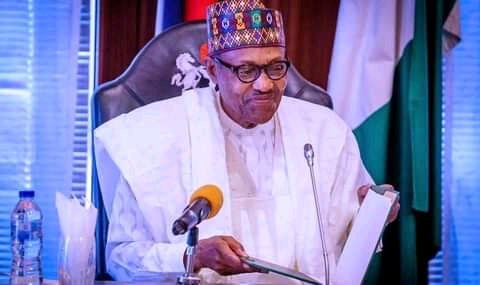
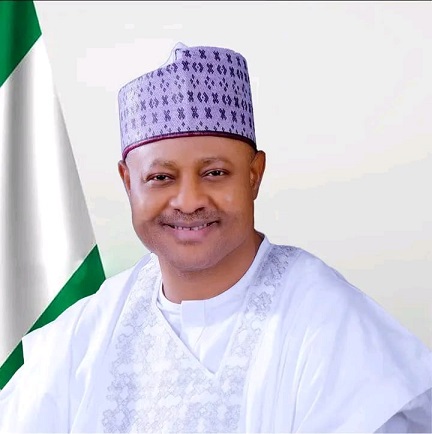
President Muhammadu Buhari

A nostalgic tribute to Muhammadu Buhari

By Amir Abdulazeez

During the early and mid-months of 2002, I would often visit an uncle (now deceased) who generously provided me with newspapers before he had even read them himself. On one such visit, I picked up a copy of the Daily Trust, a relatively new publication at the time, and while flipping through its pages, I read the delightful news that not only made me happy but also propelled me into a brief career in partisan politics. Retired General Muhammadu Buhari had decided to join democratic politics and announced his entry into the All Nigerian Peoples Party (ANPP).

At the time, the Obasanjo-led administration was widely perceived as underperforming, failing to address Nigeria’s mounting challenges sincerely. The PDP had morphed into a formidable political giant, while the ANPP was weakening steadily; other newly registered parties existed only in the briefcases of their founders.  Buhari’s decision to enter politics at that time represented the single most decisive move that changed the Nigerian democratic landscape over the last 25 years. Youths, pensioners, activists, comrades, veterans and even fence-sitters found a new rallying point, and almost everyone else joined the new messiah.

Although many harboured reservations about Buhari, especially those whose interests had been hurt during his military regime or the post-1999 established elite who saw him as a threat, I was among the countless young Nigerians who adored Buhari to a fault. My admiration for him was so intense that another uncle once felt compelled to caution me. It was just before the 2003 presidential election when he walked into my room, saw a large framed portrait of Buhari on my wall, smiled, and advised me to moderate my obsession.

My love for Buhari began about 30 years ago. The establishment of the Petroleum Trust Fund (PTF) by General Sani Abacha’s administration in 1994 coincided with our early years in secondary school. By the time the Fund was a year old in 1995, the name of Muhammadu Buhari was on the lips of virtually all Nigerians. In my estimation, then, he was the only tangible positive aspect of the Abacha government. In fact, he appeared to be more popular than Abacha himself; a hypothesis that reportedly inspired Obasanjo to scrap the Fund in 1999 to avoid ‘running a government inside a government’.

I vividly recall a day in 1995 or 1996 when I accompanied my father to a bookshop. The PTF low-price edition of every book we went to buy was available at a 50% or so discount without any compromise in quality. While paying the money, I could see the smile on my father’s face reflecting deep satisfaction and appreciation for the work of the PTF. That was the first time in my life that I truly felt and understood the direct impact of government on the people. In pharmacies, PTF drugs were sold at subsidised rates. There was no propaganda, rhetoric, cosmetics, or media packaging; the work of Buhari’s PTF was there for everyone to see and touch. I was fortunate as a young lad to join elders on travels across the country from 1995 to 1997. I got tired of seeing the PTF road projects that I once asked: “Why won’t this Buhari return as president to fix Nigeria?”

Muhammadu Buhari, a constant figure in Nigerian political discourse since 1983, is no longer with us. Few anticipated his death, as the brief illness he suffered in London seemed either a rumour or a routine medical trip. Ironically, many of his detractors had “killed” him multiple times in the past; some of them dying before he did. In 2014, former Ekiti State Governor Ayo Fayose ran a notorious advertisement predicting that Buhari wouldn’t last in office for months if elected. Yet he won, served for eight years, and died just months short of turning 83.

Buhari lived a long, dedicated, and enduring life of service and commitment to Nigeria, spanning about six decades in both military and civilian capacities. Save perhaps for Obasanjo, there’s no Nigerian, dead or alive, who matches his array of public portfolios. His personal reputation for discipline, honesty, integrity, and austerity endured throughout his public life. He stood as a symbol of principled and stoic leadership, leaving behind a legacy that will continue to resonate for generations.

Just before his death, the debate of who made him president in 2015 resurfaced with an exchange of tantrums between some pro-Tinubu and pro-Buhari gladiators. While I found the debate outdated, my position remains that Buhari ought to have become president 12 years earlier. For the avoidance of doubt, Muhammadu Buhari did not lose the 2003 presidential elections; it was brutally rigged to return Obasanjo for a second term. That year’s election ranks among the most fraudulent in modern global history. In 2007, the presidential election results were allegedly fabricated, so we can’t even call that an election, let alone determine who won or lost.

Despite my immense love for Buhari, I was left with no choice but to join his critics after 2015. Less than a year in, it became clear that his government lacked the vision and effectiveness many had hoped for. In 2015, I queued until about 10:00 p.m. to vote for him, believing he was Nigeria’s last chance. By 2018, I was disappointed and called for him to serve just one term. I argued then that if he couldn’t lead like Nelson Mandela, he could at least exit like Mandela. By 2021, while in his second term, I was so disillusioned that I openly advocated for his impeachment.

It remains a mystery how our much beloved, tested, and trusted (his campaign slogan in 2003) Buhari failed to meet expectations so short. Some blamed his arrogant and underperforming appointees; others cited a fractured and directionless party. But ultimately, he bore the responsibility. His inability or unwillingness to discipline ineffective ministers eroded his credibility. In 2022, during the eight-month strike by university lecturers, I contacted one of his aides (a relative), who confirmed that it was Buhari’s ministers, not Buhari himself, who opposed paying the lecturers. Another indicator that he wasn’t really in charge. 

In the midst of the storm, Buhari’s administration achieved several landmark milestones in infrastructure, social welfare, and the fight against terrorism. He delivered the elusive Second Niger Bridge, the Lagos-Ibadan and Abuja-Kaduna railways and upgraded numerous critical road networks. His government implemented the Treasury Single Account (TSA), which significantly improved public financial transparency and curbed leakages. Buhari’s war against Boko Haram yielded mixed results but succeeded in reclaiming substantial territory from insurgents. He introduced arguably the largest Social Investment Program in the history of Africa, targeting millions of beneficiaries through initiatives such as N-Power, Trader Moni, Survival Fund, Anchor Borrowers Scheme, and conditional cash transfers.

Nigerians are free to hold divergent views on Buhari. But there should be decency in how we express those views. No one is without flaws; we all have our good and bad sides. One day, we too shall pass, and others will speak of us. Buhari had both triumphs and failings; some reaped benefits, others suffered losses. If you can pray for him, please do. If not, be measured in your words.

The past few days have witnessed a flurry of deaths, a sobering reminder that life is fleeting and death is inevitable. Today’s giants will one day lie lifeless. When Garba Shehu broke the news of Buhari’s death, I immediately made up my mind to put up a tribute. A few minutes after the announcement, I visited his Wikipedia page to verify some information about the general. To my surprise, the information about his death had already been updated: “Muhammadu Buhari (1942-2025)”—so swiftly? I said to myself. Baba is gone. May Allah forgive and grant him Jannatul-Firdaus.
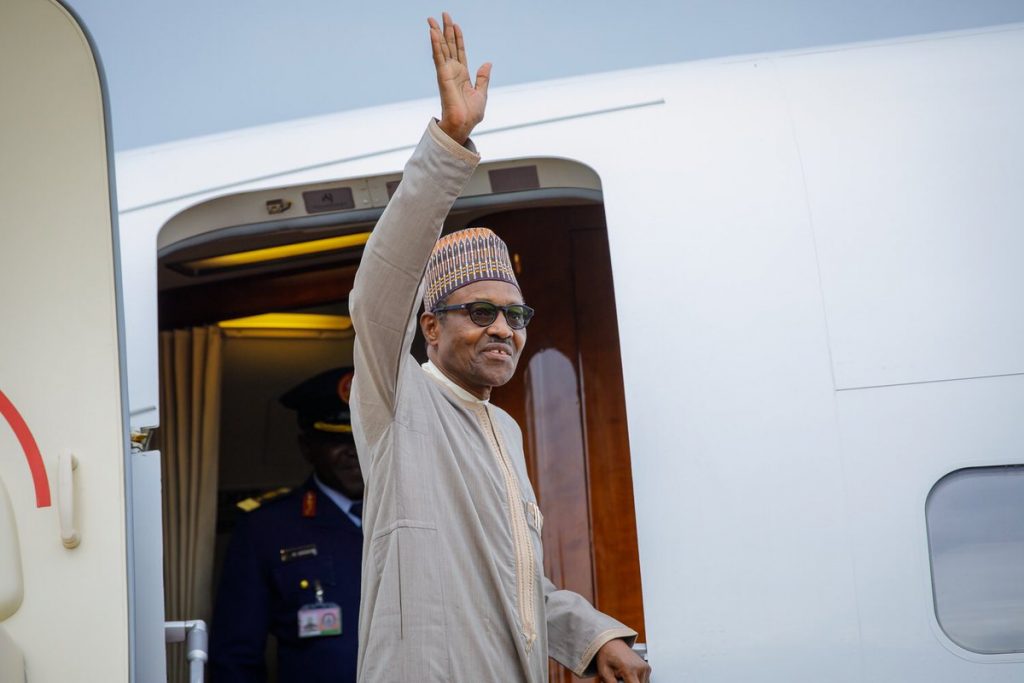
Buhari’s death in London rekindles debate over Nigeria’s medical exodus

By Hadiza Abdulkadir

The death of Nigeria’s former President Muhammadu Buhari in a London hospital has once again spotlighted the country’s long-standing crisis in healthcare delivery, especially among its elite. 

Buhari, 82, died on Saturday, July 13, after a prolonged illness reportedly linked to leukaemia. Despite leading Africa’s most populous nation and the continent’s largest economy, he died not on Nigerian soil, but under foreign care.

His passing mirrors a now-familiar pattern among Nigeria’s political class: fleeing abroad for treatment, even for routine ailments, only to eventually die in foreign hospitals. Buhari, who frequently sought medical attention in the United Kingdom during his presidency, had once campaigned on the promise of reducing medical tourism. Instead, he became one of its most prominent symbols.

Public reaction has been swift and critical. Muhammad Shakir Balogun, a resident advisor with the Nigeria Field Epidemiology and Laboratory Training Program (NFELTP), condemned the trend in a widely shared Facebook post. Drawing comparisons with African icons like Nelson Mandela and Jerry Rawlings—both of whom received treatment and died in their home countries—Balogun wrote:

“They were not flown to London, Paris, or Amsterdam. They were attended to in their own countries by their own doctors… What of Nigeria, the giant of Africa? Even those who campaigned on the moral pedestal of not going abroad for treatment turned out to be the worst offenders ever.”

He called on current President Bola Tinubu to “break the despicable and shameless tradition” by ensuring at least one world-class hospital exists within Nigeria—“even if it’s a military hospital.”

Yet, President Tinubu himself has also faced criticism for continuing the same tradition. Since assuming office in May 2023, he has reportedly travelled to Paris multiple times for medical checkups, reinforcing the perception that Nigerian leaders lack confidence in the very healthcare system they oversee.

Critics argue that the reliance on foreign healthcare is not just a failure of policy but a profound betrayal of public trust. Nigeria’s public hospitals suffer from underfunding, dilapidated infrastructure, and a mass exodus of medical professionals, many of whom now work in the very countries to which Nigerian leaders turn in times of illness.

With Buhari’s burial scheduled for today in his hometown of Daura, Katsina State, attention is turning not just to the legacy of his leadership, but to the urgent need for healthcare reform at home, so that future presidents may live, heal, and if necessary, die on Nigerian soil.

Future generations will understand better: Good night, Baba

By Bilyamin Abdulmumin, PhD

I didn’t feel very emotional when I first heard about the death of Muhammadu Buhari. Until this morning, when I came across one of his speeches from the 2023 campaign. In that speech, he reflected on his life, the approaching end of his tenure, and his return home. He bade farewell and admonished the congress and the Nigerian people with good leadership, honesty, and trustworthiness. Watching that speech now, occasioned by his passing, felt like listening to a wasiyya, a final will, from one of my dying parents. For the first time, I found my eyes welling up over someone’s death. 

The death of the former president shouldn’t come as a surprise. At 82, he had lived a full, ripe, and by many standards, successful life. Yet many of us were caught unprepared by his passing. He was much in the spotlight, with his move from his Daura residence to a renovated home in Kaduna, and visits from opposition figures, leading to the APC’s restlessness and the immediate response from the then APC chairman, “Habu Na Habu”. 

The last time Buhari was in the news, it was due to rumours that he had slipped into a coma and was in critical condition—claims swiftly denied by Garba Shehu. Like many staunch Buharists, I didn’t take those rumours seriously. After all, we had heard many such baseless reports before.

Two key lessons I’ve taken from Buhari’s leadership: one about Buhari himself, and the second about the general society. For Buhari, integrity and honesty, while essential, are not enough on their own to bring about revolutionary change. I’ve followed transformational leaders like Lee Kuan Yew. Like Buhari, he was tough and sincere. But what set him apart was his well-defined economic philosophy and strategic vision. Buhari, by contrast, appeared to rely heavily on the capacity of his advisers and inner circle. 

For Nigerians, even the much-touted Lee Kuan Yew may still not be enough to deliver the revolutionary change. This is because the mindset and orientation of much of Nigerian society are often at odds with the very change they claim to seek. Many did not fully understand the nature or depth of the “change” being clamoured for in the first place. In contrast, a significant portion of Singaporean society shared in Lee Kuan Yew’s vision—or were at least willing to align themselves with a national revolution. That collective readiness made transformation possible. In Nigeria, however, the societal psyche remains a major barrier to meaningful reform.

History is best understood by future generations. Chairman Mao was once seen as merely a rebel, yet he eventually seized power and reshaped global history. How he was perceived a hundred years ago stands in stark contrast to how he’s viewed today. 

President Muhammadu Buhari came, did his part, and has now taken his bow. Time will reveal the full weight of his legacy. Good night, Baba. May your soul rest in Jannatul Firdaus.

Goodbye, Muhammadu Buhari, I love you

By Prof. Abdussamad Umar Jibia

“Fellow countrymen and women. I, Brigadier Sani Abacha of the Nigerian Army, address you this morning on behalf of the Nigerian armed forces. You are all living witnesses to the grave economic predicament….”

That was on the 31st of December 1983. I was a Form Five student at the Government Secondary Technical School,Mashi. But the school was on its first-term vacation. So, I was at home. I was sitting with my father that early morning when someone came in to announce that the Army had overthrown President Shehu Shagari and that “rediyo baya Magana”, meaning the radio was silent. It was after my father sent for his transistor radio that I understood what the man meant. Normal radio programmes were not running. The radio station we listened to those days was mainly Radio Kaduna. Occasionally, we listened to Rima Radio, Sokoto, a Nigerien radio channel and Radio Kano. There was no Katsina State, so no Radio Katsina. No FM. No social media.

The only voice Radio Kaduna was airing was that of Brigadier Sani Abacha with the historical coup speech at regular intervals, filled with military music. Since my father did not go to Makarantar Boko, he asked me to translate, and I did that with the confidence of a final year student ready to take the WAEC examination in five months. Yeah, only WAEC. No NECO. No NABTEB. Nothing else except WAEC. 

But that was not the point. Everyone was anxious to know Shagari’s replacement. It didn’t come immediately. Later in the afternoon, a Yoruba voice (later identified as Tunde Idiagbon) spoke to announce the acceptance of the “voluntary retirement” of service chiefs. While they were still waiting, another General (Ibrahim Badamasi Babangida) spoke; he asked Nigerians to remain calm as they awaited the speech of the new Head of State and Commander-in-Chief of the armed forces. 

The speech did not come until midnight, when many of us were already asleep. The following morning, my father didn’t need me for translation as Radio Kaduna was airing the translated speech of the new Head of State, Major General Muhammadu Buhari. I saw happiness on the faces of the adults. I understood that they were happy because the new Head of State was not another Kaduna Nzegwu or an Aguiyi-Ironsi. 

That was the beginning of the Buhari story. For those of us in secondary schools, nothing changed. Our holiday ended and we went back to our boarding school. In the whole of what is now Katsina state, I knew of only one day secondary school. That was the one in Katsina town, and it was owned by the Government. All the other schools I knew were boarding schools and public schools.

We sat for the WAEC GCE O-level exam and passed with the necessary credits and distinctions. My BUK pre-degree admission came quickly, and it was after I reported and registered that I understood that Buhari had removed the feeding subsidy in tertiary institutions. So, we were on our own.

Buhari was overthrown in August 1985, and that was the beginning of his popularity. Four months after he was overthrown, Nigerian students went on a rampage to protest the IMF loan. It was followed by the unpopular SAP. The more General Babangida introduced new policies, the more popular Major General Buhari became, even though he was in prison. People were tearing Babangida’s pictures and pasting the pictures of Buhari, his prisoner, on their vehicles and business premises.

The interview Buhari gave The News magazine after his release from detention made him even more popular among the elites and demonised Babangida. In the interview, Buhari spoke about the “fifth columnist” in his administration,which was understood to be a veiled reference to Babangida.

Fast forward to 2015, as a democrat, Buhari became the President after three failed attempts. The experiences of Nigerians were bitter, depending on who was involved. To the victims of banditry like us, he was a failure. To university lecturers like me, he destroyed tertiary education. To the Shiites, he was a murderer. To the masses, he is synonymous with hardship.

However, regardless of how you see Buhari, you must admit that he was sincere. He was incorruptible and meant well for Nigeria. Buhari would have been the best president Nigeria had if only he had ensured accountability in his Government.

May Allah have mercy on the soul of Muhammadu Buhari and admit him into the highest level of Firdaus. Amin.

Professor Abdussamad Umar Jibia wrote via aujibia@gmail.com.

The Proliferation of National ‘Honours’ 

By Amir Abdulazeez

If we can recall, on 7th October, 2015, a 19-year-old student, Hassan Mohammed Damagum, sacrificed himself to save others from a suicide bomber who attempted to attack a mosque during the Subh (Dawn) prayer at Buhari Housing Estate in Yobe State. Hassan had sensed that the individual standing next to him was a suicide bomber trying to kill people. The boy was said to have confronted the bomber, who blew both of them off. 

Again, on 25th January 2017, Yakubu Fannami, another student from Borno State who was just in SS1, died a hero while preventing a suicide bomber from entering the Darrusalam Science and Islamic Academy in Maiduguri. Fannami tackled the female suicide bomber, preventing her from reaching the mosque and detonating her explosives, thus saving the lives of many worshippers.  

To the best of my research, which may be inadequate, neither of the two boys was publicly given significant national recognition. Nigeria’s story is replete with the neglect of brave and heroic citizens who had sacrificed a lot and even laid down their lives to save others. 

Since 1999, Nigeria has always chosen to reward and honour many lazy elites who contributed virtually nothing but became huge beneficiaries of government patronage and corruption. Every President has made it a duty to bestow national honours on his chosen elites as one would do with his personal property.

In line with the routine tradition of his predecessors, President Bola Tinubu used the June 12, 2025, Democracy Day to confer over 100 national honours, some posthumously. As expected, many awardees are members of his administration and personalities very close to him. A section of the awardees list portrays a belated compensation package to a gang of Abacha victims, who actually need justice more than honour.

While people like Prof. Humphrey Nwosu (CON), Prof. Wole Soyinka (GCON), Alhaji Balarabe Musa (CFR), Bishop Matthew Hassan Kukah (CON) and Femi Falana, SAN (CON) truly deserve their awards, it would have been wiser and more balanced to include people like Late Bashir Tofa (Abiola’s NRC opponent), Late Abubakar Rimi and Magaji Abdullahi (two important SDP figures who miraculously delivered Kano, Tofa’s State, to Abiola) and, of course, M.D. Yusufu, the presidential candidate of MDJ, who was Abacha’s sole challenger in his bid to undemocratically transform into a civilian president, among others. Perhaps, they would be remembered by this or another President in the next set of awards, for at this rate, every political household name, dead or alive, may soon have a national honour in Nigeria by 2030.

What exactly is this national honour, and who deserves it? The honouring system was originally envisioned as a prestigious recognition of exceptional service to the nation. It was formally established by the National Honours Act No. 5 of 1964 to inspire patriotism, reward merit, and foster national unity. 

The structure of national honours, divided into two orders (Order of the Federal Republic and Order of the Niger) and eight ranks (GCFR, GCON, CFR, CON, OFR, OON, MFR, MON), was designed to reflect degrees of national impact. However, the system’s proliferation and indiscriminate distribution have undermined these distinctions, often placing true heroes, statesmen and national icons equal or below some presidential sycophants, political loyalists and officeholders, regardless of their performance or public standing. 

The early years of Nigeria’s national honours system reflected its original purpose. Recipients such as Dr. Nnamdi Azikiwe, Sir Ahmadu Bello, Chief Obafemi Awolowo and Mrs. Funmilayo Ransome-Kuti were honoured for verifiable and transformative contributions. However, over time, the politicisation and personalisation of the awards diminished their integrity, giving way to an annual ritual often characterised by hundreds of questionable awardees whose contributions to the nation are neither tangible nor verifiable. In the past 15 years, things have gotten worse as the selection system itself has been incompetently reduced to a mechanism marred by political patronage, duplication and credibility crises. 

Today, the integrity of this noble initiative is in serious jeopardy, with widespread scepticism about its selection process and relevance. Ideally, recipients should be individuals whose lives exemplify ethical integrity, measurable public impact and selfless service. However, the current trend favours tenure over achievement and proximity to power over merit. Politicians under corruption investigation, individuals with no tangible contributions and business moguls with opaque wealth have all made their way into the honours roll. Prominent Nigerians have rejected national honours in protest. Chinua Achebe, Gani Fawehinmi and Wole Soyinka famously turned down honours, citing corruption, misgovernance and the lack of transparency in the process. Their principled refusals sent powerful messages about the need to restore the system’s credibility. As Achebe aptly put it, ‘a government that fails its people cannot in good conscience bestow honours’.

Numerous scandals have exposed the flaws of the system. In 2022, the conferment of awards to serving ministers during a prolonged ASUU strike and the inclusion of people accused of corruption represented a new low. Even more embarrassing were administrative blunders such as conferring posthumous awards to please certain interests and duplicating awards to the same person under different titles. Meanwhile, countless unsung heroes remain ignored. Rural teachers shaping future generations, healthcare workers battling epidemics without protection and community leaders mediating conflicts receive no recognition. 

The establishment has reluctantly recognised a few non-elitist Nigerians in the past. The belated honour to Dr. Ameyo Stella Adadevoh (posthumous OON, 2022), whose sacrifice averted an Ebola catastrophe in August 2014, only came after sustained public pressure for about eight years. In August 2018, then President Muhammadu Buhari and the United States Embassy honoured the Bauchi State-born 83-year-old Malam Abubakar Abdullahi, a Muslim Imam in a village in Plateau State. He sheltered and fed 300 Christians for five days to prevent them from being killed in an uprising. The old man ran from one corner to the other, stopping youths who wanted to enter the mosque to get hold of his guests. Eventually, they gave up after realising that the only way to execute their evil plan was to kill the old man. That was how he saved their lives. I am not sure whether the man was given any national honour beyond that presidential acknowledgement.

If we are to continue like this, I will suggest the renaming of the awards to “Special Presidential Honours”.  The National Honours Act, last revised in 2004, offers the President near-total discretion, with little room for public input or institutional checks. With time, it has been turned into a presidential farewell affair as outgoing Presidents routinely populate honours lists upon leaving office to pay back loyalists. Recent attempts at reform, such as the proposed National Honours and Merit Award Commission, represent a step forward but are insufficient on their own. Far-reaching legislative and administrative reforms are needed to restore the honours’ integrity. This includes public nominations, independent vetting panels, open selection criteria and mandatory justification of award decisions. 

A critical reform must also introduce public objections and transparency mechanisms, such as publishing nominee shortlists and designing revocation protocols. Honours should be rescinded from individuals found guilty of crimes or misconduct post-conferment. The system should no longer shield disgraced figures or treat national honours as irrevocable symbols of status, regardless of later behaviour. Furthermore, awards should be capped annually to preserve their exclusivity. Honouring fewer, more deserving Nigerians will increase the prestige of the titles and prevent undeserving awards. Most importantly, the honours system must reconnect with the grassroots. By recognising farmers, nurses, teachers, inventors and humanitarian workers, Nigeria can turn the system into a true tool of national inspiration. 

All these are, by the way, because ordinary Nigerians no longer care about leaders honouring themselves and their cronies. No impoverished Nigerian has the luxury of waiting to be honoured by someone whose honour is questionable himself. All Nigerians are asking for is guaranteed security to farm, stable power supply to produce, quality and affordable education to learn, reliable healthcare to survive and a stable economy to thrive. When they can provide this, they can go on naming and renaming national monuments after their wives and continue with the vicious cycle of self-glorification in the name of national honours.

Twitter/X: @AmirAbdulazeez 

Buhari loyalists reaffirm support for Tinubu, pledge to remain in APC

By Uzair Adam 

Amid speculations of discontent within the ruling All Progressives Congress (APC), key loyalists of former President Muhammadu Buhari have reaffirmed their support for President Bola Tinubu and pledged to remain in the party.

The group, operating under the Forum of the defunct Congress for Progressive Change (CPC), made the declaration in Abuja on Thursday, countering reports that some Buhari allies were planning to exit the APC.

Those present at the meeting included Katsina State Governor Dikko Radda, Niger State Governor Umar Bago’s representative, former Nasarawa State Governor Senator Tanko Al-Makura, former Katsina State Governor Aminu Bello Masari, and Chairman of the National Drug Law Enforcement Agency (NDLEA), Gen. Buba Marwa (retd).

Other notable figures in attendance were former Voice of Nigeria Director General Osita Okechukwu, former presidential aide Okoi Obono Obla, former APC National Secretary Waziri Bulama, ex-lawmaker Farouk Adamu, a representative of Speaker Tajudeen Abbas, and Foreign Affairs Minister Maitama Tuggar.

The forum emphasised that although individuals are free to pursue personal political interests, they should not do so under the guise of representing former CPC members.

Responding to whether the bloc would support Tinubu beyond the current administration, Hon. Farouk Adamu expressed confidence, saying, “We are with Tinubu just like our leader (Buhari), and it is our hope that Tinubu continues to remain our leader.”

Coalition, 2027 power play and the need for unity 

By Isyaka Laminu Badamasi

In the move to ouster Bola Ahmed Tinubu’s administration and the All Progressive Congress (APC) from the mantle of leadership in 2027, the need for unity among our political leaders can not be overemphasised.

The recent visit by Atiku Abubakar and other top politicians to former president Muhammadu Buhari for the post-Sallah, cast serious doubts in the minds of Nigerians who are yet to recover from the shocks of the former president’s betrayal of 2015 – 2023. The Wazirin Adamawa clearly stated that the visit has nothing to do with the proposed merger.

Be that as it may, Atiku as the prominent opposition leader should also be very careful with the crop of politicians is aligning with to achieve this objective, as some of those seen in his entourage during the visit are people with questionable backgrounds, whose their reigns in power left an indelible mark of anger and uncertainty in the minds of their people, they are heartless with no sense of sympathy to the people, they are not different with Tinubu.

As the Hausa saying goes, one need not select water in an attempt to squelch a fire, but in some situations, there is a need for that, as some waters may be more harmful than the fire. The selection of who to join hands with towards emancipating this country from the hands of incessant geezers is of the utmost importance. Sending President Tinubu out of the villa in 2027 is non-negotiable and shouldn’t be handled with kid gloves.

As it stands today, Nigerians yearn for someone who is ready to implement policies and programs that will make their lives very easy and promising, someone who will bring an end to the wanton killings all over the country caused by one insecurity or another, someone who is ready to ensure that Nigeria remains one and united. 

For this, the need for the political leaders to unite and make necessary adjustments to face the heartless APC administration head om is very paramount,  any move that can not guarantee the aspirations of common man in the streets can not move to an inch, and, it will be for the advantage of Bola Tinubu and his APC to remain in power beyond 2027.

To those power drunk, who are making a mockery of the movement, should be reminded that the pre-2015 merger that brought APC to power is still workable. APC and Tinubu should get prepared.

Isyaka Laminu Badamasi,  a public affairs commentator and advocate for sustainable development,  writes from Bauchi. 

The unfinished battle for local government autonomy

By Lawal Dahiru Mamman

In countries where governance works in favour of the people, citizens always look forward to progress and innovation. In contrast, Nigeria often clings to nostalgia, with many, including those who never lived through certain eras, romanticising what they fondly call the “good old days.”

Believing that the past was always better than the present, some advocate for a return to free education and overseas scholarships. Others yearn for the days of kobo coins, arguing that Nigeria’s economy thrived when they were in circulation and the naira held strong against the almighty dollar.

The era of Native Authorities, which largely financed itself through poll taxes and prioritised education, is also missed. Back then, local administrators ensured students were transported to and from school dormitories at the beginning and end of each term, reinforcing a system that valued structured governance and community welfare.

These administrative units, established under British colonial rule, eventually led to local governments (LGs). Initially, the LGs performed well, maintaining orderly markets, paying teachers’ salaries, and addressing essential grassroots needs.

However, over time, they lost autonomy and are now seen as mere appendages of state governments. Recognised as the most crucial level of governance due to their proximity to the people, successive administrations have made efforts to grant LGs full autonomy.

Yet, these efforts have consistently faced resistance. In 2012, former President Goodluck Jonathan declared his commitment to local government autonomy, emphasising that meaningful national development was impossible without functional local councils.

He argued that empowering LGs would have mitigated the rising insecurity. Jonathan also opposed the state-local government joint account, insisting that councils had a pivotal role in his administration’s “Transformation Agenda.”

At one point, he took legal steps to actualise this vision, but the dream of LG autonomy remained unrealised. Former President Muhammadu Buhari also pursued this goal. In May 2020, he signed an Executive Order granting financial autonomy to the judiciary, legislature, and local government councils.

Experts hailed this as a landmark move toward a more people-centred governance structure. Buhari’s rationale was grounded in Section 7 of the 1999 Constitution, which mandates LGs to oversee primary, adult, and vocational education, develop agriculture and natural resources (excluding mineral exploitation), and maintain key public services.

Their responsibilities also include street naming, house numbering, waste disposal, public convenience maintenance, and the registration of births, deaths, and marriages—basic yet crucial civic functions that remain poorly executed in today’s Nigeria.

Additionally, LGs are tasked with assessing and collecting tenement rates, regulating outdoor advertising, and overseeing public health and alcohol control. However, despite Buhari’s efforts, his administration’s push for LG autonomy, much like Jonathan’s, ultimately failed.

Now, President Bola Ahmed Tinubu finds himself at the center of this enduring struggle. He successfully secured a Supreme Court victory affirming LGs’ constitutional rights and their role in advancing grassroots governance.

He hailed the judgment as a win for democracy. However, what initially appeared to be an achievement began to feel like a setback. Many believe that state governors, who have long controlled local government resources, are deliberately frustrating the implementation of this autonomy for personal gain.

The requirement that LGs must conduct elections to receive direct allocations has further complicated the issue, as state governments continue to manipulate the process to maintain dominance.

By its very nature, local government should be the most accessible level of governance, open to all—from the ordinary citizen who walks barefoot to the community leader who mobilises residents for communal projects.

Yet, it has become a political chessboard where governors install their loyalists as council chairmen or caretakers, reducing them to mere appendages rather than independent administrators. Governors have historically played a decisive role in shaping Nigeria’s presidential politics.

With the 2027 elections casting a long shadow, party defections and quiet coalition-building are underway. This leaves Tinubu in a precarious position: will he stand firm on his commitment to full LG autonomy for sustainable economic development, or will he yield to political pressures and look the other way as 2027 approaches?

The battle for local government autonomy remains unfinished. The question now is whether Tinubu will see it through or let history repeat itself.

Lawal Dahiru Mamman writes from Abuja and can be reached via dahirulawal90@gmail.com.

Kaduna governor blames northern elites for region’s woes

By Uzair Adam 

Kaduna State Governor, Uba Sani, has said political leaders from northern Nigeria have failed the region and should collectively apologise to the people for decades of underdevelopment and neglect.

Speaking during an interview with Trust TV, Sani stressed that criticism of government policies should be driven by the genuine interest of the people and not by political ambition.

“Every democracy must allow criticism, but it must be constructive, and in the interest of the Nigerian people. That’s what we did as activists — not because we wanted power,” he said.

He noted that those who have held public office in the last two decades — including himself — bear responsibility for the challenges facing the region.

“Anyone who is from northern Nigeria and held a political office in the last 20 years, we all need to look at ourselves in the mirror and apologise to the people of northern Nigeria. We let them down,” he admitted.

Reflecting on his own time in office, the governor said the region’s problems stem from long-standing structural and economic neglect.

“I’ll say it here today — all of us; I was a senator in this country, and the problems of northern Nigeria didn’t start two years ago,” he added.

Sani also criticised the outcomes of the massive social intervention programmes under former president Muhammadu Buhari, saying they failed to uplift the region due to deep-rooted financial exclusion.

“Buhari spent hundreds of billions on social interventions,” he said. “But the North became poorer even after that because 70% of the population, especially the masses, were completely financially excluded.”

He pointed out that anyone who had served as a senator, minister, governor, or vice-president from the region over the past 20 years shares in the blame.

The governor cautioned politicians against misleading the public and lauded honest critics who maintain integrity and a people-first approach.

“We must not deceive the people of northern Nigeria. We must not mislead them. I’ve no problem with people criticising the government — people like Dan Bello Galadanchi. 

“Those individuals have the moral right to speak. But those who contributed to the rot and now claim to have repented — I think that’s wrong,” he said.

_________________________________

Muhsin Ibrahim, PhD

Institute of African Studies

University of Cologne 

Blogwww.muhsin.in

From Baba “Go Slow” to Baba “Going Very Fast” 

By Bilyamin Abdulmumin, PhD

Buhari was largely viewed as reluctant, whereas Tinubu engaged in tit-for-tat responses. Tinubu has demonstrated decisiveness on many occasions. For instance, when there was a public outcry over his Kano ministerial nominee, Maryam Shettima, he swiftly replaced her with Dr. Mariya Mahmoud, who enjoyed greater public approval. Buhari likely would have retained Shettima.

A few months after the ministers assumed office, the Minister of Humanitarian Affairs, a ministry infamous for waywardness—was caught in multiple scandals. In a swift response to public outrage, Tinubu suspended Betta Edu, and from all likelihood, she has gone for good.

No situation highlights the difference between Tinubu and Buhari more than the ongoing political crisis in Rivers State involving Governor Fubara and his former benefactor, Nyesom Wike. While Buhari would have turned a deaf ear to the situation, Tinubu reacted decisively. Those who once criticised Buhari for his passive leadership should now give a standing ovation to Tinubu’s stern control and decisiveness.

Nevertheless, Tinubu’s speech during the emergency declaration was notably one-sided. He sided with his FCT Minister, Nyesom Wike, heaping blame on Fubara for demolishing national assembly structures and failing to address pipeline bombings—while completely ignoring Wike’s role in the crisis. These reinforced accusations of federal government highhandedness in Nigeria’s most populous states.

Some argue that the federal government is involved in the debacles affecting Rivers, Lagos, and Kano due to its fear of losing these key states to the opposition. However, as the APC states, the allegations of internal conflicts in the Lagos government do not hold up. Since the state is governed by the ruling party, it seems to be just another political facade from the federal government.

A major issue for Tinubu’s camp is their position on Fubara and Uba Sani. If they oppose Fubara, they should also oppose Uba Sani. You cannot support Wike in Rivers while opposing El-Rufai in Kaduna. The two scenarios bear a striking resemblance.

Reflecting on how Nigerians criticized Buhari for lacking swiftness and displaying full control as the Commander-in-Chief of the Armed Forces of Nigeria, it is fair to say that Tinubu has now met that expectation.

Bilyamin Abdulmumin, PhD wrote via bilal4riid13@gmail.com.