President Muhammadu Buhari

Buhari under fire for pardoning Dariye, Nyame

By Muhammadu Sabiu

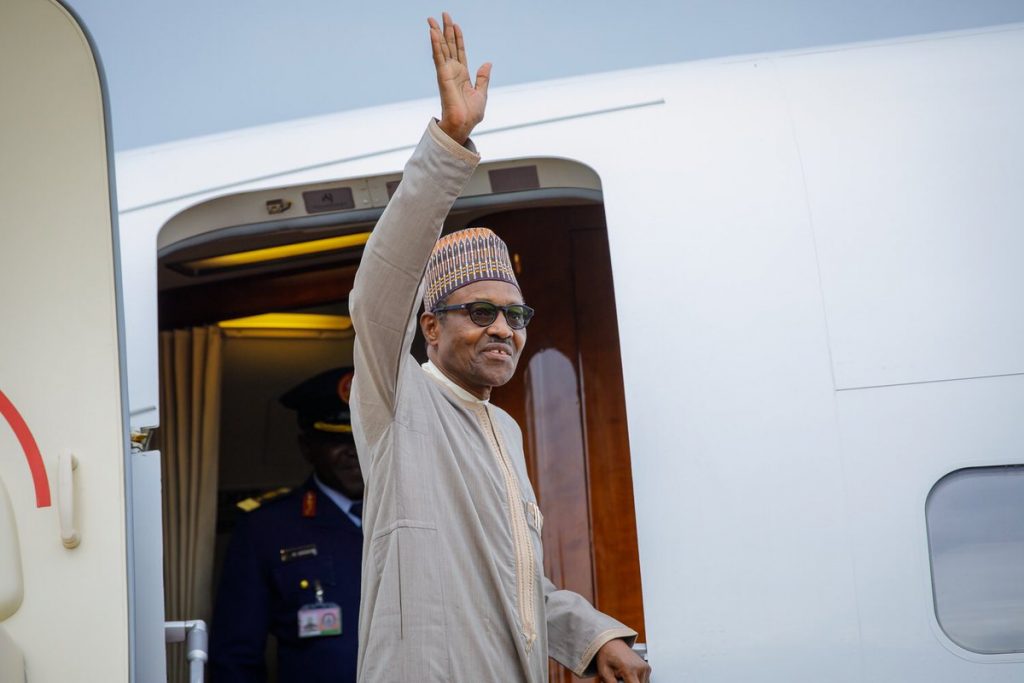
President Muhammadu Buhari has been chastised for pardoning two former governors who were imprisoned for corruption.

Recall that on Thursday, the Council of State granted 159 convicts presidential pardons, according to reports.

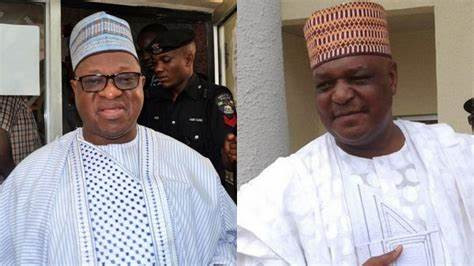
Former governors of Plateau State, Joshua Dariye, and Taraba State, Jolly Nyame, imprisoned for stealing N1.16 billion and N1.6 billion, respectively, were among the released convicts.

However, speaking at the 1st anniversary of late Afenifere’s spokesman, Yinka Odumakin’s Lecture and Book Presentation, Mr Femi Falana (SAN), a human rights campaigner, encouraged the Federal Government to extend the presidential pardon to individuals serving sentences for minor offences. Falana argued that this would reflect fairness and equity for all.

“All petty thieves in our prisons should be released. Under Section 17 of the 1999 Constitution, there shall be equality and equal rights for all citizens.

“Section 42 of the Constitution says there shall be no discrimination on the basis of class and gender, so you cannot take out a few people on the basis that they belong to a category or section of the society.

“I can assure you that if the government did not release others, I am going to call on lawyers whose clients are left in custody to come to court and challenge the discriminatory treatment of their clients,” Mr Falana was partly quoted as saying.

FG in dialogue with abductors of Kaduna-Abuja train passengers

By Uzair Adam Imam 

The Federal Government is in dialogue with the bandits that stormed and abducted many people in the Kaduna-Abuja train attack. 

The FG was said to have granted a discussion with the bandits for negotiation. 

Dr Jimoh Fatai, who has been designated as chairman of the group pressing for the release of their loved ones, made the disclosure. 

He stated that the Minister of Information, Lai Mohammed while addressing the victims’ relatives, assured them that FG would save the victims.

The Daily Reality reported how bandits attacked the Kaduna-Abuja train, killed eight persons, and abducted many passengers last month.

The bandits in a video threatened to kill all the victims if the federal government refused to negotiate with them.

However, a few days after the attack, the bandits released one of the abductees, Alwan Hassan, the Managing Director of the Bank of Agriculture (BON).

Hassan was alleged to have paid the sum of N100 million as ransom.

Northern elders ask Buhari to resign over incessant security challenge 

By Uzair Adam Imam 

The Northern Elders Forum (NEF) has demanded the immediate resignation of President Muhammadu Buhari over the incessant security challenge bedevilling the northwestern part of the country. 

The Director, Publicity and Advocacy of NEF, Dr. Hakeem Baba-Ahmed, made the call on Tuesday saying that Nigerians cannot continue to live and die under the dictates of bandits.

Baba-Ahmed lamented that Nigerians had shed enough tears and blood without an appropriate response from those with responsibilities to protect us.

He added that President Buhari’s administration does not appear to have answers to the challenges of security to which Nigerians are exposed. 

He stated that “We cannot continue to live and die under the dictates of killers, kidnappers, rapists and sundry criminal groups that have deprived us of our rights to live in peace and security.

“Our constitution has provisions for leaders to voluntarily step down if they are challenged by personal reasons, or they prove incapable of leading.
“It is now time for President Buhari to seriously consider that option since his leadership has proved spectacularly incapable of providing security over Nigerians. 

“Our Forum is aware of the weight of this advice, and it is also aware that we cannot continue to live under these conditions until 2023, when President Buhari’s term ends,” Baba-Ahmed said.

Is the Buhari-led government on holiday?

By Shafi’i Sheikh Jr.

I tried to resist the temptation to speak on matters that fringe around governance and government policies. This is because there are things that an observer can only see if he resists the temptation to jump into the fray and become an actor himself. But recent happenings have reawakened my enthusiasm to march to the stake like the man my mom had always desired me to be and take the bullet in the chest should the need arise. 

In 2015, we supported APC with our sweat and money chanting “change” wherever we found ourselves so much that it caught every household’s mood. Why? Because we thought a Buhari-led government would have no trouble handling the heaps of problems bedevilling our mettlesome Nigeria. 

Now, let’s get down to the nitty-gritty of why we-the masses brought Buhari to power in the first place. 

First of all, Nigeria, Africa’s biggest oil-producing country, was rapidly growing its economy, but the wealth had not been shared appropriately. Half of Nigeria’s population was living below the poverty line. The corruption that was partly to blame was eating into every fabric of Nigeria’s being. 

Secondly, the menace of Boko Haram was spreading wider than it started and had already claimed over 20,000 people and forced out some 3 million others from their homes. We accused the previous Goodluck E. Jonathan-led administration of not taking the menace seriously and posited that Buhari, who’s from the region, would do better if given the opportunity. 

We, therefore, came out en masse to vote Buhari into power. The 2015 election was and still is of massive significance in Nigeria’s turbulent history because, for the first time in Nigeria’s history, an opposition candidate won a presidential election free and fair. 

The president-elect (as he then was) told his supporters that “We have proven to the world that we are people who have embraced democracy. We have put the one-party state behind us.”

“You, Nigerians, have won. The people have shown their love for this nation and their belief in democracy,” He mentioned. 

It was the beginning of a new era. Nigeria and Nigerians refurbished a new hope. But these hopes were soon quashed by his incompetence to constitute a cabinet after 100 days in office. It was opined that a leader who couldn’t form a cabinet for that long is ill-prepared for the most important job in the country. 

Albeit hinging his voter appeal on waging war against corruption, fighting terrorism, and revamping the economy, the Buhari-led government had nothing to show except a plethora of controversies that embroiled his first 100 days in office. 

Today, the government only succeeded in pulling us from the shackles of Boko Haram into a dungeon full of kidnappers, IPOB and the so-called Unknown Gunmen. 

Ours is a country where lives are no longer sacred. Education has been exiled, social amenities are declared “extinct”, and food! Well, you’ll have to take a bank loan if you want to eat healthily. These terrorists attack and operate in broad daylight. 

Even after the president’s declaration in 2019 that Nigeria has “technically won the war” against Boko Haram, the country is still ravaged by insurgencies ranging from kidnappings to coordinated attacks on security forces and population centres. 

The recent attack on the Abuja-Kaduna train is a clear example that Nigerians will not forget for a very long time.

If holiday refers to that time of the year when one usually takes time away from home, work, or business to travel and relax, then this so-called government has betrayed Nigerians and gone on a holiday! 

Shafi’i Sheikh Jr. is a student of the Nigerian Law School, Kano Campus. He writes from Jos and can be reached via talk2sheikh.esq@gmail.com.

Sheikh Nuru Khalid: The way they and I see it

By Bilyamin Abdulmumin

The nation has woken up with yet another round of controversial news, as the committee to the National Assembly mosque, Apo legislative quarters Abuja, deemed it fit to suspend the renowned Islamic cleric Sheikh Nuru Khalil before sacking him later. The committee cited incitement and lack of showing remorse as reasons for the suspension and the final sacking, respectively.

Last week’s Friday prayer sermon the Sheikh delivered was the action that earned him the sack. In the sermon, reeling from the Abuja-Kaduna train attack tragedy, the Sheikh supported a boycott of the upcoming 2023 general election should the government fail to protect the lives of Nigerians. This message immediately went viral to generate a heated debate among the public on social media.

Those who support the message have some reasons. Because it was just history that repeated itself; before the 2015 general election, Nigeria, especially the North, was literally on fire. Amidst the chaos majority of the northern Islamic clerics openly criticized the government of the day – PDP, while drumming support for the opposition – APC.

Fast forward, seven years later, the table has turned. The APC is in charge, and similar to the eve period of the 2015 general election, the insecurity is threatening the country again. So, for this category of view, what is good for the goose should also be good for the gender.

Some try to strike a balance. According to these people, the Sheikh’s sermon was right, but they argue that leadership comes with responsibility. So, a leader with a large audience has both privilege and responsibility. Some of these responsibilities are eschewing opinion, unlike any ordinary person who doesn’t mince words. In other words, the Sheik should have a tread with caution. 

Some categories look at it from the extremism tendency. According to them, some extremists, such as Muhammad Yusuf, the Boko haram leader, started as a spokesperson to the masses. First, he became a fierce critic of the government, but later, when his antics escalated to insurgency, those masses clapping for him became the most victims in the end.

Some sought to politicize the controversy. According to them, the Sheikh has pitched a tent around the opposition – PDP, so they claim he has been a critic of the Buhari government for the last seven years. These critics sealed their arguments with the allegations that the Sheikh was appointed an Imam at a mosque built by Atiku Abubakar, a new Jumu’at Mosque behind the Central Bank Nigeria (CBN) Quarters, Abuja.

The peculiarity of any argument is that if anyone is allowed to explain his view, one will somehow see a reason for their claim. The above four viewpoints on the same thing are good examples.

By and large, if there is anything this raging debate achieved, it is one thing: it made Nigerians forget the series of other pressing issues like the ASUU strike, fuel scarcity, the naira to dollar depreciation, VP Osinbajo, Minister Pantami, and Farooq debates, even the plight of the actual victims of the attack (may theirs be a speedy release, harmless). One Nigerian coined this scenario: “one rising issue after another makes Nigerians forget their suffering; Nigerians live for the moment.”

Bilyamin Abdulmumin is a PhD candidate in Chemical Engineering at ABU Zaria. He is also an activist for a better, informed society.

Accident: Buhari commiserates with Jonathan over personal staff’s death

By Uzair Adam Imam 

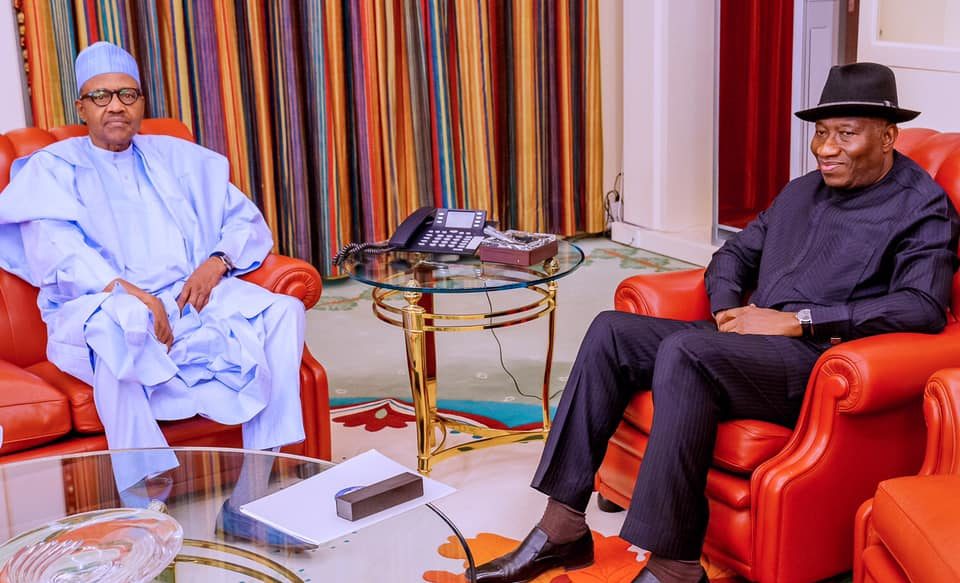
President Muhammadu Buhari has commiserated with former President Goodluck Ebele Jonathan over the death of his two personal staff in a road accident.

A statement signed Friday by the presidential media aide, Garba Shehu, contained the commiseration. 

The President expressed gratitude to Almighty God for having the former president escape unhurt from the accident.

However, he also advised Jonathan not to be distracted from his frequent local and international travels. 

Reports disclosed how the former president’s convoy was involved in an accident in the vicinity of Nnamdi Azikiwe International Airport, Abuja.

The accident that took place Wednesday had claimed the lives of two orderlies.

Pantami and the bitter taste of politics (I)

By Aminu Nuru

Isa Ali Ibrahim Pantami’s odyssey into public service, and mainstream politics in Nigeria by extension, is so far filled with notable controversies that muddy the stream of his public image despite being received and welcomed with a reservoir of goodwill and optimistic anticipations by many Nigerians.

Although some people may argue that, before Pantami’s appointment to public office, there were members of the Federal Executive Council (FEC) equally knowledgeable in the matters of Islam and could be regarded as scholars in their own rights. Still, the fact is that both Mallam Aminu Kano and Senator Bello Maitama Yusuf made a name for themselves in politics and public service before Islamic scholarship and preaching. Or, to say it better, the duos are more widely known for their political engagements than anything else. Thus, they were seen as full-time politicians in the public eye. While Pantami, on the other hand, got his fame strictly from Islamic teachings and discourses.

Therefore, Pantami is a trailblazer who pioneered a cause in Nigerian polity – a revolution of Islamic clerics from Northern Nigeria joining national politics and public service. This position naturally accords him the status of a role model for subsequent clerics from the North that are willing to join public service in the future.

Though preaching and propagation of Islam would have played a role in Pantami’s rise to prominence and subsequent appointment into Nigerian public service, the controversial minister, to be fair, has demonstrated some degree of competency and seems to be averagely prepared, to say the least,  to the job he has been offered as the Director-General of NITDA  and later Minister of Communication and Digital Economy. In the same vein, he has also recorded some achievements so far. Unfortunately, however, a series of controversies are beginning to overshadow these achievements, which are at the same time complicating his polity. Still, some of these complications may not be disconnected from his past. On the contrary, they could be best appreciated if one revisits and analyses the context and content of his previous preaching vis-à-vis the atmospheric politics of the time.

Efforts to corroborate the exact date Pantami made his debut into the realm of Islamic preaching in his first preaching base – Bauchi – proved abortive. But what is certain was the unique style he adopted in delivering lectures, Tafseer sessions and Friday sermons, which promptly endeared him in the hearts of the local audience.

In the early 2000s, most Western-styled educated Muslims were looking for a fresh voice in Islamic preaching and seemed to be tired of the “oldies” and their archaic modus. They wanted something different and were eager to access the new approach that analyses and interprets contemporary issues from Islam’s perspectives. They were looking for an Islamic preacher to address and speak to them in the manner and tongues they would align and reason with. A preacher that could, for example, scrutinize the EU’s foreign policies and the US invasion of the Middle East and validate his points with the verses of the Holy Qur’an.

In Pantami, they saw the exponent of those ideals. This was due to his ability to demonstrate basic knowledge of global politics, international relations, and science and technology through the lenses of the Quran and Hadith. In addition, he commanded a very good English Language (a rare talent among Islamic clerics at the time). He exhibited a charming oratory skill sauced with puritanical diction – a personal endowment and enchantment that he consciously or subconsciously deployed to arrest, startle, and move his audience. The eloquence with which Pantami delivered his sessions was what stood him out among his contemporaries. Consequently, Pantami became the darling of Muslim populations in Bauchi and beyond for this and other intellectual traits. The Western-styled educated populations saw a 21st-century Islamic cleric of their dream in his shape.

As an influential preacher with access to grass-root populations, his pulpit echoed a dissenting voice against the government of the day. He was explicitly critical of PDP’s government at both the state and national levels and openly promoted the presidential ambition of General Muhammadu Buhari (GMB). It is on record that Pantami was not the only cleric to uphold the candidature of GMB via his pulpit; other clerics had also promoted him with equal conviction. However, Pantami’s open romanticism and penchant for the General were so extreme that when his old “friend” – Governor Isa Yuguda – fell out with Buhari’s ANPP and decamped to PDP, Pantami was not reluctant to denounce this move. Therefore, he launched out series of attacks and criticisms of the Yuguda administration in his Friday sermons (despite being a back-door “friend” of the Yuguda administration).

In an article titled “Nigerian Politicians and Hypocrisy”, Pantami wrote: “I do not know a profession anywhere in the world that is full of professionals who fulfil all the characteristics and signs of hypocrites aptly described by our infallible Prophet like Nigerian politicians in the corridors of power, particularly the companions of the largest, and probably the most dangerous party in Africa (PDP)” (Premium Times, 2012).

Nobody felt Pantami was not doing the right thing among the population. He was even celebrated and eulogized for his vilification of the PDP’s government and support for GMB. His effort was appreciated as a selfless service to the poor masses. He was practically dancing to the bits of the society. Naturally, this created a public image for Pantami – an image of an honest Islamic cleric who told the truth to power (PDP’s government?). 

Considering this background, it is not entirely out of sight if some groups work to step back on Pantami’s toes now that he has been appointed a Minister of the Federal Republic of Nigeria. They would not also relent to feed him the same bitter pills of politics through (de)constructive criticism, malice and deliberately cooked scandals. Therefore, it is not a surprise if, for example, some pundits dug into his past utterances to make the polity difficult for him now. Or it is not least expected if some of his critics alleged that he used the garment of Islamic preaching to reach where he is now – an allegation echoed loudly by his fellow preacher and former neighbour in Bauchi. This particular preacher believes that Pantami is not worthy of being considered an Islamic cleric simply because he did not attend any Islamic school.

This allegation could be dismissed as sheer envy, especially as it comes from a fellow Salafi cleric who does not hide his aspersion of the minister. Reputable Islamic scholars have, time without number attested to Pantami’s intellectual prowess and competence in Islamic scholarship. Besides, altogether, he has tackled those accusations cleverly by not quitting the teaching of Islam even after being appointed a Minister.

The accusation that may have firmly stood is how Pantami’s pulpit swiftly changed from being a pro-people voice to one with less interest in the matters of governance and the governed. There’s no more dissent voice against the government. Even the choice of his texts for his ta’alims at Annur Mosque were deliberately strategic in the sense that their content analysis and commentary of moral truth and calls for proper conduct may not be extended explicitly to subjects within the present government. From their titles, both Kindness to Parents and Kindness to Relatives and Loved Ones would surely give a soft landing for anybody willing to avoid activism in his preaching.

His defenders may argue that Pantami now has unlimited access to the government. Therefore, he can channel his grievances privately, but the atrocities for which he vilified the previous government have also been committed, doubled and tripled by the present administration. Morality demands that he does more than voice his anger privately, considering his earlier vituperation.

One would think he will not hesitate to relinquish anything that has to do with this administration to demonstrate his unreserved solidarity for the masses. But, unfortunately, Pantami – an erstwhile vibrant advocate of good governance – is not the man to surrender power for posterity. Therefore, while it may not be the wisest decision to leave the government to demonstrate his pro-masses stand, Pantami should do better in making patriotic moves decisions no matter whose ox is gored. He could do that while avoiding avoidable controversies and political tussles that may tarnish his image and the institution he represents.

Aminu Nuru wrote from Bauchi. He can be contacted via aminuahmednuru@gmail.com.
The bleeding North and the executive inaction of its leaders 

By Mohammed Baba Goro

God knows how hard I’ve been suppressing this uncontrollable urge to write about the damning insecurity, especially that of the bandits. Yes, our hues and heys do not matter, but the sigh that comes with someone pouring the biting grief of his heart out is a relief! Again, I wouldn’t want to get emotional in doing that, but the situation of insecurity is enough to cause any well-meaning leader to lose sleep.

I felt cold when all northern leaders could give President Muhammadu Buhari (PMB) during the convention as pass mark was hearty cheers, especially the remarks by the Senate President and Governor Atiku Bagudu of Kebbi State. The governor just lost over 60 vigilantes in one ambush, alongside police officers and a DPO. Yet, it all sounded like all was well with the North and the country.

The economy, insecurity, and corruption are the hallmarks promises of this administration, yet these are the areas the regime has failed the most. Even when you try to tinker with them because of some sparsely built infrastructures – though this is typical of every administration; the high economic numbers that have dragged more people into poverty keep staring at you in the face to have a second thought.

The recent attack on the Abuja-Kaduna train reaffirms that we don’t learn a lesson. The government is inactive, and this is an outright failure of leadership that has deserted the masses on the mercies of the Almighty.

All these tell us that, on the one hand, there is a disconnection between what those in the president’s echo chamber tell him and the reality the masses face. And on the other hand, the executive inaction of its leaders. If not, their remarks to Mr President at the convention shouldn’t have been praises alone but a mixture of some honest and collective concerns about the bleeding North and the urgent need to get to grips with it. 

I hope and pray Mr President will write his name in gold, at least for his last days in office, to exterminate these destructive elements and redeem the promise of peace and security he made amidst tears to his Northern kith and kins, and for him to have a befitting retirement.

Mohammed Baba Goro writes from Mokwa in Niger State. He can be reached at: mohammedbabagoro3@gmail.com.

El-Rufa’i: A politician without political ambition?

By Safiyanu Ladan

While speaking on Channels TV program Politics Today, the governor of Kaduna state, Malam Nasiru Ahmad El-Rufa’i, said he’s currently not vying for any office come 2023. The governor, whose tenure is elapsing in the next fourteen months, insisted that he’s not interested in any political position.

“I have said it over and over, but I guess the trust in politicians is very low. Nobody believes me. I have said over and over that, I’m not a contestant for any office. I’m not an aspirant for anything,” he said.

“Rotimi Amaechi is interested in running for president. He has the right to do so, but I’m not running for anything. I’m not going to be on his ticket.”

He gave an impression that he had never wanted to run for the office of the governor of Kaduna state in 2015, but President Buhari prevailed over him. Because he has so much respect for the President, he reluctantly accepted to run.

The essence of being in politics is to have political ambition, which includes aspiring for a higher political position. Political ambition dictates the activities of every politician and can go to any extent in fulfilling their aspirations.

Yet, Mr El-Rufa’i remains the only politician in the history of this country without any political ambition that came out on national TV endorsing the removal of the National Chairman of the APC caretaker committee. Therefore, one can’t help but ask what the governor’s motive is?

It’s high time for this politician to stop deceiving us. We already know that the ambition of every politician is fixed and well defined. It’s nothing other than being in a political position.

Safiyanu Ladan wrote from Kaduna. He can be reached via uncledoctor24@gmail.com.

Train Attack: Unite against terrorism – MURIC

News Desk

The Abuja-Kaduna train was attacked by bandits on the evening of Monday, 28th March 2022. The attack led to the killing and abduction of some passengers. Meanwhile, the Muslim Rights Concern (MURIC) has called on Nigerians to unite against terrorists, bandits and saboteurs.

MURIC’s input was contained in a press statement issued on Wednesday 30th March 2022 by its director and founder, Professor Ishaq Akintola.

The statement reads:

“Bandits attacked the Abuja-Kaduna train yesterday Monday, 28th March 2022. The attack led to the killing and abduction of some passengers. We strongly condemn this attack. It was mindless, vicious, brutal and barbaric. This is also major evidence of the extent to which unscrupulous elements can go to sabotage the good efforts of the government to provide comfort for the citizens.

“With hindsight, the latest attack may not have been too surprising, particularly with the ominous signs presented by previous activities of bandits in the zone. It is obvious that Kaduna Airport was attacked last week because the bandits had become desperate since they could not find enough victims on the roads.

“Our security agencies should be more proactive. Intelligence Transport Systems (ITS) should be used in all our transportation networks starting with the modern railway line and critical national routes of our roads. They should all be linked with control rooms of the security agencies. We also need tactical surveillance teams at critical locations along the modern railway lines. Not only that, unmanned aircraft and drones can be used to collect information during the trains’ working hours. This will prevent criminal elements from springing surprise attacks on innocent passengers.

“The citizenry must also be security conscious. They need to complement [the] government’s efforts. Nobody should tell us that the present government did the wrong thing by introducing a modern rail system but the people benefiting from it must be prepared to pass information about suspicious moves at sabotage.

“We call on Nigerians to look beyond this mindless attack. It is the work of saboteurs, rebellious subjects and enemies of peace. Nigerians must not allow the tragic incident to test their will. Rather, we must unite against those who seek to destroy our fragile civilisation and our nascent democracy. We must speak with one voice targeted at the inhumanity of man to man. The criminals are not happy with the progress being made. They want to drag us back to the Stone Age. We must resist them.

“No single government, no matter how popular, or how powerful, can be competent enough to repel terrorists and saboteurs. The people must become partners with [the] government. They must become [the] eyes and ears of the security agencies. The modern trains on Abuja-Kaduna, Lagos-Ibadan and Itakpe-Warri should be enough to inspire patriotism.

“Patriots all over the world stand with their governments. That was what Americans did when the country was attacked by terrorists in 2001. That is what the Ukrainians are doing now against the invading ultra-Red communist war criminals. We must unite against those who are making it difficult for innocent citizens to enjoy the dividends of democracy.

“The media has a special role to play at this critical point. There is no professionalism in celebrating terror. Nobody is immune from terrorists’ attacks, not even journalists. That is why all hands must be on deck in the fight against insecurity. Terrorists are cowards who pick on soft targets to embarrass [the] government and traumatise the citizenry, including journalists. That is why all media fora must mobilise themselves against marauding bandits and terrorists.

“The modern trains introduced by this administration are superb and they are reducing the sufferings of travellers but it is now time to leverage on the infotech facilities at our disposal to make the trips hitch-free. Nonetheless, the challenge of insecurity should not be seen as a mark of [the] failure of the project. We must put saboteurs and enemies of the people to shame by forging ahead. We must not surrender to terrorists. Nigeria is on course.”