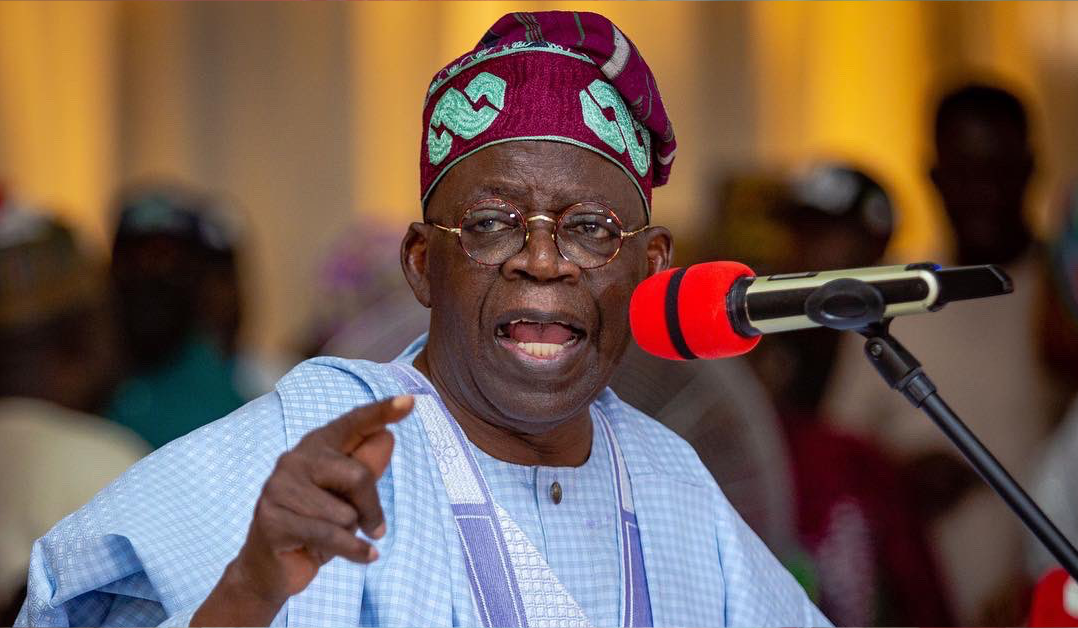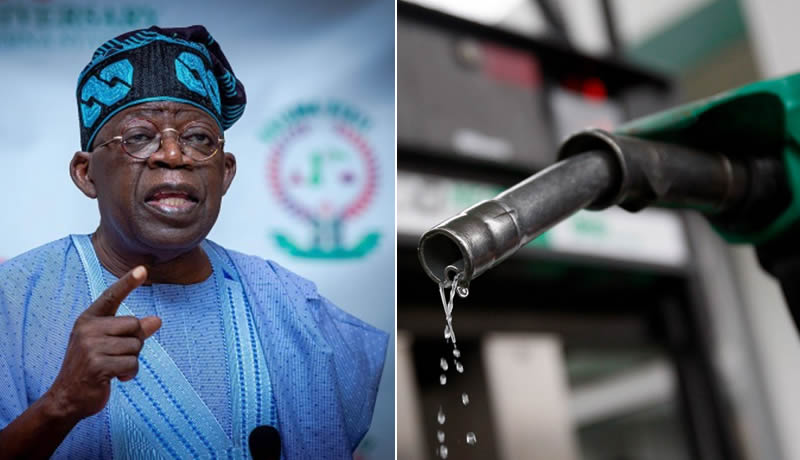
President Bola Ahmed Tinubu

Subsidy Removal: A welcome development for Nigeria and its people

By ImamMalik Abdullahi Kaga

The removal of fuel subsidies has been a hotly debated and controversial topic in Nigeria for many years, especially now that President Bola Ahmed Tinubu has made the pronouncement. For the longest time, fuel subsidies represented a significant portion of government expenditures, and many Nigerian leaders refused to remove them for fear of political backlash from their citizens. However, President Tinubu’s bold decision has been a critical step towards transforming the Nigerian economy and helping the poor.

The Nigerian government spent an average of  $6.2 billion annually on fuel subsidies, and despite this, the country’s economy did not improve significantly. The fuel subsidy was primarily a means of subsidising fuel prices for Nigerian consumers, and the government aimed to keep the domestic fuel prices low, which, in turn, would help fight inflation and improve the economy. However, the fuel subsidy did not achieve this goal; instead, it distorted the market, leading to corruption, smuggling, and inflation.

Furthermore, fuel subsidies are often perceived as socially unjust because it benefits wealthier individuals more than the poor.  Studies have shown that the richest 10% of Nigerians receive up to 60% of the subsidy, while the poorest 10% only receive 1%.

It is well-known that the country’s wealthy motorists and industries benefit most from the subsidy, not the poor. Hence, the benefit did not trickle down to the poor but only helped the rich acquire fuel more cheaply. However, since most of the poor Nigerians are not benefitting from the fuel subsidy, it’s a commendable effort that the president made.

The removal of the fuel subsidy will create jobs in the downstream sector, increasing the availability of fuel and reducing smuggling, which will contribute significantly to the Nigerian economy’s growth.

Moreover, the government’s removal of the fuel subsidy will allow it to redirect the average amount, $6.2 billion, towards investing in critical sectors such as education, healthcare, agriculture, security, and infrastructure, which will help reduce poverty levels and create employment opportunities for Nigerians. The government’s commitment to investing in these critical sectors will reduce the dependency on oil, the country’s primary source of revenue, and make the economy more resilient to oil price fluctuations.

Tinubu’s fuel subsidy removal will also reduce government corruption, a significant problem in Nigeria. With the fuel subsidy, many government officials’ fraudulently inflated the amount allocated to the subsidy scheme, which was further used to enrich themselves. Removing the subsidy will prevent the exploitation of government funds by corrupt individuals, which will be an essential step toward improving the Nigerian economy.

I urge Nigerians to be patient and prayerful as Tinubu Administration has a lot in store for us– poor Nigerians.
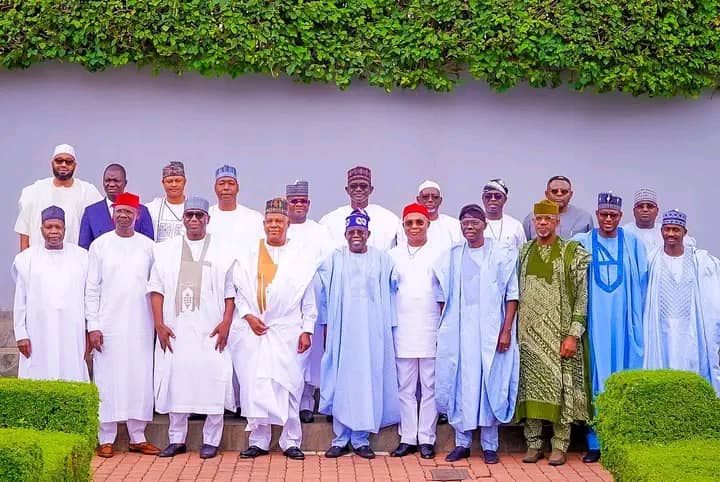
Tinubu receives APC governors in Aso Rock

By Ahmad Deedat Zakari

President Bola Ahmad Tinubu, on Friday, had a meeting behind closed doors with governors of the All Progressives Congress, APC.

President Tinubu, in a Facebook post, posted about the meeting with the governors at the Presidential Villa, Abuja.

“Today, I had the delight of welcoming distinguished Governors from our great party, the APC, to the State House.

“Together, we reaffirmed our commitment and united efforts in realizing our cherished vision for Nigeria. With every hand on deck, We are resolute in our pursuit of a prosperous nation.” the post says.

The governors were led to the State House by Imo State Governor, Hope Uzodinma, who recently assumed the role of Chairman of the Progressives Governors Forum, PGF.

Seventeen of the twenty APC governors were in attendance. However, conspicuously absent from the meeting were Governor Oluwarotimi Akeredolu of Ondo State, Abiodun Abayomi Oyebanji of Ekiti State and Dr Nasir Idris of Kebbi State.

“Subsidy is gone”: A simple explainer


By Abdulhaleem Ishaq Ringim

The enactment of the Petroleum Industry Act 2021 was intended to mark a significant shift in the regulation of the downstream petroleum sector. The act aimed to align petrol prices with market dynamics, phasing out the fuel subsidy regime. However, despite the planned full deregulation in February 2022, the government continued to allocate funds for subsidies, leading to financial strain and mounting debts.

Under the Petroleum Industry Act, the government ought to have terminated fuel subsidies and allow petrol prices to reflect the general market rates six months after its enactment. However, the government continued to provide for subsidy costs in its budget. Due to financial constraints, the government could not back the subsidy provisions in the 2022 and 2023 budgets with financing, resulting in unpaid subsidy costs. The Nigerian National Petroleum Company Limited (NNPCL), acting as the supplier of last resort, offset these costs. This resulted in the accumulation of debt of N2.8 trillion for the government in the process.

The new President, Bola Ahmed Tinubu, has pronounced the termination of the subsidy regime. This is in line with the law and is further necessitated by the inability to finance subsidy commitments since February 2022. The removal of subsidies means that petrol prices will now fluctuate based on market dynamics rather than being fixed. 

While the arguments continue on whether the announcement approach was systematic or not, it has to a certain extent, saved the country from the intense speculative buying activities that would have resulted from scheduling the announcement and other implications that would have marred such gradualism. I consider it a welcome development and commend the President for such uncommon courage, which has been missing in the governance space for long. 

However, the repercussions extend beyond price adjustments. The rise in price will naturally raise the costs of transportation, which will, in turn, further pressurise the country’s inflation rate. The government’s lack of resources to offset subsidy liabilities since February and the outstanding debt to NNPCL means there will hardly be any room for reinvestment, including allocating funds for palliatives or post-subsidy shock alleviation. Moreover, it is crucial to note that even when the government was able to offset the subsidy costs, it relied on borrowing rather than revenue to cover the costs, exacerbating the financial burden.

With the subsidy officially and finally gone, the government must prioritise strategies to repay NNPCL’s debt of N2.8 trillion and other subsidy-related debts while refocusing on the productive sectors of the economy and social welfare. This commitment demands immediate attention, as the accumulated debt poses a significant liability and might impede the effective utilisation of government revenues.

An encouraging prospect arises from the current situation as we grapple with outstanding subsidy debts. Once the government’s financial circumstances improve, its focus will permanently shift away from the subsidy regime and towards prioritising crucial areas such as education, health, infrastructure, and other significant sectors. This shift is anticipated and underscores the government’s intention to allocate resources towards enhancing public value and renewing national hope. 

Meanwhile, the government should advisably prioritise the enhancement of public transport systems and collaborate with state governments to improve mass transit systems and infrastructure, especially by incorporating more diesel-based buses into the stock of public transport vehicles in their various states. The situation should also serve as an incentive for state governments to renew focus on developing Bus and Light Rail Transit systems. 

To consolidate this hard decision, the government should consider the privatisation of state-owned refineries to enhance efficiency and promote private sector participation in the downstream sector. By opening up the refineries to private investment, the government can improve their operational performance, output and overall local refining capacity. As the Dangote refinery gets ready to begin operations, the government should also support other private oil-refining projects like the BUA refinery in Akwa Ibom.

Additionally, the Nigerian National Petroleum Company Limited (NNPCL) should explore the possibility of an initial public offering (IPO) to raise capital and expand its operations. Emphasising the development of the gas sector could also be beneficial, considering its potential for revenue generation and reducing dependency on imported fuels.

Abdulhaleem Ishaq Ringim is a political/policy/public affairs analyst. He writes from Zaria and can be reached via haleemabdul1999@gmail.com.

Cost of governance: Shekarau urges Tinubu to reduce number of lawmakers

By Muhammadu Sabiu

Kano Central Senator Ibrahim Shekarau has advised President Bola Tinubu on measures to cut the government’s expenses.

According to Shekarau, Tinubu should reduce the number of members in the Senate and House of Representatives in order to minimise the expense of government.

Appearing on Channels TV Wednesday night, Shekarau said that Nigeria does not require both chambers.

He was quoted as saying, “Left to me, we don’t need to have the two chambers, the two houses.

“It’s costing the country. I agree, a democracy means getting as many involved as possible, but the way it is going on now, it’s almost 500 legislators nationwide; I don’t think we really need this much at the moment.”

President Tinubu makes first appointments

By Ahmad Deedat Zakari

President Bola Ahmad Tinubu has made his first appointments as Nigerian President.

Tinubu, who was sworn in this morning, appointed Ambassador Kunle Adeleke, as State Chief of Protocol to the President.

The President also appointed Dele Alake as Presidential Spokeperson and Olusegun Dada as Special Adviser to the President on Digital Media

Further Details later … .